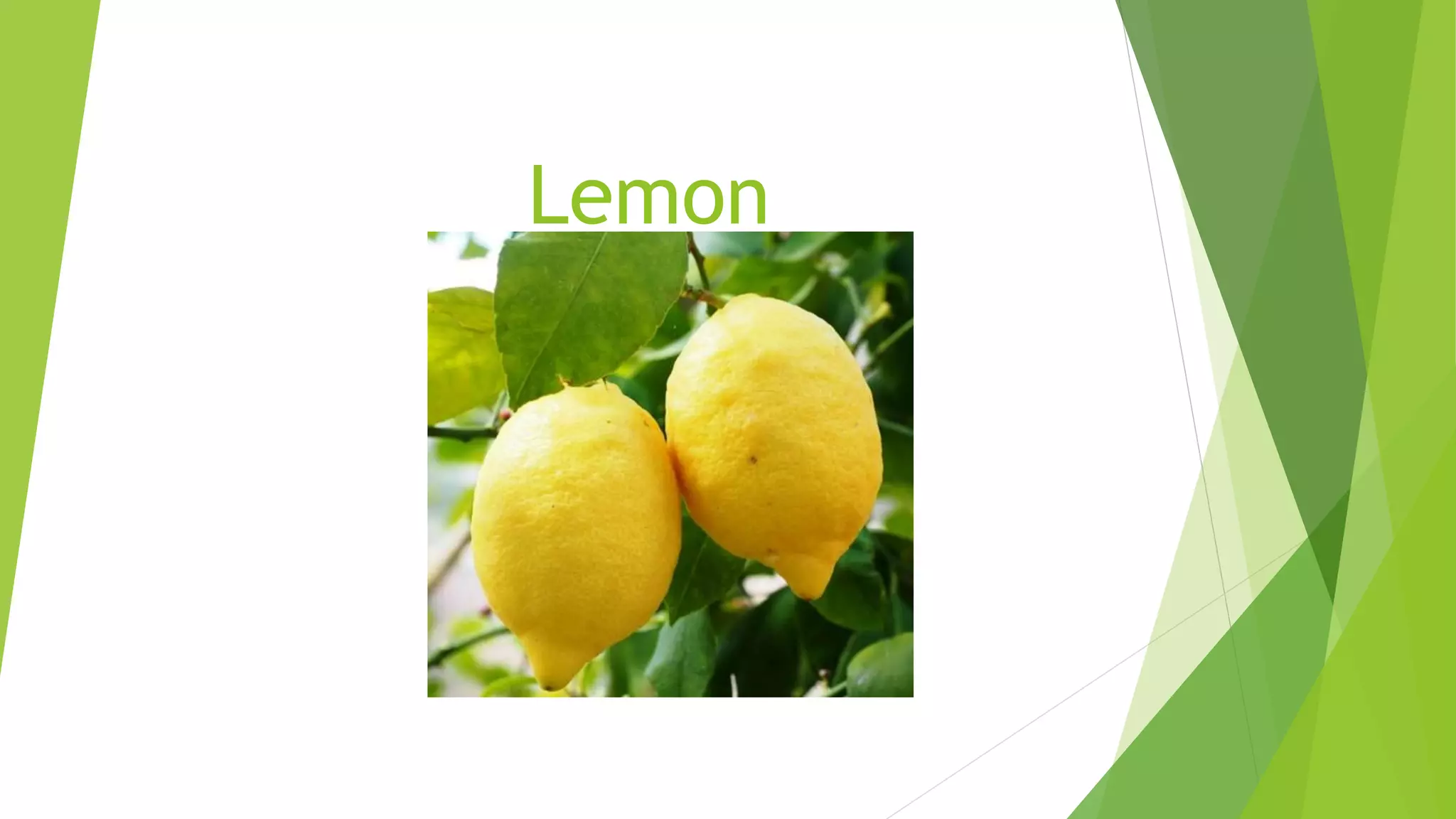
Lemon
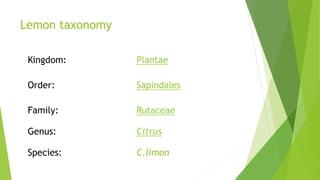
Lemon taxonomy
Kingdom: Plantae
Order: Sapindales
Family: Rutaceae
Genus: Citrus
Species: C.limon
origin
 The lemon originated in Southeast Asia, probably
in India or southern China.
 Its history is sometimes unclear because of the
confusion with the similarly appearing citron, a
closely related species. The lemon may have been
depicted in Roman artwork as early as the first
century AD.
Soil Preparation
How To Prepare Your Soil
 Roots grow faster when they’re spread out. Dig
the hole deep and wide enough so the root system
has plenty of room to easily expand. Keep the
topsoil in a separate pile so you can put it in the
bottom of the hole, where it’ll do the most good.
 To loosen the soil, mix peat moss (up to 1/3
concentration) into your pile of topsoil. You can
also add our Coco-Fiber Potting Medium or 2 or
more inches of organic material and work in
evenly with the existing soil.
Uses and Pharmacology
 Pharmacologically, the lemon is primarily
important for its vitamin C and potassium
content. Epidemiological studies associate the
intake of citrus fruit with a reduction in the risk
of various diseases
Antioxidant effects

German studies in the late 1980s related this
effect to the peel. The pectin fiber and lemon oil
also possess antioxidant properties.
 One group of researchers, having identified
eriocitrin, hesperidin, and coumarins as
antioxidants,
Cancer
 The structure of various chemical constituents of lemon
and their relationship to cancer prevention has been
investigated
 In an experiment with the flavonoid eriocitrin and its
metabolites extracted from lemon fruit, apoptosis has
been demonstrated in acute myelomonocytic leukemia
cells
 A meta-analysis of epidemiological studies associates the
consumption of citrus fruit with a larger protective effect
against oral cancer.
Nephrolithiasis

Lemon juice has been shown to increase citrate
levels in patients with hypocitraturic calcium
nephrolithiasis in a small, long-term trial
Other uses
 Lemon juice and lemon oil have been evaluated
for antimicrobial action.
 The oil shows some bacteriostatic and antiviral
action thought to be due to citral and linalool
content.
 Lemon has been shown to inhibit the growth of
Aspergillus mold,
 and has been used to disinfect drinking water and
to inactivate rabies virus
Dosage
 Clinical information is limited. To increase citrate
levels, 120 mL of lemon juice, containing citric
acid 5.9 g, was diluted and consumed daily.
 Toxicology
 Research reveals little or no information regarding
toxicology.
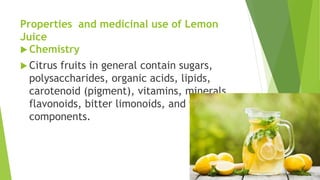
Properties and medicinal use of Lemon
Juice
 Chemistry
 Citrus fruits in general contain sugars,
polysaccharides, organic acids, lipids,
carotenoid (pigment), vitamins, minerals,
flavonoids, bitter limonoids, and volatile
components.
 Plentiful Vitamin C
 Lemon juice is rich in vitamin C. The body needs
vitamin C to resist colds, fight disease and aids
absorption of iron from vegetables and grains.
 It wards off a broad range of health problems
including the condition called scurvy that once
plagued seafarers who lacked access to fresh
fruits and vegetables. Scurvy causes a wide range
of ailments including tooth loss, aching bones,
vision problems and slow healing of wounds.
 Potassium
 A glass of lemonade also provides lots of potassium.
There are about 145 mg of potassium in 100 g of
lemon juice. Potassium works to balance acid and
alkaline blood chemistry known as body pH. It helps
nourish the body by aiding in synthesis of amino acids
from protein and use of carbohydrates. Potassium
also assists functions such as expansion and
contraction of muscles. While infants need less than
a half gram of potassium daily, adults need almost 5
grams.
 Acidic Yet Alkalizing
 Lemon juice is a boon to anyone experiencing
nausea, such as sea travelers or pregnant women
during their first trimester. No one knows exactly
what causes morning sickness, but lemon juice
combined with water creates an alkalizing
substance that settles stomach acid and vomiting.
Its soothing aroma also helps settle nausea,
 Kidney Stone Prevention
 Drinking lots of lemonade can help prevent kidney
stones
Recipe for memory boosting
 One drop of basile and rosemary
 Tow drops of each (lemon , peppermint
,grapefruit and lavender)
How Lemon Water Makes Your Brain Fast?
 The potassium found in raw lemon juice helps the
brain and nerve cells, improves
concentration, processing speed, memory and
calms the mind. This underappreciated tart fruit
makes your brain fast.
 Lemon oil may be used in aromatherapy.
Researchers at The Ohio State University found
that lemon oil aroma does not influence the
human immune system, but may enhance mood.
The low pH of juice makes it antibacterial, and in
India, the lemon is used in Indian traditional
medicines Siddha Medicine and Ayurveda,
 Water is a Must
 Like the body, the brain is mostly water and
needs plenty of hydration to function at its best.
Scientists in the United Kingdom who checked
brain scans of riders after an hour and a half of
cycling found that brain tissue had shrunk away
from the subjects’ skulls. And research shows
that dehydration not only affects the size of the
brain but also how it works
Application in biotechnology
 Biochemical studies on a novel antioxidant from
lemon oil and its biotechnological application in
cosmetic dermatology.
 It is generally accepted that lipid peroxides play an
important role in the pathogenesis of free radical-
induced cellular injury and that antioxidants such as
glutathione, ascorbic acid and alpha-tocopherol are
vital in cellular defense against endogenous and
exogenous oxidants.
References
 https://www.ncbi.nlm.nih.gov/pubmed/10568210
 https://www.drugs.com/npp/lemon.html
Thank you

Lemon

  • 1.
  • 2.
    Lemon taxonomy Kingdom: Plantae Order:Sapindales Family: Rutaceae Genus: Citrus Species: C.limon
  • 3.
    origin  The lemonoriginated in Southeast Asia, probably in India or southern China.  Its history is sometimes unclear because of the confusion with the similarly appearing citron, a closely related species. The lemon may have been depicted in Roman artwork as early as the first century AD.
  • 4.
    Soil Preparation How ToPrepare Your Soil  Roots grow faster when they’re spread out. Dig the hole deep and wide enough so the root system has plenty of room to easily expand. Keep the topsoil in a separate pile so you can put it in the bottom of the hole, where it’ll do the most good.
  • 5.
     To loosenthe soil, mix peat moss (up to 1/3 concentration) into your pile of topsoil. You can also add our Coco-Fiber Potting Medium or 2 or more inches of organic material and work in evenly with the existing soil.
  • 6.
    Uses and Pharmacology Pharmacologically, the lemon is primarily important for its vitamin C and potassium content. Epidemiological studies associate the intake of citrus fruit with a reduction in the risk of various diseases
  • 7.
    Antioxidant effects  German studiesin the late 1980s related this effect to the peel. The pectin fiber and lemon oil also possess antioxidant properties.  One group of researchers, having identified eriocitrin, hesperidin, and coumarins as antioxidants,
  • 8.
    Cancer  The structureof various chemical constituents of lemon and their relationship to cancer prevention has been investigated  In an experiment with the flavonoid eriocitrin and its metabolites extracted from lemon fruit, apoptosis has been demonstrated in acute myelomonocytic leukemia cells  A meta-analysis of epidemiological studies associates the consumption of citrus fruit with a larger protective effect against oral cancer.
  • 9.
    Nephrolithiasis  Lemon juice hasbeen shown to increase citrate levels in patients with hypocitraturic calcium nephrolithiasis in a small, long-term trial
  • 10.
    Other uses  Lemonjuice and lemon oil have been evaluated for antimicrobial action.  The oil shows some bacteriostatic and antiviral action thought to be due to citral and linalool content.  Lemon has been shown to inhibit the growth of Aspergillus mold,  and has been used to disinfect drinking water and to inactivate rabies virus
  • 11.
    Dosage  Clinical informationis limited. To increase citrate levels, 120 mL of lemon juice, containing citric acid 5.9 g, was diluted and consumed daily.
  • 12.
     Toxicology  Researchreveals little or no information regarding toxicology.
  • 13.
    Properties and medicinaluse of Lemon Juice  Chemistry  Citrus fruits in general contain sugars, polysaccharides, organic acids, lipids, carotenoid (pigment), vitamins, minerals, flavonoids, bitter limonoids, and volatile components.
  • 14.
     Plentiful VitaminC  Lemon juice is rich in vitamin C. The body needs vitamin C to resist colds, fight disease and aids absorption of iron from vegetables and grains.
  • 15.
     It wardsoff a broad range of health problems including the condition called scurvy that once plagued seafarers who lacked access to fresh fruits and vegetables. Scurvy causes a wide range of ailments including tooth loss, aching bones, vision problems and slow healing of wounds.
  • 16.
     Potassium  Aglass of lemonade also provides lots of potassium. There are about 145 mg of potassium in 100 g of lemon juice. Potassium works to balance acid and alkaline blood chemistry known as body pH. It helps nourish the body by aiding in synthesis of amino acids from protein and use of carbohydrates. Potassium also assists functions such as expansion and contraction of muscles. While infants need less than a half gram of potassium daily, adults need almost 5 grams.
  • 17.
     Acidic YetAlkalizing  Lemon juice is a boon to anyone experiencing nausea, such as sea travelers or pregnant women during their first trimester. No one knows exactly what causes morning sickness, but lemon juice combined with water creates an alkalizing substance that settles stomach acid and vomiting. Its soothing aroma also helps settle nausea,
  • 18.
     Kidney StonePrevention  Drinking lots of lemonade can help prevent kidney stones
  • 19.
    Recipe for memoryboosting  One drop of basile and rosemary  Tow drops of each (lemon , peppermint ,grapefruit and lavender)
  • 20.
    How Lemon WaterMakes Your Brain Fast?  The potassium found in raw lemon juice helps the brain and nerve cells, improves concentration, processing speed, memory and calms the mind. This underappreciated tart fruit makes your brain fast.
  • 21.
     Lemon oilmay be used in aromatherapy. Researchers at The Ohio State University found that lemon oil aroma does not influence the human immune system, but may enhance mood. The low pH of juice makes it antibacterial, and in India, the lemon is used in Indian traditional medicines Siddha Medicine and Ayurveda,
  • 22.
     Water isa Must  Like the body, the brain is mostly water and needs plenty of hydration to function at its best. Scientists in the United Kingdom who checked brain scans of riders after an hour and a half of cycling found that brain tissue had shrunk away from the subjects’ skulls. And research shows that dehydration not only affects the size of the brain but also how it works
  • 23.
    Application in biotechnology Biochemical studies on a novel antioxidant from lemon oil and its biotechnological application in cosmetic dermatology.  It is generally accepted that lipid peroxides play an important role in the pathogenesis of free radical- induced cellular injury and that antioxidants such as glutathione, ascorbic acid and alpha-tocopherol are vital in cellular defense against endogenous and exogenous oxidants.
  • 24.
  • 25.