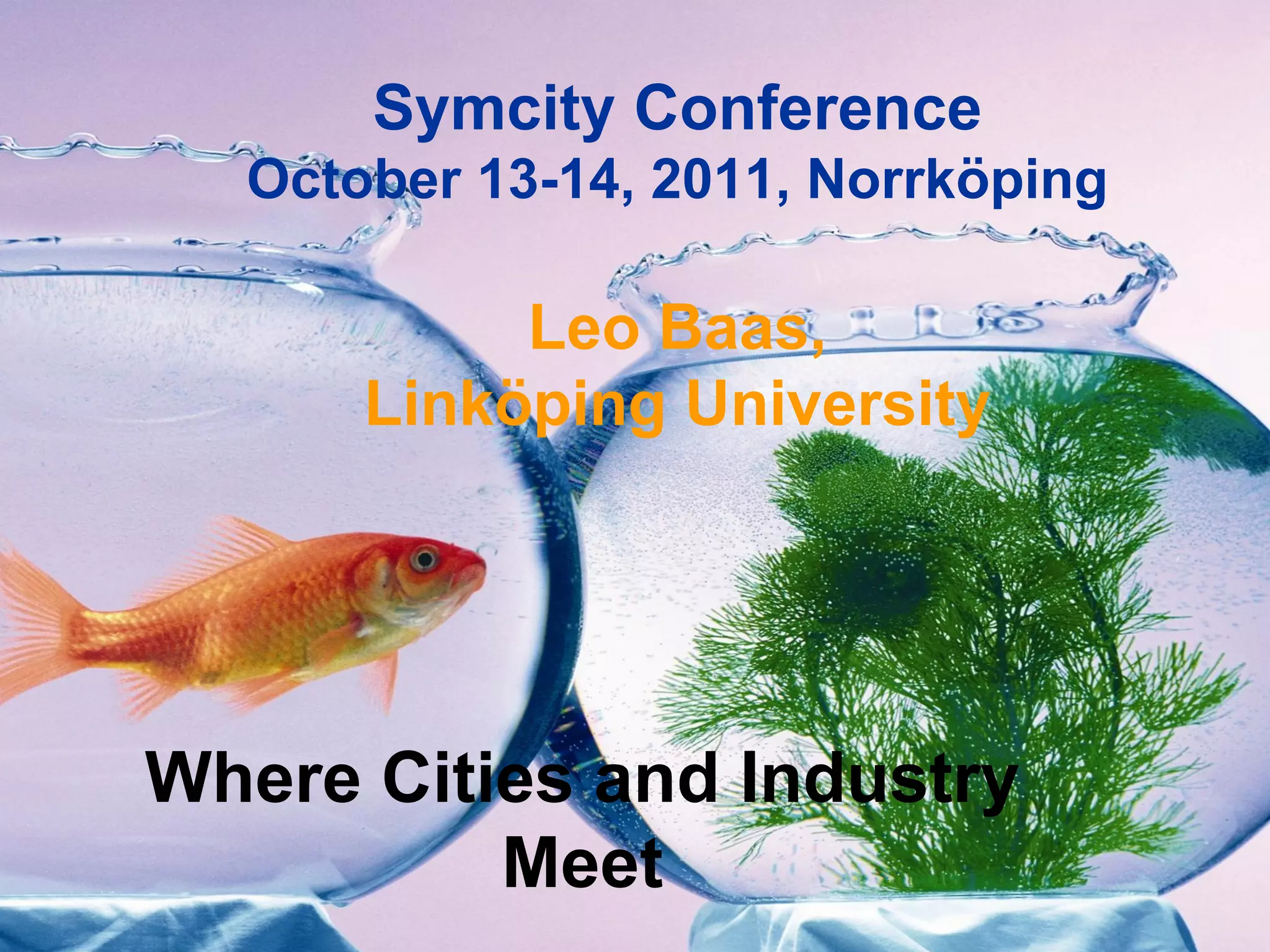
Symcity Conference
  October 13-14, 2011, Norrköping

           Leo Baas,
      Linköping University


Where Cities and Industry
          Meet
               1
Industrial Ecology definition

Industrial ecology is described as:
An integrated system, in which the
consumption of energy and materials is
optimised and the effluents of one process
serve as the raw material(s) or energy for
another process

            (Frosch & Gallopoulos, Scientific American:1989)


                       2
Industrial Ecology: Interconnectedness of
        Physical & Social Systems
Physical Systems:
Technology, Material and Energy Flows

        interconnectedness

Social Systems:
Individuals, Organisations, Culture,
Values, Institutions


                   3
Industrial Symbiosis
Industrial Symbiosis is seen as a
process whereby materials, water,
energy in the techno-sphere and
informational, organizational and
management flows at the institutional
level between and among companies
are investigated with the objective of
developing and improving co-
operative links between/among them


                   4
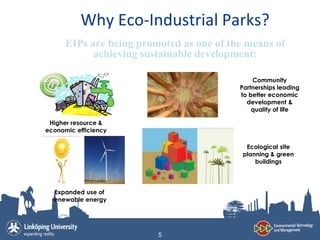
Why Eco-Industrial Parks?
      EIPs are being promoted as one of the means of
            achieving sustainable development:

                                              Community
                                          Partnerships leading
                                          to better economic
                                            development &
                                              quality of life

 Higher resource &
economic efficiency

                                            Ecological site
                                           planning & green
                                               buildings


   Expanded use of
  renewable energy


                         5
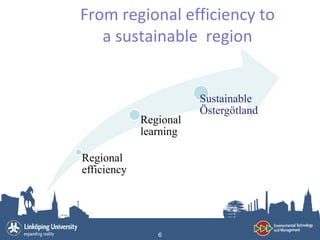
From regional efficiency to
   a sustainable region


                        Sustainable
                        Östergötland
             Regional
             learning

Regional
efficiency


                6
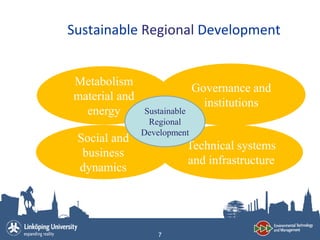
Sustainable Regional Development


Metabolism
                              Governance and
material and
                                institutions
  energy        Sustainable
                 Regional
               Development
 Social and
                          Technical systems
  business
                          and infrastructure
 dynamics


                   7
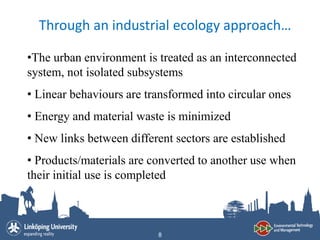
Through an industrial ecology approach…

•The urban environment is treated as an interconnected
system, not isolated subsystems
• Linear behaviours are transformed into circular ones
• Energy and material waste is minimized
• New links between different sectors are established
• Products/materials are converted to another use when
their initial use is completed


                          8
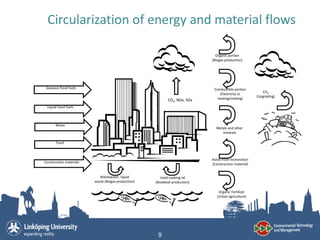
Circularization of energy and material flows

                                                                                Organic portion
                                                                              (Biogas production)


 Gaseous fossil fuels                                                          Combustible portion
                                                                                                           CH4
                                                                                  (Electricity or
                                                                                                        (Upgrading)
                                                            CO2, NOx, SOx        heating/cooling)

 Liquid fossil fuels


       Water
                                                                                Metals and other
                                                                                   minerals

       Food


                                                                              Ashes from incineration
Construction materials
                                                                              (Construction material)


                            Wastewater, liquid          Used cooking oil
                         waste (Biogas production)   (Biodiesel production)

                                                                                  Organic Fertilizer
                                                                                 (Urban agriculture)


                                                      9
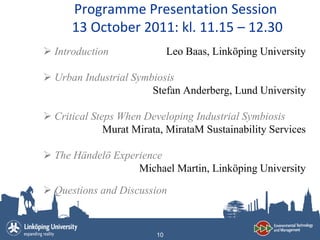
Programme Presentation Session
      13 October 2011: kl. 11.15 – 12.30
 Introduction                Leo Baas, Linköping University

 Urban Industrial Symbiosis
                       Stefan Anderberg, Lund University

 Critical Steps When Developing Industrial Symbiosis
              Murat Mirata, MirataM Sustainability Services

 The Händelö Experience
                   Michael Martin, Linköping University

 Questions and Discussion


                         10

Leenard Bass

  • 1.
    Symcity Conference October 13-14, 2011, Norrköping Leo Baas, Linköping University Where Cities and Industry Meet 1
  • 2.
    Industrial Ecology definition Industrialecology is described as: An integrated system, in which the consumption of energy and materials is optimised and the effluents of one process serve as the raw material(s) or energy for another process (Frosch & Gallopoulos, Scientific American:1989) 2
  • 3.
    Industrial Ecology: Interconnectednessof Physical & Social Systems Physical Systems: Technology, Material and Energy Flows interconnectedness Social Systems: Individuals, Organisations, Culture, Values, Institutions 3
  • 4.
    Industrial Symbiosis Industrial Symbiosisis seen as a process whereby materials, water, energy in the techno-sphere and informational, organizational and management flows at the institutional level between and among companies are investigated with the objective of developing and improving co- operative links between/among them 4
  • 5.
    Why Eco-Industrial Parks? EIPs are being promoted as one of the means of achieving sustainable development: Community Partnerships leading to better economic development & quality of life Higher resource & economic efficiency Ecological site planning & green buildings Expanded use of renewable energy 5
  • 6.
    From regional efficiencyto a sustainable region Sustainable Östergötland Regional learning Regional efficiency 6
  • 7.
    Sustainable Regional Development Metabolism Governance and material and institutions energy Sustainable Regional Development Social and Technical systems business and infrastructure dynamics 7
  • 8.
    Through an industrialecology approach… •The urban environment is treated as an interconnected system, not isolated subsystems • Linear behaviours are transformed into circular ones • Energy and material waste is minimized • New links between different sectors are established • Products/materials are converted to another use when their initial use is completed 8
  • 9.
    Circularization of energyand material flows Organic portion (Biogas production) Gaseous fossil fuels Combustible portion CH4 (Electricity or (Upgrading) CO2, NOx, SOx heating/cooling) Liquid fossil fuels Water Metals and other minerals Food Ashes from incineration Construction materials (Construction material) Wastewater, liquid Used cooking oil waste (Biogas production) (Biodiesel production) Organic Fertilizer (Urban agriculture) 9
  • 10.
    Programme Presentation Session 13 October 2011: kl. 11.15 – 12.30  Introduction Leo Baas, Linköping University  Urban Industrial Symbiosis Stefan Anderberg, Lund University  Critical Steps When Developing Industrial Symbiosis Murat Mirata, MirataM Sustainability Services  The Händelö Experience Michael Martin, Linköping University  Questions and Discussion 10