Empires and Borderlands  of   the   Early Middle Ages
Germanic Kingdoms  of Western Europe General characteristics Anglo-Saxon England Visigothic Spain Lombard Italy The Kingdom of the Franks
Anglo-Saxon England Celts Roman Britain 400: Angles + Saxons invade Loss of Romanization 3 Kingdoms
Visigothic Spain (409-711) 5 th –6 th c: Power in southern France 587: Conversion of King Reccared  Visigothic Code  (654) 711: Muslims conquer Spain
Lombard Italy (568-774) Alboin + Invasion of Italy (568) Byzantine loss of power Queen Theodelinda: Orthodox Christianity Fragmentation = Frankish conquest (774)
The Kingdom of the Franks Merovingian dynasty (476–750)  Conversion of Clovis Salic Law (508-511) Death of Clovis = civil wars Rise of “Mayors of the Palace” Decline of urban life
Growth of the Papacy Decline of Byzantine Power Frankish-Papal alliance Revival: Gregory the Great Monasteries + Missionaries
Converting the Anglo-Saxons Anglo-Saxon paganism Gregory the Great: Missions from Rome St Augustine Strategy: gentle persuasion Source: Bede
Converting the Irish Celtic religion Palladius: convert + reform St. Patrick + 5 th  C Missions Growth of monasteries
Monastery: Center of Learning St. Benedict Rise in power Library +  Scriptorium Illuminated manuscripts Growth of education
The Carolingian Empire Pepin the Short Charlemagne: classical to medieval 3 classes:  1. Peasants (workers) 2. Nobles (fighters) 3. Clergy (educated + powerful)
Reign of Charlemagne Policy of expansion Goal of Christianization Coronation of Charlemagne Divisions of Frankish Kingdom Establishing loyalty Commerce + trade
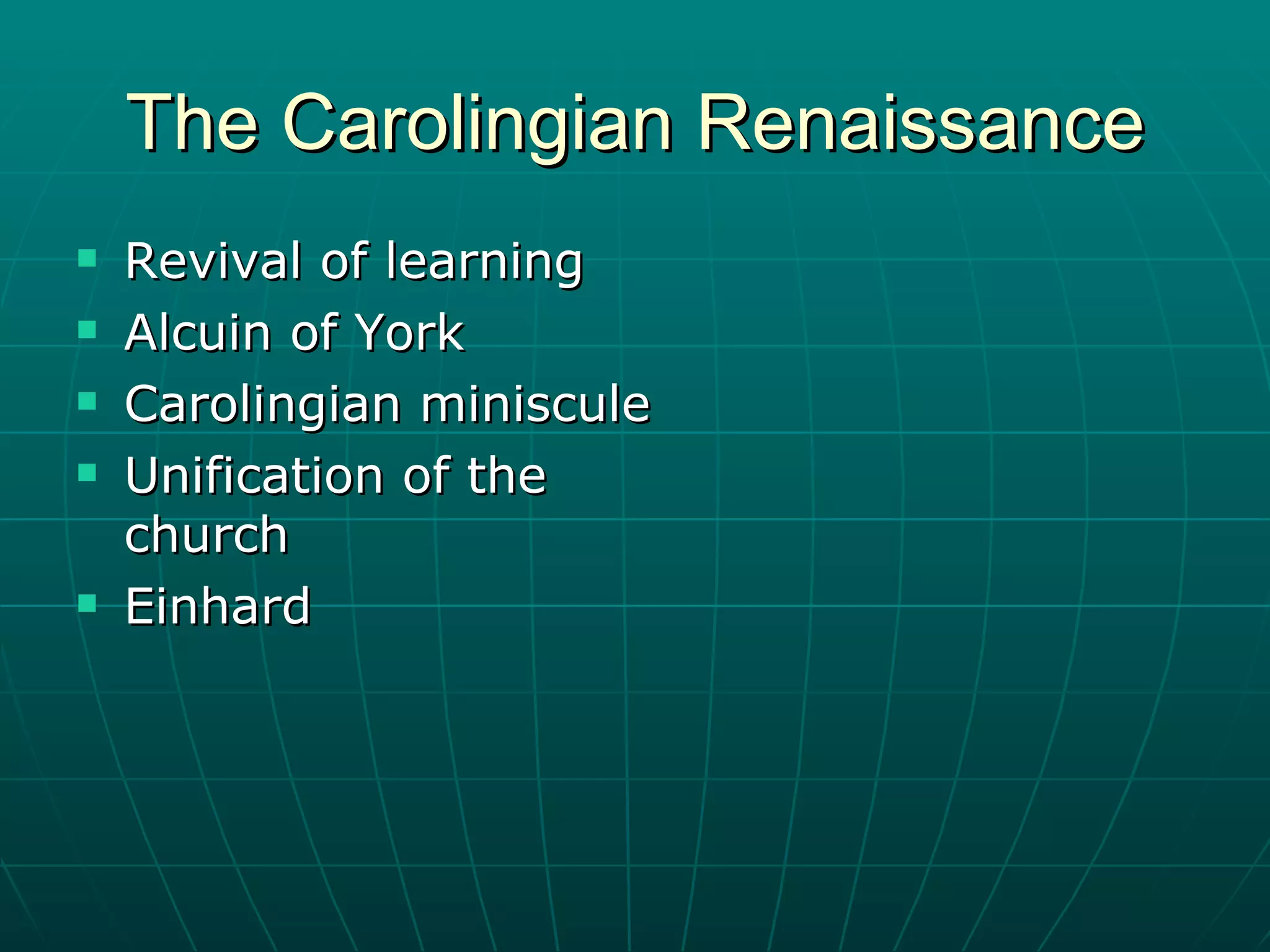
The Carolingian Renaissance Revival of learning Alcuin of York Carolingian miniscule Unification of the church Einhard
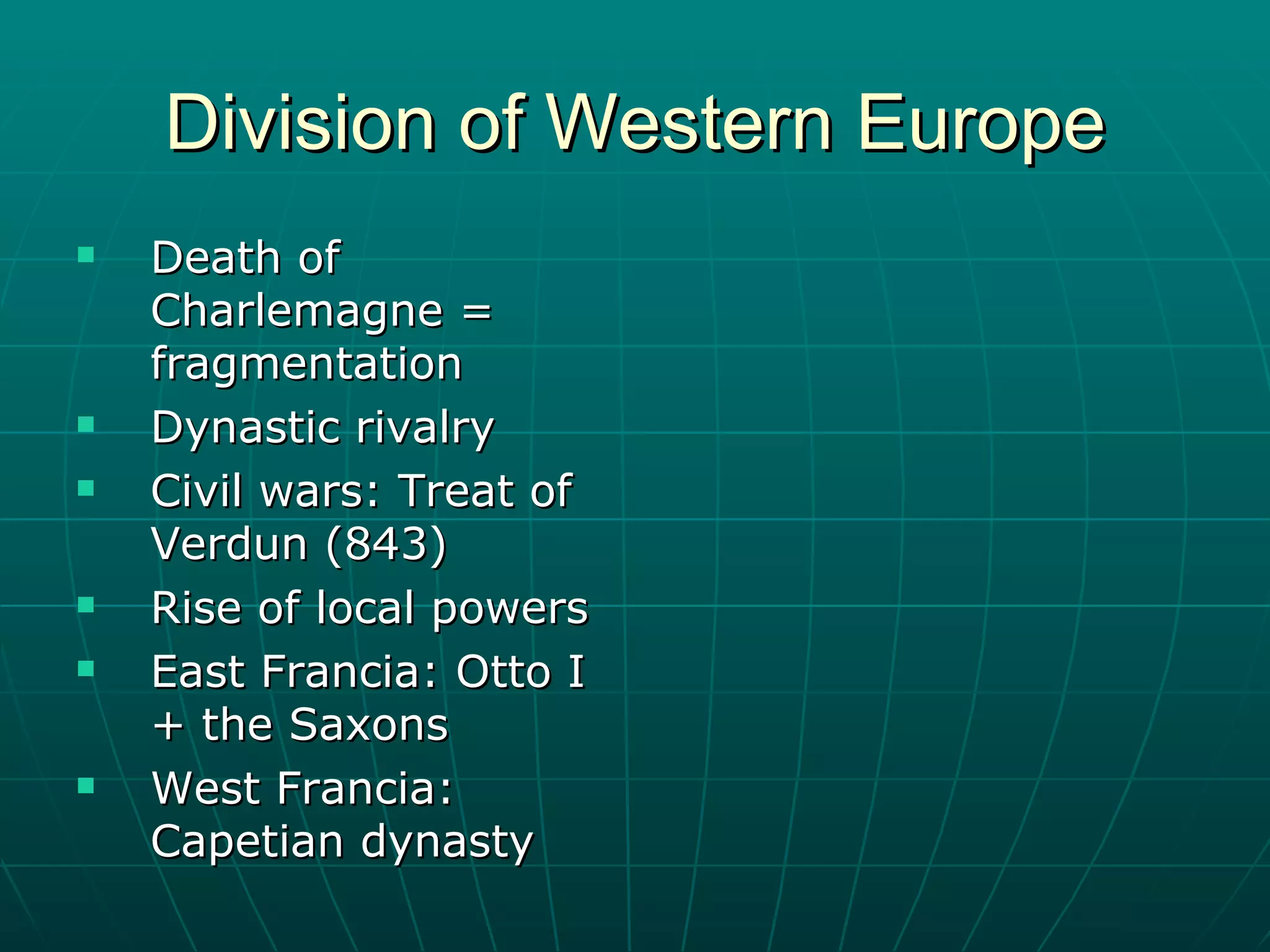
Division of Western Europe Death of Charlemagne = fragmentation Dynastic rivalry Civil wars: Treat of Verdun (843) Rise of local powers East Francia: Otto I + the Saxons West Francia: Capetian dynasty
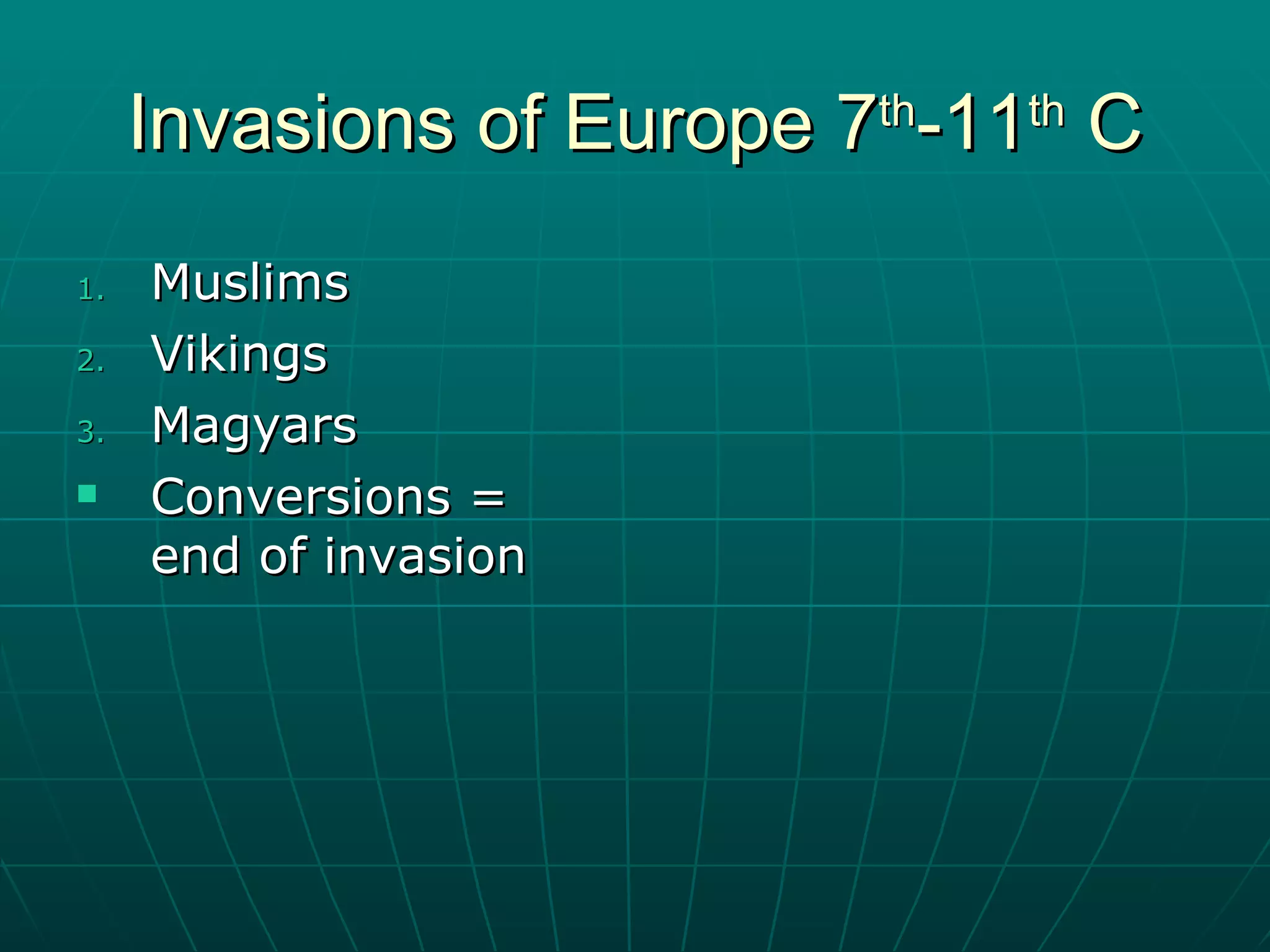
Invasions of Europe 7 th -11 th  C Muslims Vikings Magyars Conversions = end of invasion
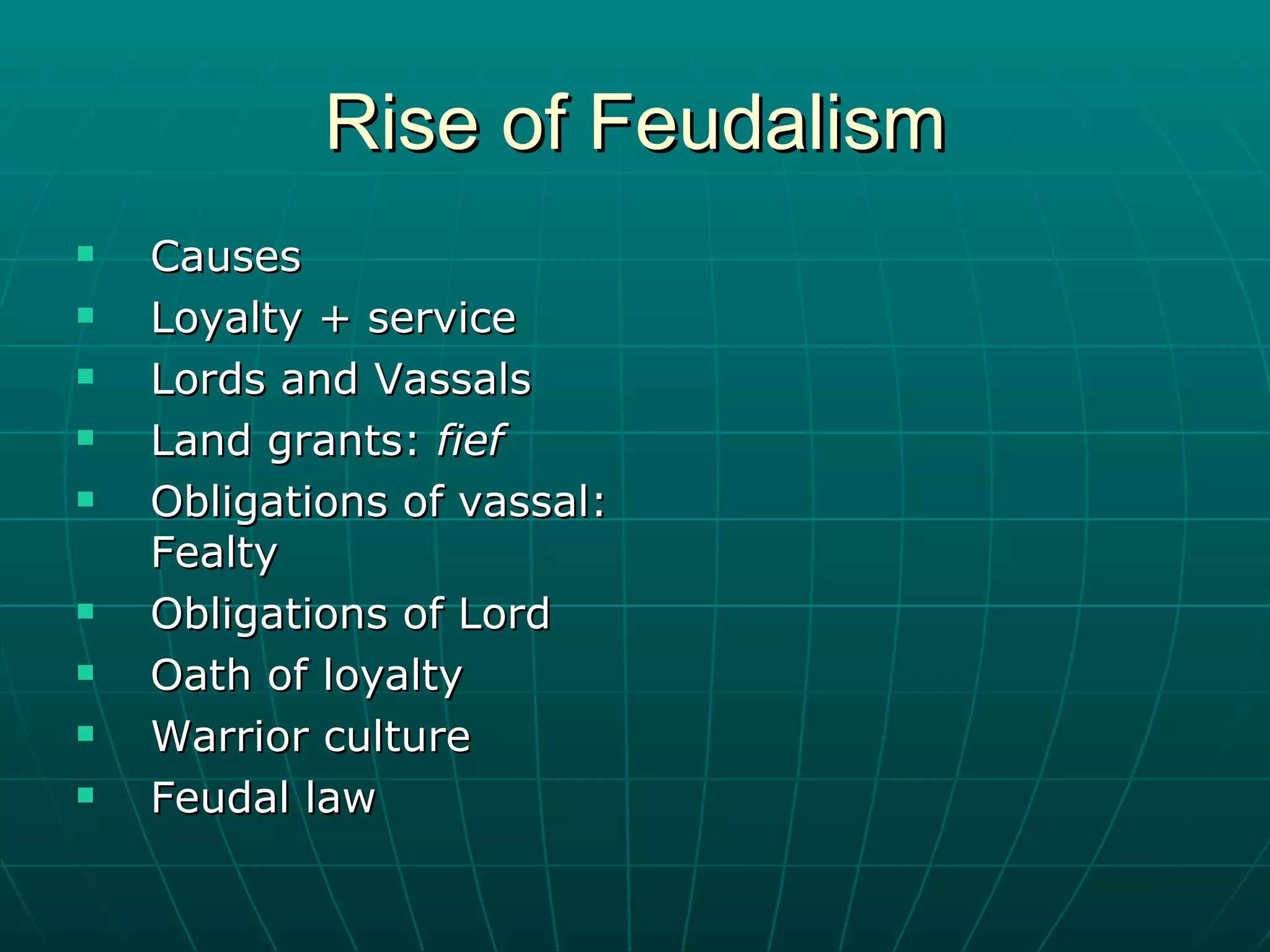
Rise of Feudalism Causes  Loyalty + service Lords and Vassals Land grants:  fief Obligations of vassal: Fealty Obligations of Lord Oath of loyalty Warrior culture Feudal law

Lecture13 empiresandborderlandsedited

  • 1.
    Empires and Borderlands of the Early Middle Ages
  • 2.
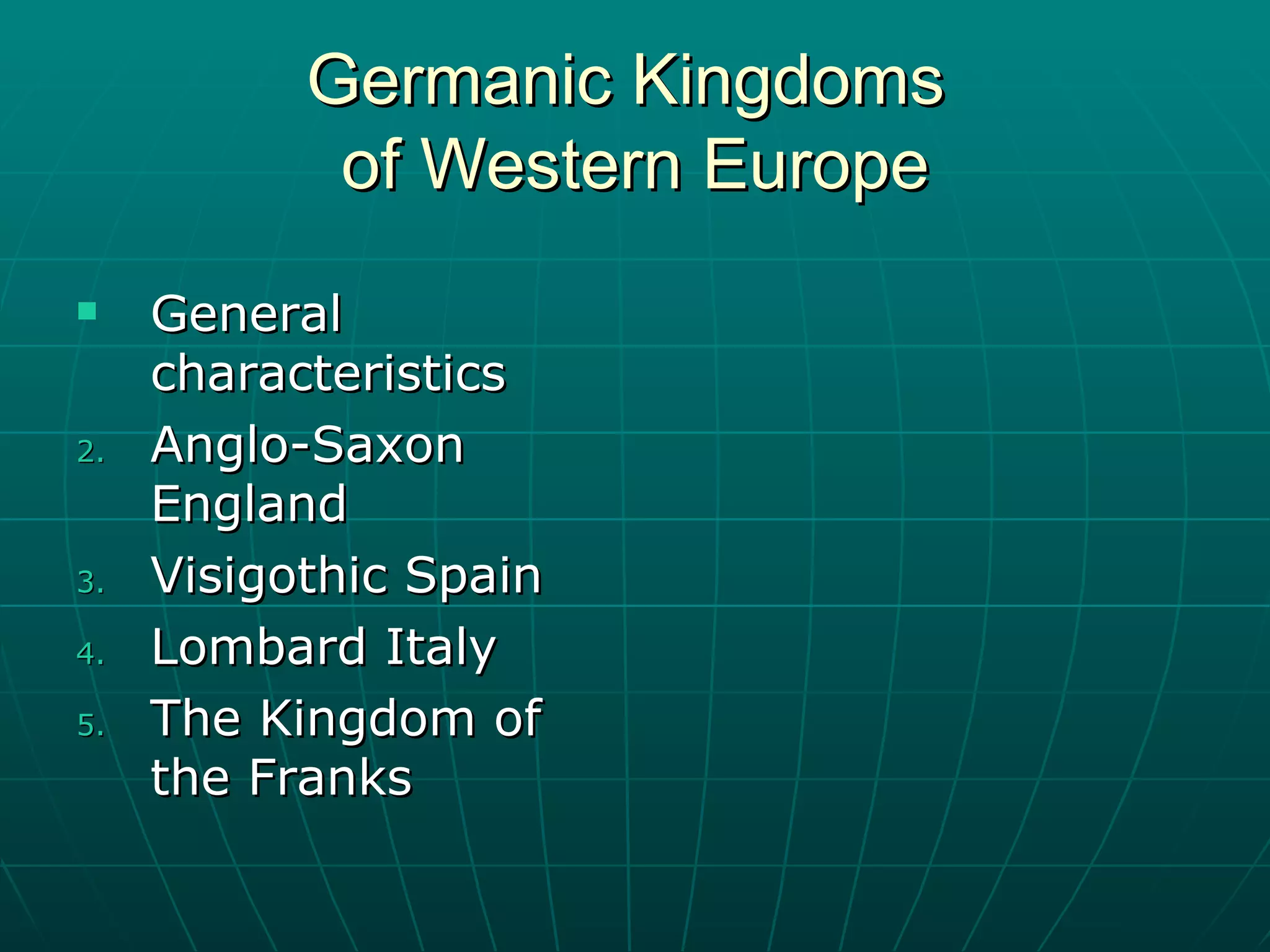
    Germanic Kingdoms of Western Europe General characteristics Anglo-Saxon England Visigothic Spain Lombard Italy The Kingdom of the Franks
  • 3.
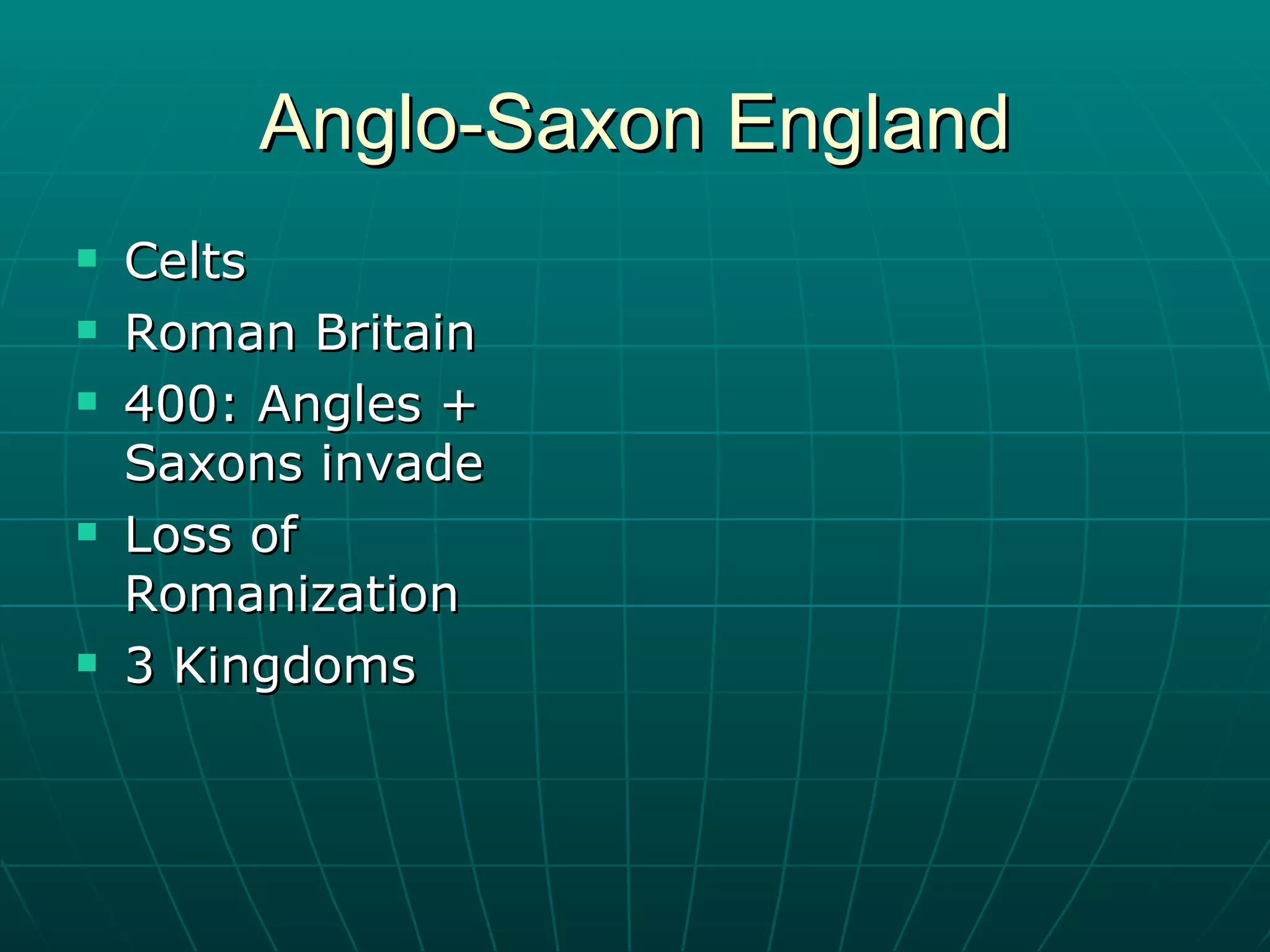
    Anglo-Saxon England CeltsRoman Britain 400: Angles + Saxons invade Loss of Romanization 3 Kingdoms
  • 4.
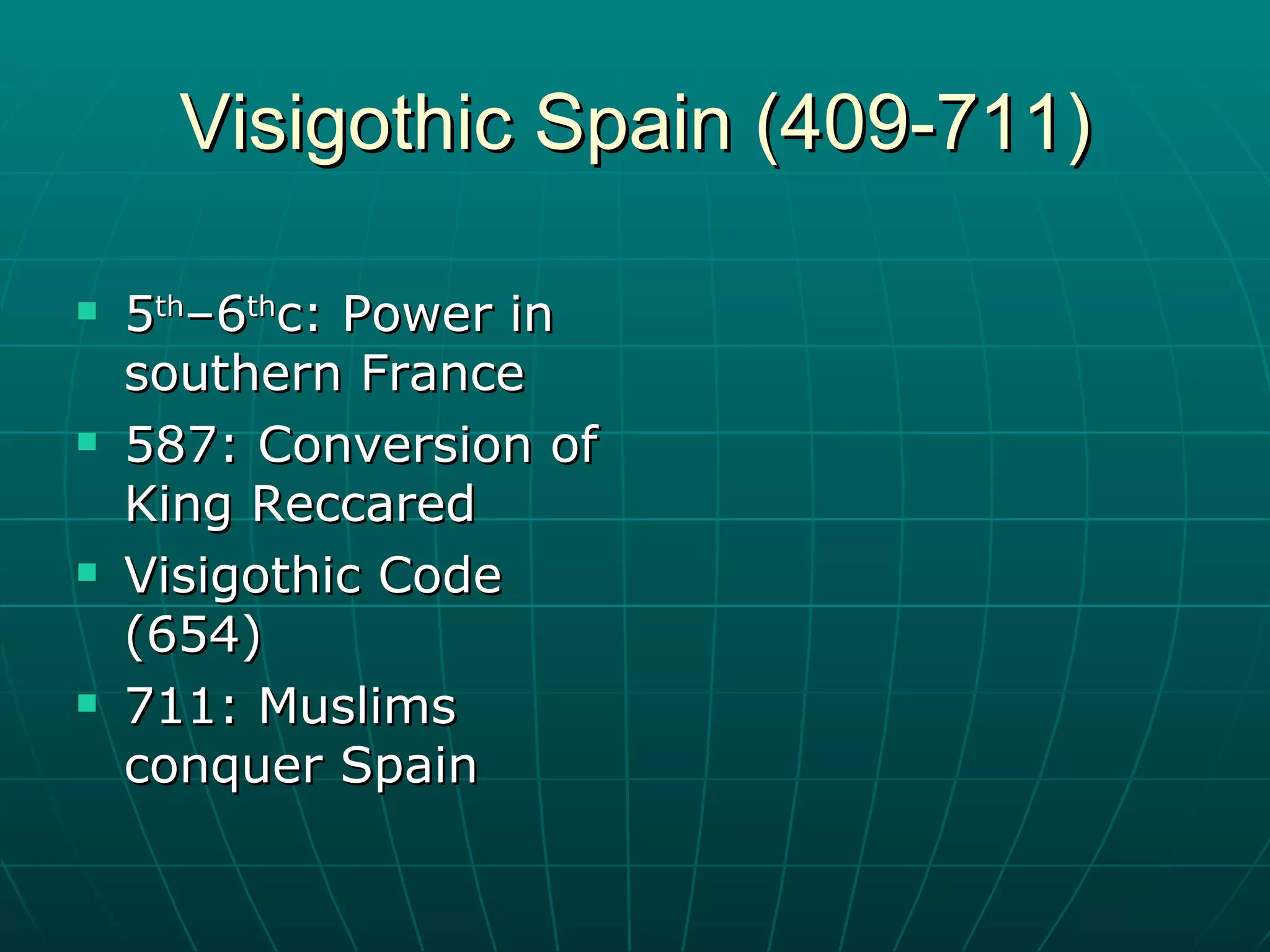
    Visigothic Spain (409-711)5 th –6 th c: Power in southern France 587: Conversion of King Reccared Visigothic Code (654) 711: Muslims conquer Spain
  • 5.
    Lombard Italy (568-774)Alboin + Invasion of Italy (568) Byzantine loss of power Queen Theodelinda: Orthodox Christianity Fragmentation = Frankish conquest (774)
  • 6.
    The Kingdom ofthe Franks Merovingian dynasty (476–750) Conversion of Clovis Salic Law (508-511) Death of Clovis = civil wars Rise of “Mayors of the Palace” Decline of urban life
  • 7.
    Growth of thePapacy Decline of Byzantine Power Frankish-Papal alliance Revival: Gregory the Great Monasteries + Missionaries
  • 8.
    Converting the Anglo-SaxonsAnglo-Saxon paganism Gregory the Great: Missions from Rome St Augustine Strategy: gentle persuasion Source: Bede
  • 9.
    Converting the IrishCeltic religion Palladius: convert + reform St. Patrick + 5 th C Missions Growth of monasteries
  • 10.
    Monastery: Center ofLearning St. Benedict Rise in power Library + Scriptorium Illuminated manuscripts Growth of education
  • 11.
    The Carolingian EmpirePepin the Short Charlemagne: classical to medieval 3 classes: 1. Peasants (workers) 2. Nobles (fighters) 3. Clergy (educated + powerful)
  • 12.
    Reign of CharlemagnePolicy of expansion Goal of Christianization Coronation of Charlemagne Divisions of Frankish Kingdom Establishing loyalty Commerce + trade
  • 13.
    The Carolingian RenaissanceRevival of learning Alcuin of York Carolingian miniscule Unification of the church Einhard
  • 14.
    Division of WesternEurope Death of Charlemagne = fragmentation Dynastic rivalry Civil wars: Treat of Verdun (843) Rise of local powers East Francia: Otto I + the Saxons West Francia: Capetian dynasty
  • 15.
    Invasions of Europe7 th -11 th C Muslims Vikings Magyars Conversions = end of invasion
  • 16.
    Rise of FeudalismCauses Loyalty + service Lords and Vassals Land grants: fief Obligations of vassal: Fealty Obligations of Lord Oath of loyalty Warrior culture Feudal law