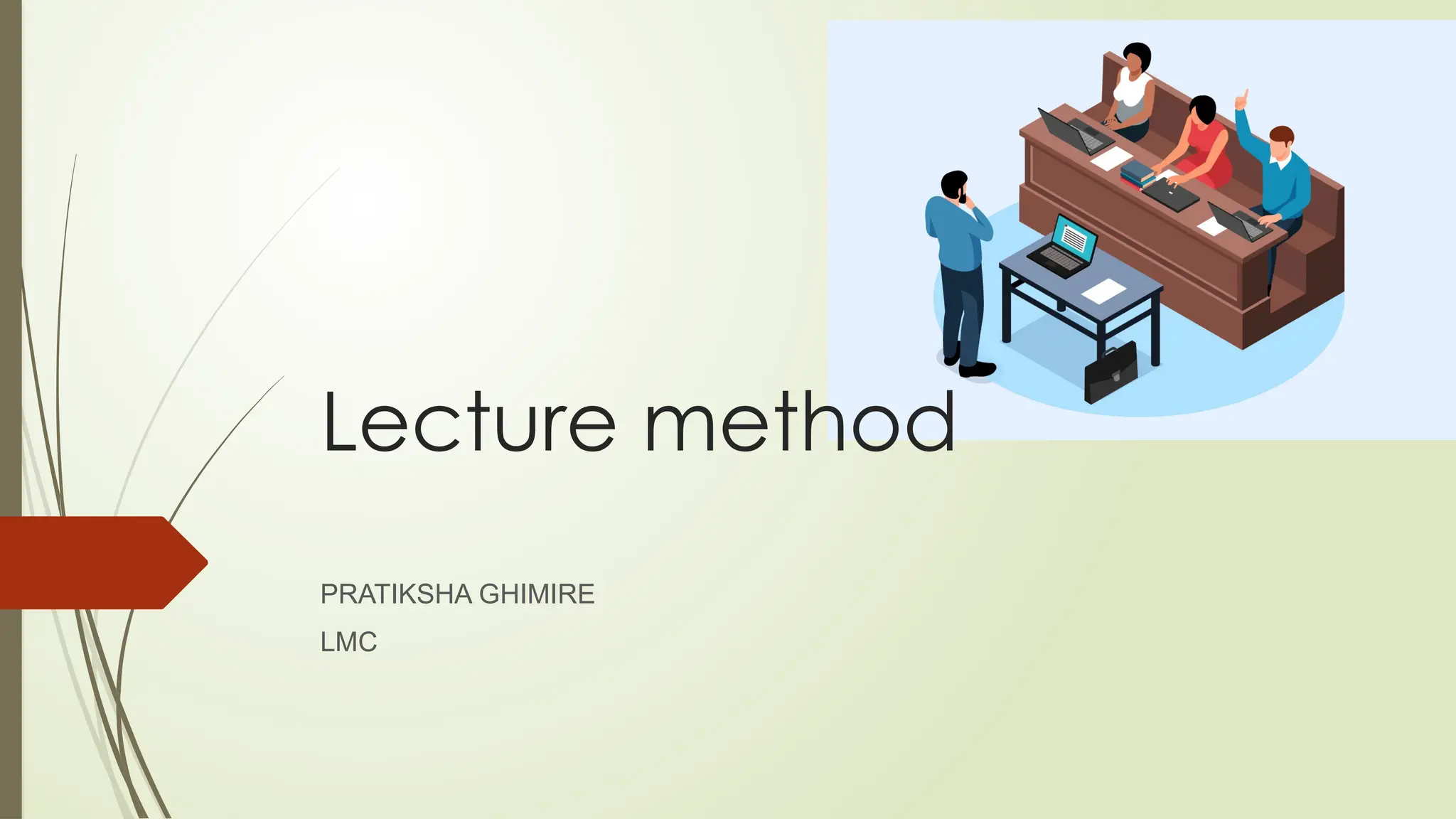
Lecture method
PRATIKSHA GHIMIRE
LMC
Introduction:
It is most conventional method used in formal teachings. In
lecture method, teacher transmit information to a large
number of learner at a time.
Teacher does the most of the talking and student remain
passive most of the time.
Definition:
Lecture is a pedagogical method whereby the teacher
formally delivers carefully planned expository address on
some particular topic
James
Micheal Lee
PURPOSE:
To provide structured knowledge
To motivate and guide in hunting knowledge
To arouse students interest in a subject
Introduce students to new areas of learning
To clarify difficult concepts
To assist in preparing students for discussion
To promote critical thinking
Psychological Principles Leading To
Effective Lecturing
The delivering of lecture should be in an active mode.
The lecture should think from the point of view of the
students.
The lecture should present the subject matter in a
systemic way.
Contd:
The lecture should use the language which is easily
understandable
The lecture should ensure continuous attention and
reflection by the learners by posing challenging situation.
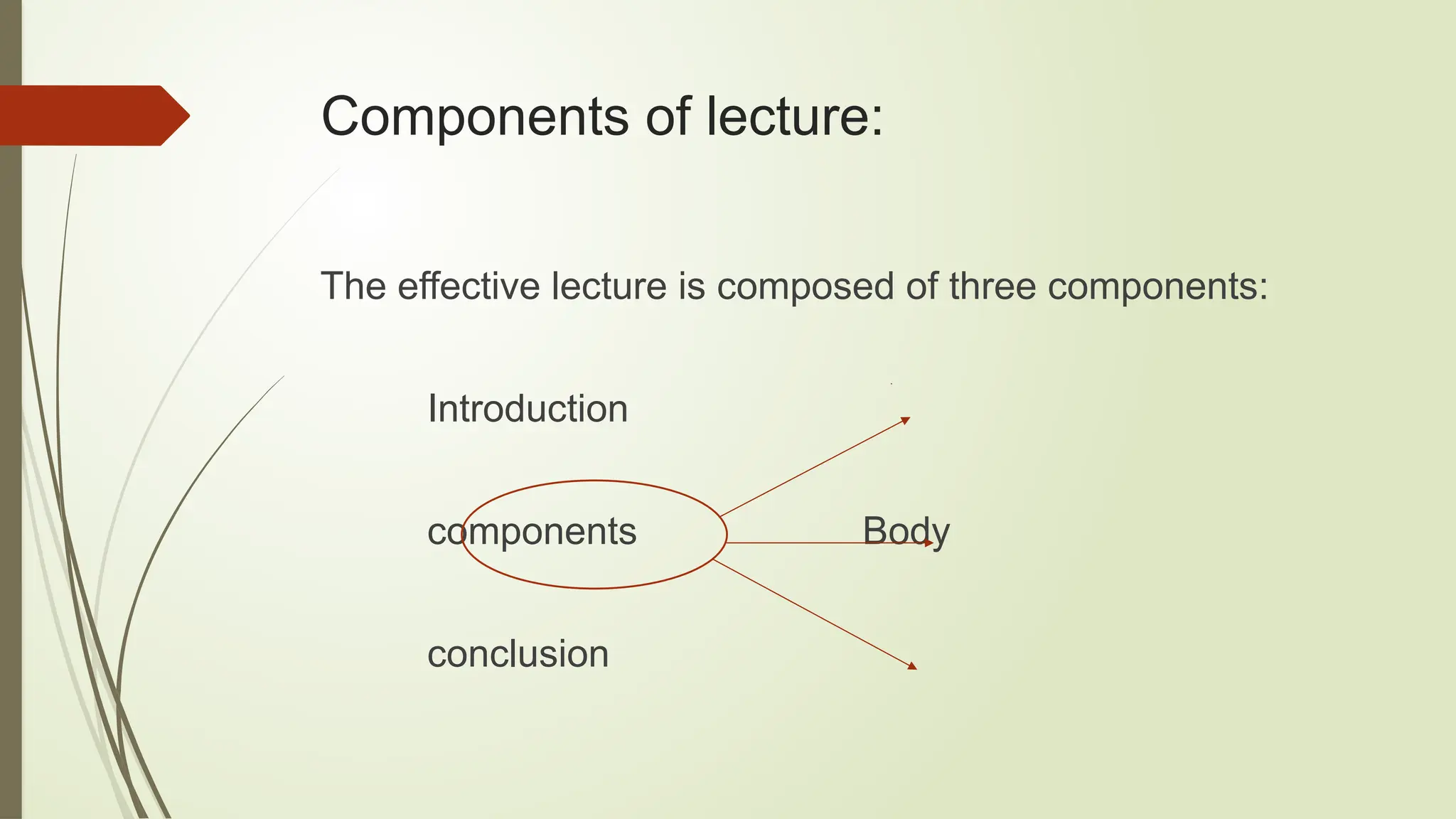
Components of lecture:
The effective lecture is composed of three components:
Introduction
components Body
conclusion
The Introduction:
The introduction usually is the first three to five minutes of
the lecture.
The main purpose is to provide a framework for students
learning, providing the structure for the lecture’s content
information.
It is also necessary to gain student’s attention.
Contd:
It should do the following:
 Establish a Relationship with the audience .
Gain attention and foster motivation
 Prompt awareness of relevant pre-existing knowledge
 Announce lecture topic as title
The body:
The body of the lecture covers the content in an
organized way
The Conclusion
The most frequently neglected component of the lecture
Try to do following in your lecture conclusion: -
Repeat and emphasize main points
 Encourage questions from students
Relate content to previous and subsequent topics
Factors In Planning The Lectures:
Learners factors: the most obvious factors to be
considered is the type of course the class is pursuing as
this will dictate to large extent the level of objectives eg.
Staff nurse , bsc nursing.
Subject matter factors: The domain of the objectives will
exert profound influence over the planning of lecture.
CONTD:
Environmental factors: the exert a practical constraint
over lecture planning as the environment may not contain
such things as power points, chalkboards, OHP, movie
projector, computer LCD etc.
Psychological factors: The organization of the content
must be logical and meaning and the sequence should
progress from simple to complex, from concrete to the
abstract and from known to known.
Types of lecture:
The ideal lecture
Classical lecture
The experiential lecture.( process of learning by doing)
Lecturing technique:
Voluntary dissemination of information or spontaneity
Voice gradation and voice quality
Adequate pacing
Proper body language
Control annoying mannerism
Contd:
Use of audio visual
Simple plan and key points
Feedback from student
Providing further clarification
Time management
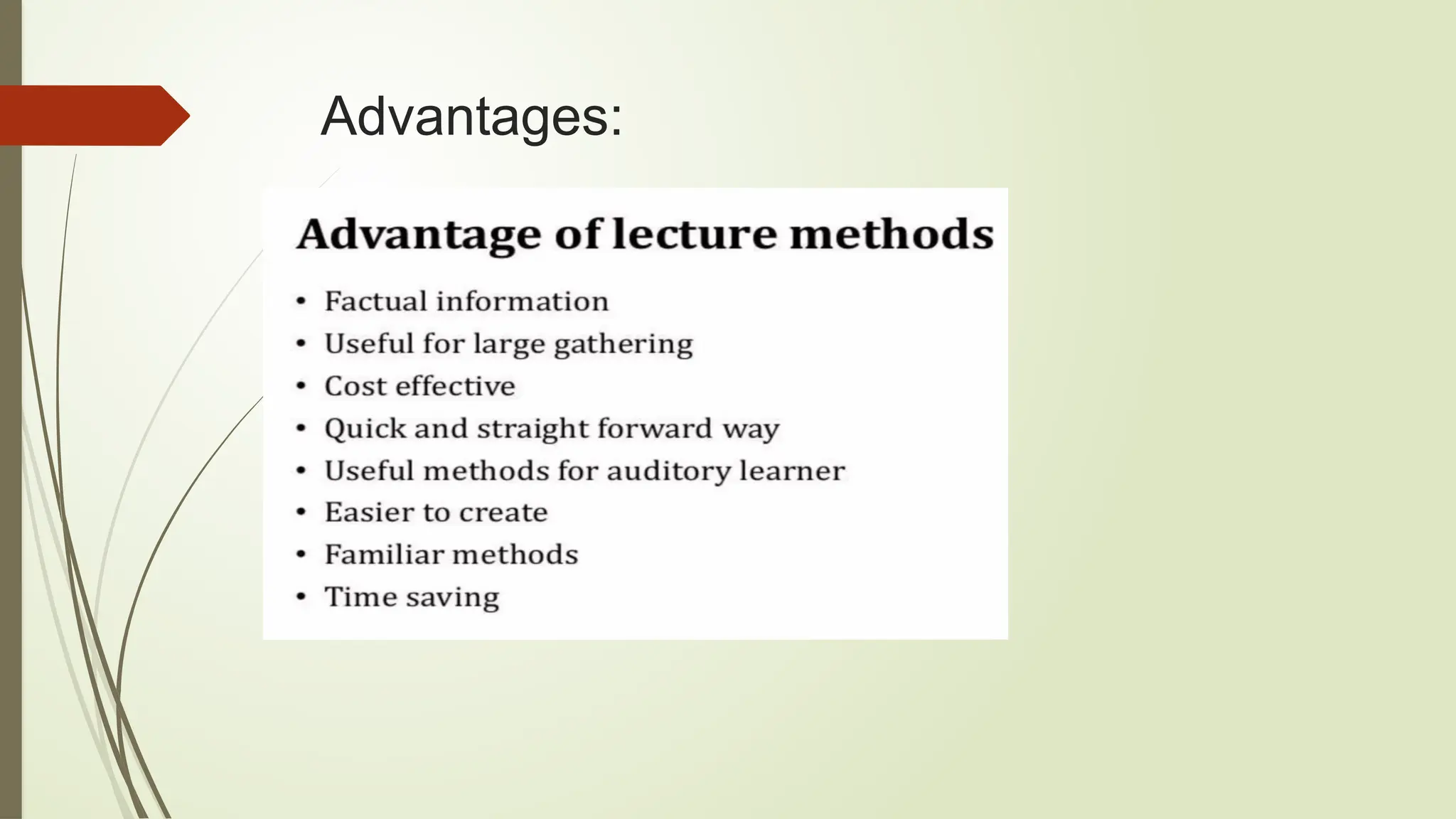
Advantages:
Contd:
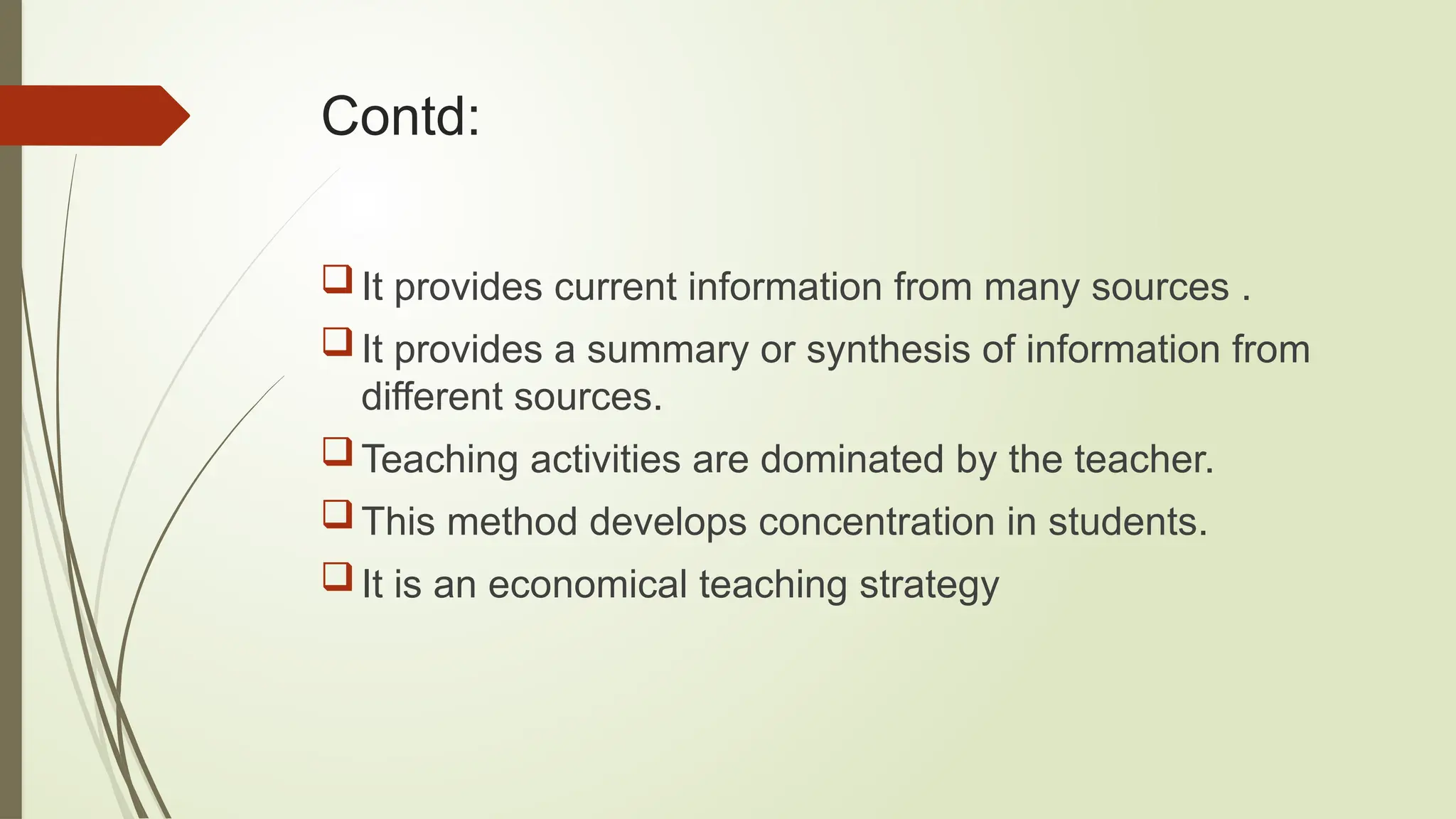
It provides current information from many sources .
It provides a summary or synthesis of information from
different sources.
Teaching activities are dominated by the teacher.
This method develops concentration in students.
It is an economical teaching strategy
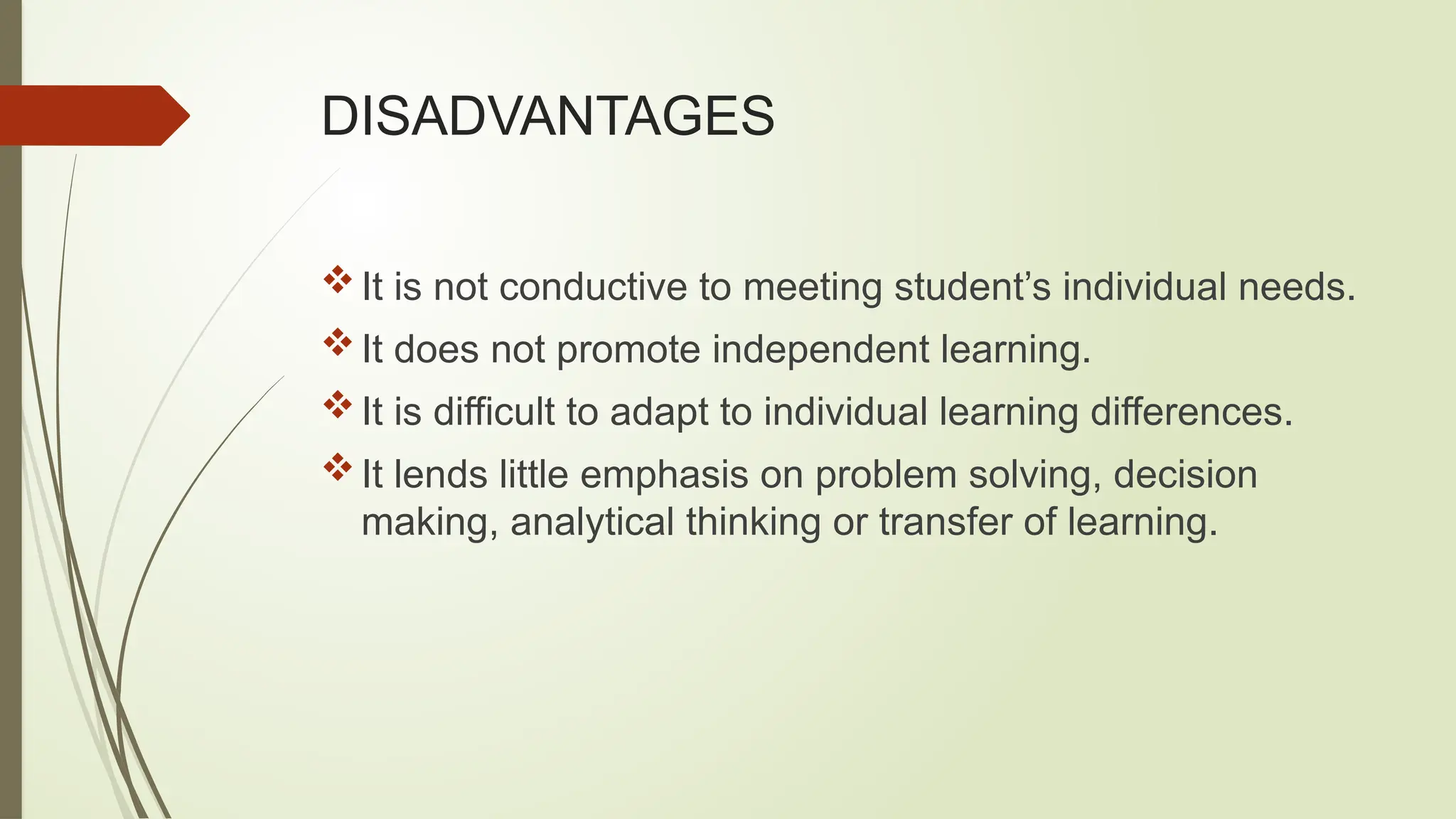
DISADVANTAGES
It is not conductive to meeting student’s individual needs.
It does not promote independent learning.
It is difficult to adapt to individual learning differences.
It lends little emphasis on problem solving, decision
making, analytical thinking or transfer of learning.
Lecture method unit 6 3rd year bsc nursing

Lecture method unit 6 3rd year bsc nursing

  • 1.
  • 2.
    Introduction: It is mostconventional method used in formal teachings. In lecture method, teacher transmit information to a large number of learner at a time. Teacher does the most of the talking and student remain passive most of the time.
  • 3.
    Definition: Lecture is apedagogical method whereby the teacher formally delivers carefully planned expository address on some particular topic James Micheal Lee
  • 4.
    PURPOSE: To provide structuredknowledge To motivate and guide in hunting knowledge To arouse students interest in a subject Introduce students to new areas of learning To clarify difficult concepts To assist in preparing students for discussion To promote critical thinking
  • 5.
    Psychological Principles LeadingTo Effective Lecturing The delivering of lecture should be in an active mode. The lecture should think from the point of view of the students. The lecture should present the subject matter in a systemic way.
  • 6.
    Contd: The lecture shoulduse the language which is easily understandable The lecture should ensure continuous attention and reflection by the learners by posing challenging situation.
  • 7.
    Components of lecture: Theeffective lecture is composed of three components: Introduction components Body conclusion
  • 8.
    The Introduction: The introductionusually is the first three to five minutes of the lecture. The main purpose is to provide a framework for students learning, providing the structure for the lecture’s content information. It is also necessary to gain student’s attention.
  • 9.
    Contd: It should dothe following:  Establish a Relationship with the audience . Gain attention and foster motivation  Prompt awareness of relevant pre-existing knowledge  Announce lecture topic as title
  • 10.
    The body: The bodyof the lecture covers the content in an organized way
  • 11.
    The Conclusion The mostfrequently neglected component of the lecture Try to do following in your lecture conclusion: - Repeat and emphasize main points  Encourage questions from students Relate content to previous and subsequent topics
  • 12.
    Factors In PlanningThe Lectures: Learners factors: the most obvious factors to be considered is the type of course the class is pursuing as this will dictate to large extent the level of objectives eg. Staff nurse , bsc nursing. Subject matter factors: The domain of the objectives will exert profound influence over the planning of lecture.
  • 13.
    CONTD: Environmental factors: theexert a practical constraint over lecture planning as the environment may not contain such things as power points, chalkboards, OHP, movie projector, computer LCD etc. Psychological factors: The organization of the content must be logical and meaning and the sequence should progress from simple to complex, from concrete to the abstract and from known to known.
  • 14.
    Types of lecture: Theideal lecture Classical lecture The experiential lecture.( process of learning by doing)
  • 15.
    Lecturing technique: Voluntary disseminationof information or spontaneity Voice gradation and voice quality Adequate pacing Proper body language Control annoying mannerism
  • 16.
    Contd: Use of audiovisual Simple plan and key points Feedback from student Providing further clarification Time management
  • 17.
  • 18.
    Contd: It provides currentinformation from many sources . It provides a summary or synthesis of information from different sources. Teaching activities are dominated by the teacher. This method develops concentration in students. It is an economical teaching strategy
  • 19.
    DISADVANTAGES It is notconductive to meeting student’s individual needs. It does not promote independent learning. It is difficult to adapt to individual learning differences. It lends little emphasis on problem solving, decision making, analytical thinking or transfer of learning.