Lecture Method
Introduction
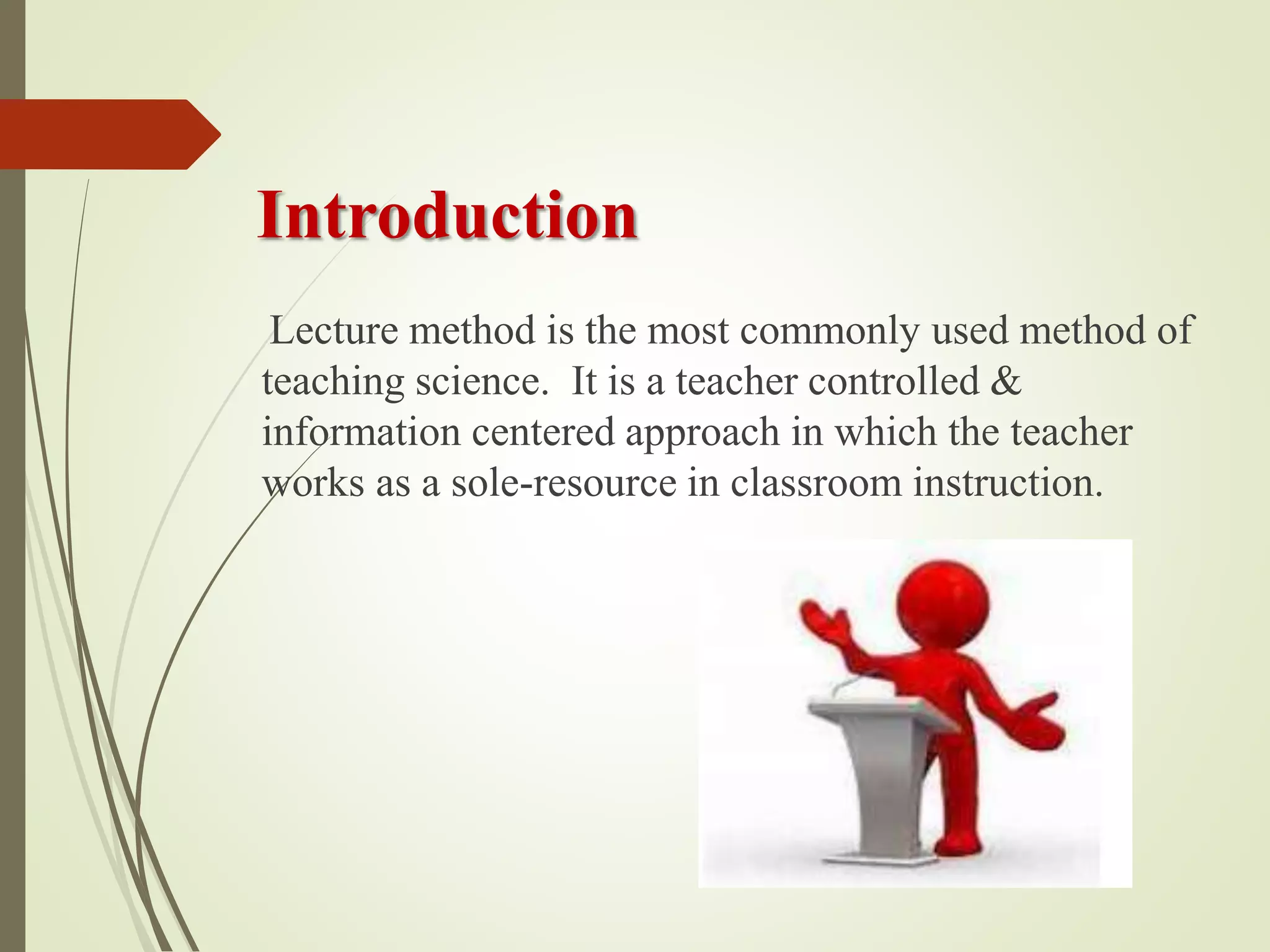
Lecture method is the most commonly used method of
teaching science. It is a teacher controlled &
information centered approach in which the teacher
works as a sole-resource in classroom instruction.
In lecture method only the teacher
talks & students a passive listeners.
Since the student do not actively
participate in this method of teaching,
this is a teacher-controlled and
information centered method.
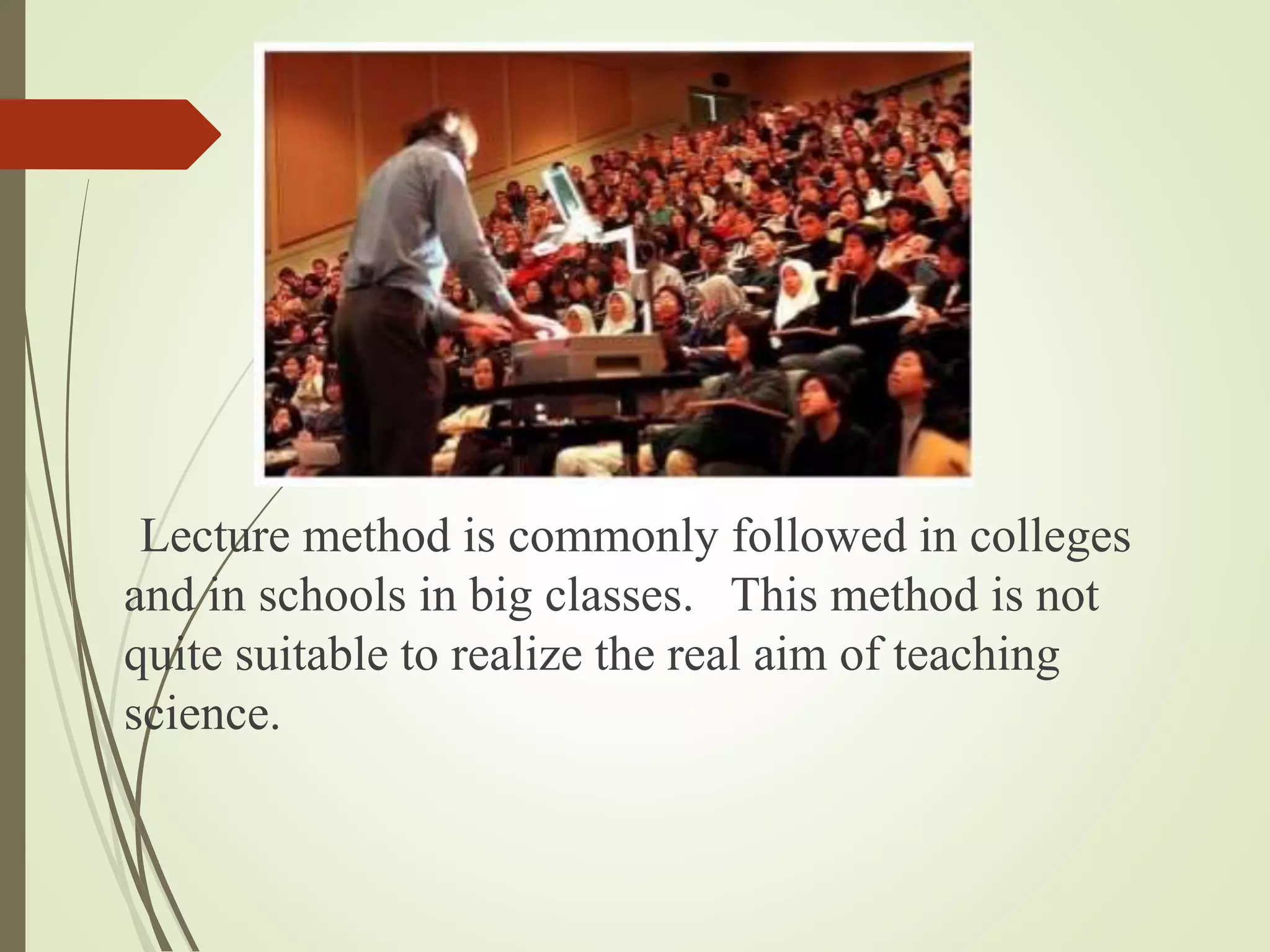
Lecture method is commonly followed in colleges
and in schools in big classes. This method is not
quite suitable to realize the real aim of teaching
science.
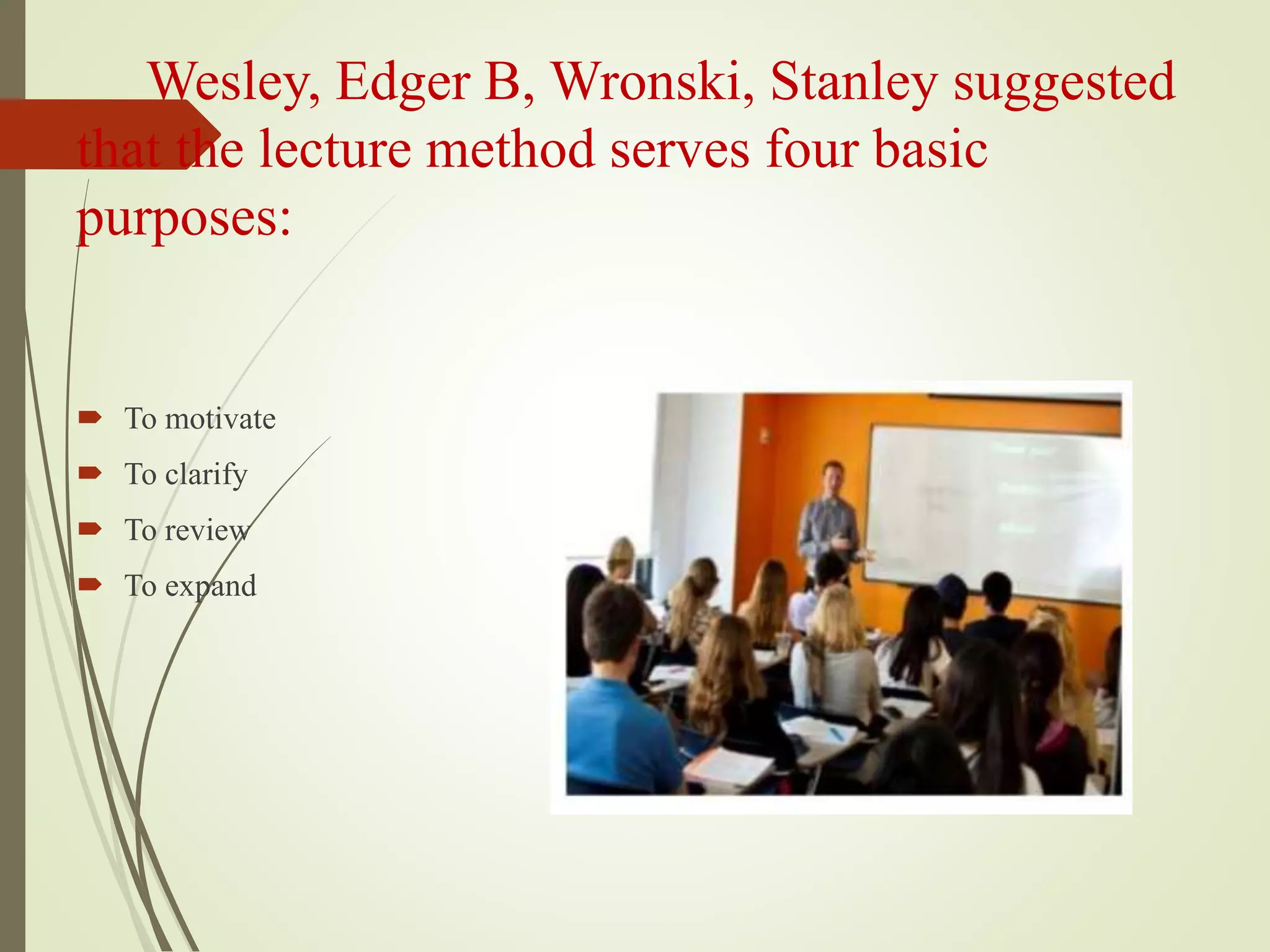
Wesley, Edger B, Wronski, Stanley suggested
that the lecture method serves four basic
purposes:
 To motivate
 To clarify
 To review
 To expand
PLANNING THE LECTURE
Before starting to prepare a lecture, the teacher must be able
to answer for basic questions:
 Who is your audience ? - Who
 What is the purpose of your lecture ? – Why
 How much time is available - How long
 What is the subject matter ? - What
PURPOSE OF LECTURE
The objectives of lecture may be to,
1. Give general information on a subject
2. Gain acceptance for a new point of view
3. Change basic attitude
4. Teach a particular skill
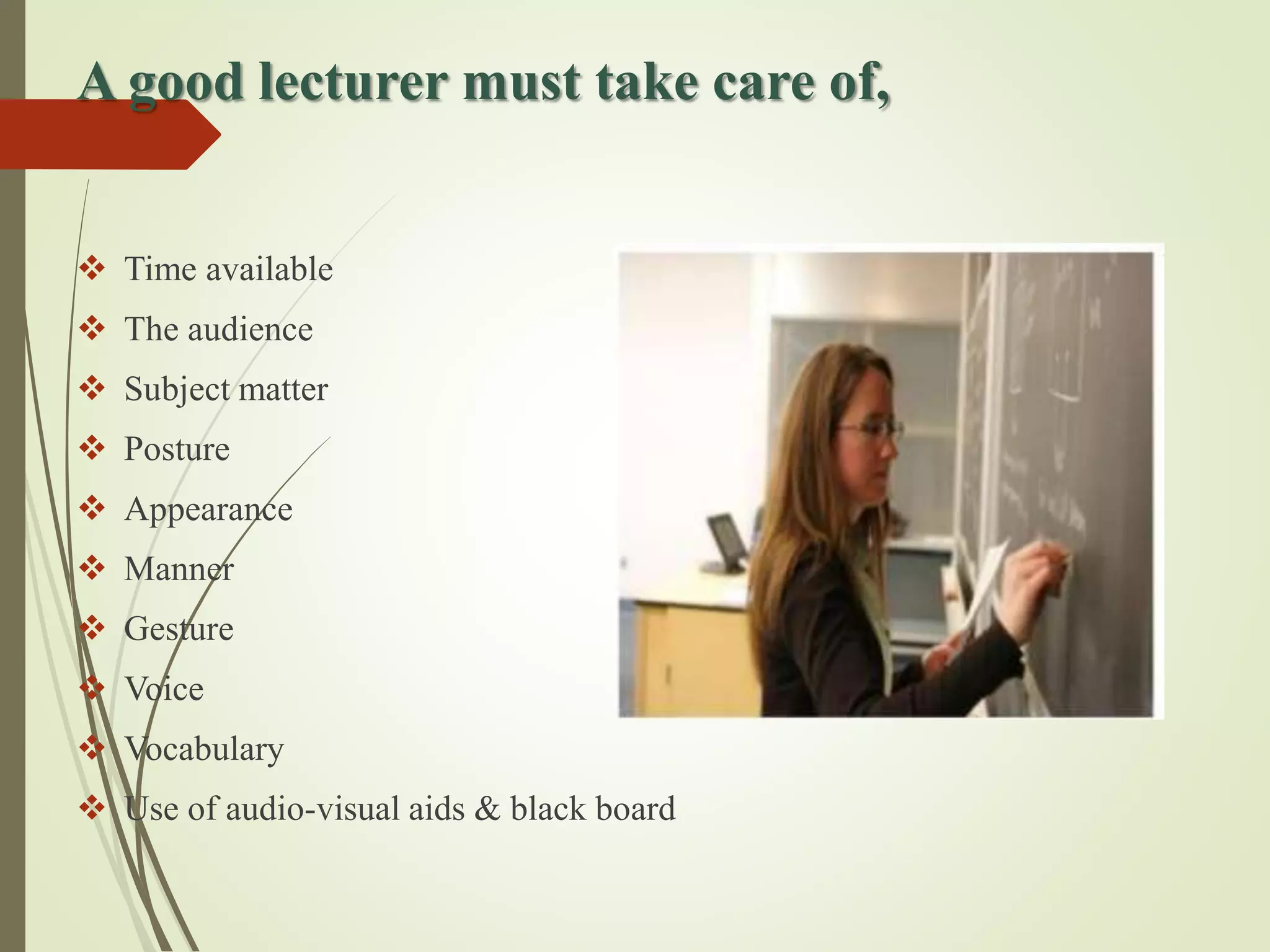
A good lecturer must take care of,
 Time available
 The audience
 Subject matter
 Posture
 Appearance
 Manner
 Gesture
 Voice
 Vocabulary
 Use of audio-visual aids & black board
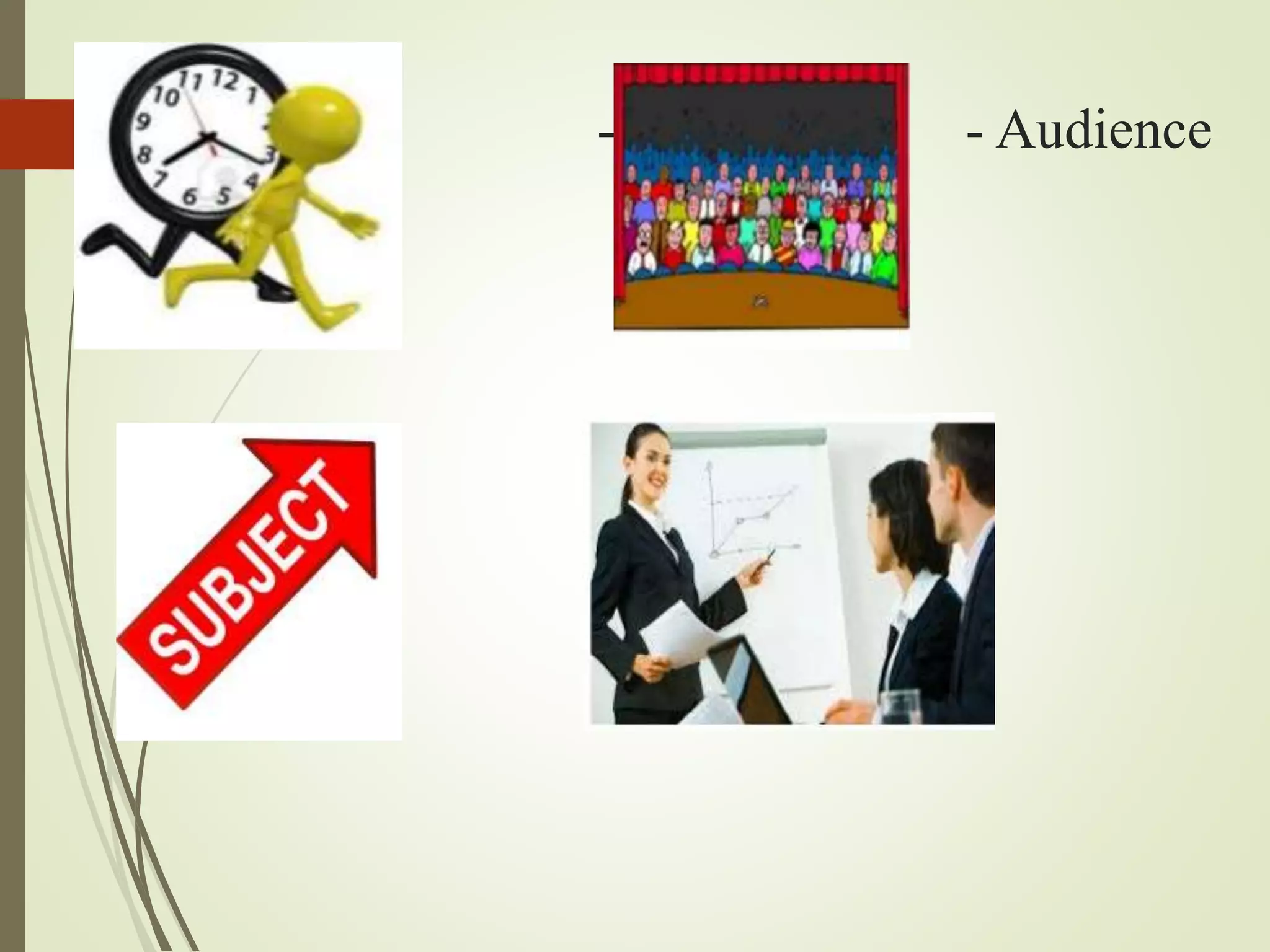
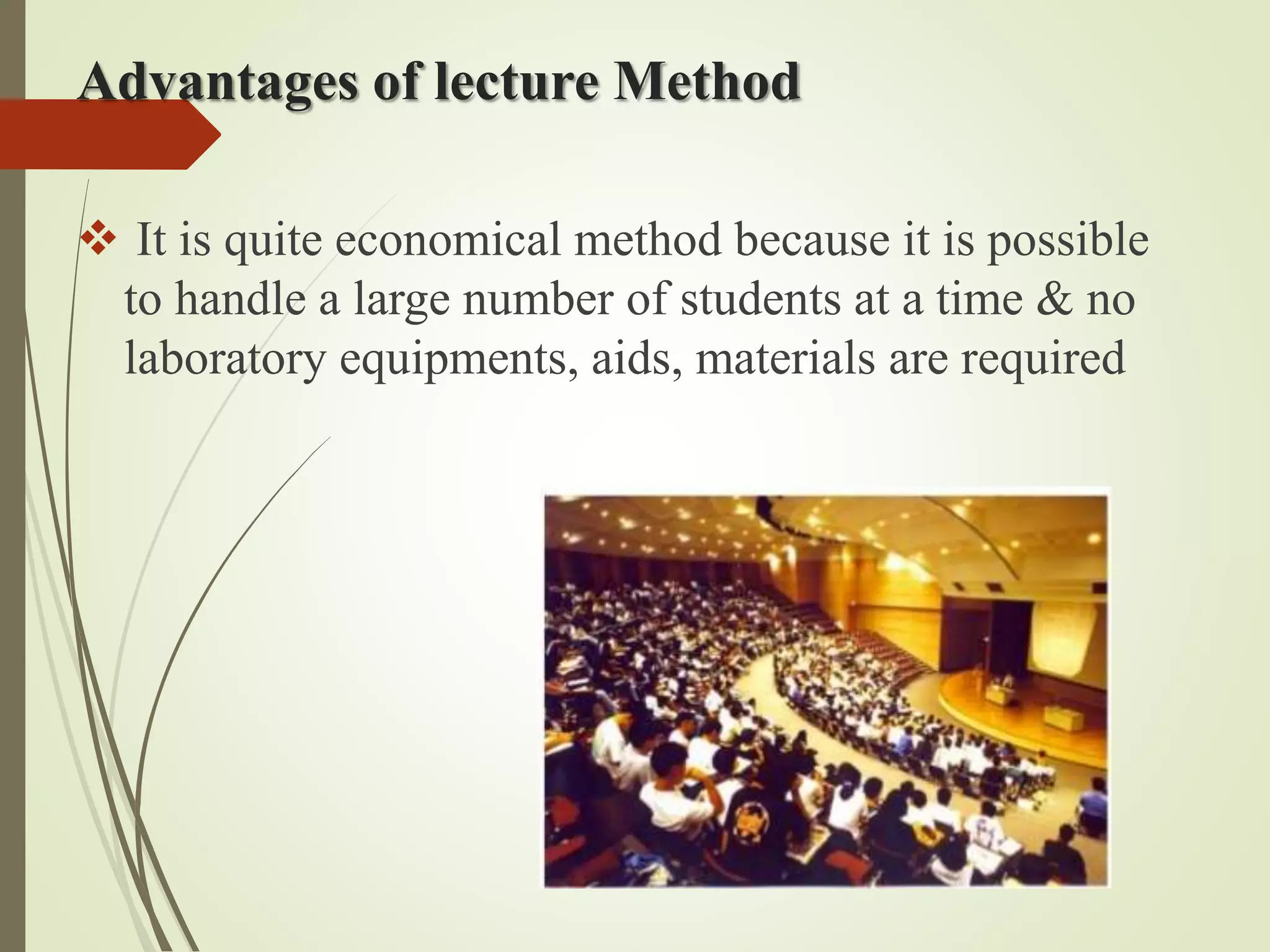
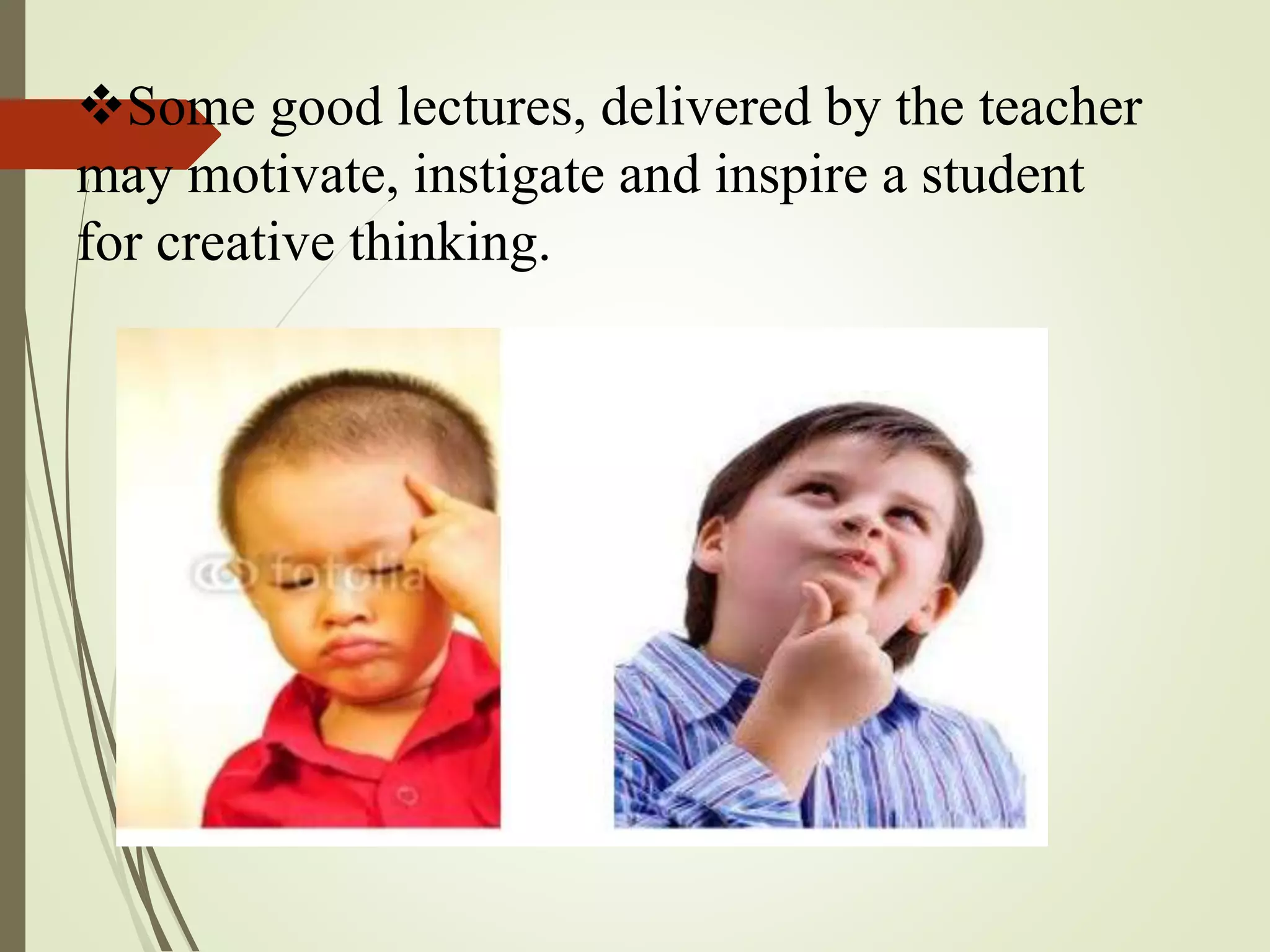
- Time - Audience
Advantages of lecture Method
 It is quite economical method because it is possible
to handle a large number of students at a time & no
laboratory equipments, aids, materials are required
Using this method the knowledge can be
imparted to students quickly & prescribed
syllabus can be covered in short time.
Some good lectures, delivered by the teacher
may motivate, instigate and inspire a student
for creative thinking.
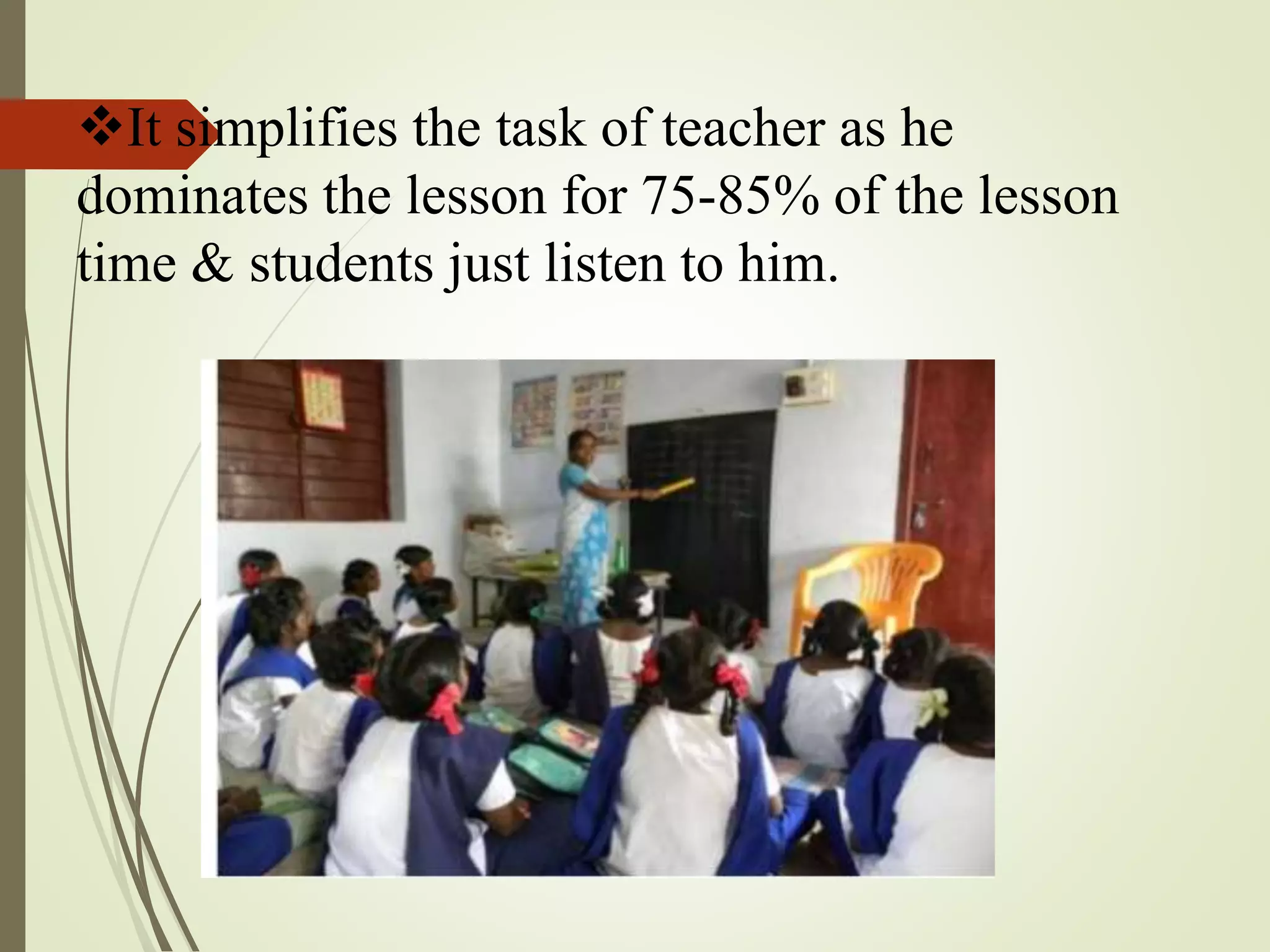
It simplifies the task of teacher as he
dominates the lesson for 75-85% of the lesson
time & students just listen to him.
It is quite attractive & easy to follow and also
by this method teacher can develop his own
style of teaching and exposition.
Disadvantages
 In this method the students participation is
negligible and students become passive
recipients of information.
In this method we are never sure if the
students are concentrating and understanding
the subject matter being taught to them by
teacher.
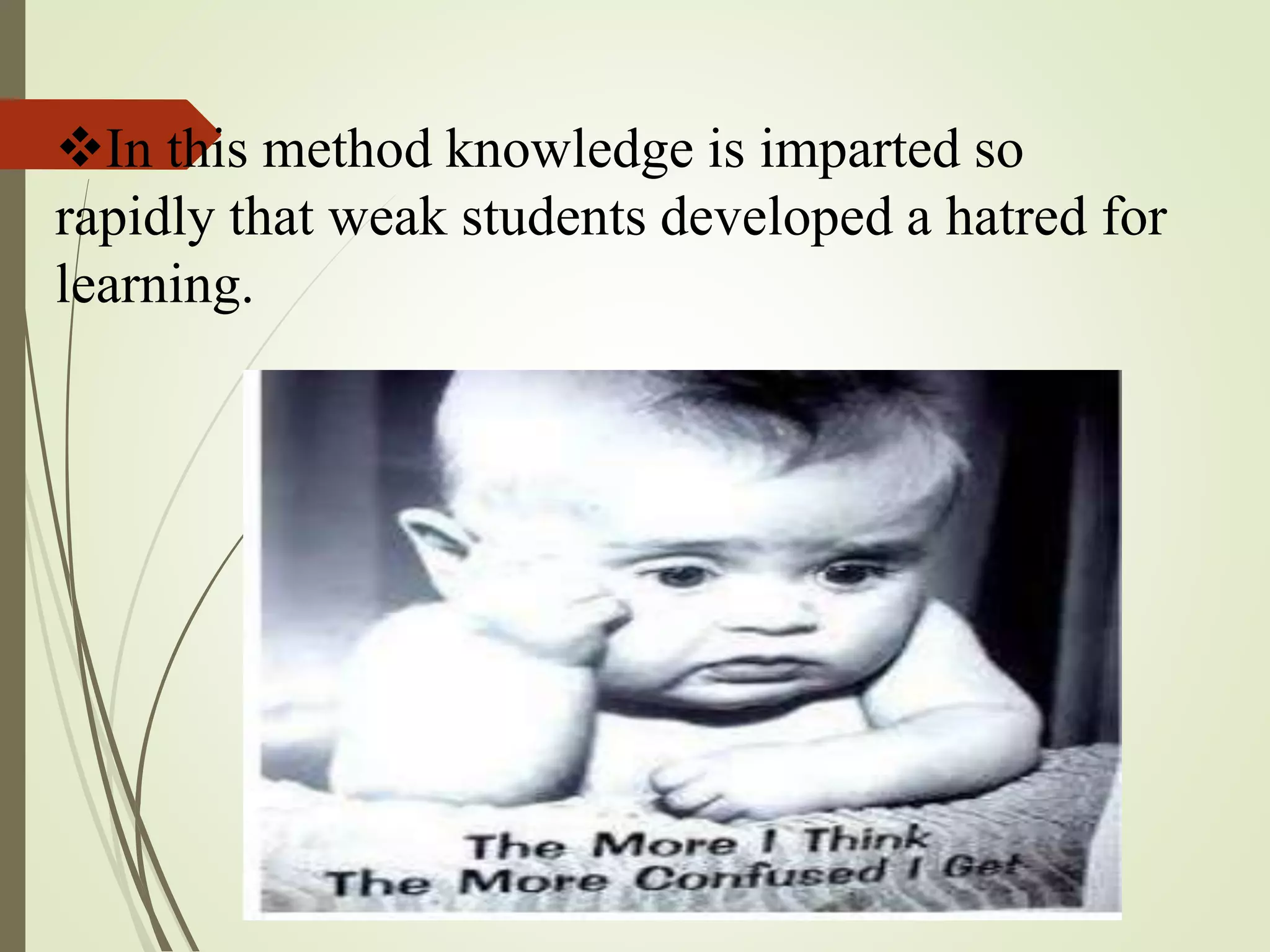
In this method knowledge is imparted so
rapidly that weak students developed a hatred for
learning.
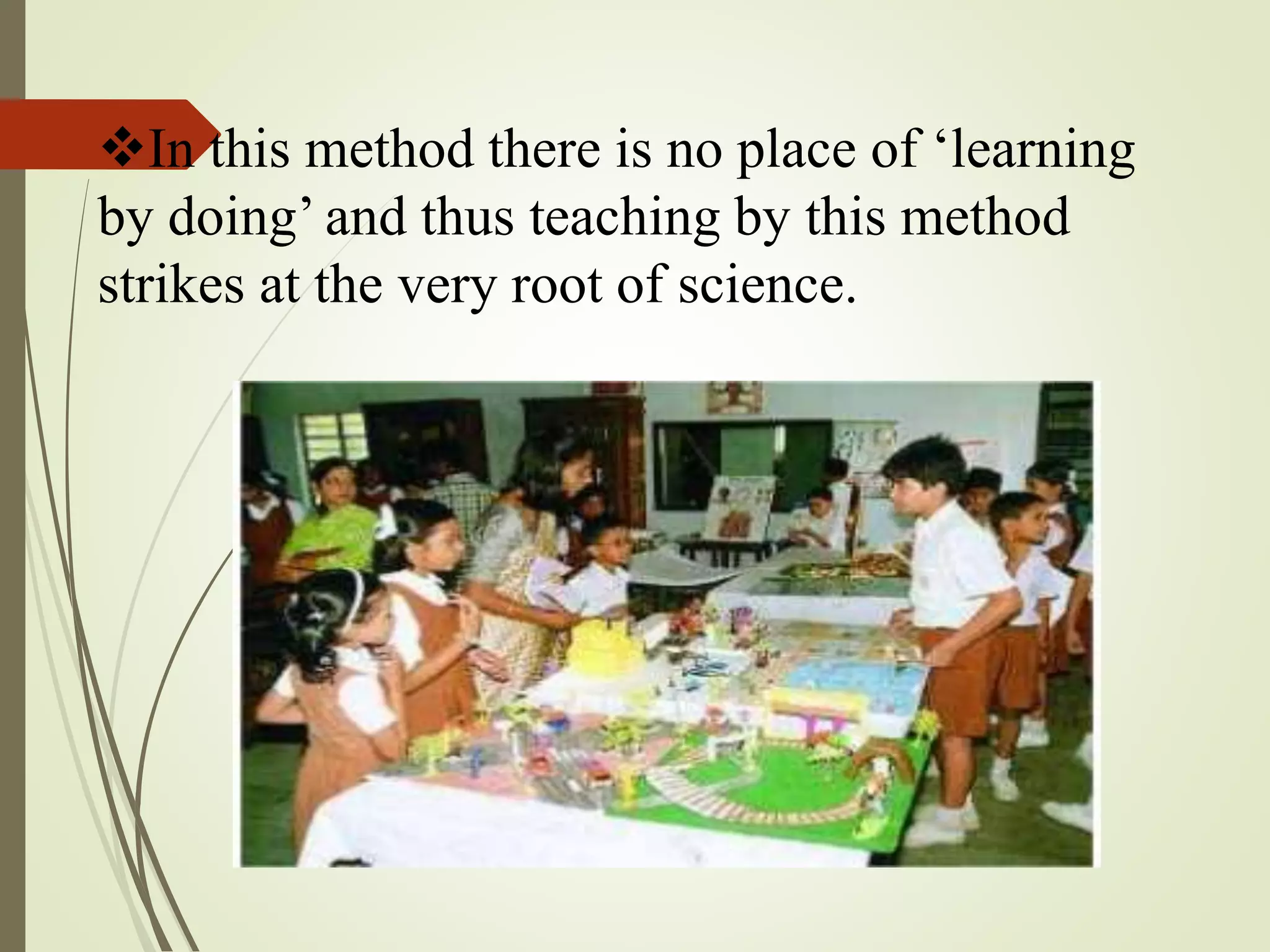
In this method there is no place of ‘learning
by doing’ and thus teaching by this method
strikes at the very root of science.
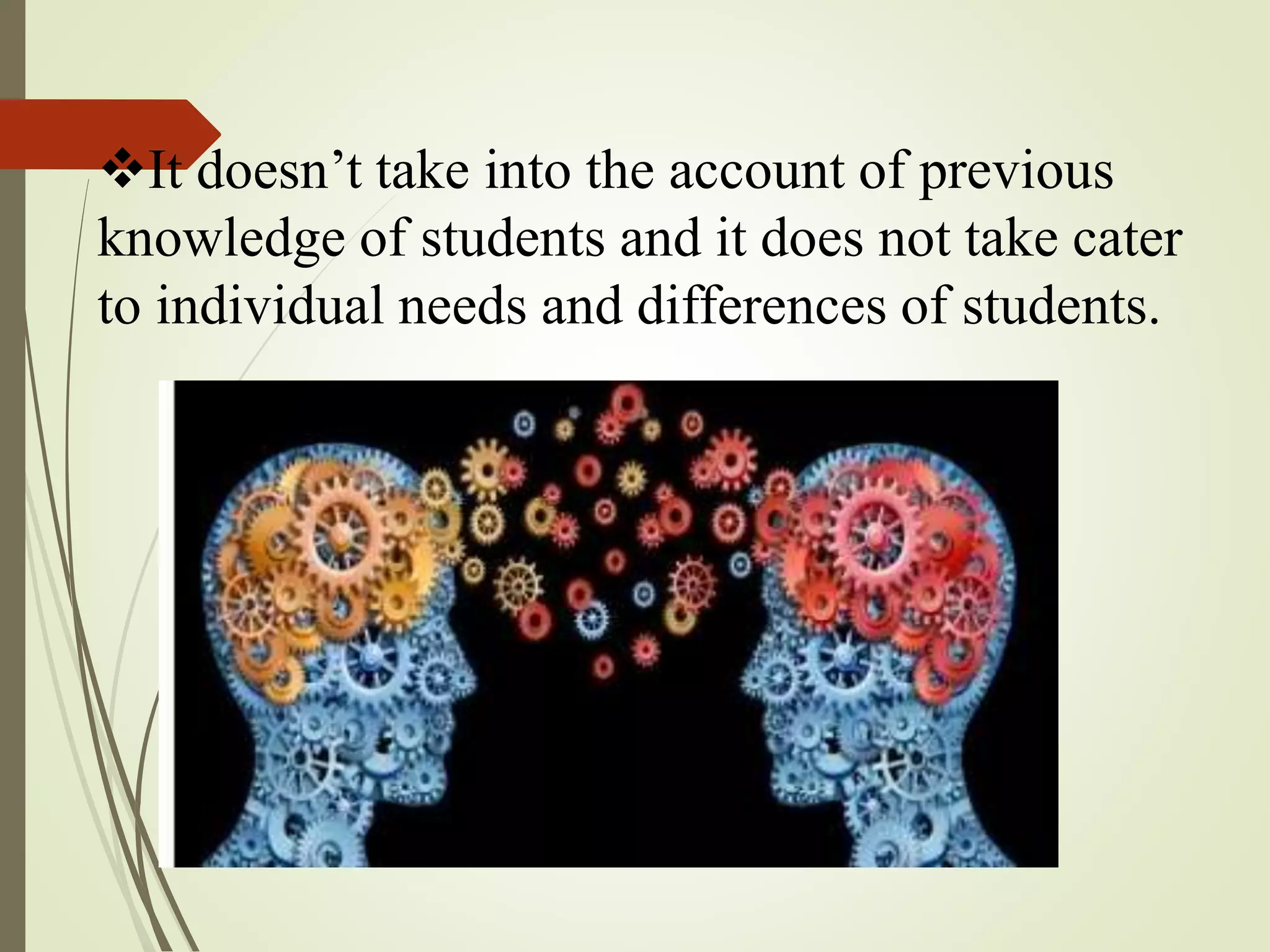
It doesn’t take into the account of previous
knowledge of students and it does not take cater
to individual needs and differences of students.
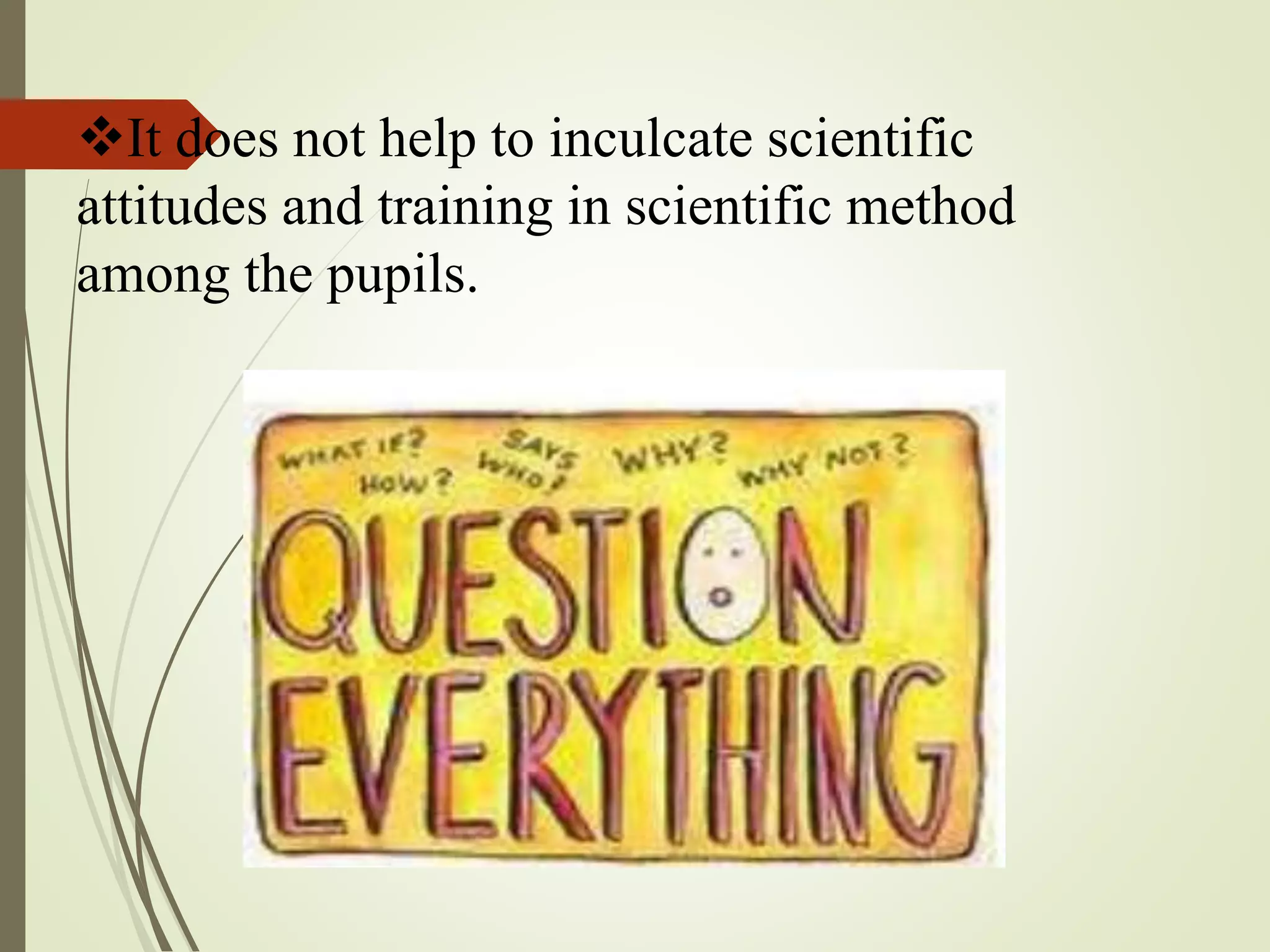
It does not help to inculcate scientific
attitudes and training in scientific method
among the pupils.
CONCLUSION
This method is suitable for teaching in
higher classes (XI,XII) where we aim to
cover the prescribed syllabus quickly, and
also this method will help them to
prepare themselves for college where
lecture method of teaching is a dominant
method of imparting instruction.
Thank you

Lecture method ppt

  • 1.
  • 2.
    Introduction Lecture method isthe most commonly used method of teaching science. It is a teacher controlled & information centered approach in which the teacher works as a sole-resource in classroom instruction.
  • 3.
    In lecture methodonly the teacher talks & students a passive listeners. Since the student do not actively participate in this method of teaching, this is a teacher-controlled and information centered method.
  • 4.
    Lecture method iscommonly followed in colleges and in schools in big classes. This method is not quite suitable to realize the real aim of teaching science.
  • 5.
    Wesley, Edger B,Wronski, Stanley suggested that the lecture method serves four basic purposes:  To motivate  To clarify  To review  To expand
  • 6.
    PLANNING THE LECTURE Beforestarting to prepare a lecture, the teacher must be able to answer for basic questions:  Who is your audience ? - Who  What is the purpose of your lecture ? – Why  How much time is available - How long  What is the subject matter ? - What
  • 7.
    PURPOSE OF LECTURE Theobjectives of lecture may be to, 1. Give general information on a subject 2. Gain acceptance for a new point of view 3. Change basic attitude 4. Teach a particular skill
  • 8.
    A good lecturermust take care of,  Time available  The audience  Subject matter  Posture  Appearance  Manner  Gesture  Voice  Vocabulary  Use of audio-visual aids & black board
  • 9.
    - Time -Audience
  • 10.
    Advantages of lectureMethod  It is quite economical method because it is possible to handle a large number of students at a time & no laboratory equipments, aids, materials are required
  • 11.
    Using this methodthe knowledge can be imparted to students quickly & prescribed syllabus can be covered in short time.
  • 12.
    Some good lectures,delivered by the teacher may motivate, instigate and inspire a student for creative thinking.
  • 13.
    It simplifies thetask of teacher as he dominates the lesson for 75-85% of the lesson time & students just listen to him.
  • 14.
    It is quiteattractive & easy to follow and also by this method teacher can develop his own style of teaching and exposition.
  • 15.
    Disadvantages  In thismethod the students participation is negligible and students become passive recipients of information.
  • 16.
    In this methodwe are never sure if the students are concentrating and understanding the subject matter being taught to them by teacher.
  • 17.
    In this methodknowledge is imparted so rapidly that weak students developed a hatred for learning.
  • 18.
    In this methodthere is no place of ‘learning by doing’ and thus teaching by this method strikes at the very root of science.
  • 19.
    It doesn’t takeinto the account of previous knowledge of students and it does not take cater to individual needs and differences of students.
  • 20.
    It does nothelp to inculcate scientific attitudes and training in scientific method among the pupils.
  • 21.
    CONCLUSION This method issuitable for teaching in higher classes (XI,XII) where we aim to cover the prescribed syllabus quickly, and also this method will help them to prepare themselves for college where lecture method of teaching is a dominant method of imparting instruction.
  • 22.