LECTURE METHOD
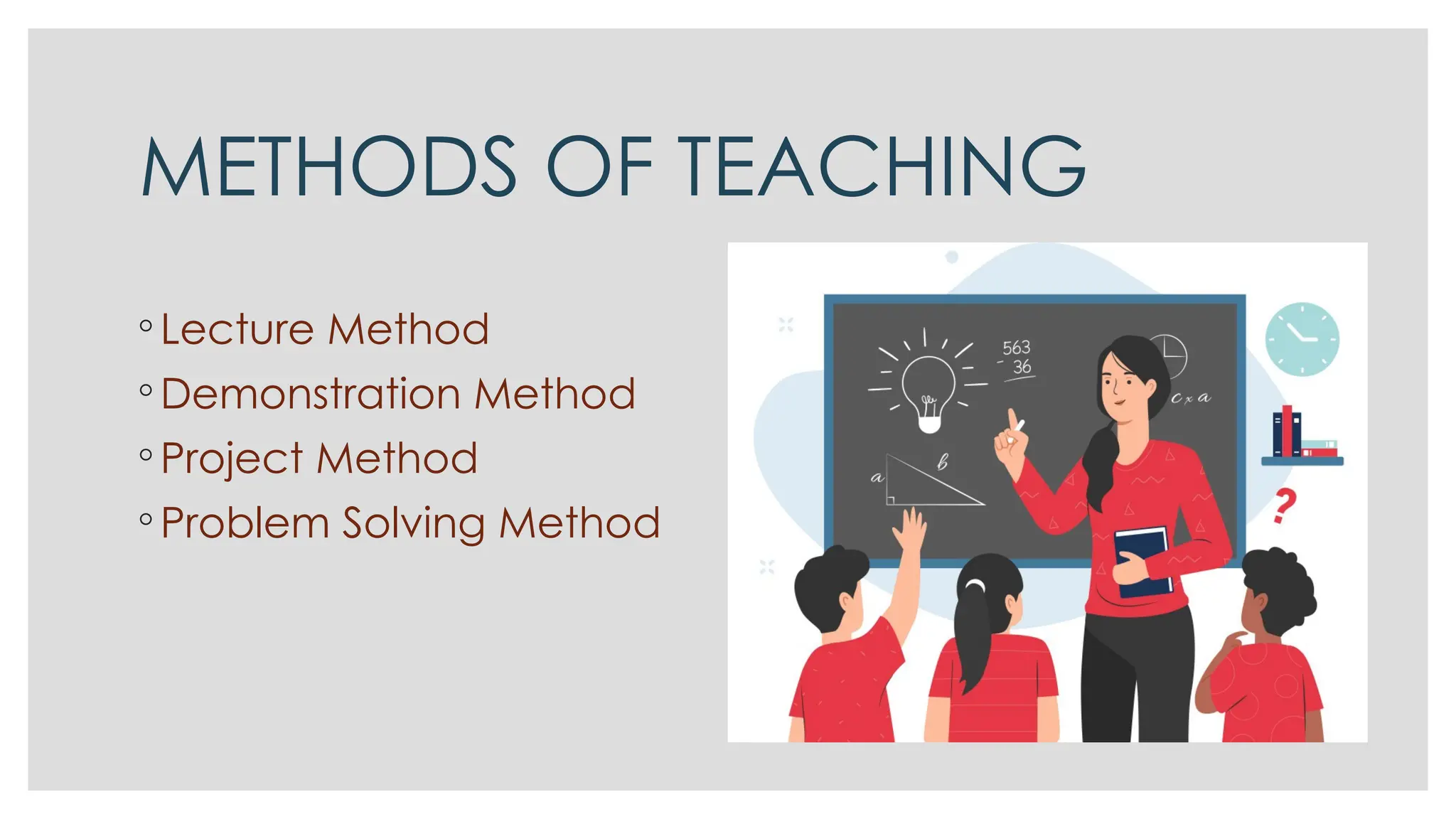
METHODS OF TEACHING
◦ Lecture Method
◦ Demonstration Method
◦ Project Method
◦ Problem Solving Method
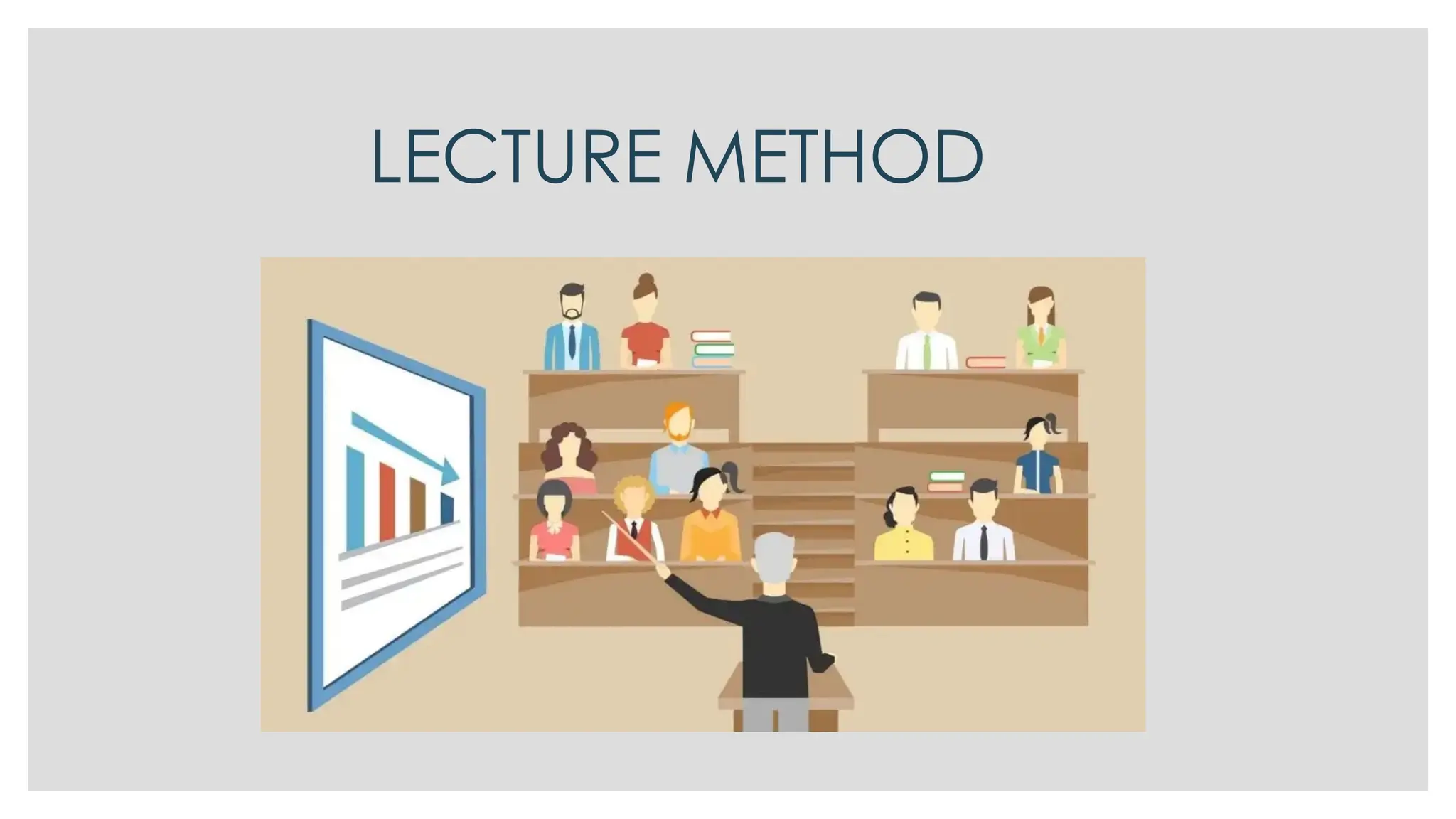
LECTURE METHOD
What is a Lecture???
A lecture is an oral presentation intended to present
information or teach people about a particular
subject.
Lecture Method:
Is a teaching procedure comprising the presentation of content, clarification of doubts
and exploration of facts, principle and relationships
FEATURES:
◦ The most commonly used method in teaching
science.
◦ Oldest method
◦ A teacher centered method
◦ Students are passive
◦ Purpose of this method is to achieve cognitive
and affective objectives
◦ It is based on philosophy of idealism
PLANNING THE LECTURE
Before starting to prepare a lecture, the teacher must be able to
answer four basic questions:-
◦ Who is the audience ? - Who
◦ What is the purpose of your lecture ? - Why
◦ How much time is available ? – How long
◦ What is the subject matter ? - What
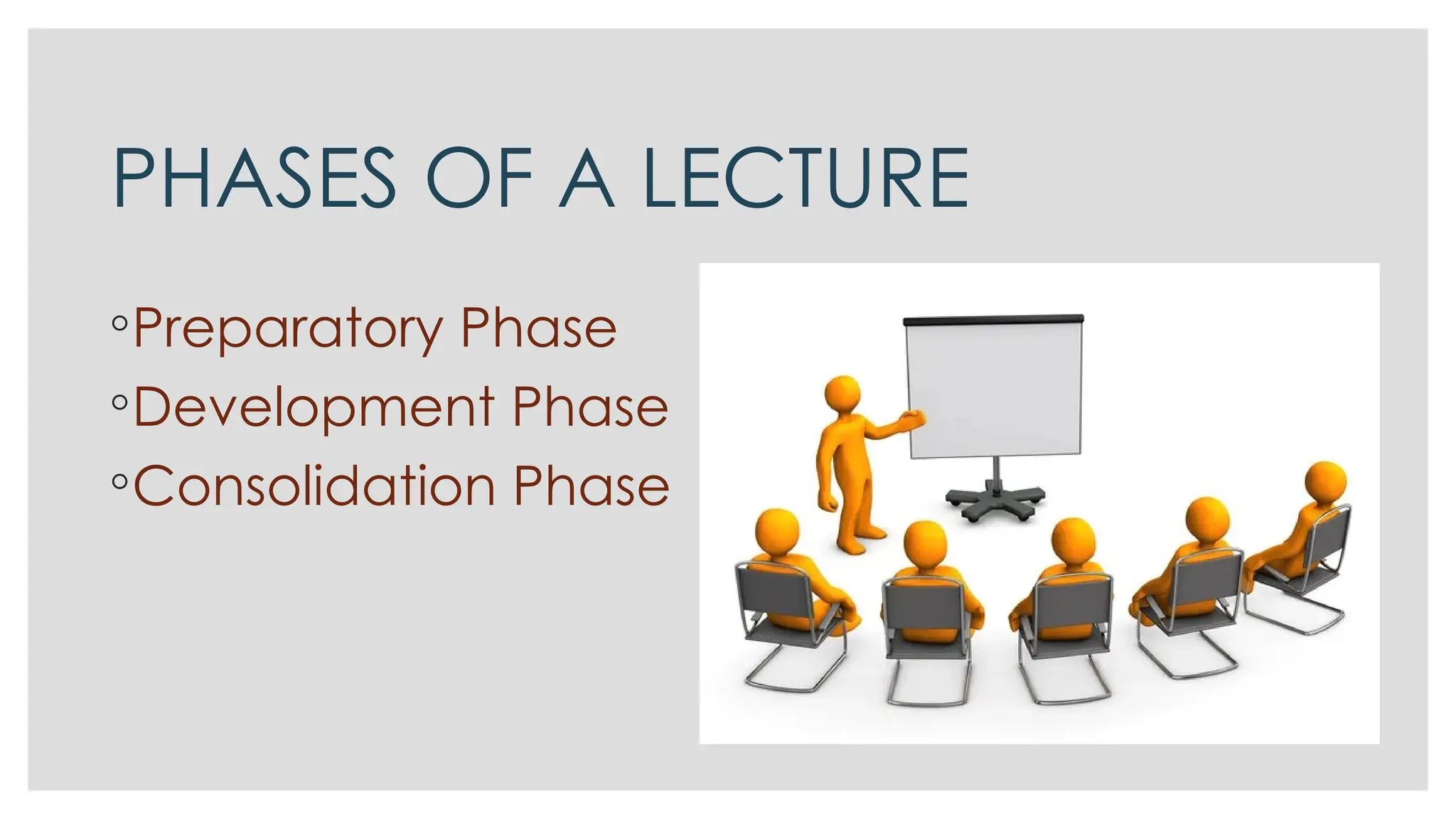
PHASES OF A LECTURE
◦Preparatory Phase
◦Development Phase
◦Consolidation Phase
PURPOSE
◦ To introduce some new and difficult topic
◦ To revise the topics already covered
◦ To give some background of a certain topic
◦ To introduce to the life histories of great scientists and their struggles and
achievements in life
◦ To explain the demonstration which has been done or which is to be done
◦ To impart factual knowledge
◦ To explain certain difficult theoretical points which cannot be demonstrated
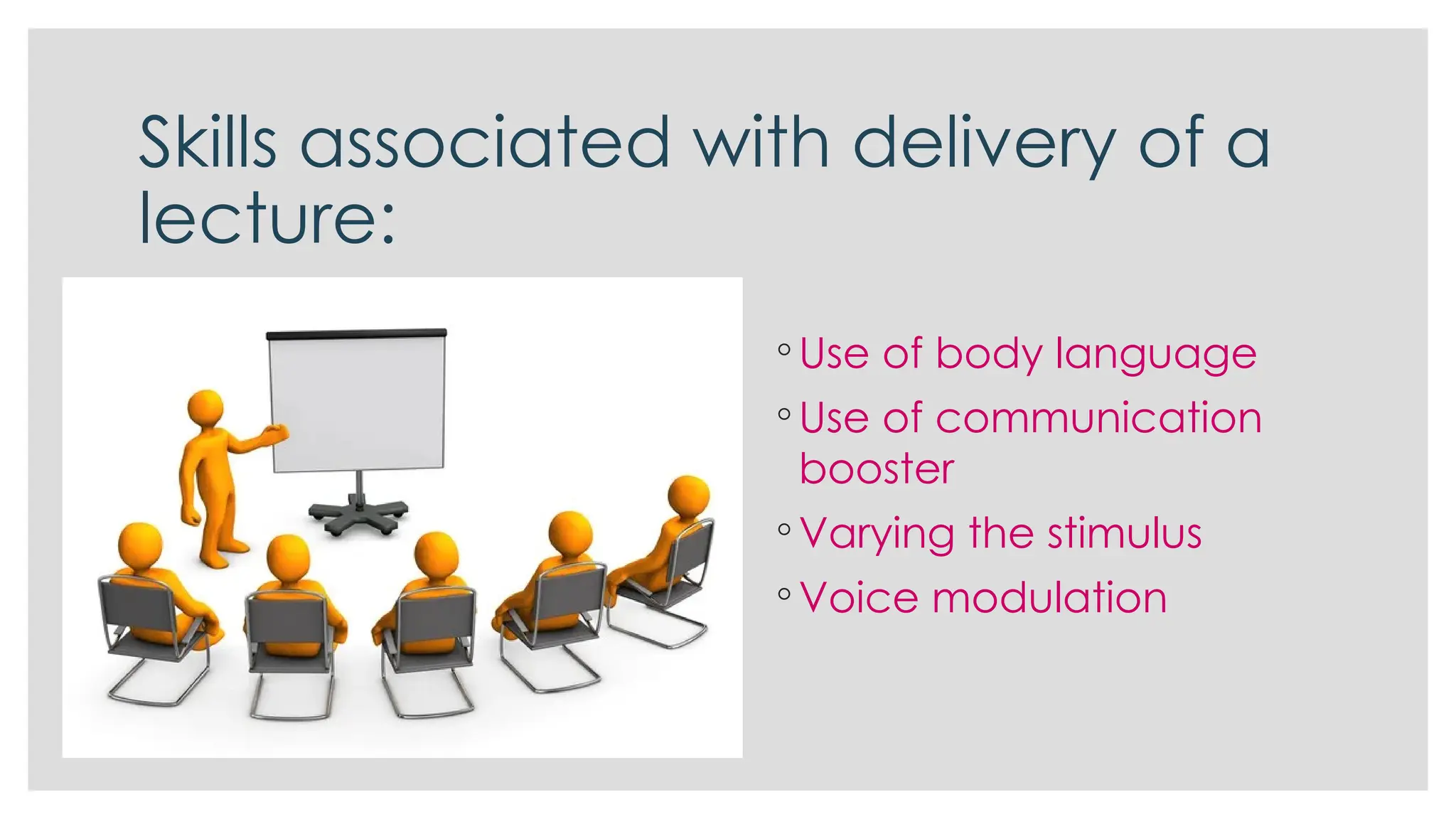
Skills associated with delivery of a
lecture:
◦ Use of body language
◦ Use of communication
booster
◦ Varying the stimulus
◦ Voice modulation
MERITS
◦ It is quite economical
 It saves time
 No laboratory equipments, aids, materials and so on
are required
 Can handle any number of students
◦ It is attractive, speedy, concise and very easy to follow
◦ The method is useful for imparting factual information
about historical incidents to pupils
◦ Good lectures have high inspirational values
DEMERITS
◦ The method is against the principle of ‘learning by doing’ and doesn't allow the
habit of independent thinking
◦ It is teacher centered, learners become passive recipient as it encourages one way
communication
◦ It does not provide training in scientific method and does not help inculcating of
scientific attitudes in pupils
◦ There is no assurance for the teacher whether the students have understood what
he had taught in the class
◦ Slow learners may miss important points and do not cater individual students need
◦ It lays too much stress on memory work which is just burden to the minds of the pupil
which is against the principle of teaching science
How can we make a lecture interesting………..?
◦ Add humour to the lecture
◦ Give training in the art of note taking
while lecture is on
◦ Allow a questionnaire session
◦ And finally, the lection should be in
good tone, loud voice, clearly and
slowly without the use of any
ambiguous or bombastic words.
THANKYOU….
Presented by,
SHAHNA A S
Physical science

LECTURE METHOD method of teaching :.pptx

  • 1.
  • 2.
    METHODS OF TEACHING ◦Lecture Method ◦ Demonstration Method ◦ Project Method ◦ Problem Solving Method
  • 3.
  • 4.
    What is aLecture??? A lecture is an oral presentation intended to present information or teach people about a particular subject. Lecture Method: Is a teaching procedure comprising the presentation of content, clarification of doubts and exploration of facts, principle and relationships
  • 5.
    FEATURES: ◦ The mostcommonly used method in teaching science. ◦ Oldest method ◦ A teacher centered method ◦ Students are passive ◦ Purpose of this method is to achieve cognitive and affective objectives ◦ It is based on philosophy of idealism
  • 6.
    PLANNING THE LECTURE Beforestarting to prepare a lecture, the teacher must be able to answer four basic questions:- ◦ Who is the audience ? - Who ◦ What is the purpose of your lecture ? - Why ◦ How much time is available ? – How long ◦ What is the subject matter ? - What
  • 7.
    PHASES OF ALECTURE ◦Preparatory Phase ◦Development Phase ◦Consolidation Phase
  • 8.
    PURPOSE ◦ To introducesome new and difficult topic ◦ To revise the topics already covered ◦ To give some background of a certain topic ◦ To introduce to the life histories of great scientists and their struggles and achievements in life ◦ To explain the demonstration which has been done or which is to be done ◦ To impart factual knowledge ◦ To explain certain difficult theoretical points which cannot be demonstrated
  • 9.
    Skills associated withdelivery of a lecture: ◦ Use of body language ◦ Use of communication booster ◦ Varying the stimulus ◦ Voice modulation
  • 10.
    MERITS ◦ It isquite economical  It saves time  No laboratory equipments, aids, materials and so on are required  Can handle any number of students ◦ It is attractive, speedy, concise and very easy to follow ◦ The method is useful for imparting factual information about historical incidents to pupils ◦ Good lectures have high inspirational values
  • 11.
    DEMERITS ◦ The methodis against the principle of ‘learning by doing’ and doesn't allow the habit of independent thinking ◦ It is teacher centered, learners become passive recipient as it encourages one way communication ◦ It does not provide training in scientific method and does not help inculcating of scientific attitudes in pupils ◦ There is no assurance for the teacher whether the students have understood what he had taught in the class ◦ Slow learners may miss important points and do not cater individual students need ◦ It lays too much stress on memory work which is just burden to the minds of the pupil which is against the principle of teaching science
  • 12.
    How can wemake a lecture interesting………..? ◦ Add humour to the lecture ◦ Give training in the art of note taking while lecture is on ◦ Allow a questionnaire session ◦ And finally, the lection should be in good tone, loud voice, clearly and slowly without the use of any ambiguous or bombastic words.
  • 13.