











Exploring Business Models and the Role of Information Technology on Value CreationPaul M. Di Gangi, Ph.D.Western Carolina Universitywww.paulmdigangi.compdigangi@gmail.com
Presentation StructureStartIntroductionDrivers of EvolutionTypes of Business ModelsUnderstanding Co-created ValueWhat should I take away from this?QuestionsFinish
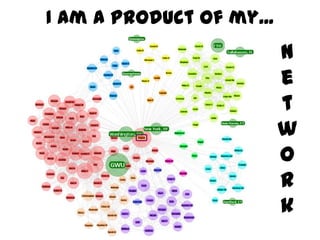
I am a product of my...network
The Business ModelAn organization’s line in the sand1/31/11
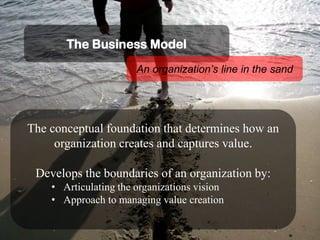
The Business ModelAn organization’s line in the sandThe conceptual foundation that determines how an organization creates and captures value.Develops the boundaries of an organization by: Articulating the organizations vision
Approach to managing value creation1/31/11
Happens1/31/11
< 1 >PeopleChange...
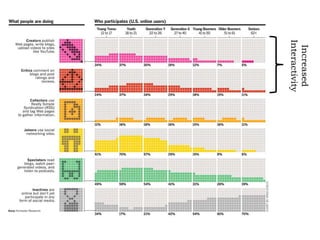
IncreasedInteractivity
Suddenly... everyone’s a 933|<!
< 2 >Our\/\/0rLD can Change...
Explosion of Social Media
< 3 >Our choices Change...
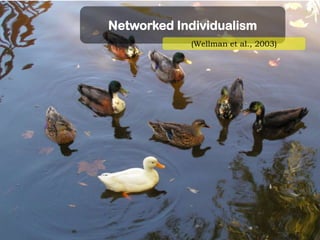
Networked Individualism(Wellman et al., 2003)
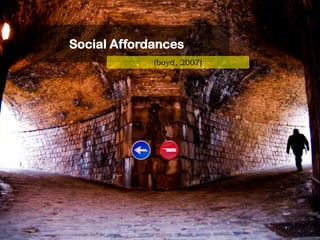
1/31/11Social Affordances(boyd, 2007)
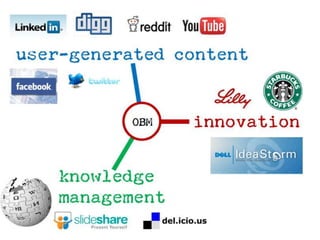
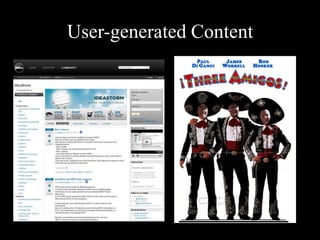
User-generated Content
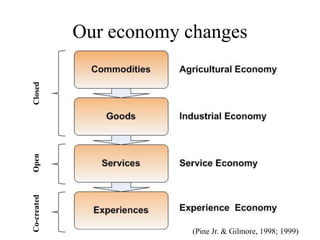
Our economy changesClosedOpenCo-created(Pine Jr. & Gilmore, 1998; 1999)
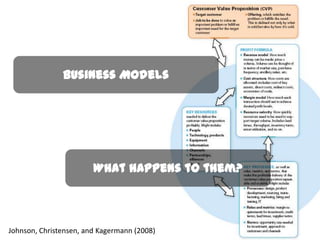
Business ModelsWhat happens to them?Johnson, Christensen, and Kagermann (2008)
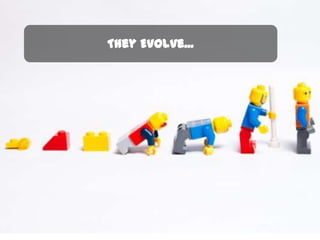
They Evolve...1/31/11
Closed ModelOrganizations internalize resources for value creation; restrict access to knowledge, and protect intellectual property.
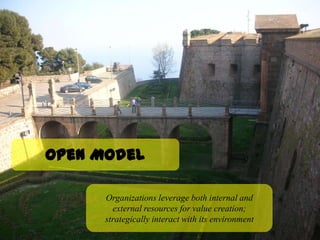
Open ModelOrganizations leverage both internal and external resources for value creation; strategically interact with its environment
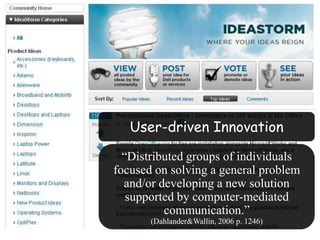
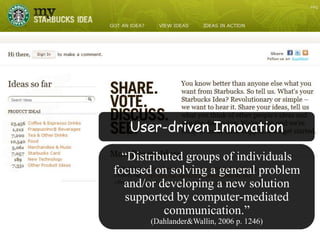
User-driven Innovation“Distributed groups of individuals focused on solving a general problem and/or developing a new solution supported by computer-mediated communication.” (Dahlander & Wallin, 2006 p. 1246)
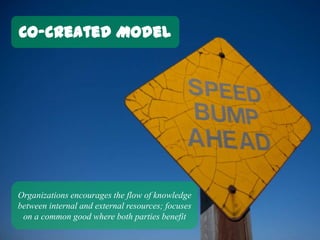
Co-created ModelOrganizations encourages the flow of knowledge between internal and external resources; focuses on a common good where both parties benefit
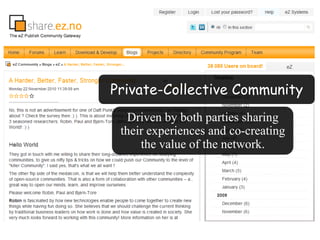
Private-Collective CommunityDriven by both parties sharing their experiences and co-creating the value of the network.
How can we make these models work for us?
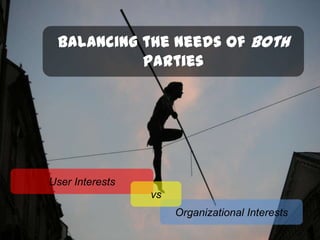
Balancing the needs of both partiesUser InterestsvsOrganizational Interests
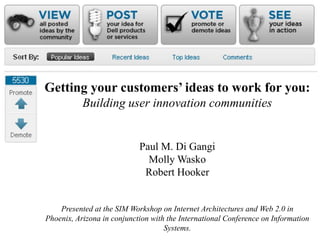
Getting your customers’ ideas to work for you:Building user innovation communitiesPaul M. Di GangiMolly WaskoRobert HookerPresented at the SIM Workshop on Internet Architectures and Web 2.0 in Phoenix, Arizona in conjunction with the International Conference on Information Systems.
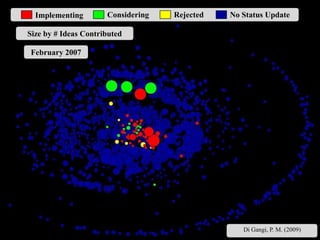
ConsideringRejectedNo Status UpdateImplementingSize by # Ideas ContributedFebruary 2007Di Gangi, P. M. (2009)
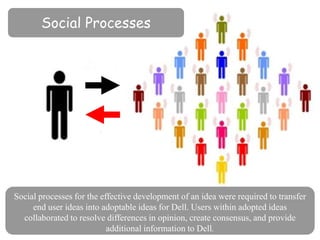
Social ProcessesSocial processes for the effective development of an idea were required to transfer end user ideas into adoptable ideas for Dell. Users within adopted ideas collaborated to resolve differences in opinion, create consensus, and provide additional information to Dell.
Exploring the Organization-User Relationship in Private-Collective Knowledge CommunitiesRobin TeiglandElia GiovacchiniBjørn-Tore FlåtenPaul M. Di GangiCurrently under review at the CK Prahalad SMS Special Conference.
Relational DynamicsTheme One
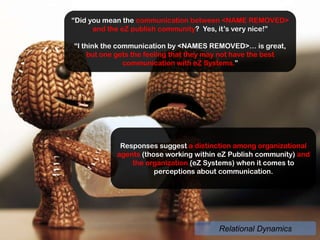
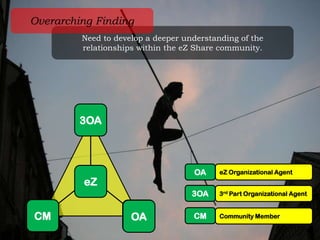
“Did you mean the communication between <NAME REMOVED> and the eZ publish community?  Yes, it’s very nice!”“I think the communication by <NAMES REMOVED>… is great, but one gets the feeling that they may not have the best communication with eZ Systems.”Responses suggest a distinction among organizational agents (those working within eZ Publish community) and the organization (eZ Systems) when it comes to perceptions about communication.Relational Dynamics
Decision Making ProcessTheme Two
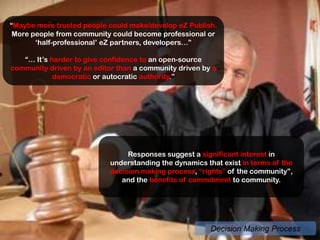
“Maybe more trusted people could make/develop eZ Publish.  More people from community could become professional or ‘half-professional’ eZ partners, developers…”“… It’s harder to give confidence to an open-source community driven by an editor than a community driven by a democratic or autocratic authority.”Responses suggest a significant interest in understanding the dynamics that exist in terms of the decision making process, “rights” of the community”, and the benefits of commitment to community.Decision Making Process
Member DevelopmentTheme Three
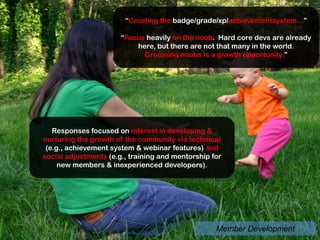
“Creating the badge/grade/xp/achievementsystem…”“Focus heavily on the noob.  Hard core devs are already here, but there are not that many in the world.  Grooming noobs is a growth opportunity.”Responses focused on interest in developing & nurturing the growth of the community via technical (e.g., achievement system & webinar features) and social adjustments (e.g., training and mentorship for new members & inexperienced developers).Member Development
Overarching FindingNeed to develop a deeper understanding of the relationships within the eZ Share community.3OAOAeZ Organizational AgenteZ3OA3rd Part Organizational AgentCMOACMOACMCommunity Member
How can I 933|< out?
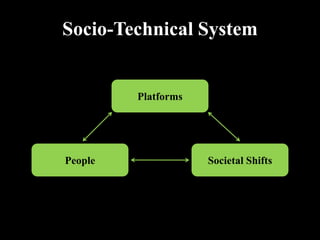
Socio-Technical SystemPlatformsPeopleSocietal Shifts
Thank You for EngagingContact @ pdigangi@gmail.com | Website @ www.paulmdigangi.comModified version of these slides will be available @ www.slideshare.com/pmd06c

Lecture by Paul DiGangi_Value Creation

Editor's Notes

  • #6 Background Image Source: http://www.flickr.com/photos/mglarsen/3963274094/sizes/o/
  • #7 Background Image Source: http://www.flickr.com/photos/mglarsen/3963274094/sizes/o/
  • #8 Background Image Source: http://www.flickr.com/photos/spursfan_ace/2328879637/
  • #14 Background Image Source: http://www.flickr.com/photos/mburpee/4624692163/sizes/o/in/photostream/
  • #16 Background Image Source: http://www.flickr.com/photos/two-wrongs/50362295/sizes/o/
  • #17 Background Image Source: http://www.flickr.com/photos/davic/2526920923/sizes/o/
  • #21 Image Background Source: http://www.flickr.com/photos/horlik/4350942510/sizes/o/
  • #22 Background Image Source: http://www.flickr.com/photos/betta_design/922748164/
  • #23 Background Image Attribution: http://www.flickr.com/photos/stevoarnold/2789464563/
  • #24 Background Image Source: http://www.flickr.com/photos/puroticorico/441296576/
  • #27 Background Image Source: http://www.flickr.com/photos/veggiefrog/3435380297/sizes/o/
  • #29 Background Image Attribution: http://www.flickr.com/photos/atranman/5016786784/sizes/l/
  • #30 Background Image Attribution: http://www.flickr.com/photos/orangebrompton/224649987/sizes/o/
  • #34 Adapted from: http://www.flickr.com/photos/intersectionconsulting/3598356119/
  • #36 Image Attribution: http://www.flickr.com/photos/atranman/5016786784/sizes/l/
  • #37 Image Attribution: http://www.flickr.com/photos/atranman/5016786784/sizes/l/
  • #38 Image Attribution: http://www.flickr.com/photos/18796746@N05/4272817915/sizes/m/
  • #39 Image Attribution: http://www.flickr.com/photos/18796746@N05/4272817915/sizes/m/
  • #40 Image Attribution: http://www.flickr.com/photos/voglesonger/2421504851/sizes/o/
  • #41 Image Attribution: http://www.flickr.com/photos/voglesonger/2421504851/sizes/o/
  • #42 Background Image Attribution: http://www.flickr.com/photos/orangebrompton/224649987/sizes/o/
  • #46 Background Image Attribution: http://www.flickr.com/photos/crystaljingsr/3914729343/sizes/z/in/photostream/