Urban design
considerations are
formulated to bring
to the attention of the
designers in applying the
valuable design
requirements to buildings
and urban spaces.
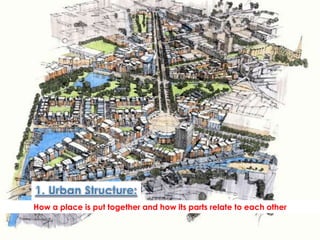
How a place is put together and how its parts relate to each other
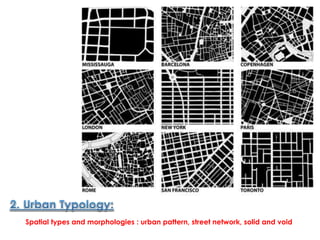
Spatial types and morphologies : urban pattern, street network, solid and void
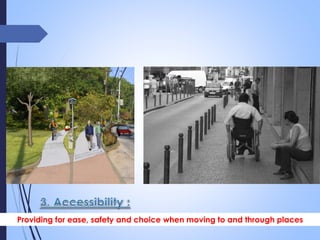
Providing for ease, safety and choice when moving to and through places
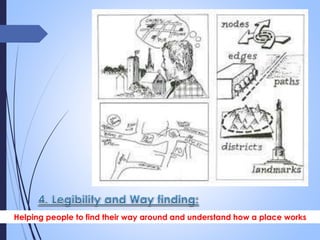
Helping people to find their way around and understand how a place works
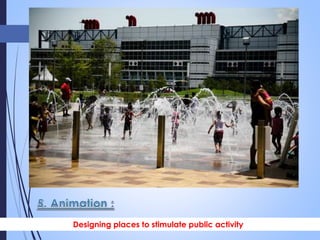
Designing places to stimulate public activity
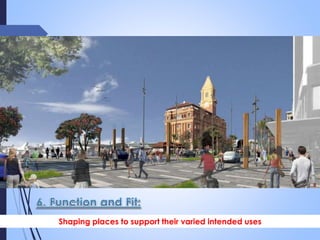
Shaping places to support their varied intended uses
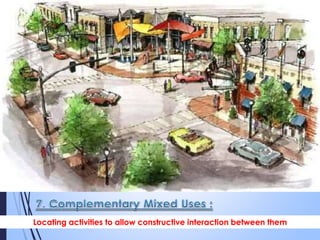
Locating activities to allow constructive interaction between them
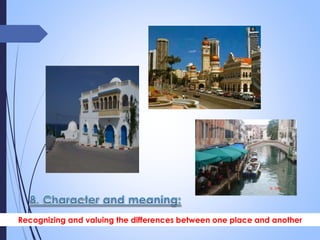
Recognizing and valuing the differences between one place and another
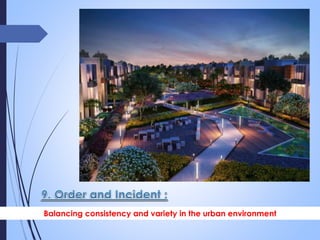
Balancing consistency and variety in the urban environment
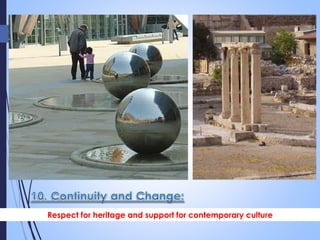
Respect for heritage and support for contemporary culture
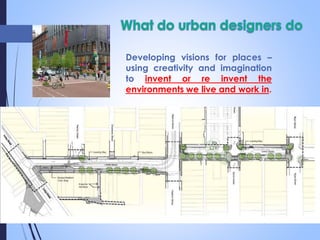
Developing visions for places –
using creativity and imagination
to invent or re invent the
environments we live and work in.
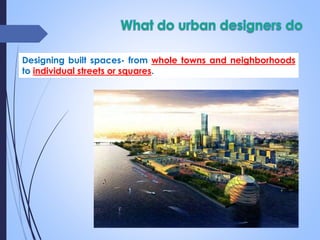
Designing built spaces- from whole towns and neighborhoods
to individual streets or squares.
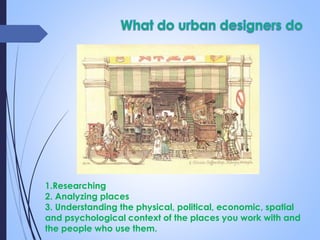
1.Researching
2. Analyzing places
3. Understanding the physical, political, economic, spatial
and psychological context of the places you work with and
the people who use them.
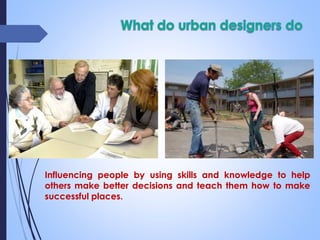
Influencing people by using skills and knowledge to help
others make better decisions and teach them how to make
successful places.
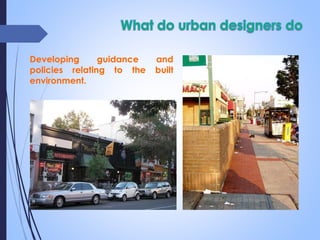
Developing guidance and
policies relating to the built
environment.
What gets urban
designers out of
bed in the morning
is the challenge of
creating a place that
will be used and
enjoyed by a wide
range of different
purposes, not only now
but in years to come.
An urban designer needs a board
understanding of cities, towns and villages,
and ways of making them work better.
This involves understanding how the planning system
operates, how developers make their sums add up,
how to assess what makes a particular place special,
how to make places easy to move around by foot and
vehicles, how to bring life to places, how to conserve
historic buildings, how to make the most of landscape,
how o think about the future of development sites, how
to involve local people, etc.
That’s sounds a lot of subjects !!!. But
they are all related.. The urban
designer is not expected to be an
expert on all of them, but it is
essential to be able to see the whole
picture.
Thank you 

Urban Design

  • 2.
    Urban design considerations are formulatedto bring to the attention of the designers in applying the valuable design requirements to buildings and urban spaces.
  • 3.
    How a placeis put together and how its parts relate to each other
  • 4.
    Spatial types andmorphologies : urban pattern, street network, solid and void
  • 5.
    Providing for ease,safety and choice when moving to and through places
  • 6.
    Helping people tofind their way around and understand how a place works
  • 7.
    Designing places tostimulate public activity
  • 8.
    Shaping places tosupport their varied intended uses
  • 9.
    Locating activities toallow constructive interaction between them
  • 10.
    Recognizing and valuingthe differences between one place and another
  • 11.
    Balancing consistency andvariety in the urban environment
  • 12.
    Respect for heritageand support for contemporary culture
  • 14.
    Developing visions forplaces – using creativity and imagination to invent or re invent the environments we live and work in.
  • 15.
    Designing built spaces-from whole towns and neighborhoods to individual streets or squares.
  • 16.
    1.Researching 2. Analyzing places 3.Understanding the physical, political, economic, spatial and psychological context of the places you work with and the people who use them.
  • 17.
    Influencing people byusing skills and knowledge to help others make better decisions and teach them how to make successful places.
  • 18.
    Developing guidance and policiesrelating to the built environment.
  • 19.
    What gets urban designersout of bed in the morning is the challenge of creating a place that will be used and enjoyed by a wide range of different purposes, not only now but in years to come.
  • 20.
    An urban designerneeds a board understanding of cities, towns and villages, and ways of making them work better. This involves understanding how the planning system operates, how developers make their sums add up, how to assess what makes a particular place special, how to make places easy to move around by foot and vehicles, how to bring life to places, how to conserve historic buildings, how to make the most of landscape, how o think about the future of development sites, how to involve local people, etc.
  • 21.
    That’s sounds alot of subjects !!!. But they are all related.. The urban designer is not expected to be an expert on all of them, but it is essential to be able to see the whole picture.
  • 22.