*
Breathing Techniques
Babette Parthum, RRT
Clinical Coordinator
Respiratory Therapy
● One of the most effective ways to
control shortness of breath
● These techniques help move more air
into and out of lungs with each breath
● Keeps airways open longer during
exhalation.
● Lessens shortness of breath during
exercise and other daily activities
*
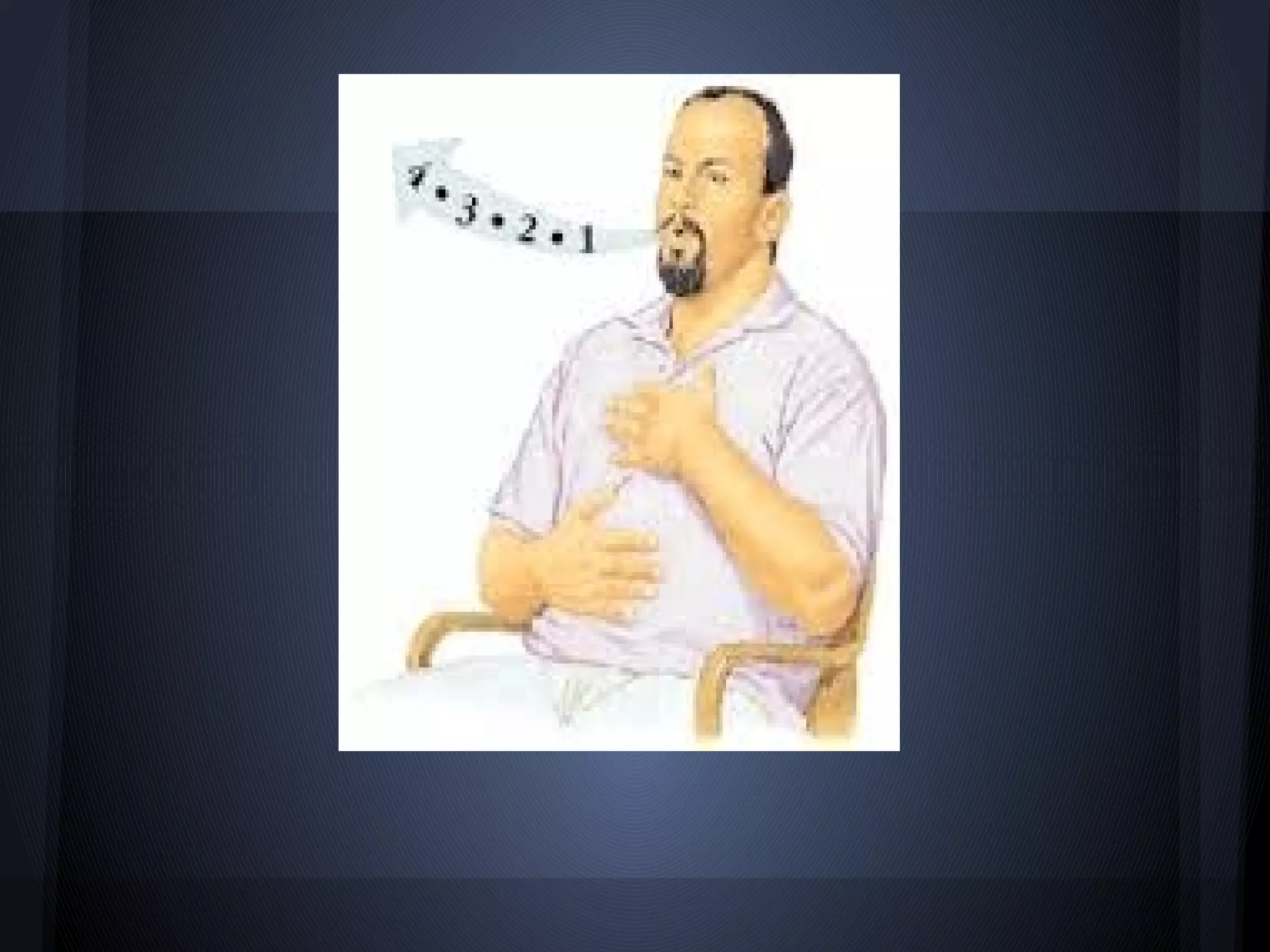
● Sit down or lie on your back so that you are
relaxed.
● Put one hand on your upper chest and the other
hand on your stomach just above your waist.
● Inhale slowly through your nose for at least 2
counts. As you inhale you should feel your
stomach move out.
● Exhale through pursed lips for 4 counts. As
you exhale you should feel your stomach move
in.
*
● Work against resistance.
● Once you have mastered diaphragmatic
breathing, you can add a little weight.
● Lie on the bed with a weight on your stomach
and do a few minutes of diaphragmatic
breathing.
● Start with a lighter weight (bag of dried
beans) and work up to a heavier weight (bag
of flour).
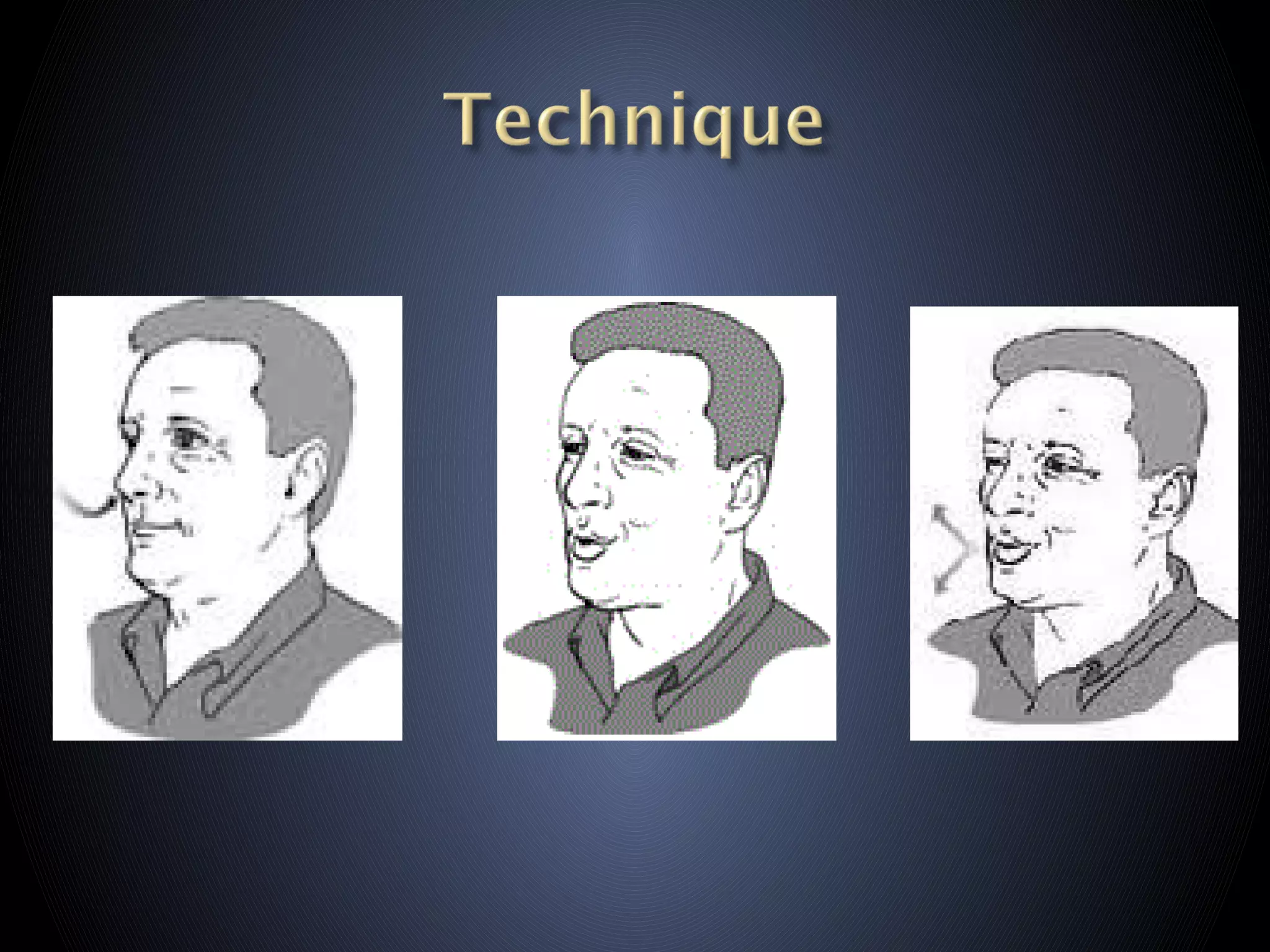
● Relax neck and shoulder muscles.
● Inhale slowly through your nose for at least
2 counts.
● Purse (pucker) your lips as if you are
blowing out a candle.
● Exhale slowly through your pursed lips for
4 counts (twice as long as you inhale).
● Do Not force the air out of your lungs
*
● Get a bottle of kids’ bubbles that comes with a
wand.
● Follow the steps for pursed lip breathing.
● If you have lots of little bubbles, you are
breathing too fast.
● If you have no bubble, you are not breathing
hard enough.
● Your goal should be one slow, big bubble that
hangs on the wand.
*
*
● Improves ventilation.
● Keeps the airways open longer, decreasing the
work of breathing.
● Prolongs exhalation to control the breathing rate.
● Improves breathing patterns by moving old air
out of the lungs and allowing for new air to enter
the lungs.
● Releases trapped air in the lungs by opening up
the airways enough to release more air.
● Relieves shortness of breath.
Tips to Breathing Better
StopStopstop
When you feel short of breath:
Stop, Reset, Continue
● Stop your activity.
● Reset by sitting down, relax your shoulders,
and do pursed-lips breathing until you catch
your breath.
● Continue activity, doing pursed-lips breathing
as you go. Go at a slower pace if you need to.
References
● American Lung Association
● COPD Foundation
● National Heart, Lung, and Blood
Institute

Lecture 1: Pursed Lip and Diaphragmatic Breathing

  • 1.
    * Breathing Techniques Babette Parthum,RRT Clinical Coordinator Respiratory Therapy
  • 2.
    ● One ofthe most effective ways to control shortness of breath ● These techniques help move more air into and out of lungs with each breath ● Keeps airways open longer during exhalation. ● Lessens shortness of breath during exercise and other daily activities *
  • 3.
    ● Sit downor lie on your back so that you are relaxed. ● Put one hand on your upper chest and the other hand on your stomach just above your waist. ● Inhale slowly through your nose for at least 2 counts. As you inhale you should feel your stomach move out. ● Exhale through pursed lips for 4 counts. As you exhale you should feel your stomach move in. *
  • 4.
    ● Work againstresistance. ● Once you have mastered diaphragmatic breathing, you can add a little weight. ● Lie on the bed with a weight on your stomach and do a few minutes of diaphragmatic breathing. ● Start with a lighter weight (bag of dried beans) and work up to a heavier weight (bag of flour).
  • 6.
    ● Relax neckand shoulder muscles. ● Inhale slowly through your nose for at least 2 counts. ● Purse (pucker) your lips as if you are blowing out a candle. ● Exhale slowly through your pursed lips for 4 counts (twice as long as you inhale). ● Do Not force the air out of your lungs *
  • 7.
    ● Get abottle of kids’ bubbles that comes with a wand. ● Follow the steps for pursed lip breathing. ● If you have lots of little bubbles, you are breathing too fast. ● If you have no bubble, you are not breathing hard enough. ● Your goal should be one slow, big bubble that hangs on the wand. *
  • 9.
    * ● Improves ventilation. ●Keeps the airways open longer, decreasing the work of breathing. ● Prolongs exhalation to control the breathing rate. ● Improves breathing patterns by moving old air out of the lungs and allowing for new air to enter the lungs. ● Releases trapped air in the lungs by opening up the airways enough to release more air. ● Relieves shortness of breath.
  • 10.
    Tips to BreathingBetter StopStopstop When you feel short of breath: Stop, Reset, Continue ● Stop your activity. ● Reset by sitting down, relax your shoulders, and do pursed-lips breathing until you catch your breath. ● Continue activity, doing pursed-lips breathing as you go. Go at a slower pace if you need to.
  • 11.
    References ● American LungAssociation ● COPD Foundation ● National Heart, Lung, and Blood Institute