Self -Concept
M.AdnanAkbar
Mental Health Nursing
At the end of this presentation learner will be
able to;
Define Self Concept.
Discuss relation between self concept,
self esteem, and body image.
Describe Roles Self-Actualization.
Discuss Factors Affecting Self-concept.
Describe Assessing Self-concept.
Discuss Self-Concept Questionnaire.
Discuss nursing diagnosis and nursing
interventions and nursing evaluation.
Self -Concept
Self-concept : self image
Each individual is unique with own
self-concept
View of self affects one’s ability to
function as well as health
components: self-knowledge
self-esteem
self-actualization
Identity
An internal sense of individuality
and wholeness. Who are you?
Name, gender, race, religion,
occupation, role, +++so much more
Begins during childhood as parents
provide role models
Continues during adolescence as
teens establish own identity
Self-Esteem
The emotional appraisal of self-
concept.
How do you regard yourself??????
Feel about self?
Sense of worth or value??
This appraisal is an on-going process
so…levels of self-esteem can
change.
Body Image
What do you think you look like physically?
?????
What do you think about your
appearance??????
Body image is dynamic: the body changes
thru normal growth and development.
Cultural and societal attitudes affect body
image
Roles
What is your role?????????
What are the expected behaviors you
perform????
Simultaneously hold many roles and
they change
Who do you want to be????
What do you want your role to be???
Roles
Self-Actualization
A part of self-concept is the way a person
perceives their ability to carry out
significant roles
Health self-concept can distinguish
between:
Ideal role expectations
AND
Realistic possibilities
Factors Affecting Self-concept
Health status: illness, injury, body chg, loss of
control, dependency on others
Role stressors; overload, strained,
feelings of inadequacy
Developmental transitions – aging in our culture
Personal “success” or failure history
Crisis and/or life events: personal and/or global
Internal and external resources
Individual perception of crisis
Self-concept: psychosocial
dimension
How one develops and grows can
have an affect on self-concept & health
Therefore nurses need to understand
normal stages of growth (physical
changes) & development
(psychosocial changes).
Assessing Self-concept
Developmental and chronological age
Assessing includes questions on
identity… body image…self
esteem…roles…
Patient’s strengths/weaknesses
Self-Concept Questionnaire
Describe yourself.
What are your personal characteristics?
What are your strengths?
What are your fears or weaknesses?
Describe your body.
What do you like most about your body?
What do you like least about your body?
Tell me about some things you do or have done in
the past that give you a sense of achievement or
accomplishment.
Describe the primary roles you fill.
How do you feel about your ability to perform
these roles?
Are these roles satisfying to you?
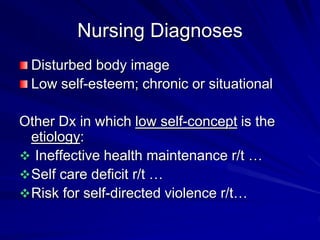
Nursing Diagnoses
Disturbed body image
Low self-esteem; chronic or situational
Other Dx in which low self-concept is the
etiology:
 Ineffective health maintenance r/t …
Self care deficit r/t …
Risk for self-directed violence r/t…
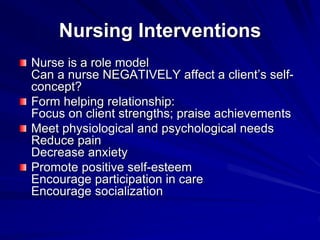
Nursing Interventions
Nurse is a role model
Can a nurse NEGATIVELY affect a client’s self-
concept?
Form helping relationship:
Focus on client strengths; praise achievements
Meet physiological and psychological needs
Reduce pain
Decrease anxiety
Promote positive self-esteem
Encourage participation in care
Encourage socialization
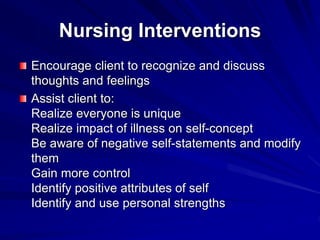
Nursing Interventions
Encourage client to recognize and discuss
thoughts and feelings
Assist client to:
Realize everyone is unique
Realize impact of illness on self-concept
Be aware of negative self-statements and modify
them
Gain more control
Identify positive attributes of self
Identify and use personal strengths
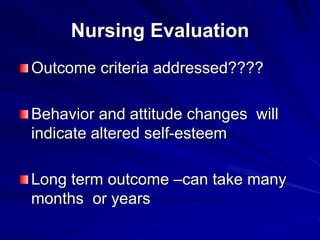
Nursing Evaluation
Outcome criteria addressed????
Behavior and attitude changes will
indicate altered self-esteem
Long term outcome –can take many
months or years
Evaluation
Client should be able to meet the following
outcomes:
Be comfortable with body image
Be able to describe self positively
Be able to meet realistic goals
Be capable of interacting appropriately
with environment and others
“Know Thyself” Socrates
Nurses need to reflect on their OWN self-
concept in order to effectively assist OTHERs.
Ask yourself these questions:
How do I perceive myself?
How do I think others see me?
What are my strengths and weaknesses?
What are my goals for self-improvement?
What does ALL THIS have to do with my
professional practice?
Summary
Self-concept based on 3 components
Need to understand how various
factors affect self-concept
Interventions to promote self-concept
Evaluate outcome criteria
“No one can make you feel
inferior without your
consent”
- Eleanor Roosevelt
References
www2.sunysuffolk.edu/.../Lect13%20Self%20Co
ncept,%20Stress%20and%20Coping.ppt –
www.uen.org/.../downloadFile.cgi?file...Self-
Concept.ppt...Self-Concept.ppt –
www.authorstream.com/.../imprintcenter-
734455-self-esteem-ppt/
faculty.ksu.edu.sa/.../CourseNUR123%20ppt/Ch
apter43[1]%20self%20concept.ppt
Lect13 Self Concept, Stress and Coping.ppt

Lect13 Self Concept, Stress and Coping.ppt

  • 1.
  • 2.
    At the endof this presentation learner will be able to; Define Self Concept. Discuss relation between self concept, self esteem, and body image. Describe Roles Self-Actualization. Discuss Factors Affecting Self-concept. Describe Assessing Self-concept. Discuss Self-Concept Questionnaire. Discuss nursing diagnosis and nursing interventions and nursing evaluation.
  • 3.
    Self -Concept Self-concept :self image Each individual is unique with own self-concept View of self affects one’s ability to function as well as health components: self-knowledge self-esteem self-actualization
  • 4.
    Identity An internal senseof individuality and wholeness. Who are you? Name, gender, race, religion, occupation, role, +++so much more Begins during childhood as parents provide role models Continues during adolescence as teens establish own identity
  • 5.
    Self-Esteem The emotional appraisalof self- concept. How do you regard yourself?????? Feel about self? Sense of worth or value?? This appraisal is an on-going process so…levels of self-esteem can change.
  • 6.
    Body Image What doyou think you look like physically? ????? What do you think about your appearance?????? Body image is dynamic: the body changes thru normal growth and development. Cultural and societal attitudes affect body image
  • 7.
    Roles What is yourrole????????? What are the expected behaviors you perform???? Simultaneously hold many roles and they change Who do you want to be???? What do you want your role to be???
  • 8.
    Roles Self-Actualization A part ofself-concept is the way a person perceives their ability to carry out significant roles Health self-concept can distinguish between: Ideal role expectations AND Realistic possibilities
  • 9.
    Factors Affecting Self-concept Healthstatus: illness, injury, body chg, loss of control, dependency on others Role stressors; overload, strained, feelings of inadequacy Developmental transitions – aging in our culture Personal “success” or failure history Crisis and/or life events: personal and/or global Internal and external resources Individual perception of crisis
  • 10.
    Self-concept: psychosocial dimension How onedevelops and grows can have an affect on self-concept & health Therefore nurses need to understand normal stages of growth (physical changes) & development (psychosocial changes).
  • 11.
    Assessing Self-concept Developmental andchronological age Assessing includes questions on identity… body image…self esteem…roles… Patient’s strengths/weaknesses
  • 12.
    Self-Concept Questionnaire Describe yourself. Whatare your personal characteristics? What are your strengths? What are your fears or weaknesses? Describe your body. What do you like most about your body? What do you like least about your body? Tell me about some things you do or have done in the past that give you a sense of achievement or accomplishment. Describe the primary roles you fill. How do you feel about your ability to perform these roles? Are these roles satisfying to you?
  • 13.
    Nursing Diagnoses Disturbed bodyimage Low self-esteem; chronic or situational Other Dx in which low self-concept is the etiology:  Ineffective health maintenance r/t … Self care deficit r/t … Risk for self-directed violence r/t…
  • 14.
    Nursing Interventions Nurse isa role model Can a nurse NEGATIVELY affect a client’s self- concept? Form helping relationship: Focus on client strengths; praise achievements Meet physiological and psychological needs Reduce pain Decrease anxiety Promote positive self-esteem Encourage participation in care Encourage socialization
  • 15.
    Nursing Interventions Encourage clientto recognize and discuss thoughts and feelings Assist client to: Realize everyone is unique Realize impact of illness on self-concept Be aware of negative self-statements and modify them Gain more control Identify positive attributes of self Identify and use personal strengths
  • 16.
    Nursing Evaluation Outcome criteriaaddressed???? Behavior and attitude changes will indicate altered self-esteem Long term outcome –can take many months or years
  • 17.
    Evaluation Client should beable to meet the following outcomes: Be comfortable with body image Be able to describe self positively Be able to meet realistic goals Be capable of interacting appropriately with environment and others
  • 18.
    “Know Thyself” Socrates Nursesneed to reflect on their OWN self- concept in order to effectively assist OTHERs. Ask yourself these questions: How do I perceive myself? How do I think others see me? What are my strengths and weaknesses? What are my goals for self-improvement? What does ALL THIS have to do with my professional practice?
  • 19.
    Summary Self-concept based on3 components Need to understand how various factors affect self-concept Interventions to promote self-concept Evaluate outcome criteria
  • 20.
    “No one canmake you feel inferior without your consent” - Eleanor Roosevelt
  • 21.