CONCEPT OF
SELF HEALTH
Mrs. Sneha Sahay Youtham
Self concept is an individual’s
conceptualization about how one think
about himself or herself.
Self-concept or how one think
about himself or herself directly affects
one’s self esteem.
If the self-concept is related to health
that is self-health-concept.
Self concept & perception of health are clearly
associated to each other. A client belief in
good health can enhance power of self
concept. A student such as “I will never been
sick a day in my life”. Indicate that a person’s
thought about health are positive. These
thought are important to one self perception
negative. Self perception is reflected in such
statement as “ I will never get any better.
SELF-HEALTH CONCEPT
GOALS
To take care of health issues
To carry out normal activities
To manage emotional changes
 Self concept self esteem & self image are
essential to a person mental & physical
health.
 Individual with a positive self concept of
high self esteem are better able to develop &
maintain was as interpersonal relationship &
resist psychological & physical illness.
 A healthy self concept enable a person to find
happiness in life & to cope with life’s
disappointment & changes.
 Failure to achieve a positive self image
present obstruction in the treatment of
common disorder such as Depression Eating
disorder.
 People with an unhealthy self concept
generally express feeling of worthlessness
 Are of nurses major responsibility is to
identify persons with a negative self concept
or low self esteem & to assist them in
developing a more positive view of them
selves.
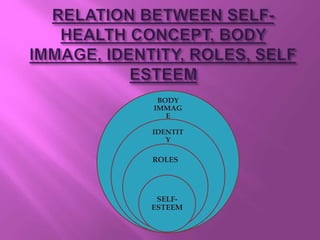
BODY
IMMAG
E
IDENTIT
Y
ROLES
SELF-
ESTEEM
 Identity involves the internal sense of
individuality, wholeness & consistency of a
person over time and in various
circumstances.It is related to Ethics.
 Identity implies being distinct and separate
from others.
 Example- Peer pressure (leadership)
 Body image involves attitudes related the
body.
 It including physical appearance, structure or
function, feeling, about body image.
 Body image is affected by cognitive growth &
physical development.
Individual who have been overweight for many
years and than loss weight often have
difficulty perceiving themselves as thin. They
may even continue to choose clothing in the
size they were before they lost weight.
Other are patient with amputation, mastectomy,
colostomy, paralysis etc.
 Self performance is the way in which an
individual perceives his or her ability to carry
out significant.
 self-esteem is an individual’s overall séance
of self worth or the emotional appraisal of
self concept. it in closely related to other
aspect that is identity, body image, self
performance.
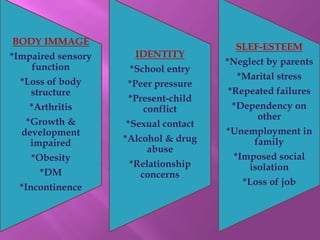
BODY IMMAGE
*Impaired sensory
function
*Loss of body
structure
*Arthritis
*Growth &
development
impaired
*Obesity
*DM
*Incontinence
IDENTITY
*School entry
*Peer pressure
*Present-child
conflict
*Sexual contact
*Alcohol & drug
abuse
*Relationship
concerns
SLEF-ESTEEM
*Neglect by parents
*Marital stress
*Repeated failures
*Dependency on
other
*Unemployment in
family
*Imposed social
isolation
*Loss of job
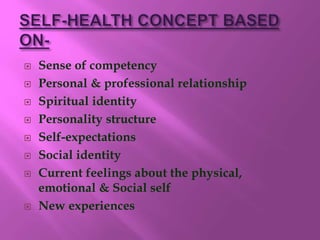
 Sense of competency
 Personal & professional relationship
 Spiritual identity
 Personality structure
 Self-expectations
 Social identity
 Current feelings about the physical,
emotional & Social self
 New experiences
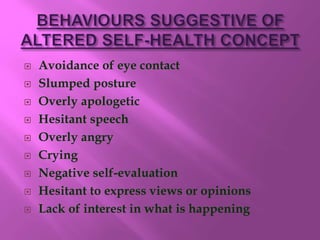
 Avoidance of eye contact
 Slumped posture
 Overly apologetic
 Hesitant speech
 Overly angry
 Crying
 Negative self-evaluation
 Hesitant to express views or opinions
 Lack of interest in what is happening
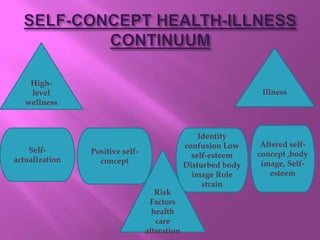
High-
level
wellness
Illness
Risk
Factors
health
care
alteration
Self-
actualization
Positive self-
concept
Altered self-
concept ,body
image, Self-
esteem
Identity
confusion Low
self-esteem
Disturbed body
image Role
strain
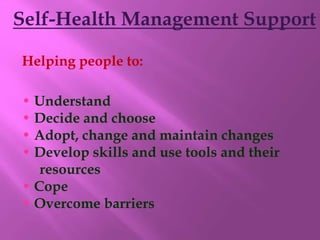
Self-Health Management Support
Helping people to:
• Understand
• Decide and choose
• Adopt, change and maintain changes
• Develop skills and use tools and their
resources
• Cope
• Overcome barriers
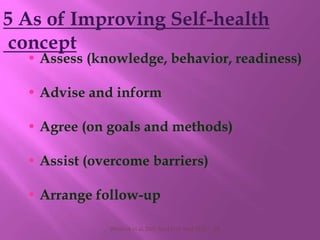
5 As of Improving Self-health
concept
• Assess (knowledge, behavior, readiness)
• Advise and inform
• Agree (on goals and methods)
• Assist (overcome barriers)
• Arrange follow-up
Whitlock et al, 2002 Am J Prev Med 22:267 - 84
Self health concept

Self health concept

  • 1.
    CONCEPT OF SELF HEALTH Mrs.Sneha Sahay Youtham
  • 2.
    Self concept isan individual’s conceptualization about how one think about himself or herself. Self-concept or how one think about himself or herself directly affects one’s self esteem. If the self-concept is related to health that is self-health-concept.
  • 3.
    Self concept &perception of health are clearly associated to each other. A client belief in good health can enhance power of self concept. A student such as “I will never been sick a day in my life”. Indicate that a person’s thought about health are positive. These thought are important to one self perception negative. Self perception is reflected in such statement as “ I will never get any better.
  • 4.
    SELF-HEALTH CONCEPT GOALS To takecare of health issues To carry out normal activities To manage emotional changes
  • 5.
     Self conceptself esteem & self image are essential to a person mental & physical health.  Individual with a positive self concept of high self esteem are better able to develop & maintain was as interpersonal relationship & resist psychological & physical illness.  A healthy self concept enable a person to find happiness in life & to cope with life’s disappointment & changes.
  • 6.
     Failure toachieve a positive self image present obstruction in the treatment of common disorder such as Depression Eating disorder.  People with an unhealthy self concept generally express feeling of worthlessness  Are of nurses major responsibility is to identify persons with a negative self concept or low self esteem & to assist them in developing a more positive view of them selves.
  • 7.
  • 8.
     Identity involvesthe internal sense of individuality, wholeness & consistency of a person over time and in various circumstances.It is related to Ethics.  Identity implies being distinct and separate from others.  Example- Peer pressure (leadership)
  • 9.
     Body imageinvolves attitudes related the body.  It including physical appearance, structure or function, feeling, about body image.  Body image is affected by cognitive growth & physical development.
  • 10.
    Individual who havebeen overweight for many years and than loss weight often have difficulty perceiving themselves as thin. They may even continue to choose clothing in the size they were before they lost weight. Other are patient with amputation, mastectomy, colostomy, paralysis etc.
  • 11.
     Self performanceis the way in which an individual perceives his or her ability to carry out significant.
  • 12.
     self-esteem isan individual’s overall séance of self worth or the emotional appraisal of self concept. it in closely related to other aspect that is identity, body image, self performance.
  • 14.
    BODY IMMAGE *Impaired sensory function *Lossof body structure *Arthritis *Growth & development impaired *Obesity *DM *Incontinence IDENTITY *School entry *Peer pressure *Present-child conflict *Sexual contact *Alcohol & drug abuse *Relationship concerns SLEF-ESTEEM *Neglect by parents *Marital stress *Repeated failures *Dependency on other *Unemployment in family *Imposed social isolation *Loss of job
  • 15.
     Sense ofcompetency  Personal & professional relationship  Spiritual identity  Personality structure  Self-expectations  Social identity  Current feelings about the physical, emotional & Social self  New experiences
  • 16.
     Avoidance ofeye contact  Slumped posture  Overly apologetic  Hesitant speech  Overly angry  Crying  Negative self-evaluation  Hesitant to express views or opinions  Lack of interest in what is happening
  • 17.
    High- level wellness Illness Risk Factors health care alteration Self- actualization Positive self- concept Altered self- concept,body image, Self- esteem Identity confusion Low self-esteem Disturbed body image Role strain
  • 18.
    Self-Health Management Support Helpingpeople to: • Understand • Decide and choose • Adopt, change and maintain changes • Develop skills and use tools and their resources • Cope • Overcome barriers
  • 20.
    5 As ofImproving Self-health concept • Assess (knowledge, behavior, readiness) • Advise and inform • Agree (on goals and methods) • Assist (overcome barriers) • Arrange follow-up Whitlock et al, 2002 Am J Prev Med 22:267 - 84