Measurment Of work,
Power, Energy,
Expenditure
• Measurement of energy expenditure and power
output has many applications in exercise science.
• For example, adequate knowledge of the energy
requirements of physical activities (e.g., running)
is important to a coach in planning a training and
dietary program for athletes.
• This same information can be used by an exercise
specialist to prescribe exercise for adults entering
a fitness program.
• Therefore, an understanding of human energy
expenditure, how it is measured, and its practical
significance is critical for the physical therapist,
coach, physical educator, exercise specialist, or
exercise physiologist.
UNITS OF MEASURE
MATRIC SYSTEM:
•Is the standard system of measurement for
scientists and is used by almost all scientific
journals .
•In the metric system, the basic units of length,
volume, and mass are the meter, the liter, and the
gram, respectively
S.I UNITS:
•A uniform system of reporting scientific
measurement has been developed through
international cooperation.
•This system, known as System International units,
or SI units, has been endorsed by almost all
exercise and sports medicine journals for the
publication of research data
WORK AND POWER
• Work:
• Work is defined as the product of force multiplied
by distance.
Work = force X distance
• The SI unit for force is …….. (N), whereas
• The SI unit for distance is …………….(m)
• Consider the following example to compute
work during a weight-lifting exercise.
• If you lifted a 10-kilogram (Kg) weight
upward over the distance of two meters (m),
the work performed would be:
Work = 97.9 N X 2 m
= 195.8 Joules
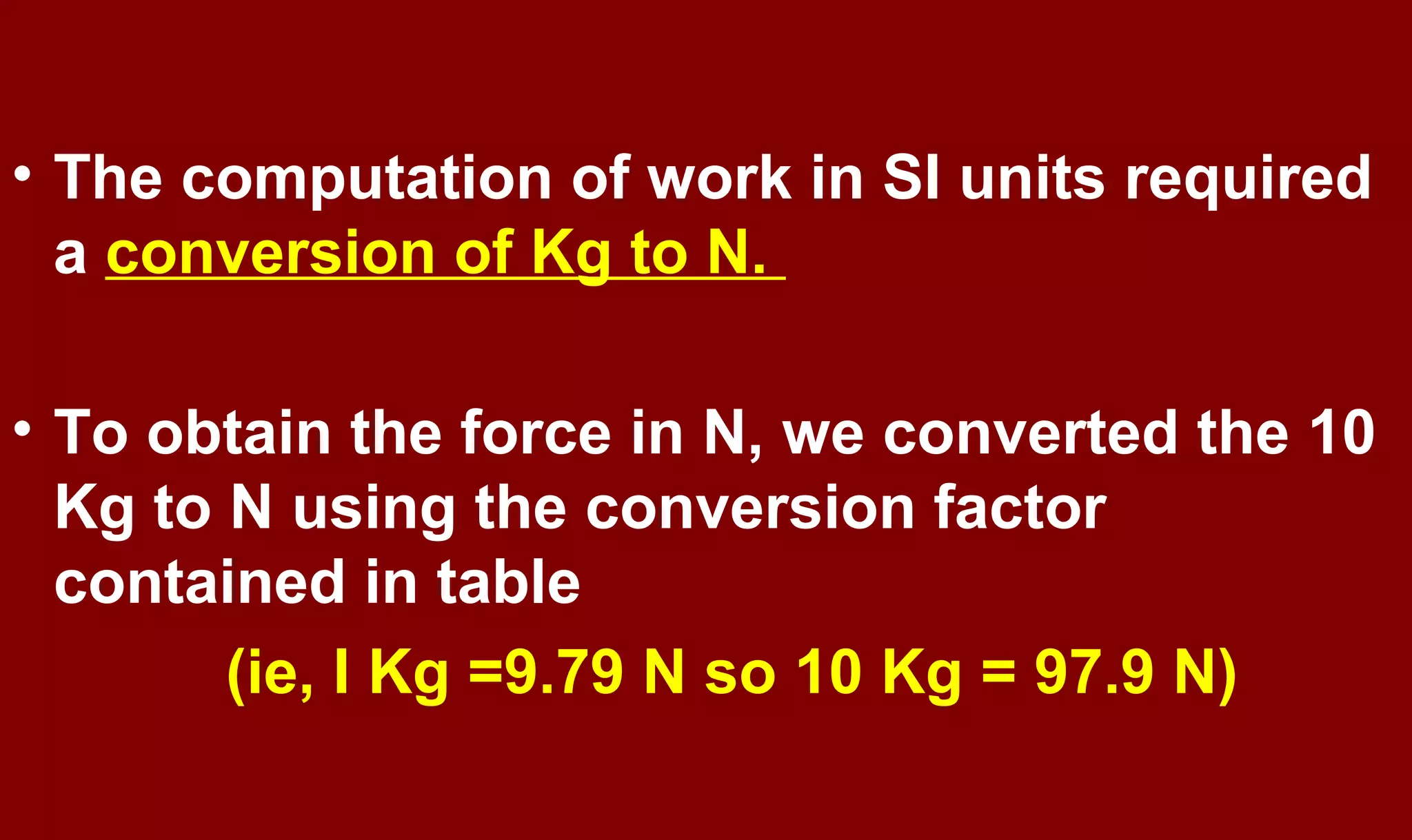
• The computation of work in SI units required
a conversion of Kg to N.
• To obtain the force in N, we converted the 10
Kg to N using the conversion factor
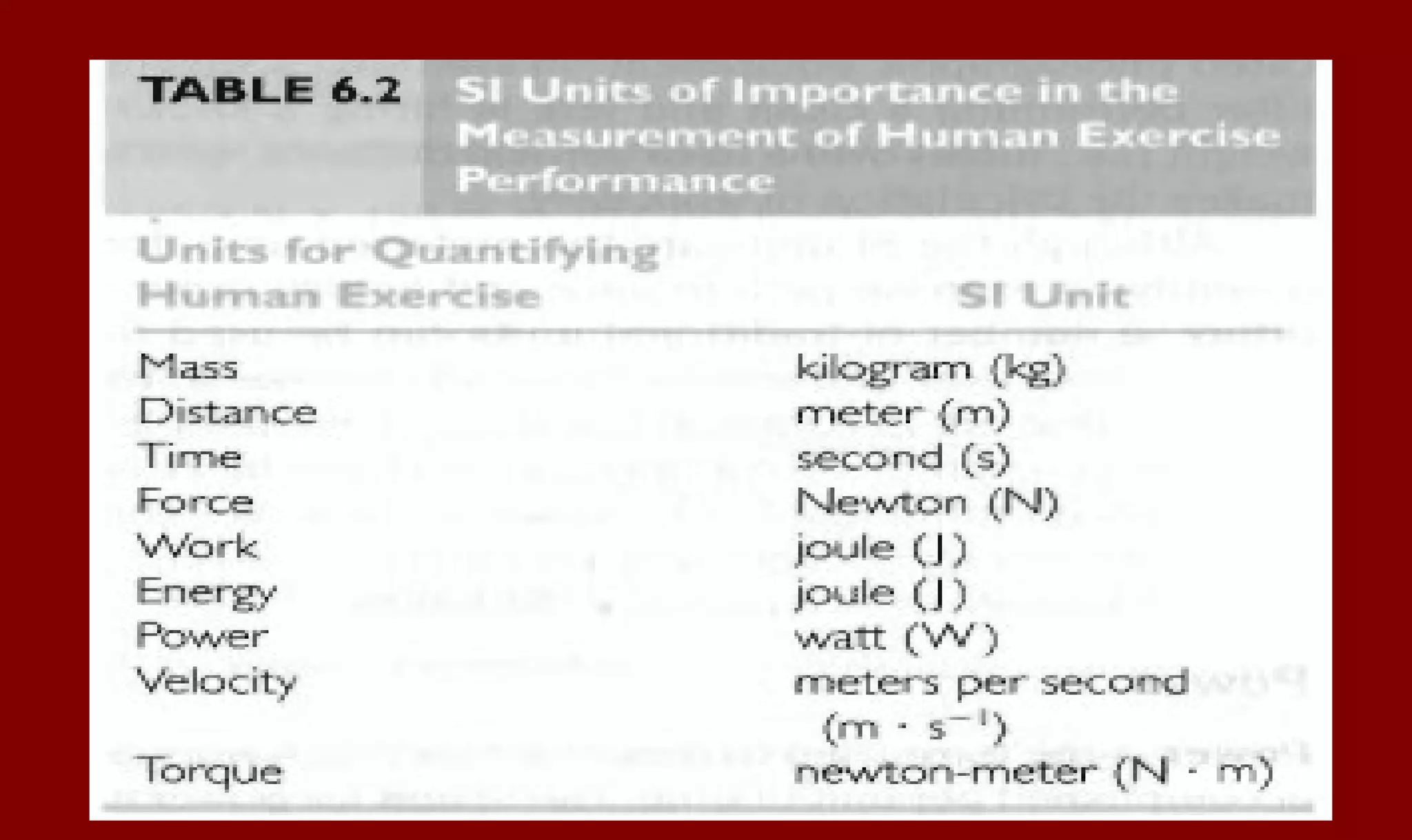
contained in table
(ie, I Kg =9.79 N so 10 Kg = 97.9 N)
• Therefore. the work performed was
computed by : multiplying the force
(expressed in N) times the distance traveled
(expressed in m) with the resulting work
being expressed in Joules, which is the SI
unit for work (where I joule = I Nm; table )
Power
• Power is the term used to describe how much
work is accomplished per unit of time .
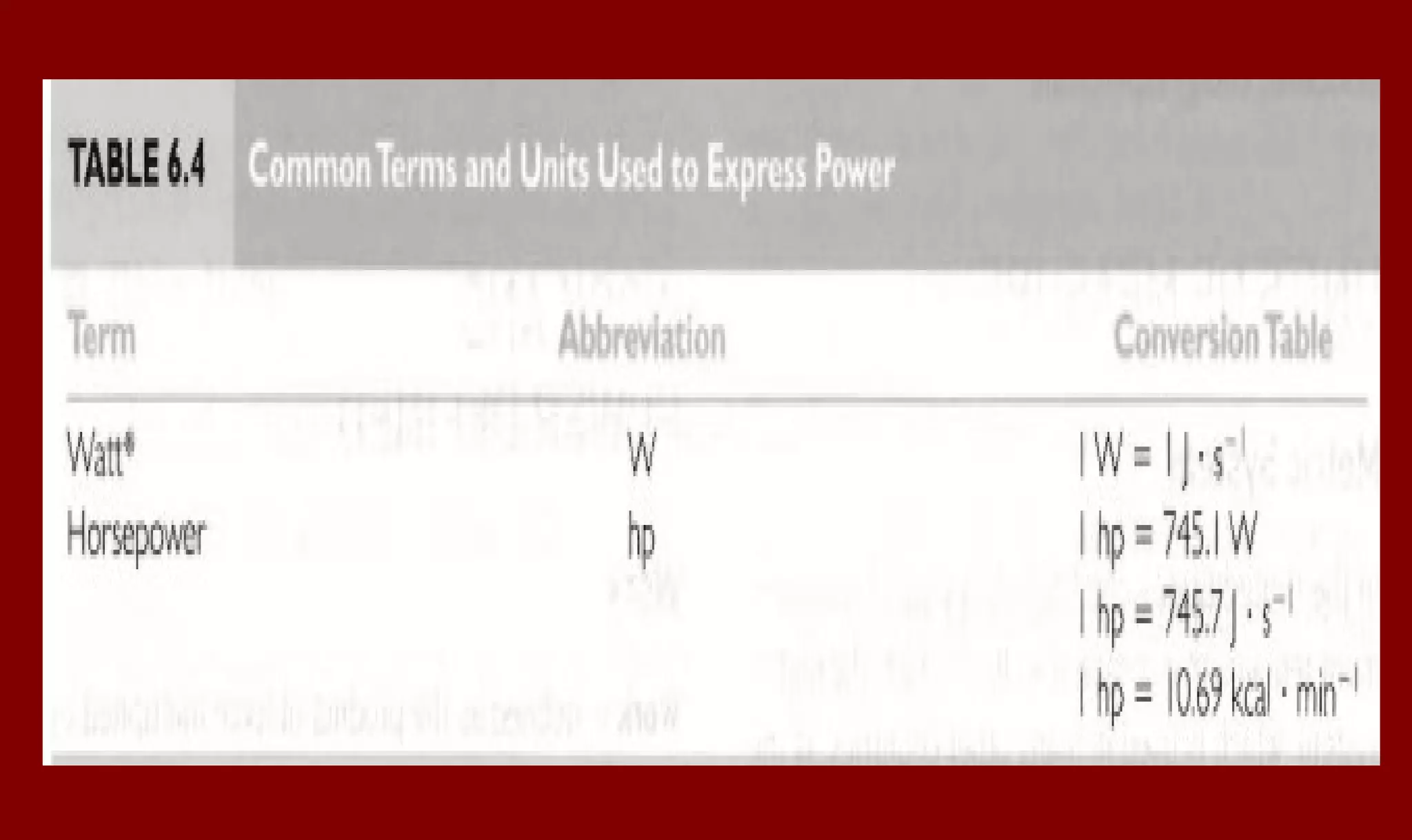
• The SI unit for power is the watt (W) and is defined
as I Joule per second
Power can be calculated as: Power = Work -;- time
• The concept of power is important because it
describes the rate at which work is being
performed (work rate).
• It is the work rate or power output that
describes the intensity of exercise.
• Any healthy adult could perform a total work
output of 20,000 joules.
• However, only a few highly trained athletes could
perform this amount of work in sixty seconds (s).
• Calculation of power output using this example
can be done as follows
Power = 20.000 Joules/60 seconds
= 333.33 watts
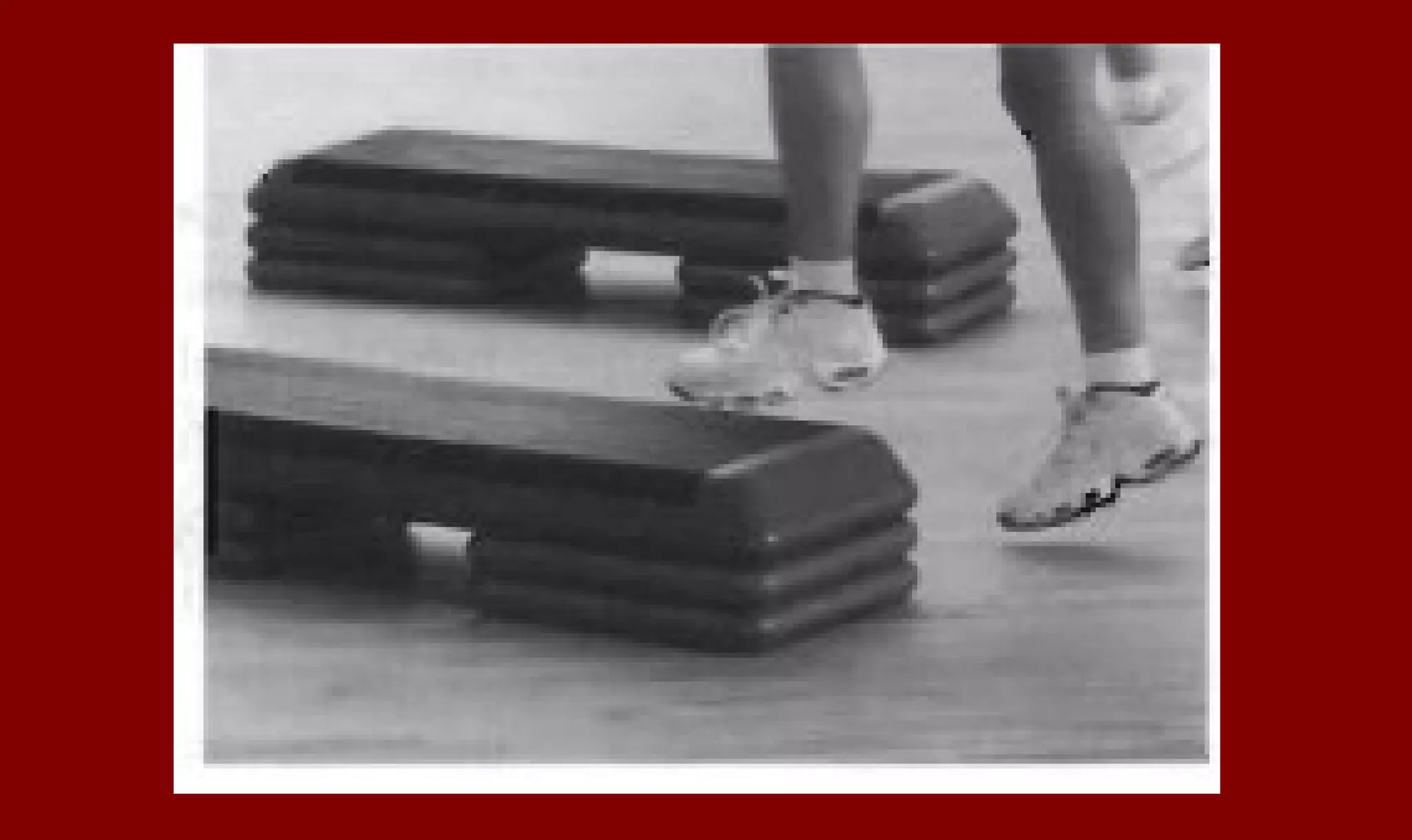
(a) A bench step.
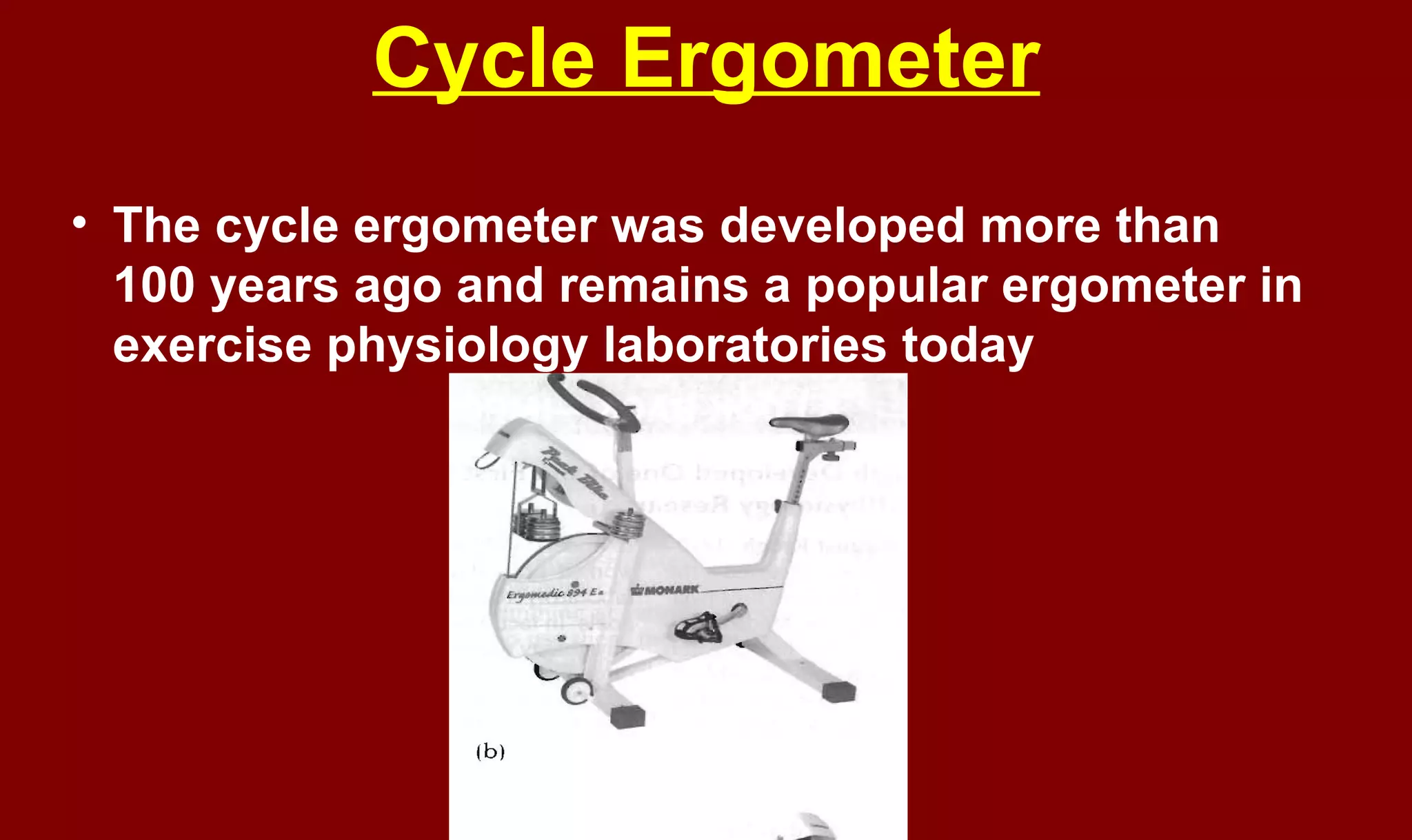
(b) Friction-braked
cycle ergometer.
(c) Motor-driven
treadmill.
(d) Arm crank
ergometer. Arm
crank ergometry can
be used to measure
work output with the
arms.
MEASUREMENT OF WORK AND POWER
• The term ergometry refers to ????
• The word ergometer refers to the apparatus
or device used to measure a specific type of
work
• Many types of ergometers are in use today in
exercise physiology laboratories.
BENCH STEP
• One of the earliest ergometers used to measure
work capacity in humans was the bench step.
• This ergometer is still in use today and simply
involves the subject stepping up and down on a
bench at a specified rate.
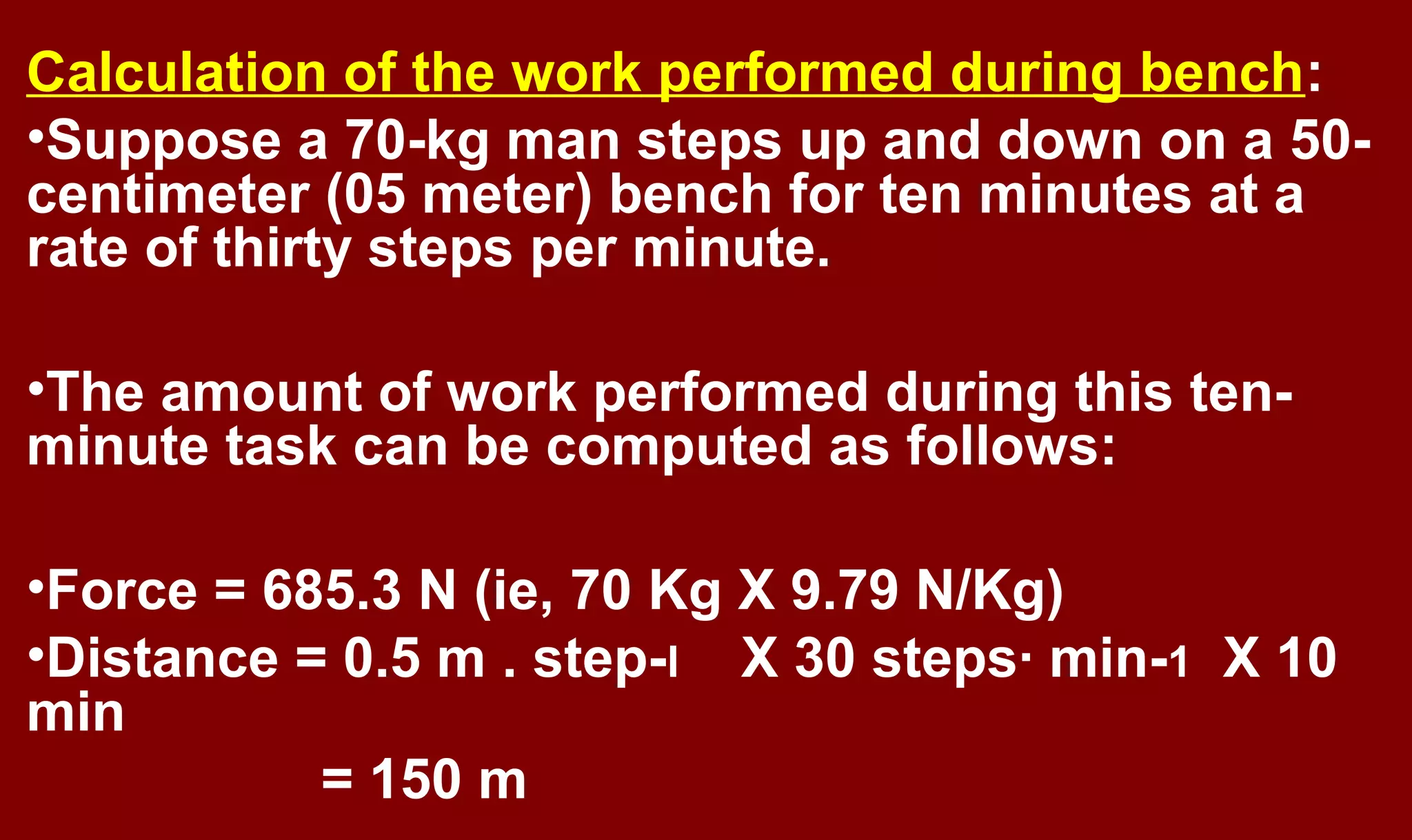
Calculation of the work performed during bench:
•Suppose a 70-kg man steps up and down on a 50-
centimeter (05 meter) bench for ten minutes at a
rate of thirty steps per minute.
•The amount of work performed during this ten-
minute task can be computed as follows:
•Force = 685.3 N (ie, 70 Kg X 9.79 N/Kg)
•Distance = 0.5 m . step-l X 30 steps· min-1 X 10
min
= 150 m
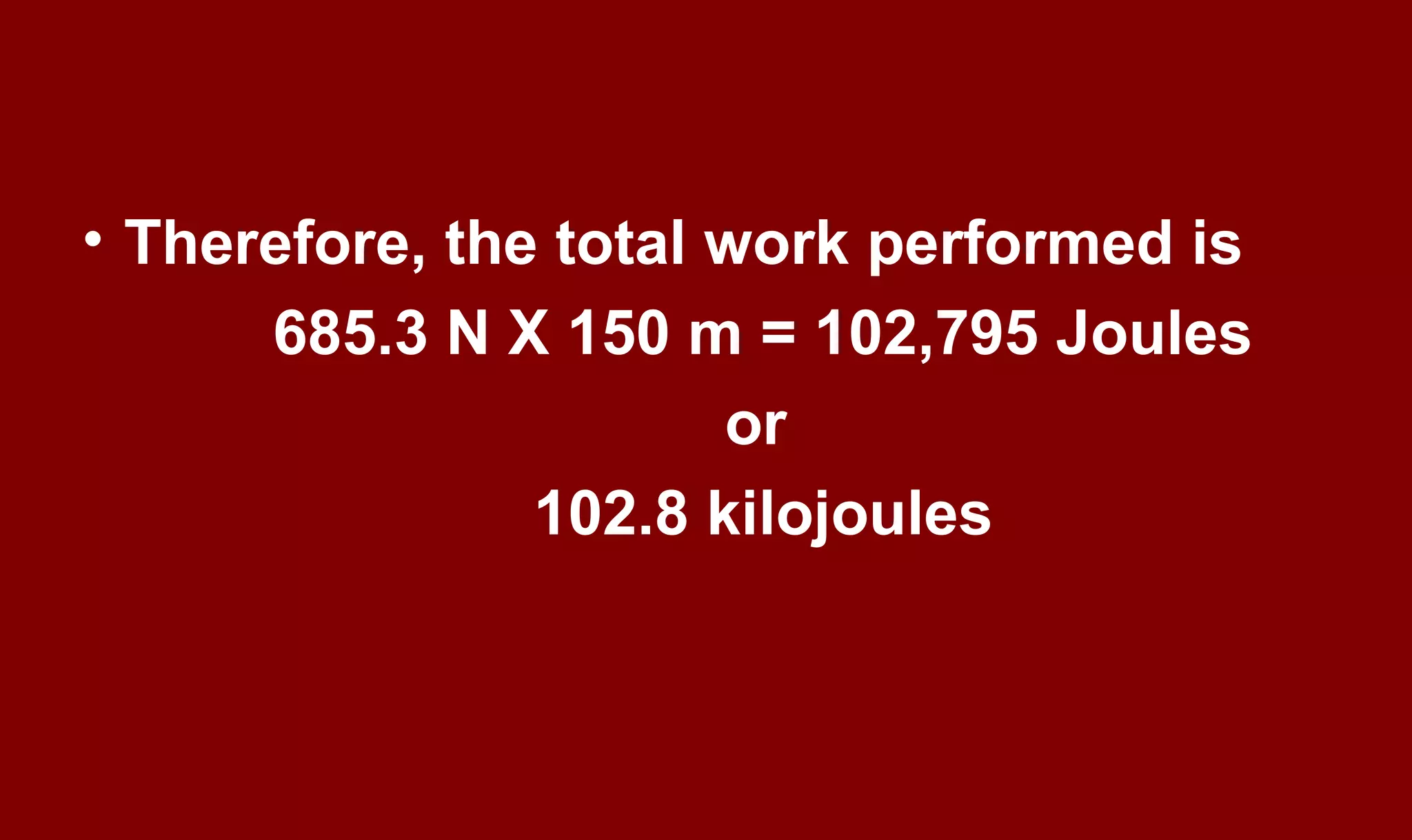
• Therefore, the total work performed is
685.3 N X 150 m = 102,795 Joules
or
102.8 kilojoules
• The power output during this exercise can be
calculated as:
• Power can be calculated as:
Power = Work -;- time
Power = 102,795 Joules/600 seconds
171.3 watts
Cycle Ergometer
• The cycle ergometer was developed more than
100 years ago and remains a popular ergometer in
exercise physiology laboratories today
• This type of ergometer is a stationary exercise
bicycle that permits accurate measurement of the
amount of work performed.
• Distance traveled can be determined by
computing the distance covered per revolution of
the pedals (6 meters per revolution on a standard
Monark cycle) times the number of pedal
revolutions.
• Consider the following example for the
computation of work and power using
the cycle ergometer Calculate work
given:
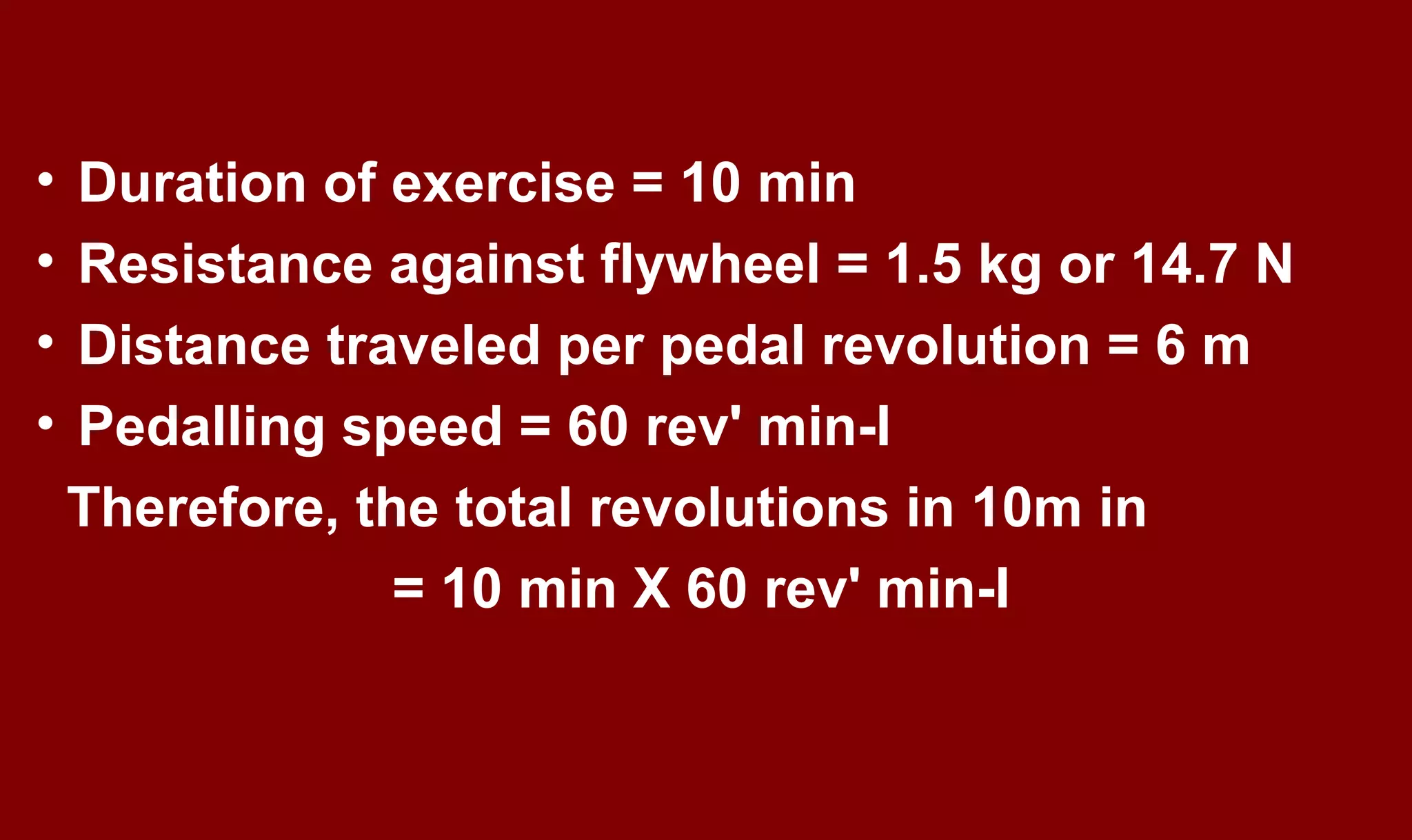
• Duration of exercise = 10 min
• Resistance against flywheel = 1.5 kg or 14.7 N
• Distance traveled per pedal revolution = 6 m
• Pedalling speed = 60 rev' min-I
Therefore, the total revolutions in 10m in
= 10 min X 60 rev' min-I
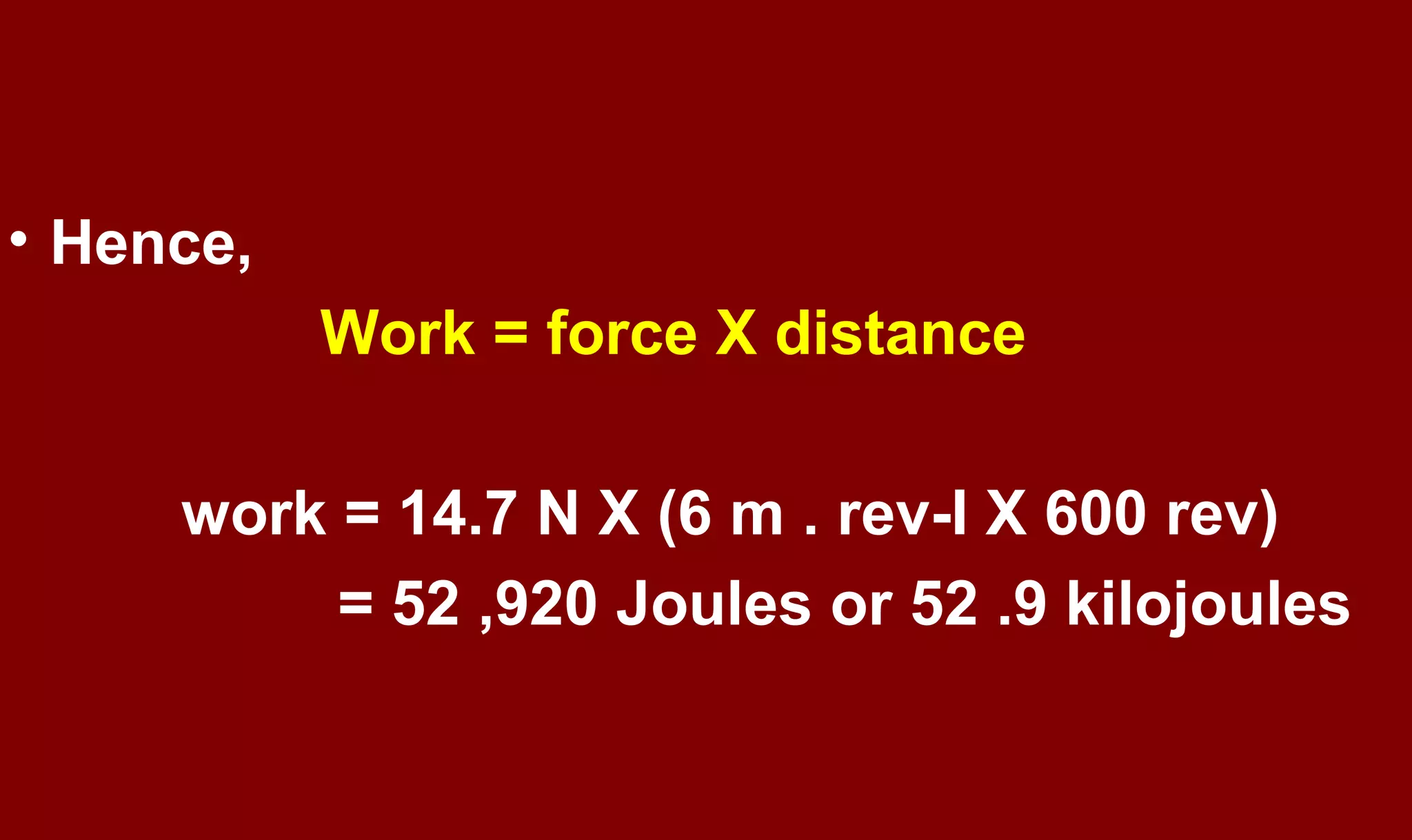
• Hence,
Work = force X distance
work = 14.7 N X (6 m . rev-I X 600 rev)
= 52 ,920 Joules or 52 .9 kilojoules
• The power output in this example is computed by:
Power = Work -;- time
dividing the total work performed by time
Power = 52 ,920 Joules -'- 600 seconds
= 88.2 watts

Lec 4 work energy

  • 1.
    Measurment Of work, Power,Energy, Expenditure
  • 2.
    • Measurement ofenergy expenditure and power output has many applications in exercise science. • For example, adequate knowledge of the energy requirements of physical activities (e.g., running) is important to a coach in planning a training and dietary program for athletes.
  • 3.
    • This sameinformation can be used by an exercise specialist to prescribe exercise for adults entering a fitness program. • Therefore, an understanding of human energy expenditure, how it is measured, and its practical significance is critical for the physical therapist, coach, physical educator, exercise specialist, or exercise physiologist.
  • 4.
    UNITS OF MEASURE MATRICSYSTEM: •Is the standard system of measurement for scientists and is used by almost all scientific journals . •In the metric system, the basic units of length, volume, and mass are the meter, the liter, and the gram, respectively
  • 6.
    S.I UNITS: •A uniformsystem of reporting scientific measurement has been developed through international cooperation. •This system, known as System International units, or SI units, has been endorsed by almost all exercise and sports medicine journals for the publication of research data
  • 8.
    WORK AND POWER •Work: • Work is defined as the product of force multiplied by distance. Work = force X distance • The SI unit for force is …….. (N), whereas • The SI unit for distance is …………….(m)
  • 9.
    • Consider thefollowing example to compute work during a weight-lifting exercise. • If you lifted a 10-kilogram (Kg) weight upward over the distance of two meters (m), the work performed would be: Work = 97.9 N X 2 m = 195.8 Joules
  • 10.
    • The computationof work in SI units required a conversion of Kg to N. • To obtain the force in N, we converted the 10 Kg to N using the conversion factor contained in table (ie, I Kg =9.79 N so 10 Kg = 97.9 N)
  • 12.
    • Therefore. thework performed was computed by : multiplying the force (expressed in N) times the distance traveled (expressed in m) with the resulting work being expressed in Joules, which is the SI unit for work (where I joule = I Nm; table )
  • 13.
    Power • Power isthe term used to describe how much work is accomplished per unit of time . • The SI unit for power is the watt (W) and is defined as I Joule per second Power can be calculated as: Power = Work -;- time
  • 14.
    • The conceptof power is important because it describes the rate at which work is being performed (work rate). • It is the work rate or power output that describes the intensity of exercise.
  • 15.
    • Any healthyadult could perform a total work output of 20,000 joules. • However, only a few highly trained athletes could perform this amount of work in sixty seconds (s). • Calculation of power output using this example can be done as follows Power = 20.000 Joules/60 seconds = 333.33 watts
  • 17.
    (a) A benchstep. (b) Friction-braked cycle ergometer. (c) Motor-driven treadmill. (d) Arm crank ergometer. Arm crank ergometry can be used to measure work output with the arms.
  • 18.
    MEASUREMENT OF WORKAND POWER • The term ergometry refers to ???? • The word ergometer refers to the apparatus or device used to measure a specific type of work • Many types of ergometers are in use today in exercise physiology laboratories.
  • 19.
    BENCH STEP • Oneof the earliest ergometers used to measure work capacity in humans was the bench step. • This ergometer is still in use today and simply involves the subject stepping up and down on a bench at a specified rate.
  • 21.
    Calculation of thework performed during bench: •Suppose a 70-kg man steps up and down on a 50- centimeter (05 meter) bench for ten minutes at a rate of thirty steps per minute. •The amount of work performed during this ten- minute task can be computed as follows: •Force = 685.3 N (ie, 70 Kg X 9.79 N/Kg) •Distance = 0.5 m . step-l X 30 steps· min-1 X 10 min = 150 m
  • 22.
    • Therefore, thetotal work performed is 685.3 N X 150 m = 102,795 Joules or 102.8 kilojoules
  • 23.
    • The poweroutput during this exercise can be calculated as: • Power can be calculated as: Power = Work -;- time Power = 102,795 Joules/600 seconds 171.3 watts
  • 24.
    Cycle Ergometer • Thecycle ergometer was developed more than 100 years ago and remains a popular ergometer in exercise physiology laboratories today
  • 25.
    • This typeof ergometer is a stationary exercise bicycle that permits accurate measurement of the amount of work performed. • Distance traveled can be determined by computing the distance covered per revolution of the pedals (6 meters per revolution on a standard Monark cycle) times the number of pedal revolutions.
  • 26.
    • Consider thefollowing example for the computation of work and power using the cycle ergometer Calculate work given:
  • 27.
    • Duration ofexercise = 10 min • Resistance against flywheel = 1.5 kg or 14.7 N • Distance traveled per pedal revolution = 6 m • Pedalling speed = 60 rev' min-I Therefore, the total revolutions in 10m in = 10 min X 60 rev' min-I
  • 28.
    • Hence, Work =force X distance work = 14.7 N X (6 m . rev-I X 600 rev) = 52 ,920 Joules or 52 .9 kilojoules
  • 29.
    • The poweroutput in this example is computed by: Power = Work -;- time dividing the total work performed by time Power = 52 ,920 Joules -'- 600 seconds = 88.2 watts