SCHOOL TO WORK TRANSITION
Learnings
Evangeline M. Clemente
23 August 2013
Takeaways
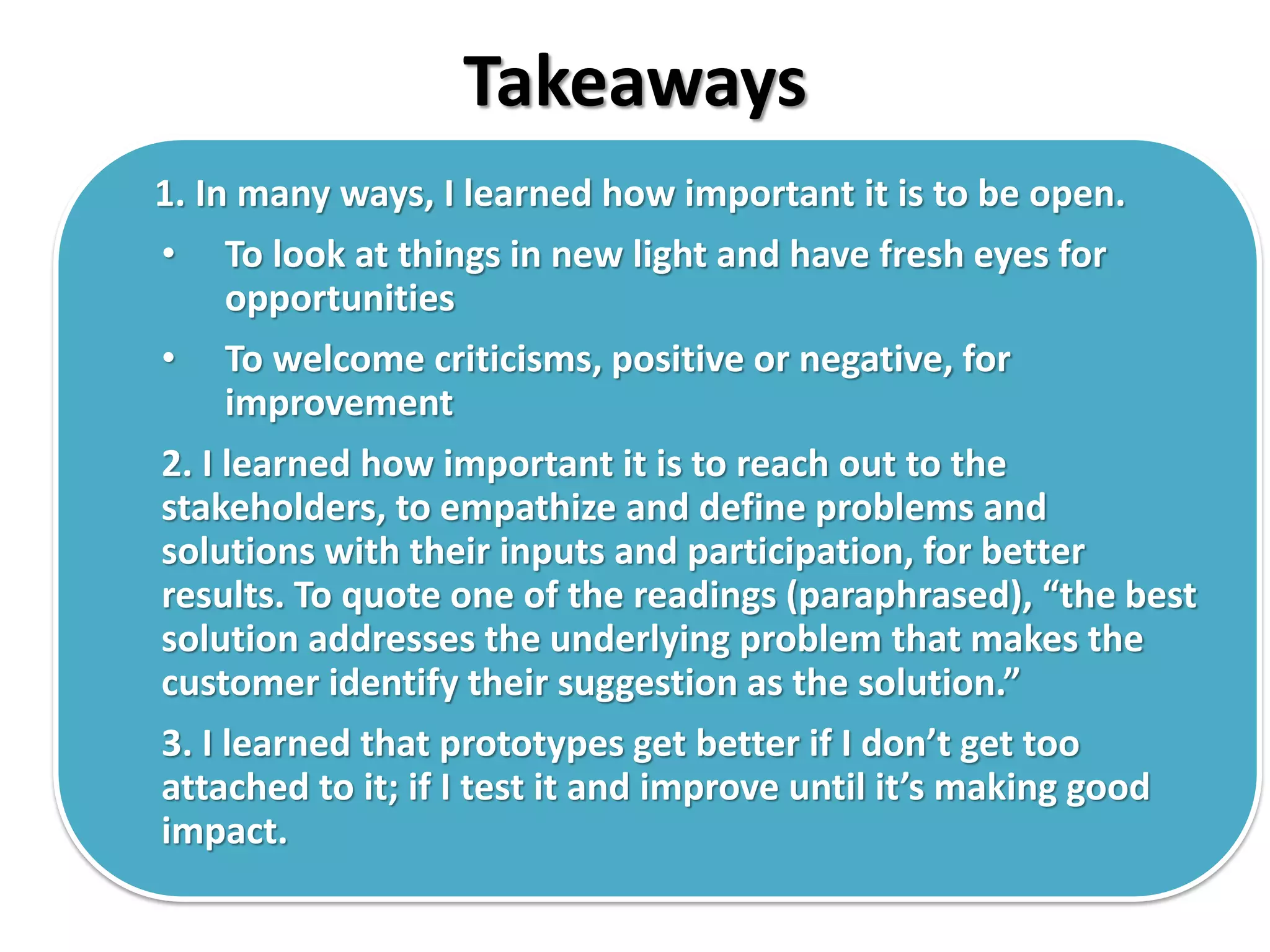
1. In many ways, I learned how important it is to be open.
• To look at things in new light and have fresh eyes for
opportunities
• To welcome criticisms, positive or negative, for
improvement
2. I learned how important it is to reach out to the
stakeholders, to empathize and define problems and
solutions with their inputs and participation, for better
results. To quote one of the readings (paraphrased), “the best
solution addresses the underlying problem that makes the
customer identify their suggestion as the solution.”
3. I learned that prototypes get better if I don’t get too
attached to it; if I test it and improve until it’s making good
impact.
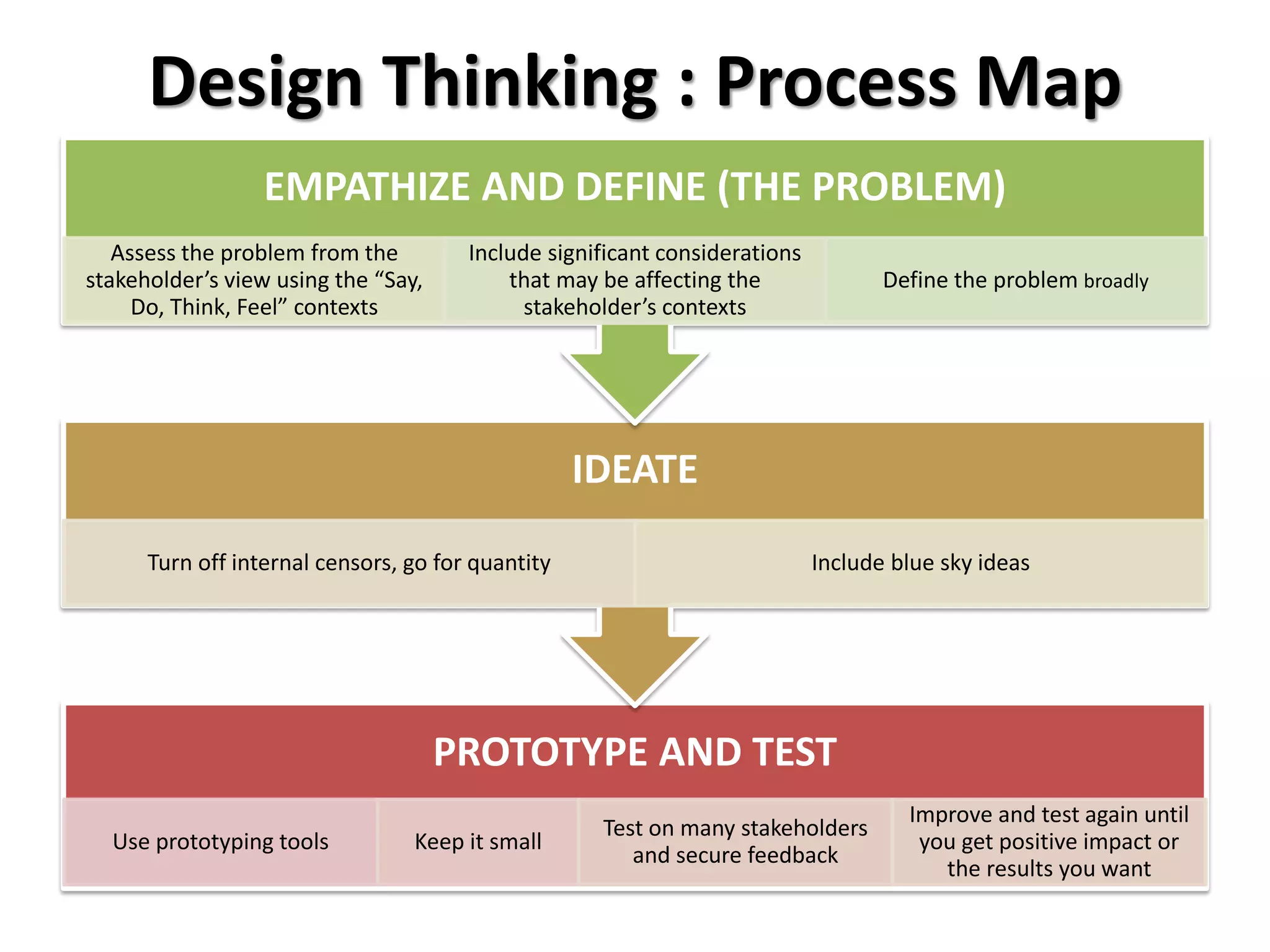
Design Thinking : Process Map
PROTOTYPE AND TEST
Use prototyping tools Keep it small
Test on many stakeholders
and secure feedback
Improve and test again until
you get positive impact or
the results you want
IDEATE
Turn off internal censors, go for quantity Include blue sky ideas
EMPATHIZE AND DEFINE (THE PROBLEM)
Assess the problem from the
stakeholder’s view using the “Say,
Do, Think, Feel” contexts
Include significant considerations
that may be affecting the
stakeholder’s contexts
Define the problem broadly
Reflection
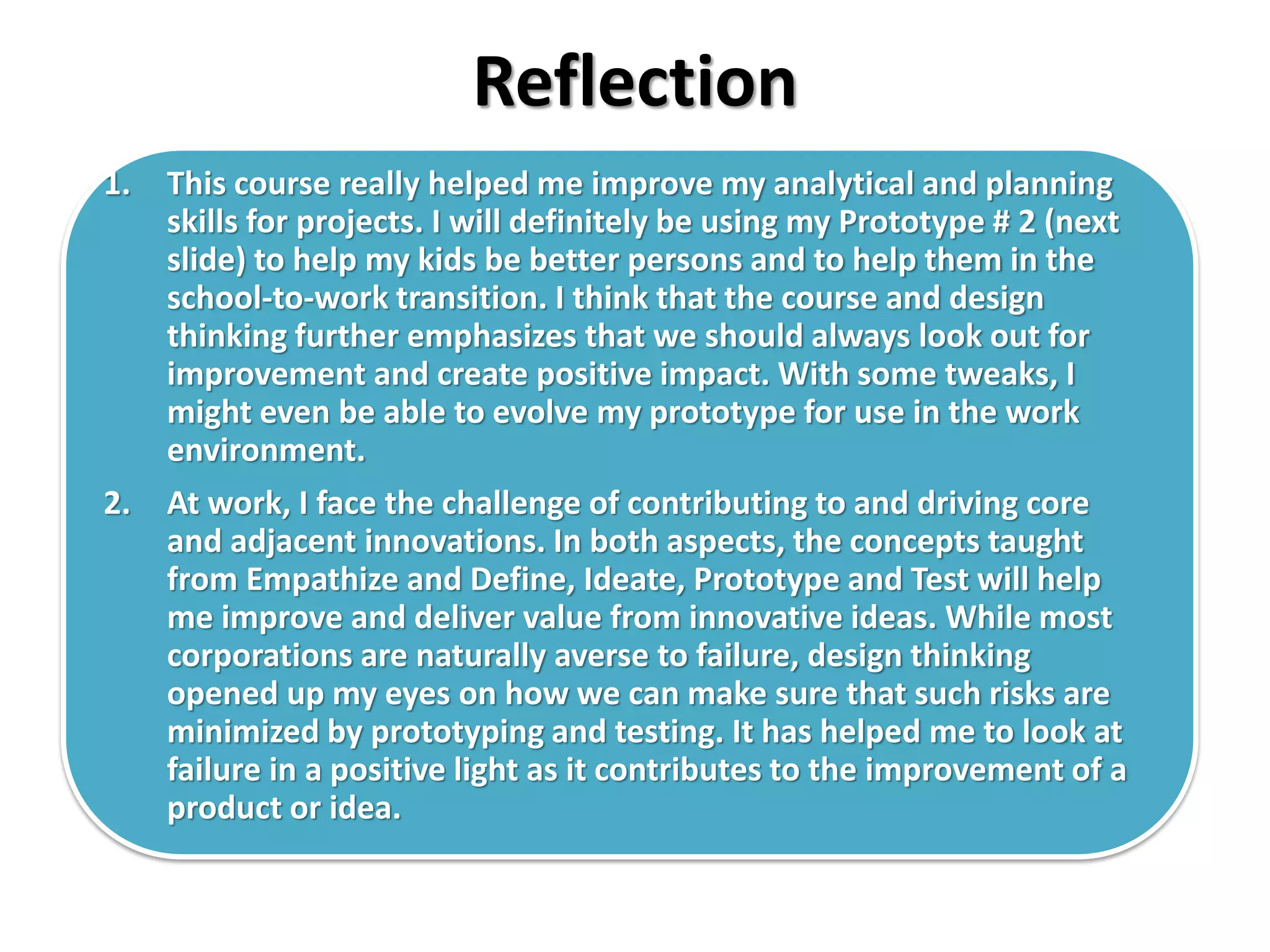
1. This course really helped me improve my analytical and planning
skills for projects. I will definitely be using my Prototype # 2 (next
slide) to help my kids be better persons and to help them in the
school-to-work transition. I think that the course and design
thinking further emphasizes that we should always look out for
improvement and create positive impact. With some tweaks, I
might even be able to evolve my prototype for use in the work
environment.
2. At work, I face the challenge of contributing to and driving core
and adjacent innovations. In both aspects, the concepts taught
from Empathize and Define, Ideate, Prototype and Test will help
me improve and deliver value from innovative ideas. While most
corporations are naturally averse to failure, design thinking
opened up my eyes on how we can make sure that such risks are
minimized by prototyping and testing. It has helped me to look at
failure in a positive light as it contributes to the improvement of a
product or idea.
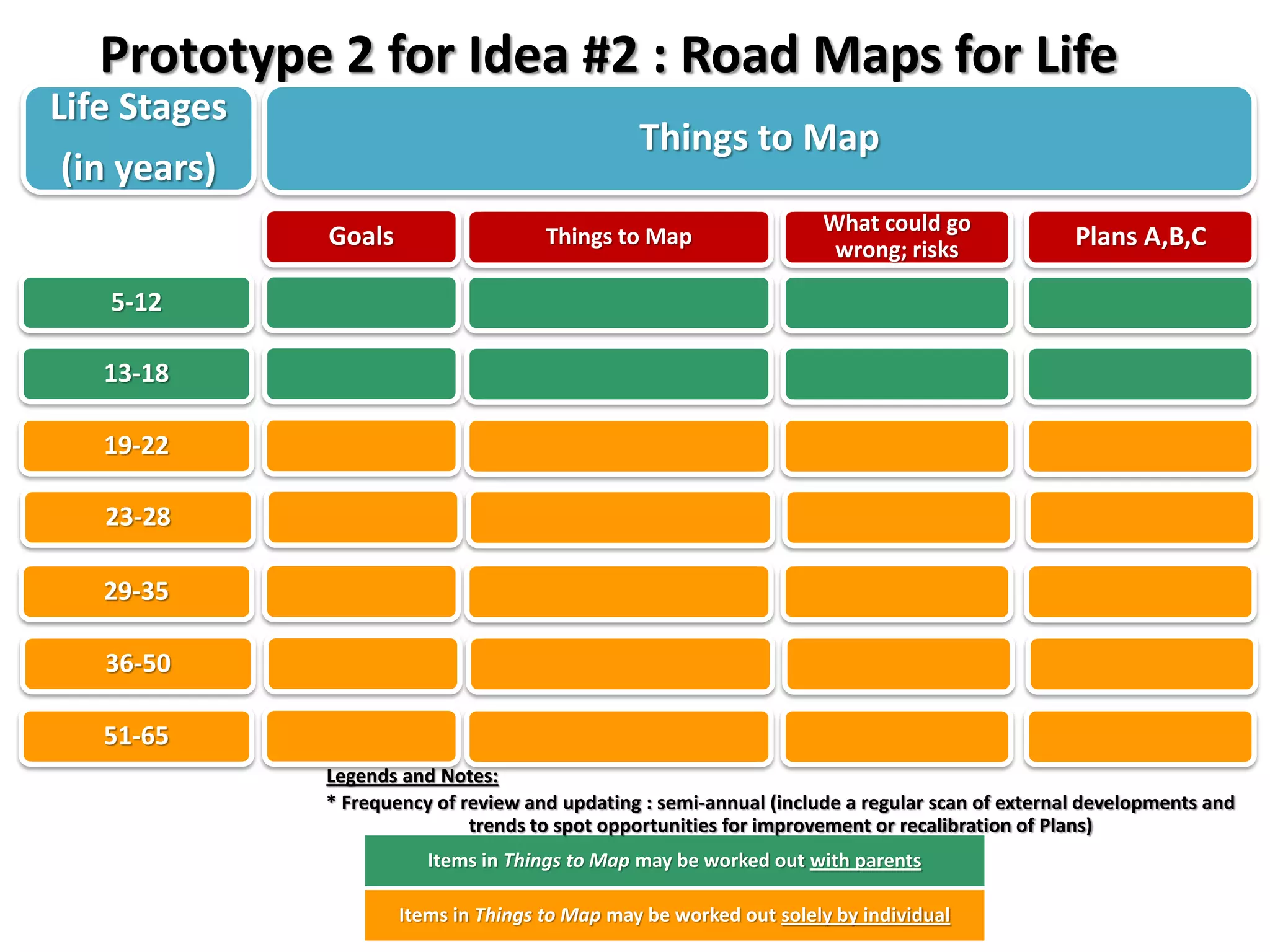
Prototype 2 for Idea #2 : Road Maps for Life
Life Stages
(in years)
Things to Map
5-12
13-18
19-22
23-28
29-35
36-50
51-65
Things to Map
What could go
wrong; risks Plans A,B,C
Items in Things to Map may be worked out with parents
Items in Things to Map may be worked out solely by individual
Legends and Notes:
* Frequency of review and updating : semi-annual (include a regular scan of external developments and
trends to spot opportunities for improvement or recalibration of Plans)
Goals
Thank you!
Evangeline M. Clemente

Learnings evangeline clemente

  • 1.
    SCHOOL TO WORKTRANSITION Learnings Evangeline M. Clemente 23 August 2013
  • 2.
    Takeaways 1. In manyways, I learned how important it is to be open. • To look at things in new light and have fresh eyes for opportunities • To welcome criticisms, positive or negative, for improvement 2. I learned how important it is to reach out to the stakeholders, to empathize and define problems and solutions with their inputs and participation, for better results. To quote one of the readings (paraphrased), “the best solution addresses the underlying problem that makes the customer identify their suggestion as the solution.” 3. I learned that prototypes get better if I don’t get too attached to it; if I test it and improve until it’s making good impact.
  • 3.
    Design Thinking :Process Map PROTOTYPE AND TEST Use prototyping tools Keep it small Test on many stakeholders and secure feedback Improve and test again until you get positive impact or the results you want IDEATE Turn off internal censors, go for quantity Include blue sky ideas EMPATHIZE AND DEFINE (THE PROBLEM) Assess the problem from the stakeholder’s view using the “Say, Do, Think, Feel” contexts Include significant considerations that may be affecting the stakeholder’s contexts Define the problem broadly
  • 4.
    Reflection 1. This coursereally helped me improve my analytical and planning skills for projects. I will definitely be using my Prototype # 2 (next slide) to help my kids be better persons and to help them in the school-to-work transition. I think that the course and design thinking further emphasizes that we should always look out for improvement and create positive impact. With some tweaks, I might even be able to evolve my prototype for use in the work environment. 2. At work, I face the challenge of contributing to and driving core and adjacent innovations. In both aspects, the concepts taught from Empathize and Define, Ideate, Prototype and Test will help me improve and deliver value from innovative ideas. While most corporations are naturally averse to failure, design thinking opened up my eyes on how we can make sure that such risks are minimized by prototyping and testing. It has helped me to look at failure in a positive light as it contributes to the improvement of a product or idea.
  • 5.
    Prototype 2 forIdea #2 : Road Maps for Life Life Stages (in years) Things to Map 5-12 13-18 19-22 23-28 29-35 36-50 51-65 Things to Map What could go wrong; risks Plans A,B,C Items in Things to Map may be worked out with parents Items in Things to Map may be worked out solely by individual Legends and Notes: * Frequency of review and updating : semi-annual (include a regular scan of external developments and trends to spot opportunities for improvement or recalibration of Plans) Goals
  • 6.