1. List of 3 key takeaways/learnings
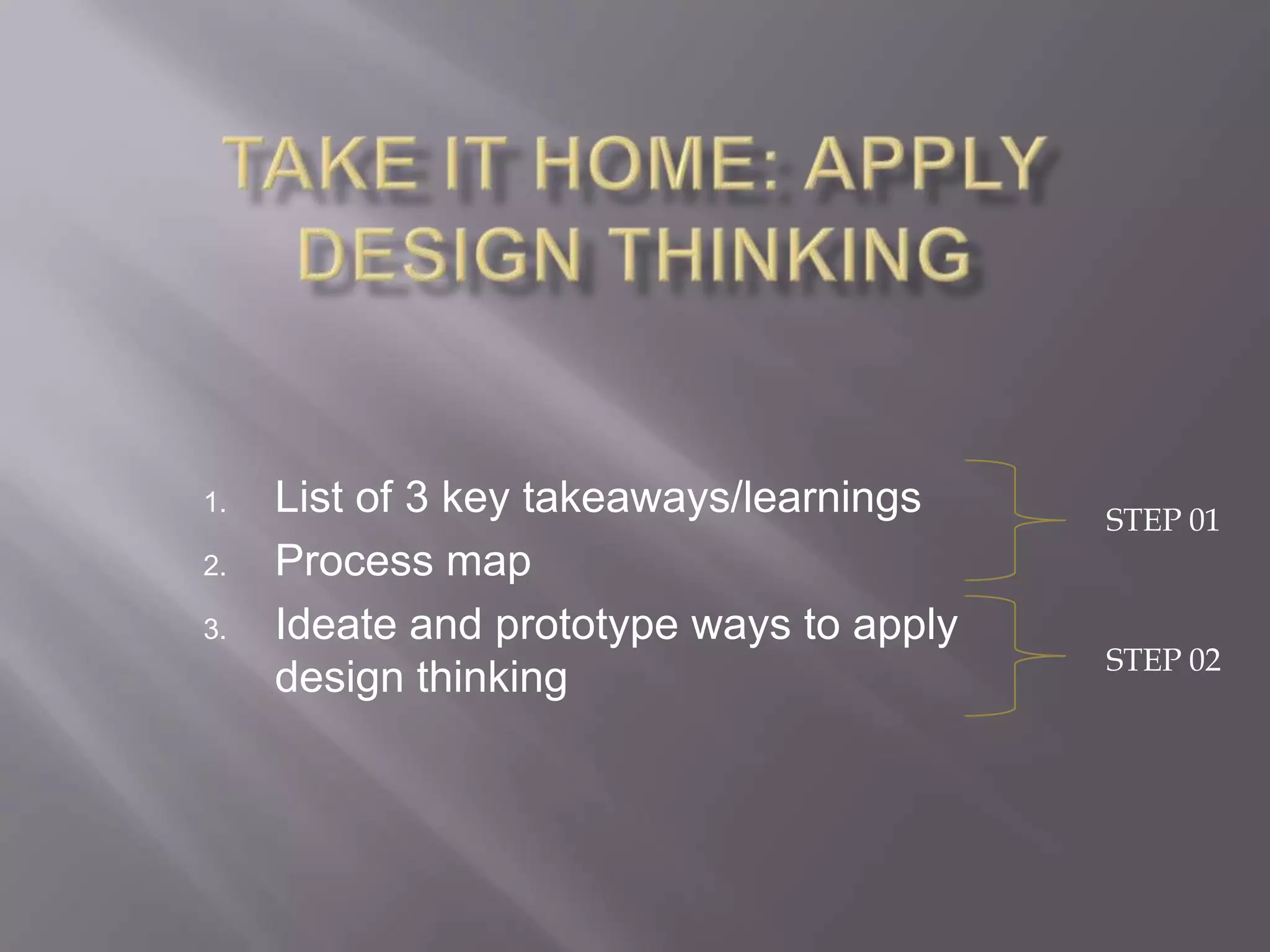
2. Process map
3. Ideate and prototype ways to apply
design thinking
STEP 01
STEP 02
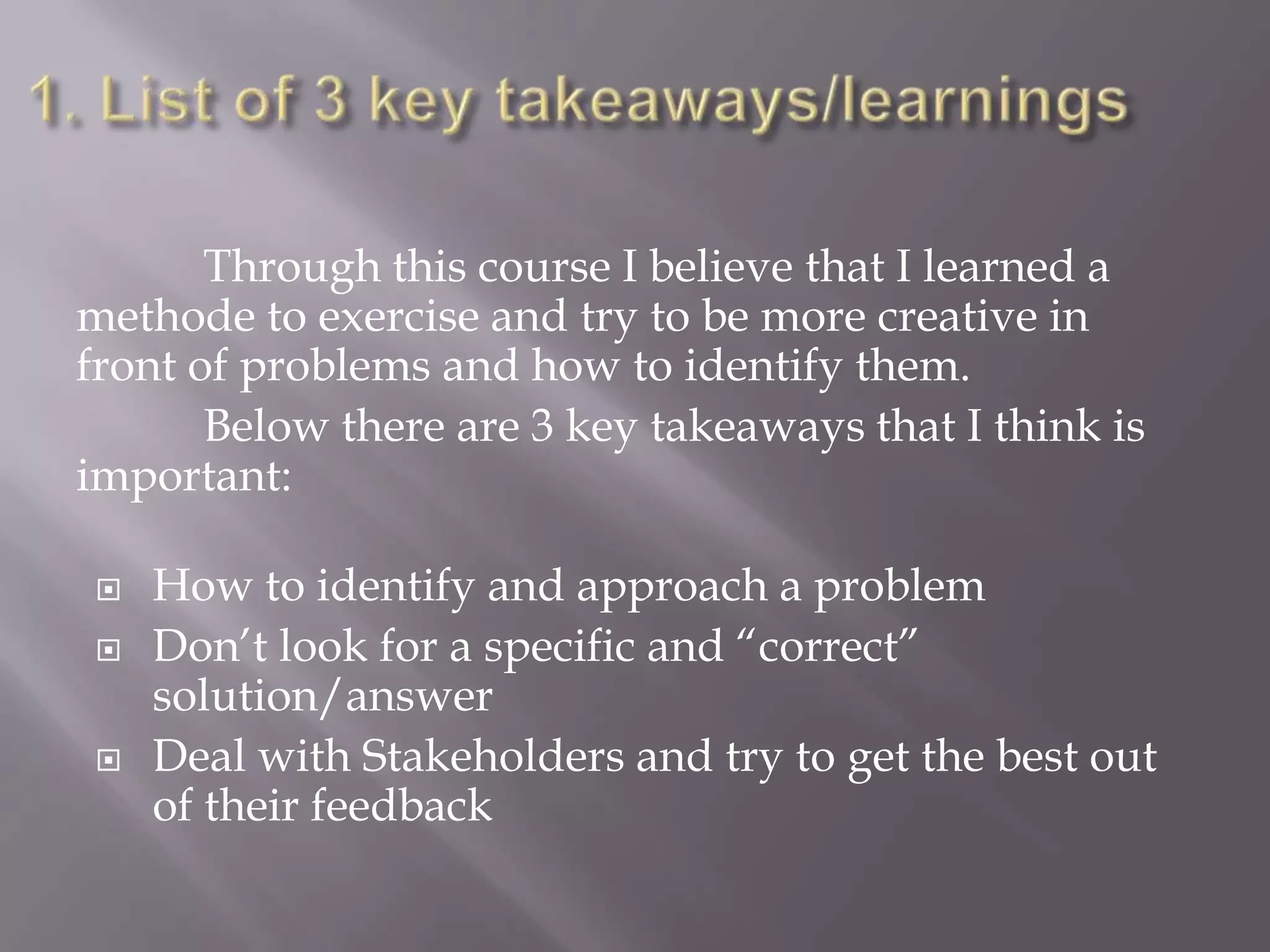
Through this course I believe that I learned a
methode to exercise and try to be more creative in
front of problems and how to identify them.
Below there are 3 key takeaways that I think is
important:
 How to identify and approach a problem
 Don’t look for a specific and “correct”
solution/answer
 Deal with Stakeholders and try to get the best out
of their feedback
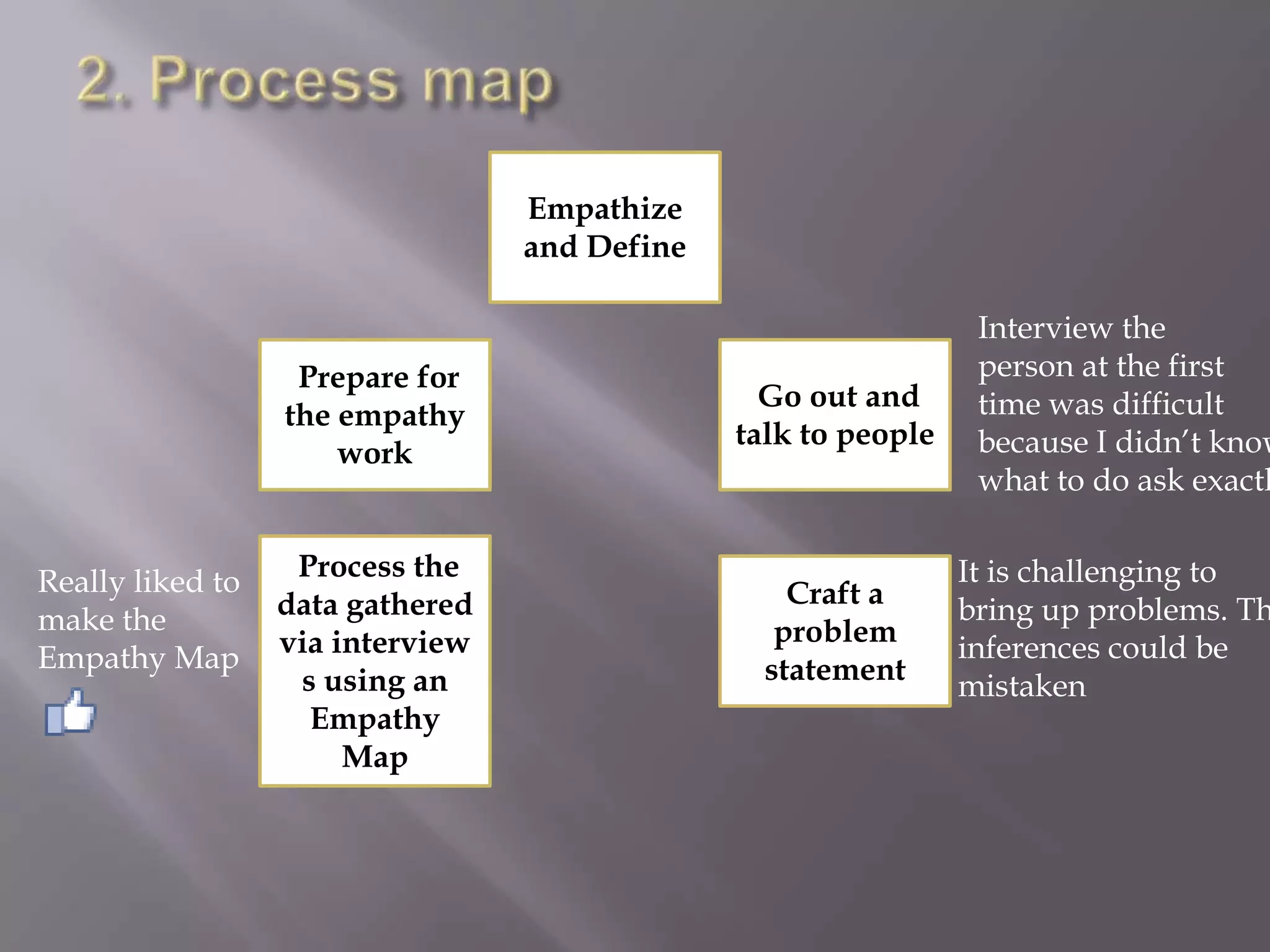
Empathize
and Define
Prepare for
the empathy
work
Craft a
problem
statement
Go out and
talk to people
Process the
data gathered
via interview
s using an
Empathy
Map
Really liked to
make the
Empathy Map
Interview the
person at the first
time was difficult
because I didn’t know
what to do ask exactl
It is challenging to
bring up problems. Th
inferences could be
mistaken
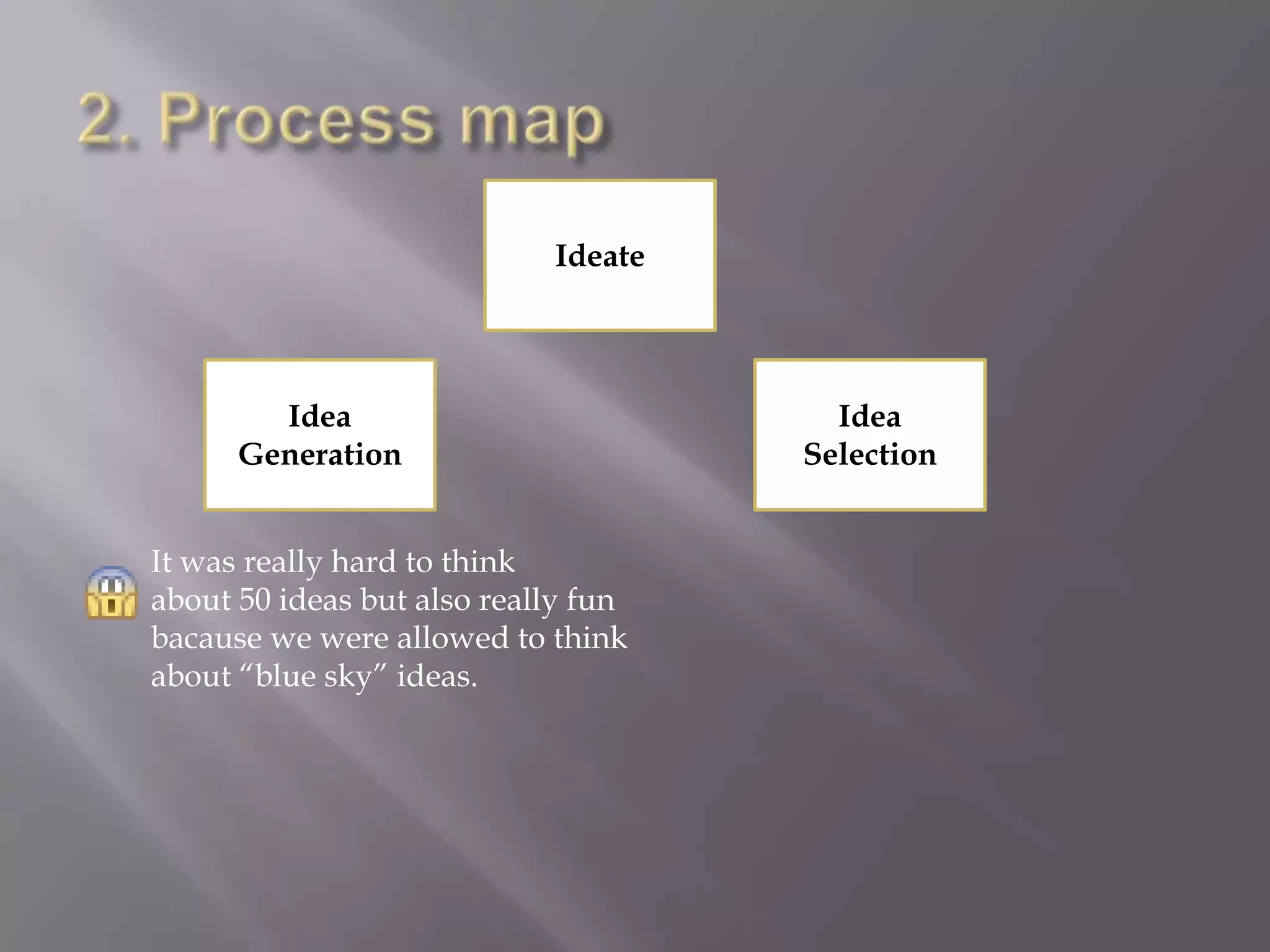
Ideate
Idea
Generation
Idea
Selection
It was really hard to think
about 50 ideas but also really fun
bacause we were allowed to think
about “blue sky” ideas.
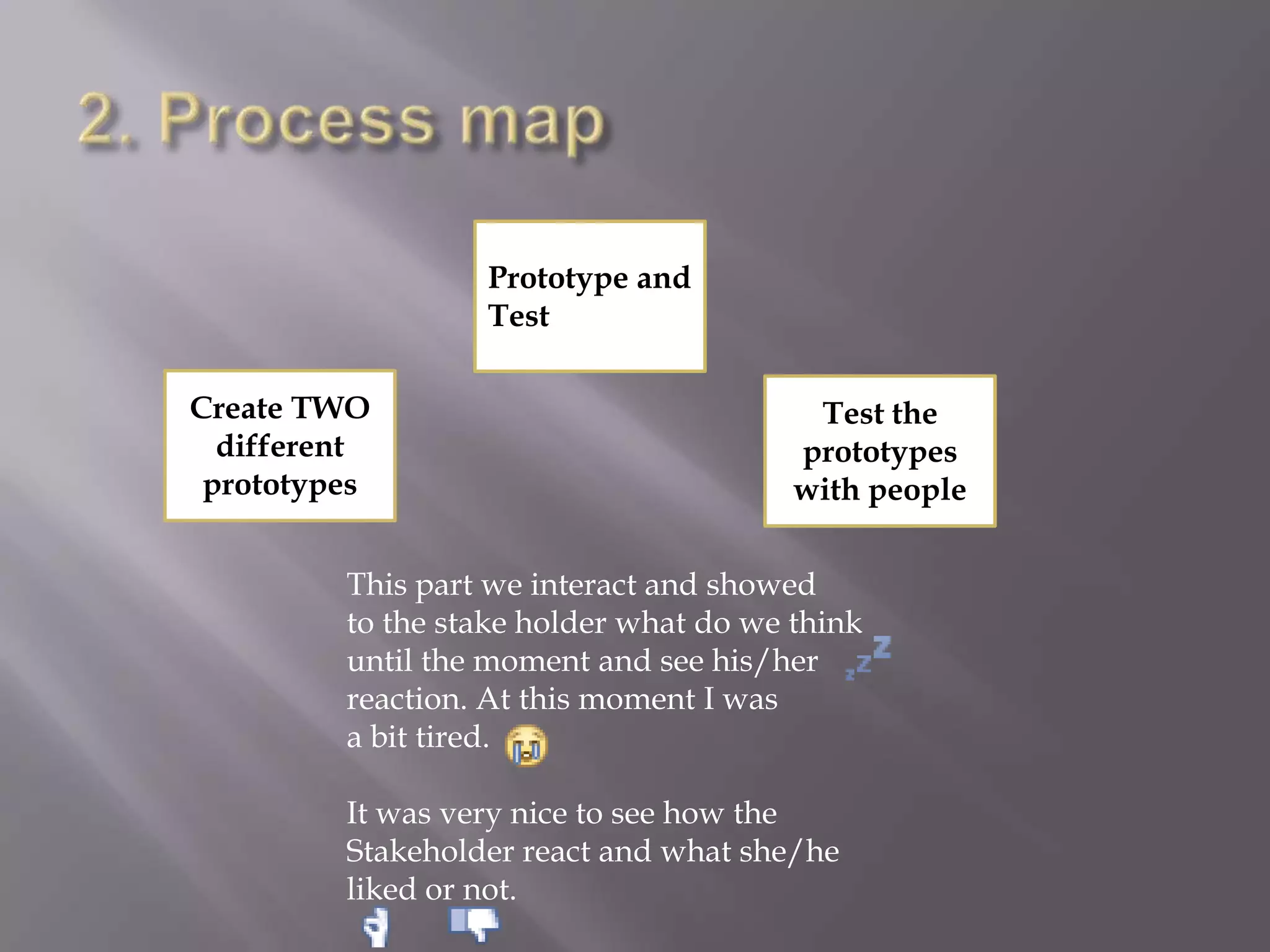
Create TWO
different
prototypes
Test the
prototypes
with people
Prototype and
Test
This part we interact and showed
to the stake holder what do we think
until the moment and see his/her
reaction. At this moment I was
a bit tired.
It was very nice to see how the
Stakeholder react and what she/he
liked or not.
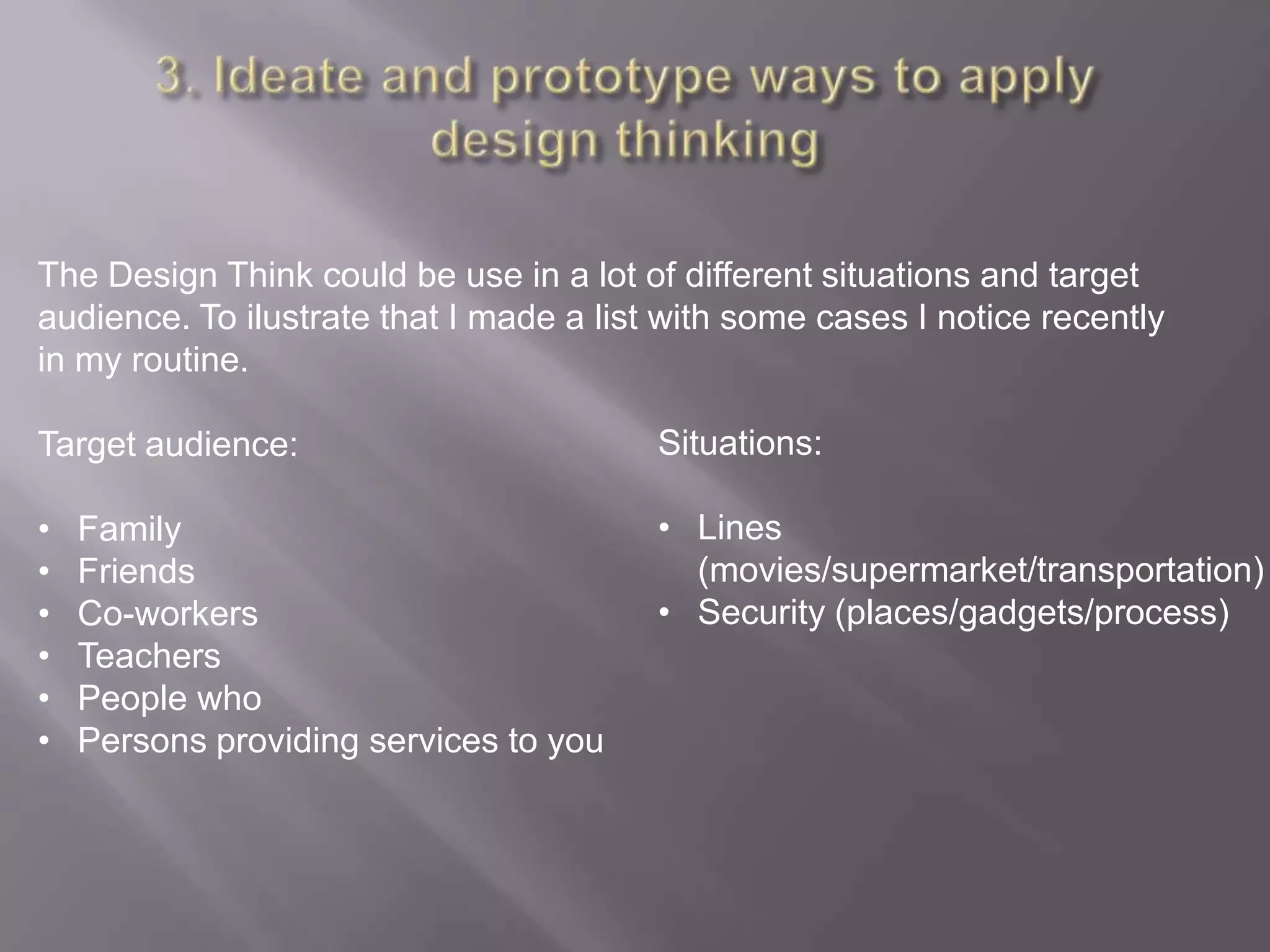
The Design Think could be use in a lot of different situations and target
audience. To ilustrate that I made a list with some cases I notice recently
in my routine.
Target audience:
• Family
• Friends
• Co-workers
• Teachers
• People who
• Persons providing services to you
Situations:
• Lines
(movies/supermarket/transportation)
• Security (places/gadgets/process)
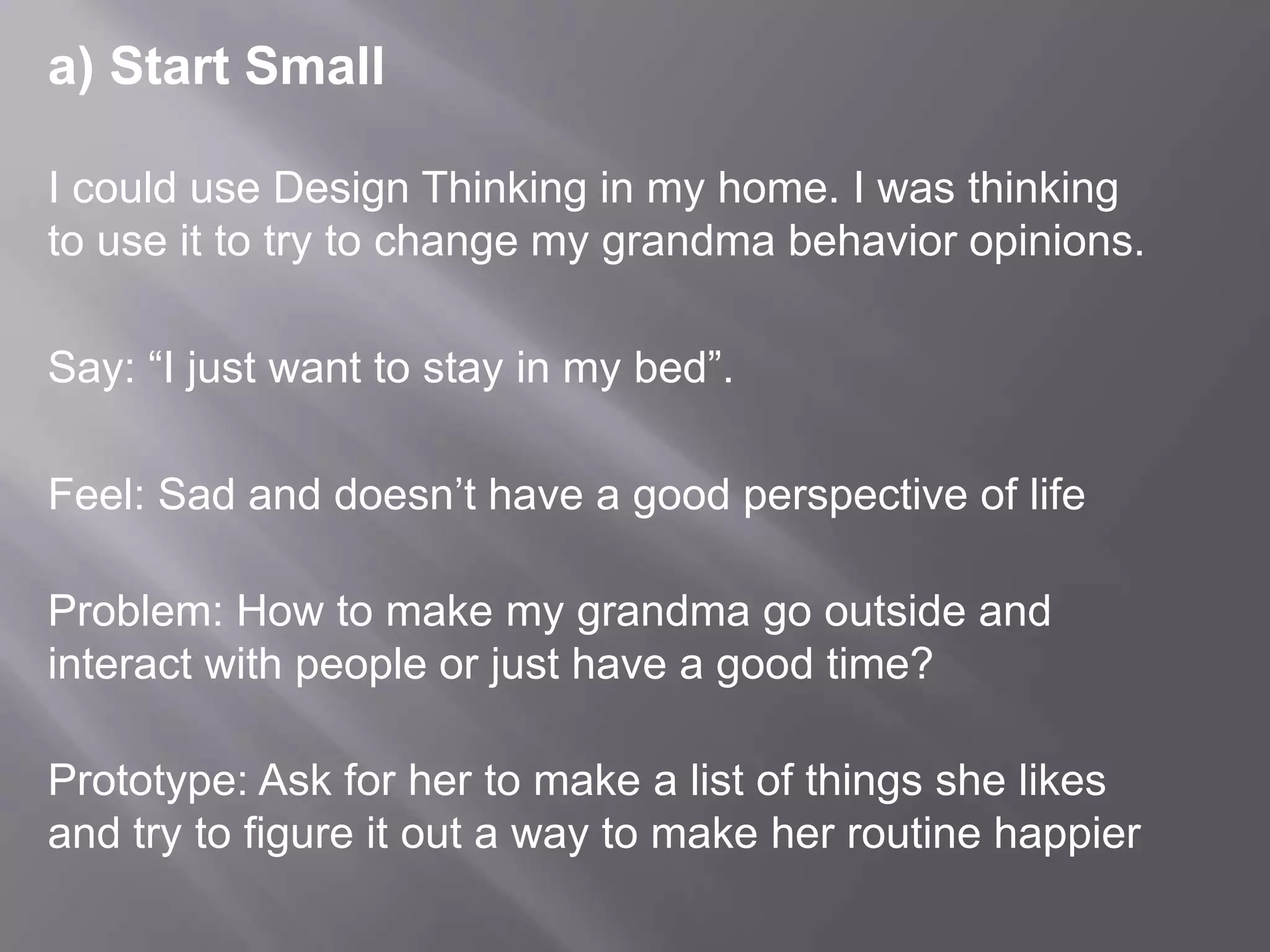
a) Start Small
I could use Design Thinking in my home. I was thinking
to use it to try to change my grandma behavior opinions.
Say: “I just want to stay in my bed”.
Feel: Sad and doesn’t have a good perspective of life
Problem: How to make my grandma go outside and
interact with people or just have a good time?
Prototype: Ask for her to make a list of things she likes
and try to figure it out a way to make her routine happier
b) build on the first ideas
I use public transportation (subway and train)
and the demand is much bigger than the
supply.
I could spend some time thinking about how
could I organize the logistics flow of people to
control and avoid confusions.

Take it home apply design thinking

  • 1.
    1. List of3 key takeaways/learnings 2. Process map 3. Ideate and prototype ways to apply design thinking STEP 01 STEP 02
  • 2.
    Through this courseI believe that I learned a methode to exercise and try to be more creative in front of problems and how to identify them. Below there are 3 key takeaways that I think is important:  How to identify and approach a problem  Don’t look for a specific and “correct” solution/answer  Deal with Stakeholders and try to get the best out of their feedback
  • 3.
    Empathize and Define Prepare for theempathy work Craft a problem statement Go out and talk to people Process the data gathered via interview s using an Empathy Map Really liked to make the Empathy Map Interview the person at the first time was difficult because I didn’t know what to do ask exactl It is challenging to bring up problems. Th inferences could be mistaken
  • 4.
    Ideate Idea Generation Idea Selection It was reallyhard to think about 50 ideas but also really fun bacause we were allowed to think about “blue sky” ideas.
  • 5.
    Create TWO different prototypes Test the prototypes withpeople Prototype and Test This part we interact and showed to the stake holder what do we think until the moment and see his/her reaction. At this moment I was a bit tired. It was very nice to see how the Stakeholder react and what she/he liked or not.
  • 6.
    The Design Thinkcould be use in a lot of different situations and target audience. To ilustrate that I made a list with some cases I notice recently in my routine. Target audience: • Family • Friends • Co-workers • Teachers • People who • Persons providing services to you Situations: • Lines (movies/supermarket/transportation) • Security (places/gadgets/process)
  • 7.
    a) Start Small Icould use Design Thinking in my home. I was thinking to use it to try to change my grandma behavior opinions. Say: “I just want to stay in my bed”. Feel: Sad and doesn’t have a good perspective of life Problem: How to make my grandma go outside and interact with people or just have a good time? Prototype: Ask for her to make a list of things she likes and try to figure it out a way to make her routine happier
  • 8.
    b) build onthe first ideas I use public transportation (subway and train) and the demand is much bigger than the supply. I could spend some time thinking about how could I organize the logistics flow of people to control and avoid confusions.