Using Learning Styles Inventory


Learning Styles You have probably noticed that when you try to learn something new that you prefer to learn by listening to someone talk to you about the information.  Some people prefer to read about a concept to learn it; others need to see a demonstration of the concept.  The Learning Style Inventory helps you understand what your own preferred learning style is and how to: take in information;  study information for effective learning;  study for performing well on an examination.
Learning Styles Inventory Scores on the Learning Style Inventory fall into one of the three categories: major, minor, and negligible. These categories may be defined as follows:  Major: You prefer this mode of learning, feel comfortable with it, and use it for important learning. You do not necessarily have one and only one preferred style.  Minor: You use this mode but usually as a second choice or in conjunction with other learning styles.  Negligible: You prefer not to use this if other choices are available. You do not feel comfortable with this style.
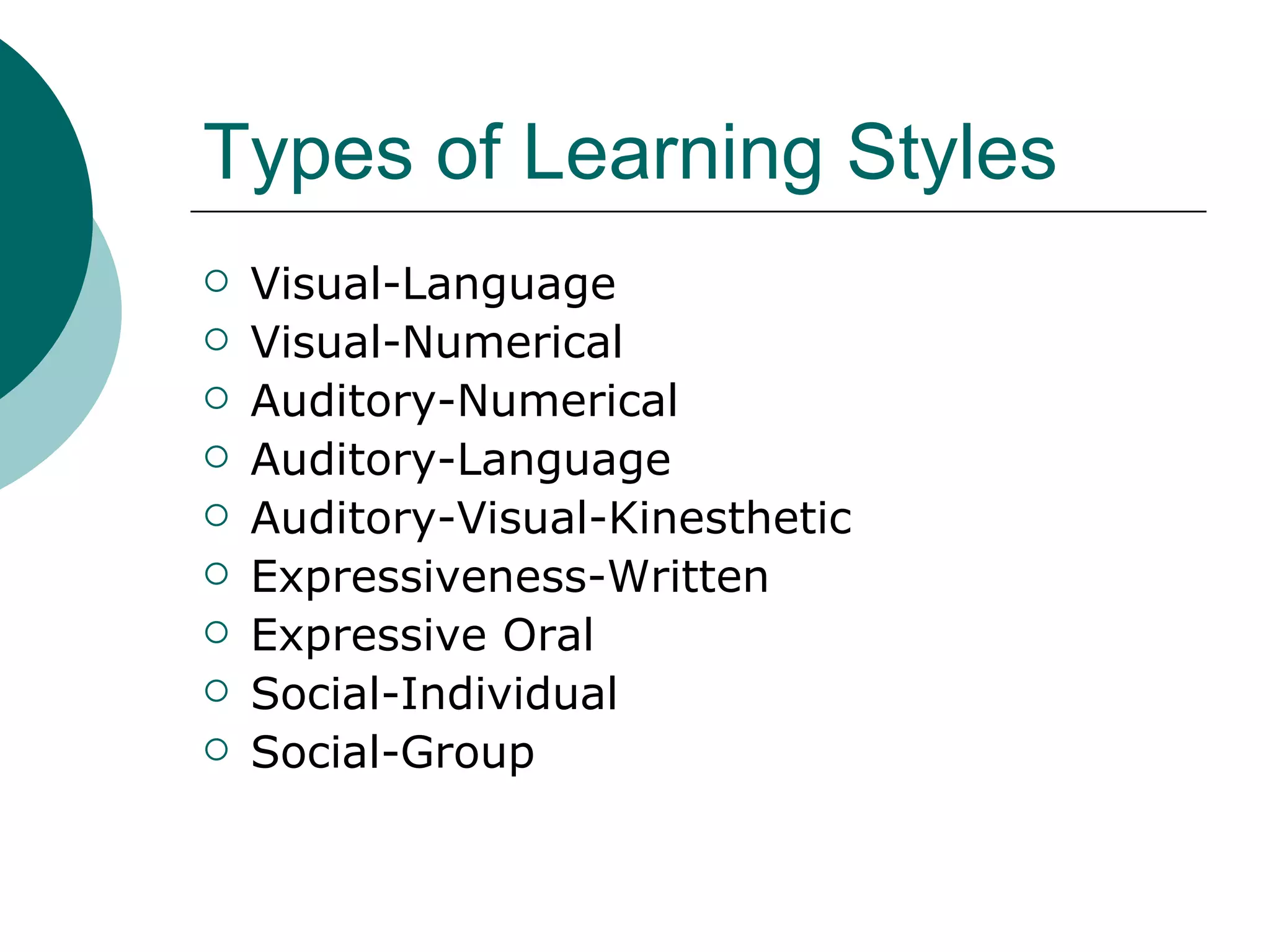
Types of Learning Styles Visual-Language Visual-Numerical Auditory-Numerical Auditory-Language Auditory-Visual-Kinesthetic  Expressiveness-Written Expressive Oral  Social-Individual Social-Group
Visual This style of learner will learn better by seeing words and numbers in a book, on the chalkboard, workbook or text book. The learner is more likely to remember and understand facts when they are presented visually.  draw pictures highlight use the chalkboard or whiteboard use maps, charts and pictures watch a video flash card pay attention to details in photographs and pictures use acronyms
Auditory This style of learner will learn better by hearing words and numbers spoken. This learner is more likely to remember and understand facts and new material by reading or doing number games and puzzles out loud. attend classes  attend discussions and tutorials  discuss topics with others  discuss topics with your teachers  explain new ideas to other people  use a tape recorder  remember the interesting examples, stories, jokes...  describe the overheads, pictures and other visuals to somebody who was not there  leave spaces in your notes for later recall and 'filling'
Auditory Convert your "notes" into a learnable package by reducing them  Your notes may be poor because you prefer to listen. You will need to expand your notes by talking with others and collecting notes from the textbook.  Put your summarized notes onto tapes and listen to them.  Ask others to 'hear' your understanding of a topic.  Read your summarized notes aloud.  Explain your notes to another 'aural' person.
Auditory To perform well on assignments or tests  Imagine talking with the examiner.  Listen to your voices and write them down.  Spend time in quiet places recalling the ideas.  Practice writing answers to old exam questions.  Speak your answers aloud or inside your head.
Auditory/Visual/Kinesthetic This style of learner will learn best by doing, self-involvement and manipulation. The manipulation of material along with accompanying sight and sounds (words and numbers seen and heard) will aid his or her learning. This student may not understand or be able to concentrate or work unless totally involved! This learner will need to handle, touch and work with what is being learned! be involved in classroom "hands on" projects/labs. physical involvement in class-related activity out side of class flash cards games build projects to help understand the ideas change pencils and pens frequently use manipulatives study in small, frequent chunks study with another Kinesthetic-Tactile Learner
Expressiveness If you are an ORAL expressive learner, you prefer to tell what you know rather than write it.  speak to others about the information take oral tests/quizzes when possible use a recorder to organize thoughts WRITTEN expressive learners prefer to write, can usually write fluently and are usually very organized in putting thoughts on paper.  organize thoughts by writing them down take essay type tests when possible
Social Group Learner  likes to study with others. This learner will not accomplish as much when working alone and likes and values the opinions of others.  study with a study buddy ask a teacher if a group activity is possible study with someone who understands your learning style The  Individual Learner  would rather work alone - and remembers best and more when not distracted by other students.  work alone make personal connection between information and yourself be aware of your surroundings, such as light, noise, temperature, time of day

Learning styles

  • 1.
  • 2.
  • 3.
  • 4.
  • 5.
    Learning Styles Youhave probably noticed that when you try to learn something new that you prefer to learn by listening to someone talk to you about the information. Some people prefer to read about a concept to learn it; others need to see a demonstration of the concept. The Learning Style Inventory helps you understand what your own preferred learning style is and how to: take in information; study information for effective learning; study for performing well on an examination.
  • 6.
    Learning Styles InventoryScores on the Learning Style Inventory fall into one of the three categories: major, minor, and negligible. These categories may be defined as follows: Major: You prefer this mode of learning, feel comfortable with it, and use it for important learning. You do not necessarily have one and only one preferred style. Minor: You use this mode but usually as a second choice or in conjunction with other learning styles. Negligible: You prefer not to use this if other choices are available. You do not feel comfortable with this style.
  • 7.
    Types of LearningStyles Visual-Language Visual-Numerical Auditory-Numerical Auditory-Language Auditory-Visual-Kinesthetic Expressiveness-Written Expressive Oral Social-Individual Social-Group
  • 8.
    Visual This styleof learner will learn better by seeing words and numbers in a book, on the chalkboard, workbook or text book. The learner is more likely to remember and understand facts when they are presented visually. draw pictures highlight use the chalkboard or whiteboard use maps, charts and pictures watch a video flash card pay attention to details in photographs and pictures use acronyms
  • 9.
    Auditory This styleof learner will learn better by hearing words and numbers spoken. This learner is more likely to remember and understand facts and new material by reading or doing number games and puzzles out loud. attend classes attend discussions and tutorials discuss topics with others discuss topics with your teachers explain new ideas to other people use a tape recorder remember the interesting examples, stories, jokes... describe the overheads, pictures and other visuals to somebody who was not there leave spaces in your notes for later recall and 'filling'
  • 10.
    Auditory Convert your"notes" into a learnable package by reducing them Your notes may be poor because you prefer to listen. You will need to expand your notes by talking with others and collecting notes from the textbook. Put your summarized notes onto tapes and listen to them. Ask others to 'hear' your understanding of a topic. Read your summarized notes aloud. Explain your notes to another 'aural' person.
  • 11.
    Auditory To performwell on assignments or tests Imagine talking with the examiner. Listen to your voices and write them down. Spend time in quiet places recalling the ideas. Practice writing answers to old exam questions. Speak your answers aloud or inside your head.
  • 12.
    Auditory/Visual/Kinesthetic This styleof learner will learn best by doing, self-involvement and manipulation. The manipulation of material along with accompanying sight and sounds (words and numbers seen and heard) will aid his or her learning. This student may not understand or be able to concentrate or work unless totally involved! This learner will need to handle, touch and work with what is being learned! be involved in classroom "hands on" projects/labs. physical involvement in class-related activity out side of class flash cards games build projects to help understand the ideas change pencils and pens frequently use manipulatives study in small, frequent chunks study with another Kinesthetic-Tactile Learner
  • 13.
    Expressiveness If youare an ORAL expressive learner, you prefer to tell what you know rather than write it. speak to others about the information take oral tests/quizzes when possible use a recorder to organize thoughts WRITTEN expressive learners prefer to write, can usually write fluently and are usually very organized in putting thoughts on paper. organize thoughts by writing them down take essay type tests when possible
  • 14.
    Social Group Learner likes to study with others. This learner will not accomplish as much when working alone and likes and values the opinions of others. study with a study buddy ask a teacher if a group activity is possible study with someone who understands your learning style The Individual Learner would rather work alone - and remembers best and more when not distracted by other students. work alone make personal connection between information and yourself be aware of your surroundings, such as light, noise, temperature, time of day