Question


       Learning Styles
                                         Why do we need to
                                           know about the
                                          different learning
                                                styles?


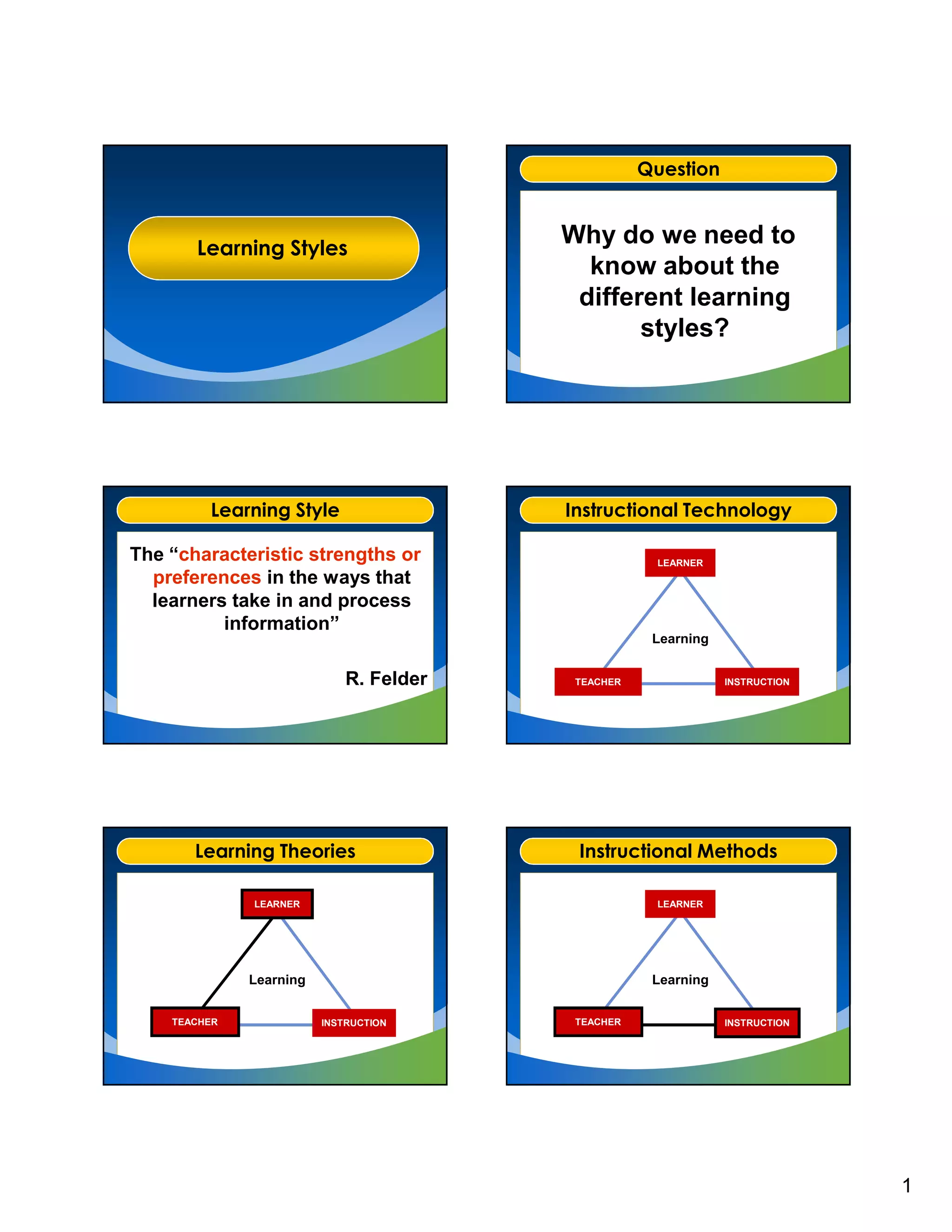
         Learning Style                  Instructional Technology

The “characteristic strengths or                     LEARNER
  preferences in the ways that
  learners take in and process
          information”
                                                     Learning


                             R. Felder    TEACHER               INSTRUCTION


       Learning Theories                  Instructional Methods

              LEARNER                                LEARNER


              Learning                               Learning


    TEACHER              INSTRUCTION      TEACHER               INSTRUCTION


                                                                              1
Learning Styles                       Why is There a Gap?
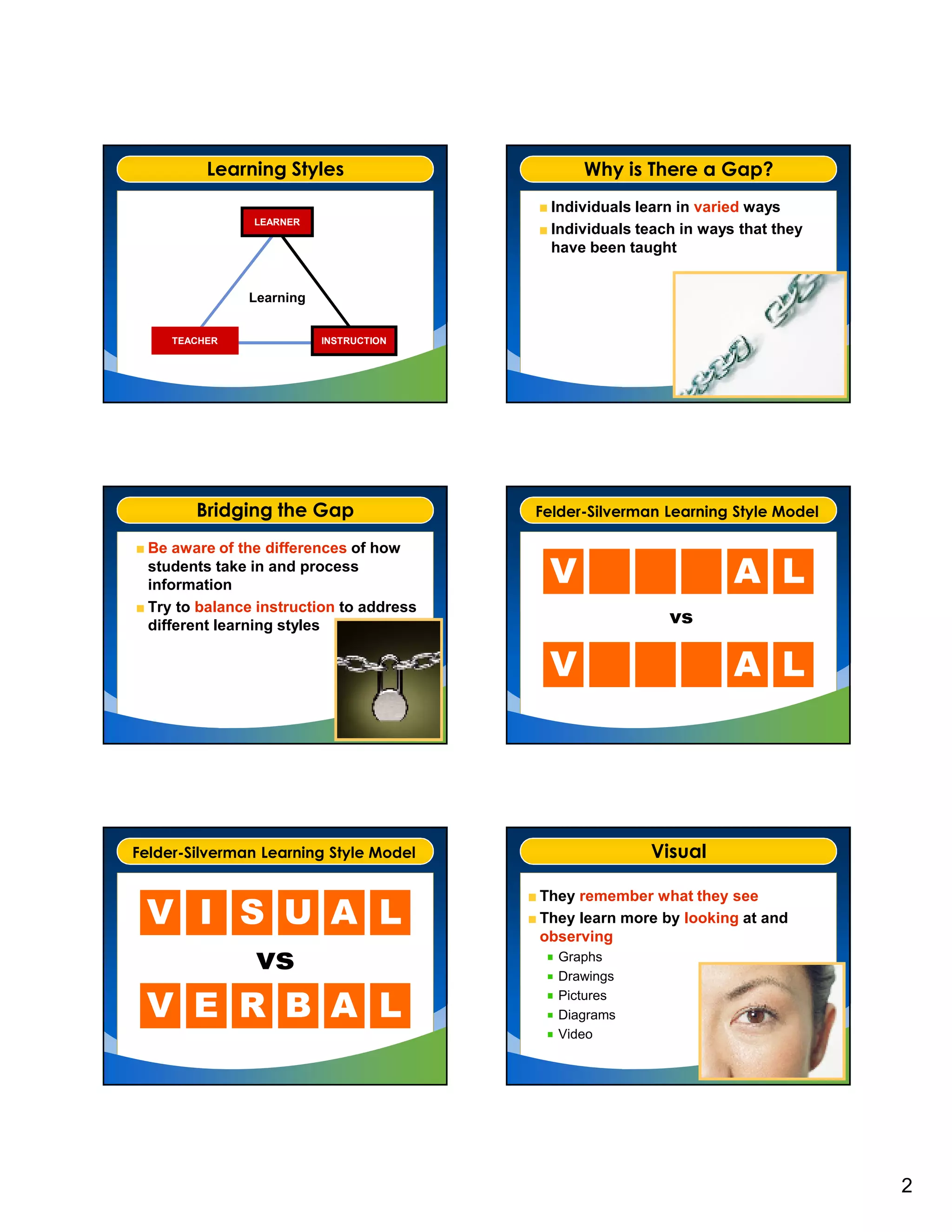
                                            Individuals learn in varied ways
                LEARNER
                                            Individuals teach in ways that they
                                            have been taught


               Learning


     TEACHER              INSTRUCTION


        Bridging the Gap                  Felder-Silverman Learning Style Model

  Be aware of the differences of how
  students take in and process
  information                              V                         A L
  Try to balance instruction to address
  different learning styles                                 vs

                                           V                         A L


Felder-Silverman Learning Style Model                    Visual

                                          They remember what they see
 V I S U A L                              They learn more by looking at and
                                          observing
                vs                           Graphs
                                             Drawings
                                             Pictures
 V E R B A L                                 Diagrams
                                             Video


                                                                                  2
Verbal                            Felder-Silverman Learning Style Model

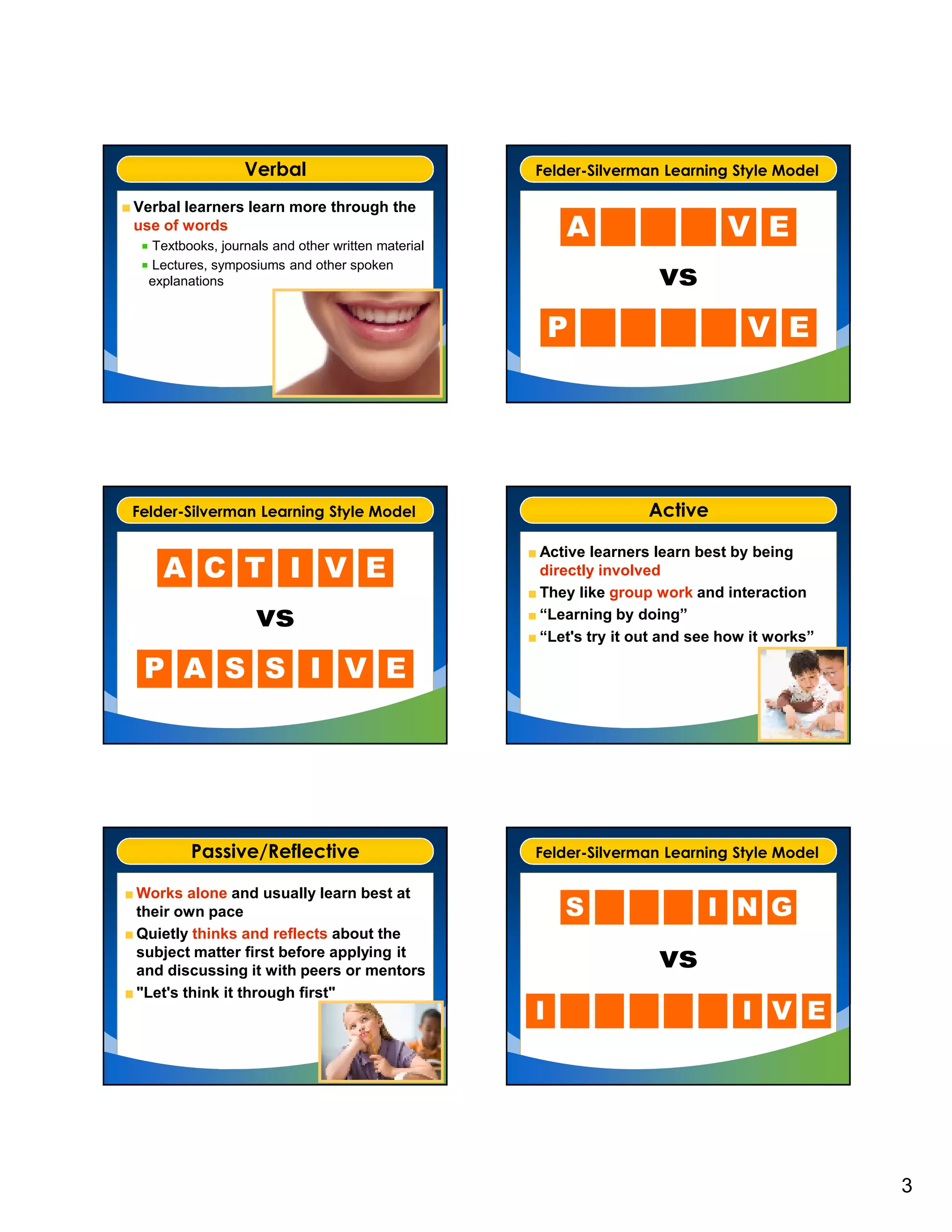
Verbal learners learn more through the
use of words
  Textbooks, journals and other written material
                                                       A                     V E
  Lectures, symposiums and other spoken
  explanations                                                     vs
                                                       P                        V E


Felder-Silverman Learning Style Model                             Active

                                                   Active learners learn best by being
    A C T I V E                                    directly involved
                                                   They like group work and interaction
                   vs                              “Learning by doing”
                                                   “Let's try it out and see how it works”

 P A S S I V E


         Passive/Reflective                        Felder-Silverman Learning Style Model

Works alone and usually learn best at
their own pace                                         S                  I N G
Quietly thinks and reflects about the
subject matter first before applying it
and discussing it with peers or mentors
                                                                   vs
"Let's think it through first"
                                                   I                           I V E


                                                                                             3
Felder-Silverman Learning Style Model                        Sensing
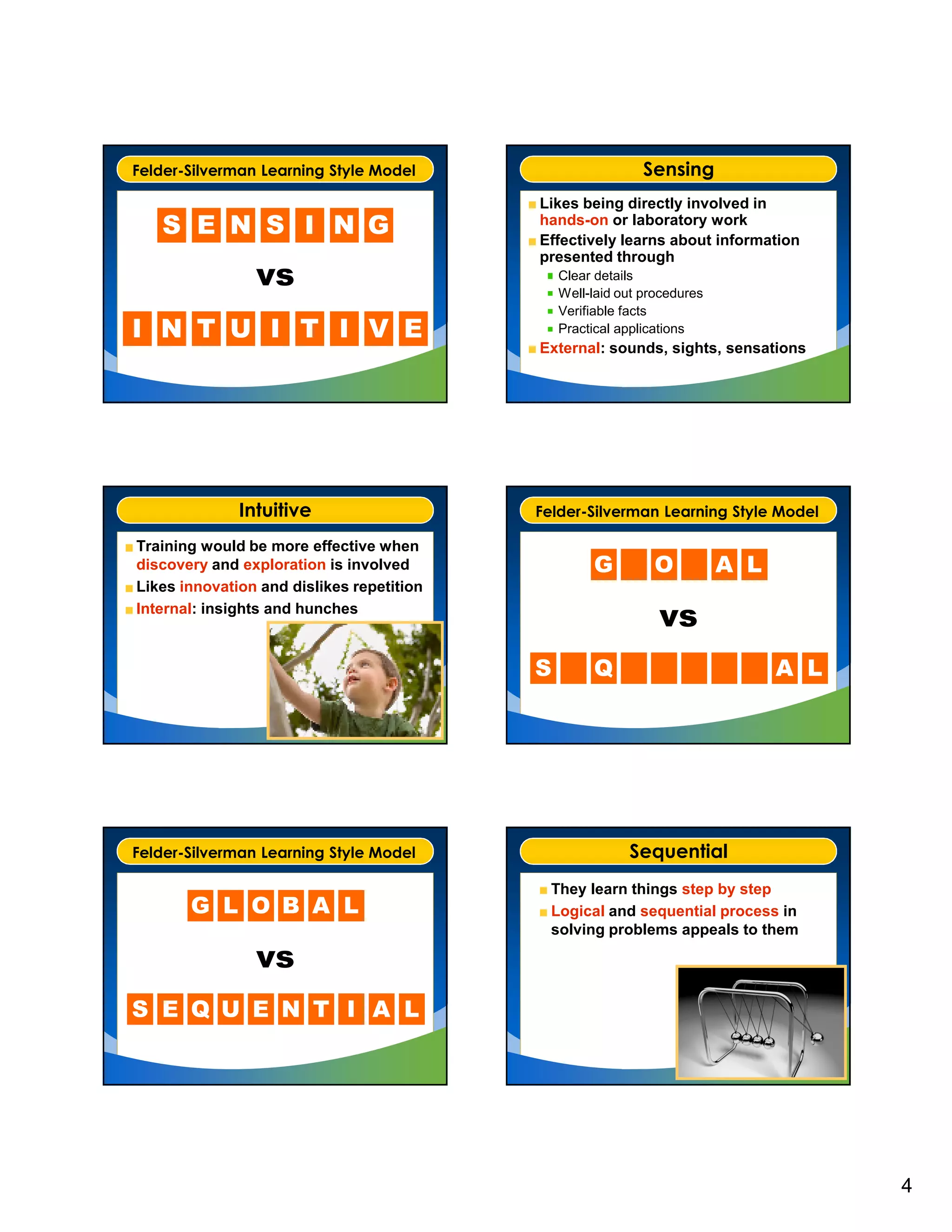
                                           Likes being directly involved in
                                           hands-on or laboratory work
   S E N S I N G                           Effectively learns about information
                                           presented through
                vs                             Clear details
                                               Well-laid out procedures
                                               Verifiable facts
I N T U I T I V E                              Practical applications
                                           External: sounds, sights, sensations


              Intuitive                    Felder-Silverman Learning Style Model

Training would be more effective when
discovery and exploration is involved               G         O           A L
Likes innovation and dislikes repetition
Internal: insights and hunches
                                                               vs
                                           S        Q                           A L


Felder-Silverman Learning Style Model                     Sequential
                                             They learn things step by step
       G L O B A L                           Logical and sequential process in
                                             solving problems appeals to them

                vs
S E Q U E N T I A L


                                                                                      4
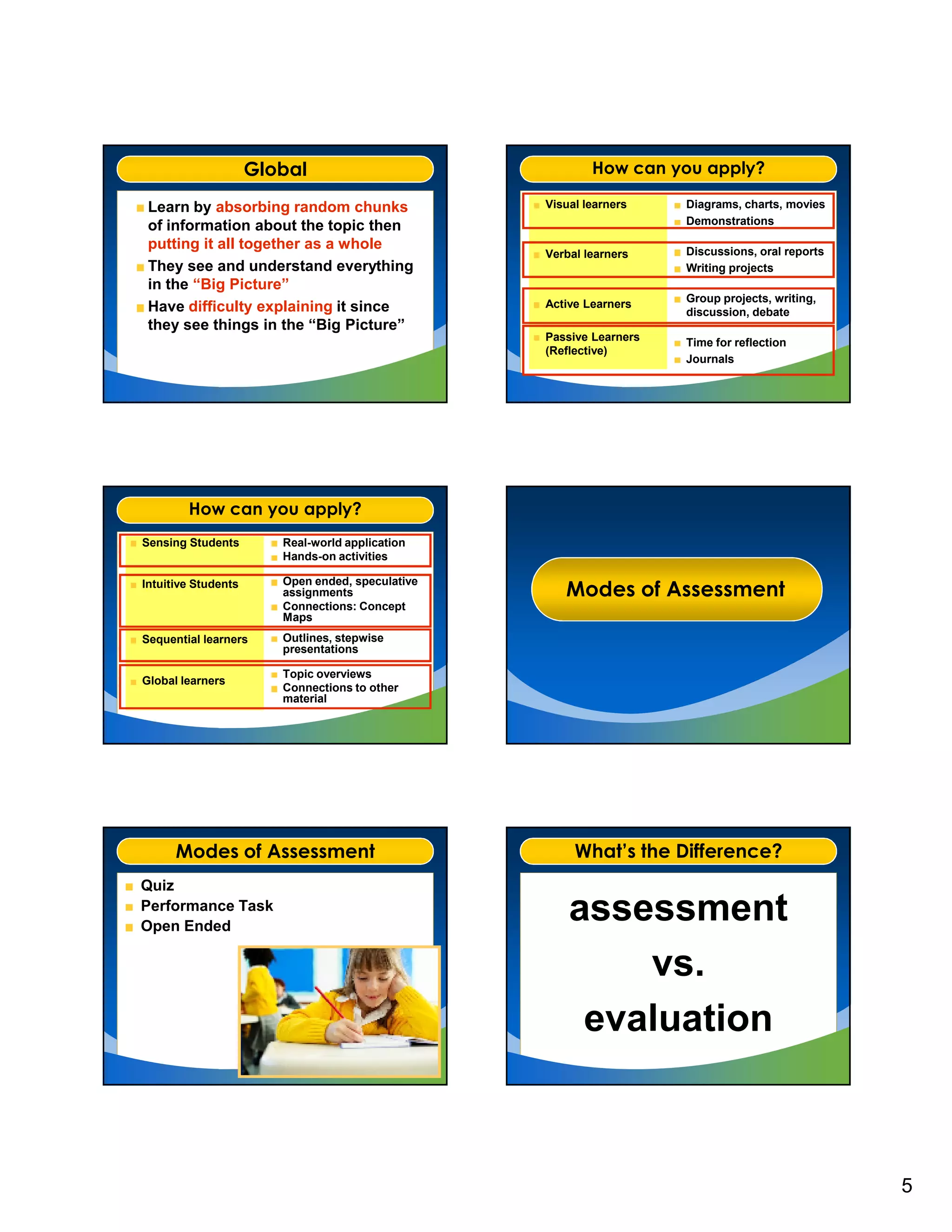
Global                               How can you apply?

 Learn by absorbing random chunks                 Visual learners    Diagrams, charts, movies
 of information about the topic then                                 Demonstrations

 putting it all together as a whole                                  Discussions, oral reports
                                                  Verbal learners
 They see and understand everything                                  Writing projects
 in the “Big Picture”
                                                  Active Learners    Group projects, writing,
 Have difficulty explaining it since                                 discussion, debate
 they see things in the “Big Picture”
                                                  Passive Learners   Time for reflection
                                                  (Reflective)
                                                                     Journals


        How can you apply?
Sensing Students        Real-world application
                        Hands-on activities

Intuitive Students      Open ended, speculative
                        assignments                  Modes of Assessment
                        Connections: Concept
                        Maps
Sequential learners     Outlines, stepwise
                        presentations

                        Topic overviews
Global learners
                        Connections to other
                        material


      Modes of Assessment                              What’s the Difference?
Quiz
Performance Task
Open Ended
                                                      assessment
                                                          vs.
                                                       evaluation


                                                                                                 5
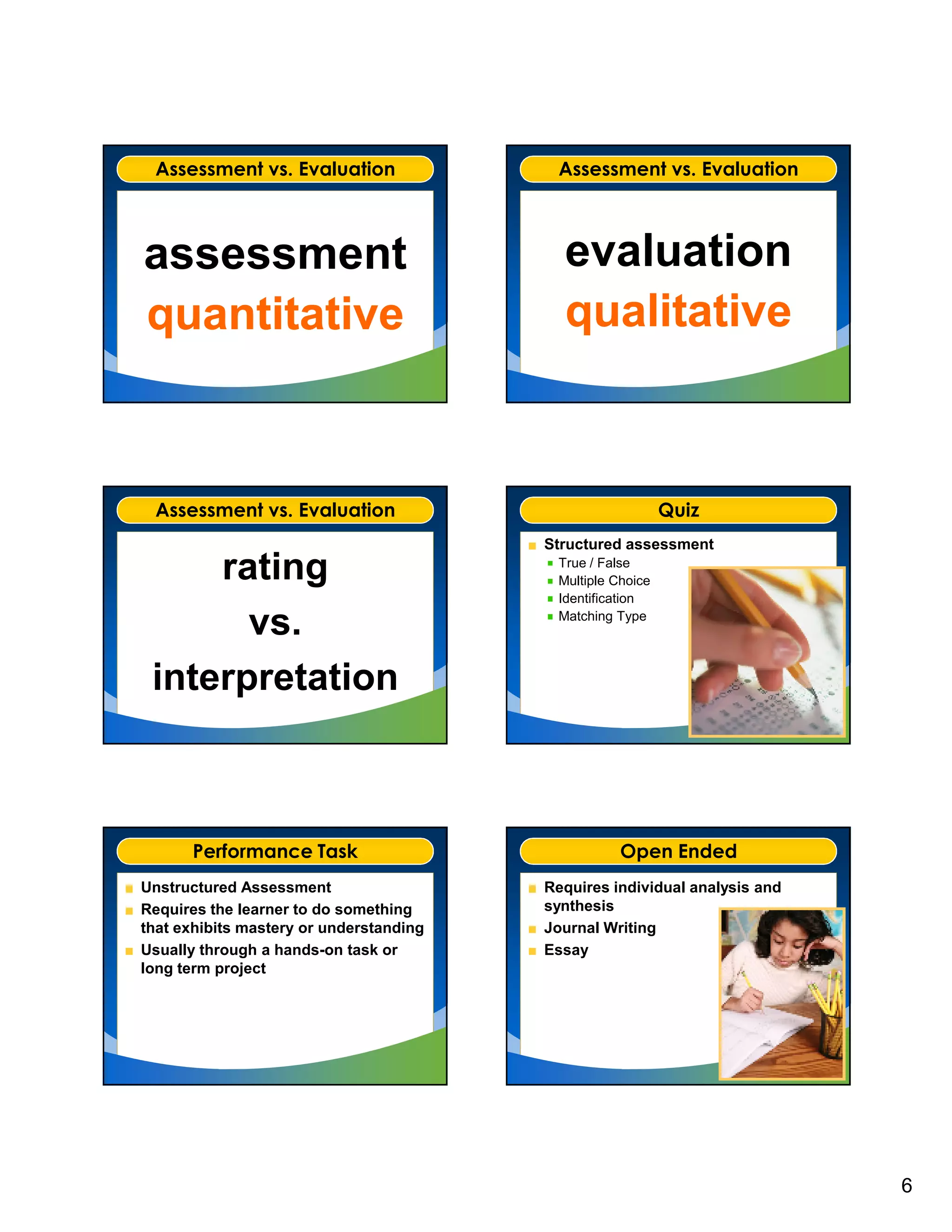
Assessment vs. Evaluation                Assessment vs. Evaluation


assessment                                 evaluation
quantitative                               qualitative


 Assessment vs. Evaluation                                  Quiz
                                         Structured assessment
     rating                               True / False
                                          Multiple Choice
                                          Identification

       vs.                                Matching Type


 interpretation


      Performance Task                              Open Ended
Unstructured Assessment                  Requires individual analysis and
Requires the learner to do something     synthesis
that exhibits mastery or understanding   Journal Writing
Usually through a hands-on task or       Essay
long term project


                                                                            6

Learning Styles

  • 1.
    Question Learning Styles Why do we need to know about the different learning styles? Learning Style Instructional Technology The “characteristic strengths or LEARNER preferences in the ways that learners take in and process information” Learning R. Felder TEACHER INSTRUCTION Learning Theories Instructional Methods LEARNER LEARNER Learning Learning TEACHER INSTRUCTION TEACHER INSTRUCTION 1
  • 2.
    Learning Styles Why is There a Gap? Individuals learn in varied ways LEARNER Individuals teach in ways that they have been taught Learning TEACHER INSTRUCTION Bridging the Gap Felder-Silverman Learning Style Model Be aware of the differences of how students take in and process information V A L Try to balance instruction to address different learning styles vs V A L Felder-Silverman Learning Style Model Visual They remember what they see V I S U A L They learn more by looking at and observing vs Graphs Drawings Pictures V E R B A L Diagrams Video 2
  • 3.
    Verbal Felder-Silverman Learning Style Model Verbal learners learn more through the use of words Textbooks, journals and other written material A V E Lectures, symposiums and other spoken explanations vs P V E Felder-Silverman Learning Style Model Active Active learners learn best by being A C T I V E directly involved They like group work and interaction vs “Learning by doing” “Let's try it out and see how it works” P A S S I V E Passive/Reflective Felder-Silverman Learning Style Model Works alone and usually learn best at their own pace S I N G Quietly thinks and reflects about the subject matter first before applying it and discussing it with peers or mentors vs "Let's think it through first" I I V E 3
  • 4.
    Felder-Silverman Learning StyleModel Sensing Likes being directly involved in hands-on or laboratory work S E N S I N G Effectively learns about information presented through vs Clear details Well-laid out procedures Verifiable facts I N T U I T I V E Practical applications External: sounds, sights, sensations Intuitive Felder-Silverman Learning Style Model Training would be more effective when discovery and exploration is involved G O A L Likes innovation and dislikes repetition Internal: insights and hunches vs S Q A L Felder-Silverman Learning Style Model Sequential They learn things step by step G L O B A L Logical and sequential process in solving problems appeals to them vs S E Q U E N T I A L 4
  • 5.
    Global How can you apply? Learn by absorbing random chunks Visual learners Diagrams, charts, movies of information about the topic then Demonstrations putting it all together as a whole Discussions, oral reports Verbal learners They see and understand everything Writing projects in the “Big Picture” Active Learners Group projects, writing, Have difficulty explaining it since discussion, debate they see things in the “Big Picture” Passive Learners Time for reflection (Reflective) Journals How can you apply? Sensing Students Real-world application Hands-on activities Intuitive Students Open ended, speculative assignments Modes of Assessment Connections: Concept Maps Sequential learners Outlines, stepwise presentations Topic overviews Global learners Connections to other material Modes of Assessment What’s the Difference? Quiz Performance Task Open Ended assessment vs. evaluation 5
  • 6.
    Assessment vs. Evaluation Assessment vs. Evaluation assessment evaluation quantitative qualitative Assessment vs. Evaluation Quiz Structured assessment rating True / False Multiple Choice Identification vs. Matching Type interpretation Performance Task Open Ended Unstructured Assessment Requires individual analysis and Requires the learner to do something synthesis that exhibits mastery or understanding Journal Writing Usually through a hands-on task or Essay long term project 6