Aaron Maurer
@coffeechugbooks
coffeeforthebrain.com
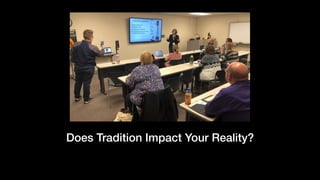
Does Tradition Impact Your Reality? 
How Can Modern Learning
Environments Embrace the
STEM Mindset?
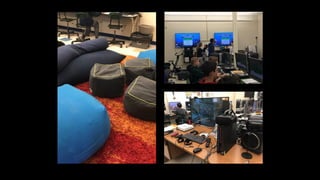
Choice
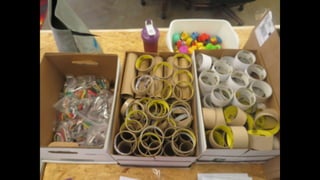
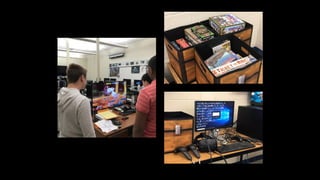
Access to Materials
Movement
Flexibility
Step 1
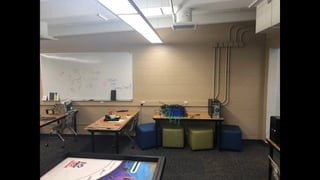
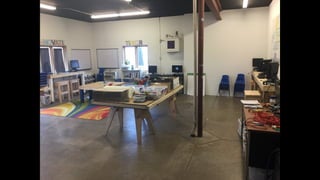
How does your learning space reflect the culture and
mission and vision of your school/district?
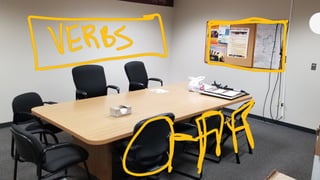
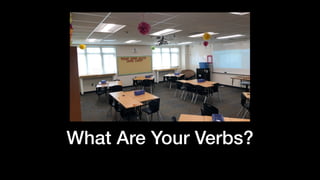
What Are Your Verbs?
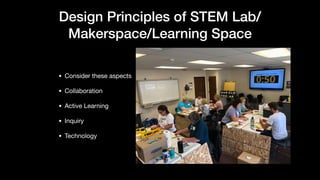
Design Principles of STEM Lab/
Makerspace/Learning Space
• Consider these aspects

• Collaboration

• Active Learning

• Inquiry

• Technology
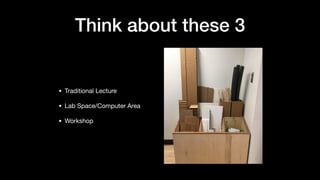
Think about these 3
• Traditional Lecture

• Lab Space/Computer Area

• Workshop
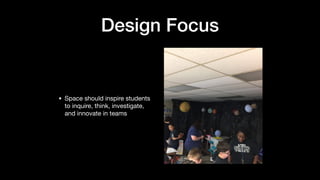
Design Focus
• Space should inspire students
to inquire, think, investigate,
and innovate in teams
Considerations
• What subjects will be taught in the space? 

• What other activities will be completed in the space?

• Which students and teachers will use the space?

• At what times will the space be used?

• What tools and technologies will the space require?
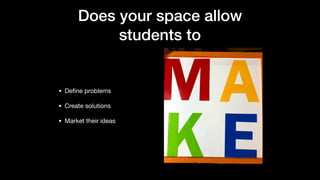
Does your space allow
students to
• Define problems

• Create solutions

• Market their ideas
Core Themes
Everything is connected
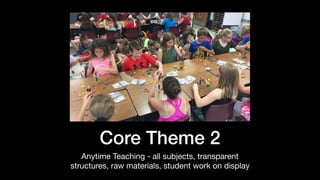
Core Theme 2
Anytime Teaching - all subjects, transparent
structures, raw materials, student work on display
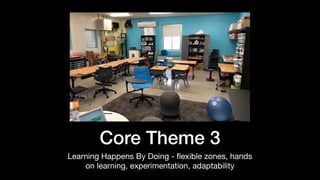
Core Theme 3
Learning Happens By Doing - flexible zones, hands
on learning, experimentation, adaptability
Facility Considerations
• How many students are expected to use the STEM lab at one time?

• How much power will be needed to operate the STEM lab?

• How will students and teachers access power (e.g., wall outlets, floor outlets)?

• Do existing building features such as doorways, load-bearing walls, or
ventilation need to be designed around?

• What safety features and equipment must be embedded in STEM lab design
based on its intended functions?

• How much and what kind of lighting, plumbing, and other utilities will the
STEM lab require?

• Is there a specific timeline on which construction must be completed?
Lab Features
• Where will computers and other equipment be placed in the STEM lab?

• Will students share equipment or have one-to-one technology?

• Will the STEM lab have a central staging and instructional area for teachers to
provide whole group instruction or demonstrations?

• What types of work stations (e.g., individual, group) will be required?

• How many of each work station type should be built?

• What kinds of equipment and materials will be stored in the STEM lab?

• How much storage space is needed?

• Do any equipment items or materials (e.g., chemicals) need secure storage space?
Instructor Preferences
• What kind of workspace (e.g., stationary desk, mobile cart) will teachers need?

• What instructional practices (e.g., lecture, one-to-one student conferencing)
will the STEM lab space need to support?

• What instructional technologies will teachers need to support student learning?

• What kinds of furniture (e.g., fixed, mobile) should the STEM lab have?

• Will teachers emphasize individual work or group work, or will they balance
both approaches?

• How many teams will teachers typically divide students into?

• Will teachers have clear sight lines to monitor students at all times?
Student Characteristics
• What age are the students who will be the primary users of the lab
space?

• Should work spaces be adjustable to accommodate the heights of
multiple age groups?

• What features are necessary to make facilities accessible to all
students with disabilities?

• Will students require additional storage of personal items (e.g.,
backpacks, purses)?

• Will students be able to see and hear their peers and teachers at
all times?
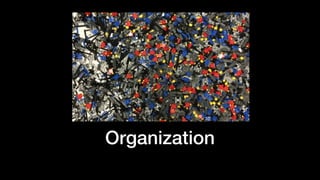
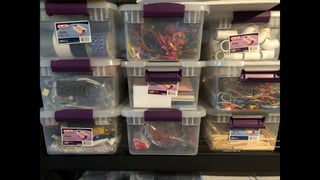
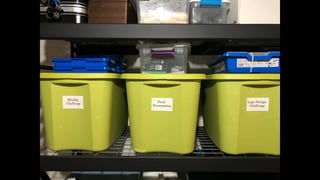
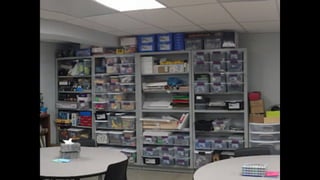
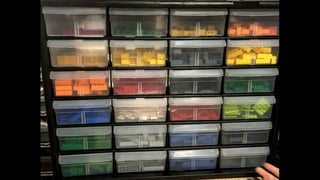
Organization
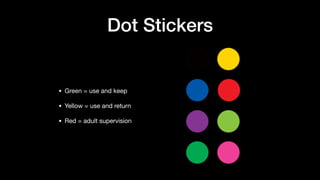
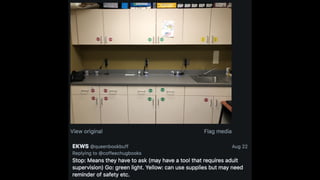
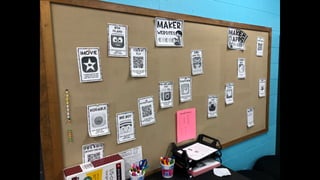
Dot Stickers
• Green = use and keep

• Yellow = use and return

• Red = adult supervision
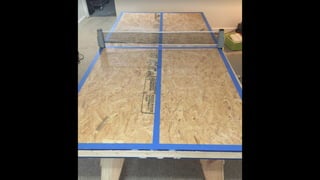
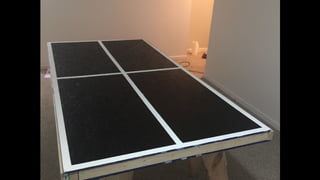
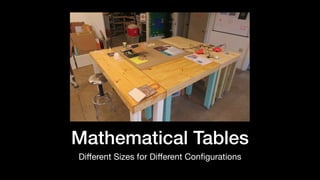
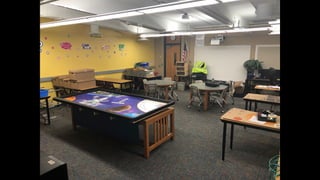
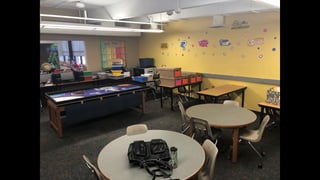
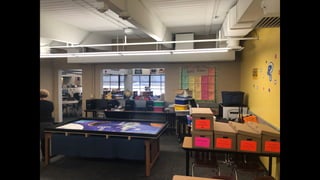
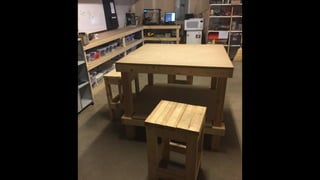
Mathematical Tables
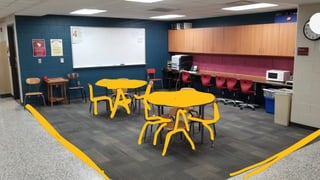
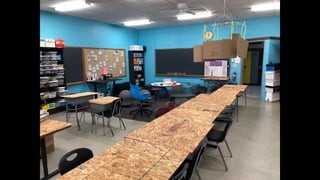
Different Sizes for Different Configurations
Learning Space Design Tour Beginning Steps  December 2018

Learning Space Design Tour Beginning Steps December 2018

  • 1.
  • 2.
    Does Tradition ImpactYour Reality? 
  • 3.
    How Can ModernLearning Environments Embrace the STEM Mindset?
  • 5.
  • 6.
  • 7.
  • 8.
  • 17.
    Step 1 How doesyour learning space reflect the culture and mission and vision of your school/district?
  • 18.
  • 20.
    Design Principles ofSTEM Lab/ Makerspace/Learning Space • Consider these aspects • Collaboration • Active Learning • Inquiry • Technology
  • 21.
    Think about these3 • Traditional Lecture • Lab Space/Computer Area • Workshop
  • 22.
    Design Focus • Spaceshould inspire students to inquire, think, investigate, and innovate in teams
  • 23.
    Considerations • What subjectswill be taught in the space? • What other activities will be completed in the space? • Which students and teachers will use the space? • At what times will the space be used? • What tools and technologies will the space require?
  • 24.
    Does your spaceallow students to • Define problems • Create solutions • Market their ideas
  • 25.
  • 27.
    Core Theme 2 AnytimeTeaching - all subjects, transparent structures, raw materials, student work on display
  • 29.
    Core Theme 3 LearningHappens By Doing - flexible zones, hands on learning, experimentation, adaptability
  • 30.
    Facility Considerations • Howmany students are expected to use the STEM lab at one time? • How much power will be needed to operate the STEM lab? • How will students and teachers access power (e.g., wall outlets, floor outlets)? • Do existing building features such as doorways, load-bearing walls, or ventilation need to be designed around? • What safety features and equipment must be embedded in STEM lab design based on its intended functions? • How much and what kind of lighting, plumbing, and other utilities will the STEM lab require? • Is there a specific timeline on which construction must be completed?
  • 31.
    Lab Features • Wherewill computers and other equipment be placed in the STEM lab? • Will students share equipment or have one-to-one technology? • Will the STEM lab have a central staging and instructional area for teachers to provide whole group instruction or demonstrations? • What types of work stations (e.g., individual, group) will be required? • How many of each work station type should be built? • What kinds of equipment and materials will be stored in the STEM lab? • How much storage space is needed? • Do any equipment items or materials (e.g., chemicals) need secure storage space?
  • 32.
    Instructor Preferences • Whatkind of workspace (e.g., stationary desk, mobile cart) will teachers need? • What instructional practices (e.g., lecture, one-to-one student conferencing) will the STEM lab space need to support? • What instructional technologies will teachers need to support student learning? • What kinds of furniture (e.g., fixed, mobile) should the STEM lab have? • Will teachers emphasize individual work or group work, or will they balance both approaches? • How many teams will teachers typically divide students into? • Will teachers have clear sight lines to monitor students at all times?
  • 33.
    Student Characteristics • Whatage are the students who will be the primary users of the lab space? • Should work spaces be adjustable to accommodate the heights of multiple age groups? • What features are necessary to make facilities accessible to all students with disabilities? • Will students require additional storage of personal items (e.g., backpacks, purses)? • Will students be able to see and hear their peers and teachers at all times?
  • 35.
  • 39.
    Dot Stickers • Green= use and keep • Yellow = use and return • Red = adult supervision
  • 49.
    Mathematical Tables Different Sizesfor Different Configurations