Cultural issues
by Toronto Training and HR
April 2014
CONTENTS
3-4 Introduction
5-6 Definition
7-8 Key activities
9-10 Measuring culture
11-13 Cultural profile
14-15 Tight and loose cultures
16-17 High versus low context cultures
18-19 Culturally determining fit
20-21 Appreciative inquiry
22-23 Cultural distance
24-25 Multicultural identity dimensions
26-27 East v West leadership
28-29 Internal conflict
30-31 Post merger priorities
32-33 Creating a new culture
34-35 Antecedents of cultural identity
36-37 The cultural web
38-39 What do culture-savvy leaders do?
40-41 Generating a culture of blameless error
42-43 Creating an effective learning & development culture
44-45 Performance and values
46-48 Building a strong performance-based culture
49-50 Conclusion, summary and questions
Page 2
Page 3
Introduction
Page 4
Introduction to Toronto Training
and HR
Toronto Training and HR is a specialist training and
human resources consultancy headed by Timothy Holden
10 years in banking
15 years in training and human resources
Freelance practitioner since 2006
The core services provided by Toronto Training and HR
are:
Training event design
Training event delivery
HR support with an emphasis on reducing
costs, saving time plus improving employee
engagement and morale
Services for job seekers
Page 5
Definition
Definition • What is culture?
Page 6
Page 7
Key activities
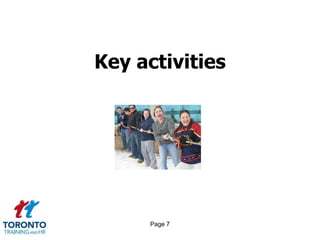
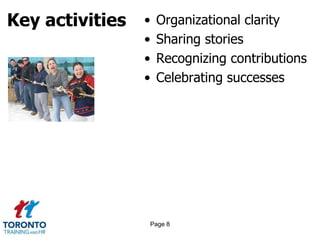
Key activities • Organizational clarity
• Sharing stories
• Recognizing contributions
• Celebrating successes
Page 8
Page 9
Measuring culture
Measuring
culture
• Performance
• Values
Page 10
Page 11
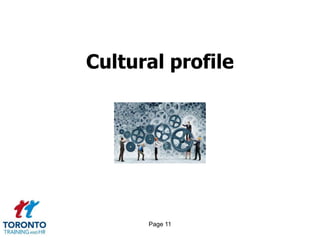
Cultural profile
Cultural
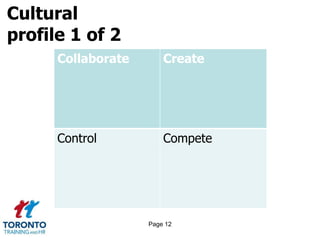
profile 1 of 2
Page 12
Collaborate Create
Control Compete
Cultural
profile 2 of 2
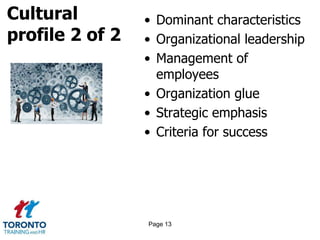
• Dominant characteristics
• Organizational leadership
• Management of
employees
• Organization glue
• Strategic emphasis
• Criteria for success
Page 13
Page 14
Tight and loose cultures
Tight and
loose cultures
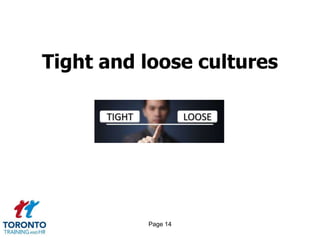
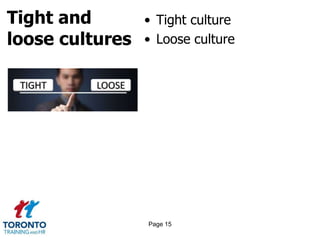
• Tight culture
• Loose culture
Page 15
Page 16
High versus low context
cultures
High versus
low context
cultures
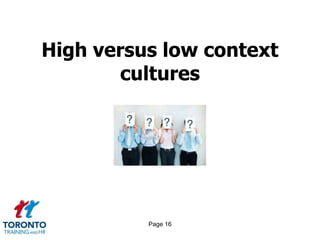
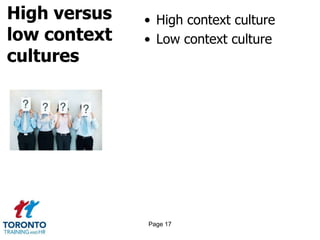
• High context culture
• Low context culture
Page 17
Page 18
Culturally determining fit
Culturally
determining
fit
• Brand identity
• Reputation and
relationships
• Communication
Page 19
Page 20
Appreciative inquiry
Appreciative
inquiry
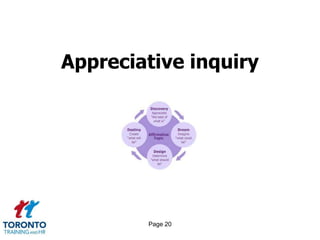
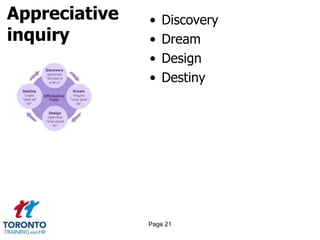
• Discovery
• Dream
• Design
• Destiny
Page 21
Page 22
Cultural distance
Cultural
distance
• High cultural distance
• Low cultural distance
Page 23
Page 24
Multicultural identity
dimensions
Multicultural
identity
dimensions
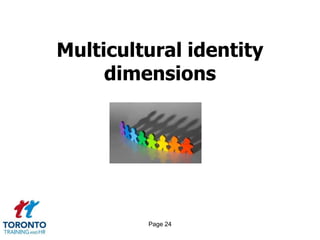
• Aggregating
• Compartmentalizing
• Hybridizing
• Prioritizing
Page 25
Page 26
East v West-leadership
East v West-
leadership
• Balancing individualism
with collectivism
• Blending results with
personal empowerment
• Influencing remotely and
cross-culturally
• Transparency and a focus
on action
Page 27
Page 28
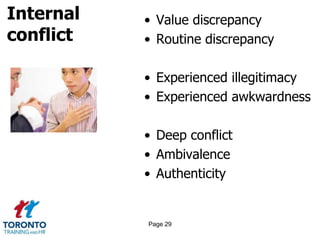
Internal conflict
Internal
conflict
• Value discrepancy
• Routine discrepancy
• Experienced illegitimacy
• Experienced awkwardness
• Deep conflict
• Ambivalence
• Authenticity
Page 29
Page 30
Post-merger priorities
Post-merger
priorities
• Communication
• Lay-offs
• Contract review and new
negotiations
Page 31
Page 32
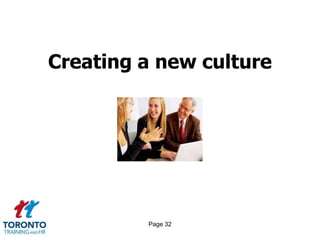
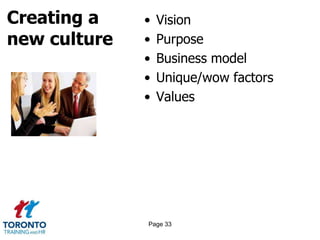
Creating a new culture
Creating a
new culture
• Vision
• Purpose
• Business model
• Unique/wow factors
• Values
Page 33
Page 34
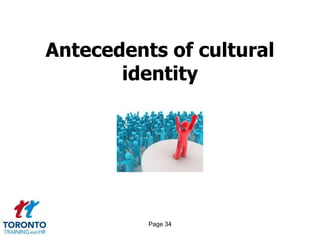
Antecedents of cultural
identity
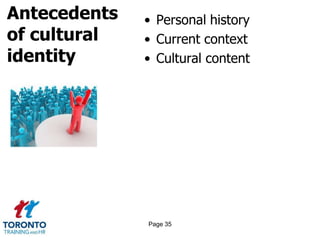
Antecedents
of cultural
identity
• Personal history
• Current context
• Cultural content
Page 35
Page 36
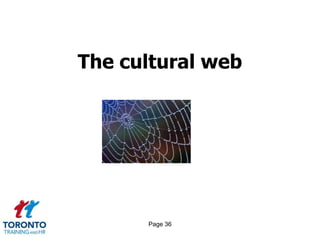
The cultural web
The cultural
web
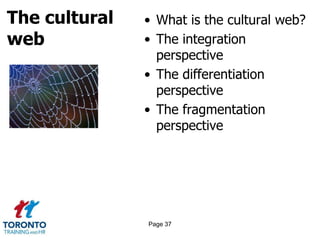
• What is the cultural web?
• The integration
perspective
• The differentiation
perspective
• The fragmentation
perspective
Page 37
Page 38
What do culture-savvy
leaders do?
What do
culture-savvy
leaders do?
• Act
• Create
• Align
Page 39
Page 40
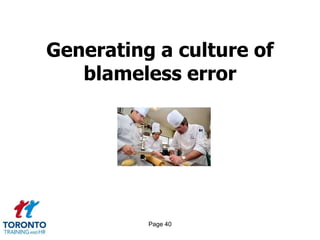
Generating a culture of
blameless error
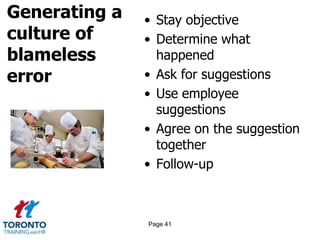
Generating a
culture of
blameless
error
• Stay objective
• Determine what
happened
• Ask for suggestions
• Use employee
suggestions
• Agree on the suggestion
together
• Follow-up
Page 41
Page 42
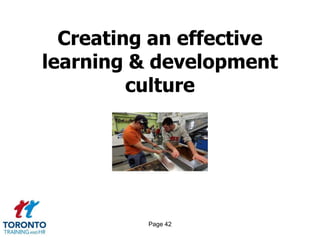
Creating an effective
learning & development
culture
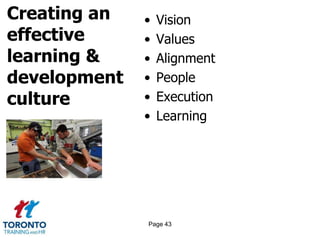
Creating an
effective
learning &
development
culture
• Vision
• Values
• Alignment
• People
• Execution
• Learning
Page 43
Page 44
Performance and values
Performance
and values
Page 45
HIGH
PERFORMANCE
High
performance
Low values
High
performance
High values
LOW
PERFORMANCE
Low performance
Low values
Low performance
High values
LOW VALUES HIGH VALUES
Page 46
Building a strong
performance-based
culture
Building a
strong
performance-
based culture
1 of 2
• Ensure you have a
meaningful and relevant
vision, mission and values
• Ensure active (ongoing)
communication
• Practice active inquiry
• Identify what your need
your culture to be
• Based on survey findings,
identify key actions to
help bridge the gap
between now and then
Page 47
Building a
strong
performance-
based culture
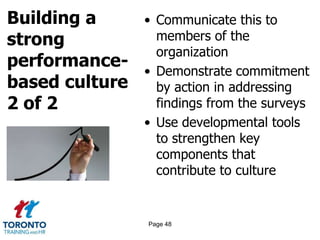
2 of 2
• Communicate this to
members of the
organization
• Demonstrate commitment
by action in addressing
findings from the surveys
• Use developmental tools
to strengthen key
components that
contribute to culture
Page 48
Page 49
Conclusion, summary and
questions
Page 50
Conclusion, summary and
questions
Conclusion
Summary
Videos
Questions

Culture April 2014