 Lean manufacturing is a philosophy that considers 
the expenditure of resources other than the direct 
creation of value for the end customer to be 
wasteful. 
 Thus its targeted for elimination. 
 Working from the perspective of the client who 
consumes a product or service.
1. Eliminate Waste 
2. Build Quality In 
3. Create Knowledge 
4. Defer Commitment 
5. Deliver Fast 
6. Optimize the Whole
 Agile manufacturing is a term applied to an 
organization that has created the processes, tools, 
and training to enable it to respond quickly to 
customer needs and market changes while still 
controlling costs and quality. 
 Agile manufacturing is seen as the next step 
after Lean manufacturing in the evolution of 
production methodology.
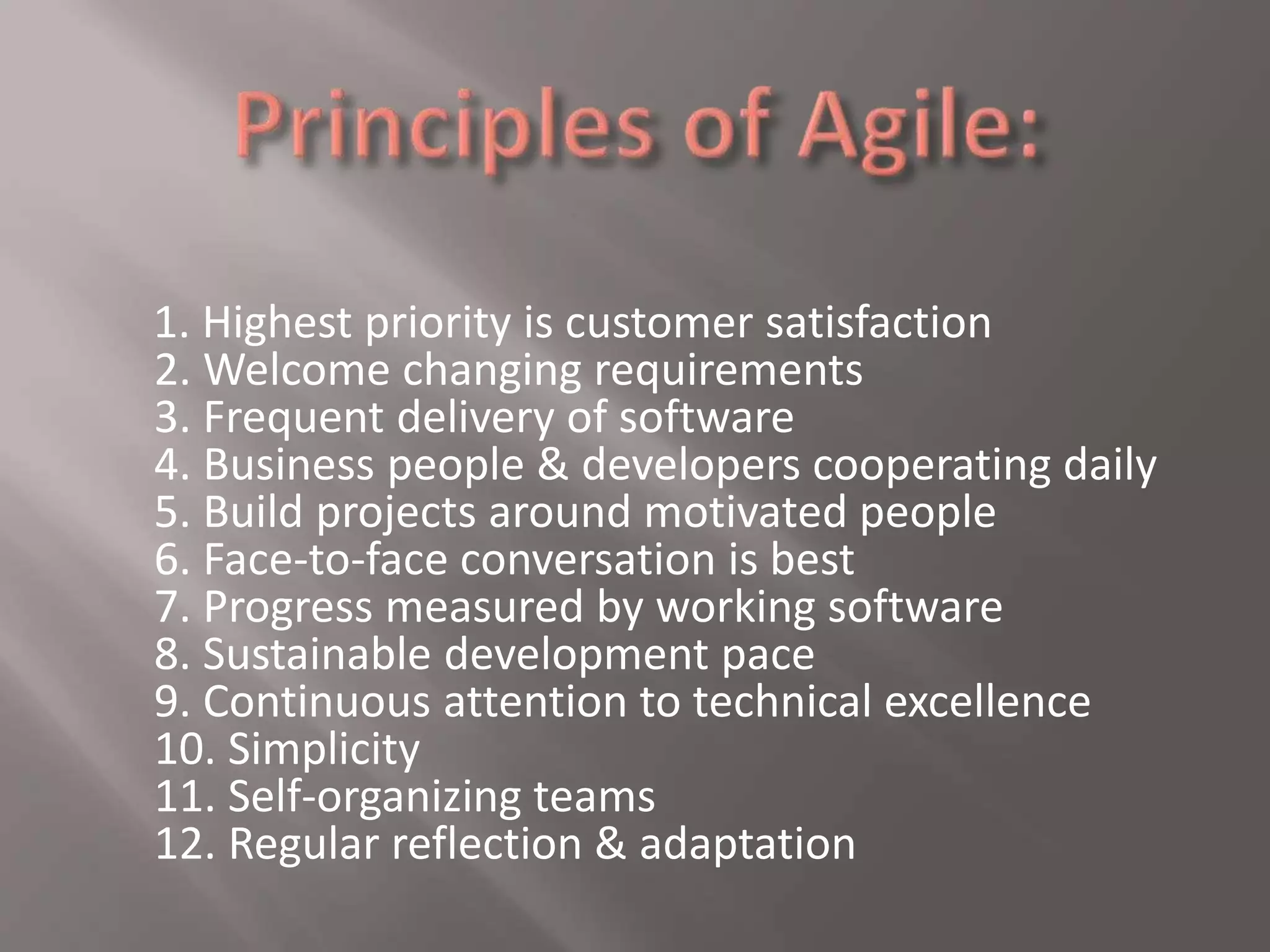
1. Highest priority is customer satisfaction 
2. Welcome changing requirements 
3. Frequent delivery of software 
4. Business people & developers cooperating daily 
5. Build projects around motivated people 
6. Face-to-face conversation is best 
7. Progress measured by working software 
8. Sustainable development pace 
9. Continuous attention to technical excellence 
10. Simplicity 
11. Self-organizing teams 
12. Regular reflection & adaptation
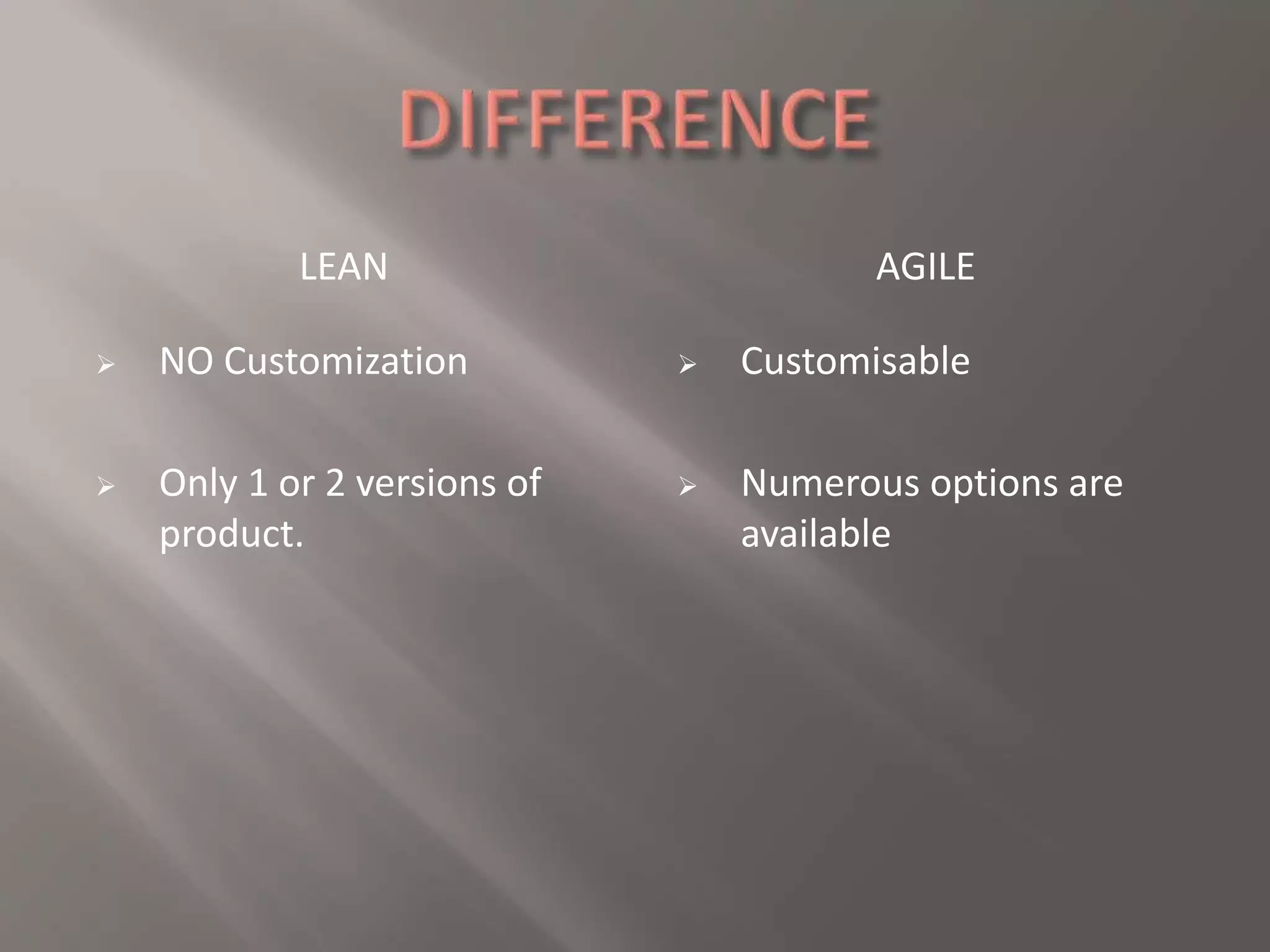
LEAN AGILE 
 Customisable 
 Numerous options are 
available 
 NO Customization 
 Only 1 or 2 versions of 
product.
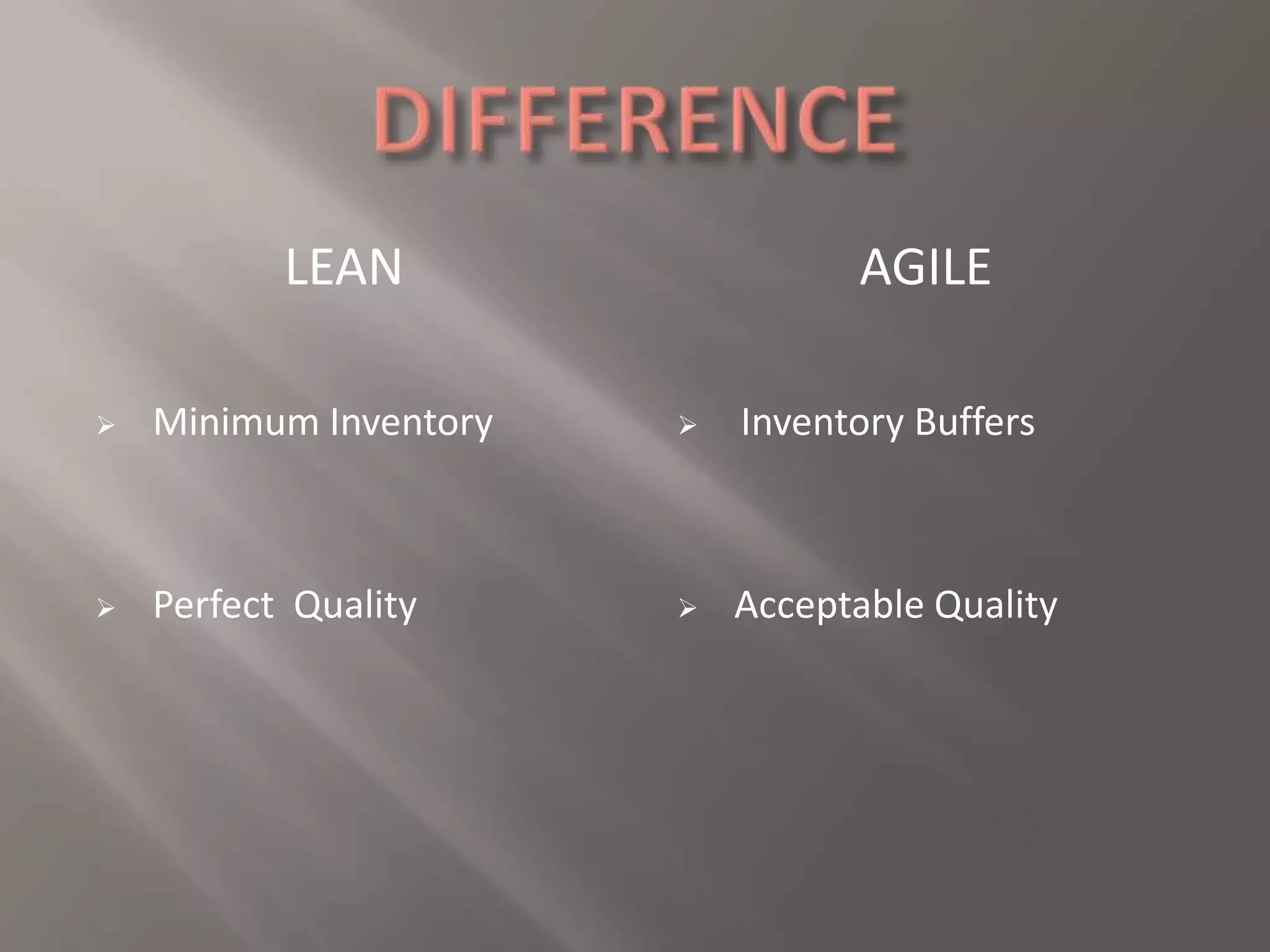
LEAN AGILE 
 Inventory Buffers 
 Acceptable Quality 
 Minimum Inventory 
 Perfect Quality
LEAN AGILE 
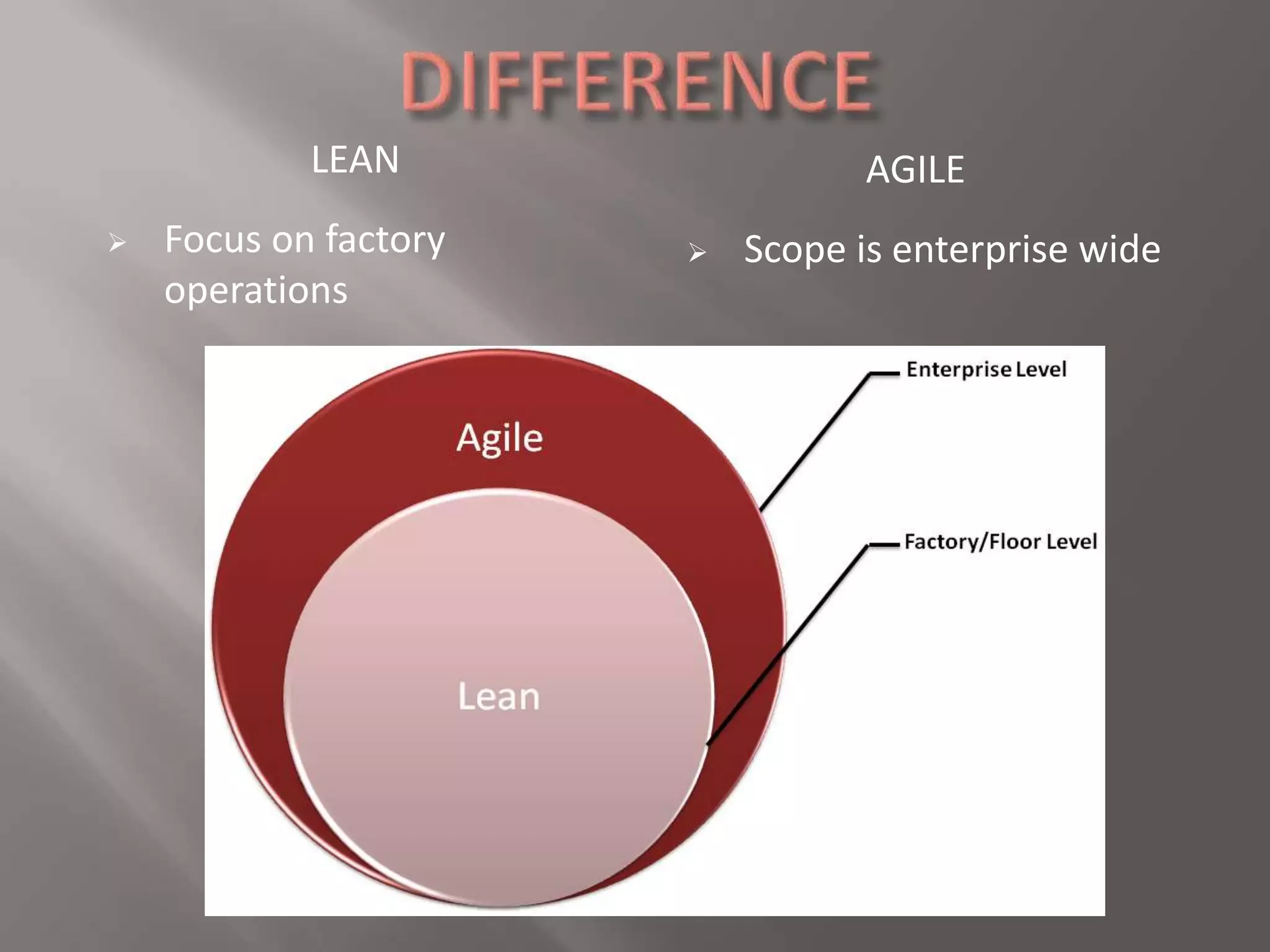
 Scope is enterprise wide  Focus on factory 
operations
LEAN AGILE 
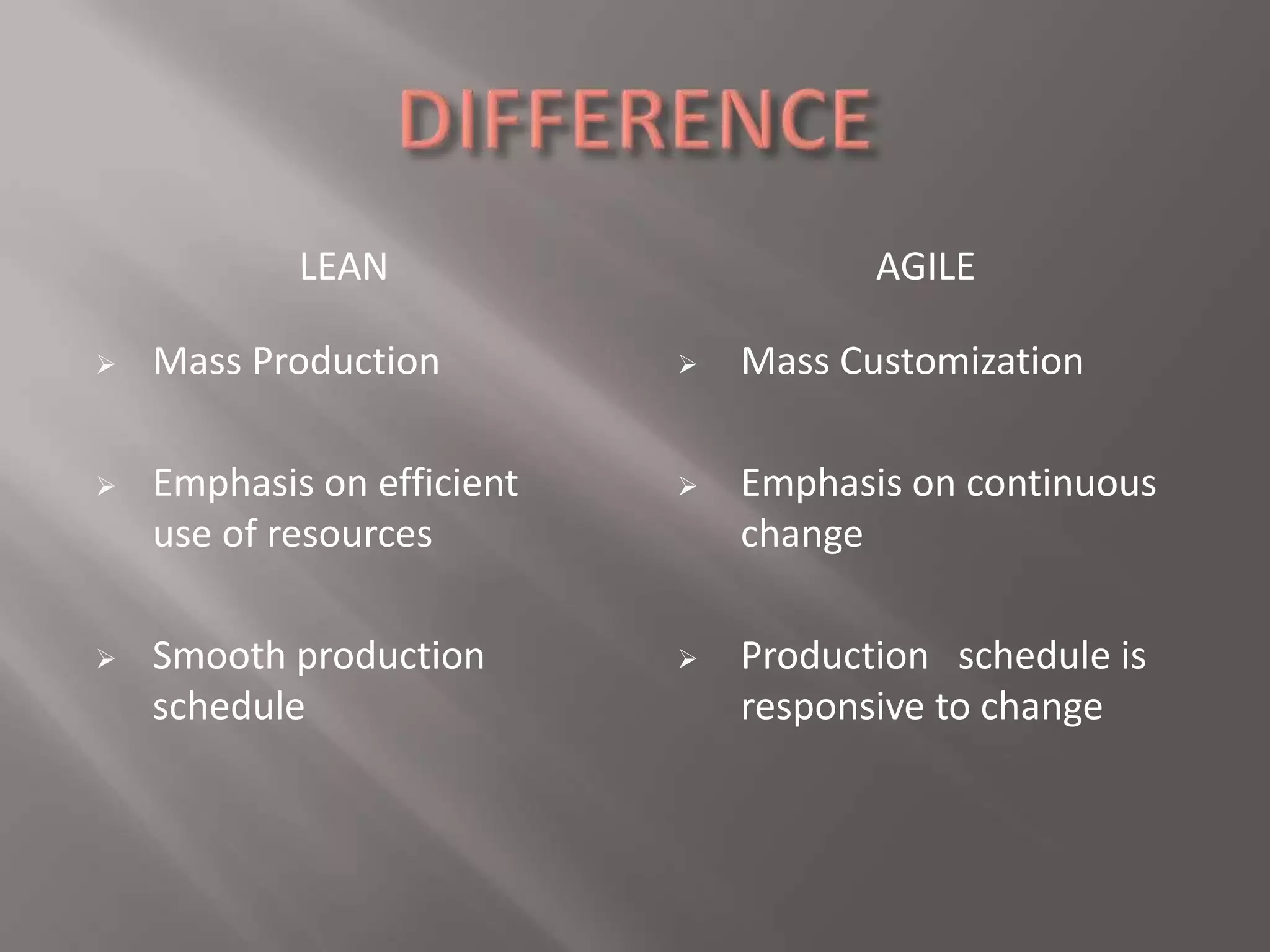
 Mass Customization 
 Emphasis on continuous 
change 
 Production schedule is 
responsive to change 
 Mass Production 
 Emphasis on efficient 
use of resources 
 Smooth production 
schedule
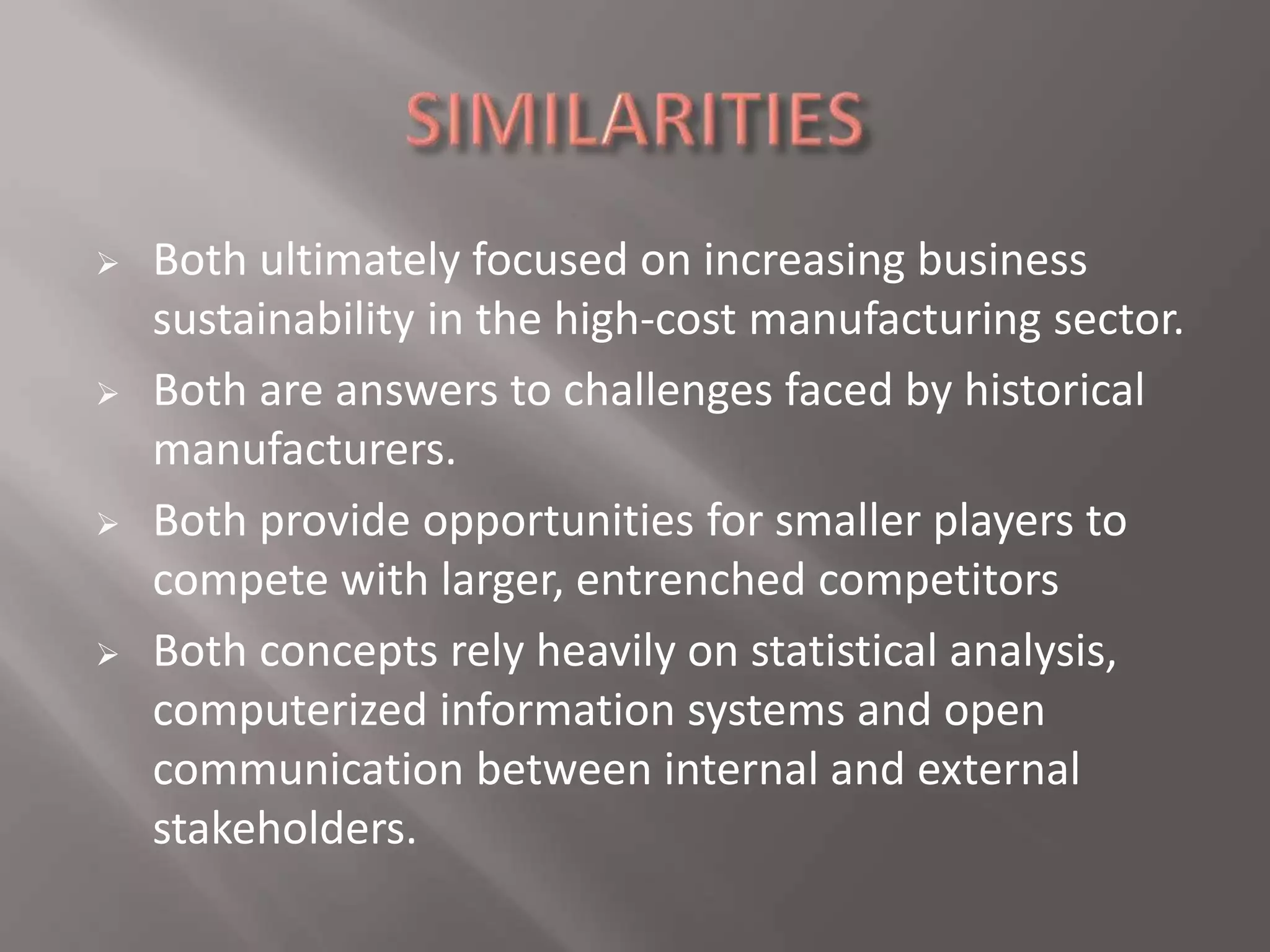
 Both ultimately focused on increasing business 
sustainability in the high-cost manufacturing sector. 
 Both are answers to challenges faced by historical 
manufacturers. 
 Both provide opportunities for smaller players to 
compete with larger, entrenched competitors 
 Both concepts rely heavily on statistical analysis, 
computerized information systems and open 
communication between internal and external 
stakeholders.
Lean vs agile manufacturing

Lean vs agile manufacturing

  • 2.
     Lean manufacturingis a philosophy that considers the expenditure of resources other than the direct creation of value for the end customer to be wasteful.  Thus its targeted for elimination.  Working from the perspective of the client who consumes a product or service.
  • 3.
    1. Eliminate Waste 2. Build Quality In 3. Create Knowledge 4. Defer Commitment 5. Deliver Fast 6. Optimize the Whole
  • 4.
     Agile manufacturingis a term applied to an organization that has created the processes, tools, and training to enable it to respond quickly to customer needs and market changes while still controlling costs and quality.  Agile manufacturing is seen as the next step after Lean manufacturing in the evolution of production methodology.
  • 5.
    1. Highest priorityis customer satisfaction 2. Welcome changing requirements 3. Frequent delivery of software 4. Business people & developers cooperating daily 5. Build projects around motivated people 6. Face-to-face conversation is best 7. Progress measured by working software 8. Sustainable development pace 9. Continuous attention to technical excellence 10. Simplicity 11. Self-organizing teams 12. Regular reflection & adaptation
  • 6.
    LEAN AGILE Customisable  Numerous options are available  NO Customization  Only 1 or 2 versions of product.
  • 8.
    LEAN AGILE Inventory Buffers  Acceptable Quality  Minimum Inventory  Perfect Quality
  • 9.
    LEAN AGILE Scope is enterprise wide  Focus on factory operations
  • 10.
    LEAN AGILE Mass Customization  Emphasis on continuous change  Production schedule is responsive to change  Mass Production  Emphasis on efficient use of resources  Smooth production schedule
  • 12.
     Both ultimatelyfocused on increasing business sustainability in the high-cost manufacturing sector.  Both are answers to challenges faced by historical manufacturers.  Both provide opportunities for smaller players to compete with larger, entrenched competitors  Both concepts rely heavily on statistical analysis, computerized information systems and open communication between internal and external stakeholders.