Lean	
  PMO	
  in	
  everyday	
  Agile	
  
Prashanth	
  Madhavan	
  Narasimhan	
  
Lead	
  Consultant,	
  Agile	
  Coach,	
  
Product	
  Owner	


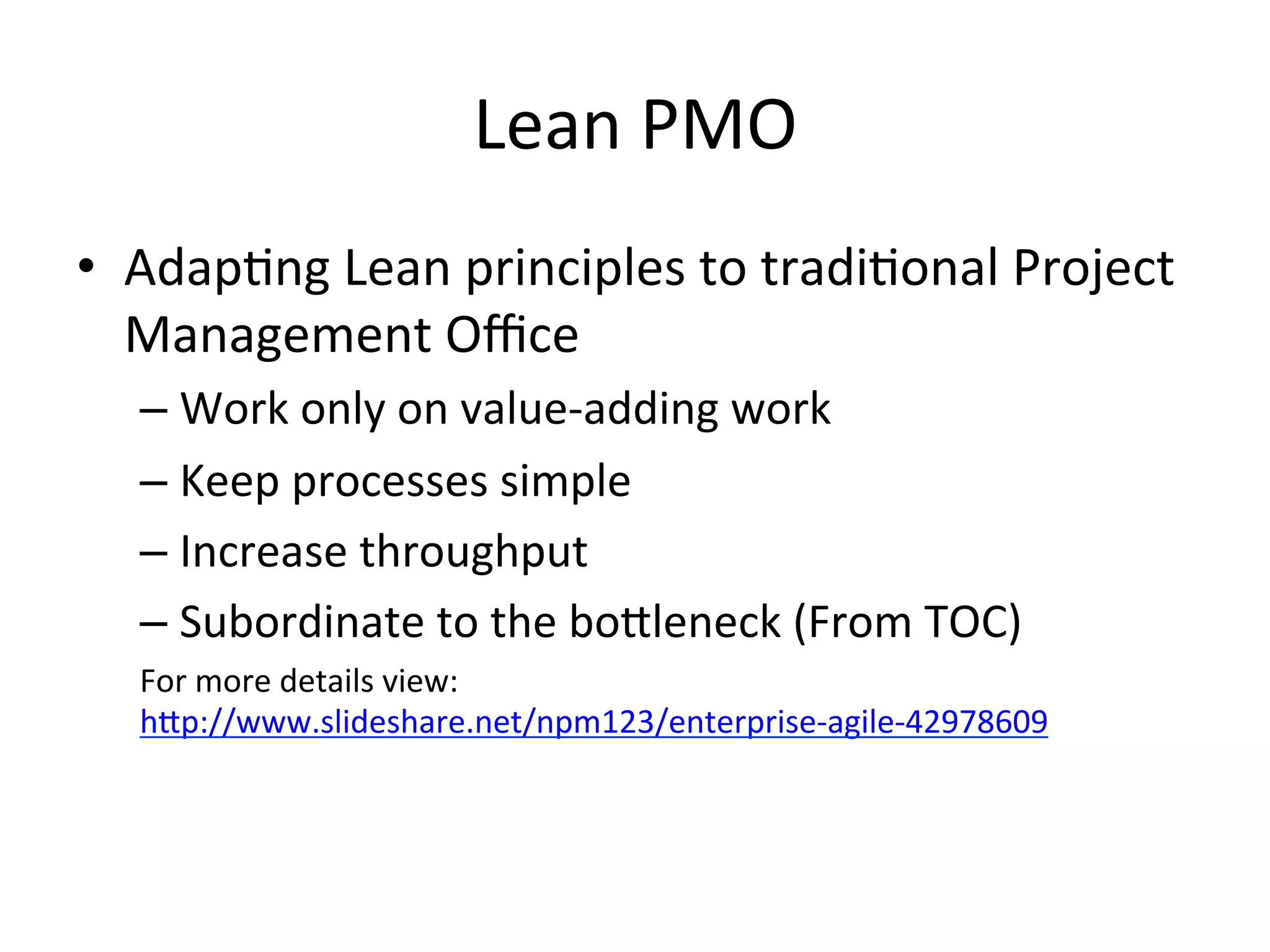
Lean	
  PMO	
  
•  Adap=ng	
  Lean	
  principles	
  to	
  tradi=onal	
  Project	
  
Management	
  Office	
  
– Work	
  only	
  on	
  value-­‐adding	
  work	
  
– Keep	
  processes	
  simple	
  
– Increase	
  throughput	
  
– Subordinate	
  to	
  the	
  boGleneck	
  (From	
  TOC)	
  
For	
  more	
  details	
  view:
hGp://www.slideshare.net/npm123/enterprise-­‐agile-­‐42978609	
  
Team	
  Organiza=on	
  
•  Organize	
  teams	
  around	
  streams	
  of	
  work	
  
•  Value	
  adding	
  streams	
  of	
  work	
  
•  Break	
  into	
  smaller	
  streams	
  of	
  work	
  
Benefits	
  
•  BeGer	
  repor=ng	
  on	
  
business	
  value	
  
•  Easier	
  priori=za=on	
  if	
  
streams	
  are	
  broken	
  down	
  
Challenges	
  
•  Teams	
  might	
  struggle	
  to	
  
see	
  the	
  bigger	
  picture	
  
•  More	
  overhead	
  in	
  terms	
  
of	
  team	
  communica=on	
  
Poly	
  skilling	
  
Team	
  member	
  rota*on	
  
across	
  streams	
  
•  Ge_ng	
  team	
  members	
  to	
  
work	
  in	
  different	
  streams	
  
•  Helps	
  gain	
  context	
  on	
  
other	
  streams	
  
•  Helps	
  during	
  integra=on	
  
tes=ng	
  and	
  socware	
  
design	
  
Team	
  member	
  rota*on	
  
across	
  func*ons	
  
•  Ge_ng	
  team	
  members	
  to	
  
work	
  in	
  different	
  
func=onal	
  roles	
  like	
  Dev,	
  
QA	
  etc	
  
•  Helps	
  in	
  diagnosing	
  
problems	
  beGer	
  
•  Helps	
  in	
  throughput	
  since	
  
work	
  is	
  not	
  dependent	
  on	
  
a	
  specific	
  perso	
  
Throughput	
  
Design	
  team	
  processes	
  for	
  maximum	
  
throughput	
  
•  Limit	
  work	
  that	
  can	
  be	
  taken	
  in	
  a	
  sprint	
  
•  Visually	
  radiate	
  informa=on	
  on	
  boGlenecks	
  to	
  
the	
  team	
  
•  Poly-­‐skilled	
  teams	
  can	
  work	
  to	
  complete	
  the	
  
commiGed	
  work	
  before	
  signing	
  up	
  for	
  more	
  
work	
  
Quality	
  
•  Constantly	
  regressing	
  for	
  quality	
  to	
  maintain	
  
socware	
  quality	
  
– Raise	
  early	
  alarms	
  if	
  things	
  don’t	
  work	
  well	
  
– Stop	
  future	
  work	
  to	
  ensure	
  quality	
  is	
  good	
  
– Make	
  sure	
  that	
  the	
  socware	
  is	
  working	
  and	
  
maintainable	
  before	
  signing	
  up	
  for	
  new	
  work	
  
– Design	
  team	
  processes	
  like	
  retrospec=ves	
  or	
  bug	
  
triages	
  to	
  understand	
  how	
  to	
  uphold	
  quality	
  
standards	
  
Architecture	
  
•  Based	
  on	
  the	
  complexity	
  of	
  the	
  program	
  and	
  
the	
  stream,	
  we	
  could	
  go	
  with	
  Big	
  upfront	
  
design	
  versus	
  Itera=ve	
  design	
  
– Design	
  team	
  processes	
  like	
  dev	
  huddles	
  to	
  work	
  
on	
  issues	
  related	
  to	
  integra=on	
  
– Have	
  the	
  safety	
  net	
  of	
  end	
  to	
  end	
  integra=on	
  
tes=ng	
  to	
  validate	
  any	
  architectural	
  assump=ons	
  
Conclusion	
  
•  Lean	
  PMO	
  is	
  a	
  structured	
  and	
  disciplined	
  
approach	
  for	
  large	
  enterprises	
  to	
  manage	
  
programs	
  
•  They	
  can	
  be	
  broken	
  down	
  into	
  specific	
  
prac=ces	
  for	
  teams	
  
•  The	
  essence	
  is	
  to	
  stay	
  simple	
  and	
  relevant	
  to	
  
the	
  program	
  goal	
  and	
  for	
  streams	
  to	
  figure	
  out	
  
which	
  team	
  prac=ce	
  suits	
  them	
  
About	
  Me	
  
•  The	
  author	
  is	
  a	
  lead	
  consultant	
  /	
  agile	
  coach	
  at	
  
Thoughtworks	
  and	
  has	
  10	
  years	
  of	
  experience	
  
in	
  so:ware	
  delivery	
  –	
  5	
  of	
  which	
  has	
  been	
  with	
  
enabling	
  enterprise	
  adapt	
  agile.	
  	
  
•  The	
  author	
  regularly	
  writes	
  at	
  
www.madhavanwrites.blogspot.com	


Lean PMO in everyday agile

  • 1.
    Lean  PMO  in  everyday  Agile   Prashanth  Madhavan  Narasimhan   Lead  Consultant,  Agile  Coach,   Product  Owner    
  • 2.
    Lean  PMO   • Adap=ng  Lean  principles  to  tradi=onal  Project   Management  Office   – Work  only  on  value-­‐adding  work   – Keep  processes  simple   – Increase  throughput   – Subordinate  to  the  boGleneck  (From  TOC)   For  more  details  view: hGp://www.slideshare.net/npm123/enterprise-­‐agile-­‐42978609  
  • 3.
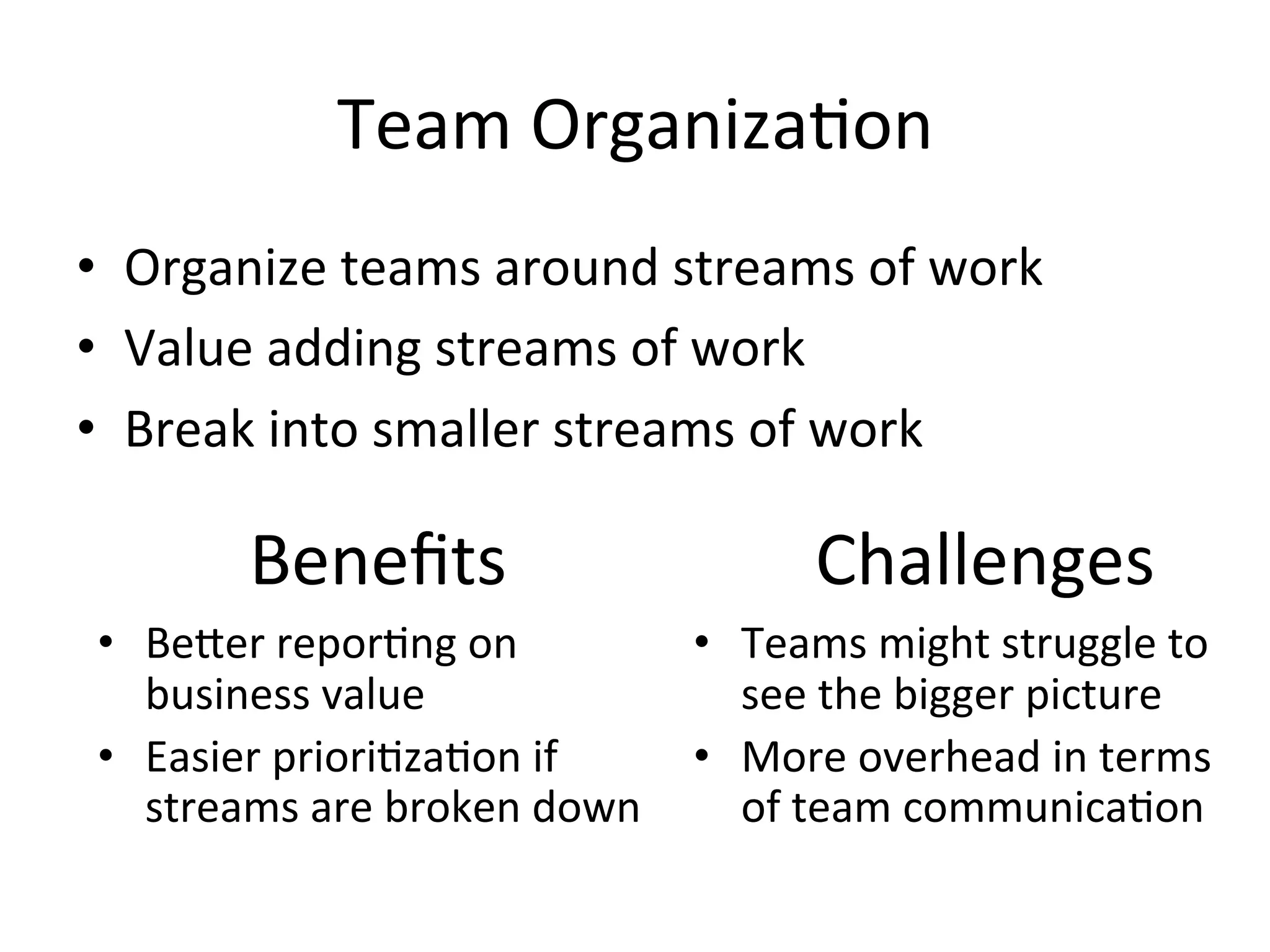
    Team  Organiza=on   • Organize  teams  around  streams  of  work   •  Value  adding  streams  of  work   •  Break  into  smaller  streams  of  work   Benefits   •  BeGer  repor=ng  on   business  value   •  Easier  priori=za=on  if   streams  are  broken  down   Challenges   •  Teams  might  struggle  to   see  the  bigger  picture   •  More  overhead  in  terms   of  team  communica=on  
  • 4.
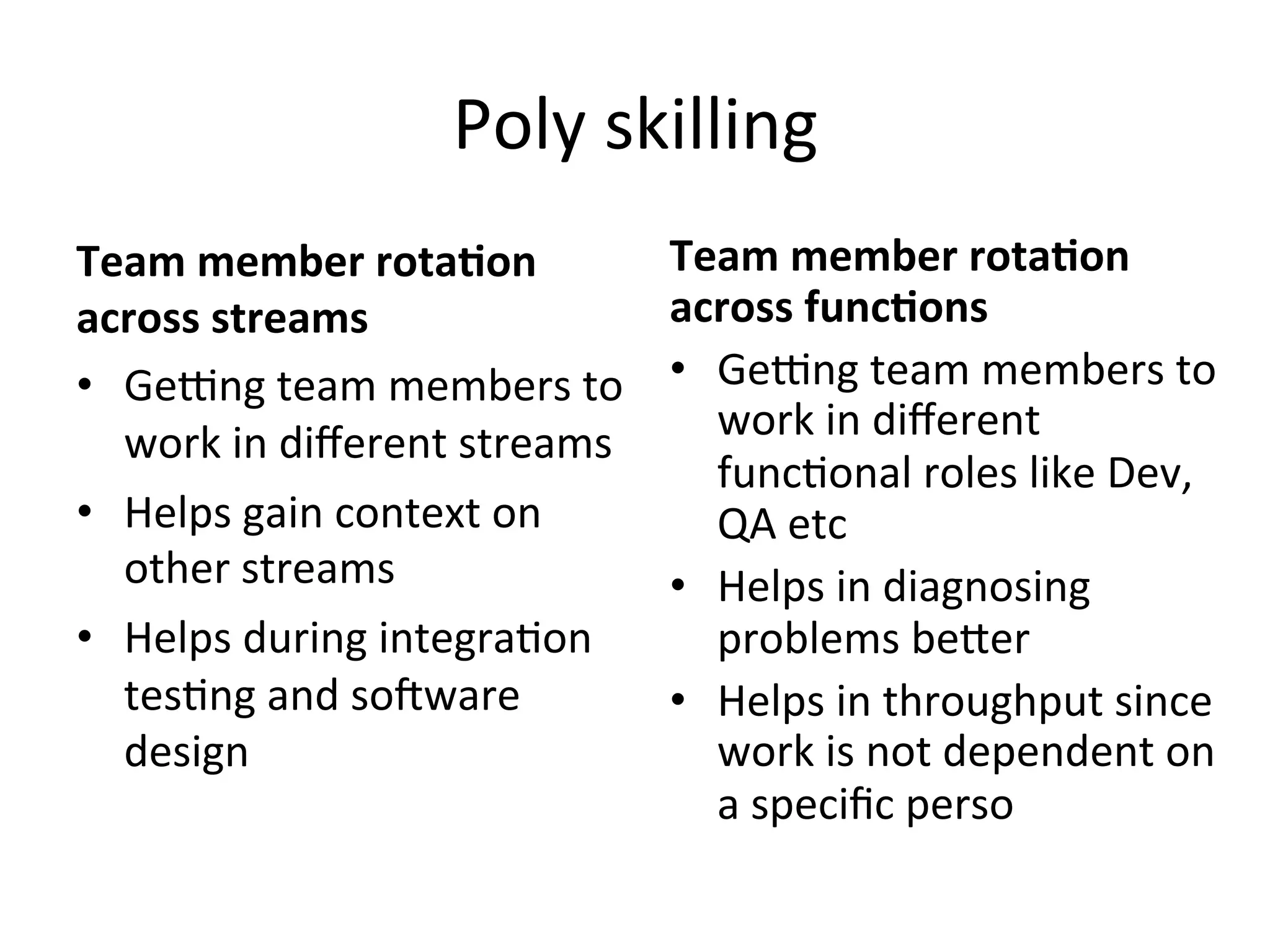
    Poly  skilling   Team  member  rota*on   across  streams   •  Ge_ng  team  members  to   work  in  different  streams   •  Helps  gain  context  on   other  streams   •  Helps  during  integra=on   tes=ng  and  socware   design   Team  member  rota*on   across  func*ons   •  Ge_ng  team  members  to   work  in  different   func=onal  roles  like  Dev,   QA  etc   •  Helps  in  diagnosing   problems  beGer   •  Helps  in  throughput  since   work  is  not  dependent  on   a  specific  perso  
  • 5.
    Throughput   Design  team  processes  for  maximum   throughput   •  Limit  work  that  can  be  taken  in  a  sprint   •  Visually  radiate  informa=on  on  boGlenecks  to   the  team   •  Poly-­‐skilled  teams  can  work  to  complete  the   commiGed  work  before  signing  up  for  more   work  
  • 6.
    Quality   •  Constantly  regressing  for  quality  to  maintain   socware  quality   – Raise  early  alarms  if  things  don’t  work  well   – Stop  future  work  to  ensure  quality  is  good   – Make  sure  that  the  socware  is  working  and   maintainable  before  signing  up  for  new  work   – Design  team  processes  like  retrospec=ves  or  bug   triages  to  understand  how  to  uphold  quality   standards  
  • 7.
    Architecture   •  Based  on  the  complexity  of  the  program  and   the  stream,  we  could  go  with  Big  upfront   design  versus  Itera=ve  design   – Design  team  processes  like  dev  huddles  to  work   on  issues  related  to  integra=on   – Have  the  safety  net  of  end  to  end  integra=on   tes=ng  to  validate  any  architectural  assump=ons  
  • 8.
    Conclusion   •  Lean  PMO  is  a  structured  and  disciplined   approach  for  large  enterprises  to  manage   programs   •  They  can  be  broken  down  into  specific   prac=ces  for  teams   •  The  essence  is  to  stay  simple  and  relevant  to   the  program  goal  and  for  streams  to  figure  out   which  team  prac=ce  suits  them  
  • 9.
    About  Me   • The  author  is  a  lead  consultant  /  agile  coach  at   Thoughtworks  and  has  10  years  of  experience   in  so:ware  delivery  –  5  of  which  has  been  with   enabling  enterprise  adapt  agile.     •  The  author  regularly  writes  at   www.madhavanwrites.blogspot.com