ThoughtWorks Local Office Day

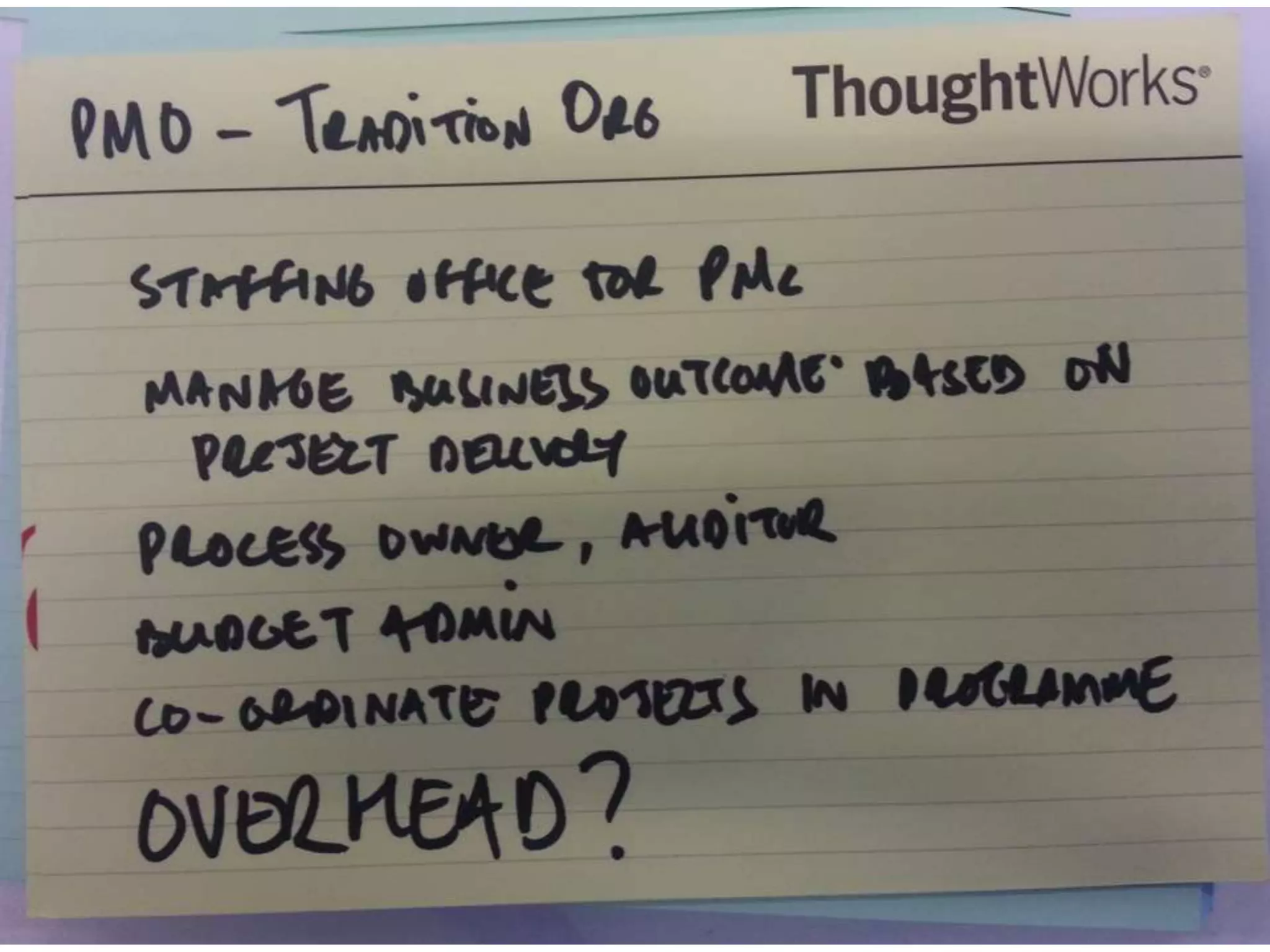
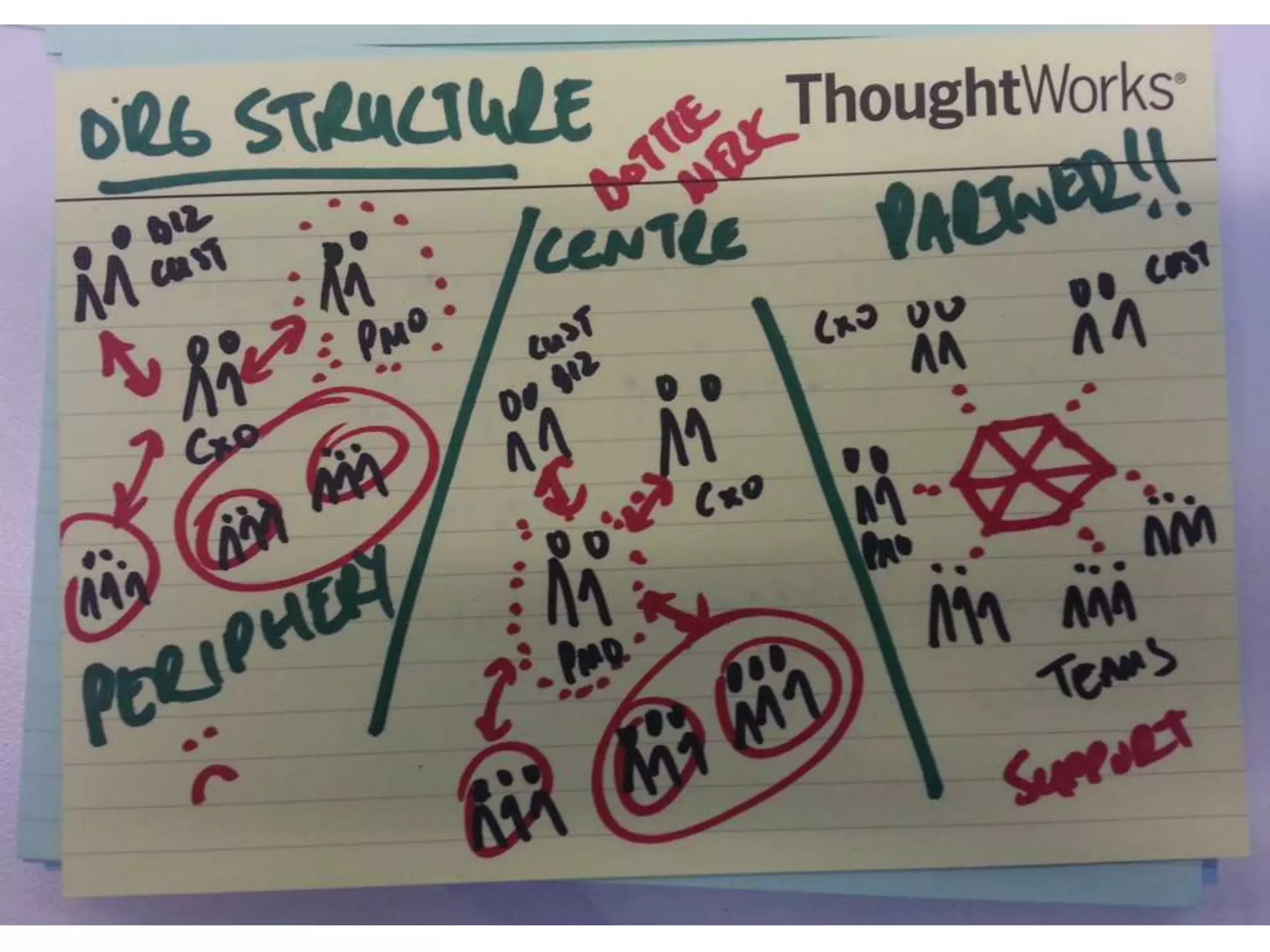
     Traditional vs Agile/Lean PMO
Dean Leffingwell
Many “impediments” rise to a ceiling that is beyond the control of the
teams. Sometimes the ceiling is represented by the PMO, a place
many agilists perceive to be “the mother ship of impediments.”

Indeed, if you mention the words project office or PMO among a
group of agilists in the trenches, reactions will vary, but probably only
from negative . . . to very negative.

It should come as no surprise that our agile teams, and programs, are
being held accountable to legacy waterfall practices for
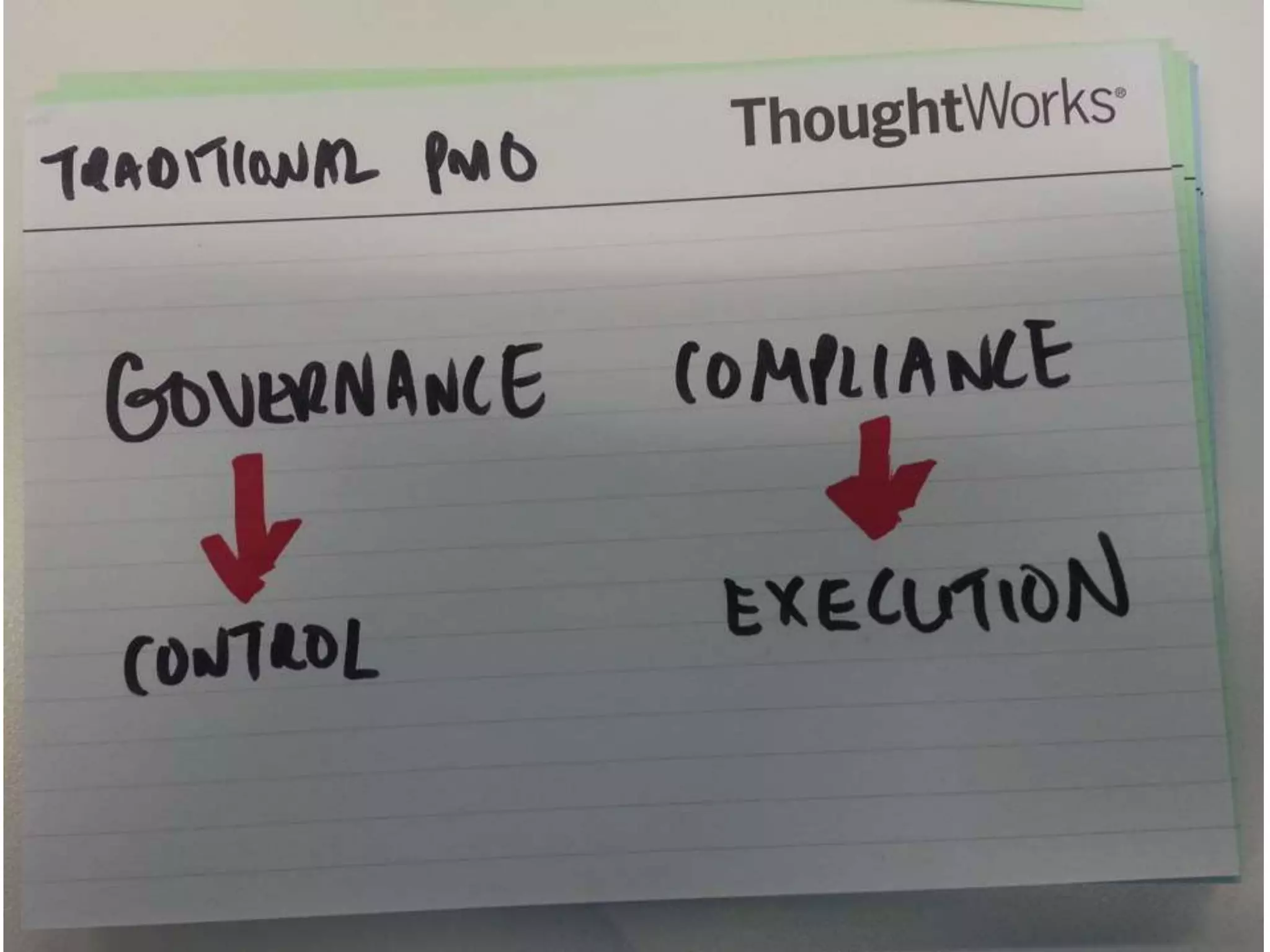
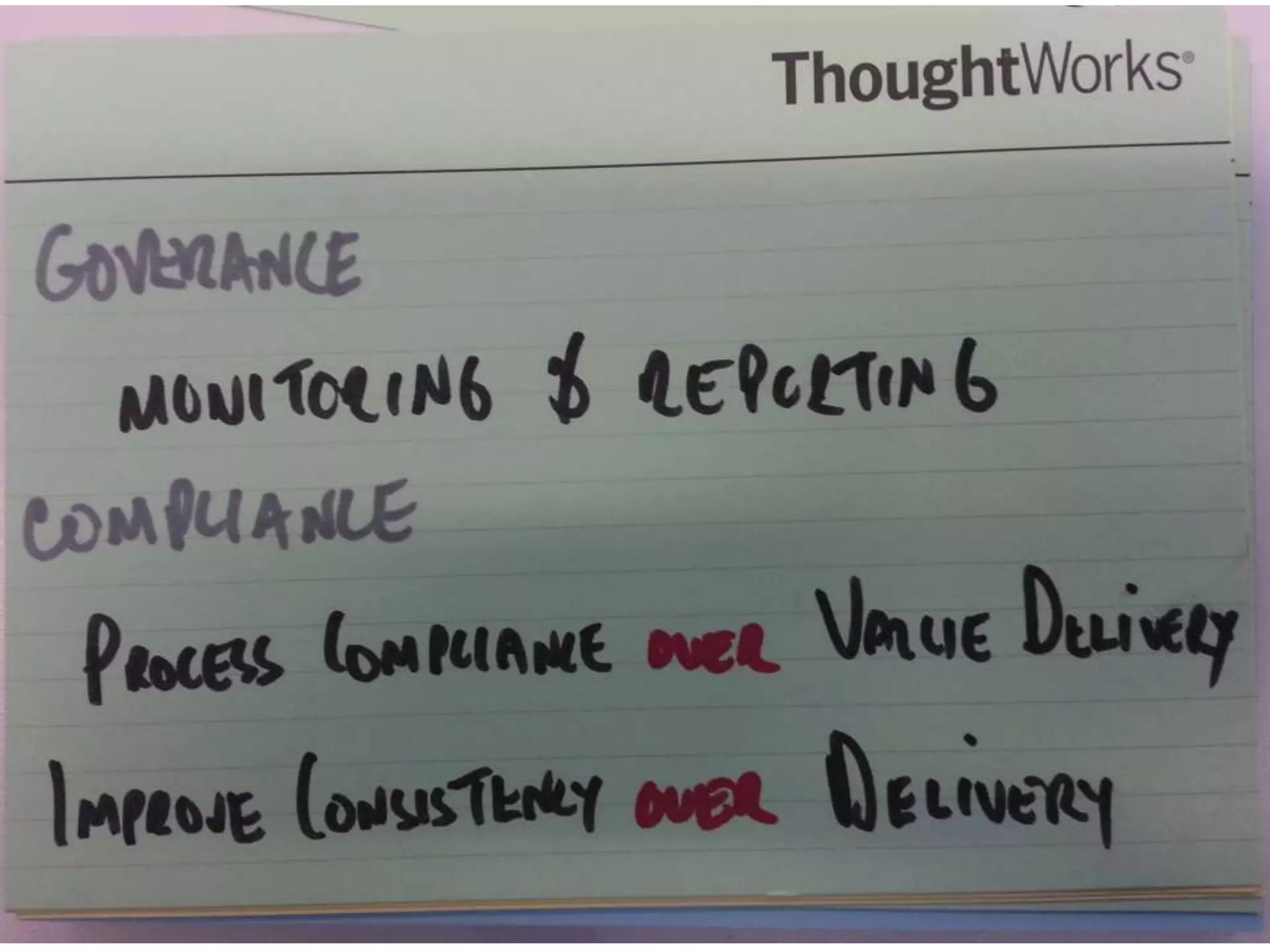
governance, and traditional methods of project management.

They are based around legacy mindsets,
but that was all there was.
Legacy Mindsets
Widget engineering
“Draw it up, and build it like you drew it”

Order-taker mentality
“You build, what we tell you to build”

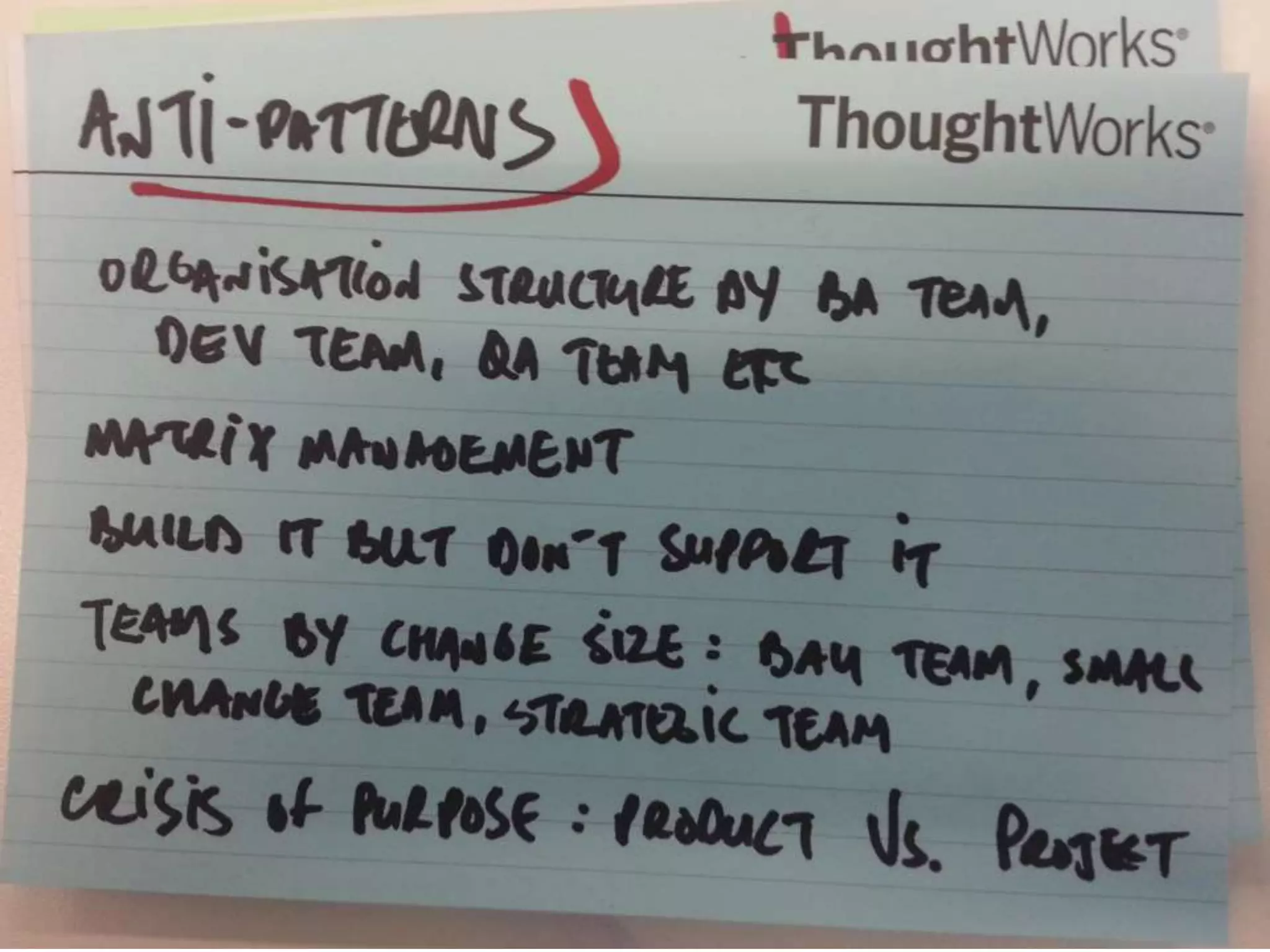
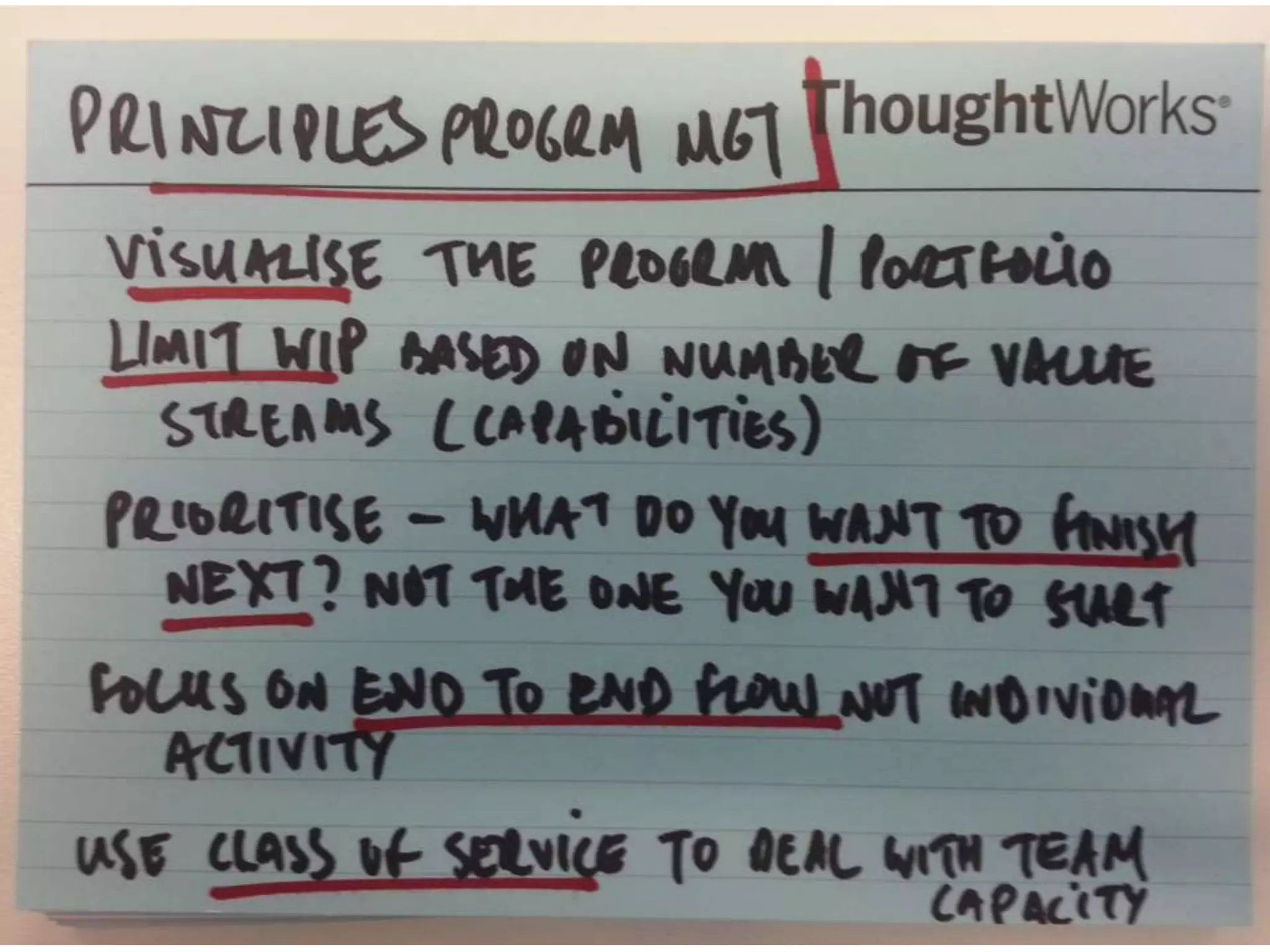
Maximize utilisation
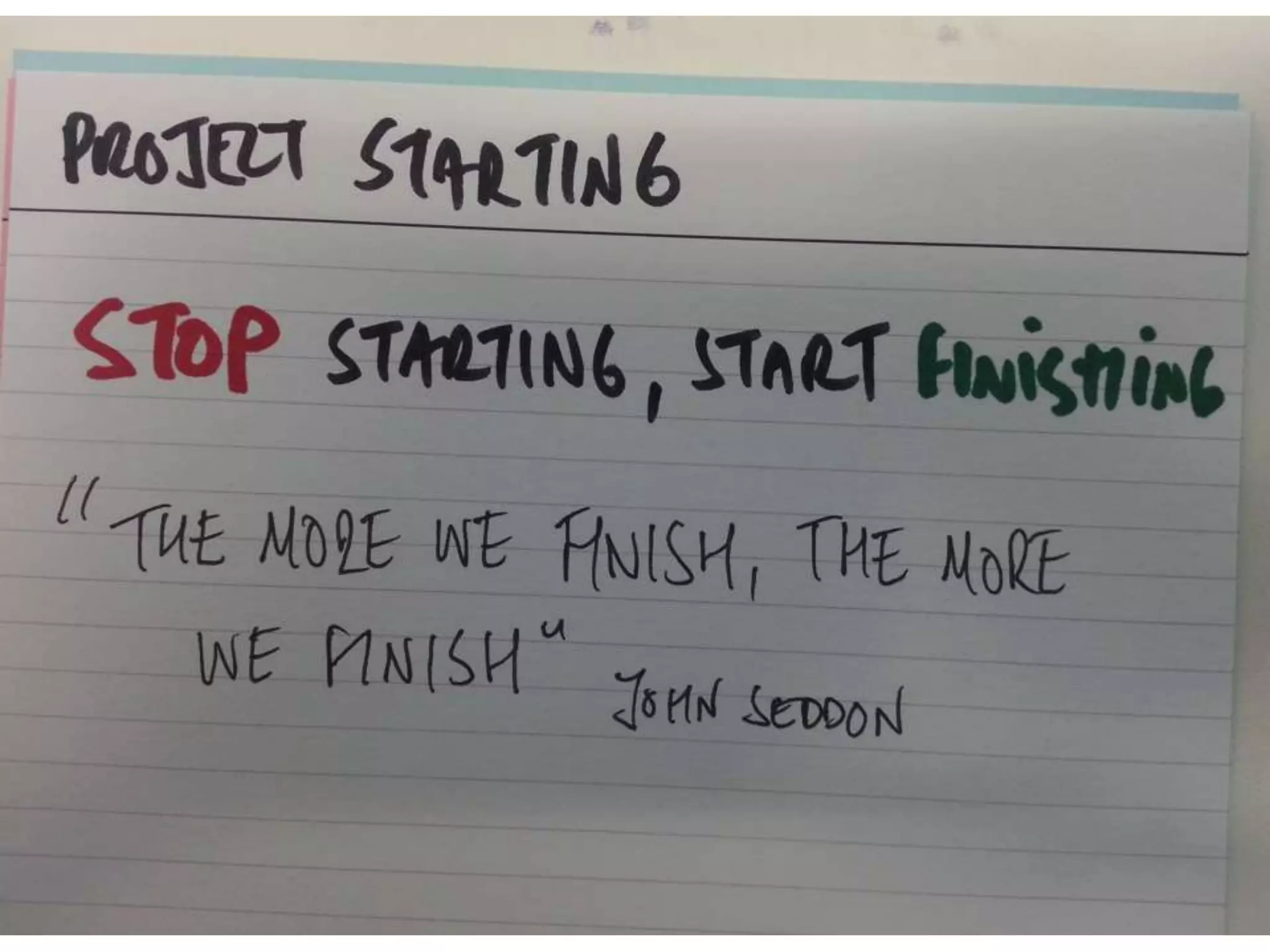
“The more we start, the more we finish”

Control through milestones
“If we still can’t tell where we are we’ll just ask for more detailed data”

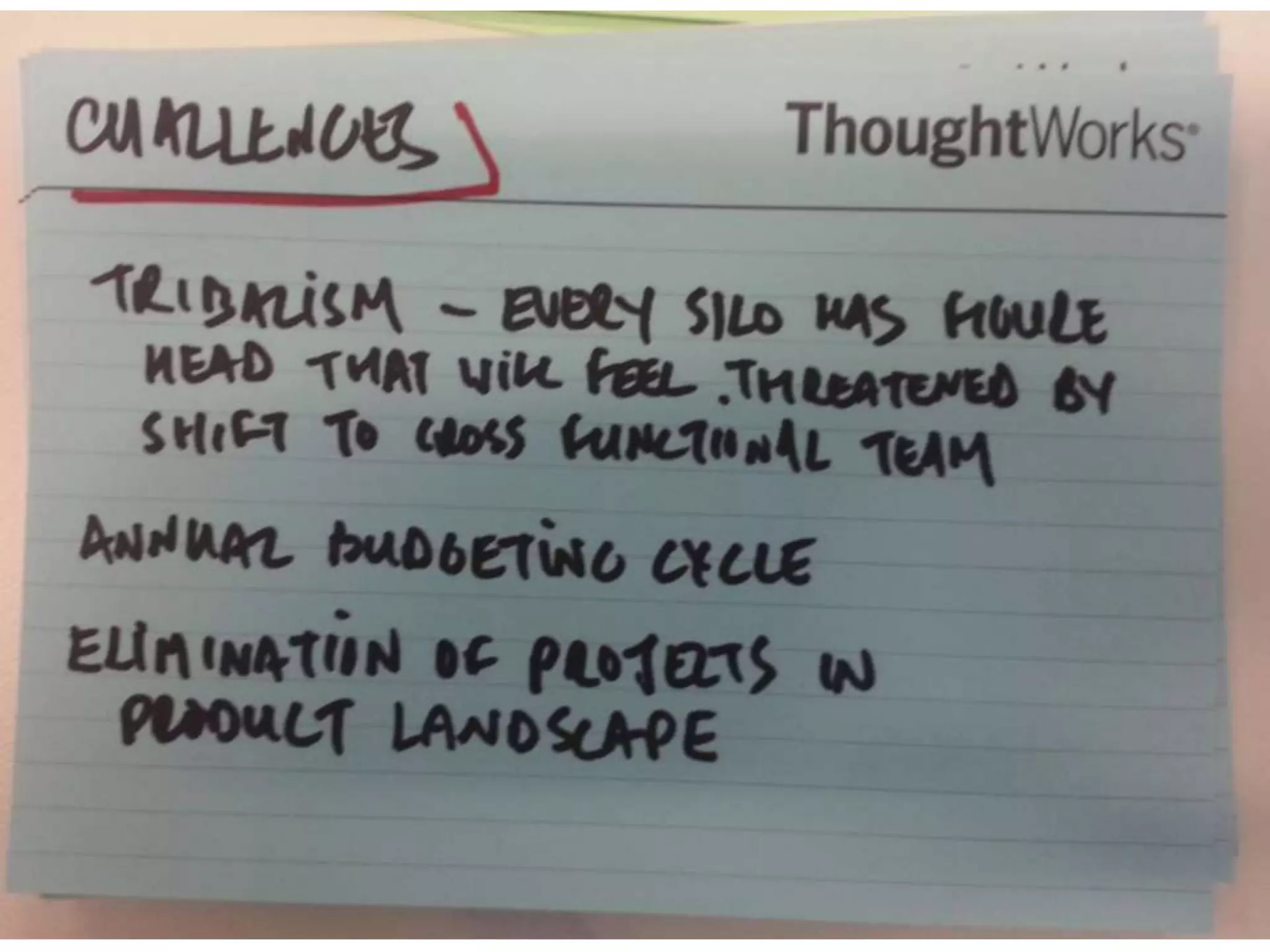
We can plan a full year of projects
“If we only planned in more detail, we could really get it right this year.”

Just get it done
“This is the plan ‘we’ agreed to; now execute it”
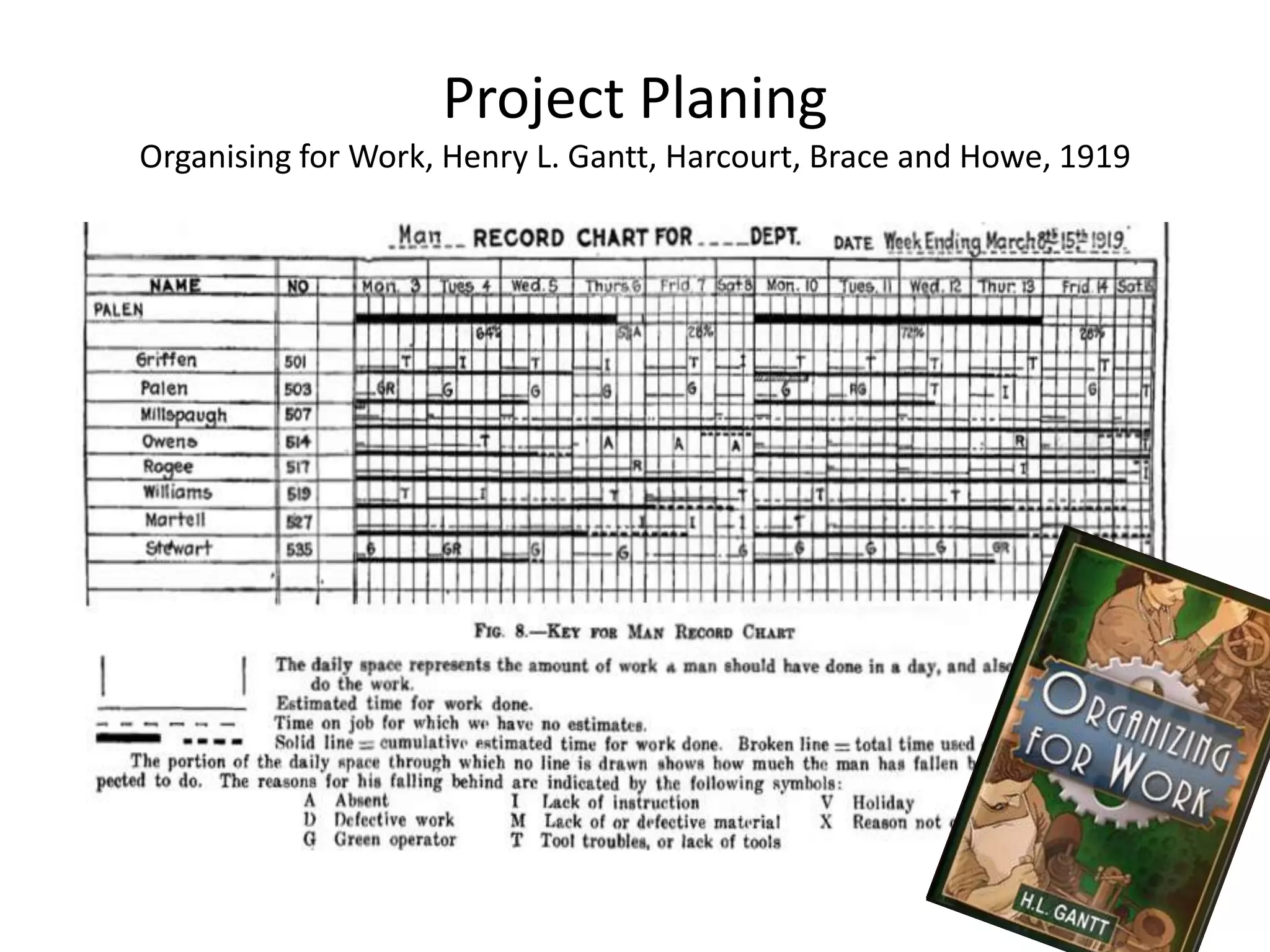
Project Planing
Organising for Work, Henry L. Gantt, Harcourt, Brace and Howe, 1919
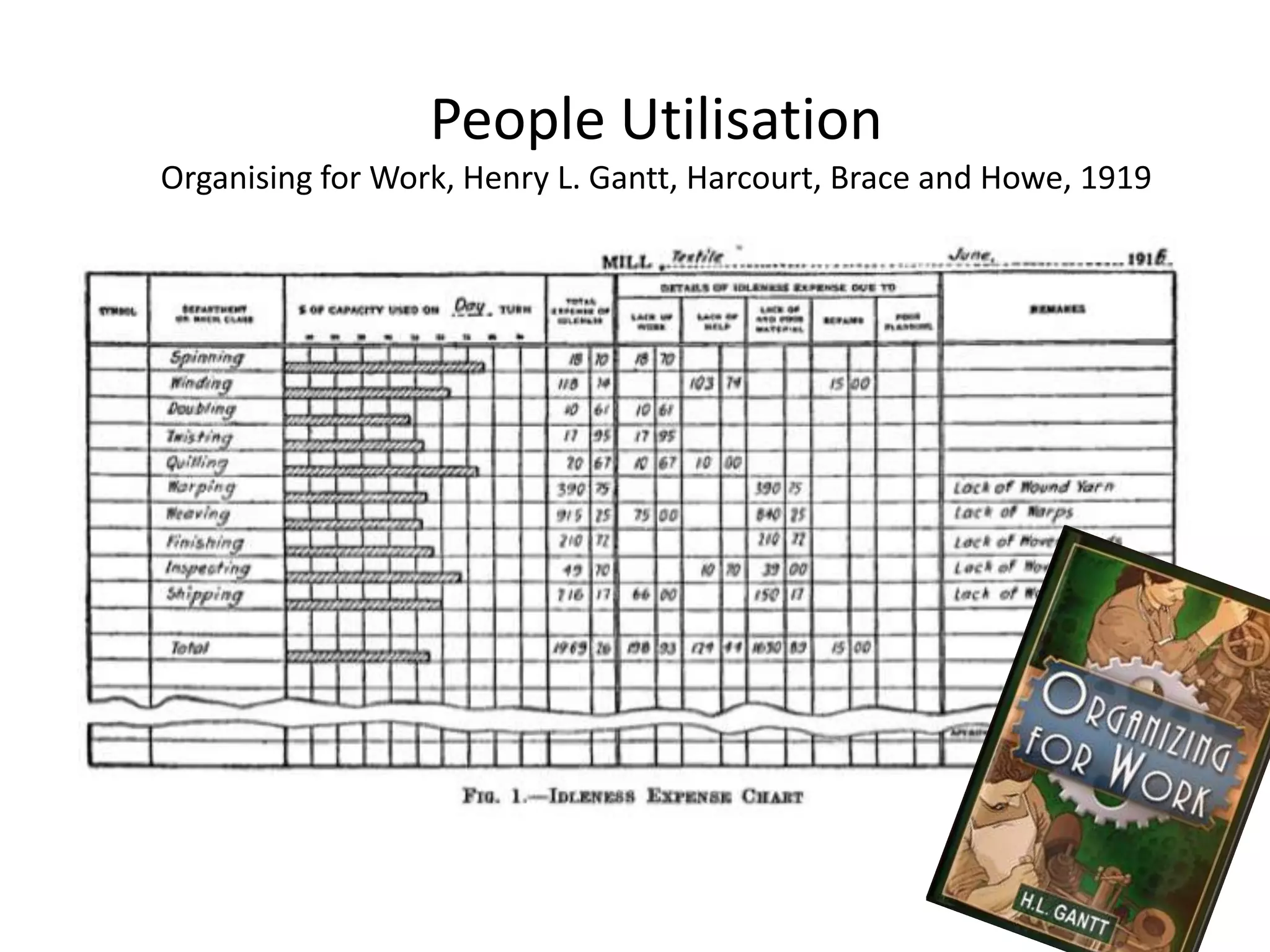
People Utilisation
Organising for Work, Henry L. Gantt, Harcourt, Brace and Howe, 1919
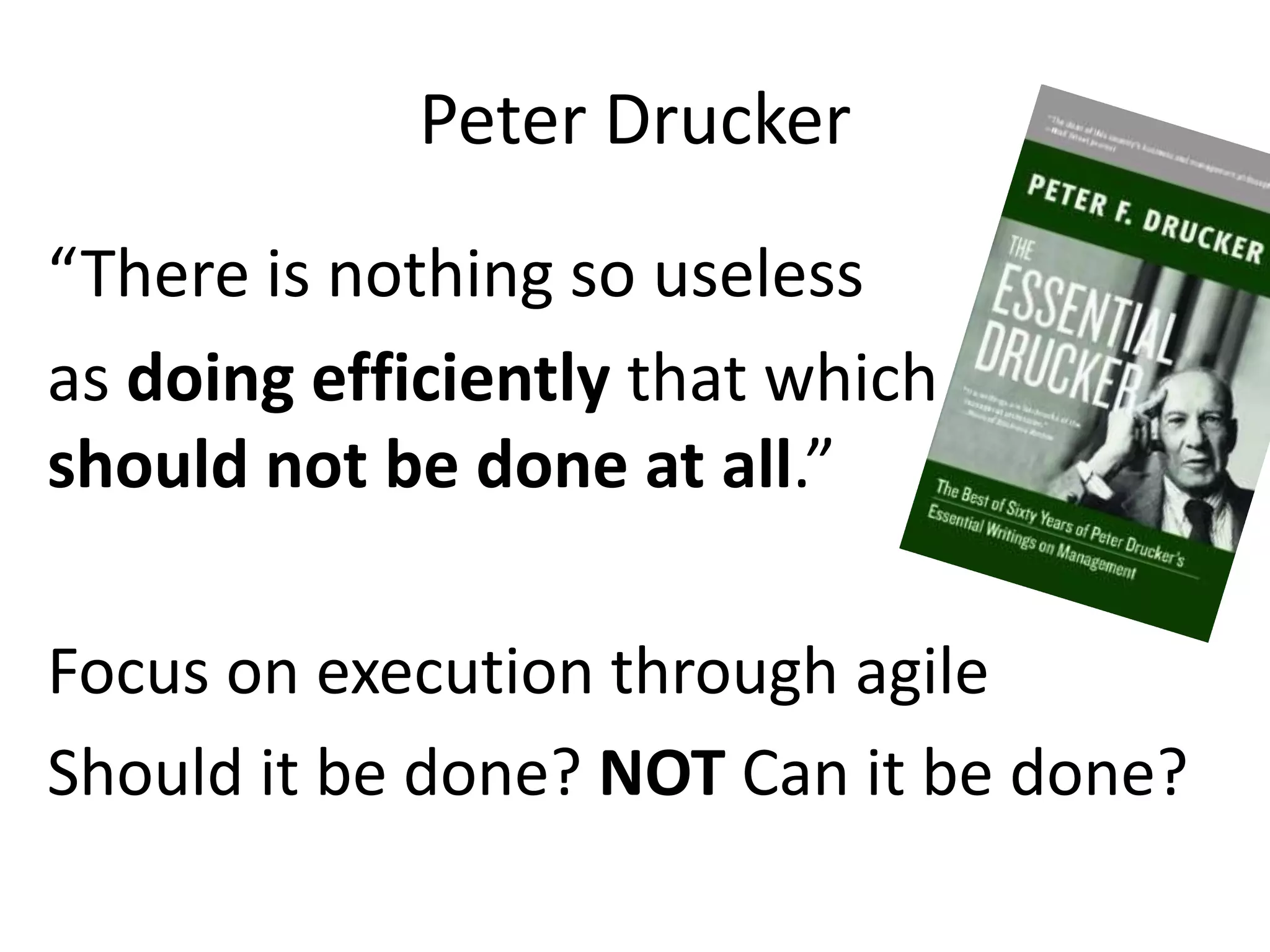
Peter Drucker
“There is nothing so useless
as doing efficiently that which
should not be done at all.”

Focus on execution through agile
Should it be done? NOT Can it be done?
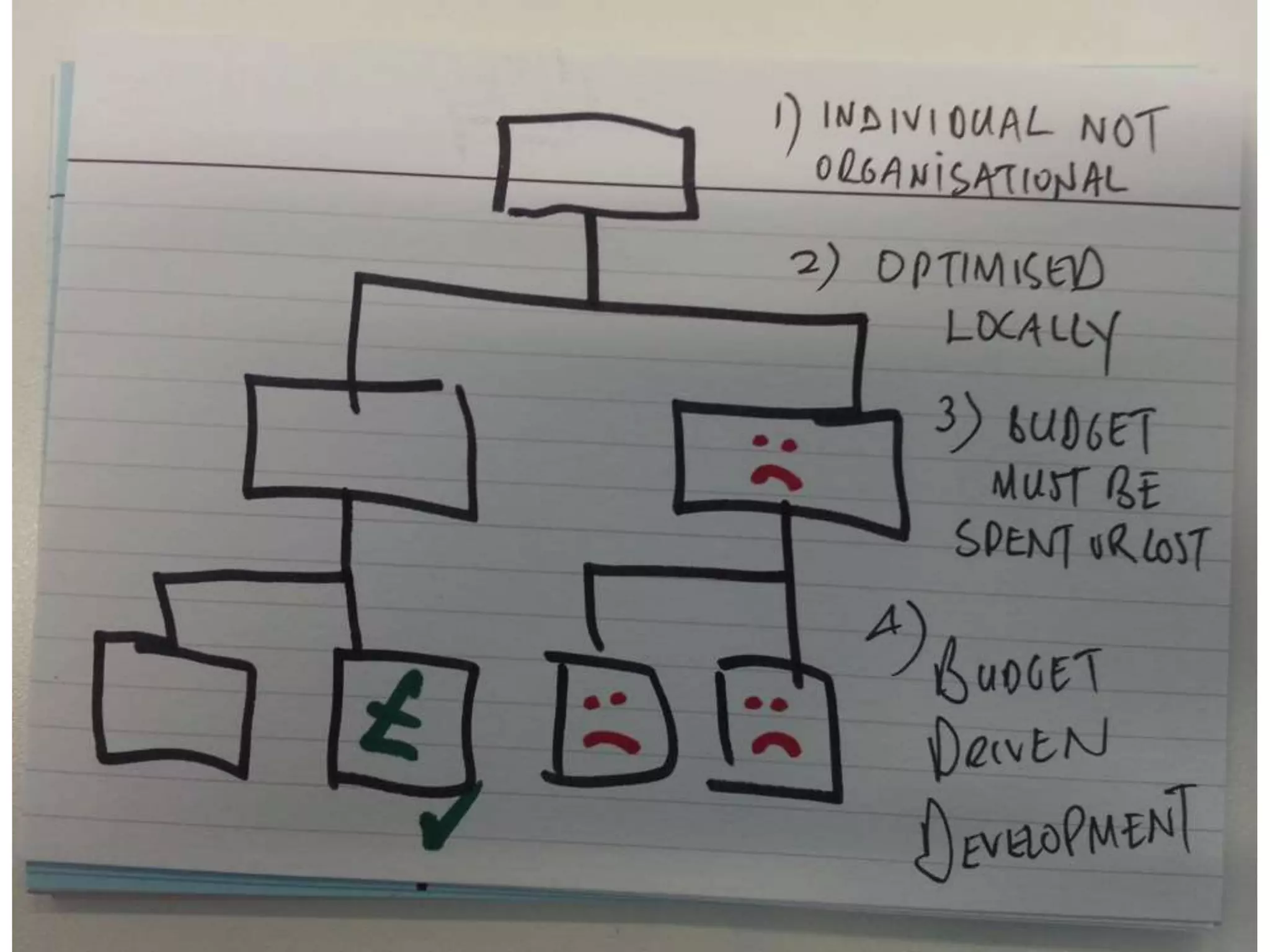
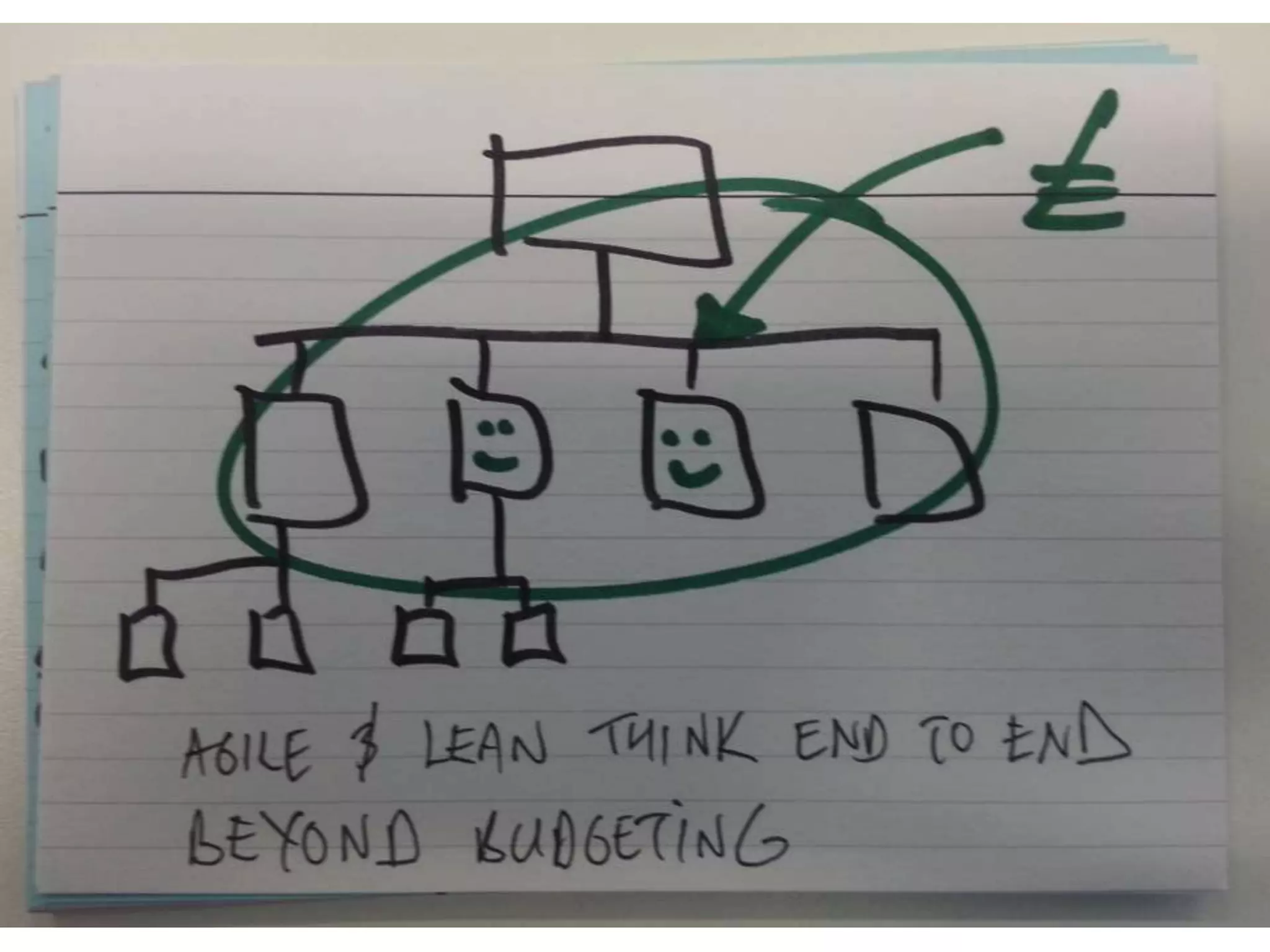
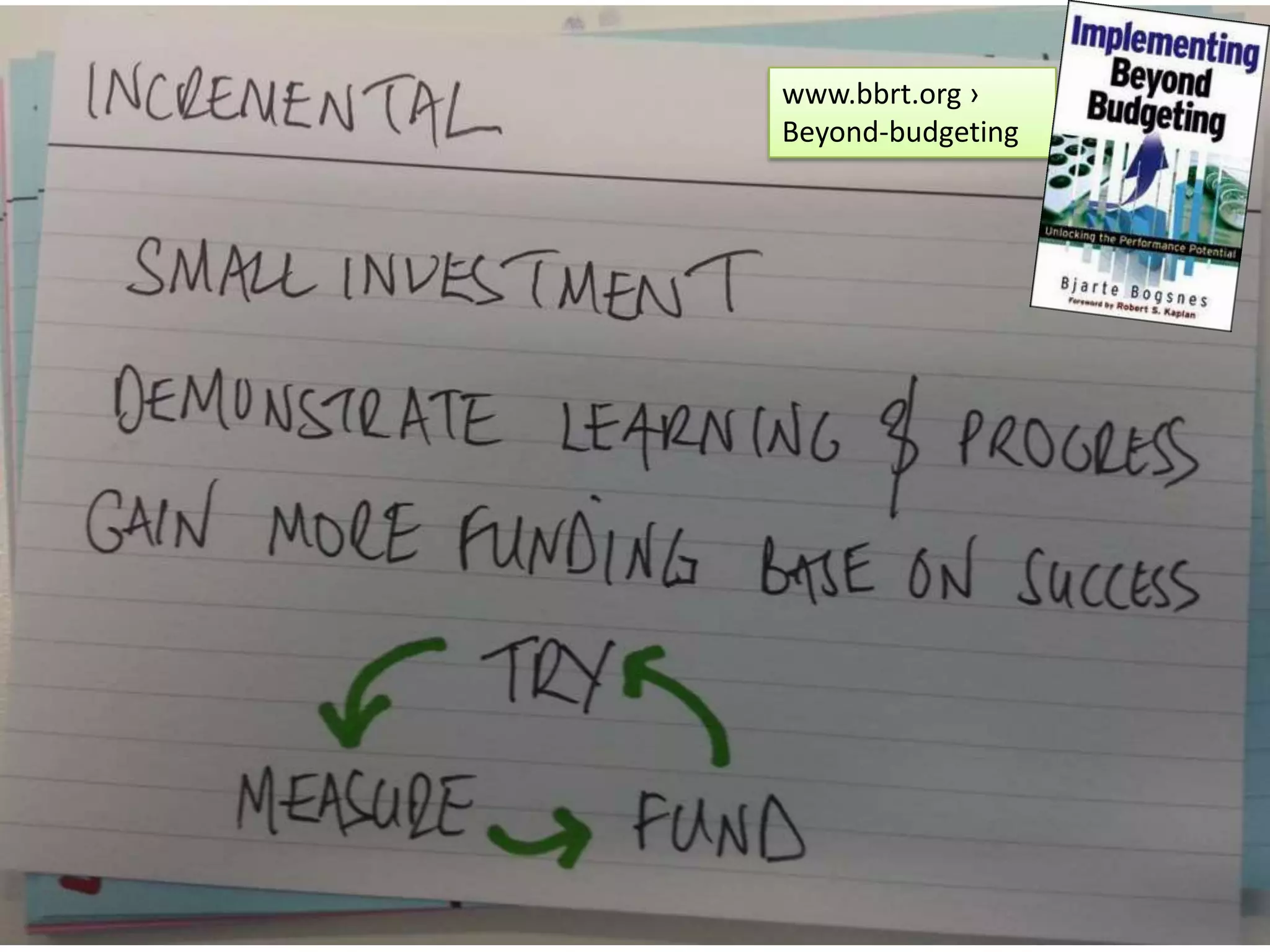
www.bbrt.org ›
Beyond-budgeting
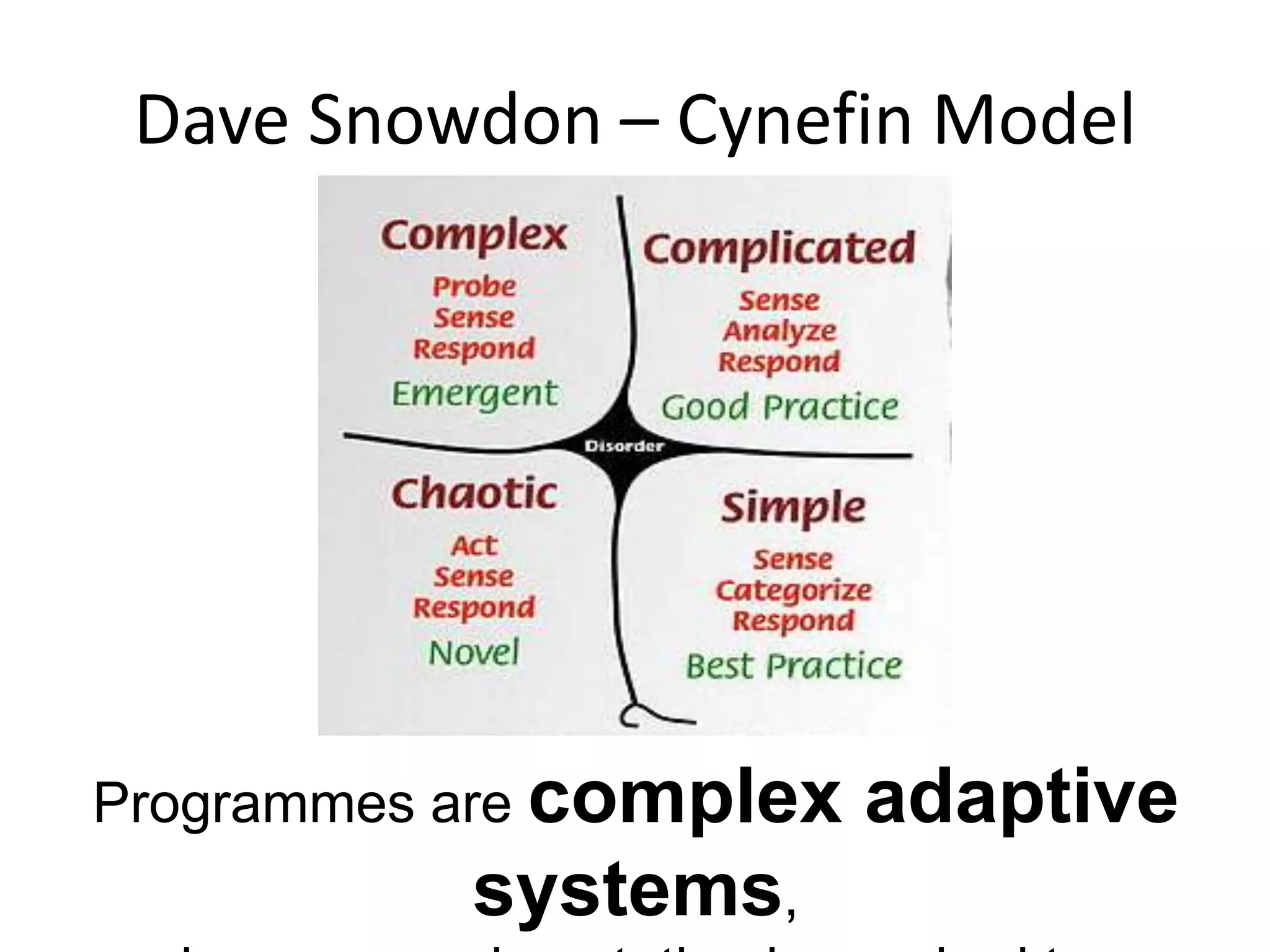
Dave Snowdon – Cynefin Model


Programmes are complex   adaptive
           systems,
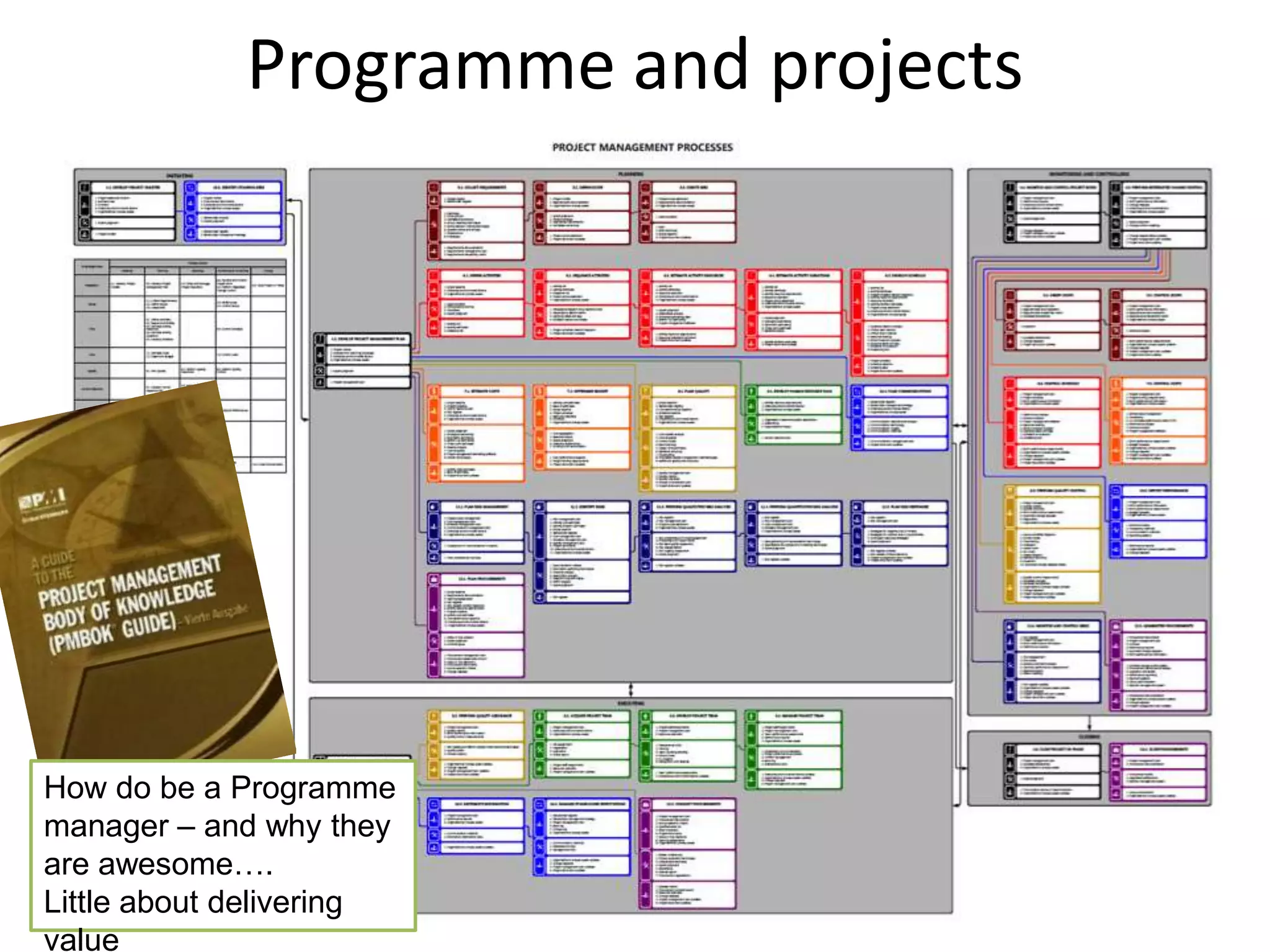
Programme and projects


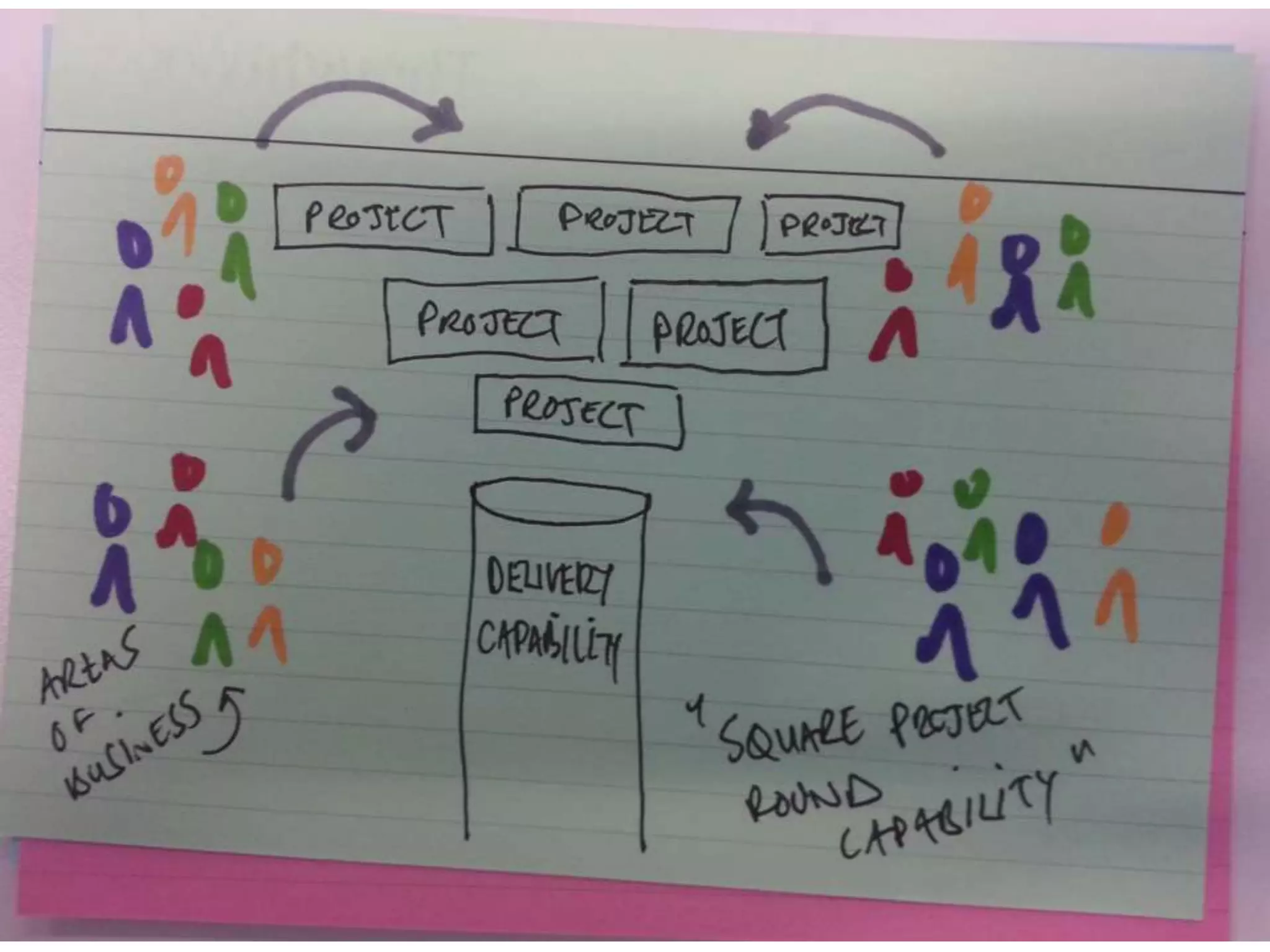
How do be a Programme
manager – and why they
are awesome….
Little about delivering
value
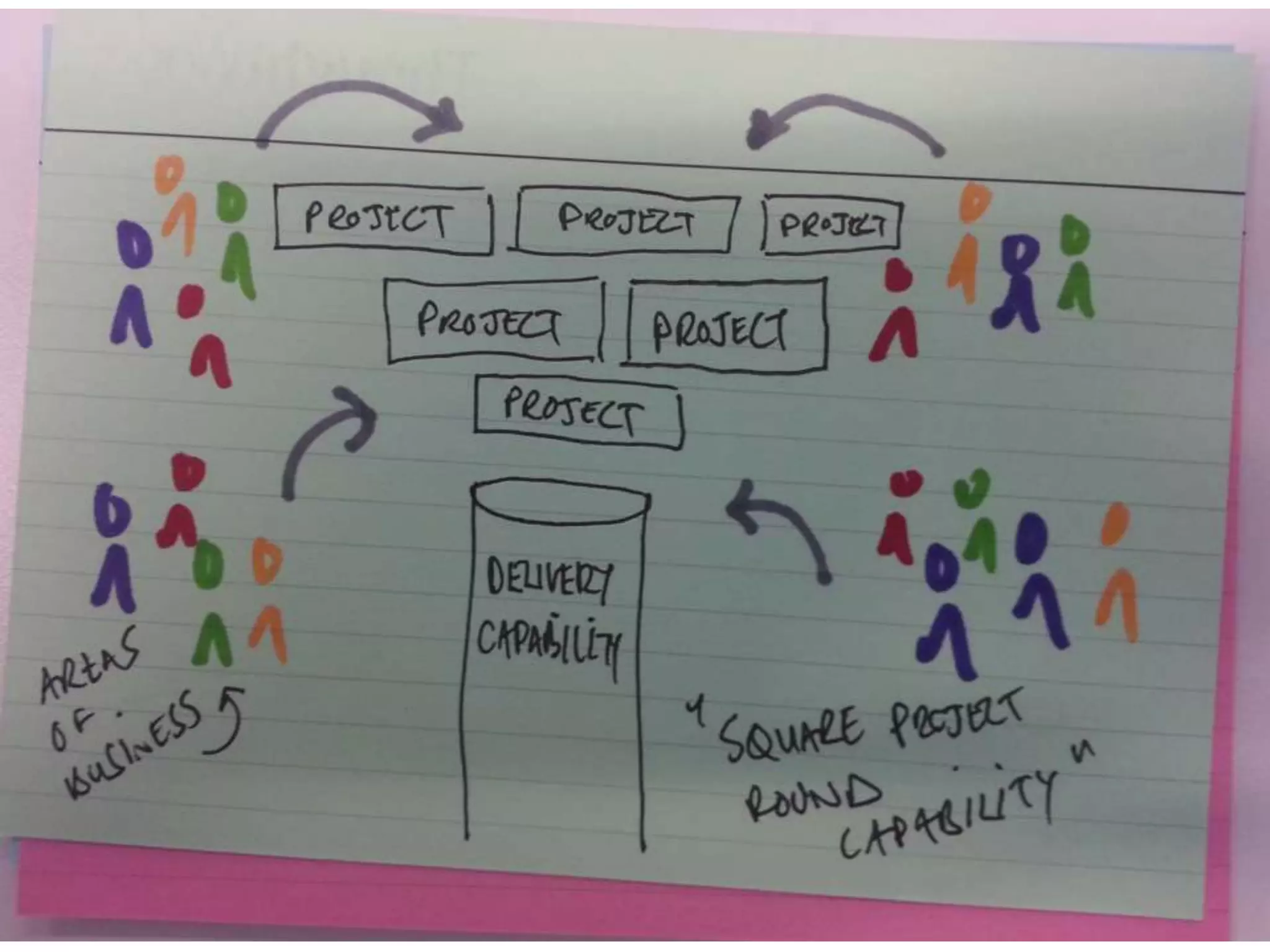
From Projects to Continuous Delivery of Value
 “Traditionally, based on a construction-like metaphor, a “project” gathered
 some resources together, a set of requirements, a mission, start and end
 dates, and a project manager.

 The project then binds these things to together in a package that tends to
 become fixed and immutable.

 Once started, every project develops its own antibodies to change.
 No one wants to be part of a canceled project; jobs may be on the line, even
 if the result was a “successful early failure” of a new product or technology.

 How does one innovate in that environment?”

                                        Dean Leffingwell
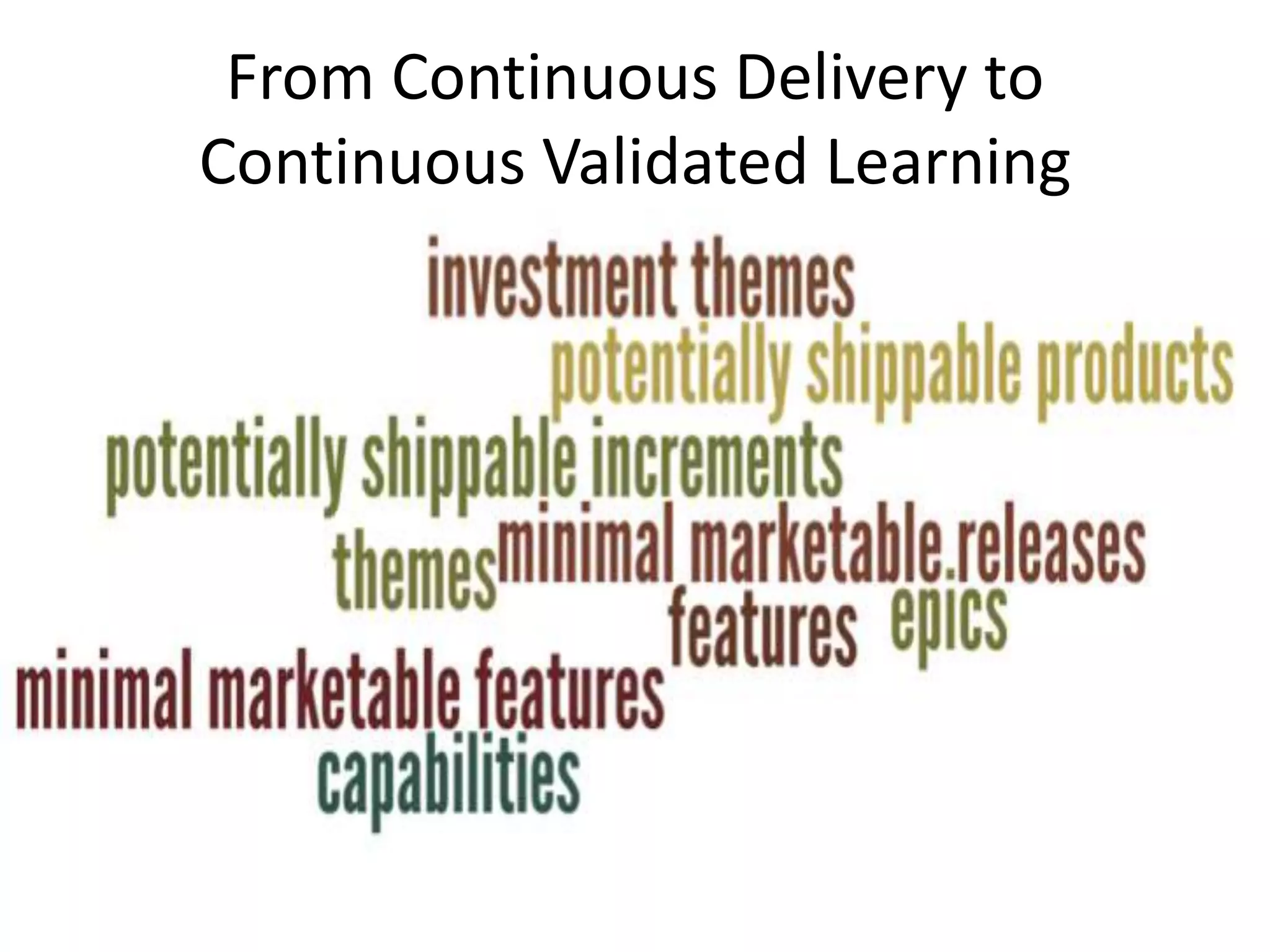
From Continuous Delivery to
Continuous Validated Learning
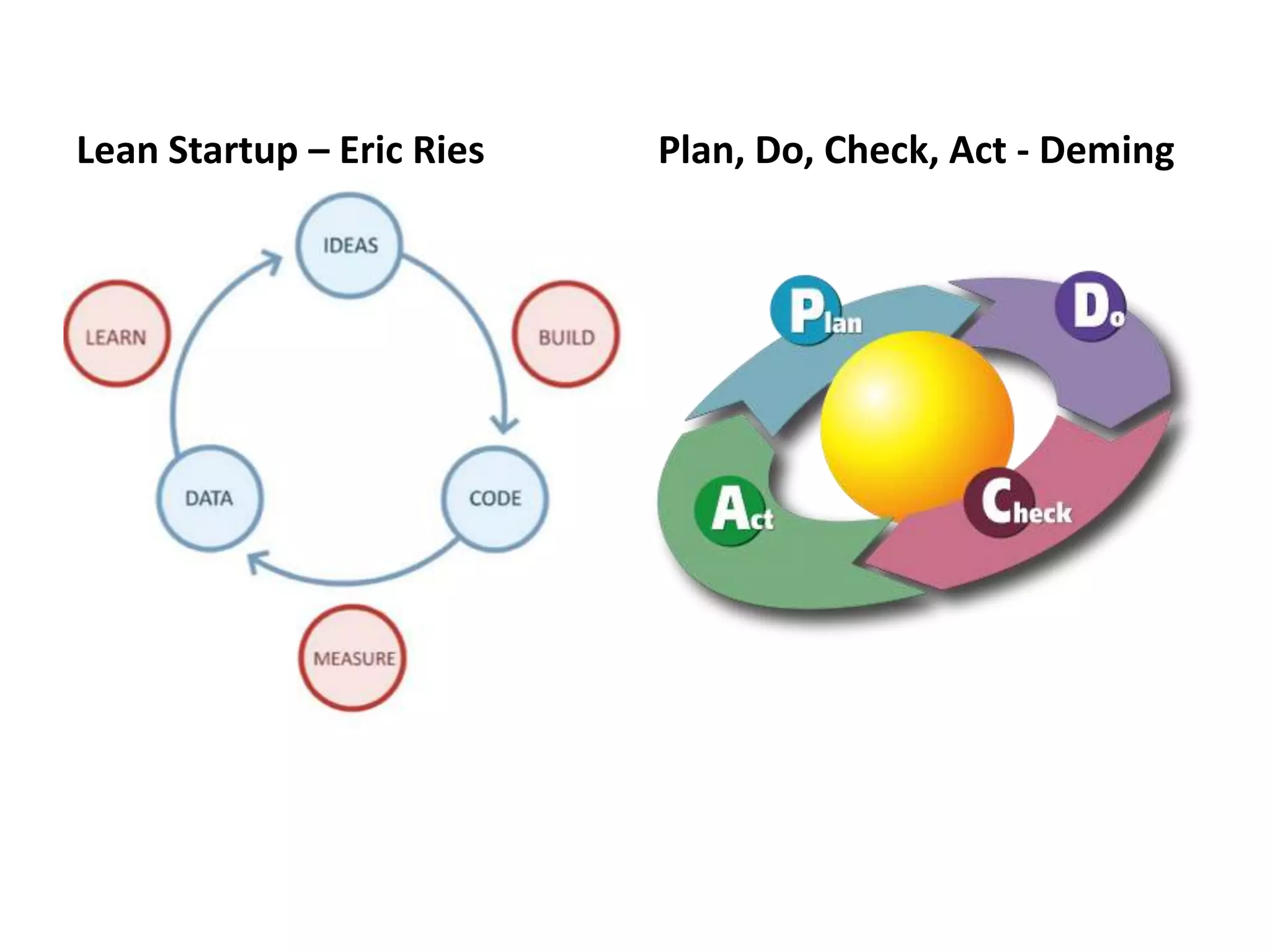
Lean Startup – Eric Ries   Plan, Do, Check, Act - Deming
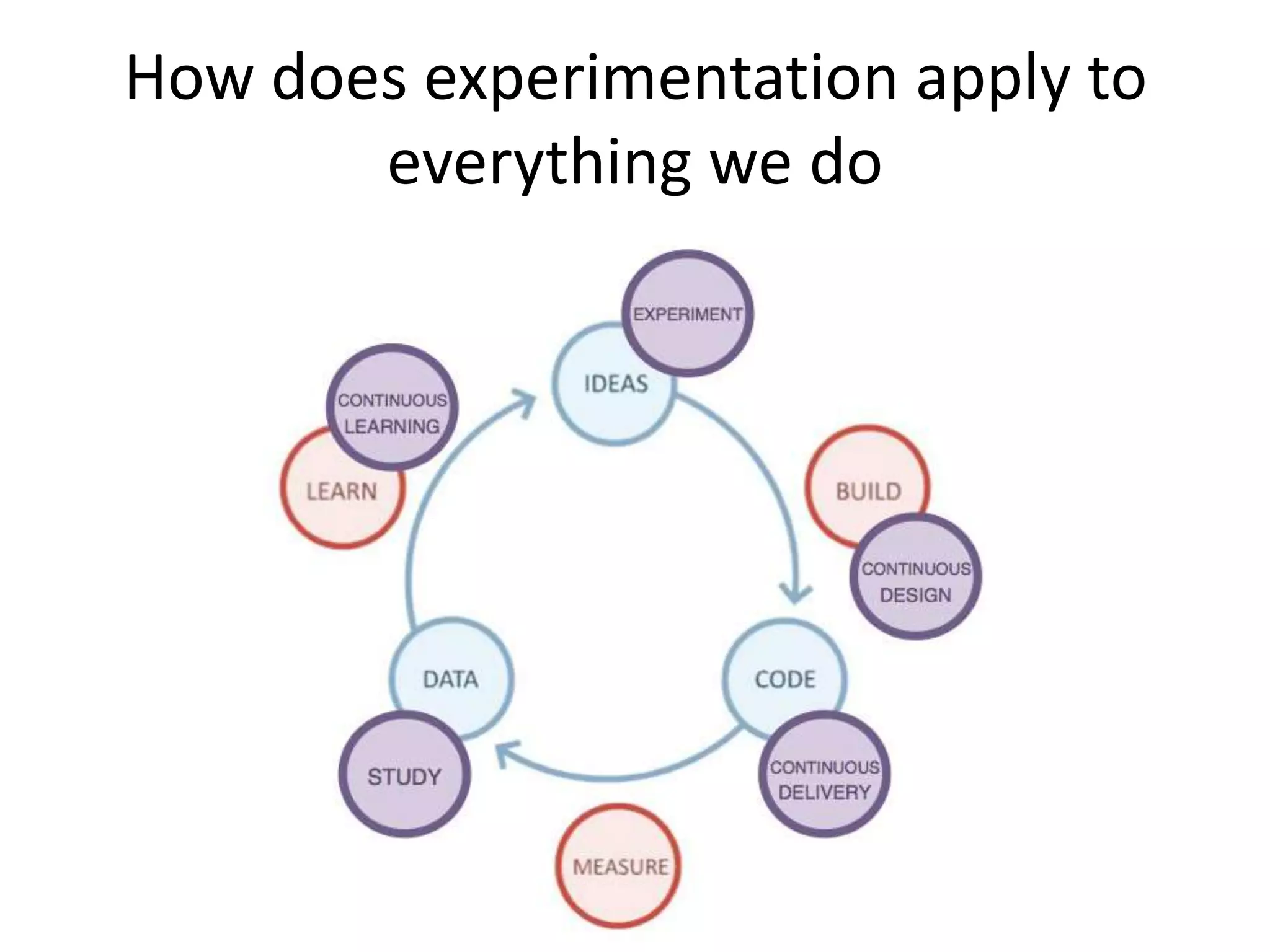
How does experimentation apply to
       everything we do
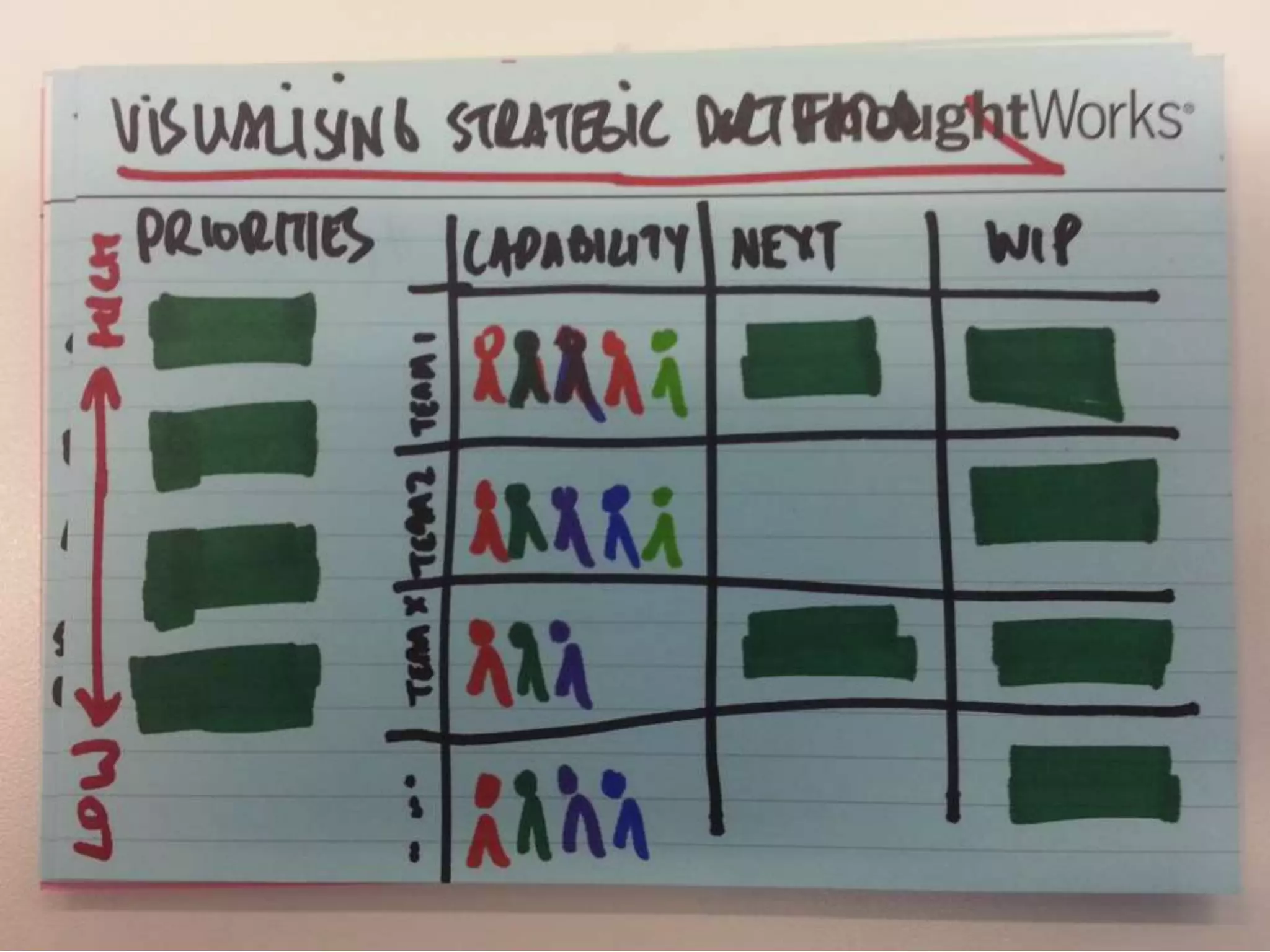
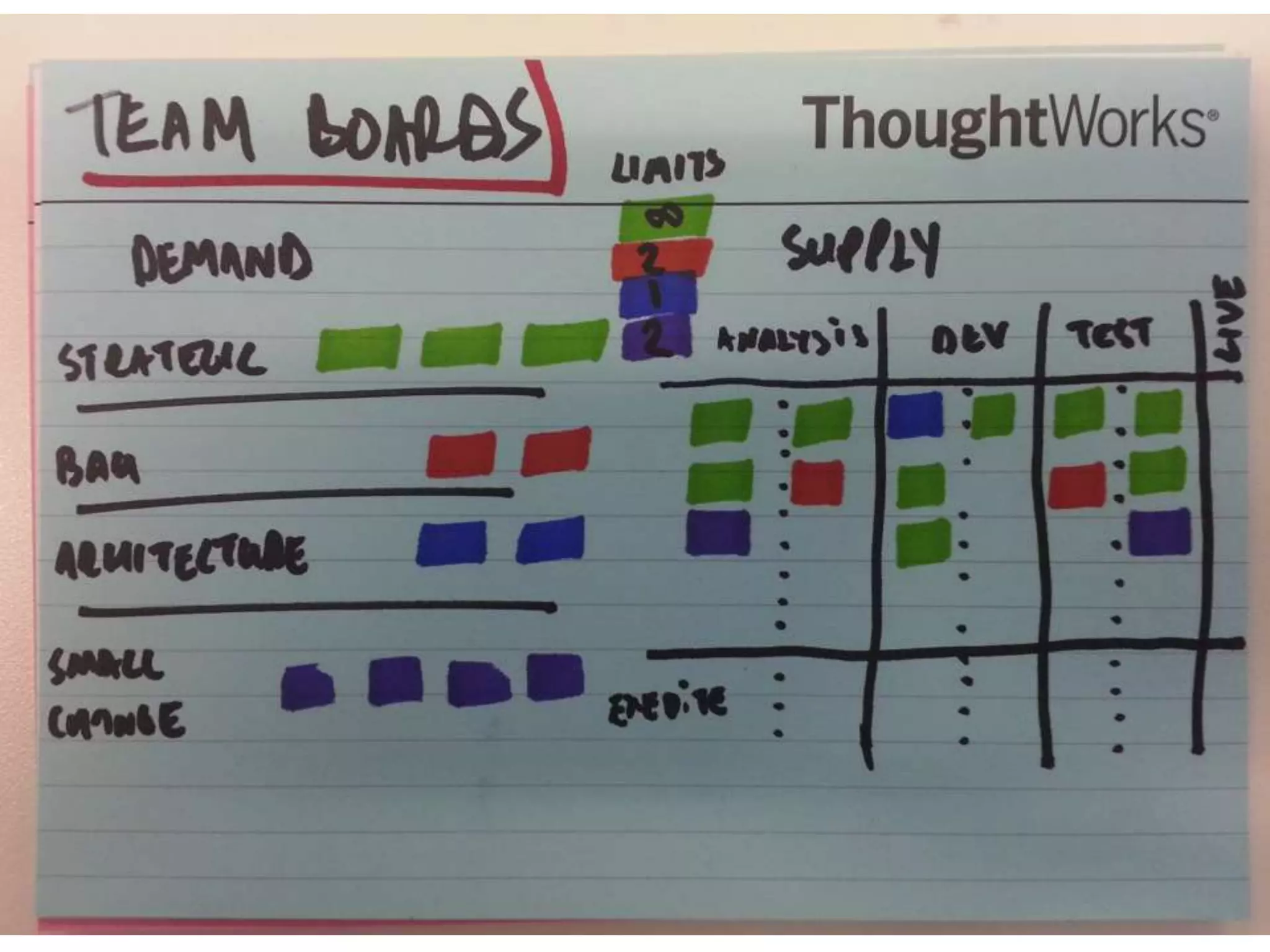
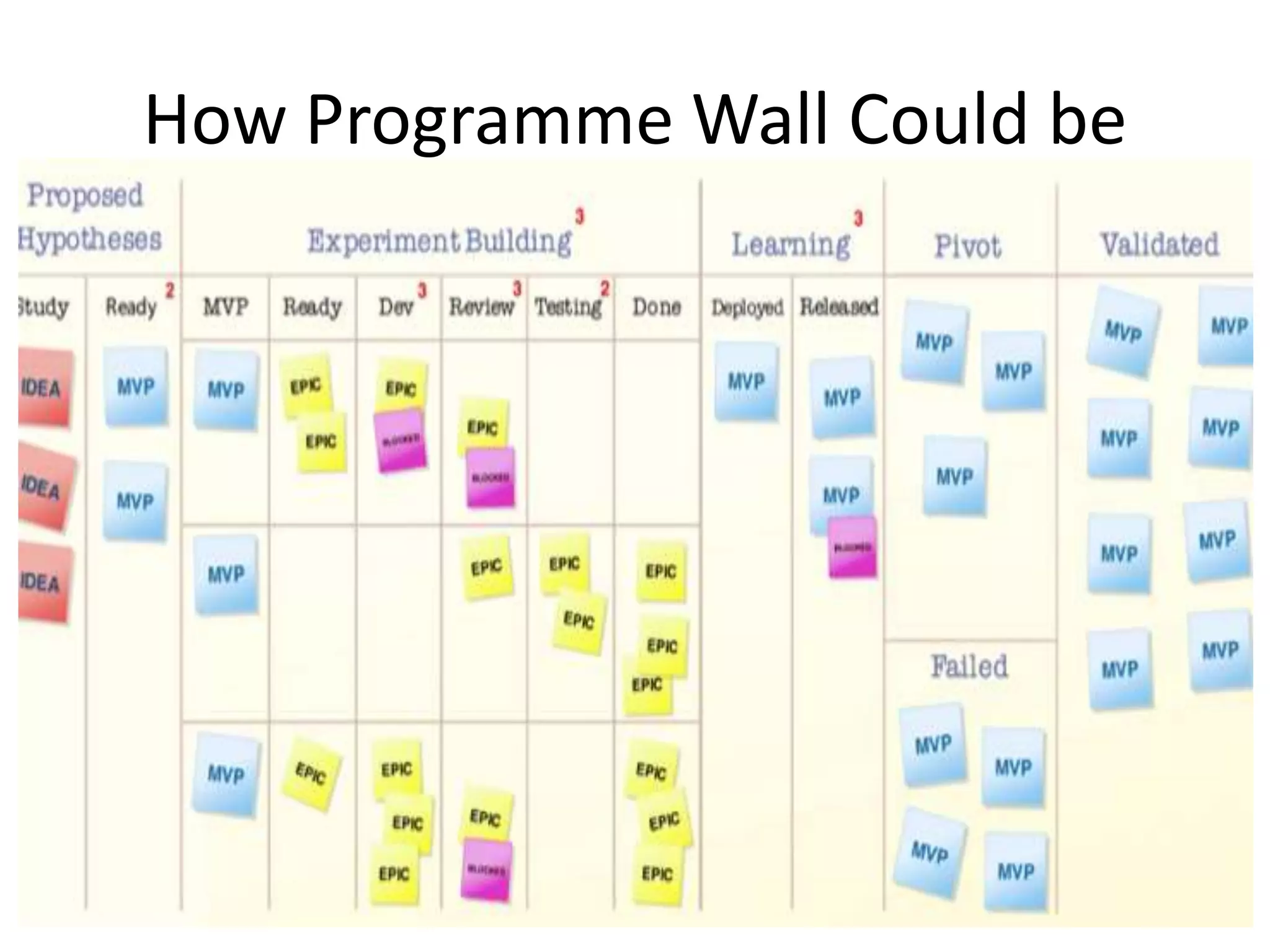
How Programme Wall Could be
Traditional vs Lean Portfolio Management, Agile PMO & Organisations

Traditional vs Lean Portfolio Management, Agile PMO & Organisations

  • 1.
    ThoughtWorks Local OfficeDay Traditional vs Agile/Lean PMO
  • 7.
    Dean Leffingwell Many “impediments”rise to a ceiling that is beyond the control of the teams. Sometimes the ceiling is represented by the PMO, a place many agilists perceive to be “the mother ship of impediments.” Indeed, if you mention the words project office or PMO among a group of agilists in the trenches, reactions will vary, but probably only from negative . . . to very negative. It should come as no surprise that our agile teams, and programs, are being held accountable to legacy waterfall practices for governance, and traditional methods of project management. They are based around legacy mindsets, but that was all there was.
  • 8.
    Legacy Mindsets Widget engineering “Drawit up, and build it like you drew it” Order-taker mentality “You build, what we tell you to build” Maximize utilisation “The more we start, the more we finish” Control through milestones “If we still can’t tell where we are we’ll just ask for more detailed data” We can plan a full year of projects “If we only planned in more detail, we could really get it right this year.” Just get it done “This is the plan ‘we’ agreed to; now execute it”
  • 9.
    Project Planing Organising forWork, Henry L. Gantt, Harcourt, Brace and Howe, 1919
  • 10.
    People Utilisation Organising forWork, Henry L. Gantt, Harcourt, Brace and Howe, 1919
  • 16.
    Peter Drucker “There isnothing so useless as doing efficiently that which should not be done at all.” Focus on execution through agile Should it be done? NOT Can it be done?
  • 23.
  • 28.
    Dave Snowdon –Cynefin Model Programmes are complex adaptive systems,
  • 29.
    Programme and projects Howdo be a Programme manager – and why they are awesome…. Little about delivering value
  • 30.
    From Projects toContinuous Delivery of Value “Traditionally, based on a construction-like metaphor, a “project” gathered some resources together, a set of requirements, a mission, start and end dates, and a project manager. The project then binds these things to together in a package that tends to become fixed and immutable. Once started, every project develops its own antibodies to change. No one wants to be part of a canceled project; jobs may be on the line, even if the result was a “successful early failure” of a new product or technology. How does one innovate in that environment?” Dean Leffingwell
  • 32.
    From Continuous Deliveryto Continuous Validated Learning
  • 33.
    Lean Startup –Eric Ries Plan, Do, Check, Act - Deming
  • 34.
    How does experimentationapply to everything we do
  • 35.

Editor's Notes

  • #9 Just as in software projects, we are applying the same logic to traditional
  • #10 Bonus System – if you ahead of time, you get a bonus… behind beating up – what behaviours would that drive for budgeting, sizing etc
  • #11 Ideal chart – maximize utilization
  • #33 Smaller pieces of workExperimentsUselearnings
  • #36 De-risking big betsSmall batchesHigher frequency Data driven decision based on learning in system