

Image: Pixshark
Leading on Social Media
Knight Digital Media Center:
Best Social Media and Networking Skills and
Practices for Foundation Leadership
Stephanie Rudat
Marketing Consultant, Trainer, and Changemaker
Leading on Social Media
Knight Digital Media Center:
Best Social Media and Networking Skills and
Practices for Foundation Leadership
Stephanie Rudat
Marketing Consultant, Trainer, and Changemaker
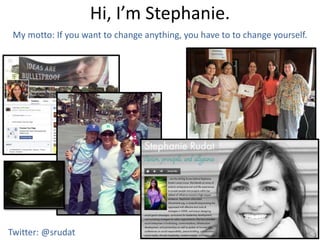
Hi, I’m Stephanie.
My motto: If you want to change anything, you have to to change yourself.
Twitter: @srudat
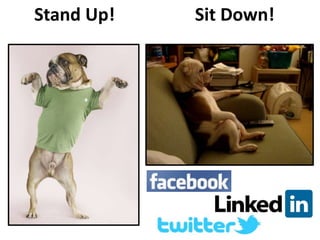
Stand Up! Sit Down!
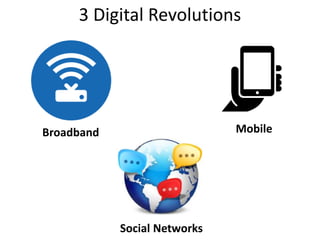
3 Digital Revolutions
MobileBroadband
Social Networks
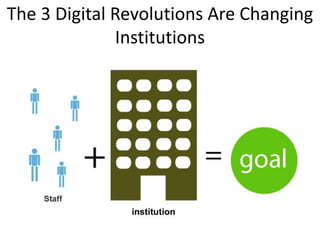
The 3 Digital Revolutions Are Changing
Institutions
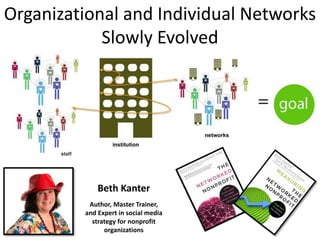
Organizational and Individual Networks
Slowly Evolved
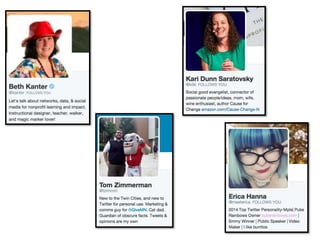
Beth Kanter
Author, Master Trainer,
and Expert in social media
strategy for nonprofit
organizations
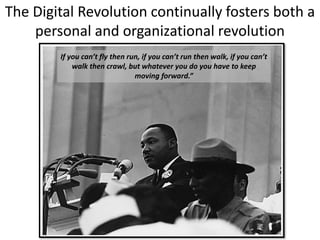
If you can’t fly then run, if you can’t run then walk, if you can’t
walk then crawl, but whatever you do you have to keep
moving forward.”
The Digital Revolution continually fosters both a
personal and organizational revolution
Image: Huffington Post
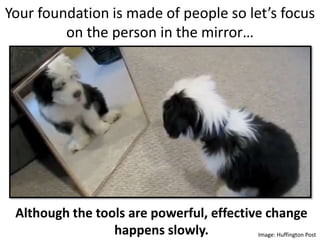
Your foundation is made of people so let’s focus
on the person in the mirror…
Although the tools are powerful, effective change
happens slowly.
Paired
Share!
Paired
Share!
Share about your personal evolution using
digital tools. Do you have clear objectives?
Image by Dave Wyman
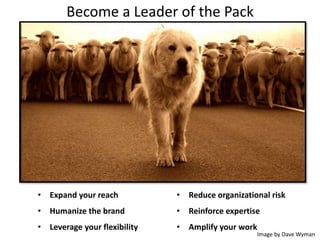
Become a Leader of the Pack
• Expand your reach
• Humanize the brand
• Leverage your flexibility
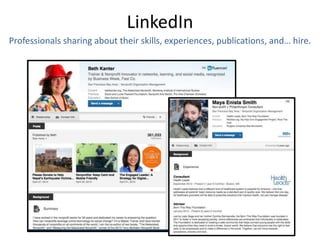
LinkedIn
Professionals sharing about their skills, experiences, publications, and… hire.
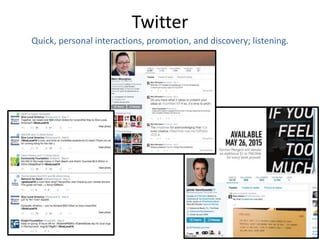
Twitter
Quick, personal interactions, promotion, and discovery; listening.
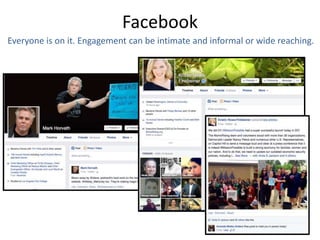
Facebook
Everyone is on it. Engagement can be intimate and informal or wide reaching.
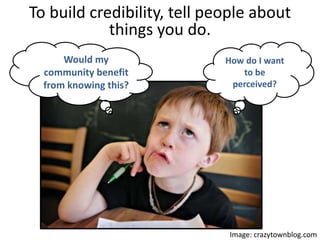
How do I want
to be
perceived?
Image: crazytownblog.com
To build credibility, tell people about things
you do.
Would my community benefit
from knowing this?
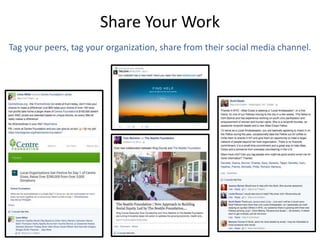
Share Your Work
Tag your peers, tag your organization, share from their social media channel.
Paired
Share!
Paired
Share!
What are your foundation’s key social
media objectives?
How do those objectives align with your
personal social leadership objectives?
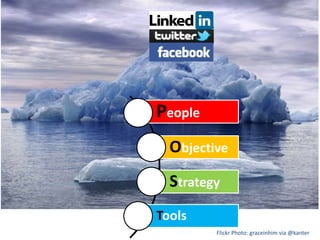
Flickr Photo: graceinhim via @kanter
People
Objective
Strategy
Tools
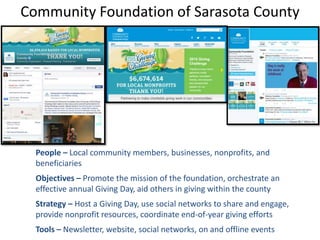
Community Foundation of Sarasota County
People – Local community members, businesses, nonprofits, and
beneficiaries
Objectives – Promote the mission of the foundation, orchestrate an
effective annual Giving Day, aid others in giving within the county
Strategy – Host a Giving Day, use social networks to share and engage,
provide nonprofit resources, coordinate end-of-year giving efforts
Tools – Newsletter, website, social networks, on and offline events
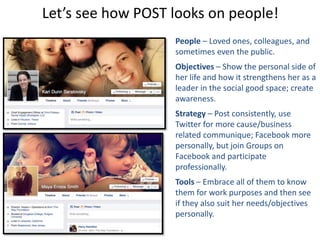
Let’s see how POST looks on people!
People – Loved ones, colleagues, and
sometimes even the public.
Objectives – Show the personal side of
her life and how it strengthens her as a
leader in the social good space; create
awareness.
Strategy – Post consistently, use
Twitter for more cause/business
related communique; Facebook more
personally, but join Groups on
Facebook and participate
professionally.
Tools – Embrace all of them to know
them for work purposes and then see
if they also suit her needs/objectives
personally.
Stand Up! Sit Down!
Are you concerned about your
privacy and maintaining
boundaries on social media?
Do you feel vulnerable?
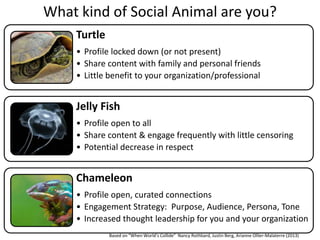
Turtle
• Profile locked down (or not present)
• Share content with family and personal friends
• Little benefit to your organization/professional
Jelly Fish
• Profile open to all
• Share content & engage frequently with little censoring
• Potential decrease in respect
Chameleon
• Profile open, curated connections
• Engagement Strategy: Purpose, Audience, Persona, Tone
• Increased thought leadership for you and your organization
Based on “When World’s Collide” Nancy Rothbard, Justin Berg, Arianne Ollier-Malaterre (2013)
What kind of Social Animal are you?
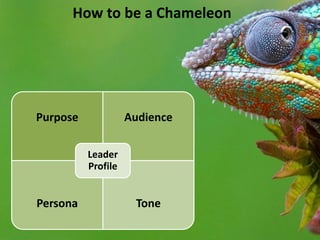
Purpose Audience
Persona Tone
Leader
Profile
How to be a Chameleon
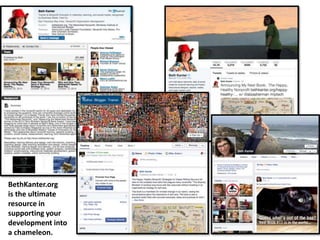
BethKanter.org
is the ultimate
resource in
supporting your
development into
a chameleon.
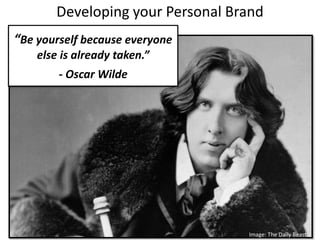
“Be yourself because everyone
else is already taken.”
- Oscar Wilde
“Be yourself because everyone
else is already taken.”
- Oscar Wilde
Image: The Daily Beast
Developing your Personal Brand
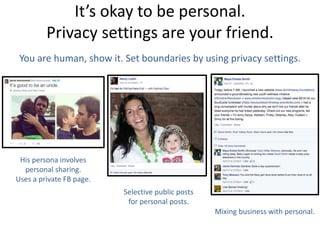
It’s okay to be personal.
Privacy settings are your friend.
You are human, show it. Set boundaries by using privacy settings.
His persona involves
personal sharing.
Uses a private FB page.
Selective public posts
for personal posts.
Mixing business with personal.
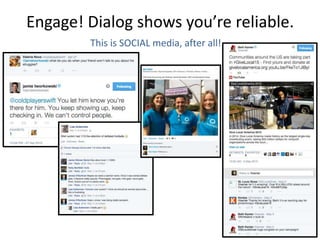
Engage! Dialog shows you’re reliable.
This is SOCIAL media, after all!
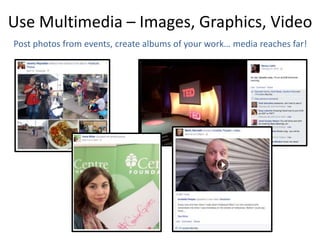
Use Multimedia – Images, Graphics, Video
Post photos from events, create albums of your work… media reaches far!
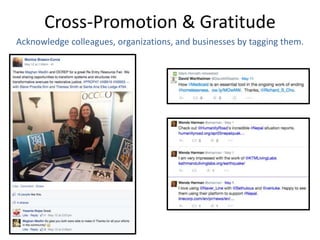
Cross-Promotion & Gratitude
Acknowledge colleagues, organizations, and businesses by tagging them.
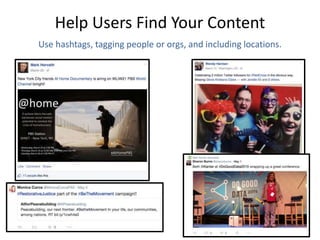
Help Users Find Your Content
Use hashtags, tagging people or orgs, and including locations.
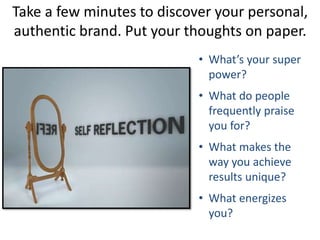
Take a few minutes to discover your personal,
authentic brand. Put your thoughts on paper.
• What’s your super
power?
• What do people
frequently praise
you for?
• What makes the
way you achieve
results unique?
• What energizes
you?
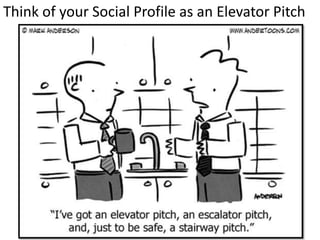
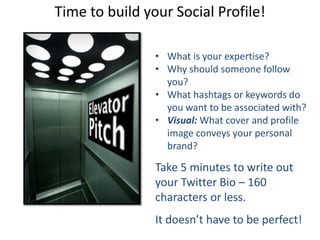
Think of your Social Profile as an Elevator Pitch
We’ve all been here… Today, we’ll build a
safeguard against this happening again.
Preparation is security!
An elevator pitch is a short, pithy statement about who you
are and what you do that you can use to present yourself
quickly in networking situations.
Time to build your Social Profile!
• What is your expertise?
• Why should someone follow
you?
• What hashtags or keywords do
you want to be associated with?
• Visual: What cover and profile
image conveys your personal
brand?
Take 5 minutes to write out
your Twitter Bio – 160
characters or less.
It doesn’t have to be perfect!
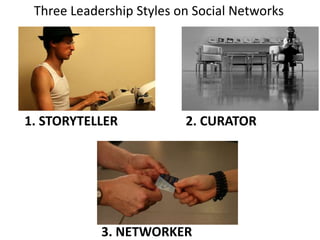
Three Leadership Styles on Social Networks
1. STORYTELLER 2. CURATOR
3. NETWORKER
Paired
Share!
Paired
Share!
What Leadership Style resonates with you?
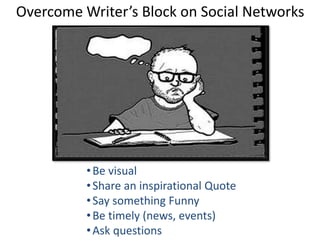
•Be visual
•Share an inspirational Quote
•Say something Funny
•Be timely (news, events)
•Ask questions
Overcome Writer’s Block on Social Networks
Twitter Scavenger Hunt
Let’s activate our inner Sherlock Holmes!
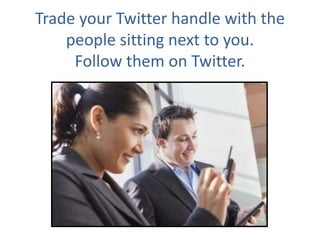
Trade your Twitter handle with the people sitting next to you.
Follow them on Twitter.
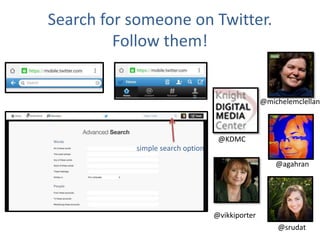
Search for someone on Twitter.
Follow them!
simple search option
@agahran
@srudat
@michelemclellan
@KDMC
@vikkiporter
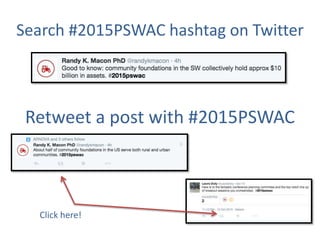
Search #2015PSWAC hashtag on Twitter
Retweet a post with #2015PSWAC
Click here!
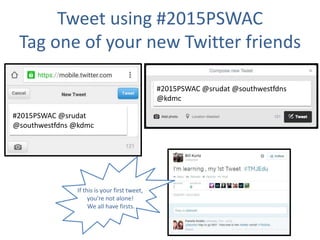
Tweet using #2015PSWAC
Tag one of your new Twitter friends
If this is your first tweet,
you’re not alone!
We all have firsts.
#2015PSWAC @srudat
@southwestfdns @kdmc
#2015PSWAC @srudat
@southwestfdns @kdmc
#2015PSWAC @srudat @southwestfdns
@kdmc
#2015PSWAC @srudat @southwestfdns
@kdmc
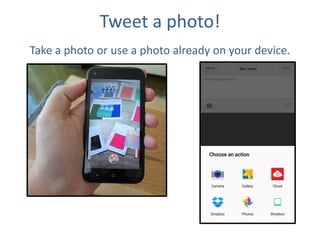
Tweet a photo!
Take a photo or use a photo already on your device.
Re-visit #2015PSWAC.
Reply to a tweet.
Connect with new peers.
Social media affords engagement to happen… at a push of a button!
Image: FourthSource.com
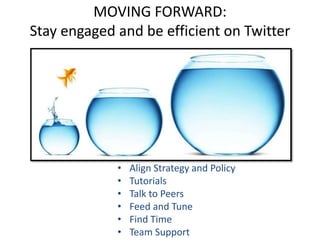
MOVING FORWARD:
Stay engaged and be efficient on Twitter
• Align Strategy and Policy
• Tutorials
• Talk to Peers
• Feed and Tune
• Find Time
• Team Support
• Follow your favorite nonprofits
• Use hashtags
• Share images & urls
• Tag friends & locations
• Tweet me with questions - @srudat
Keep discovering.
Have fun learning and sharing!
Image: Socialcentive.com
Let’s become better together.
Stephanie Rudat
@srudat - StephanieRudat@gmail.com - StephanieRudat.me
“I’d rather attempt to do
something great and fail than
to attempt to do nothing
and succeed.”
- Robert H. Schuller

Leading on Social Media

  • 1.
    Image: Pixshark Leading onSocial Media Knight Digital Media Center: Best Social Media and Networking Skills and Practices for Foundation Leadership Stephanie Rudat Marketing Consultant, Trainer, and Changemaker Leading on Social Media Knight Digital Media Center: Best Social Media and Networking Skills and Practices for Foundation Leadership Stephanie Rudat Marketing Consultant, Trainer, and Changemaker
  • 2.
    Hi, I’m Stephanie. Mymotto: If you want to change anything, you have to to change yourself. Twitter: @srudat
  • 3.
  • 4.
  • 5.
    The 3 DigitalRevolutions Are Changing Institutions
  • 6.
    Organizational and IndividualNetworks Slowly Evolved Beth Kanter Author, Master Trainer, and Expert in social media strategy for nonprofit organizations
  • 7.
    If you can’tfly then run, if you can’t run then walk, if you can’t walk then crawl, but whatever you do you have to keep moving forward.” The Digital Revolution continually fosters both a personal and organizational revolution
  • 8.
    Image: Huffington Post Yourfoundation is made of people so let’s focus on the person in the mirror… Although the tools are powerful, effective change happens slowly.
  • 9.
    Paired Share! Paired Share! Share about yourpersonal evolution using digital tools. Do you have clear objectives?
  • 10.
    Image by DaveWyman Become a Leader of the Pack • Expand your reach • Humanize the brand • Leverage your flexibility
  • 11.
    LinkedIn Professionals sharing abouttheir skills, experiences, publications, and… hire.
  • 12.
    Twitter Quick, personal interactions,promotion, and discovery; listening.
  • 13.
    Facebook Everyone is onit. Engagement can be intimate and informal or wide reaching.
  • 14.
    How do Iwant to be perceived? Image: crazytownblog.com To build credibility, tell people about things you do. Would my community benefit from knowing this?
  • 15.
    Share Your Work Tagyour peers, tag your organization, share from their social media channel.
  • 17.
    Paired Share! Paired Share! What are yourfoundation’s key social media objectives? How do those objectives align with your personal social leadership objectives?
  • 18.
    Flickr Photo: graceinhimvia @kanter People Objective Strategy Tools
  • 19.
    Community Foundation ofSarasota County People – Local community members, businesses, nonprofits, and beneficiaries Objectives – Promote the mission of the foundation, orchestrate an effective annual Giving Day, aid others in giving within the county Strategy – Host a Giving Day, use social networks to share and engage, provide nonprofit resources, coordinate end-of-year giving efforts Tools – Newsletter, website, social networks, on and offline events
  • 20.
    Let’s see howPOST looks on people! People – Loved ones, colleagues, and sometimes even the public. Objectives – Show the personal side of her life and how it strengthens her as a leader in the social good space; create awareness. Strategy – Post consistently, use Twitter for more cause/business related communique; Facebook more personally, but join Groups on Facebook and participate professionally. Tools – Embrace all of them to know them for work purposes and then see if they also suit her needs/objectives personally.
  • 21.
    Stand Up! SitDown! Are you concerned about your privacy and maintaining boundaries on social media? Do you feel vulnerable?
  • 22.
    Turtle • Profile lockeddown (or not present) • Share content with family and personal friends • Little benefit to your organization/professional Jelly Fish • Profile open to all • Share content & engage frequently with little censoring • Potential decrease in respect Chameleon • Profile open, curated connections • Engagement Strategy: Purpose, Audience, Persona, Tone • Increased thought leadership for you and your organization Based on “When World’s Collide” Nancy Rothbard, Justin Berg, Arianne Ollier-Malaterre (2013) What kind of Social Animal are you?
  • 23.
  • 24.
    BethKanter.org is the ultimate resourcein supporting your development into a chameleon.
  • 25.
    “Be yourself becauseeveryone else is already taken.” - Oscar Wilde “Be yourself because everyone else is already taken.” - Oscar Wilde Image: The Daily Beast Developing your Personal Brand
  • 26.
    It’s okay tobe personal. Privacy settings are your friend. You are human, show it. Set boundaries by using privacy settings. His persona involves personal sharing. Uses a private FB page. Selective public posts for personal posts. Mixing business with personal.
  • 27.
    Engage! Dialog showsyou’re reliable. This is SOCIAL media, after all!
  • 28.
    Use Multimedia –Images, Graphics, Video Post photos from events, create albums of your work… media reaches far!
  • 29.
    Cross-Promotion & Gratitude Acknowledgecolleagues, organizations, and businesses by tagging them.
  • 30.
    Help Users FindYour Content Use hashtags, tagging people or orgs, and including locations.
  • 31.
    Take a fewminutes to discover your personal, authentic brand. Put your thoughts on paper. • What’s your super power? • What do people frequently praise you for? • What makes the way you achieve results unique? • What energizes you?
  • 32.
    Think of yourSocial Profile as an Elevator Pitch
  • 33.
    We’ve all beenhere… Today, we’ll build a safeguard against this happening again. Preparation is security!
  • 34.
    An elevator pitchis a short, pithy statement about who you are and what you do that you can use to present yourself quickly in networking situations.
  • 36.
    Time to buildyour Social Profile! • What is your expertise? • Why should someone follow you? • What hashtags or keywords do you want to be associated with? • Visual: What cover and profile image conveys your personal brand? Take 5 minutes to write out your Twitter Bio – 160 characters or less. It doesn’t have to be perfect!
  • 37.
    Three Leadership Styleson Social Networks 1. STORYTELLER 2. CURATOR 3. NETWORKER
  • 38.
  • 39.
    •Be visual •Share aninspirational Quote •Say something Funny •Be timely (news, events) •Ask questions Overcome Writer’s Block on Social Networks
  • 40.
    Twitter Scavenger Hunt Let’sactivate our inner Sherlock Holmes!
  • 41.
    Trade your Twitterhandle with the people sitting next to you. Follow them on Twitter.
  • 42.
    Search for someoneon Twitter. Follow them! simple search option @agahran @srudat @michelemclellan @KDMC @vikkiporter
  • 43.
    Search #2015PSWAC hashtagon Twitter Retweet a post with #2015PSWAC Click here!
  • 44.
    Tweet using #2015PSWAC Tagone of your new Twitter friends If this is your first tweet, you’re not alone! We all have firsts. #2015PSWAC @srudat @southwestfdns @kdmc #2015PSWAC @srudat @southwestfdns @kdmc #2015PSWAC @srudat @southwestfdns @kdmc #2015PSWAC @srudat @southwestfdns @kdmc
  • 45.
    Tweet a photo! Takea photo or use a photo already on your device.
  • 46.
    Re-visit #2015PSWAC. Reply toa tweet. Connect with new peers. Social media affords engagement to happen… at a push of a button! Image: FourthSource.com
  • 47.
    MOVING FORWARD: Stay engagedand be efficient on Twitter • Align Strategy and Policy • Tutorials • Talk to Peers • Feed and Tune • Find Time • Team Support
  • 48.
    • Follow yourfavorite nonprofits • Use hashtags • Share images & urls • Tag friends & locations • Tweet me with questions - @srudat Keep discovering. Have fun learning and sharing! Image: Socialcentive.com
  • 49.
    Let’s become bettertogether. Stephanie Rudat @srudat - StephanieRudat@gmail.com - StephanieRudat.me “I’d rather attempt to do something great and fail than to attempt to do nothing and succeed.” - Robert H. Schuller

Editor's Notes

  • #3 My objectives
  • #4 Standing image: NY Observer - https://nyoobserver.files.wordpress.com/2014/07/gandeevasan_bulldogdreft.jpg Sitting image: Urdogs.com
  • #6 Nonprofits have worked like this – as lone institutions – since the dawn of industrialized management … But these three digital revolutions are changing institutions and the way they work .. The work place is becoming more fluid, organizational charts are becoming flatter, especially with the Millennial generation entering the workforce, and Gen Z is not far behind
  • #7 The transition from working like this to this – doesn’t happen over night, can’t flip a switch Change is slow …
  • #11 http://m2.i.pbase.com/u34/davewyman/upload/22590662.pyranees.jpg Instead of turning to others to become leaders, you can participate with intention online and become one. _ we often turn to outsides, external champions when think about champions Why build a thought leadership profile online:  Reach: Ability to reach a different audience than the organization’s profile Humanize: People trust individuals more than organizational brand Flexibility: Less formal or structured than organizational channels Less Risk: Staff are better champions for your organization than outsiders Reinforces Expertise: Makes knowledge more visible Amplify Existing Work: Social amplifies the work you are already doing in other ways For your organization, a leadership profile online for your executive director can help your organization reach a different audience that may not already be following your brand. Your CEO (and all employees for that matter) will be tapping in their professional networks.   Your logo alone is not enough to build trust for your organization’s brand, it requires a human face to humanize the brand, not a logo. CEOs are seen as experts on your brand and products, thus their opinions are extremely valuable and trusted by the people in their networks. Due to the more personal nature of professional networks, brand messages are shared more when they are shared by employees than when shared by the brand itself.   Your organization’s branded social channels will most likely have a formal and structured editorial calendar linked to your policy agenda and other communications objectives. Having your CEO use social in a separate channel gives you more flexibility, esp. with breaking news.   Your leader as a champion and personal brand for your organization is going to have less risk than external volunteers or champions. They understand the brand’s mission and value and they know your issues better than anyone else. Your CEO already understands your brand guidelines and will most likely operate within it.   Using social media isn’t just a distraction, it amplifies and enhances the work your CEO is already doing. Most nonprofit leaders have to keep up with their sector, field, or issues anyway – and openly sharing what they are reading – useful content and news with some analysis helps contributes to thought leadership – especially on social channels like Twitter where many reporters use it to source leaders for stories or policy makers (and their staff) are monitoring. If other leaders in your field are using social channels, easily connect for leadership conversations. --------- If your nonprofit’s executive director or CEO a thought leader? Thought leaders drive conversations – online and off, influence others, and shape perceptions in their field. They are the respected voices who others turn to understand sector social change issues.   It is no longer enough for your organization’s brand to lead through social media channels. Your organization’s CEO also needs to be connected on social to be effective as a thought leader. There are significant benefits to both the organization and the leaders themselves by building a leadership profile on social. For the organization … Reach different audience The CEO and all employees for that matter will likely be reaching a different audience through their social channels – tapping their professional networks. Humanize and build trust for organization brand In a recent Gartner study, only 15 percent of people said that trust posts by companies or brands on social networking sites – a startling statistic when compared to the fact that the same study found 70 percent trust brand or product recommendations from friends and family. Employees are seen as experts on your brand and products, thus their opinions are extremely valuable and trusted by the people in their networks. Due to the more personal nature of employee networks, brand messages are shared eight times more by employees are than when shared by the brand. Flexibility in communications style Your organization’s branded social channels will most likely have a formal and structured editorial calendar linked to your policy agenda and other communications objectives. Having your CEO use social in a separate channel gives you more flexibility, esp. with breaking news. Less Risk Your leader as a champion and personal brand for your organization is going to have less risk than external volunteers or champions. They understand the brand’s mission and value and they know your issues better than anyone else. Your CEO already understands your brand guidelines and will most likely operate within it. Learning: Make Expertise More Visible Most nonprofit leaders have to keep up with their sector, field, or issues anyway – and openly sharing what you’re reading – useful content and news with some analysis helps builds thought leadership – especially on social channels like Twitter where many reporters use it to source leaders for stories or policy makers (and their staff) are monitoring. If other leaders in your field are using social channels, easily connect for leadership conversations. Enhance work already doing Leaders are doing press conferences, keeping up with their field of practice, making public appearances and giving presentations, etc – social channels provide a way to amplify and enhance this work. Professional learning Using social channels to follow the news, especially when many news organizations have a “Twitter first” policy
  • #12 Let’s understand the basics of the top 3 channels
  • #15 Business & personal Image: http://www.crazytownblog.com/.a/6a012876c6c7fb970c014e887d8142970d-800wi
  • #18 Have them voice up and share with the group after paired share
  • #19 Social media channels are the tip of the ice berg Too often we by-pass strategy in favor of the tools .. You need a strategy, a structured way to think through your social media presence so it is integrated into your communications objectives .. POST – People, Objectives, Strategy, and Technology is a great way to think about this .. This format can be used by small nonprofits as well as large government agencies or individuals
  • #22 Standing image: NY Observer - https://nyoobserver.files.wordpress.com/2014/07/gandeevasan_bulldogdreft.jpg Sitting image: Urdogs.com
  • #23 There are basically three ways to react .. You can be a turtle … You can be a jelly fish Or a Chameleon If you truly want to establish an effective leadership profile online that supports your organization’s work, you need to be a chameleon. It takes more time, savvy, comfort – but you can start with small steps which I’ll take about in minute .. But first you need a strategy for your leadership profile that is complementary to your organization’s strategy .
  • #24 Let’s look at how Chameleon’s manage their leader profiles on social networks. First, they know the audience they want to reach on different channels and where it overlaps with their organizations. Maybe your organization wants to cultivate media and using Twitter might be a natural choice because so many reporters use it as a tool for research. Maybe it is the policy makers you want to reach and many use Twitter .. Next, what’s your purpose? How does social media enhance the work you are already doing? Engage with peers? Educate influencers? Amplify organization’s messaging? Authenticity Persona – what is the image you want to convey? Professorial Inspiring Authoritative What tone is needed? Humble Scientific Insider Serious How does this complement your organization’s social strategy?
  • #25 Personal brand examples
  • #26  In the end, why are you here? Are you working to educate your audience, inspire action, or amplify messages? This should be identified in your social media support plan …. But you should own it. Make it your own. Your personal brand will topple if it sits on a foundation that’s not based in truth or perceived as genuine. And you’ll be worn out too. Anne Morrow Lindbergh once said “The most exhausting thing you can be is inauthentic.”  Being someone you’re not is hard work. It takes effort to play a role. Just ask the actors on Broadway who play their part 8 times a week. Because branding is based in authenticity, you need to understand who you are and what makes you compelling to your target audience – the people who are making decisions about you. As you think about what makes you YOU, ponder these questions:
  • #32 Image: http://lifepalette.com/wp-content/uploads/2015/01/self-reflection-1024x768.jpg Jot down notes
  • #33 Your Twitter elevator speech is what goes in your bio A strong bio can lead to more followers, and is an ideal way to introduce you to others. It helps others know what to expect if they follow you. You have 160 characters to present a concise summary about yourself that may include your title @foundation handle, and keywords if you have a crisp, compelling purpose around the content you share and your areas of interest. What’s Twitter Elevator Speech, Your Twitter Elevator Speech http://www.bethkanter.org/1-step-01/   An elevator speech is a short summary used to quickly and simply define a person, profession, product, service, organization or event and its value. The name "elevator pitch" reflects the idea that it should be possible to deliver the summary in the time span of an elevator ride, or approximately thirty seconds to two minutes and is widely credited the editors at Vanity Fair. The term itself comes from a scenario of an accidental meeting with someone important in the elevator. If the conversation inside the elevator in those few seconds is interesting and value adding, the conversation will continue after the elevator ride or end in exchange of business card or meeting. Some communications training has you commonly rehearse and use elevator pitches to get your point across quickly. Your profile on Twitter is your elevator speech.
  • #34 http://blogs.orrick.com/totalaccess/files/2013/08/elevator1-283x300.jpg
  • #37 Image Source: http://www.launchhouse.com/wp-content/uploads/2012/08/elevator-pitch.png Your Twitter elevator speech is what goes in your bio A strong bio can lead to more followers, and is an ideal way to introduce you to others. It helps others know what to expect if they follow you. You have 160 characters to present a concise summary about yourself that may include your title @foundation handle, and keywords if you have a crisp, compelling purpose around the content you share and your areas of interest. What’s Twitter Elevator Speech, Your Twitter Elevator Speech http://www.bethkanter.org/1-step-01/   An elevator speech is a short summary used to quickly and simply define a person, profession, product, service, organization or event and its value. The name "elevator pitch" reflects the idea that it should be possible to deliver the summary in the time span of an elevator ride, or approximately thirty seconds to two minutes and is widely credited the editors at Vanity Fair. The term itself comes from a scenario of an accidental meeting with someone important in the elevator. If the conversation inside the elevator in those few seconds is interesting and value adding, the conversation will continue after the elevator ride or end in exchange of business card or meeting. Some communications training has you commonly rehearse and use elevator pitches to get your point across quickly. Your profile on Twitter is your elevator speech.
  • #38 Writer: Write concise Tweets Curator: Find, listen, and learn from relevant sources Sharer: Share links and resources that are relevant, your expertise, or link to your authentic personal brand Networker: Build relationships
  • #39 Image: http://www.greenmoonsoftware.com/wp-content/uploads/2013/08/pair-of-pears-md.png
  • #40  Image: https://literaryyard.files.wordpress.com/2013/10/writers-block.jpg
  • #48 Image: https://awomanwithoutwine.files.wordpress.com/2015/06/164-moving-forward-389.jpg
  • #50 Mark – invisible people