

LEADERSHIP STYLES
LAITH ALASADI
Leadership:
a process whereby an
individual influences a
group of individuals to
achieve a common goal'
Leadership
 Leadership is lifting a person’s performance to
a higher standard, the building of a personality
beyond his normal limitations
 Leadership is the process by which a person
motivates and guides the group towards a visual
goal
 A leader is someone who believe in you and get
you to believe in your self
Leadership function
How important is a leader?
 In most cases, people will perform at about
60% of their potential with no leadership at all
 Thus, an additional 40% can be realized if
effective leadership is available
Origins of leadership
 BOTH. Evidence that both inherent personality
and environment are factors
Are leaders born or made?
What kind of leader would you be?
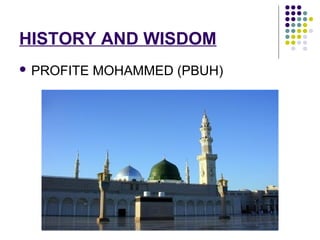
HISTORY AND WISDOM
 PROFITE MOHAMMED (PBUH)
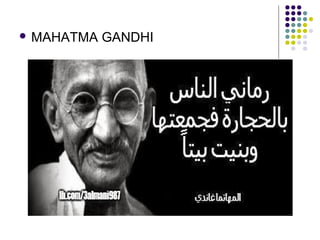
 MAHATMA GANDHI
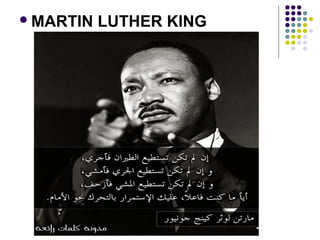
MARTIN LUTHER KING
‫سسسسس‬
‫سسس‬ ‫سسسسس‬
‫سس‬ ‫سس‬ ‫سس‬
‫سس‬ ‫سسسسس‬
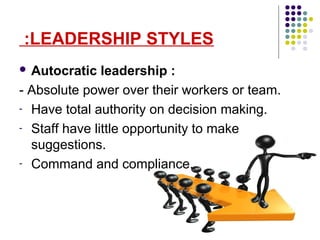
LEADERSHIP STYLES:
 Autocratic leadership :
- Absolute power over their workers or team.
- Have total authority on decision making.
- Staff have little opportunity to make
suggestions.
- Command and compliance.
Advantages of this style:
 Time is limited ( during medical emergency to
prevent any chaos or confusion )
 Doctors advised the patient to take medicines
 Dealing with groups that need close
supervision ( young children or inexperienced
employees)
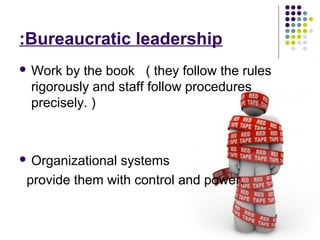
Bureaucratic leadership:
 Work by the book ( they follow the rules
rigorously and staff follow procedures
precisely. )
 Organizational systems
provide them with control and power.
Democratic leadership:
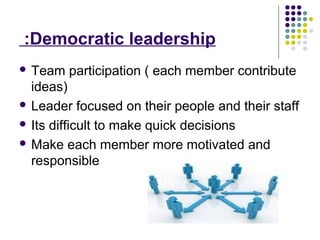
 Team participation ( each member contribute
ideas)
 Leader focused on their people and their staff
 Its difficult to make quick decisions
 Make each member more motivated and
responsible
Laissez-faire leadership:
 Leave it be ( French phrase)
 Team work on its own .
 Give free rein to make decision.
 Team member are highly experienced
 Require little supervision
 Leader need to monitor what is being
achieved & communicate the team.
Team leader leadership:
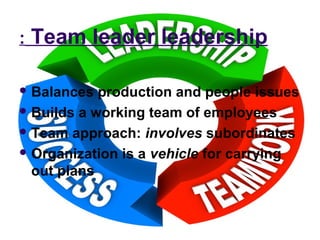
 Balances production and people issues
 Builds a working team of employees
 Team approach: involves subordinates
 Organization is a vehicle for carrying
out plans
:Coaching Leadership
 Counsels employees
 Highly values human capital, and looks for
individual strengths
 Delegates in order to develop employees
 Can be extremely
time-consuming
Task –oriented leadership :
 Focus only on getting the job done.
 Put structure, plan, organize and monitor.
 Autocratic leadership ( no motivation and
retaining staff. )
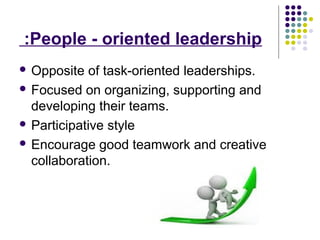
People - oriented leadership:
 Opposite of task-oriented leaderships.
 Focused on organizing, supporting and
developing their teams.
 Participative style
 Encourage good teamwork and creative
collaboration.
Transactional leadership:
 Focused on business of organization
 Maintain the status que.
 Existing cervices running smoothly
 Provide stability to cervices in the face of
change.
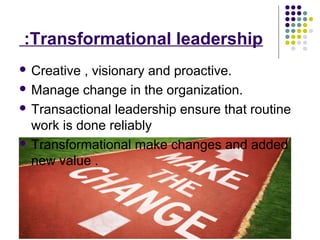
Transformational leadership:
 Creative , visionary and proactive.
 Manage change in the organization.
 Transactional leadership ensure that routine
work is done reliably
 Transformational make changes and added
new value .
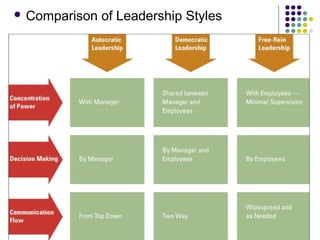
 Comparison of Leadership Styles
Factors affecting leadership
styles
 The task
 The tradition of an organization
 The type of labor force
 The leader’s personality
 The time
 Gender?
What style of leadership you
preferred?
Summary:
 There is no right way to lead.
 There is no style fit all type of situations.
 Effective leader switch between styles.
 Successful leadership find the right approach
for particular situation.
 Build leadership , not leaders
Thank you

Leadership styles

  • 1.
  • 2.
    Leadership: a process wherebyan individual influences a group of individuals to achieve a common goal'
  • 3.
    Leadership  Leadership islifting a person’s performance to a higher standard, the building of a personality beyond his normal limitations  Leadership is the process by which a person motivates and guides the group towards a visual goal  A leader is someone who believe in you and get you to believe in your self
  • 4.
  • 5.
    How important isa leader?  In most cases, people will perform at about 60% of their potential with no leadership at all  Thus, an additional 40% can be realized if effective leadership is available
  • 6.
    Origins of leadership BOTH. Evidence that both inherent personality and environment are factors Are leaders born or made? What kind of leader would you be?
  • 7.
    HISTORY AND WISDOM PROFITE MOHAMMED (PBUH)
  • 8.
  • 9.
  • 10.
  • 11.
    LEADERSHIP STYLES:  Autocraticleadership : - Absolute power over their workers or team. - Have total authority on decision making. - Staff have little opportunity to make suggestions. - Command and compliance.
  • 12.
    Advantages of thisstyle:  Time is limited ( during medical emergency to prevent any chaos or confusion )  Doctors advised the patient to take medicines  Dealing with groups that need close supervision ( young children or inexperienced employees)
  • 13.
    Bureaucratic leadership:  Workby the book ( they follow the rules rigorously and staff follow procedures precisely. )  Organizational systems provide them with control and power.
  • 14.
    Democratic leadership:  Teamparticipation ( each member contribute ideas)  Leader focused on their people and their staff  Its difficult to make quick decisions  Make each member more motivated and responsible
  • 15.
    Laissez-faire leadership:  Leaveit be ( French phrase)  Team work on its own .  Give free rein to make decision.  Team member are highly experienced  Require little supervision  Leader need to monitor what is being achieved & communicate the team.
  • 16.
    Team leader leadership: Balances production and people issues  Builds a working team of employees  Team approach: involves subordinates  Organization is a vehicle for carrying out plans
  • 17.
    :Coaching Leadership  Counselsemployees  Highly values human capital, and looks for individual strengths  Delegates in order to develop employees  Can be extremely time-consuming
  • 18.
    Task –oriented leadership:  Focus only on getting the job done.  Put structure, plan, organize and monitor.  Autocratic leadership ( no motivation and retaining staff. )
  • 19.
    People - orientedleadership:  Opposite of task-oriented leaderships.  Focused on organizing, supporting and developing their teams.  Participative style  Encourage good teamwork and creative collaboration.
  • 20.
    Transactional leadership:  Focusedon business of organization  Maintain the status que.  Existing cervices running smoothly  Provide stability to cervices in the face of change.
  • 21.
    Transformational leadership:  Creative, visionary and proactive.  Manage change in the organization.  Transactional leadership ensure that routine work is done reliably  Transformational make changes and added new value .
  • 22.
     Comparison ofLeadership Styles
  • 23.
    Factors affecting leadership styles The task  The tradition of an organization  The type of labor force  The leader’s personality  The time  Gender?
  • 24.
    What style ofleadership you preferred?
  • 25.
    Summary:  There isno right way to lead.  There is no style fit all type of situations.  Effective leader switch between styles.  Successful leadership find the right approach for particular situation.  Build leadership , not leaders
  • 26.