All you want to know about effective
leadership
by Toronto Training and HR
July 2015
CONTENTS
3-4 Introduction
5-6 Definitions
7-8 Essential characteristics of leadership
9-10 What do we see when we observe leadership?
11-12 Drivers for leadership success
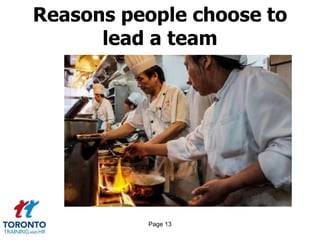
13-14 Reasons people choose to lead a team
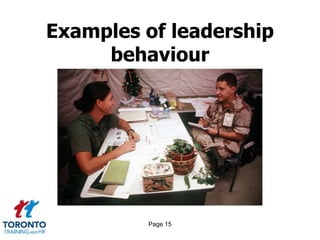
15-16 Examples of leadership behaviour
17-19 Aspects that characterize the magnitude of leadership tasks
20-21 Process steps on the part of the leader
22-23 Process steps on the part of the follower
24-25 Advantages of a hierarchical form of cooperation
26-28 To what extent?
29-30 Interim CEOs
31-37 Leaders as trust builders
38-39 The story of leadership; questions to ask
40-41 Removing barriers to accountability
42-44 Ways that leaders can destroy their team
45-46 Mistakes which some leaders make when the going gets tough
47-49 What good leaders do and don’t do…
50-51 Conclusion, summary and questions
Page 2
Page 3
Introduction
Page 4
Introduction to Toronto Training
and HR
Toronto Training and HR is a specialist training and
human resources consultancy headed by Timothy Holden
10 years in banking
15 years in training and human resources
Freelance practitioner since 2006
The core services provided by Toronto Training and HR
are:
Training event design
Training event delivery
HR support with an emphasis on reducing
costs, saving time plus improving employee
engagement and morale
Services for job seekers
Page 5
Definitions
Definitions • Leadership
• What leadership is..
• What leadership is not…
Page 6
Page 7
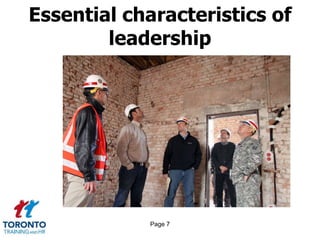
Essential characteristics of
leadership
Essential
characteristics
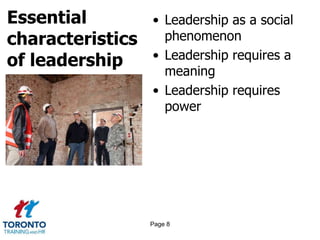
of leadership
• Leadership as a social
phenomenon
• Leadership requires a
meaning
• Leadership requires
power
Page 8
Page 12
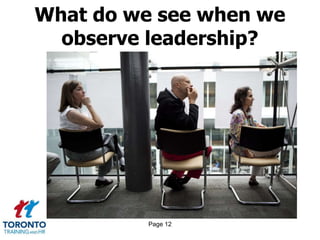
What do we see when we
observe leadership?
What do we
see when we
observe
leadership?
• Leadership actions
• Leadership structures
• Leadership results
Page 10
Page 11
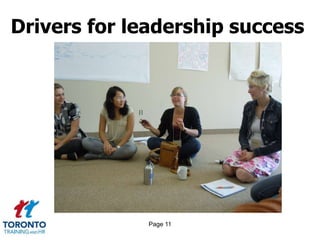
Drivers for leadership success
Drivers for
leadership
success
• Personality
• Proficiencies
• Persuasion
• Purpose
Page 12
Page 13
Reasons people choose to
lead a team
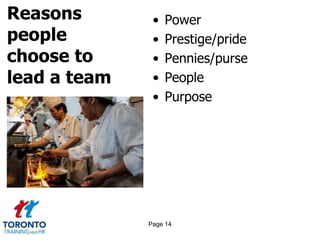
Reasons
people
choose to
lead a team
• Power
• Prestige/pride
• Pennies/purse
• People
• Purpose
Page 14
Page 15
Examples of leadership
behaviour
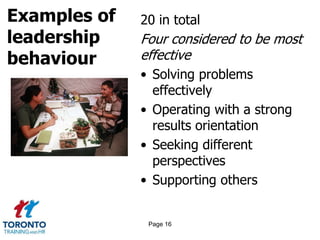
Examples of
leadership
behaviour
20 in total
Four considered to be most
effective
• Solving problems
effectively
• Operating with a strong
results orientation
• Seeking different
perspectives
• Supporting others
Page 16
Page 17
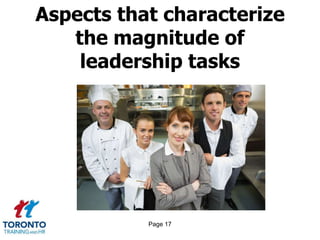
Aspects that characterize
the magnitude of
leadership tasks
Aspects that
characterize
the magnitude
of leadership
tasks 1 of 2
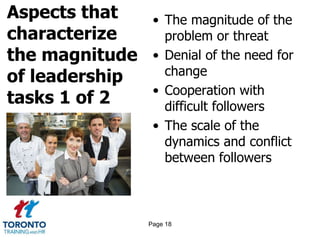
• The magnitude of the
problem or threat
• Denial of the need for
change
• Cooperation with
difficult followers
• The scale of the
dynamics and conflict
between followers
Page 18
Aspects that
characterize
the magnitude
of leadership
tasks 2 of 2
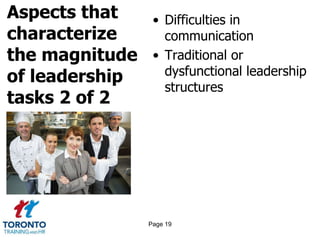
• Difficulties in
communication
• Traditional or
dysfunctional leadership
structures
Page 19
Page 20
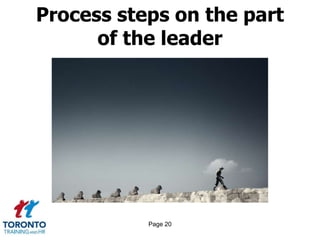
Process steps on the part
of the leader
Process steps
on the part of
the leader
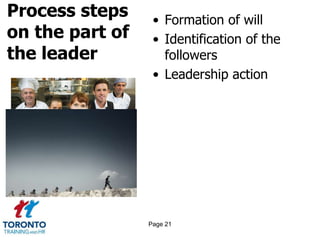
• Formation of will
• Identification of the
followers
• Leadership action
Page 21
Page 22
Process steps on the part
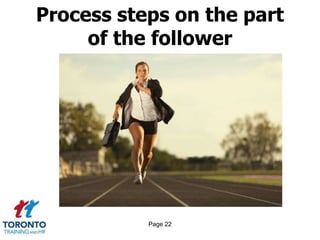
of the follower
Process steps
on the part of
the follower
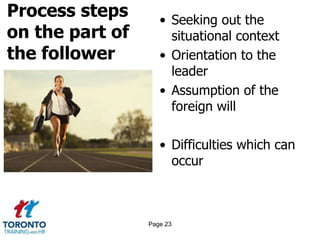
• Seeking out the
situational context
• Orientation to the
leader
• Assumption of the
foreign will
• Difficulties which can
occur
Page 23
Page 24
Advantages of a
hierarchical form of
cooperation
Advantages of
a hierarchical
form of
cooperation
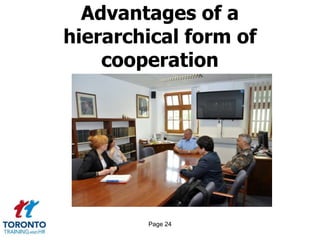
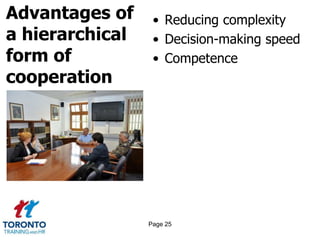
• Reducing complexity
• Decision-making speed
• Competence
Page 25
Page 26
To what extent?
To what
extent? 1 of 2
Leadership factors
• Personal proficiency
• Strategist
• Executor
• People manager
• Leadership differentiator
Page 27
To what
extent? 2 of 2
Human capital
• Culture capability
• Talent
• Performance
accountability
• Information
• Work
Page 28
Page 29
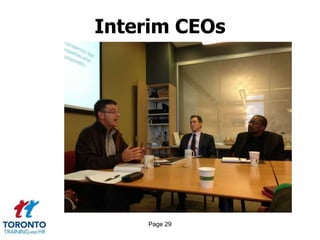
Interim CEOs
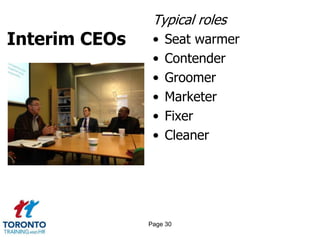
Interim CEOs
Typical roles
• Seat warmer
• Contender
• Groomer
• Marketer
• Fixer
• Cleaner
Page 30
Page 31
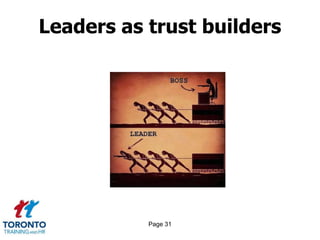
Leaders as trust builders
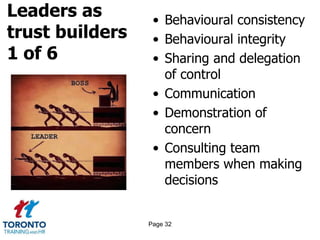
Leaders as
trust builders
1 of 6
• Behavioural consistency
• Behavioural integrity
• Sharing and delegation
of control
• Communication
• Demonstration of
concern
• Consulting team
members when making
decisions
Page 32
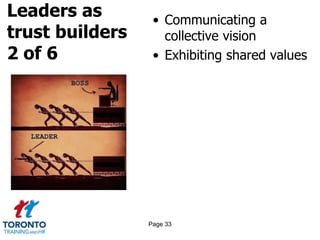
Leaders as
trust builders
2 of 6
• Communicating a
collective vision
• Exhibiting shared values
Page 33
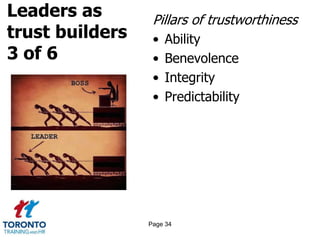
Leaders as
trust builders
3 of 6
Pillars of trustworthiness
• Ability
• Benevolence
• Integrity
• Predictability
Page 34
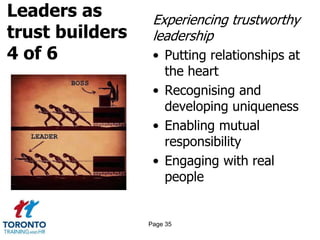
Leaders as
trust builders
4 of 6
Experiencing trustworthy
leadership
• Putting relationships at
the heart
• Recognising and
developing uniqueness
• Enabling mutual
responsibility
• Engaging with real
people
Page 35
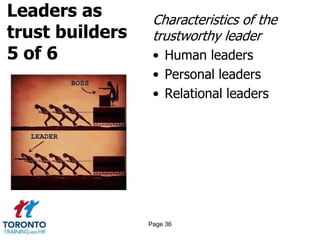
Leaders as
trust builders
5 of 6
Characteristics of the
trustworthy leader
• Human leaders
• Personal leaders
• Relational leaders
Page 36
Leaders as
trust builders
6 of 6
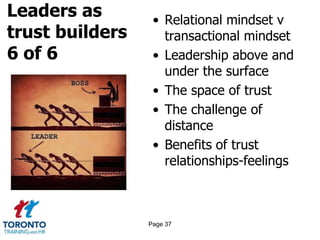
• Relational mindset v
transactional mindset
• Leadership above and
under the surface
• The space of trust
• The challenge of
distance
• Benefits of trust
relationships-feelings
Page 37
Page 38
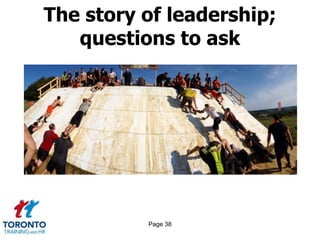
The story of leadership;
questions to ask
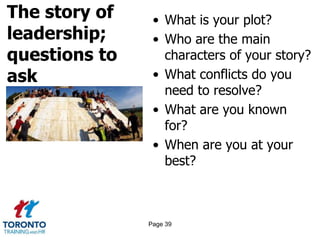
The story of
leadership;
questions to
ask
• What is your plot?
• Who are the main
characters of your story?
• What conflicts do you
need to resolve?
• What are you known
for?
• When are you at your
best?
Page 39
Page 40
Removing barriers to
accountability
Removing
barriers to
accountability
Why do leaders struggle?
• Fear accountability
• Confuse accountability
with responsibility
• Do not have adequate
resources
• Have blind spots
• Are not willing to be
accountable
Page 41
Page 42
Ways that leaders can
destroy their team
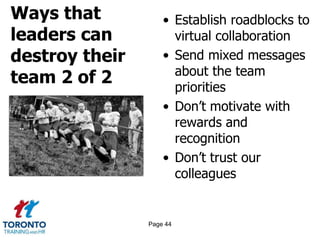
Ways that
leaders can
destroy their
team 1 of 2
• Create unreasonable
time constraints
• Insult innovation and
discourage mistakes
• Don’t involve the team
until the last minute
• Don’t define who does
what
• Let corporate politics
get in the way of
progress
Page 43
Ways that
leaders can
destroy their
team 2 of 2
• Establish roadblocks to
virtual collaboration
• Send mixed messages
about the team
priorities
• Don’t motivate with
rewards and
recognition
• Don’t trust our
colleagues
Page 44
Page 45
Mistakes which some
leaders make when the
going gets tough
Mistakes
which some
leaders make
when the
going gets
tough
• Become reactive and
reactionary
• Huddle with only the
corporate folks
• Cut, cut and cut again
• Go after new clients and
customers
• Do more with less
• Buy into pessimism
Page 46
Page 29
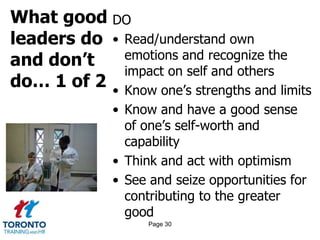
What good leaders do and
don’t do…
What good
leaders do
and don’t
do… 1 of 2
DO
• Read/understand own
emotions and recognize the
impact on self and others
• Know one’s strengths and limits
• Know and have a good sense
of one’s self-worth and
capability
• Think and act with optimism
• See and seize opportunities for
contributing to the greater
good
Page 30
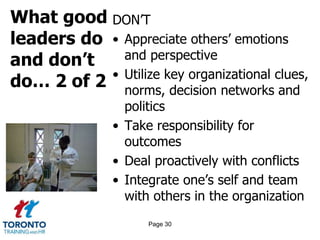
What good
leaders do
and don’t
do… 2 of 2
DON’T
• Appreciate others’ emotions
and perspective
• Utilize key organizational clues,
norms, decision networks and
politics
• Take responsibility for
outcomes
• Deal proactively with conflicts
• Integrate one’s self and team
with others in the organization
Page 30
Page 49
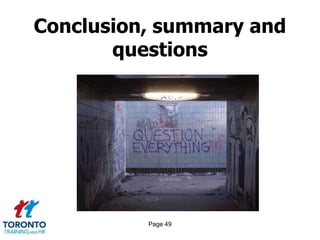
Conclusion, summary and
questions
Page 50
Conclusion, summary and
questions
Conclusion
Summary
Videos
Questions

Leadership July 2015

  • 1.
    All you wantto know about effective leadership by Toronto Training and HR July 2015
  • 2.
    CONTENTS 3-4 Introduction 5-6 Definitions 7-8Essential characteristics of leadership 9-10 What do we see when we observe leadership? 11-12 Drivers for leadership success 13-14 Reasons people choose to lead a team 15-16 Examples of leadership behaviour 17-19 Aspects that characterize the magnitude of leadership tasks 20-21 Process steps on the part of the leader 22-23 Process steps on the part of the follower 24-25 Advantages of a hierarchical form of cooperation 26-28 To what extent? 29-30 Interim CEOs 31-37 Leaders as trust builders 38-39 The story of leadership; questions to ask 40-41 Removing barriers to accountability 42-44 Ways that leaders can destroy their team 45-46 Mistakes which some leaders make when the going gets tough 47-49 What good leaders do and don’t do… 50-51 Conclusion, summary and questions Page 2
  • 3.
  • 4.
    Page 4 Introduction toToronto Training and HR Toronto Training and HR is a specialist training and human resources consultancy headed by Timothy Holden 10 years in banking 15 years in training and human resources Freelance practitioner since 2006 The core services provided by Toronto Training and HR are: Training event design Training event delivery HR support with an emphasis on reducing costs, saving time plus improving employee engagement and morale Services for job seekers
  • 5.
  • 6.
    Definitions • Leadership •What leadership is.. • What leadership is not… Page 6
  • 7.
  • 8.
    Essential characteristics of leadership • Leadershipas a social phenomenon • Leadership requires a meaning • Leadership requires power Page 8
  • 9.
    Page 12 What dowe see when we observe leadership?
  • 10.
    What do we seewhen we observe leadership? • Leadership actions • Leadership structures • Leadership results Page 10
  • 11.
    Page 11 Drivers forleadership success
  • 12.
    Drivers for leadership success • Personality •Proficiencies • Persuasion • Purpose Page 12
  • 13.
    Page 13 Reasons peoplechoose to lead a team
  • 14.
    Reasons people choose to lead ateam • Power • Prestige/pride • Pennies/purse • People • Purpose Page 14
  • 15.
    Page 15 Examples ofleadership behaviour
  • 16.
    Examples of leadership behaviour 20 intotal Four considered to be most effective • Solving problems effectively • Operating with a strong results orientation • Seeking different perspectives • Supporting others Page 16
  • 17.
    Page 17 Aspects thatcharacterize the magnitude of leadership tasks
  • 18.
    Aspects that characterize the magnitude ofleadership tasks 1 of 2 • The magnitude of the problem or threat • Denial of the need for change • Cooperation with difficult followers • The scale of the dynamics and conflict between followers Page 18
  • 19.
    Aspects that characterize the magnitude ofleadership tasks 2 of 2 • Difficulties in communication • Traditional or dysfunctional leadership structures Page 19
  • 20.
    Page 20 Process stepson the part of the leader
  • 21.
    Process steps on thepart of the leader • Formation of will • Identification of the followers • Leadership action Page 21
  • 22.
    Page 22 Process stepson the part of the follower
  • 23.
    Process steps on thepart of the follower • Seeking out the situational context • Orientation to the leader • Assumption of the foreign will • Difficulties which can occur Page 23
  • 24.
    Page 24 Advantages ofa hierarchical form of cooperation
  • 25.
    Advantages of a hierarchical formof cooperation • Reducing complexity • Decision-making speed • Competence Page 25
  • 26.
  • 27.
    To what extent? 1of 2 Leadership factors • Personal proficiency • Strategist • Executor • People manager • Leadership differentiator Page 27
  • 28.
    To what extent? 2of 2 Human capital • Culture capability • Talent • Performance accountability • Information • Work Page 28
  • 29.
  • 30.
    Interim CEOs Typical roles •Seat warmer • Contender • Groomer • Marketer • Fixer • Cleaner Page 30
  • 31.
    Page 31 Leaders astrust builders
  • 32.
    Leaders as trust builders 1of 6 • Behavioural consistency • Behavioural integrity • Sharing and delegation of control • Communication • Demonstration of concern • Consulting team members when making decisions Page 32
  • 33.
    Leaders as trust builders 2of 6 • Communicating a collective vision • Exhibiting shared values Page 33
  • 34.
    Leaders as trust builders 3of 6 Pillars of trustworthiness • Ability • Benevolence • Integrity • Predictability Page 34
  • 35.
    Leaders as trust builders 4of 6 Experiencing trustworthy leadership • Putting relationships at the heart • Recognising and developing uniqueness • Enabling mutual responsibility • Engaging with real people Page 35
  • 36.
    Leaders as trust builders 5of 6 Characteristics of the trustworthy leader • Human leaders • Personal leaders • Relational leaders Page 36
  • 37.
    Leaders as trust builders 6of 6 • Relational mindset v transactional mindset • Leadership above and under the surface • The space of trust • The challenge of distance • Benefits of trust relationships-feelings Page 37
  • 38.
    Page 38 The storyof leadership; questions to ask
  • 39.
    The story of leadership; questionsto ask • What is your plot? • Who are the main characters of your story? • What conflicts do you need to resolve? • What are you known for? • When are you at your best? Page 39
  • 40.
    Page 40 Removing barriersto accountability
  • 41.
    Removing barriers to accountability Why doleaders struggle? • Fear accountability • Confuse accountability with responsibility • Do not have adequate resources • Have blind spots • Are not willing to be accountable Page 41
  • 42.
    Page 42 Ways thatleaders can destroy their team
  • 43.
    Ways that leaders can destroytheir team 1 of 2 • Create unreasonable time constraints • Insult innovation and discourage mistakes • Don’t involve the team until the last minute • Don’t define who does what • Let corporate politics get in the way of progress Page 43
  • 44.
    Ways that leaders can destroytheir team 2 of 2 • Establish roadblocks to virtual collaboration • Send mixed messages about the team priorities • Don’t motivate with rewards and recognition • Don’t trust our colleagues Page 44
  • 45.
    Page 45 Mistakes whichsome leaders make when the going gets tough
  • 46.
    Mistakes which some leaders make whenthe going gets tough • Become reactive and reactionary • Huddle with only the corporate folks • Cut, cut and cut again • Go after new clients and customers • Do more with less • Buy into pessimism Page 46
  • 47.
    Page 29 What goodleaders do and don’t do…
  • 48.
    What good leaders do anddon’t do… 1 of 2 DO • Read/understand own emotions and recognize the impact on self and others • Know one’s strengths and limits • Know and have a good sense of one’s self-worth and capability • Think and act with optimism • See and seize opportunities for contributing to the greater good Page 30
  • 49.
    What good leaders do anddon’t do… 2 of 2 DON’T • Appreciate others’ emotions and perspective • Utilize key organizational clues, norms, decision networks and politics • Take responsibility for outcomes • Deal proactively with conflicts • Integrate one’s self and team with others in the organization Page 30
  • 50.
  • 51.
    Page 50 Conclusion, summaryand questions Conclusion Summary Videos Questions