Ade Wijaya, MD
October 2017
 Introduction
 Pathogenesis
 Diagnosis and differential diagnosis
 Brain MRI
 Treatment
 Summary
 Preeclampsia: new-onset hypertension + proteinuria in pregnancy. Proteinuria > 300
mg / 24 jam.
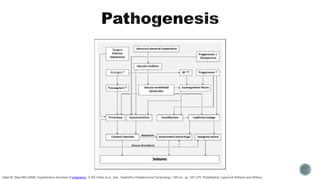
 Eclampsia is a complex phenomenon as a result of cerebral dysrhythmia due to the
multifarious pathogenesis started by abnormal trophoblastic invasion initiating
vasospasm, endothelial dysfunction, and platelet aggregation. (preeclampsia +
seizure)
 Eclampsia  major morbidity and mortality
 Late post-partum eclampsia  rare
Gupte, S., & Wagh, G. (2014). Preeclampsia–Eclampsia. The Journal of Obstetrics and Gynecology of India, 64(1), 4-13.
Santos, V. M., Correa, F. G., Modesto, F. R. D., & Moutella, P. R. (2008). Late-onset postpartum eclampsia: still a diagnostic dilemma?. Hong Kong Medical Journal, 14(1), 60.
 Onset of convulsion > 48 hours but < 4 weeks after delivery
 Can be without preeclampsia
 Rarely up to 6 weeks after delivery
Habli M, Sibai BM (2008). Hypertensive disorders of pregnancy. In RS Gibbs et al., eds., Danforth's Obstetrics and Gynecology, 10th ed., pp. 257-275. Philadelphia: Lippincott Williams and Wilkins.
Santos, V. M., Correa, F. G., Modesto, F. R. D., & Moutella, P. R. (2008). Late-onset postpartum eclampsia: still a diagnostic dilemma?. Hong Kong Medical Journal, 14(1), 60.
Habli M, Sibai BM (2008). Hypertensive disorders of pregnancy. In RS Gibbs et al., eds., Danforth's Obstetrics and Gynecology, 10th ed., pp. 257-275. Philadelphia: Lippincott Williams and Wilkins.
Habli M, Sibai BM (2008). Hypertensive disorders of pregnancy. In RS Gibbs et al., eds., Danforth's Obstetrics
and Gynecology, 10th ed., pp. 257-275. Philadelphia: Lippincott Williams and Wilkins.
Habli M, Sibai BM (2008). Hypertensive disorders of pregnancy. In RS Gibbs et al., eds., Danforth's Obstetrics
and Gynecology, 10th ed., pp. 257-275. Philadelphia: Lippincott Williams and Wilkins.
Zhang, L., Wang, Y., Shi, L., Cao, J., Li, Z., & Wáng, Y. X. J. (2015). Late postpartum eclampsia complicated with posterior reversible encephalopathy syndrome: a case report and a literature review. Quantitative imaging in medicine and
surgery, 5(6), 909.
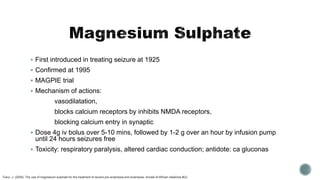
 First introduced in treating seizure at 1925
 Confirmed at 1995
 MAGPIE trial
 Mechanism of actions:
vasodilatation,
blocks calcium receptors by inhibits NMDA receptors,
blocking calcium entry in synaptic
 Dose 4g iv bolus over 5-10 mins, followed by 1-2 g over an hour by infusion pump
until 24 hours seizures free
 Toxicity: respiratory paralysis, altered cardiac conduction; antidote: ca gluconas
Tukur, J. (2009). The use of magnesium sulphate for the treatment of severe pre-eclampsia and eclampsia. Annals of African medicine,8(2).
 Eclampsia has significant morbidity and mortality
 Late post-partume eclampsia is rare
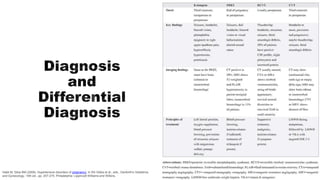
 Differential diagnosis including PRES, RCVS, and CVT
 MRI for diagnosis
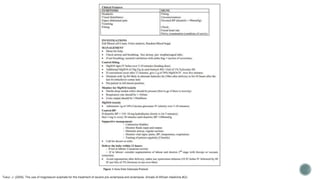
 Treatment: Oxygen, blood pressure lowering, MgSO4
Late Postpartum Eclampsia

Late Postpartum Eclampsia

  • 1.
  • 2.
     Introduction  Pathogenesis Diagnosis and differential diagnosis  Brain MRI  Treatment  Summary
  • 3.
     Preeclampsia: new-onsethypertension + proteinuria in pregnancy. Proteinuria > 300 mg / 24 jam.  Eclampsia is a complex phenomenon as a result of cerebral dysrhythmia due to the multifarious pathogenesis started by abnormal trophoblastic invasion initiating vasospasm, endothelial dysfunction, and platelet aggregation. (preeclampsia + seizure)  Eclampsia  major morbidity and mortality  Late post-partum eclampsia  rare Gupte, S., & Wagh, G. (2014). Preeclampsia–Eclampsia. The Journal of Obstetrics and Gynecology of India, 64(1), 4-13. Santos, V. M., Correa, F. G., Modesto, F. R. D., & Moutella, P. R. (2008). Late-onset postpartum eclampsia: still a diagnostic dilemma?. Hong Kong Medical Journal, 14(1), 60.
  • 4.
     Onset ofconvulsion > 48 hours but < 4 weeks after delivery  Can be without preeclampsia  Rarely up to 6 weeks after delivery Habli M, Sibai BM (2008). Hypertensive disorders of pregnancy. In RS Gibbs et al., eds., Danforth's Obstetrics and Gynecology, 10th ed., pp. 257-275. Philadelphia: Lippincott Williams and Wilkins. Santos, V. M., Correa, F. G., Modesto, F. R. D., & Moutella, P. R. (2008). Late-onset postpartum eclampsia: still a diagnostic dilemma?. Hong Kong Medical Journal, 14(1), 60.
  • 5.
    Habli M, SibaiBM (2008). Hypertensive disorders of pregnancy. In RS Gibbs et al., eds., Danforth's Obstetrics and Gynecology, 10th ed., pp. 257-275. Philadelphia: Lippincott Williams and Wilkins.
  • 6.
    Habli M, SibaiBM (2008). Hypertensive disorders of pregnancy. In RS Gibbs et al., eds., Danforth's Obstetrics and Gynecology, 10th ed., pp. 257-275. Philadelphia: Lippincott Williams and Wilkins.
  • 7.
    Habli M, SibaiBM (2008). Hypertensive disorders of pregnancy. In RS Gibbs et al., eds., Danforth's Obstetrics and Gynecology, 10th ed., pp. 257-275. Philadelphia: Lippincott Williams and Wilkins.
  • 8.
    Zhang, L., Wang,Y., Shi, L., Cao, J., Li, Z., & Wáng, Y. X. J. (2015). Late postpartum eclampsia complicated with posterior reversible encephalopathy syndrome: a case report and a literature review. Quantitative imaging in medicine and surgery, 5(6), 909.
  • 9.
     First introducedin treating seizure at 1925  Confirmed at 1995  MAGPIE trial  Mechanism of actions: vasodilatation, blocks calcium receptors by inhibits NMDA receptors, blocking calcium entry in synaptic  Dose 4g iv bolus over 5-10 mins, followed by 1-2 g over an hour by infusion pump until 24 hours seizures free  Toxicity: respiratory paralysis, altered cardiac conduction; antidote: ca gluconas Tukur, J. (2009). The use of magnesium sulphate for the treatment of severe pre-eclampsia and eclampsia. Annals of African medicine,8(2).
  • 10.
    Tukur, J. (2009).The use of magnesium sulphate for the treatment of severe pre-eclampsia and eclampsia. Annals of African medicine,8(2).
  • 11.
     Eclampsia hassignificant morbidity and mortality  Late post-partume eclampsia is rare  Differential diagnosis including PRES, RCVS, and CVT  MRI for diagnosis  Treatment: Oxygen, blood pressure lowering, MgSO4