Large-scale integrated project for built
environment undergraduate students:
              a case study

                 Steve Austin
               Ursula Rutherford
                John W Davies

             Coventry University, UK
29/11/2011            Introduction     1
Introduction
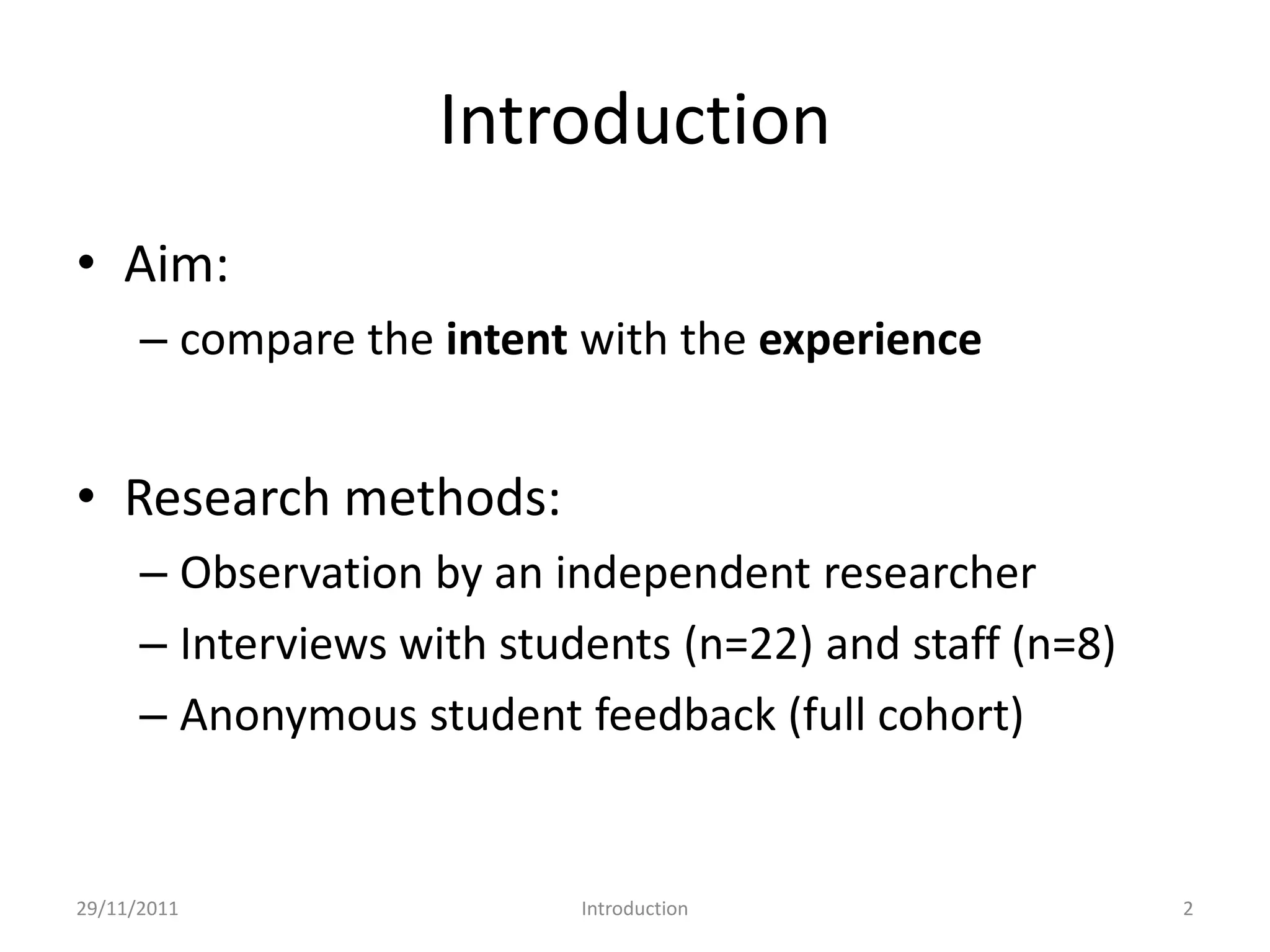
• Aim:
      – compare the intent with the experience


• Research methods:
      – Observation by an independent researcher
      – Interviews with students (n=22) and staff (n=8)
      – Anonymous student feedback (full cohort)


29/11/2011                  Introduction                  2
Background
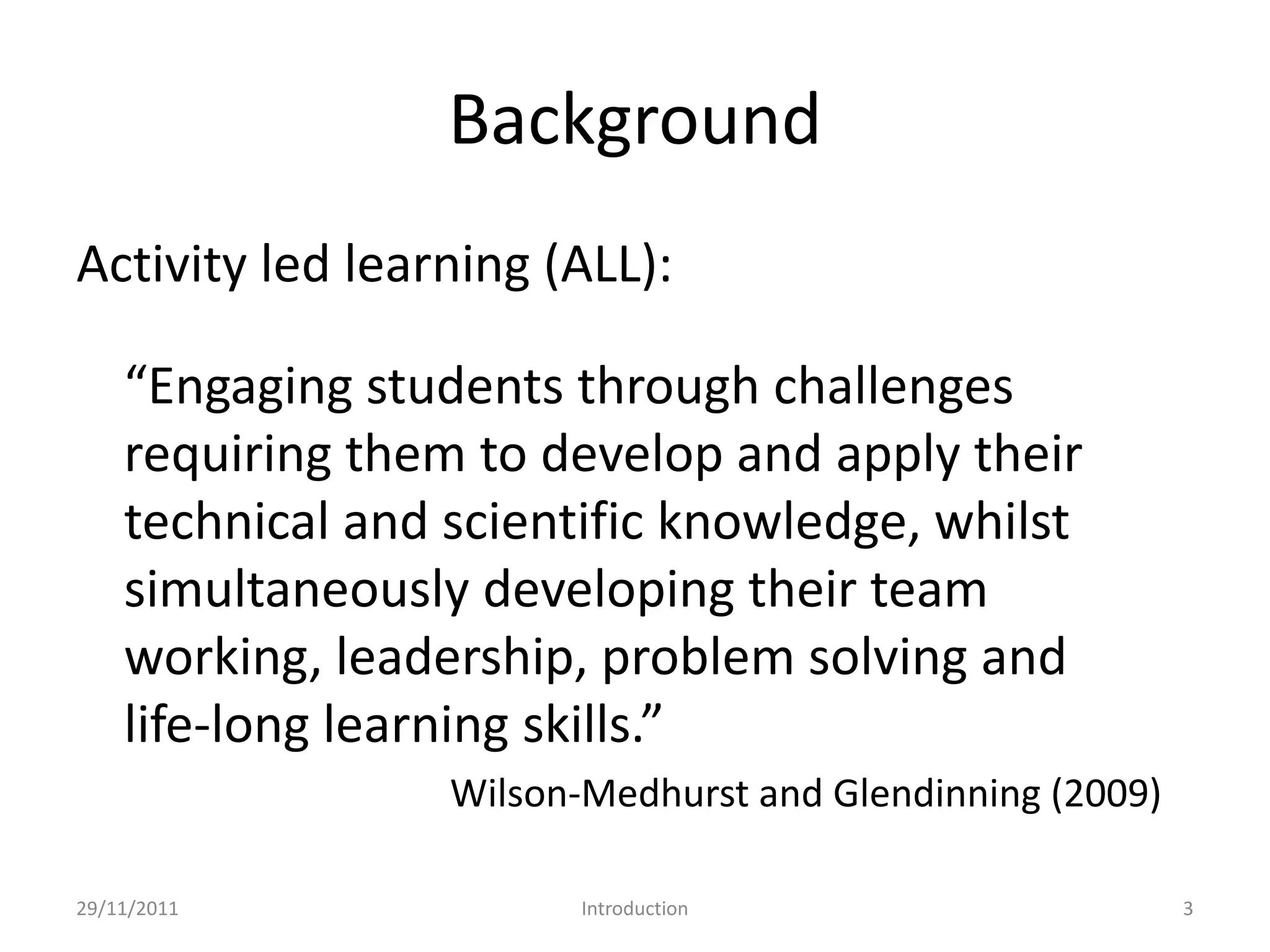
Activity led learning (ALL):

    “Engaging students through challenges
    requiring them to develop and apply their
    technical and scientific knowledge, whilst
    simultaneously developing their team
    working, leadership, problem solving and
    life-long learning skills.”
                  Wilson-Medhurst and Glendinning (2009)

29/11/2011               Introduction                      3
Background
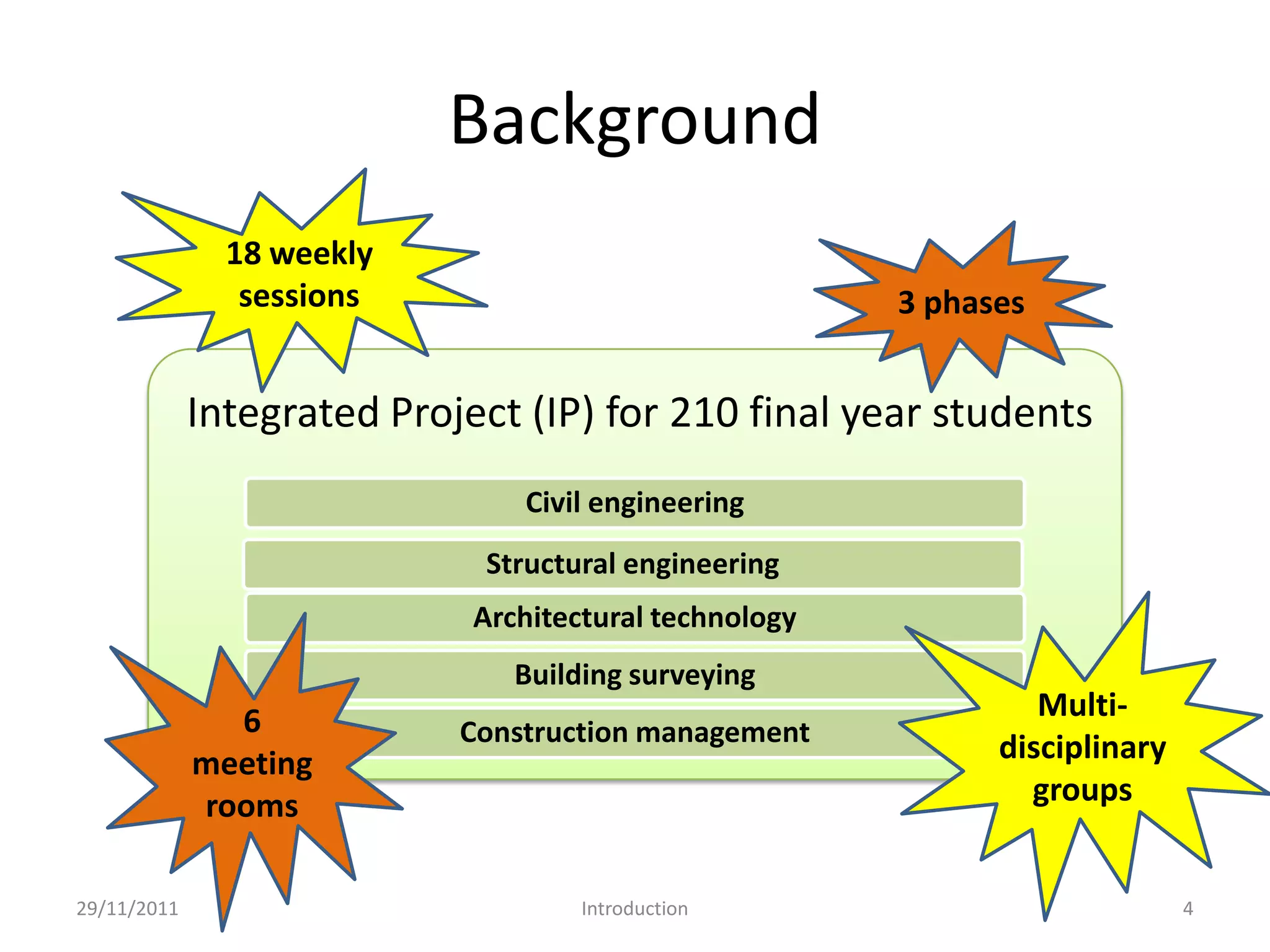
               18 weekly
                sessions                                3 phases


             Integrated Project (IP) for 210 final year students
                                Civil engineering
                             Structural engineering
                             Architectural technology
                                Building surveying
               6                                                 Multi-
                            Construction management
             meeting                                          disciplinary
             rooms                                              groups


29/11/2011                           Introduction                            4
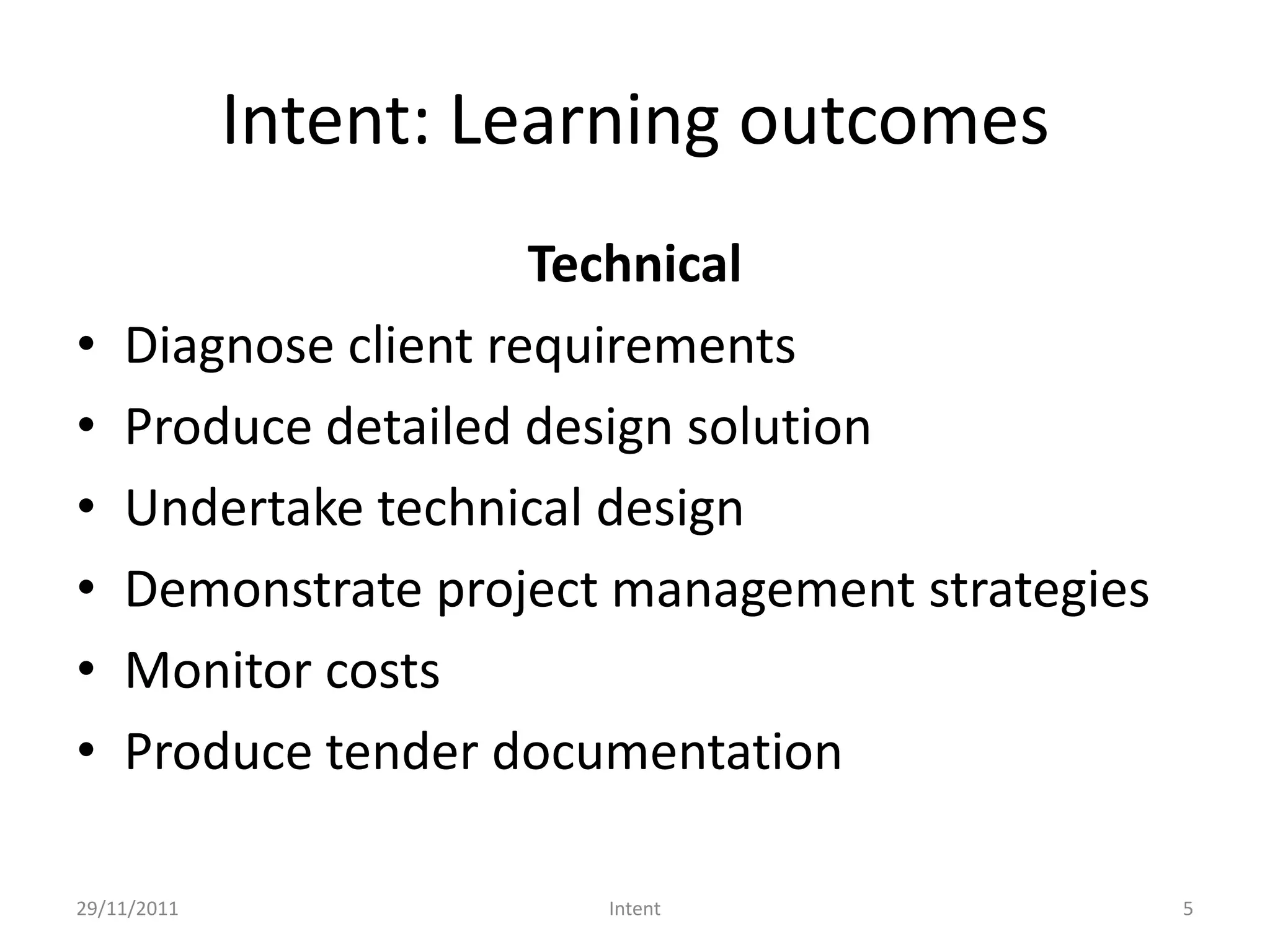
Intent: Learning outcomes
                      Technical
•   Diagnose client requirements
•   Produce detailed design solution
•   Undertake technical design
•   Demonstrate project management strategies
•   Monitor costs
•   Produce tender documentation

29/11/2011              Intent                  5
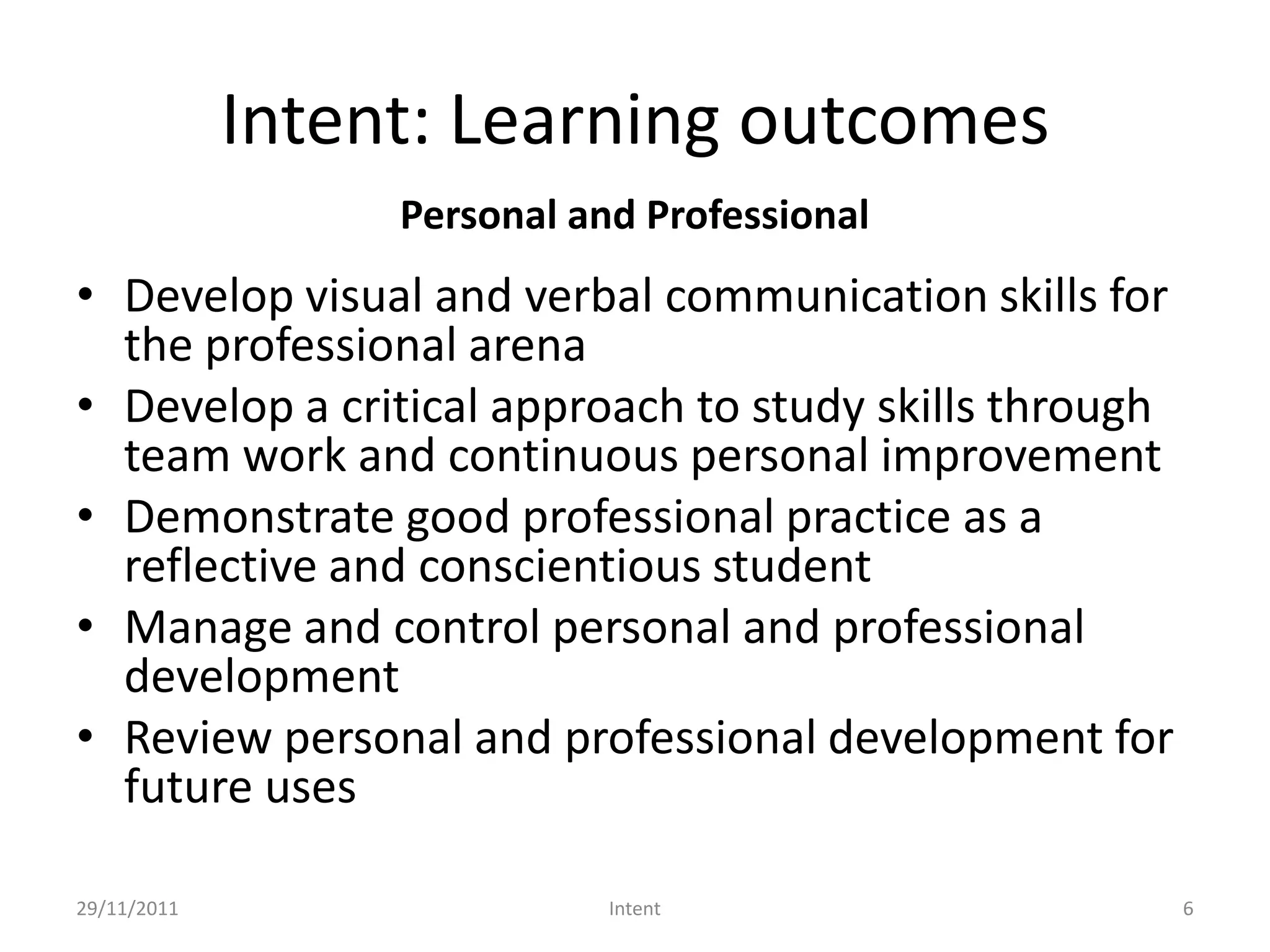
Intent: Learning outcomes
                  Personal and Professional
• Develop visual and verbal communication skills for
  the professional arena
• Develop a critical approach to study skills through
  team work and continuous personal improvement
• Demonstrate good professional practice as a
  reflective and conscientious student
• Manage and control personal and professional
  development
• Review personal and professional development for
  future uses

29/11/2011                   Intent                     6
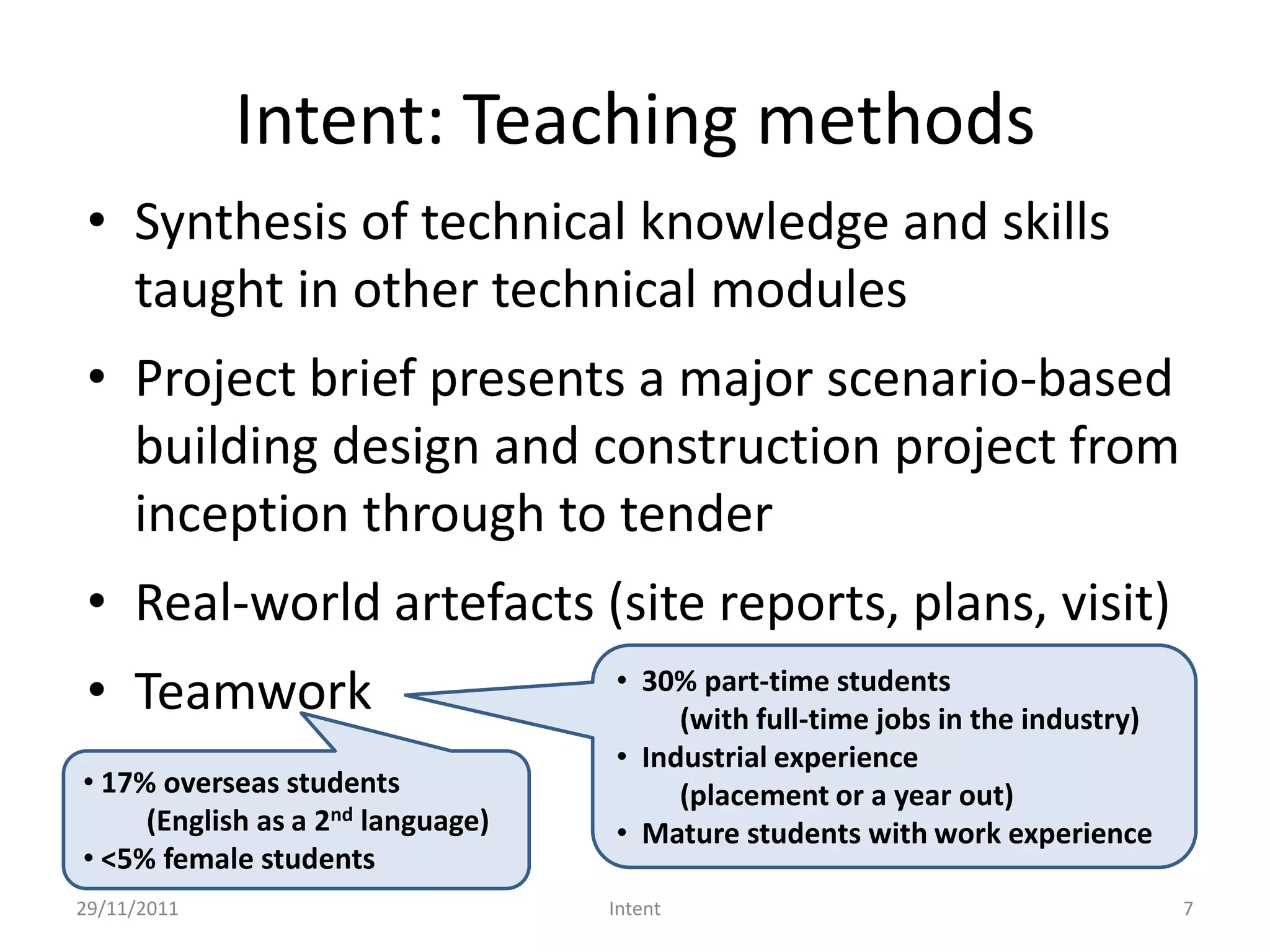
Intent: Teaching methods
 • Synthesis of technical knowledge and skills
   taught in other technical modules
 • Project brief presents a major scenario-based
   building design and construction project from
   inception through to tender
 • Real-world artefacts (site reports, plans, visit)
 • Teamwork                        • 30% part-time students
                                        (with full-time jobs in the industry)
                                   • Industrial experience
• 17% overseas students                 (placement or a year out)
     (English as a 2nd language)   • Mature students with work experience
• <5% female students
29/11/2011                         Intent                                       7
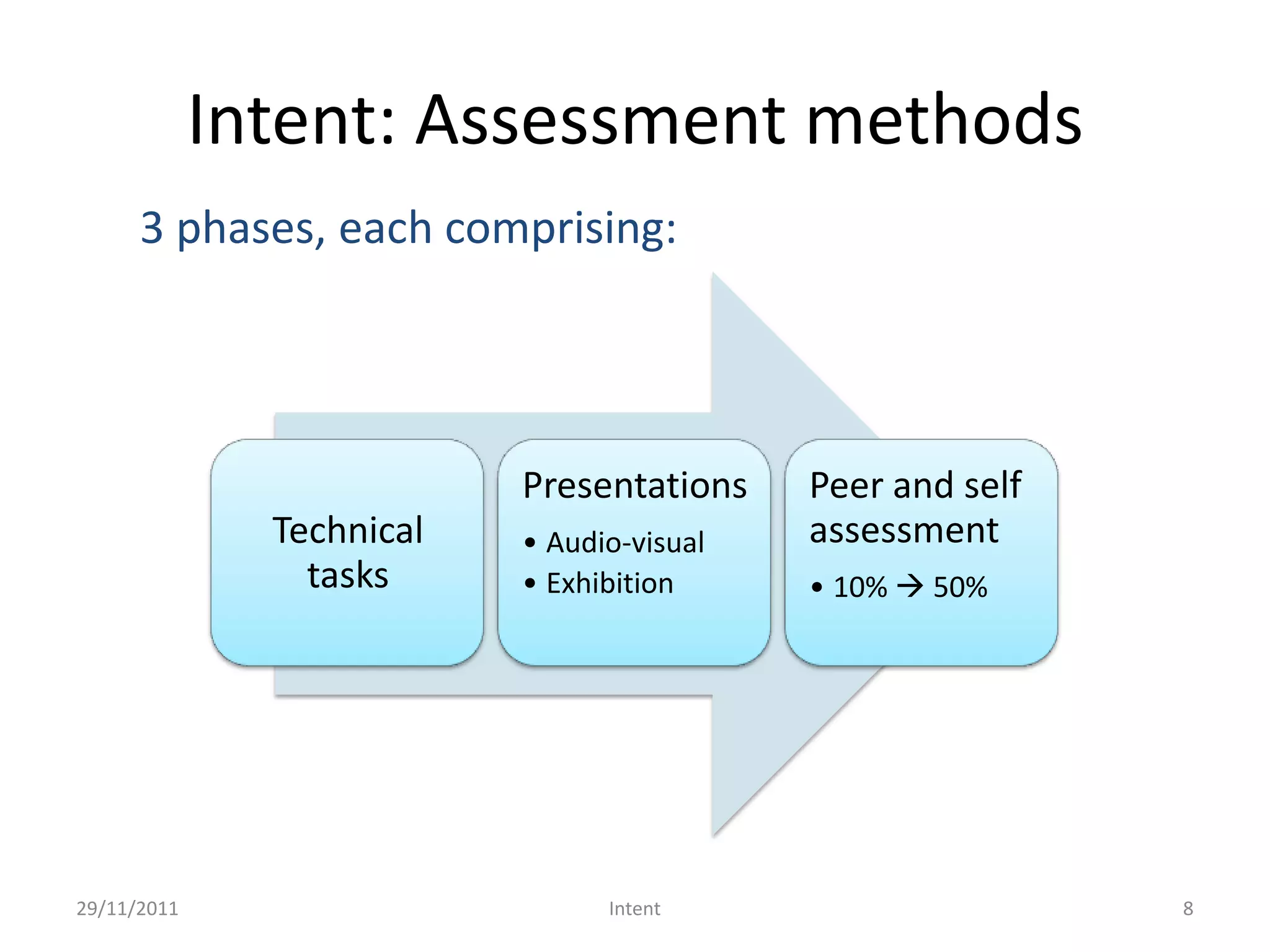
Intent: Assessment methods
      3 phases, each comprising:


                           Presentations    Peer and self
               Technical   • Audio-visual   assessment
                 tasks     • Exhibition     • 10%  50%


29/11/2011                       Intent                     8
Experience


29/11/2011      Experience   9
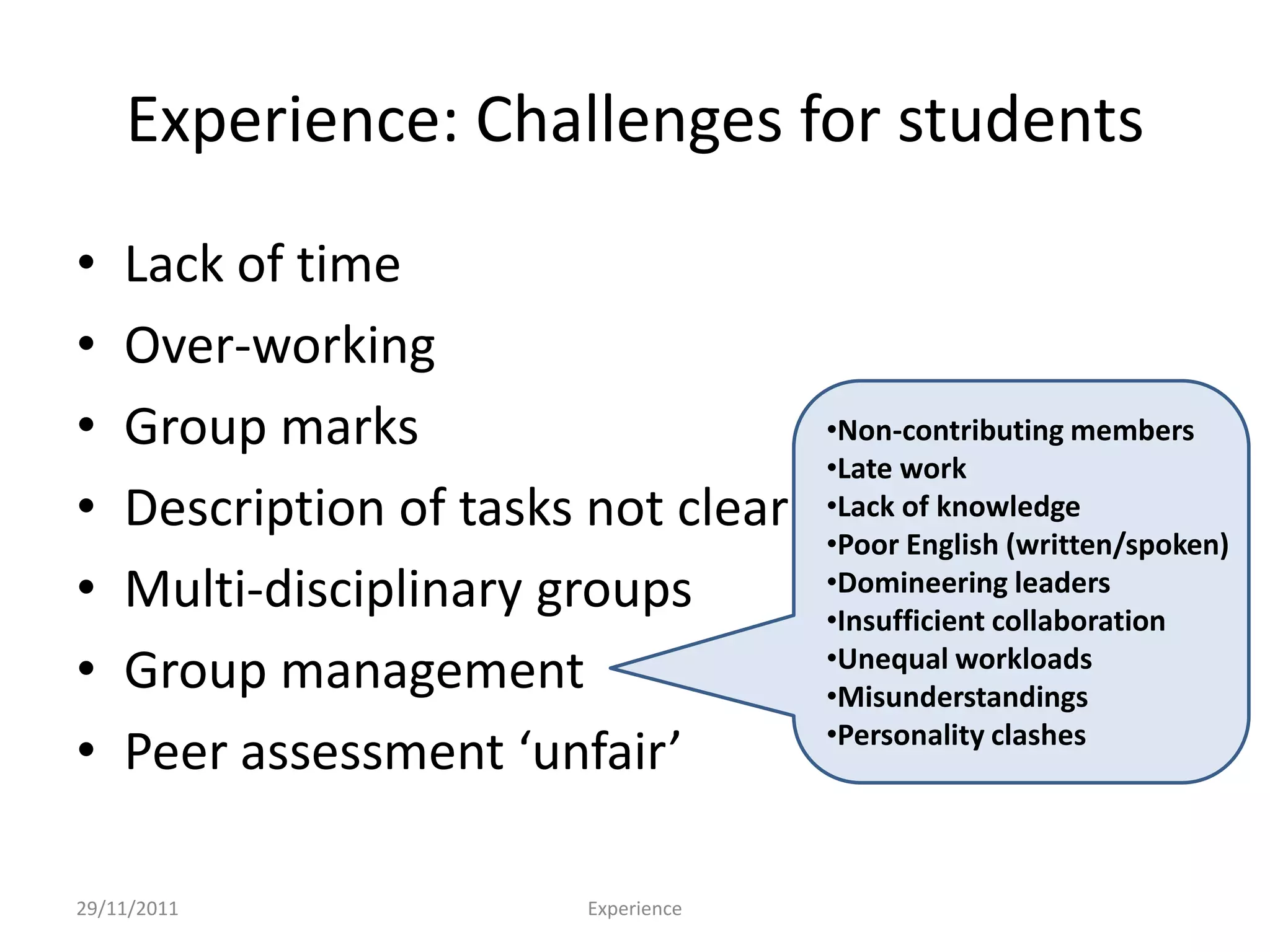
Experience

              Challenges                 Challenges
             for students                 for staff

               Student
                                         Responses
              feedback

29/11/2011                  Experience                10
Experience: Challenges for students
•   Lack of time
•   Over-working
•   Group marks                      •Non-contributing members
                                     •Late work
•   Description of tasks not clear   •Lack of knowledge
                                     •Poor English (written/spoken)
•   Multi-disciplinary groups        •Domineering leaders
                                     •Insufficient collaboration
•   Group management                 •Unequal workloads
                                     •Misunderstandings
                                     •Personality clashes
•   Peer assessment ‘unfair’

29/11/2011              Experience
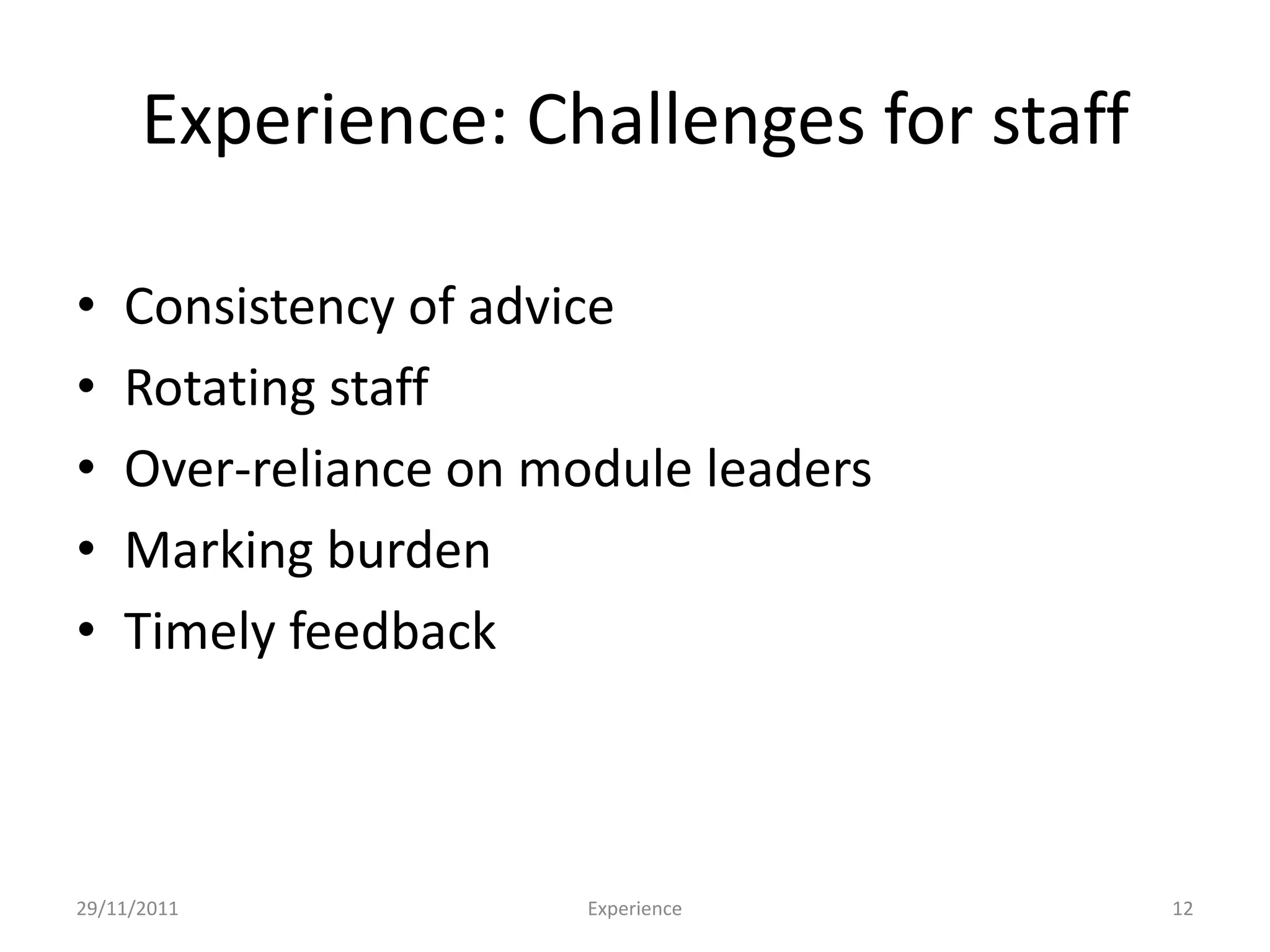
Experience: Challenges for staff

•   Consistency of advice
•   Rotating staff
•   Over-reliance on module leaders
•   Marking burden
•   Timely feedback


29/11/2011             Experience        12
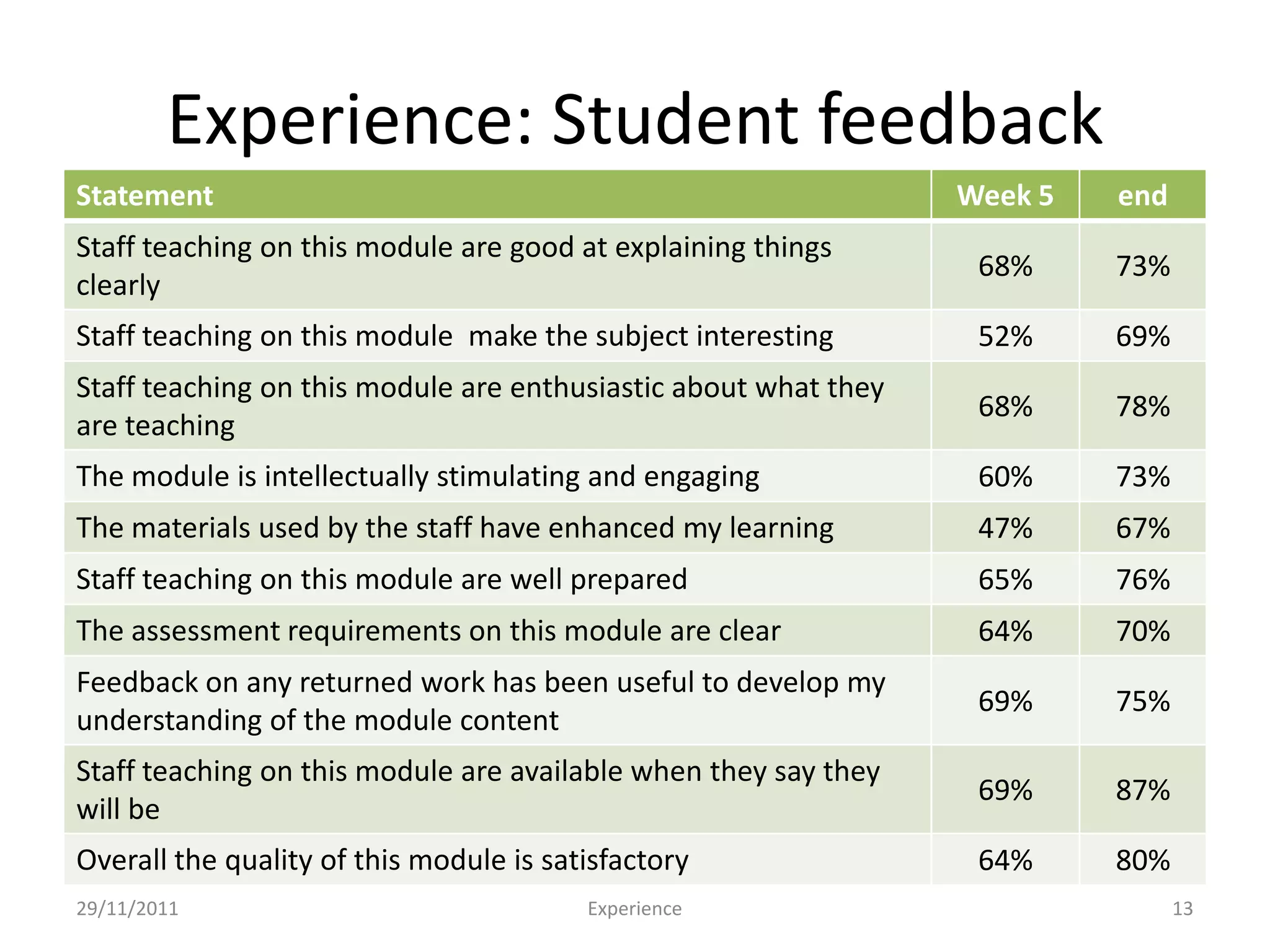
Experience: Student feedback
Statement                                                        Week 5   end
Staff teaching on this module are good at explaining things
                                                                  68%     73%
clearly
Staff teaching on this module make the subject interesting        52%     69%
Staff teaching on this module are enthusiastic about what they
                                                                  68%     78%
are teaching
The module is intellectually stimulating and engaging             60%     73%
The materials used by the staff have enhanced my learning         47%     67%
Staff teaching on this module are well prepared                   65%     76%
The assessment requirements on this module are clear              64%     70%
Feedback on any returned work has been useful to develop my
                                                                  69%     75%
understanding of the module content
Staff teaching on this module are available when they say they
                                                                  69%     87%
will be
Overall the quality of this module is satisfactory                64%     80%
29/11/2011                               Experience                             13
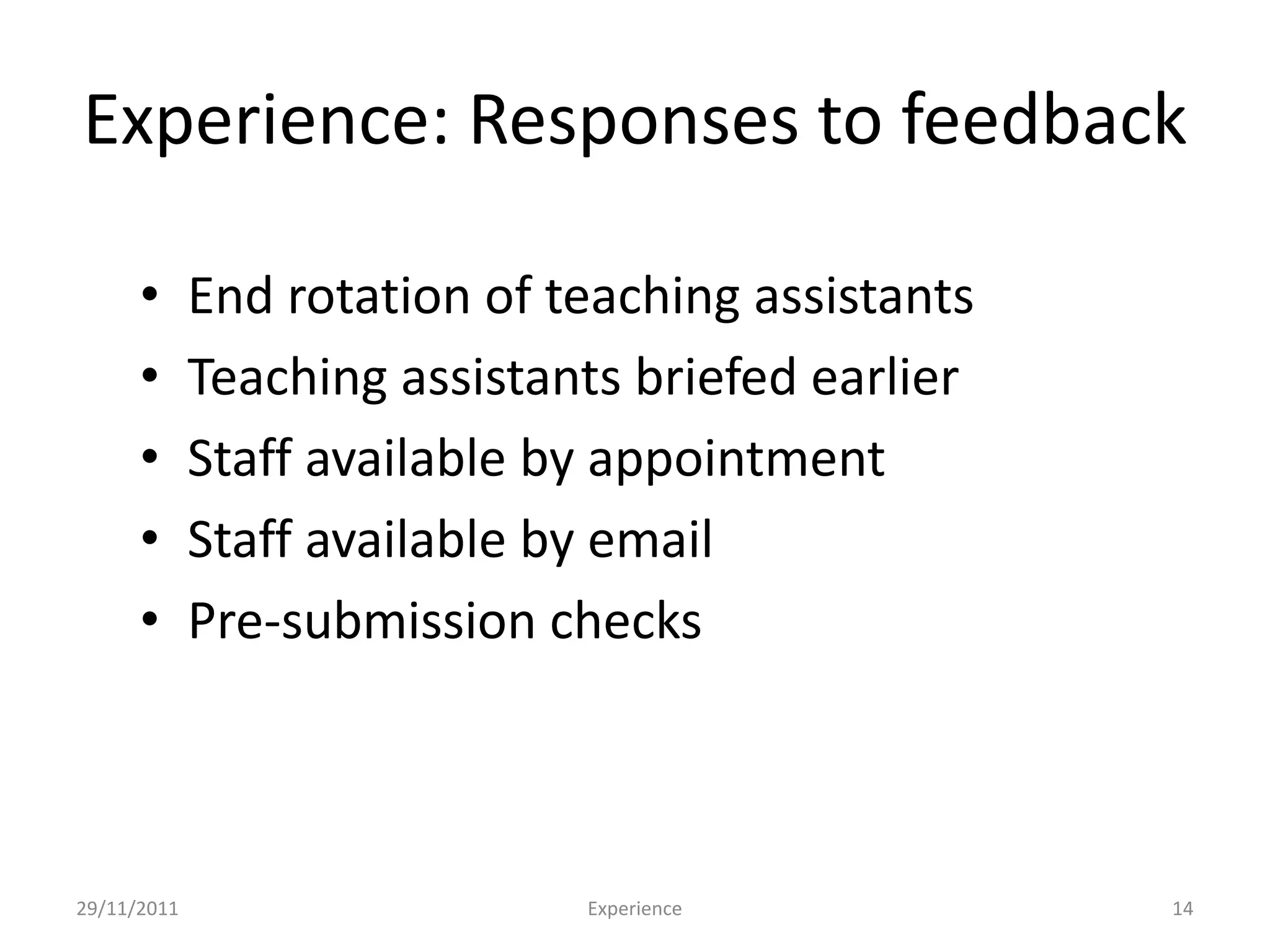
Experience: Responses to feedback

      •      End rotation of teaching assistants
      •      Teaching assistants briefed earlier
      •      Staff available by appointment
      •      Staff available by email
      •      Pre-submission checks


29/11/2011                    Experience           14
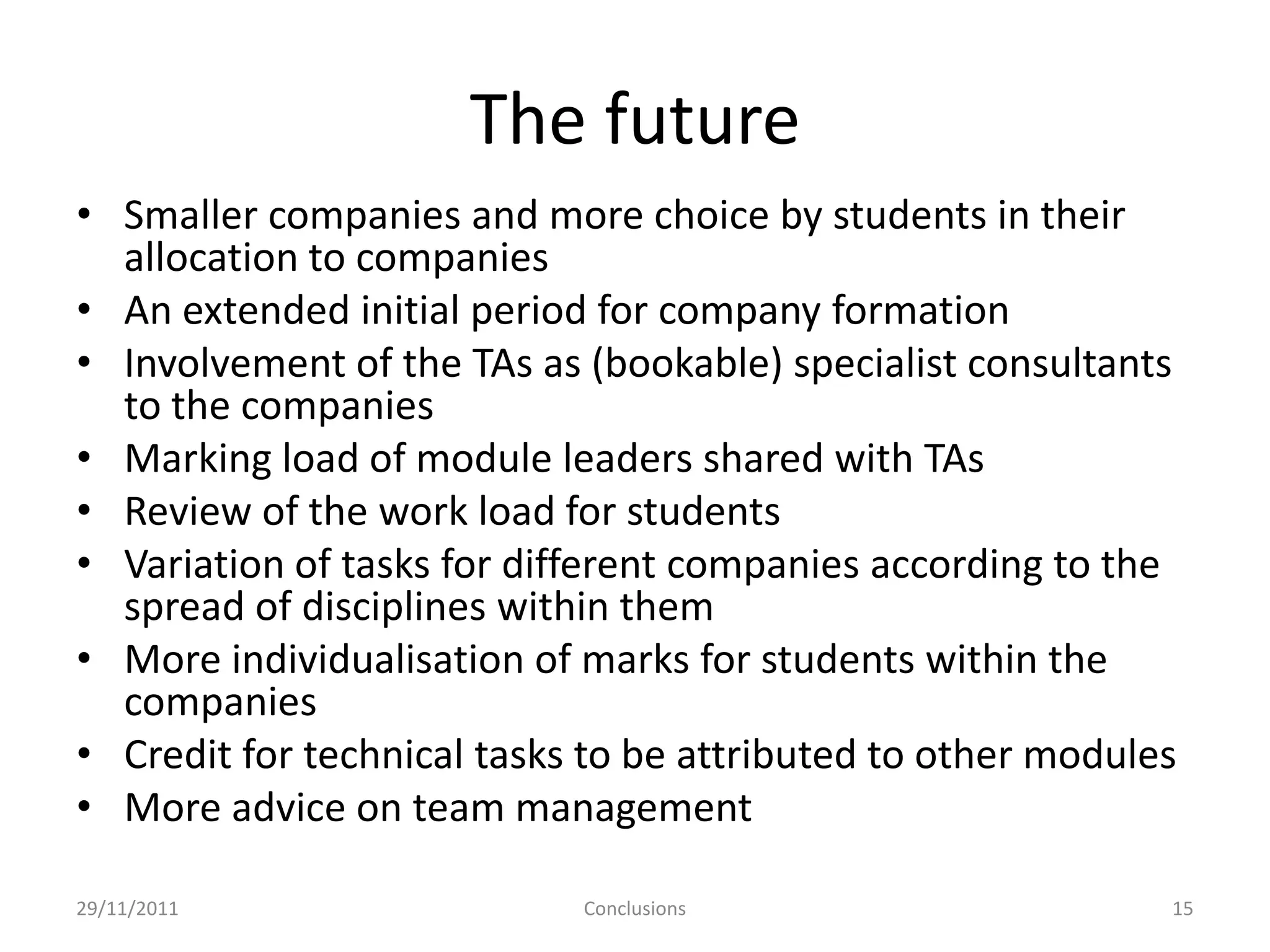
The future
• Smaller companies and more choice by students in their
  allocation to companies
• An extended initial period for company formation
• Involvement of the TAs as (bookable) specialist consultants
  to the companies
• Marking load of module leaders shared with TAs
• Review of the work load for students
• Variation of tasks for different companies according to the
  spread of disciplines within them
• More individualisation of marks for students within the
  companies
• Credit for technical tasks to be attributed to other modules
• More advice on team management

29/11/2011                  Conclusions                      15
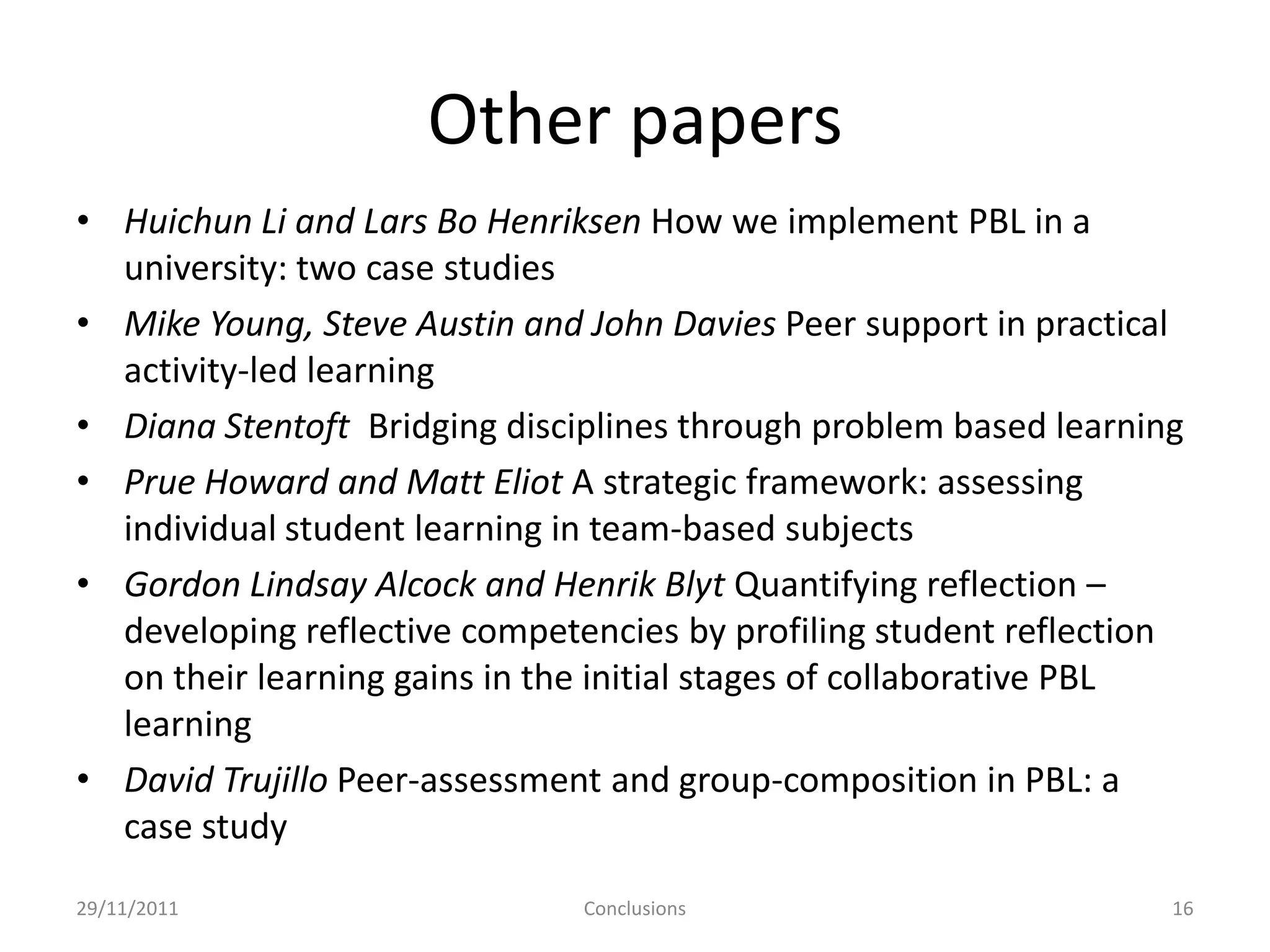
Other papers
• Huichun Li and Lars Bo Henriksen How we implement PBL in a
  university: two case studies
• Mike Young, Steve Austin and John Davies Peer support in practical
  activity-led learning
• Diana Stentoft Bridging disciplines through problem based learning
• Prue Howard and Matt Eliot A strategic framework: assessing
  individual student learning in team-based subjects
• Gordon Lindsay Alcock and Henrik Blyt Quantifying reflection –
  developing reflective competencies by profiling student reflection
  on their learning gains in the initial stages of collaborative PBL
  learning
• David Trujillo Peer-assessment and group-composition in PBL: a
  case study
29/11/2011                     Conclusions                         16
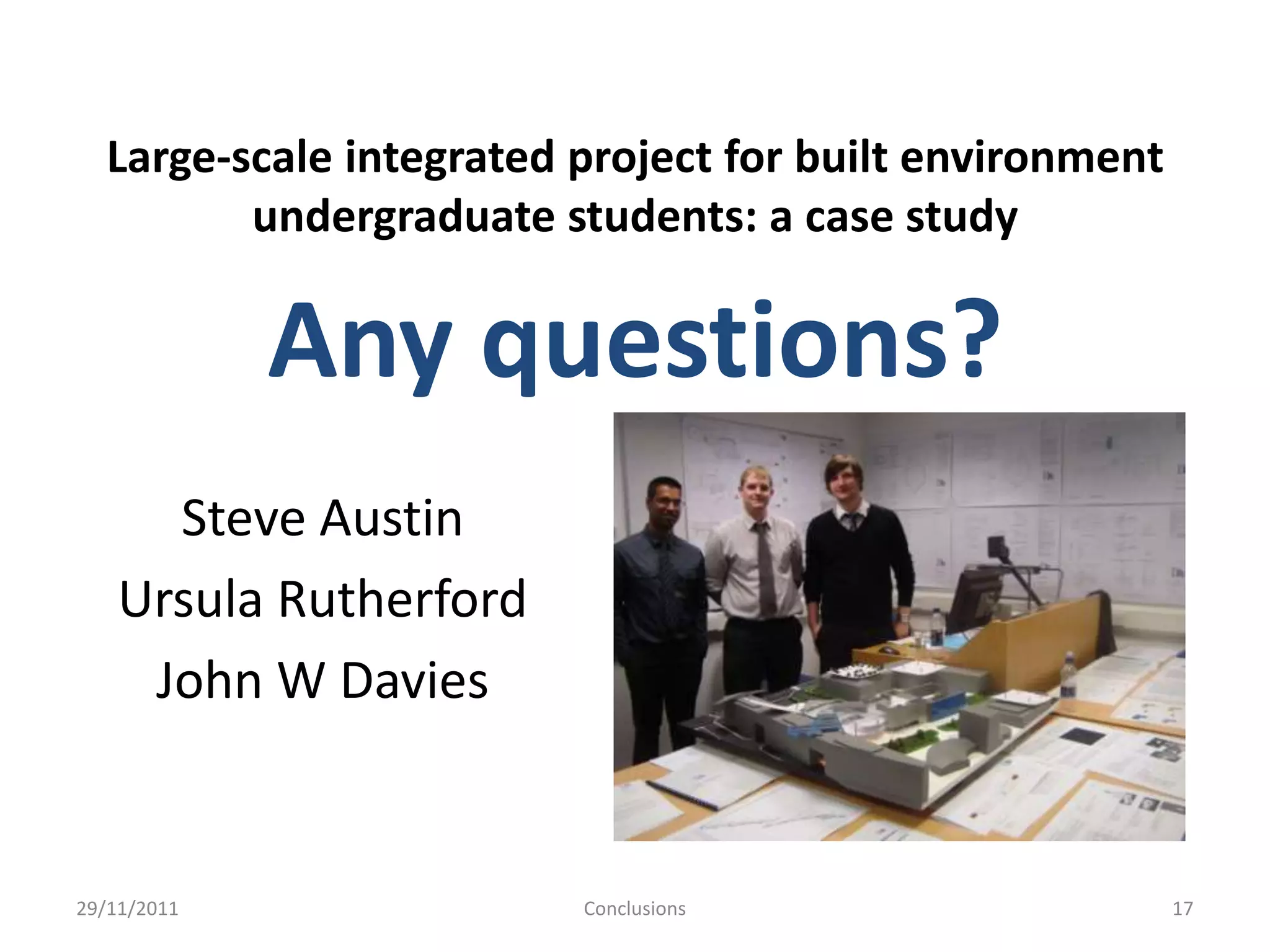
Large-scale integrated project for built environment
         undergraduate students: a case study

             Any questions?
      Steve Austin
    Ursula Rutherford
     John W Davies


29/11/2011               Conclusions                     17

Large scale integrated project for built environment undergraduate students- a case study

  • 1.
    Large-scale integrated projectfor built environment undergraduate students: a case study Steve Austin Ursula Rutherford John W Davies Coventry University, UK 29/11/2011 Introduction 1
  • 2.
    Introduction • Aim: – compare the intent with the experience • Research methods: – Observation by an independent researcher – Interviews with students (n=22) and staff (n=8) – Anonymous student feedback (full cohort) 29/11/2011 Introduction 2
  • 3.
    Background Activity led learning(ALL): “Engaging students through challenges requiring them to develop and apply their technical and scientific knowledge, whilst simultaneously developing their team working, leadership, problem solving and life-long learning skills.” Wilson-Medhurst and Glendinning (2009) 29/11/2011 Introduction 3
  • 4.
    Background 18 weekly sessions 3 phases Integrated Project (IP) for 210 final year students Civil engineering Structural engineering Architectural technology Building surveying 6 Multi- Construction management meeting disciplinary rooms groups 29/11/2011 Introduction 4
  • 5.
    Intent: Learning outcomes Technical • Diagnose client requirements • Produce detailed design solution • Undertake technical design • Demonstrate project management strategies • Monitor costs • Produce tender documentation 29/11/2011 Intent 5
  • 6.
    Intent: Learning outcomes Personal and Professional • Develop visual and verbal communication skills for the professional arena • Develop a critical approach to study skills through team work and continuous personal improvement • Demonstrate good professional practice as a reflective and conscientious student • Manage and control personal and professional development • Review personal and professional development for future uses 29/11/2011 Intent 6
  • 7.
    Intent: Teaching methods • Synthesis of technical knowledge and skills taught in other technical modules • Project brief presents a major scenario-based building design and construction project from inception through to tender • Real-world artefacts (site reports, plans, visit) • Teamwork • 30% part-time students (with full-time jobs in the industry) • Industrial experience • 17% overseas students (placement or a year out) (English as a 2nd language) • Mature students with work experience • <5% female students 29/11/2011 Intent 7
  • 8.
    Intent: Assessment methods 3 phases, each comprising: Presentations Peer and self Technical • Audio-visual assessment tasks • Exhibition • 10%  50% 29/11/2011 Intent 8
  • 9.
  • 10.
    Experience Challenges Challenges for students for staff Student Responses feedback 29/11/2011 Experience 10
  • 11.
    Experience: Challenges forstudents • Lack of time • Over-working • Group marks •Non-contributing members •Late work • Description of tasks not clear •Lack of knowledge •Poor English (written/spoken) • Multi-disciplinary groups •Domineering leaders •Insufficient collaboration • Group management •Unequal workloads •Misunderstandings •Personality clashes • Peer assessment ‘unfair’ 29/11/2011 Experience
  • 12.
    Experience: Challenges forstaff • Consistency of advice • Rotating staff • Over-reliance on module leaders • Marking burden • Timely feedback 29/11/2011 Experience 12
  • 13.
    Experience: Student feedback Statement Week 5 end Staff teaching on this module are good at explaining things 68% 73% clearly Staff teaching on this module make the subject interesting 52% 69% Staff teaching on this module are enthusiastic about what they 68% 78% are teaching The module is intellectually stimulating and engaging 60% 73% The materials used by the staff have enhanced my learning 47% 67% Staff teaching on this module are well prepared 65% 76% The assessment requirements on this module are clear 64% 70% Feedback on any returned work has been useful to develop my 69% 75% understanding of the module content Staff teaching on this module are available when they say they 69% 87% will be Overall the quality of this module is satisfactory 64% 80% 29/11/2011 Experience 13
  • 14.
    Experience: Responses tofeedback • End rotation of teaching assistants • Teaching assistants briefed earlier • Staff available by appointment • Staff available by email • Pre-submission checks 29/11/2011 Experience 14
  • 15.
    The future • Smallercompanies and more choice by students in their allocation to companies • An extended initial period for company formation • Involvement of the TAs as (bookable) specialist consultants to the companies • Marking load of module leaders shared with TAs • Review of the work load for students • Variation of tasks for different companies according to the spread of disciplines within them • More individualisation of marks for students within the companies • Credit for technical tasks to be attributed to other modules • More advice on team management 29/11/2011 Conclusions 15
  • 16.
    Other papers • HuichunLi and Lars Bo Henriksen How we implement PBL in a university: two case studies • Mike Young, Steve Austin and John Davies Peer support in practical activity-led learning • Diana Stentoft Bridging disciplines through problem based learning • Prue Howard and Matt Eliot A strategic framework: assessing individual student learning in team-based subjects • Gordon Lindsay Alcock and Henrik Blyt Quantifying reflection – developing reflective competencies by profiling student reflection on their learning gains in the initial stages of collaborative PBL learning • David Trujillo Peer-assessment and group-composition in PBL: a case study 29/11/2011 Conclusions 16
  • 17.
    Large-scale integrated projectfor built environment undergraduate students: a case study Any questions? Steve Austin Ursula Rutherford John W Davies 29/11/2011 Conclusions 17