 78 year old white female   T: 99.0 P 115 R 16 BP 110/75
 presents from nursing       Gen: Elderly white female with
                               chronic debilitation, actively
 home with increasing
                               vomiting in room.
 abdominal                   HEENT: PERRL, NC/AT,
 distention, vomiting, cra     Oropharynx clear,
 mping abdominal             CV: mildly tachycardic, no m/r/g
 pain, and 3 days of         Pulm: CTAB
 constipation. Pt has a      Abd: abdominal distention,
                               decreased bowel sounds,
 history of chronic            diffuse TTP, hyperressonance to
 constipation.                 percussion
                             Ext: 2+ pulses, no c/c/e
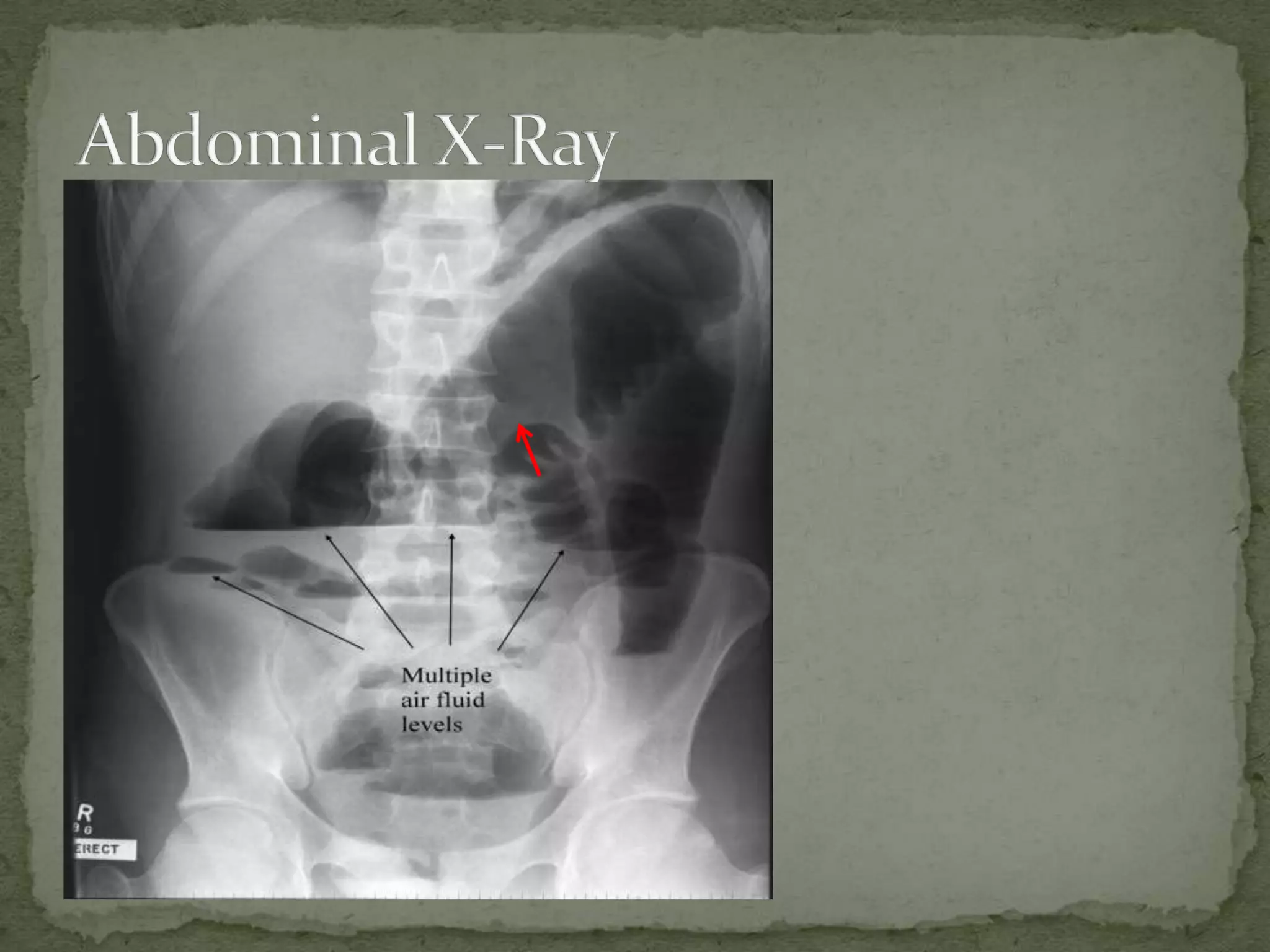
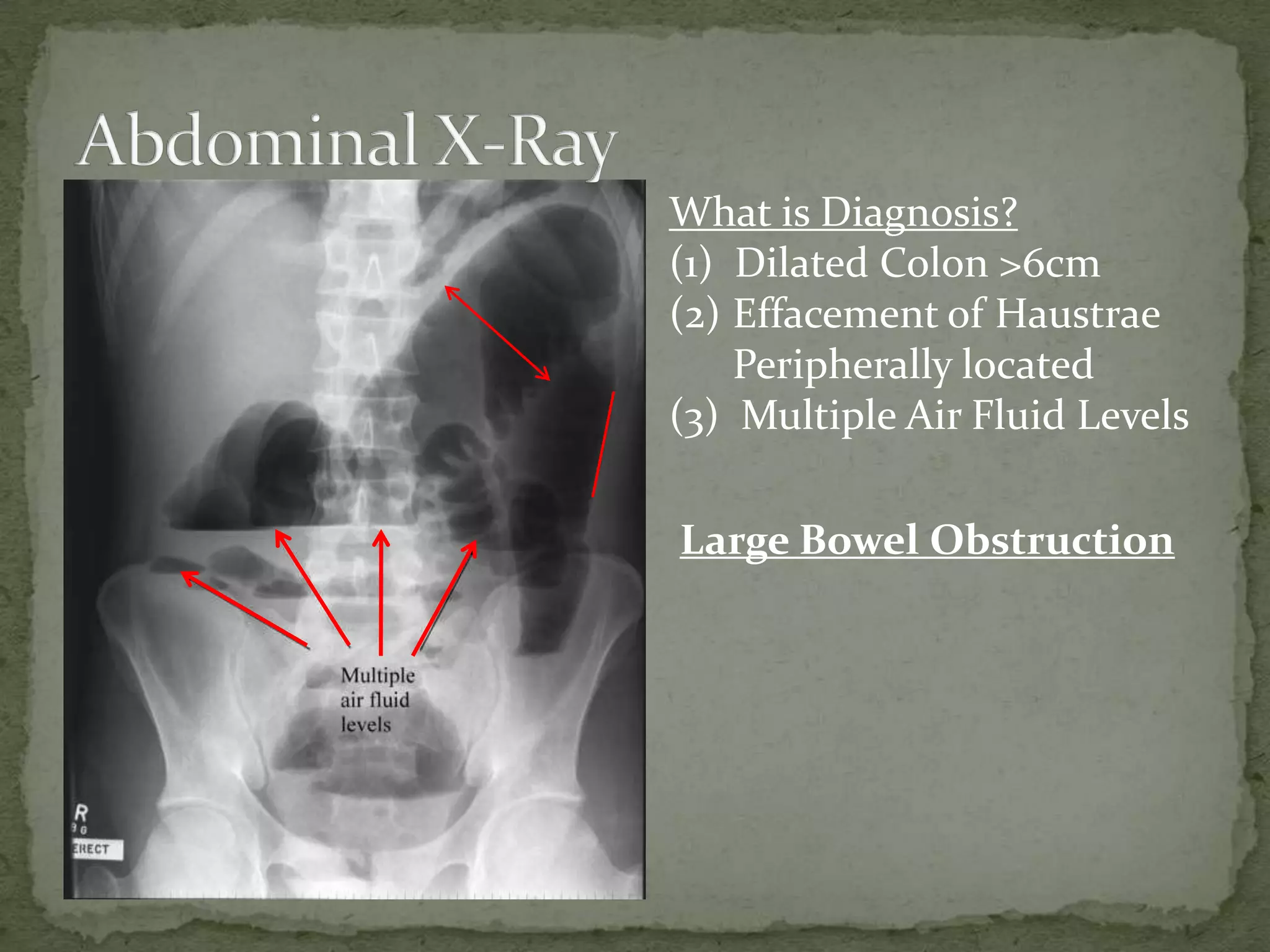
What is Diagnosis?
(1) Dilated Colon >6cm
(2) Effacement of Haustrae
    Peripherally located
(3) Multiple Air Fluid Levels

Large Bowel Obstruction
 IV & IVFs
 Analgesics & Antiemetics
 NG decompression
 Antibiotics for Gram (-) Aerobes & Anaerobes (ie.
  Flagyl, Cipro, Zosyn, Clindamycin)
 Surgery Consult
 Admission for all LBO
 Emergency Laparotomy if:
   (1) Peritonitis (2) Peritoneal Free Air (3) Sepsis (4)
    Cecal Distention >12cm
 How to Differentiate Large from Small Bowel
  Obstruction:
 Gas in the Large Bowel is usually situated peripherally.
   Gas in the small bowel is usually centrally located.
 Large intestine has haustrae, which are
  blunter, thicker, and do not completely transverse
  intestine.
   Small Intestine has valvulae conniventes that transverse
    width of intestine, giving it a ribbed appearance.
 Feces are only found in Large Intestine.
 Rule of 3,6,9:
   suspect obstruction if small bowel dilated >3cm; large bowel
    >6cm, cecum >9cm.
 Causes of LBO:
    Carcinoma (60%), Diverticulitis (20%), Volvulus (10%)
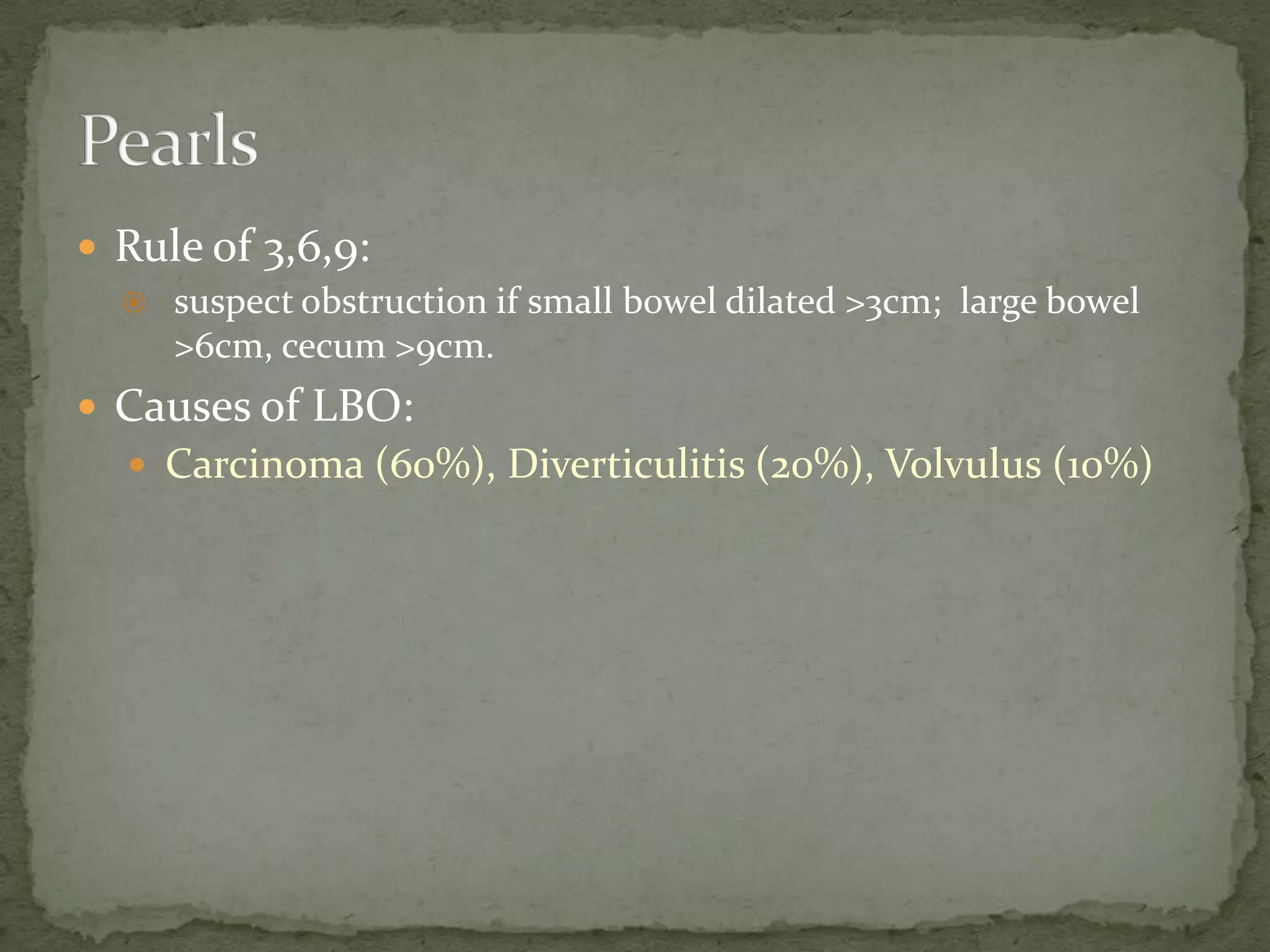
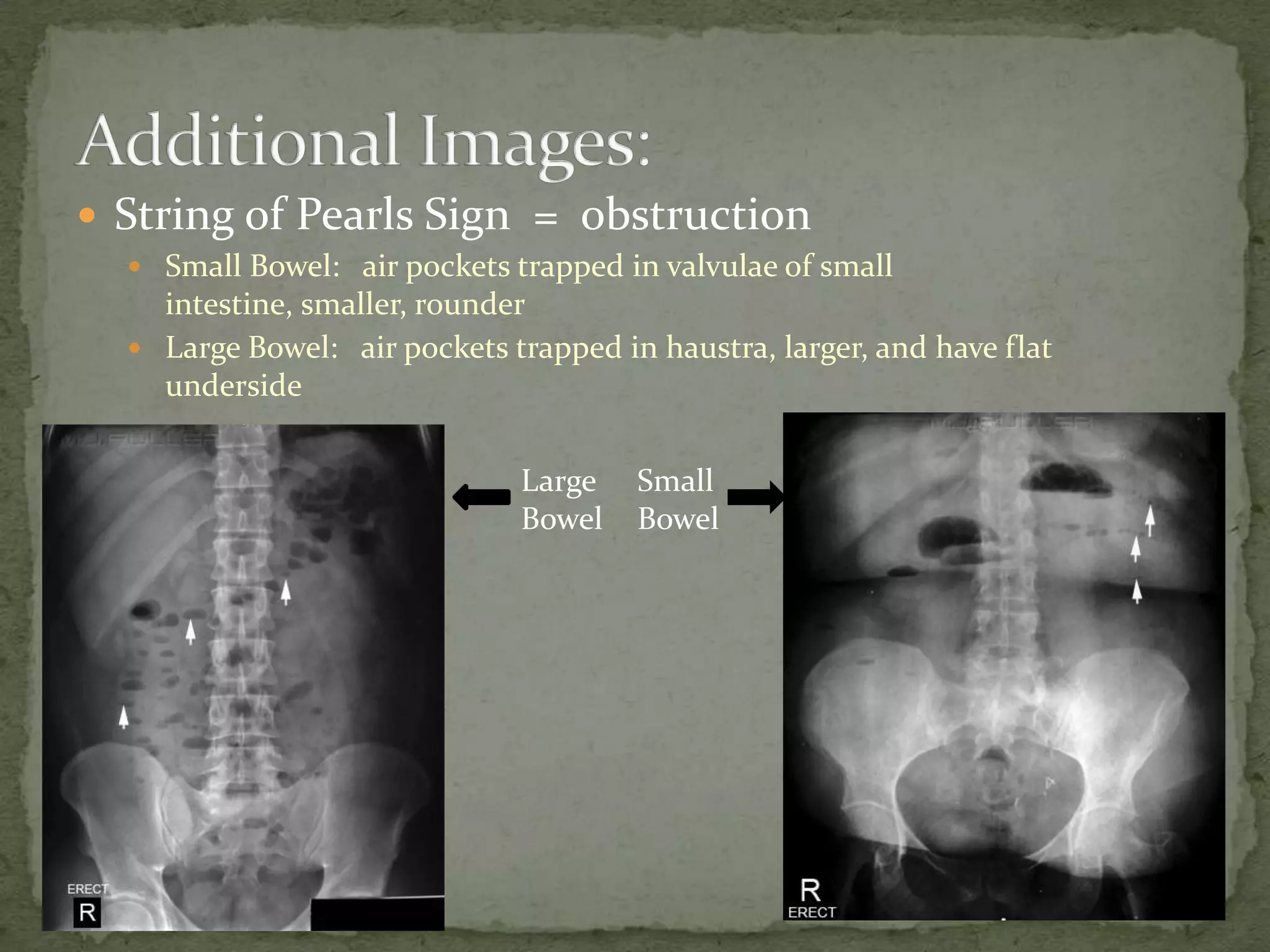
 String of Pearls Sign = obstruction
   Small Bowel: air pockets trapped in valvulae of small
    intestine, smaller, rounder
   Large Bowel: air pockets trapped in haustra, larger, and have flat
    underside


                              Large    Small
                              Bowel    Bowel
 Greenberg, Michael. Greenberg’s Atlas of Emergency
    Medicine.
   Ginzberg, Leon. “X-Ray Diagnosis of Acute Intestinal
    Instruction Without the Use of Contrast Media”
    Annals of Surgery
   Lifeinthefastlane.com “Abdominal X-Ray
    Interpretation”
   Schwartz, David. Emergency Radiology. 2000. pg 527-
    529.
   Tintanelli’s Emergency Medicine: A Comprehensive
    Study Guide. Chapter 79 Intestinal Obstruction

Large bowel obstruction power point (3)

  • 2.
     78 yearold white female T: 99.0 P 115 R 16 BP 110/75 presents from nursing Gen: Elderly white female with chronic debilitation, actively home with increasing vomiting in room. abdominal HEENT: PERRL, NC/AT, distention, vomiting, cra Oropharynx clear, mping abdominal CV: mildly tachycardic, no m/r/g pain, and 3 days of Pulm: CTAB constipation. Pt has a Abd: abdominal distention, decreased bowel sounds, history of chronic diffuse TTP, hyperressonance to constipation. percussion Ext: 2+ pulses, no c/c/e
  • 4.
    What is Diagnosis? (1)Dilated Colon >6cm (2) Effacement of Haustrae Peripherally located (3) Multiple Air Fluid Levels Large Bowel Obstruction
  • 5.
     IV &IVFs  Analgesics & Antiemetics  NG decompression  Antibiotics for Gram (-) Aerobes & Anaerobes (ie. Flagyl, Cipro, Zosyn, Clindamycin)  Surgery Consult  Admission for all LBO  Emergency Laparotomy if:  (1) Peritonitis (2) Peritoneal Free Air (3) Sepsis (4) Cecal Distention >12cm
  • 6.
     How toDifferentiate Large from Small Bowel Obstruction:  Gas in the Large Bowel is usually situated peripherally.  Gas in the small bowel is usually centrally located.  Large intestine has haustrae, which are blunter, thicker, and do not completely transverse intestine.  Small Intestine has valvulae conniventes that transverse width of intestine, giving it a ribbed appearance.  Feces are only found in Large Intestine.
  • 7.
     Rule of3,6,9:  suspect obstruction if small bowel dilated >3cm; large bowel >6cm, cecum >9cm.  Causes of LBO:  Carcinoma (60%), Diverticulitis (20%), Volvulus (10%)
  • 8.
     String ofPearls Sign = obstruction  Small Bowel: air pockets trapped in valvulae of small intestine, smaller, rounder  Large Bowel: air pockets trapped in haustra, larger, and have flat underside Large Small Bowel Bowel
  • 9.
     Greenberg, Michael.Greenberg’s Atlas of Emergency Medicine.  Ginzberg, Leon. “X-Ray Diagnosis of Acute Intestinal Instruction Without the Use of Contrast Media” Annals of Surgery  Lifeinthefastlane.com “Abdominal X-Ray Interpretation”  Schwartz, David. Emergency Radiology. 2000. pg 527- 529.  Tintanelli’s Emergency Medicine: A Comprehensive Study Guide. Chapter 79 Intestinal Obstruction