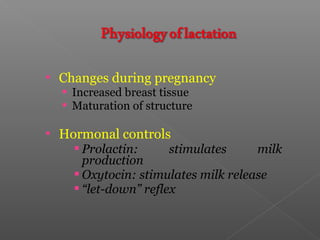
 Changes during pregnancy
 Increased breast tissue
 Maturation of structure
 Hormonal controls
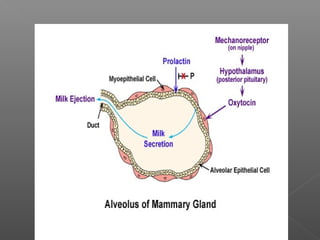
 Prolactin: stimulates milk
production
 Oxytocin: stimulates milk release
 “let-down” reflex
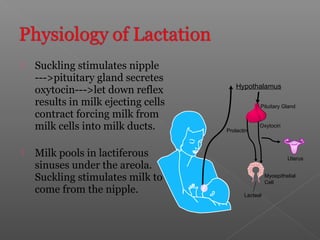
 Suckling stimulates nipple
--->pituitary gland secretes
oxytocin--->let down reflex
results in milk ejecting cells
contract forcing milk from
milk cells into milk ducts.
 Milk pools in lactiferous
sinuses under the areola.
Suckling stimulates milk to
come from the nipple.
Hypothalamus
Prolactin
Lacteal
Uterus
Oxytocin
Myoepithelial
Cell
Pituitary Gland
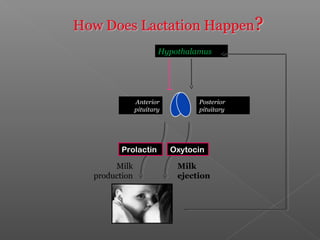
Milk
production
Milk
ejection
Prolactin Oxytocin
Anterior
pituitary
Posterior
pituitary
Hypothalamus
5
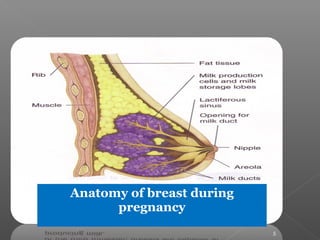
Anatomy of breast during
pregnancy
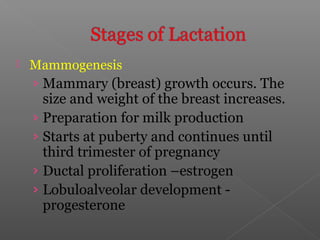
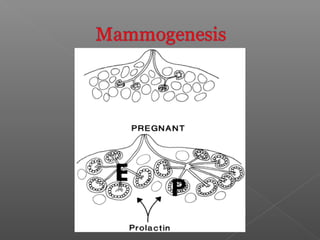
 Mammogenesis
› Mammary (breast) growth occurs. The
size and weight of the breast increases.
› Preparation for milk production
› Starts at puberty and continues until
third trimester of pregnancy
› Ductal proliferation –estrogen
› Lobuloalveolar development -
progesterone
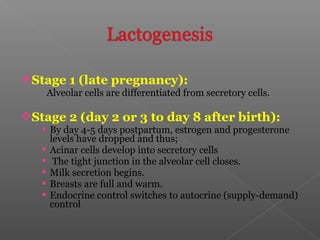
Stage 1 (late pregnancy):
Alveolar cells are differentiated from secretory cells.
Stage 2 (day 2 or 3 to day 8 after birth):
 By day 4-5 days postpartum, estrogen and progesterone
levels have dropped and thus;
 Acinar cells develop into secretory cells
 The tight junction in the alveolar cell closes.
 Milk secretion begins.
 Breasts are full and warm.
 Endocrine control switches to autocrine (supply-demand)
control
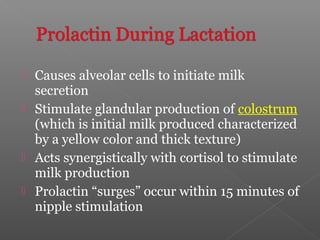
 Causes alveolar cells to initiate milk
secretion
 Stimulate glandular production of colostrum
(which is initial milk produced characterized
by a yellow color and thick texture)
 Acts synergistically with cortisol to stimulate
milk production
 Prolactin “surges” occur within 15 minutes of
nipple stimulation
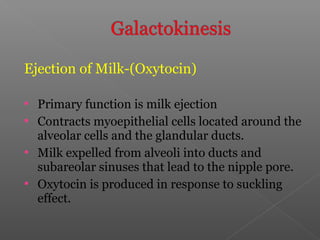
Ejection of Milk-(Oxytocin)
 Primary function is milk ejection
 Contracts myoepithelial cells located around the
alveolar cells and the glandular ducts.
 Milk expelled from alveoli into ducts and
subareolar sinuses that lead to the nipple pore.
 Oxytocin is produced in response to suckling
effect.
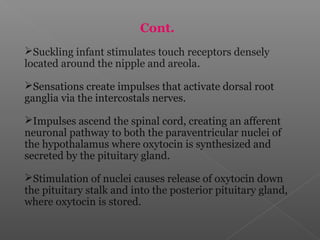
Cont.
Suckling infant stimulates touch receptors densely
located around the nipple and areola.
Sensations create impulses that activate dorsal root
ganglia via the intercostals nerves.
Impulses ascend the spinal cord, creating an afferent
neuronal pathway to both the paraventricular nuclei of
the hypothalamus where oxytocin is synthesized and
secreted by the pituitary gland.
Stimulation of nuclei causes release of oxytocin down
the pituitary stalk and into the posterior pituitary gland,
where oxytocin is stored.
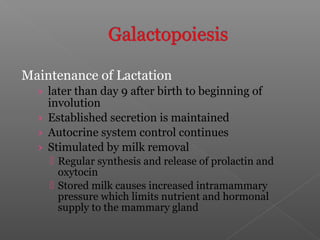
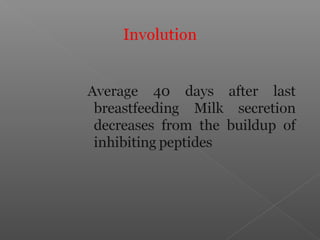
Maintenance of Lactation
› later than day 9 after birth to beginning of
involution
› Established secretion is maintained
› Autocrine system control continues
› Stimulated by milk removal
 Regular synthesis and release of prolactin and
oxytocin
 Stored milk causes increased intramammary
pressure which limits nutrient and hormonal
supply to the mammary gland
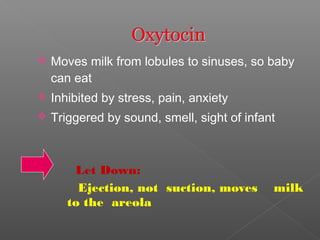
 Moves milk from lobules to sinuses, so baby
can eat
 Inhibited by stress, pain, anxiety
 Triggered by sound, smell, sight of infant
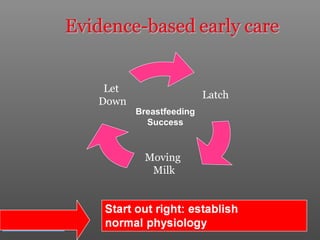
Let Down:
Ejection, not suction, moves milk
to the areola
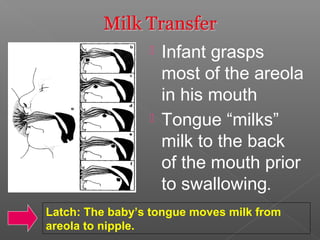
 Infant grasps
most of the areola
in his mouth
 Tongue “milks”
milk to the back
of the mouth prior
to swallowing.
Latch: The baby’s tongue moves milk from
areola to nipple.
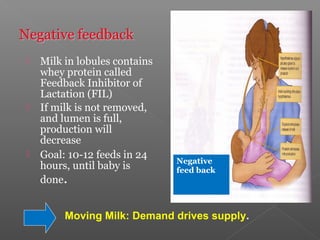
 Milk in lobules contains
whey protein called
Feedback Inhibitor of
Lactation (FIL)
 If milk is not removed,
and lumen is full,
production will
decrease
 Goal: 10-12 feeds in 24
hours, until baby is
done.
Moving Milk: Demand drives supply.
Negative
feed back
Latch
Moving
Milk
Let
Down
Breastfeeding
Success
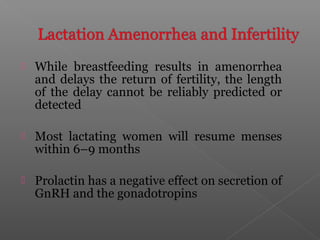
 While breastfeeding results in amenorrhea
and delays the return of fertility, the length
of the delay cannot be reliably predicted or
detected
 Most lactating women will resume menses
within 6–9 months
 Prolactin has a negative effect on secretion of
GnRH and the gonadotropins
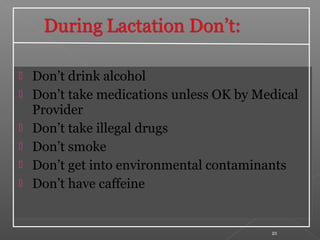
 Don’t drink alcohol
 Don’t take medications unless OK by Medical
Provider
 Don’t take illegal drugs
 Don’t smoke
 Don’t get into environmental contaminants
 Don’t have caffeine
21
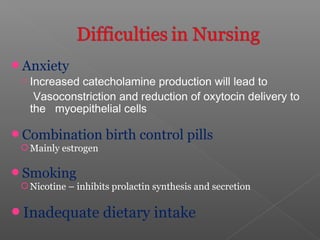
Anxiety
o Increased catecholamine production will lead to
Vasoconstriction and reduction of oxytocin delivery to
the myoepithelial cells
Combination birth control pills
Mainly estrogen
Smoking
Nicotine – inhibits prolactin synthesis and secretion
Inadequate dietary intake

Lactation

  • 2.
     Changes duringpregnancy  Increased breast tissue  Maturation of structure  Hormonal controls  Prolactin: stimulates milk production  Oxytocin: stimulates milk release  “let-down” reflex
  • 3.
     Suckling stimulatesnipple --->pituitary gland secretes oxytocin--->let down reflex results in milk ejecting cells contract forcing milk from milk cells into milk ducts.  Milk pools in lactiferous sinuses under the areola. Suckling stimulates milk to come from the nipple. Hypothalamus Prolactin Lacteal Uterus Oxytocin Myoepithelial Cell Pituitary Gland
  • 4.
  • 5.
    5 Anatomy of breastduring pregnancy
  • 7.
     Mammogenesis › Mammary(breast) growth occurs. The size and weight of the breast increases. › Preparation for milk production › Starts at puberty and continues until third trimester of pregnancy › Ductal proliferation –estrogen › Lobuloalveolar development - progesterone
  • 9.
    Stage 1 (latepregnancy): Alveolar cells are differentiated from secretory cells. Stage 2 (day 2 or 3 to day 8 after birth):  By day 4-5 days postpartum, estrogen and progesterone levels have dropped and thus;  Acinar cells develop into secretory cells  The tight junction in the alveolar cell closes.  Milk secretion begins.  Breasts are full and warm.  Endocrine control switches to autocrine (supply-demand) control
  • 10.
     Causes alveolarcells to initiate milk secretion  Stimulate glandular production of colostrum (which is initial milk produced characterized by a yellow color and thick texture)  Acts synergistically with cortisol to stimulate milk production  Prolactin “surges” occur within 15 minutes of nipple stimulation
  • 11.
    Ejection of Milk-(Oxytocin) Primary function is milk ejection  Contracts myoepithelial cells located around the alveolar cells and the glandular ducts.  Milk expelled from alveoli into ducts and subareolar sinuses that lead to the nipple pore.  Oxytocin is produced in response to suckling effect.
  • 12.
    Cont. Suckling infant stimulatestouch receptors densely located around the nipple and areola. Sensations create impulses that activate dorsal root ganglia via the intercostals nerves. Impulses ascend the spinal cord, creating an afferent neuronal pathway to both the paraventricular nuclei of the hypothalamus where oxytocin is synthesized and secreted by the pituitary gland. Stimulation of nuclei causes release of oxytocin down the pituitary stalk and into the posterior pituitary gland, where oxytocin is stored.
  • 14.
    Maintenance of Lactation ›later than day 9 after birth to beginning of involution › Established secretion is maintained › Autocrine system control continues › Stimulated by milk removal  Regular synthesis and release of prolactin and oxytocin  Stored milk causes increased intramammary pressure which limits nutrient and hormonal supply to the mammary gland
  • 15.
     Moves milkfrom lobules to sinuses, so baby can eat  Inhibited by stress, pain, anxiety  Triggered by sound, smell, sight of infant Let Down: Ejection, not suction, moves milk to the areola
  • 16.
     Infant grasps mostof the areola in his mouth  Tongue “milks” milk to the back of the mouth prior to swallowing. Latch: The baby’s tongue moves milk from areola to nipple.
  • 17.
     Milk inlobules contains whey protein called Feedback Inhibitor of Lactation (FIL)  If milk is not removed, and lumen is full, production will decrease  Goal: 10-12 feeds in 24 hours, until baby is done. Moving Milk: Demand drives supply. Negative feed back
  • 18.
  • 20.
     While breastfeedingresults in amenorrhea and delays the return of fertility, the length of the delay cannot be reliably predicted or detected  Most lactating women will resume menses within 6–9 months  Prolactin has a negative effect on secretion of GnRH and the gonadotropins
  • 21.
     Don’t drinkalcohol  Don’t take medications unless OK by Medical Provider  Don’t take illegal drugs  Don’t smoke  Don’t get into environmental contaminants  Don’t have caffeine 21
  • 22.
    Anxiety o Increased catecholamineproduction will lead to Vasoconstriction and reduction of oxytocin delivery to the myoepithelial cells Combination birth control pills Mainly estrogen Smoking Nicotine – inhibits prolactin synthesis and secretion Inadequate dietary intake

Editor's Notes

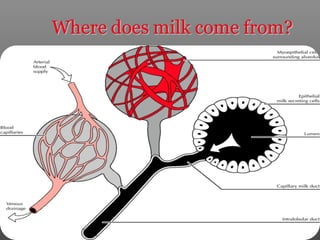
  • #5 Breast tissue differentiates during gestation At delivery, loss of placental hormones allows milk production to begin Infant suckling at the breast causes contraction of myoepithelial cells and release of milk
  • #7 Milk produced in mammary epithelium within lobules With nursing, oxytocin triggers contraction of myoepithelial cells and transfer to sinuses
  • #17 A shallow latch, or sucking on the nipple, stimulates let down but doesn’t empty the breast. It also leads to sore, cracked nipples, engorged breasts, and hungry, frustrated babies.
  • #19 Don’t distribute formula company materials in your office or hospital Ensure pediatric follow-up in the first 3-5 days Skin-to-skin at birth, nurse in the first hour Room in Feed on demand No pacifiers or formula, unless medically necessary