Introduction to Microbiology
Laboratory Equipment
What Is a Laboratory?
 A laboratory is a room or a place equipped for the performance of tests,
experimentation, investigative processes .
 Clinical laboratory
 It is a laboratory where tests are done on clinical specimens in order to get
information about the health of a patient as pertaining to the diagnosis,
treatment, and prevention of disease.
 Lab equipment
 Lab. equipment refers to the various tools used by scientists working in a
laboratory.
Microscope
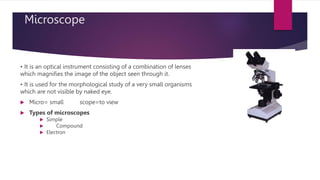
• It is an optical instrument consisting of a combination of lenses
which magnifies the image of the object seen through it.
• It is used for the morphological study of a very small organisms
which are not visible by naked eye.
 Micro= small scope=to view
 Types of microscopes
 Simple
 Compound
 Electron
Autoclave
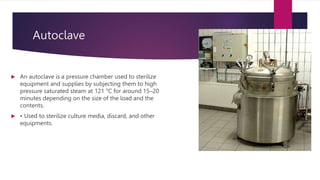
 An autoclave is a pressure chamber used to sterilize
equipment and supplies by subjecting them to high
pressure saturated steam at 121 °C for around 15–20
minutes depending on the size of the load and the
contents.
 • Used to sterilize culture media, discard, and other
equipments.
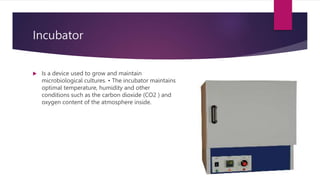
Incubator
 Is a device used to grow and maintain
microbiological cultures. • The incubator maintains
optimal temperature, humidity and other
conditions such as the carbon dioxide (CO2 ) and
oxygen content of the atmosphere inside.
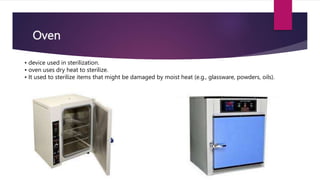
Oven
• device used in sterilization.
• oven uses dry heat to sterilize.
• It used to sterilize items that might be damaged by moist heat (e.g., glassware, powders, oils).
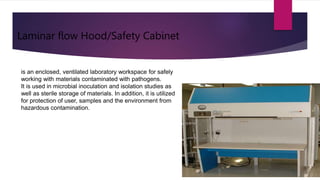
Laminar flow Hood/Safety Cabinet
is an enclosed, ventilated laboratory workspace for safely
working with materials contaminated with pathogens.
It is used in microbial inoculation and isolation studies as
well as sterile storage of materials. In addition, it is utilized
for protection of user, samples and the environment from
hazardous contamination.
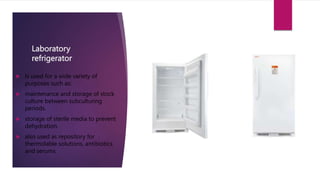
Laboratory
refrigerator
 Is used for a wide variety of
purposes such as:
 maintenance and storage of stock
culture between subculturing
periods.
 storage of sterile media to prevent
dehydration.
 also used as repository for
thermolable solutions, antibiotics
and serums.
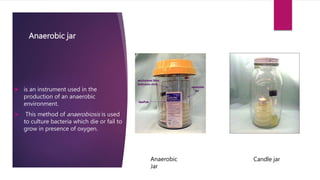
Anaerobic jar
 is an instrument used in the
production of an anaerobic
environment.
 This method of anaerobiosis is used
to culture bacteria which die or fail to
grow in presence of oxygen.
Anaerobic
Jar
Candle jar
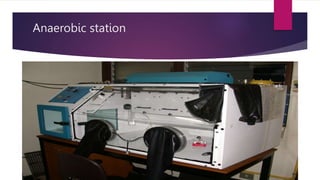
Anaerobic station
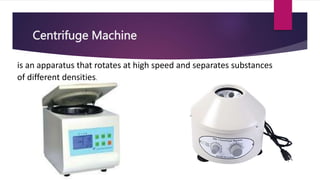
Centrifuge Machine
is an apparatus that rotates at high speed and separates substances
of different densities.
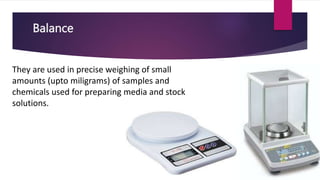
Balance
They are used in precise weighing of small
amounts (upto miligrams) of samples and
chemicals used for preparing media and stock
solutions.
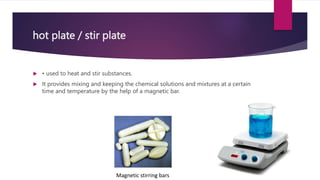
hot plate / stir plate
 • used to heat and stir substances.
 It provides mixing and keeping the chemical solutions and mixtures at a certain
time and temperature by the help of a magnetic bar.
Magnetic stirring bars
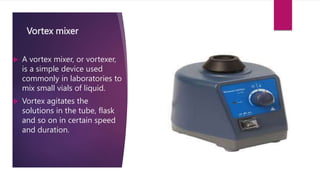
Vortex mixer
 A vortex mixer, or vortexer,
is a simple device used
commonly in laboratories to
mix small vials of liquid.
 Vortex agitates the
solutions in the tube, flask
and so on in certain speed
and duration.
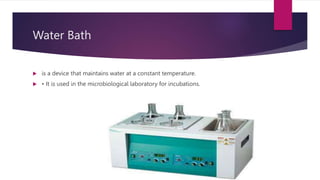
Water Bath
 is a device that maintains water at a constant temperature.
 • It is used in the microbiological laboratory for incubations.
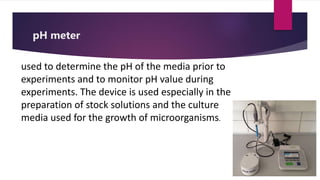
pH meter
used to determine the pH of the media prior to
experiments and to monitor pH value during
experiments. The device is used especially in the
preparation of stock solutions and the culture
media used for the growth of microorganisms.
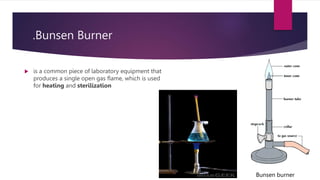
.Bunsen Burner
 is a common piece of laboratory equipment that
produces a single open gas flame, which is used
for heating and sterilization
Bunsen burner
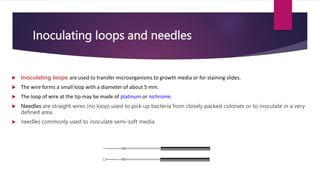
Inoculating loops and needles
 Inoculating loops are used to transfer microorganisms to growth media or for staining slides.
 The wire forms a small loop with a diameter of about 5 mm.
 The loop of wire at the tip may be made of platinum or nichrome.
 Needles are straight wires (no loop) used to pick up bacteria from closely packed colonies or to inoculate in a very
defined area.
 needles commonly used to inoculate semi-soft media.
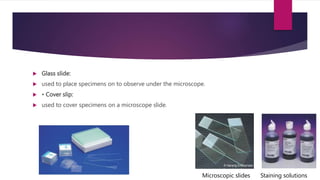
 Glass slide:
 used to place specimens on to observe under the microscope.
 • Cover slip:
 used to cover specimens on a microscope slide.
Microscopic slides Staining solutions
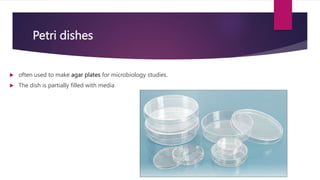
Petri dishes
 often used to make agar plates for microbiology studies.
 The dish is partially filled with media
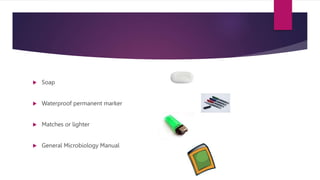
 Soap
 Waterproof permanent marker
 Matches or lighter
 General Microbiology Manual

Lab_Equipments (1).pptx

  • 1.
  • 2.
    What Is aLaboratory?  A laboratory is a room or a place equipped for the performance of tests, experimentation, investigative processes .  Clinical laboratory  It is a laboratory where tests are done on clinical specimens in order to get information about the health of a patient as pertaining to the diagnosis, treatment, and prevention of disease.  Lab equipment  Lab. equipment refers to the various tools used by scientists working in a laboratory.
  • 3.
    Microscope • It isan optical instrument consisting of a combination of lenses which magnifies the image of the object seen through it. • It is used for the morphological study of a very small organisms which are not visible by naked eye.  Micro= small scope=to view  Types of microscopes  Simple  Compound  Electron
  • 4.
    Autoclave  An autoclaveis a pressure chamber used to sterilize equipment and supplies by subjecting them to high pressure saturated steam at 121 °C for around 15–20 minutes depending on the size of the load and the contents.  • Used to sterilize culture media, discard, and other equipments.
  • 5.
    Incubator  Is adevice used to grow and maintain microbiological cultures. • The incubator maintains optimal temperature, humidity and other conditions such as the carbon dioxide (CO2 ) and oxygen content of the atmosphere inside.
  • 6.
    Oven • device usedin sterilization. • oven uses dry heat to sterilize. • It used to sterilize items that might be damaged by moist heat (e.g., glassware, powders, oils).
  • 7.
    Laminar flow Hood/SafetyCabinet is an enclosed, ventilated laboratory workspace for safely working with materials contaminated with pathogens. It is used in microbial inoculation and isolation studies as well as sterile storage of materials. In addition, it is utilized for protection of user, samples and the environment from hazardous contamination.
  • 8.
    Laboratory refrigerator  Is usedfor a wide variety of purposes such as:  maintenance and storage of stock culture between subculturing periods.  storage of sterile media to prevent dehydration.  also used as repository for thermolable solutions, antibiotics and serums.
  • 9.
    Anaerobic jar  isan instrument used in the production of an anaerobic environment.  This method of anaerobiosis is used to culture bacteria which die or fail to grow in presence of oxygen. Anaerobic Jar Candle jar
  • 10.
  • 11.
    Centrifuge Machine is anapparatus that rotates at high speed and separates substances of different densities.
  • 12.
    Balance They are usedin precise weighing of small amounts (upto miligrams) of samples and chemicals used for preparing media and stock solutions.
  • 13.
    hot plate /stir plate  • used to heat and stir substances.  It provides mixing and keeping the chemical solutions and mixtures at a certain time and temperature by the help of a magnetic bar. Magnetic stirring bars
  • 14.
    Vortex mixer  Avortex mixer, or vortexer, is a simple device used commonly in laboratories to mix small vials of liquid.  Vortex agitates the solutions in the tube, flask and so on in certain speed and duration.
  • 15.
    Water Bath  isa device that maintains water at a constant temperature.  • It is used in the microbiological laboratory for incubations.
  • 16.
    pH meter used todetermine the pH of the media prior to experiments and to monitor pH value during experiments. The device is used especially in the preparation of stock solutions and the culture media used for the growth of microorganisms.
  • 18.
    .Bunsen Burner  isa common piece of laboratory equipment that produces a single open gas flame, which is used for heating and sterilization Bunsen burner
  • 19.
    Inoculating loops andneedles  Inoculating loops are used to transfer microorganisms to growth media or for staining slides.  The wire forms a small loop with a diameter of about 5 mm.  The loop of wire at the tip may be made of platinum or nichrome.  Needles are straight wires (no loop) used to pick up bacteria from closely packed colonies or to inoculate in a very defined area.  needles commonly used to inoculate semi-soft media.
  • 20.
     Glass slide: used to place specimens on to observe under the microscope.  • Cover slip:  used to cover specimens on a microscope slide. Microscopic slides Staining solutions
  • 21.
    Petri dishes  oftenused to make agar plates for microbiology studies.  The dish is partially filled with media
  • 22.
     Soap  Waterproofpermanent marker  Matches or lighter  General Microbiology Manual