COMMUNICABLE
DISEASES
INTRODUCTION
Communicable Disease is one that can transmitted
from one person to another and is caused by an infectious
agent that is transmitted from a source or reservoir to a
susceptible host. Communicable disease is one in which
the causative organism or pathogen is carried from one
person to another either directly or indirectly.
Communicable diseases are also called as
Infectious Disease.
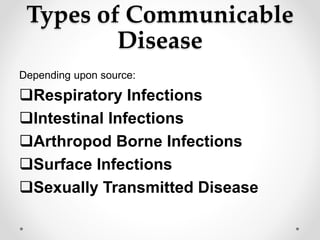
Types of Communicable
Disease
Depending upon source:
Respiratory Infections
Intestinal Infections
Arthropod Borne Infections
Surface Infections
Sexually Transmitted Disease
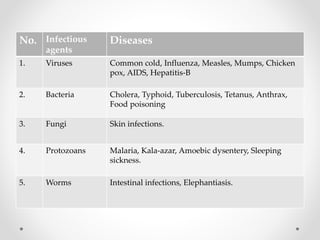
No. Infectious
agents
Diseases
1. Viruses Common cold, Influenza, Measles, Mumps, Chicken
pox, AIDS, Hepatitis-B
2. Bacteria Cholera, Typhoid, Tuberculosis, Tetanus, Anthrax,
Food poisoning
3. Fungi Skin infections.
4. Protozoans Malaria, Kala-azar, Amoebic dysentery, Sleeping
sickness.
5. Worms Intestinal infections, Elephantiasis.
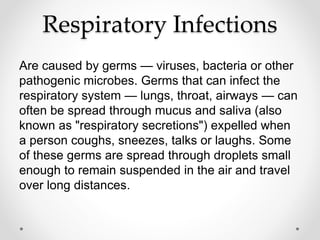
Respiratory Infections
Are caused by germs — viruses, bacteria or other
pathogenic microbes. Germs that can infect the
respiratory system — lungs, throat, airways — can
often be spread through mucus and saliva (also
known as "respiratory secretions") expelled when
a person coughs, sneezes, talks or laughs. Some
of these germs are spread through droplets small
enough to remain suspended in the air and travel
over long distances.
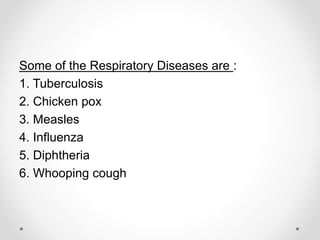
Some of the Respiratory Diseases are :
1. Tuberculosis
2. Chicken pox
3. Measles
4. Influenza
5. Diphtheria
6. Whooping cough
Tuberculosis
• Specific infectious disease primarily affecting the
lungs(Pulmonary tuberculosis-most common).
• It also affect all other vital organs like intestine,
brain, bones, joints, lymph glands, skin etc.
• Incubation period:
– From weeks, months to years depending upon dose
of infection & immunity of patient.
Mode of Transmission
Tuberculosis is mainly spread by,
1. Droplet infection (Produced by sputum
of positive patient)
2. Coughing
Sign & Symptoms
1. Tiredness
2. Loss of appetite
3. Loss of weight
4. Anemia
5. Evening rise in temperature
6. Cough for long time
PREVENTION
1.Raising the resistance of the population to the
disease by:
i. Good social conditions:
- Satisfactory housing & adequate diet.
ii. BCG (Bacille Calmette Guerin) Vaccination:
- After birth
2. Elimination of tuberculosis infection in milk:
By pasteurization of milk.
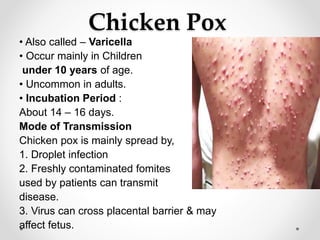
Chicken Pox
• Also called – Varicella
• Occur mainly in Children
under 10 years of age.
• Uncommon in adults.
• Incubation Period :
About 14 – 16 days.
Mode of Transmission
Chicken pox is mainly spread by,
1. Droplet infection
2. Freshly contaminated fomites
used by patients can transmit
disease.
3. Virus can cross placental barrier & may
affect fetus.
Sign & Symptoms
1. Fever
2. Appearance of rash in the form of crop on
trunk, face and limbs.
3. Macules (small flat colored spot on skin)
appear first and with in 24 hrs. lesions are
appear.
4. them lesions becomes dry to form scabs.
PREVENTION
1.Use of local antiseptics like chlorhexidine.
2. If bacterial infection progress give antibiotics.
3. Transmission prevented by isolation of
patient for 5-7 days.
4. Sterilization of all articles used by patient
after cure .
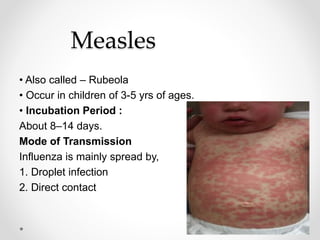
Measles
• Also called – Rubeola
• Occur in children of 3-5 yrs of ages.
• Incubation Period :
About 8–14 days.
Mode of Transmission
Influenza is mainly spread by,
1. Droplet infection
2. Direct contact
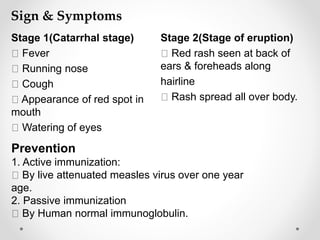
Stage 2(Stage of eruption)
Red rash seen at back of
ears & foreheads along
hairline
Rash spread all over body.
Stage 1(Catarrhal stage)
Fever
Running nose
Cough
Appearance of red spot in
mouth
Watering of eyes
Sign & Symptoms
Prevention
1. Active immunization:
By live attenuated measles virus over one year
age.
2. Passive immunization
By Human normal immunoglobulin.
Arthropod Borne
Infections
Arthropod Borne Infectious diseases are human
illnesses caused by parasites, viruses and bacteria that are
transmitted by mosquitoes, sandflies,bugs, blackflies,
snails and lice. Every year there are more than 700 000
deaths from diseases such as malaria, Plague etc..
Some of the Arthropod Borne Infectious diseases are :
1.Malaria
2.Plague
3.Filariasis
Malaria
• Occur in most topical regions.
• Protozoa disease (Protozoan infections are
parasitic diseases caused by organisms).
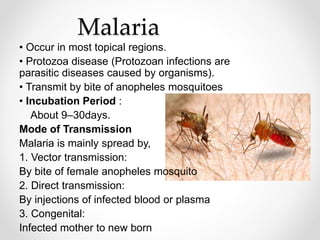
• Transmit by bite of anopheles mosquitoes
• Incubation Period :
About 9–30days.
Mode of Transmission
Malaria is mainly spread by,
1. Vector transmission:
By bite of female anopheles mosquito
2. Direct transmission:
By injections of infected blood or plasma
3. Congenital:
Infected mother to new born
Sign & Symptoms
1. Cold Stage
Onset of Fever with chills and sensation of extreme
cold.
2. Hot Stage
Temperature rise up to 106
Intense headache.
3.Sweating stage:
Fever decreases with sweating.
Prevention
1. Prevention against mosquito bite
2. Anti larval measures
3. Anti adult mosquito measures
4. Control of human reservoir
Plague
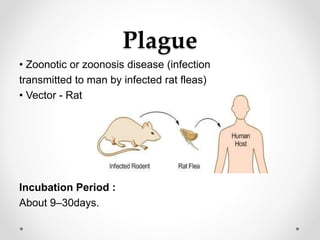
• Zoonotic or zoonosis disease (infection
transmitted to man by infected rat fleas)
• Vector - Rat
Incubation Period :
About 9–30days.
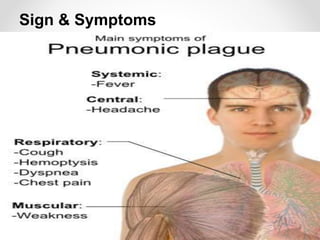
Sign & Symptoms
Prevention
1. General measures
Prophylaxis for prevention bites of fleas – by controlling
rats.
Early diagnosis, notification, isolation & disinfection of
excretions like sputum.
Attendant must wear protective measures like gloves etc.
2. Chemoprophylaxis
Protect by using suitable drugs.
3. Vaccination
Two vaccines used
a. Killed vaccine
b. Attenuated vaccine
Surface Infections
An infection of the skin that can be caused by bacteria,
fungus, viruses or parasites.
Some of Surface Infectious diseases are :
1. Rabies
2. Trachoma
3. Tetanus
4. Leprosy
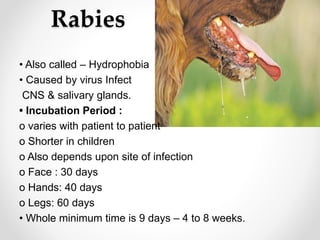
Rabies
• Also called – Hydrophobia
• Caused by virus Infect
CNS & salivary glands.
• Incubation Period :
o varies with patient to patient
o Shorter in children
o Also depends upon site of infection
o Face : 30 days
o Hands: 40 days
o Legs: 60 days
• Whole minimum time is 9 days – 4 to 8 weeks.
Mode of Transmission
Mainly spread by,
1. Zoonosis
2. Spreads by wide range of animals
3. Mostly by bites or lick on broken skin
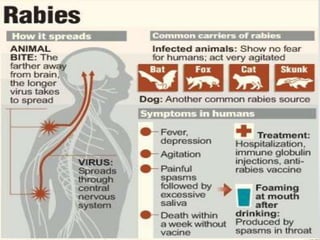
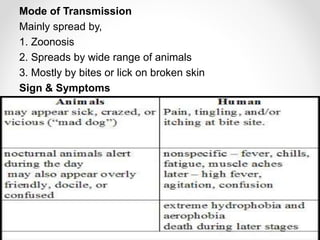
Sign & Symptoms
Prevention
1. Pre-exposure prophylaxis
Risky persons like zoo keepers should be immunized.
Compulsory vaccination of pets & stray dogs.
2. Post-exposure prophylaxis
Prompt & proper treatment
Also take following measures,
Wash area of bite using plenty of soap & water for
about 5 min.
Apply antiseptics like tincture of iodine
Vaccination: 1 ml vaccine at 0,3,7,14,30 & 90 days.
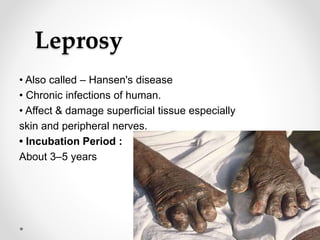
Leprosy
• Also called – Hansen's disease
• Chronic infections of human.
• Affect & damage superficial tissue especially
skin and peripheral nerves.
• Incubation Period :
About 3–5 years
Mode of Transmission
Mainly spread by,
1. Direct transmission
Prolonged close contact with an
infected person.
2. Through air borne droplets
Sign & Symptoms
1. Initially nerve damage causes numbness of
skin on face, hands & feet.
2. Affected skin may become thickened &
discolored.
3. Loss of sensation
4. Lack of sensation leads to injury or even loss
of fingers or toes.
Prevention
1. Isolation of patient
2. Early diagnosis & chemotherapy
3. Treated with some specific drugs such as
dapsone.
4. Create awareness about leprosy
Avoid over crowding
Bad personal hygiene
Avoid of sharing of cloths etc
5. For prophylactic purposes use BCG vaccine
Sexually Transmitted Diseases
(STD)
An infection transmitted through sexual contact, caused by
bacteria, viruses or parasites.
Some STD are :
1. AIDS
2. Syphilis
3. Gonorrhea
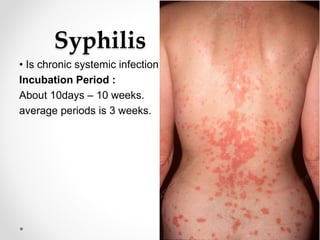
Syphilis
• Is chronic systemic infection
Incubation Period :
About 10days – 10 weeks.
average periods is 3 weeks.
Mode of Transmission
Mainly spread by,
1. By sexual contact with infected partner
2. Less common
Through blood transmission
Mother to child etc.
Prevention
1. Use of contraceptive device
2. Avoid unsafe sexual contact.
3. Create awareness about STD’s.
Acquired Immuno Deficiency
Syndrome (AIDS)
• Chronic infection with HIV
• Reduce immunity to other infections.
• Incubation Period :
For Adult’s: 8 –10 years
For Children's below 5 years: within 2 years
Mode of Transmission
Sexual contact with infected person
Through infected blood products
or blood transfusion
By sharing contaminated needles or syringes
Infected mother to fetus
Also through body fluids like semen.
Also through unsterilized piercing, blades.
Sign & Symptoms
1. Ist symptoms appear within 6 weeks of
infection
• Swollen lymph nodes
• Fever
• Fatigue
• Rash
• Sore throat etc.
2. Other symptoms are
• Fever persisting for more than one month
• Unexpected weight loss
• Diarrhea
• Tuberculosis
Prevention
1. Create awareness about HIV in children
2. Use protective measures like condoms.
3. Screening of all blood products and tissue for
transplant
4. Use sterilization method for instruments used for piercing
of nose & ear lobes.
5. Use of disposable single used needle & syringes
6. Use proper protection by health care workers
like hand gloves while handling infected patients.
Intestinal Infections
Intestinal infections are viral, bacterial or parasitic infections
that cause gastroenteritis, an inflammation of the
gastrointestinal tract involving both the stomach and the
small intestine.
Some of Intestinal diseases are :
1. Poliomyelitis
2. Cholera
3. Typhoid fever
4. Hepatitis
5. Food poisoning
6. Hook worm infection
Cholera
• Severe acute GIT infection
• Incubation Period :
Few hours – 5 days.
Mode of Transmission
1. Through food & water (contaminated
by flies, insects & improper storage)
2. Rarely with contaminated hands of
persons who handle excreta, vomitus of
patients etc.)
Sign & Symptoms
1. Severe watery diarrhea,
2. Occasional vomiting.
3. Weakness.
4. Dehydration.
5. Sub normal temp.
6. Electrolyte imbalance.
Prevention
1. Strict personal hygiene.
2. Using boiling drinking water.
3. Early detection of cases.
4. Proper and immediate treatment.
5. Disinfection of infective discharges & clothing must
be done
6. Sanitation should be maintained.
7. For prevention use vaccine.
8. Treatment is done by,
a. By giving ORS,
b. Antibiotics.
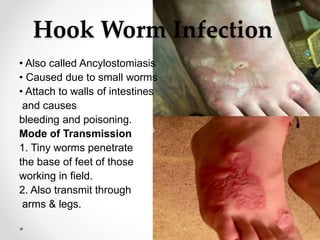
Hook Worm Infection
• Also called Ancylostomiasis
• Caused due to small worms
• Attach to walls of intestines
and causes
bleeding and poisoning.
Mode of Transmission
1. Tiny worms penetrate
the base of feet of those
working in field.
2. Also transmit through
arms & legs.
Sign & Symptoms
1. Patient appear pale and weak
2. Suffer from ringing of ears dizziness, headache etc.
3. In severe case heart is enlarged
4. Nausea & vomiting are frequent.
Prevention
1. By using or providing sewage system
2. Sanitary latrines provide to avoid
open air defecation.
3. Human waste & excreta should not
be used in fields
4. Shoes should be worn by all workers.

communiccccccccccccccccablediseases.pptx

  • 1.
  • 2.
    INTRODUCTION Communicable Disease isone that can transmitted from one person to another and is caused by an infectious agent that is transmitted from a source or reservoir to a susceptible host. Communicable disease is one in which the causative organism or pathogen is carried from one person to another either directly or indirectly. Communicable diseases are also called as Infectious Disease.
  • 5.
    Types of Communicable Disease Dependingupon source: Respiratory Infections Intestinal Infections Arthropod Borne Infections Surface Infections Sexually Transmitted Disease
  • 6.
    No. Infectious agents Diseases 1. VirusesCommon cold, Influenza, Measles, Mumps, Chicken pox, AIDS, Hepatitis-B 2. Bacteria Cholera, Typhoid, Tuberculosis, Tetanus, Anthrax, Food poisoning 3. Fungi Skin infections. 4. Protozoans Malaria, Kala-azar, Amoebic dysentery, Sleeping sickness. 5. Worms Intestinal infections, Elephantiasis.
  • 7.
    Respiratory Infections Are causedby germs — viruses, bacteria or other pathogenic microbes. Germs that can infect the respiratory system — lungs, throat, airways — can often be spread through mucus and saliva (also known as "respiratory secretions") expelled when a person coughs, sneezes, talks or laughs. Some of these germs are spread through droplets small enough to remain suspended in the air and travel over long distances.
  • 8.
    Some of theRespiratory Diseases are : 1. Tuberculosis 2. Chicken pox 3. Measles 4. Influenza 5. Diphtheria 6. Whooping cough
  • 9.
    Tuberculosis • Specific infectiousdisease primarily affecting the lungs(Pulmonary tuberculosis-most common). • It also affect all other vital organs like intestine, brain, bones, joints, lymph glands, skin etc. • Incubation period: – From weeks, months to years depending upon dose of infection & immunity of patient. Mode of Transmission Tuberculosis is mainly spread by, 1. Droplet infection (Produced by sputum of positive patient) 2. Coughing
  • 10.
    Sign & Symptoms 1.Tiredness 2. Loss of appetite 3. Loss of weight 4. Anemia 5. Evening rise in temperature 6. Cough for long time PREVENTION 1.Raising the resistance of the population to the disease by: i. Good social conditions: - Satisfactory housing & adequate diet. ii. BCG (Bacille Calmette Guerin) Vaccination: - After birth 2. Elimination of tuberculosis infection in milk: By pasteurization of milk.
  • 11.
    Chicken Pox • Alsocalled – Varicella • Occur mainly in Children under 10 years of age. • Uncommon in adults. • Incubation Period : About 14 – 16 days. Mode of Transmission Chicken pox is mainly spread by, 1. Droplet infection 2. Freshly contaminated fomites used by patients can transmit disease. 3. Virus can cross placental barrier & may affect fetus.
  • 12.
    Sign & Symptoms 1.Fever 2. Appearance of rash in the form of crop on trunk, face and limbs. 3. Macules (small flat colored spot on skin) appear first and with in 24 hrs. lesions are appear. 4. them lesions becomes dry to form scabs. PREVENTION 1.Use of local antiseptics like chlorhexidine. 2. If bacterial infection progress give antibiotics. 3. Transmission prevented by isolation of patient for 5-7 days. 4. Sterilization of all articles used by patient after cure .
  • 13.
    Measles • Also called– Rubeola • Occur in children of 3-5 yrs of ages. • Incubation Period : About 8–14 days. Mode of Transmission Influenza is mainly spread by, 1. Droplet infection 2. Direct contact
  • 14.
    Stage 2(Stage oferuption) Red rash seen at back of ears & foreheads along hairline Rash spread all over body. Stage 1(Catarrhal stage) Fever Running nose Cough Appearance of red spot in mouth Watering of eyes Sign & Symptoms Prevention 1. Active immunization: By live attenuated measles virus over one year age. 2. Passive immunization By Human normal immunoglobulin.
  • 15.
    Arthropod Borne Infections Arthropod BorneInfectious diseases are human illnesses caused by parasites, viruses and bacteria that are transmitted by mosquitoes, sandflies,bugs, blackflies, snails and lice. Every year there are more than 700 000 deaths from diseases such as malaria, Plague etc.. Some of the Arthropod Borne Infectious diseases are : 1.Malaria 2.Plague 3.Filariasis
  • 16.
    Malaria • Occur inmost topical regions. • Protozoa disease (Protozoan infections are parasitic diseases caused by organisms). • Transmit by bite of anopheles mosquitoes • Incubation Period : About 9–30days. Mode of Transmission Malaria is mainly spread by, 1. Vector transmission: By bite of female anopheles mosquito 2. Direct transmission: By injections of infected blood or plasma 3. Congenital: Infected mother to new born
  • 17.
    Sign & Symptoms 1.Cold Stage Onset of Fever with chills and sensation of extreme cold. 2. Hot Stage Temperature rise up to 106 Intense headache. 3.Sweating stage: Fever decreases with sweating. Prevention 1. Prevention against mosquito bite 2. Anti larval measures 3. Anti adult mosquito measures 4. Control of human reservoir
  • 18.
    Plague • Zoonotic orzoonosis disease (infection transmitted to man by infected rat fleas) • Vector - Rat Incubation Period : About 9–30days.
  • 19.
  • 20.
    Prevention 1. General measures Prophylaxisfor prevention bites of fleas – by controlling rats. Early diagnosis, notification, isolation & disinfection of excretions like sputum. Attendant must wear protective measures like gloves etc. 2. Chemoprophylaxis Protect by using suitable drugs. 3. Vaccination Two vaccines used a. Killed vaccine b. Attenuated vaccine
  • 21.
    Surface Infections An infectionof the skin that can be caused by bacteria, fungus, viruses or parasites. Some of Surface Infectious diseases are : 1. Rabies 2. Trachoma 3. Tetanus 4. Leprosy
  • 22.
    Rabies • Also called– Hydrophobia • Caused by virus Infect CNS & salivary glands. • Incubation Period : o varies with patient to patient o Shorter in children o Also depends upon site of infection o Face : 30 days o Hands: 40 days o Legs: 60 days • Whole minimum time is 9 days – 4 to 8 weeks.
  • 24.
    Mode of Transmission Mainlyspread by, 1. Zoonosis 2. Spreads by wide range of animals 3. Mostly by bites or lick on broken skin Sign & Symptoms
  • 25.
    Prevention 1. Pre-exposure prophylaxis Riskypersons like zoo keepers should be immunized. Compulsory vaccination of pets & stray dogs. 2. Post-exposure prophylaxis Prompt & proper treatment Also take following measures, Wash area of bite using plenty of soap & water for about 5 min. Apply antiseptics like tincture of iodine Vaccination: 1 ml vaccine at 0,3,7,14,30 & 90 days.
  • 26.
    Leprosy • Also called– Hansen's disease • Chronic infections of human. • Affect & damage superficial tissue especially skin and peripheral nerves. • Incubation Period : About 3–5 years
  • 27.
    Mode of Transmission Mainlyspread by, 1. Direct transmission Prolonged close contact with an infected person. 2. Through air borne droplets Sign & Symptoms 1. Initially nerve damage causes numbness of skin on face, hands & feet. 2. Affected skin may become thickened & discolored. 3. Loss of sensation 4. Lack of sensation leads to injury or even loss of fingers or toes.
  • 28.
    Prevention 1. Isolation ofpatient 2. Early diagnosis & chemotherapy 3. Treated with some specific drugs such as dapsone. 4. Create awareness about leprosy Avoid over crowding Bad personal hygiene Avoid of sharing of cloths etc 5. For prophylactic purposes use BCG vaccine
  • 29.
    Sexually Transmitted Diseases (STD) Aninfection transmitted through sexual contact, caused by bacteria, viruses or parasites. Some STD are : 1. AIDS 2. Syphilis 3. Gonorrhea
  • 30.
    Syphilis • Is chronicsystemic infection Incubation Period : About 10days – 10 weeks. average periods is 3 weeks.
  • 31.
    Mode of Transmission Mainlyspread by, 1. By sexual contact with infected partner 2. Less common Through blood transmission Mother to child etc. Prevention 1. Use of contraceptive device 2. Avoid unsafe sexual contact. 3. Create awareness about STD’s.
  • 32.
    Acquired Immuno Deficiency Syndrome(AIDS) • Chronic infection with HIV • Reduce immunity to other infections. • Incubation Period : For Adult’s: 8 –10 years For Children's below 5 years: within 2 years
  • 33.
    Mode of Transmission Sexualcontact with infected person Through infected blood products or blood transfusion By sharing contaminated needles or syringes Infected mother to fetus Also through body fluids like semen. Also through unsterilized piercing, blades.
  • 34.
    Sign & Symptoms 1.Ist symptoms appear within 6 weeks of infection • Swollen lymph nodes • Fever • Fatigue • Rash • Sore throat etc. 2. Other symptoms are • Fever persisting for more than one month • Unexpected weight loss • Diarrhea • Tuberculosis
  • 35.
    Prevention 1. Create awarenessabout HIV in children 2. Use protective measures like condoms. 3. Screening of all blood products and tissue for transplant 4. Use sterilization method for instruments used for piercing of nose & ear lobes. 5. Use of disposable single used needle & syringes 6. Use proper protection by health care workers like hand gloves while handling infected patients.
  • 36.
    Intestinal Infections Intestinal infectionsare viral, bacterial or parasitic infections that cause gastroenteritis, an inflammation of the gastrointestinal tract involving both the stomach and the small intestine. Some of Intestinal diseases are : 1. Poliomyelitis 2. Cholera 3. Typhoid fever 4. Hepatitis 5. Food poisoning 6. Hook worm infection
  • 37.
    Cholera • Severe acuteGIT infection • Incubation Period : Few hours – 5 days.
  • 38.
    Mode of Transmission 1.Through food & water (contaminated by flies, insects & improper storage) 2. Rarely with contaminated hands of persons who handle excreta, vomitus of patients etc.) Sign & Symptoms 1. Severe watery diarrhea, 2. Occasional vomiting. 3. Weakness. 4. Dehydration. 5. Sub normal temp. 6. Electrolyte imbalance.
  • 39.
    Prevention 1. Strict personalhygiene. 2. Using boiling drinking water. 3. Early detection of cases. 4. Proper and immediate treatment. 5. Disinfection of infective discharges & clothing must be done 6. Sanitation should be maintained. 7. For prevention use vaccine. 8. Treatment is done by, a. By giving ORS, b. Antibiotics.
  • 40.
    Hook Worm Infection •Also called Ancylostomiasis • Caused due to small worms • Attach to walls of intestines and causes bleeding and poisoning. Mode of Transmission 1. Tiny worms penetrate the base of feet of those working in field. 2. Also transmit through arms & legs.
  • 41.
    Sign & Symptoms 1.Patient appear pale and weak 2. Suffer from ringing of ears dizziness, headache etc. 3. In severe case heart is enlarged 4. Nausea & vomiting are frequent. Prevention 1. By using or providing sewage system 2. Sanitary latrines provide to avoid open air defecation. 3. Human waste & excreta should not be used in fields 4. Shoes should be worn by all workers.