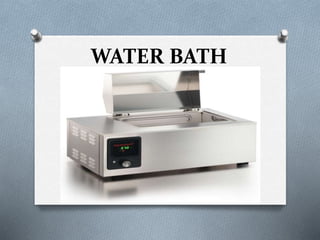
WATER BATH
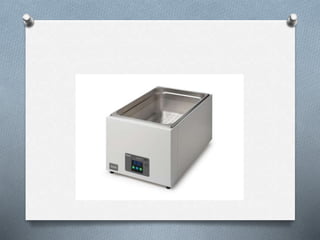
O A water bath is a device that maintains
water at a constant temperature.
O It allows the heating of small amounts of
fluids over a period of time without
changing the concentration of constituents
by evaporation.
O It is also used when several tubes are to
be handled while maintaining the
temperature of the contents,e.g., in
coagulation tests.
O Water bath is an instrument used for
maintaining a uniform temperature
throughout the fluid contained in a glass
container by keeping it in pre–heated
water.
O It also prevents excessive evaporation of
the fluid being heated.
Components
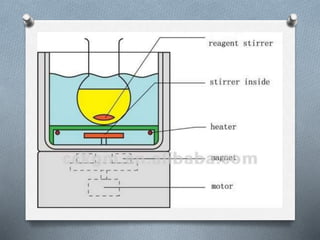
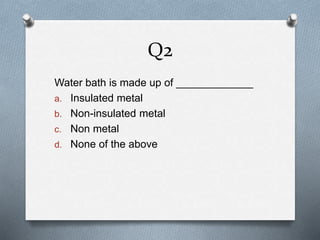
O It is made up of insulated metal, usually
stainless steel or of heat resistant glass
with or without an insulated lid.
O An electric element to heat the water
contained in the trough.
O A propeller or stirrer to circulate the water
in the trough in order to maintain a
uniform temperature throughout the
trough.
O A thermometer to check the temperature.
This may be in-built or placed separately
in the trough.
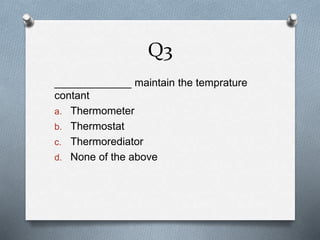
O A thermostat to maintain the temperature
at a constant level.
Water Bath Controls:
Temperature Control:
O All water baths have a control to set
temperature. This control can be digital or
a dial. Often there is an indicator light
associated with this control. When the
light is on the water bath is heating. When
the water bath reaches the set
temperature, it will cycle on and off to
maintain constant temperature.
Safety control
O Most water baths have a second control called
the safety. This control is set at the maximum
temperature the water bath should attain.
O It is usually set just above the temperature
control. Often an indicator light is associated with
the safety control.
O If the water bath reaches the temperature that the
safety control is set at, the light will go on. It will
be impossible for the water bath to heat higher
than the safety setting even when the
temperature setting is higher.
O Shaking Control:
Shaking water baths have additional
controls for shaking. The shaking
mechanism can be turned on or off. The
speed of shaking can also be set.
Operating procedure
O Fill it with clean (preferably distilled) water
to a desired level and then switch it on.
O Set the thermostat to desired temperature
and allow the water to warm to that
temperature.
O Check the temperature from the
thermometer.
Precautions and
maintenance
O Clean from inside and change the water
daily.
O This will prevent encrustation of stirrer,
heat probe and thermostat with salts
contained in raw water.
O It will also prevent the growth of fungi and
algae.
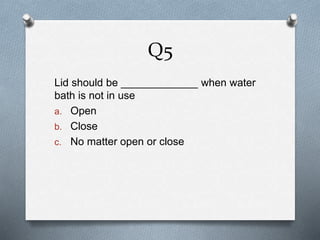
O Keep the lid closed when not in use to
prevent evaporation of water.
O Periodically check and counter-check the
water temperature with internal as well as
with an external thermometer.
O The thermometer should be placed in
such a way that it is away from the
heating element and the walls.
Specifications of a water bath for district
laboratories
O Unstirred with hydraulic thermostat or
electronic temperature control.
O Operating over a temperature range from
ambient to 60 °C or above.
O Having a 4 litre capacity.
O Fitted with a thermometer.
O Supplied with a lid.
Uses
O It provide Indirect heat.
O Used for warming blood bag blood.
O Used for incubation of test such as PT,
APTT and Coombs test.
Q1
O A water bath is a device that maintains
__________ at a constant temperature.
a. Water
b. Air
c. Solids
d. All of the above
Q2
Water bath is made up of _____________
a. Insulated metal
b. Non-insulated metal
c. Non metal
d. None of the above
Q3
_____________ maintain the temprature
contant
a. Thermometer
b. Thermostat
c. Thermorediator
d. None of the above
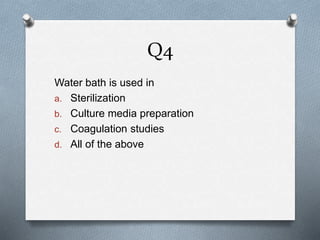
Q4
Water bath is used in
a. Sterilization
b. Culture media preparation
c. Coagulation studies
d. All of the above
Q5
Lid should be _____________ when water
bath is not in use
a. Open
b. Close
c. No matter open or close
What principle is use in water bath, explain
its procedure?

water bath instrument

  • 1.
  • 2.
    O A waterbath is a device that maintains water at a constant temperature. O It allows the heating of small amounts of fluids over a period of time without changing the concentration of constituents by evaporation. O It is also used when several tubes are to be handled while maintaining the temperature of the contents,e.g., in coagulation tests.
  • 3.
    O Water bathis an instrument used for maintaining a uniform temperature throughout the fluid contained in a glass container by keeping it in pre–heated water. O It also prevents excessive evaporation of the fluid being heated.
  • 4.
    Components O It ismade up of insulated metal, usually stainless steel or of heat resistant glass with or without an insulated lid. O An electric element to heat the water contained in the trough. O A propeller or stirrer to circulate the water in the trough in order to maintain a uniform temperature throughout the trough.
  • 5.
    O A thermometerto check the temperature. This may be in-built or placed separately in the trough. O A thermostat to maintain the temperature at a constant level.
  • 6.
    Water Bath Controls: TemperatureControl: O All water baths have a control to set temperature. This control can be digital or a dial. Often there is an indicator light associated with this control. When the light is on the water bath is heating. When the water bath reaches the set temperature, it will cycle on and off to maintain constant temperature.
  • 7.
    Safety control O Mostwater baths have a second control called the safety. This control is set at the maximum temperature the water bath should attain. O It is usually set just above the temperature control. Often an indicator light is associated with the safety control. O If the water bath reaches the temperature that the safety control is set at, the light will go on. It will be impossible for the water bath to heat higher than the safety setting even when the temperature setting is higher.
  • 8.
    O Shaking Control: Shakingwater baths have additional controls for shaking. The shaking mechanism can be turned on or off. The speed of shaking can also be set.
  • 11.
    Operating procedure O Fillit with clean (preferably distilled) water to a desired level and then switch it on. O Set the thermostat to desired temperature and allow the water to warm to that temperature. O Check the temperature from the thermometer.
  • 12.
    Precautions and maintenance O Cleanfrom inside and change the water daily. O This will prevent encrustation of stirrer, heat probe and thermostat with salts contained in raw water. O It will also prevent the growth of fungi and algae.
  • 13.
    O Keep thelid closed when not in use to prevent evaporation of water. O Periodically check and counter-check the water temperature with internal as well as with an external thermometer. O The thermometer should be placed in such a way that it is away from the heating element and the walls.
  • 14.
    Specifications of awater bath for district laboratories O Unstirred with hydraulic thermostat or electronic temperature control. O Operating over a temperature range from ambient to 60 °C or above. O Having a 4 litre capacity. O Fitted with a thermometer. O Supplied with a lid.
  • 15.
    Uses O It provideIndirect heat. O Used for warming blood bag blood. O Used for incubation of test such as PT, APTT and Coombs test.
  • 16.
    Q1 O A waterbath is a device that maintains __________ at a constant temperature. a. Water b. Air c. Solids d. All of the above
  • 17.
    Q2 Water bath ismade up of _____________ a. Insulated metal b. Non-insulated metal c. Non metal d. None of the above
  • 18.
    Q3 _____________ maintain thetemprature contant a. Thermometer b. Thermostat c. Thermorediator d. None of the above
  • 19.
    Q4 Water bath isused in a. Sterilization b. Culture media preparation c. Coagulation studies d. All of the above
  • 20.
    Q5 Lid should be_____________ when water bath is not in use a. Open b. Close c. No matter open or close
  • 21.
    What principle isuse in water bath, explain its procedure?