MICROBIOLOGICA
L EQUIPMENT IN
THE LABORATORY
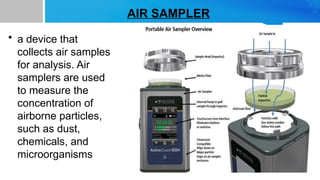
AIR SAMPLER
• a device that
collects air samples
for analysis. Air
samplers are used
to measure the
concentration of
airborne particles,
such as dust,
chemicals, and
microorganisms
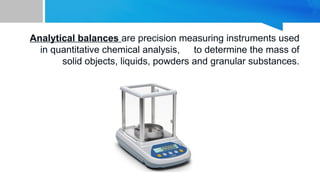
Analytical balances are precision measuring instruments used
in quantitative chemical analysis, to determine the mass of
solid objects, liquids, powders and granular substances.
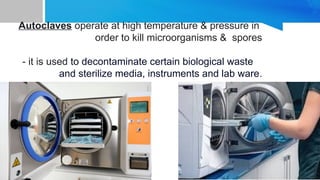
Autoclaves operate at high temperature & pressure in
order to kill microorganisms & spores
- it is used to decontaminate certain biological waste
and sterilize media, instruments and lab ware.
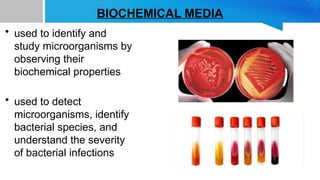
BIOCHEMICAL MEDIA
• used to identify and
study microorganisms by
observing their
biochemical properties
• used to detect
microorganisms, identify
bacterial species, and
understand the severity
of bacterial infections
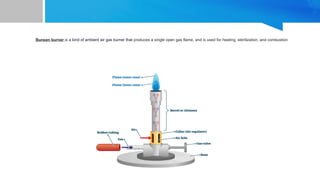
Bunsen burner is a kind of ambient air gas burner that produces a single open gas flame, and is used for heating, sterilization, and combustion
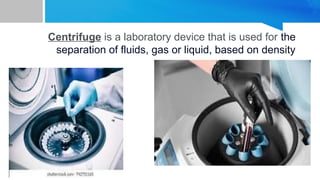
Centrifuge is a laboratory device that is used for the
separation of fluids, gas or liquid, based on density
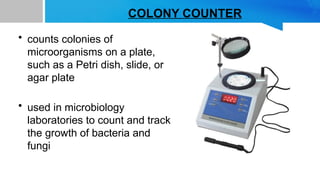
COLONY COUNTER
• counts colonies of
microorganisms on a plate,
such as a Petri dish, slide, or
agar plate
• used in microbiology
laboratories to count and track
the growth of bacteria and
fungi
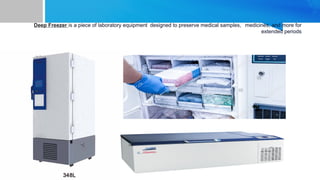
Deep Freezer is a piece of laboratory equipment designed to preserve medical samples, medicines, and more for
extended periods
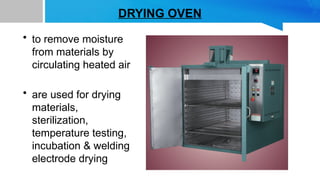
DRYING OVEN
• to remove moisture
from materials by
circulating heated air
• are used for drying
materials,
sterilization,
temperature testing,
incubation & welding
electrode drying
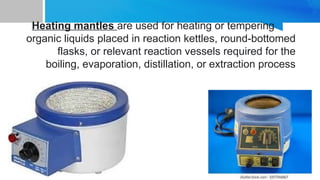
Heating mantles are used for heating or tempering
organic liquids placed in reaction kettles, round-bottomed
flasks, or relevant reaction vessels required for the
boiling, evaporation, distillation, or extraction process
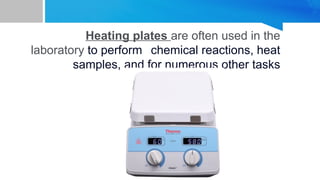
Heating plates are often used in the
laboratory to perform chemical reactions, heat
samples, and for numerous other tasks
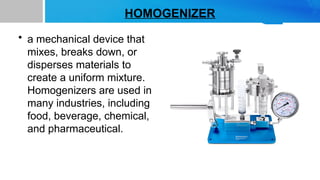
HOMOGENIZER
• a mechanical device that
mixes, breaks down, or
disperses materials to
create a uniform mixture.
Homogenizers are used in
many industries, including
food, beverage, chemical,
and pharmaceutical.
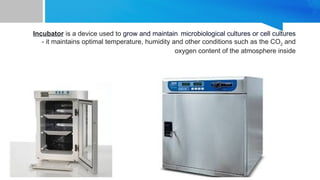
Incubator is a device used to grow and maintain microbiological cultures or cell cultures
- it maintains optimal temperature, humidity and other conditions such as the CO2 and
oxygen content of the atmosphere inside
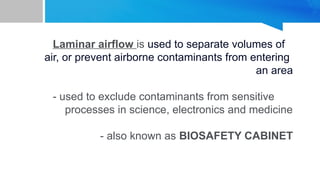
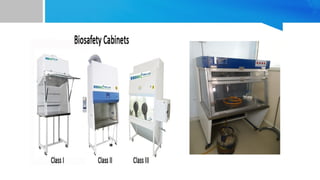
Laminar airflow is used to separate volumes of
air, or prevent airborne contaminants from entering
an area
- used to exclude contaminants from sensitive
processes in science, electronics and medicine
- also known as BIOSAFETY CABINET
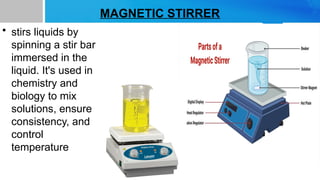
MAGNETIC STIRRER
• stirs liquids by
spinning a stir bar
immersed in the
liquid. It's used in
chemistry and
biology to mix
solutions, ensure
consistency, and
control
temperature
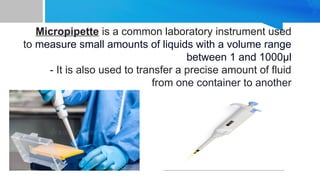
Micropipette is a common laboratory instrument used
to measure small amounts of liquids with a volume range
between 1 and 1000µl
- It is also used to transfer a precise amount of fluid
from one container to another
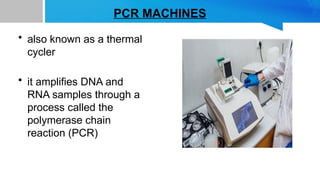
PCR MACHINES
• also known as a thermal
cycler
• it amplifies DNA and
RNA samples through a
process called the
polymerase chain
reaction (PCR)
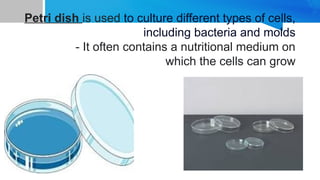
Petri dish is used to culture different types of cells,
including bacteria and molds
- It often contains a nutritional medium on
which the cells can grow
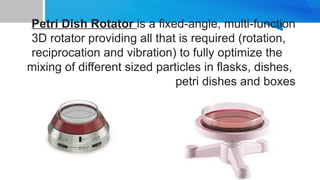
Petri Dish Rotator is a fixed-angle, multi-function
3D rotator providing all that is required (rotation,
reciprocation and vibration) to fully optimize the
mixing of different sized particles in flasks, dishes,
petri dishes and boxes
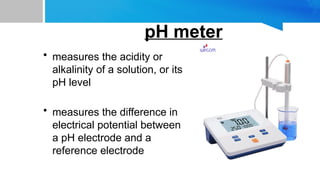
• measures the acidity or
alkalinity of a solution, or its
pH level
• measures the difference in
electrical potential between
a pH electrode and a
reference electrode
pH meter
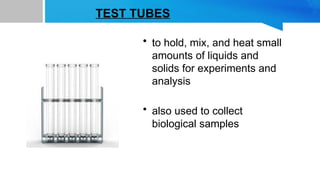
TEST TUBES
• to hold, mix, and heat small
amounts of liquids and
solids for experiments and
analysis
• also used to collect
biological samples
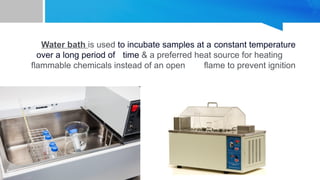
Water bath is used to incubate samples at a constant temperature
over a long period of time & a preferred heat source for heating
flammable chemicals instead of an open flame to prevent ignition
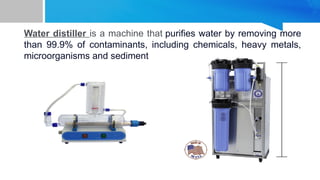
Water distiller is a machine that purifies water by removing more
than 99.9% of contaminants, including chemicals, heavy metals,
microorganisms and sediment
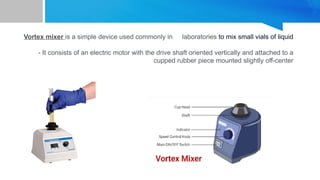
Vortex mixer is a simple device used commonly in laboratories to mix small vials of liquid
- It consists of an electric motor with the drive shaft oriented vertically and attached to a
cupped rubber piece mounted slightly off-center

2. microbiological laboratory equipments.pptx

  • 1.
  • 2.
    AIR SAMPLER • adevice that collects air samples for analysis. Air samplers are used to measure the concentration of airborne particles, such as dust, chemicals, and microorganisms
  • 3.
    Analytical balances areprecision measuring instruments used in quantitative chemical analysis, to determine the mass of solid objects, liquids, powders and granular substances.
  • 4.
    Autoclaves operate athigh temperature & pressure in order to kill microorganisms & spores - it is used to decontaminate certain biological waste and sterilize media, instruments and lab ware.
  • 5.
    BIOCHEMICAL MEDIA • usedto identify and study microorganisms by observing their biochemical properties • used to detect microorganisms, identify bacterial species, and understand the severity of bacterial infections
  • 6.
    Bunsen burner isa kind of ambient air gas burner that produces a single open gas flame, and is used for heating, sterilization, and combustion
  • 7.
    Centrifuge is alaboratory device that is used for the separation of fluids, gas or liquid, based on density
  • 8.
    COLONY COUNTER • countscolonies of microorganisms on a plate, such as a Petri dish, slide, or agar plate • used in microbiology laboratories to count and track the growth of bacteria and fungi
  • 9.
    Deep Freezer isa piece of laboratory equipment designed to preserve medical samples, medicines, and more for extended periods
  • 10.
    DRYING OVEN • toremove moisture from materials by circulating heated air • are used for drying materials, sterilization, temperature testing, incubation & welding electrode drying
  • 11.
    Heating mantles areused for heating or tempering organic liquids placed in reaction kettles, round-bottomed flasks, or relevant reaction vessels required for the boiling, evaporation, distillation, or extraction process
  • 12.
    Heating plates areoften used in the laboratory to perform chemical reactions, heat samples, and for numerous other tasks
  • 13.
    HOMOGENIZER • a mechanicaldevice that mixes, breaks down, or disperses materials to create a uniform mixture. Homogenizers are used in many industries, including food, beverage, chemical, and pharmaceutical.
  • 14.
    Incubator is adevice used to grow and maintain microbiological cultures or cell cultures - it maintains optimal temperature, humidity and other conditions such as the CO2 and oxygen content of the atmosphere inside
  • 15.
    Laminar airflow isused to separate volumes of air, or prevent airborne contaminants from entering an area - used to exclude contaminants from sensitive processes in science, electronics and medicine - also known as BIOSAFETY CABINET
  • 17.
    MAGNETIC STIRRER • stirsliquids by spinning a stir bar immersed in the liquid. It's used in chemistry and biology to mix solutions, ensure consistency, and control temperature
  • 18.
    Micropipette is acommon laboratory instrument used to measure small amounts of liquids with a volume range between 1 and 1000µl - It is also used to transfer a precise amount of fluid from one container to another
  • 19.
    PCR MACHINES • alsoknown as a thermal cycler • it amplifies DNA and RNA samples through a process called the polymerase chain reaction (PCR)
  • 20.
    Petri dish isused to culture different types of cells, including bacteria and molds - It often contains a nutritional medium on which the cells can grow
  • 21.
    Petri Dish Rotatoris a fixed-angle, multi-function 3D rotator providing all that is required (rotation, reciprocation and vibration) to fully optimize the mixing of different sized particles in flasks, dishes, petri dishes and boxes
  • 22.
    • measures theacidity or alkalinity of a solution, or its pH level • measures the difference in electrical potential between a pH electrode and a reference electrode pH meter
  • 23.
    TEST TUBES • tohold, mix, and heat small amounts of liquids and solids for experiments and analysis • also used to collect biological samples
  • 24.
    Water bath isused to incubate samples at a constant temperature over a long period of time & a preferred heat source for heating flammable chemicals instead of an open flame to prevent ignition
  • 25.
    Water distiller isa machine that purifies water by removing more than 99.9% of contaminants, including chemicals, heavy metals, microorganisms and sediment
  • 26.
    Vortex mixer isa simple device used commonly in laboratories to mix small vials of liquid - It consists of an electric motor with the drive shaft oriented vertically and attached to a cupped rubber piece mounted slightly off-center

Editor's Notes

  • #6 named after Robert Bunsen
  • #20 A petri dish is a flat, shallow dish made of glass or plastic with a suitable lid.
  • #25 While design may vary, a typical water distiller consists of a boiling chamber, a cooling system and a separate storage tank
  • #26 vortexer