


Sports-related injuries in
Paralympic sport
KRISTINA FAGHER, PT, MSC SPORTS MEDICINE,
PHD-STUDENT
Injury mechanism
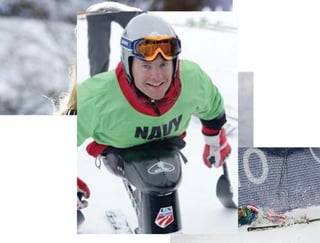
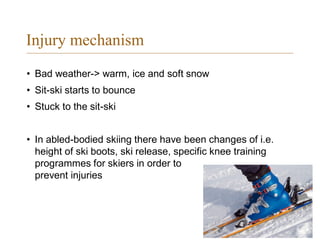
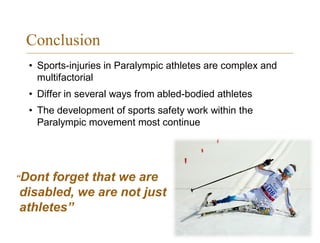
• Bad weather-> warm, ice and soft snow
• Sit-ski starts to bounce
• Stuck to the sit-ski
• In abled-bodied skiing there have been changes of i.e.
height of ski boots, ski release, specific knee training
programmes for skiers in order to
prevent injuries
Paralympic sport
• Increased interest in Paralympic sport the last decades
• “Paralympic athletes have become elite of their sport”
(Vanlandewijck. 2011)
• Several positive health benefits
BUT…..
• Participation in sports places the
athlete at a risk for injury, can
may have boring consequences
(Ljungqvist et al. 2009)
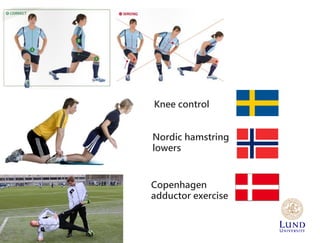
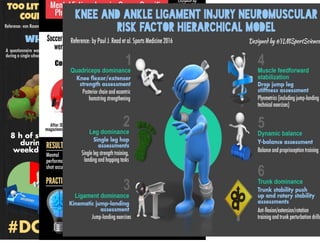
Nordic hamstring
lowers
Knee control
Copenhagen
adductor exercise
Parasport?
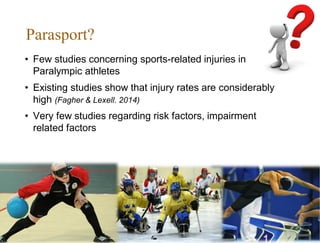
• Few studies concerning sports-related injuries in
Paralympic athletes
• Existing studies show that injury rates are considerably
high (Fagher & Lexell. 2014)
• Very few studies regarding risk factors, impairment
related factors
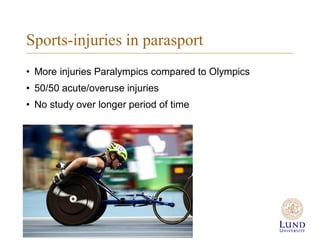
Sports-injuries in parasport
• More injuries Paralympics compared to Olympics
• 50/50 acute/overuse injuries
• No study over longer period of time
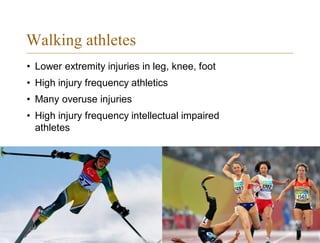
Walking athletes
• Lower extremity injuries in leg, knee, foot
• High injury frequency athletics
• Many overuse injuries
• High injury frequency intellectual impaired
athletes
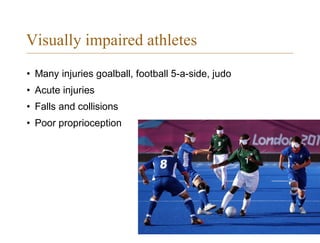
Visually impaired athletes
• Many injuries goalball, football 5-a-side, judo
• Acute injuries
• Falls and collisions
• Poor proprioception
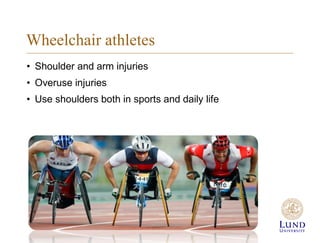
Wheelchair athletes
• Shoulder and arm injuries
• Overuse injuries
• Use shoulders both in sports and daily life
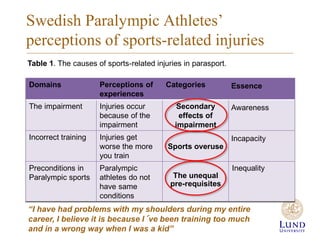
Swedish Paralympic Athletes’
perceptions of sports-related injuries
Table 1. The causes of sports-related injuries in parasport.
Domains Perceptions of
experiences
Categories Essence
The impairment Injuries occur
because of the
impairment
Secondary
effects of
impairment
Awareness
Incorrect training Injuries get
worse the more
you train
Sports overuse
Incapacity
Preconditions in
Paralympic sports
Paralympic
athletes do not
have same
conditions
The unequal
pre-requisites
Inequality
“I have had problems with my shoulders during my entire
career, I believe it is because I´ve been training too much
and in a wrong way when I was a kid”
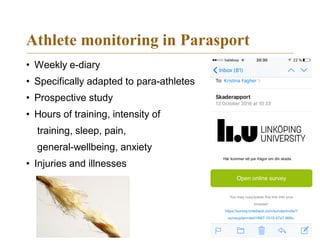
Athlete monitoring in Parasport
• Weekly e-diary
• Specifically adapted to para-athletes
• Prospective study
• Hours of training, intensity of
training, sleep, pain,
general-wellbeing, anxiety
• Injuries and illnesses
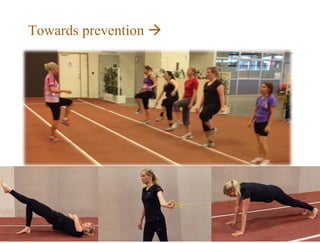
Towards prevention 
Conclusion
• Sports-injuries in Paralympic athletes are complex and
multifactorial
• Differ in several ways from abled-bodied athletes
• The development of sports safety work within the
Paralympic movement most continue
“Dont forget that we are
disabled, we are not just
athletes”
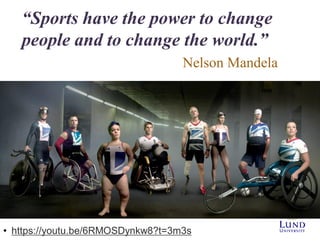
“Sports have the power to change
people and to change the world.”
Nelson Mandela
• https://youtu.be/6RMOSDynkw8?t=3m3s
Thanks
kristina.fagher@med.lu.se
@KristinaFagher
Sports-related injuries in Paralympic sport

Sports-related injuries in Paralympic sport

  • 1.
    Sports-related injuries in Paralympicsport KRISTINA FAGHER, PT, MSC SPORTS MEDICINE, PHD-STUDENT
  • 6.
    Injury mechanism • Badweather-> warm, ice and soft snow • Sit-ski starts to bounce • Stuck to the sit-ski • In abled-bodied skiing there have been changes of i.e. height of ski boots, ski release, specific knee training programmes for skiers in order to prevent injuries
  • 7.
    Paralympic sport • Increasedinterest in Paralympic sport the last decades • “Paralympic athletes have become elite of their sport” (Vanlandewijck. 2011) • Several positive health benefits BUT….. • Participation in sports places the athlete at a risk for injury, can may have boring consequences (Ljungqvist et al. 2009)
  • 8.
  • 9.
    Parasport? • Few studiesconcerning sports-related injuries in Paralympic athletes • Existing studies show that injury rates are considerably high (Fagher & Lexell. 2014) • Very few studies regarding risk factors, impairment related factors
  • 10.
    Sports-injuries in parasport •More injuries Paralympics compared to Olympics • 50/50 acute/overuse injuries • No study over longer period of time
  • 11.
    Walking athletes • Lowerextremity injuries in leg, knee, foot • High injury frequency athletics • Many overuse injuries • High injury frequency intellectual impaired athletes
  • 12.
    Visually impaired athletes •Many injuries goalball, football 5-a-side, judo • Acute injuries • Falls and collisions • Poor proprioception
  • 13.
    Wheelchair athletes • Shoulderand arm injuries • Overuse injuries • Use shoulders both in sports and daily life
  • 14.
    Swedish Paralympic Athletes’ perceptionsof sports-related injuries Table 1. The causes of sports-related injuries in parasport. Domains Perceptions of experiences Categories Essence The impairment Injuries occur because of the impairment Secondary effects of impairment Awareness Incorrect training Injuries get worse the more you train Sports overuse Incapacity Preconditions in Paralympic sports Paralympic athletes do not have same conditions The unequal pre-requisites Inequality “I have had problems with my shoulders during my entire career, I believe it is because I´ve been training too much and in a wrong way when I was a kid”
  • 16.
    Athlete monitoring inParasport • Weekly e-diary • Specifically adapted to para-athletes • Prospective study • Hours of training, intensity of training, sleep, pain, general-wellbeing, anxiety • Injuries and illnesses
  • 17.
  • 18.
    Conclusion • Sports-injuries inParalympic athletes are complex and multifactorial • Differ in several ways from abled-bodied athletes • The development of sports safety work within the Paralympic movement most continue “Dont forget that we are disabled, we are not just athletes”
  • 19.
    “Sports have thepower to change people and to change the world.” Nelson Mandela • https://youtu.be/6RMOSDynkw8?t=3m3s
  • 20.