EXERCISE IN ATHLETIC
WOMEN
Compiled by : MEGHA DEVGAN
“PARTICIPATION OF WOMEN IN
SPORTS ENABLES THEM TO FACE
ADVERSARIES. IT INSTIL
CONFIDENCE IN THEM AND MAKE
THEM HEALTHY AND STRONG”
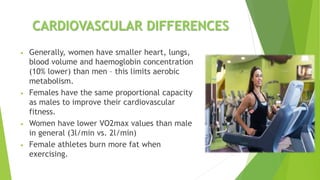
CARDIOVASCULAR DIFFERENCES
• Generally, women have smaller heart, lungs,
blood volume and haemoglobin concentration
(10% lower) than men – this limits aerobic
metabolism.
• Females have the same proportional capacity
as males to improve their cardiovascular
fitness.
• Women have lower VO2max values than male
in general (3l/min vs. 2l/min)
• Female athletes burn more fat when
exercising.
STRENGTH DIFFERENCES
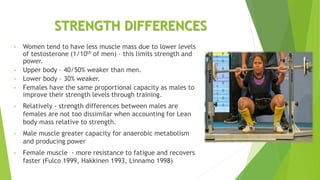
• Women tend to have less muscle mass due to lower levels
of testosterone (1/10th of men) – this limits strength and
power.
• Upper body – 40/50% weaker than men.
• Lower body – 30% weaker.
• Females have the same proportional capacity as males to
improve their strength levels through training.
• Relatively - strength differences between males are
females are not too dissimilar when accounting for Lean
body mass relative to strength.
• Male muscle greater capacity for anaerobic metabolism
and producing power
• Female muscle - more resistance to fatigue and recovers
faster (Fulco 1999, Hakkinen 1993, Linnamo 1998)
FLEXIBILITY
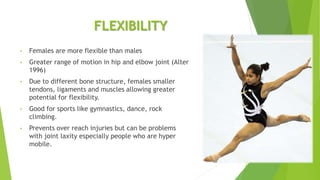
• Females are more flexible than males
• Greater range of motion in hip and elbow joint (Alter
1996)
• Due to different bone structure, females smaller
tendons, ligaments and muscles allowing greater
potential for flexibility.
• Good for sports like gymnastics, dance, rock
climbing.
• Prevents over reach injuries but can be problems
with joint laxity especially people who are hyper
mobile.
EXERCISE AND THE MENSTRUAL
CYCLE
• Awareness of pre-menstrual symptoms
– Personal diary, look for patterns
• Flexibility of training programmes
• Regulation of the menstrual cycle and minimising
symptoms.
IMPORTANCE OF EXERCISE IN FEMALE
ATHLETES
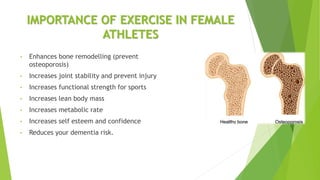
• Enhances bone remodelling (prevent
osteoporosis)
• Increases joint stability and prevent injury
• Increases functional strength for sports
• Increases lean body mass
• Increases metabolic rate
• Increases self esteem and confidence
• Reduces your dementia risk.
CONT….
• Prevents muscle loss.
• Improves digestion.
• Reduces stress, depression and anxiety.
• Enhances mental performance and work
productivity.
• Reduces cancer risk.
• Helps reduce stroke severity.
• Improves your skin.
BEST EXERCISES FOR THE
FEMALE ATHLETIC BODY
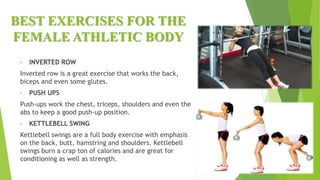
• INVERTED ROW
Inverted row is a great exercise that works the back,
biceps and even some glutes.
• PUSH UPS
Push-ups work the chest, triceps, shoulders and even the
abs to keep a good push-up position.
• KETTLEBELL SWING
Kettlebell swings are a full body exercise with emphasis
on the back, butt, hamstring and shoulders. Kettlebell
swings burn a crap ton of calories and are great for
conditioning as well as strength.
CONT….
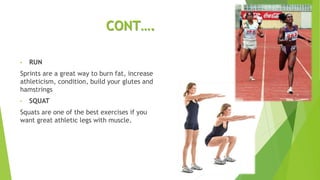
• RUN
Sprints are a great way to burn fat, increase
athleticism, condition, build your glutes and
hamstrings
• SQUAT
Squats are one of the best exercises if you
want great athletic legs with muscle.
BASICS OF EXERCISE
PHYSIOLOGY
• Exercise is a complex molecular, cellular and systemic physiological stimulus
• With every single bout of exercise, skeletal muscles, heart, brain, vascular tissue,
bone, liver, etc. experience some form of environmental “stress”.
• The type and magnitude of an adaptation or response to exercise thus results from
a sum total of all these contributing factors. Some examples include:
 mechanical, stress/strain
 temperature
 pH
 redox state
 Hormones/growth factors
 calcium
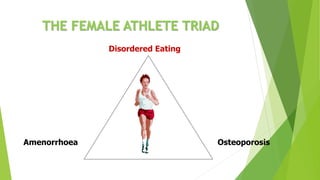
THE FEMALE ATHLETE TRIAD
Disordered Eating
OsteoporosisAmenorrhoea
AMENORRHEA
 Primary: absence of menstruation by the age of 16
 Secondary: absence of 3 or more consecutive cycles after menarche or
less than 6-9 periods annually
 Associated with:
• “Energy drain” – failing to match energy expenditure with
adequate food intake
• High training volumes
• Possible eating disorders
 May lead to osteoporosis and increased cardiac risk if untreated
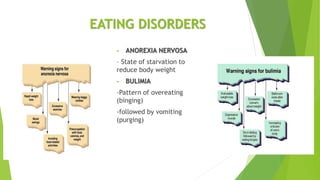
EATING DISORDERS
• ANOREXIA NERVOSA
– State of starvation to
reduce body weight
• BULIMIA
–Pattern of overeating
(binging)
-followed by vomiting
(purging)
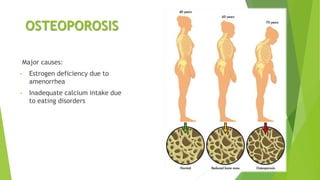
OSTEOPOROSIS
Major causes:
• Estrogen deficiency due to
amenorrhea
• Inadequate calcium intake due
to eating disorders
PREVENTING THE FEMALE ATHLETE
TRIAD
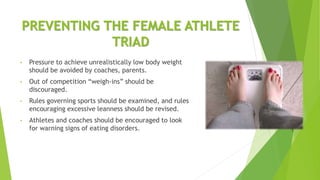
• Pressure to achieve unrealistically low body weight
should be avoided by coaches, parents.
• Out of competition “weigh-ins” should be
discouraged.
• Rules governing sports should be examined, and rules
encouraging excessive leanness should be revised.
• Athletes and coaches should be encouraged to look
for warning signs of eating disorders.
CONCLUSION
• All women can participate and gain benefits from sport, just
like men
• Female athletes, like male athletes, come in all shapes and
sizes, and it is possible to find a sport to suit all types
• Education about proper nutrition and safe practices for
women in sport is paramount
THANK YOU !

Exercise in athletic women- Megha Devgan

  • 1.
  • 2.
    “PARTICIPATION OF WOMENIN SPORTS ENABLES THEM TO FACE ADVERSARIES. IT INSTIL CONFIDENCE IN THEM AND MAKE THEM HEALTHY AND STRONG”
  • 3.
    CARDIOVASCULAR DIFFERENCES • Generally,women have smaller heart, lungs, blood volume and haemoglobin concentration (10% lower) than men – this limits aerobic metabolism. • Females have the same proportional capacity as males to improve their cardiovascular fitness. • Women have lower VO2max values than male in general (3l/min vs. 2l/min) • Female athletes burn more fat when exercising.
  • 4.
    STRENGTH DIFFERENCES • Womentend to have less muscle mass due to lower levels of testosterone (1/10th of men) – this limits strength and power. • Upper body – 40/50% weaker than men. • Lower body – 30% weaker. • Females have the same proportional capacity as males to improve their strength levels through training. • Relatively - strength differences between males are females are not too dissimilar when accounting for Lean body mass relative to strength. • Male muscle greater capacity for anaerobic metabolism and producing power • Female muscle - more resistance to fatigue and recovers faster (Fulco 1999, Hakkinen 1993, Linnamo 1998)
  • 5.
    FLEXIBILITY • Females aremore flexible than males • Greater range of motion in hip and elbow joint (Alter 1996) • Due to different bone structure, females smaller tendons, ligaments and muscles allowing greater potential for flexibility. • Good for sports like gymnastics, dance, rock climbing. • Prevents over reach injuries but can be problems with joint laxity especially people who are hyper mobile.
  • 6.
    EXERCISE AND THEMENSTRUAL CYCLE • Awareness of pre-menstrual symptoms – Personal diary, look for patterns • Flexibility of training programmes • Regulation of the menstrual cycle and minimising symptoms.
  • 7.
    IMPORTANCE OF EXERCISEIN FEMALE ATHLETES • Enhances bone remodelling (prevent osteoporosis) • Increases joint stability and prevent injury • Increases functional strength for sports • Increases lean body mass • Increases metabolic rate • Increases self esteem and confidence • Reduces your dementia risk.
  • 8.
    CONT…. • Prevents muscleloss. • Improves digestion. • Reduces stress, depression and anxiety. • Enhances mental performance and work productivity. • Reduces cancer risk. • Helps reduce stroke severity. • Improves your skin.
  • 9.
    BEST EXERCISES FORTHE FEMALE ATHLETIC BODY • INVERTED ROW Inverted row is a great exercise that works the back, biceps and even some glutes. • PUSH UPS Push-ups work the chest, triceps, shoulders and even the abs to keep a good push-up position. • KETTLEBELL SWING Kettlebell swings are a full body exercise with emphasis on the back, butt, hamstring and shoulders. Kettlebell swings burn a crap ton of calories and are great for conditioning as well as strength.
  • 10.
    CONT…. • RUN Sprints area great way to burn fat, increase athleticism, condition, build your glutes and hamstrings • SQUAT Squats are one of the best exercises if you want great athletic legs with muscle.
  • 11.
    BASICS OF EXERCISE PHYSIOLOGY •Exercise is a complex molecular, cellular and systemic physiological stimulus • With every single bout of exercise, skeletal muscles, heart, brain, vascular tissue, bone, liver, etc. experience some form of environmental “stress”. • The type and magnitude of an adaptation or response to exercise thus results from a sum total of all these contributing factors. Some examples include:  mechanical, stress/strain  temperature  pH  redox state  Hormones/growth factors  calcium
  • 12.
    THE FEMALE ATHLETETRIAD Disordered Eating OsteoporosisAmenorrhoea
  • 13.
    AMENORRHEA  Primary: absenceof menstruation by the age of 16  Secondary: absence of 3 or more consecutive cycles after menarche or less than 6-9 periods annually  Associated with: • “Energy drain” – failing to match energy expenditure with adequate food intake • High training volumes • Possible eating disorders  May lead to osteoporosis and increased cardiac risk if untreated
  • 14.
    EATING DISORDERS • ANOREXIANERVOSA – State of starvation to reduce body weight • BULIMIA –Pattern of overeating (binging) -followed by vomiting (purging)
  • 15.
    OSTEOPOROSIS Major causes: • Estrogendeficiency due to amenorrhea • Inadequate calcium intake due to eating disorders
  • 16.
    PREVENTING THE FEMALEATHLETE TRIAD • Pressure to achieve unrealistically low body weight should be avoided by coaches, parents. • Out of competition “weigh-ins” should be discouraged. • Rules governing sports should be examined, and rules encouraging excessive leanness should be revised. • Athletes and coaches should be encouraged to look for warning signs of eating disorders.
  • 17.
    CONCLUSION • All womencan participate and gain benefits from sport, just like men • Female athletes, like male athletes, come in all shapes and sizes, and it is possible to find a sport to suit all types • Education about proper nutrition and safe practices for women in sport is paramount THANK YOU !