MichelleGrant
Nichole Frederickson
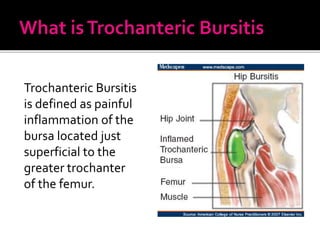
Trochanteric Bursitis
is defined as painful
inflammation of the
bursa located just
superficial to the
greater trochanter
of the femur.
 StandingAsymmetrically for long periods of
time with the effected hip elevated and
adducted, while dropping the pelvis on the
opposite side.
 Excessive walking or running
 Falls or repetitive trauma by impact
 Climbing stairs
 Leg length discrepancy or hip surgery
complications
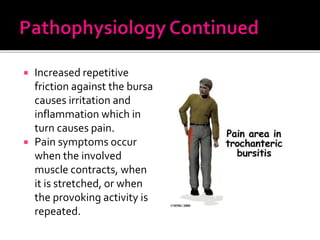
 Increased repetitive
friction against the bursa
causes irritation and
inflammation which in
turn causes pain.
 Pain symptoms occur
when the involved
muscle contracts, when
it is stretched, or when
the provoking activity is
repeated.
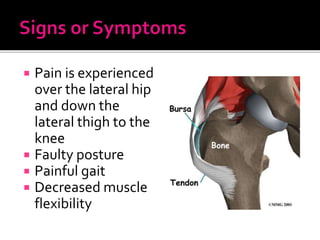
 Pain is experienced
over the lateral hip
and down the
lateral thigh to the
knee
 Faulty posture
 Painful gait
 Decreased muscle
flexibility
 Decreased muscular endurance
 Weak gluteus medius and
minimus
 Shortened lateral rotators
 Dominance of the hamstrings
 Pattern 4E- Impaired joint mobility, motor
function, muscle performance and range of
motion, associated with localized
inflammation
 Inflammation Control
 Cold packs or ice massage
 Hydrotherapy
 Laser
 Ultrasound
 Electronic Stimulation
 Compression or taping
 Continuous Passive Motion
 Restricted activity to avoid pain
 Use anAssistive Device to decrease weight
bearing
 Massage
 ManualTraction
 Joint Mobilization
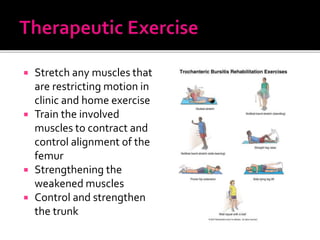
 Stretch any muscles that
are restricting motion in
clinic and home exercise
 Train the involved
muscles to contract and
control alignment of the
femur
 Strengthening the
weakened muscles
 Control and strengthen
the trunk
 Perform each exercise 1 to 3 minutes before
progression
 Perform exercises that do not worsen symptoms
 Modify intensity
 Position
 Time performed
 Weight-bearing exercises or partial weight-
bearing exercise
 Biking
 Weight shifting exercises on parallel bars
 Progress close chain exercises to functional
activities
 Increase eccentric resistance and demand for
controlled speed to return-to-work activities
 Progress to patterns of movement consistent
with the desired day-to-day activities
 Practice timing and sequencing of events
 APTA.Guide to PhysicalTherapist Practice. 2nd
ed.Alexandria,VA:APTA;2001.
 Kisner C, Colby LA.Therapeutic Exercise: Foundations and
Techniques. 5th ed.Phillidelphia, PA:F.A. Davis
Company;2007.
 Foye PM, StitikTP.Trochanteric
Bursitis.http://emedicine.medscape.com/article/309286-
overview.Updated Oct 1, 2009.Accessed Nov 20, 2010.

Trochanteric bursitis

  • 1.
  • 2.
    Trochanteric Bursitis is definedas painful inflammation of the bursa located just superficial to the greater trochanter of the femur.
  • 3.
     StandingAsymmetrically forlong periods of time with the effected hip elevated and adducted, while dropping the pelvis on the opposite side.  Excessive walking or running  Falls or repetitive trauma by impact  Climbing stairs  Leg length discrepancy or hip surgery complications
  • 4.
     Increased repetitive frictionagainst the bursa causes irritation and inflammation which in turn causes pain.  Pain symptoms occur when the involved muscle contracts, when it is stretched, or when the provoking activity is repeated.
  • 5.
     Pain isexperienced over the lateral hip and down the lateral thigh to the knee  Faulty posture  Painful gait  Decreased muscle flexibility
  • 6.
     Decreased muscularendurance  Weak gluteus medius and minimus  Shortened lateral rotators  Dominance of the hamstrings
  • 7.
     Pattern 4E-Impaired joint mobility, motor function, muscle performance and range of motion, associated with localized inflammation
  • 8.
     Inflammation Control Cold packs or ice massage  Hydrotherapy  Laser  Ultrasound  Electronic Stimulation  Compression or taping  Continuous Passive Motion
  • 9.
     Restricted activityto avoid pain  Use anAssistive Device to decrease weight bearing  Massage  ManualTraction  Joint Mobilization
  • 10.
     Stretch anymuscles that are restricting motion in clinic and home exercise  Train the involved muscles to contract and control alignment of the femur  Strengthening the weakened muscles  Control and strengthen the trunk
  • 11.
     Perform eachexercise 1 to 3 minutes before progression  Perform exercises that do not worsen symptoms  Modify intensity  Position  Time performed  Weight-bearing exercises or partial weight- bearing exercise  Biking  Weight shifting exercises on parallel bars
  • 12.
     Progress closechain exercises to functional activities  Increase eccentric resistance and demand for controlled speed to return-to-work activities  Progress to patterns of movement consistent with the desired day-to-day activities  Practice timing and sequencing of events
  • 13.
     APTA.Guide toPhysicalTherapist Practice. 2nd ed.Alexandria,VA:APTA;2001.  Kisner C, Colby LA.Therapeutic Exercise: Foundations and Techniques. 5th ed.Phillidelphia, PA:F.A. Davis Company;2007.  Foye PM, StitikTP.Trochanteric Bursitis.http://emedicine.medscape.com/article/309286- overview.Updated Oct 1, 2009.Accessed Nov 20, 2010.