KNOWLEDGE MANAGEMENTYohanesLeonardiLiemUniversitas Multimedia Nusantara
What is KM?Comprises a range of strategies and practices used in an organization to identify, create, represent, distribute, and enable adoption of insights and experiencesInsights and experiences either embodied in individuals or embedded in organizational processes or practice.
What is KM? (cont’d)Many companies and non-profit organizations have resources dedicated to internal KM efforts, often as a part of their business strategy, information technology, or human resource management.Several consulting companies also exist that provide strategy and advice regarding KM to these organizations
KM Fields of StudiesBusiness AdministrationInformation SystemsManagementInformation SciencesInformation and mediaComputer SciencePublic HealthPublic Policy
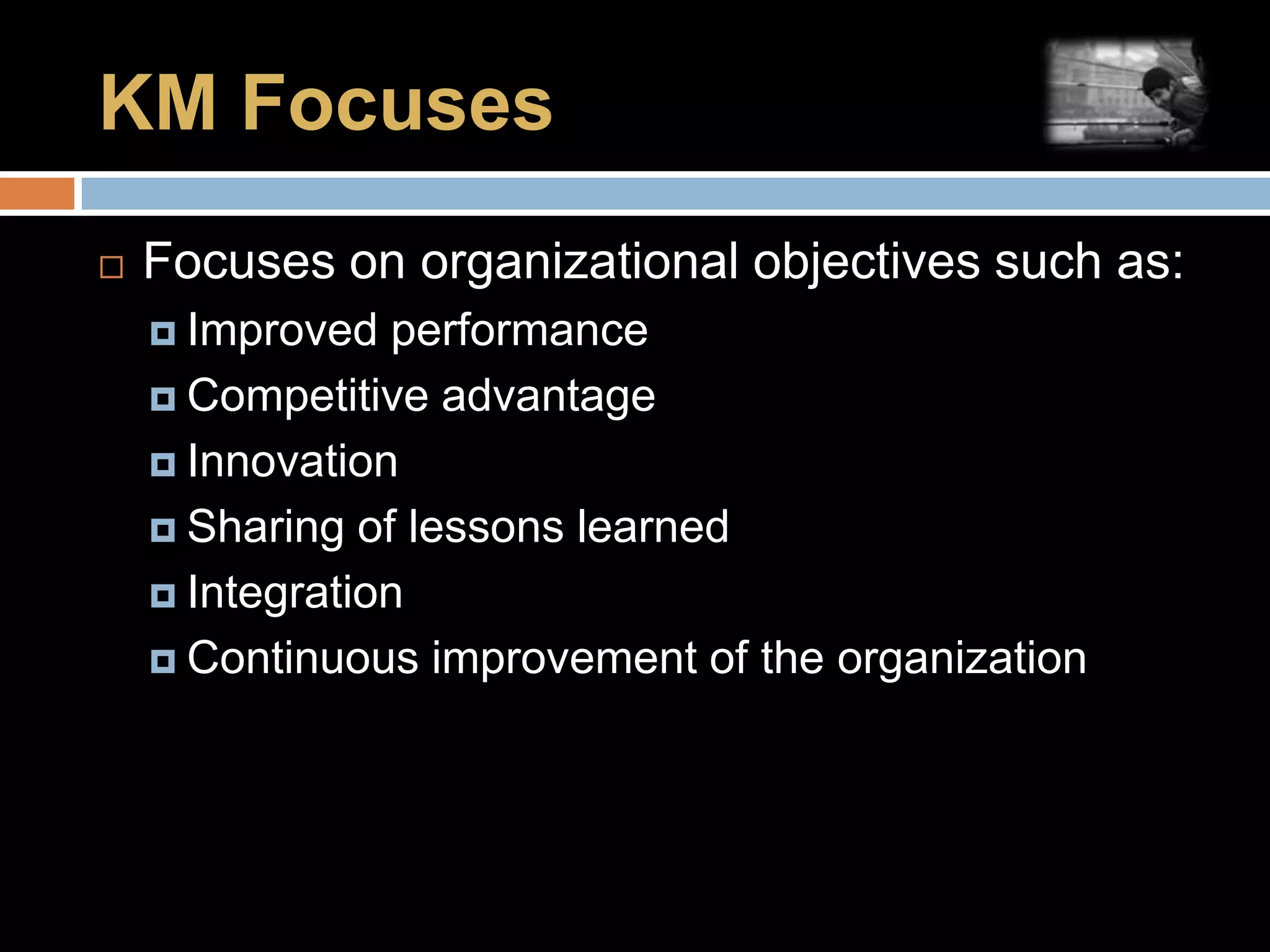
KM FocusesFocuses on organizational objectives such as:Improved performanceCompetitive advantageInnovationSharing of lessons learnedIntegrationContinuous improvement of the organization
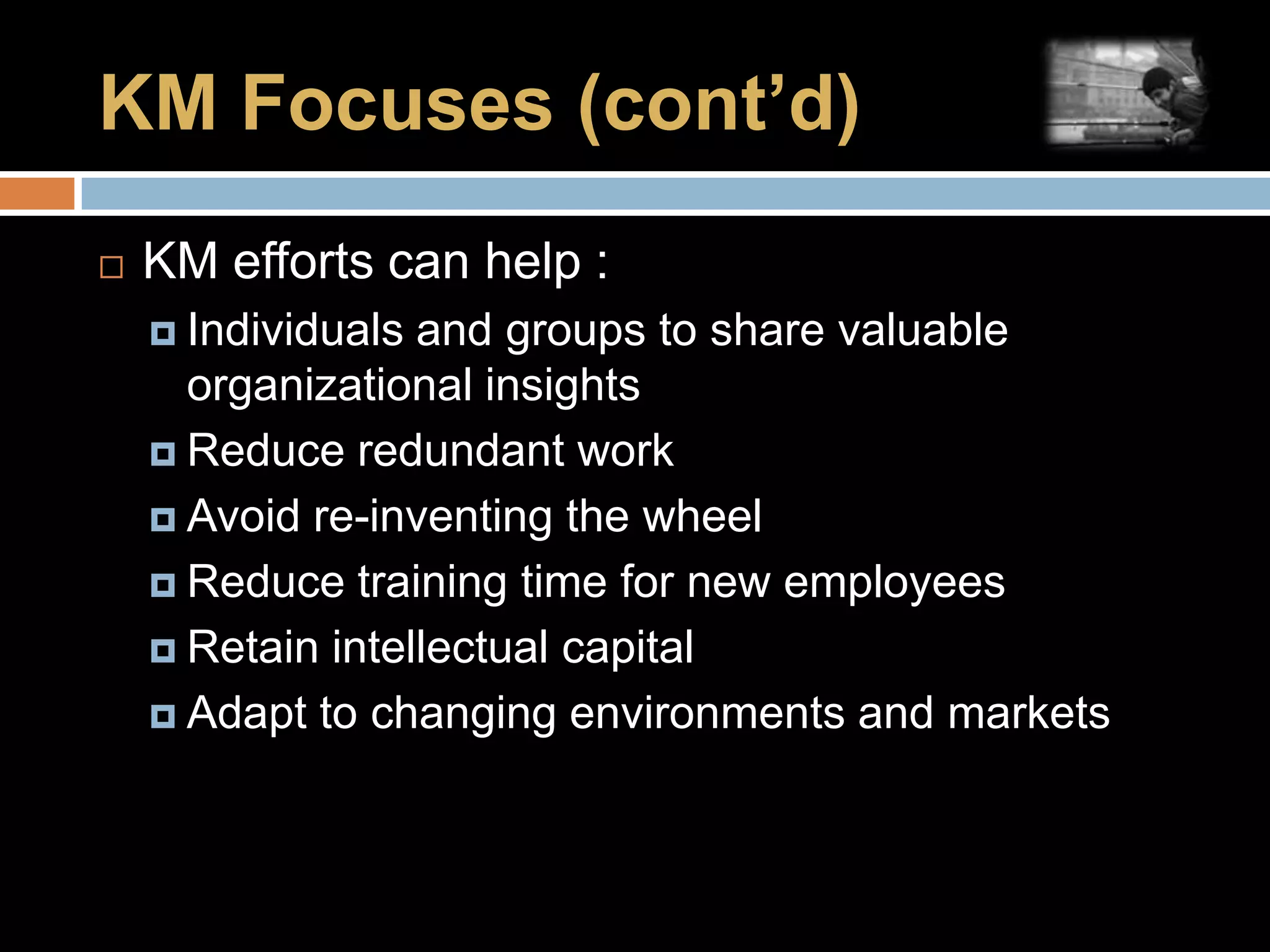
KM Focuses (cont’d)KM efforts can help :Individuals and groups to share valuable organizational insightsReduce redundant workAvoid re-inventing the wheelReduce training time for new employeesRetain intellectual capitalAdapt to changing environments and markets
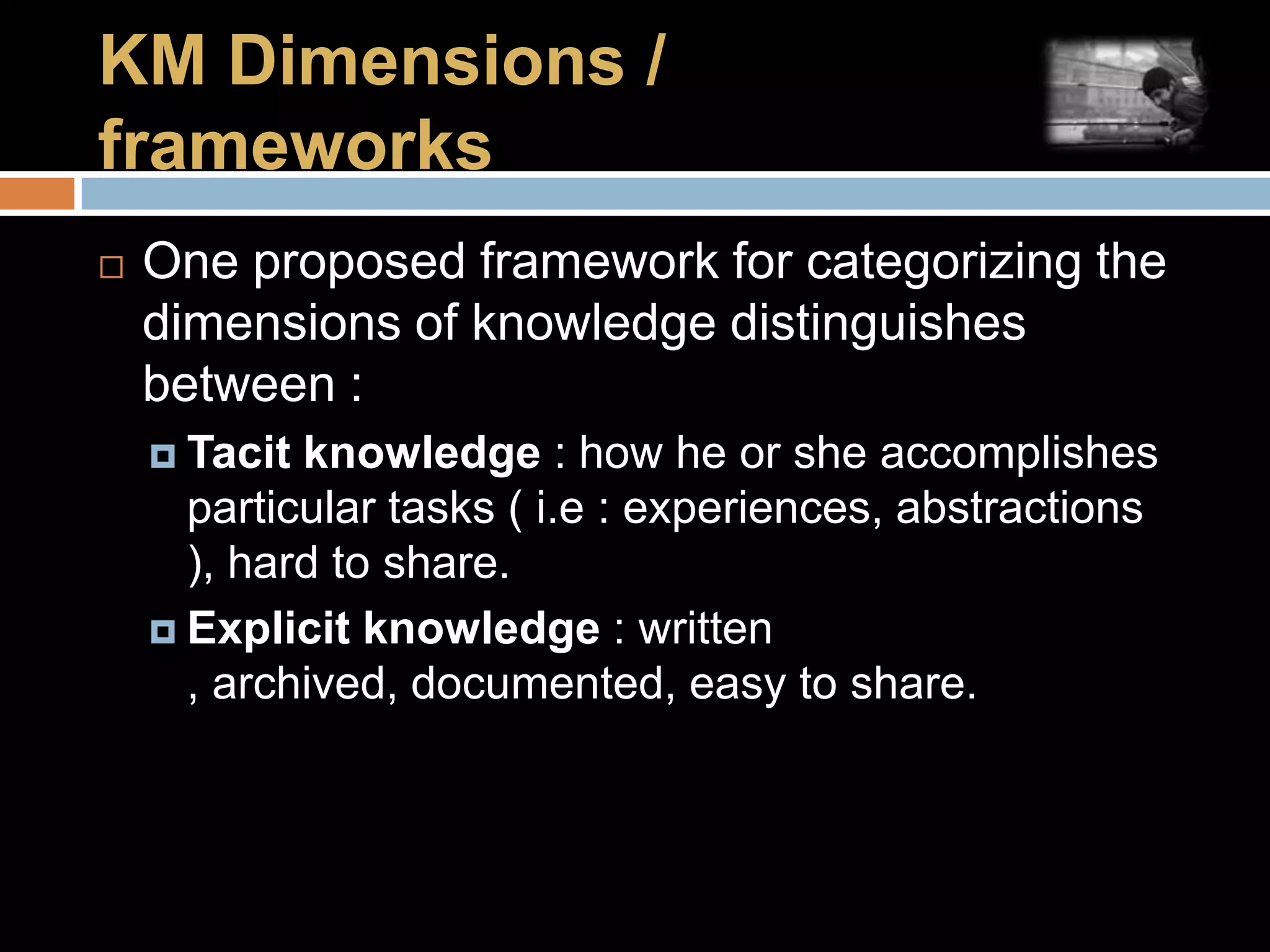
KM Dimensions / frameworksOne proposed framework for categorizing the dimensions of knowledge distinguishes between :Tacit knowledge : how he or she accomplishes particular tasks ( i.e : experiences, abstractions ), hard to share.Explicit knowledge : written , archived, documented, easy to share.
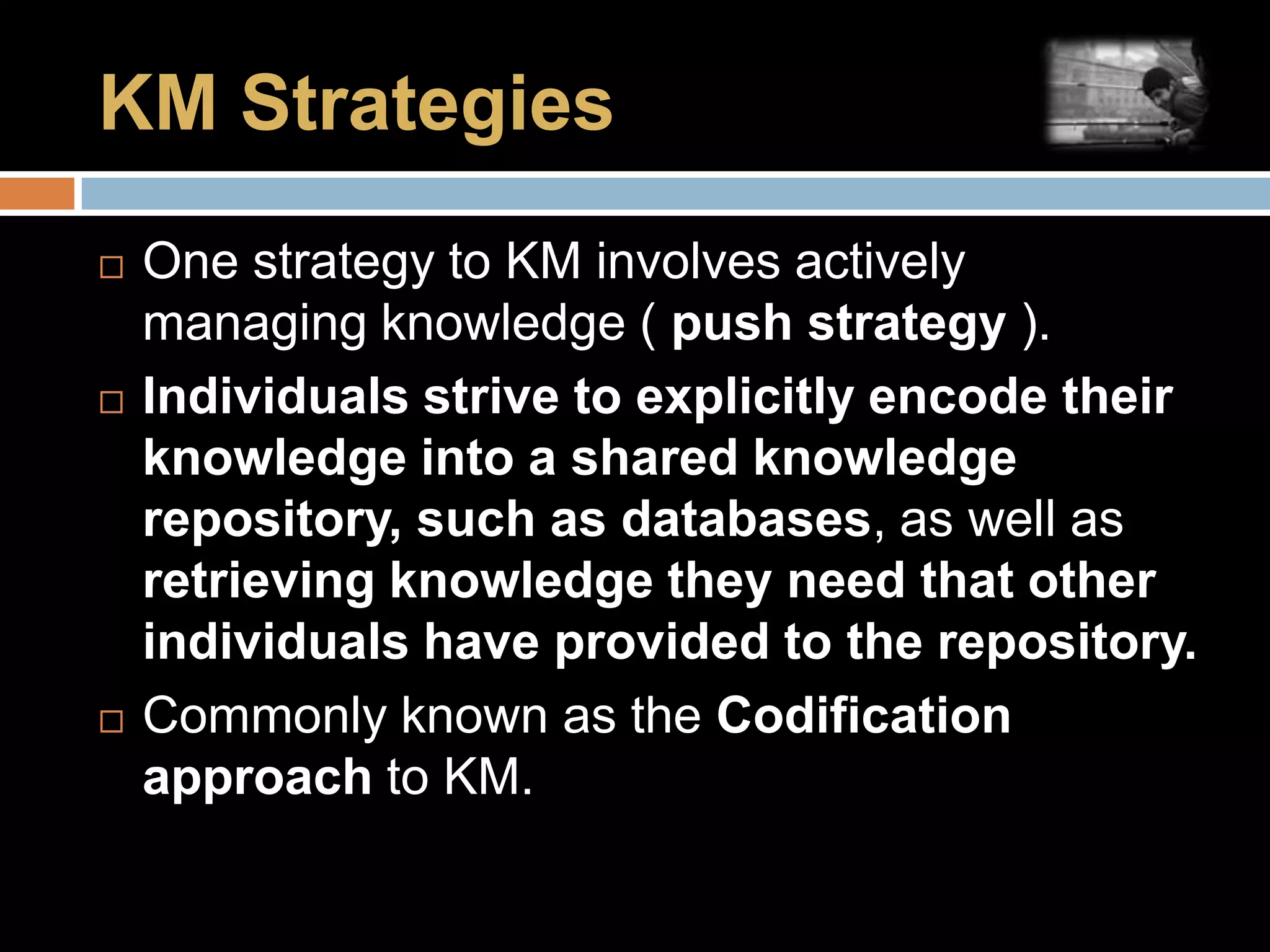
KM StrategiesOne strategy to KM involves actively managing knowledge ( push strategy ).Individuals strive to explicitly encode their knowledge into a shared knowledge repository, such as databases, as well as retrieving knowledge they need that other individuals have provided to the repository.Commonly known as the Codification approach to KM.
KM Strategies ( cont’d ) Another strategy involves individuals making knowledge requests of experts associated with a particular subject on an ad hoc basis(pull strategy).Expert individual(s) can provide their insights to the particular person or people needing this.Commonly known as the Personalization approach to KM.
KM Strategies ( cont’d ) Other KM strategies :Rewards ( motivating for knowledge sharing )Storytelling ( transfering tacit knowledge )Cross-project learningAfter action reviewsKnowledge mappingBest practice transferEtc..
KM BenefitsMaking available increased knowledge content in the development and provision of products and services.Achieving shorter new product development cycles.Facilitating and managing innovation and organizational learning.Increasing network connectivity between internal and external individual.

Knowledge Management

  • 1.
  • 2.
    What is KM?Comprisesa range of strategies and practices used in an organization to identify, create, represent, distribute, and enable adoption of insights and experiencesInsights and experiences either embodied in individuals or embedded in organizational processes or practice.
  • 3.
    What is KM?(cont’d)Many companies and non-profit organizations have resources dedicated to internal KM efforts, often as a part of their business strategy, information technology, or human resource management.Several consulting companies also exist that provide strategy and advice regarding KM to these organizations
  • 4.
    KM Fields ofStudiesBusiness AdministrationInformation SystemsManagementInformation SciencesInformation and mediaComputer SciencePublic HealthPublic Policy
  • 5.
    KM FocusesFocuses onorganizational objectives such as:Improved performanceCompetitive advantageInnovationSharing of lessons learnedIntegrationContinuous improvement of the organization
  • 6.
    KM Focuses (cont’d)KMefforts can help :Individuals and groups to share valuable organizational insightsReduce redundant workAvoid re-inventing the wheelReduce training time for new employeesRetain intellectual capitalAdapt to changing environments and markets
  • 7.
    KM Dimensions /frameworksOne proposed framework for categorizing the dimensions of knowledge distinguishes between :Tacit knowledge : how he or she accomplishes particular tasks ( i.e : experiences, abstractions ), hard to share.Explicit knowledge : written , archived, documented, easy to share.
  • 8.
    KM StrategiesOne strategyto KM involves actively managing knowledge ( push strategy ).Individuals strive to explicitly encode their knowledge into a shared knowledge repository, such as databases, as well as retrieving knowledge they need that other individuals have provided to the repository.Commonly known as the Codification approach to KM.
  • 9.
    KM Strategies (cont’d ) Another strategy involves individuals making knowledge requests of experts associated with a particular subject on an ad hoc basis(pull strategy).Expert individual(s) can provide their insights to the particular person or people needing this.Commonly known as the Personalization approach to KM.
  • 10.
    KM Strategies (cont’d ) Other KM strategies :Rewards ( motivating for knowledge sharing )Storytelling ( transfering tacit knowledge )Cross-project learningAfter action reviewsKnowledge mappingBest practice transferEtc..
  • 11.
    KM BenefitsMaking availableincreased knowledge content in the development and provision of products and services.Achieving shorter new product development cycles.Facilitating and managing innovation and organizational learning.Increasing network connectivity between internal and external individual.