Equality, Diversity & the EYFS

   Laura (Mole) Chapman
Equality:
EYFS: A unique child

• Equal treatment for all: The availability of the same
  rights, position, and status to all people, regardless of
  gender, sexual preference, age, race, ethnicity, ability or
  religion.
• Agreement of equal value
• State of being equal: rights, treatment, quantity, or value
  equal to all others in a specific group
• All individuals need to have equal choices and opportunities
  regardless of their ability.
Diversity:
EYFS Learning and Development

• Understanding that each individual is unique, and recognizing our
  differences.

• It is the exploration of differences in a safe, positive, and nurturing
  environment.
• It is about understanding each other and moving beyond tolerance
  to embracing and celebrating the dimensions of diversity
  contained within each individual.
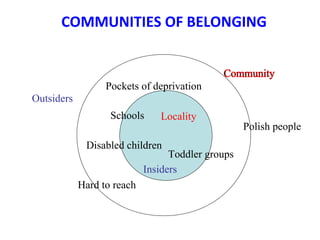
COMMUNITIES OF BELONGING


                  Pockets of deprivation
Outsiders
                   Schools     Locality
                                                   Polish people
             Disabled children
                                  Toddler groups
                            Insiders
            Hard to reach
Equity
The principle of equality has to be reinforced and extended by the
   practice of equity. On the basis of the discussion so far three broad
   principles about the nature of social justice:


         • Equality: every human being has an absolute and equal right
           to common dignity and parity of esteem and entitlement to
           access the benefits of society on equal terms.
         • Equity: every human being has a right to benefit from the
           outcomes of society on the basis of fairness and according to
           need.
         • Social justice: justice requires deliberate and specific
           intervention to secure equality and equity.


                                     (West-Burnham & Chapman 2009)
Culture Change
Welcome            Invitation
Tolerance          Acceptance
Single /other      Diverse
Deficit            Assets
Barriers           Boundaries
Rigid rules        Flexible Values
Compliance         Commitment
Improvement        Transformation

                      A Different Perspective on Equality, pg. 26
Find us on
            FaceBook
   https://www.facebook.com/pages/EQuality-
             Training/96010755427

 Twitter https://twitter.com/eqtraining
                Or
www.equalitytraining.co.uk

Kirklees pla

  • 1.
    Equality, Diversity &the EYFS Laura (Mole) Chapman
  • 2.
    Equality: EYFS: A uniquechild • Equal treatment for all: The availability of the same rights, position, and status to all people, regardless of gender, sexual preference, age, race, ethnicity, ability or religion. • Agreement of equal value • State of being equal: rights, treatment, quantity, or value equal to all others in a specific group • All individuals need to have equal choices and opportunities regardless of their ability.
  • 3.
    Diversity: EYFS Learning andDevelopment • Understanding that each individual is unique, and recognizing our differences. • It is the exploration of differences in a safe, positive, and nurturing environment. • It is about understanding each other and moving beyond tolerance to embracing and celebrating the dimensions of diversity contained within each individual.
  • 4.
    COMMUNITIES OF BELONGING Pockets of deprivation Outsiders Schools Locality Polish people Disabled children Toddler groups Insiders Hard to reach
  • 5.
    Equity The principle ofequality has to be reinforced and extended by the practice of equity. On the basis of the discussion so far three broad principles about the nature of social justice: • Equality: every human being has an absolute and equal right to common dignity and parity of esteem and entitlement to access the benefits of society on equal terms. • Equity: every human being has a right to benefit from the outcomes of society on the basis of fairness and according to need. • Social justice: justice requires deliberate and specific intervention to secure equality and equity. (West-Burnham & Chapman 2009)
  • 6.
    Culture Change Welcome Invitation Tolerance Acceptance Single /other Diverse Deficit Assets Barriers Boundaries Rigid rules Flexible Values Compliance Commitment Improvement Transformation A Different Perspective on Equality, pg. 26
  • 7.
    Find us on FaceBook https://www.facebook.com/pages/EQuality- Training/96010755427 Twitter https://twitter.com/eqtraining Or www.equalitytraining.co.uk