+
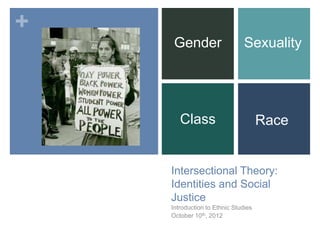
     Gender                    Sexuality


       Class                         Race


    Intersectional Theory:
    Identities and Social
    Justice
    Introduction to Ethnic Studies
    October 10th, 2012
+
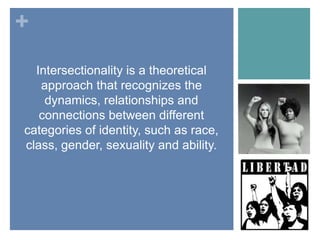
  Intersectionality is a theoretical
   approach that recognizes the
    dynamics, relationships and
   connections between different
categories of identity, such as race,
class, gender, sexuality and ability.
+                      Social Movements of the 1960s and
                        1970s


                       Identity Politics


Emergence of
                       Single factor identity
Intersectionality


                       Eliminate De Facto Discrimination
+
    The Feminist Movement

    Experiences of White, MC,          Experiences of WC Women of
       Women                              Color

                                       1.   History of Forced Labor
    1.   Right to Work


                                       2.   Controlled Reproduction
    2.   Right to Not have Children


                                       3.   Violence Inside and Outside
    3.   Stop Violence Against Women        Community


                                       4.   Racialized Stereotypes of
    4.   The ‘Essential’ Woman              Womanhood
+
    Civil Rights Movement

       Race as central category


       Agenda was determined by men and reflected such position


       Women were placed in ‘traditional’ roles


       Sexism and sexual harassment in the movement
+
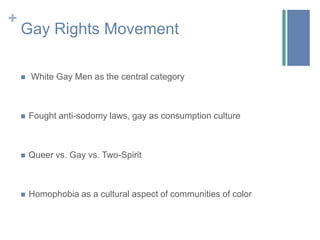
    Gay Rights Movement

       White Gay Men as the central category


       Fought anti-sodomy laws, gay as consumption culture


       Queer vs. Gay vs. Two-Spirit


       Homophobia as a cultural aspect of communities of color
+
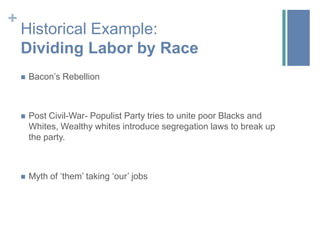
    Historical Example:
    Dividing Labor by Race
       Bacon’s Rebellion


       Post Civil-War- Populist Party tries to unite poor Blacks and
        Whites, Wealthy whites introduce segregation laws to break up
        the party.


       Myth of ‘them’ taking ‘our’ jobs
+
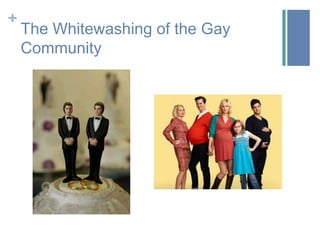
    The Whitewashing of the Gay
    Community
+
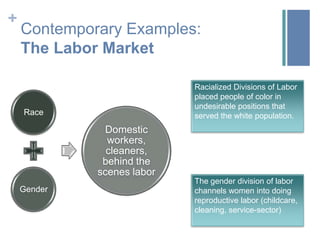
    Contemporary Examples:
    The Labor Market

                            Racialized Divisions of Labor
                            placed people of color in
                            undesirable positions that
    Race                    served the white population.
              Domestic
               workers,
               cleaners,
              behind the
             scenes labor
                            The gender division of labor
    Gender                  channels women into doing
                            reproductive labor (childcare,
                            cleaning, service-sector)
+
    Contemporary Examples:
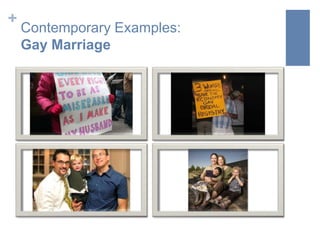
    Gay Marriage
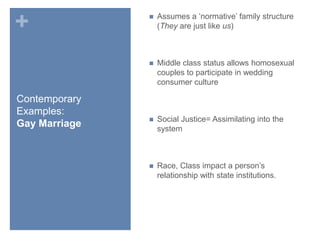
Assumes a ‘normative’ family structure
+              
                   (They are just like us)


                  Middle class status allows homosexual
                   couples to participate in wedding
                   consumer culture

Contemporary
Examples:
                  Social Justice= Assimilating into the
Gay Marriage       system


                  Race, Class impact a person’s
                   relationship with state institutions.
+
+
    Practice: The Exotification of
    Women
+
    Apply: What does Intersectionality
    Look Like in Your Life?

       Write down some of the identity characteristics of your own life
        (race, gender, class, ability, sexual orientation etc. )


       Do certain ones define you in certain situations? When? Are
        that some that matter more to other people? To you?


       What privileges and penalties do those characteristics hold?

Intersectional theory

  • 1.
    + Gender Sexuality Class Race Intersectional Theory: Identities and Social Justice Introduction to Ethnic Studies October 10th, 2012
  • 2.
    + Intersectionalityis a theoretical approach that recognizes the dynamics, relationships and connections between different categories of identity, such as race, class, gender, sexuality and ability.
  • 3.
    +  Social Movements of the 1960s and 1970s  Identity Politics Emergence of  Single factor identity Intersectionality  Eliminate De Facto Discrimination
  • 4.
    + The Feminist Movement Experiences of White, MC, Experiences of WC Women of Women Color 1. History of Forced Labor 1. Right to Work 2. Controlled Reproduction 2. Right to Not have Children 3. Violence Inside and Outside 3. Stop Violence Against Women Community 4. Racialized Stereotypes of 4. The ‘Essential’ Woman Womanhood
  • 5.
    + Civil Rights Movement  Race as central category  Agenda was determined by men and reflected such position  Women were placed in ‘traditional’ roles  Sexism and sexual harassment in the movement
  • 6.
    + Gay Rights Movement  White Gay Men as the central category  Fought anti-sodomy laws, gay as consumption culture  Queer vs. Gay vs. Two-Spirit  Homophobia as a cultural aspect of communities of color
  • 7.
    + Historical Example: Dividing Labor by Race  Bacon’s Rebellion  Post Civil-War- Populist Party tries to unite poor Blacks and Whites, Wealthy whites introduce segregation laws to break up the party.  Myth of ‘them’ taking ‘our’ jobs
  • 8.
    + The Whitewashing of the Gay Community
  • 9.
    + Contemporary Examples: The Labor Market Racialized Divisions of Labor placed people of color in undesirable positions that Race served the white population. Domestic workers, cleaners, behind the scenes labor The gender division of labor Gender channels women into doing reproductive labor (childcare, cleaning, service-sector)
  • 10.
    + Contemporary Examples: Gay Marriage
  • 11.
    Assumes a ‘normative’family structure +  (They are just like us)  Middle class status allows homosexual couples to participate in wedding consumer culture Contemporary Examples:  Social Justice= Assimilating into the Gay Marriage system  Race, Class impact a person’s relationship with state institutions.
  • 12.
  • 13.
    + Practice: The Exotification of Women
  • 14.
    + Apply: What does Intersectionality Look Like in Your Life?  Write down some of the identity characteristics of your own life (race, gender, class, ability, sexual orientation etc. )  Do certain ones define you in certain situations? When? Are that some that matter more to other people? To you?  What privileges and penalties do those characteristics hold?