Kingdom Animalia
Characteristics
• Heterotrophs
• Eukaryotic
• Multicellular
• No cell wall, no chloroplasts
• Motile
• Sense Organs
9 phyla we will mention
• Porifera—sponges
• Cnidaria—jellyfish, sea anemones, coral
• Platyhelminthes—flatworms
• Nematoda—roundworms
• Annelida—earthworms
• Mollusca—shelled animals
• Arthropoda—insects, spiders
• Echinodermata—spiny-skinned
• Chordata—vertebrates (and others)
Phylum Porifera
(sponges)
• Asymmetrical
• Pores—filter feeders
• Not motile (sessile)
• Provide habitat for
other animals
• Eaten by starfish and
some fish
• Most primitive animal
Phylum Cnidaria
(jellyfish, sea anemones, coral)
• Digestive cavity called a
coelenteron
• Radial symmetry
• Predators-feed on
crustaceans
• Corals provide important
habitat for fish
• Coral used for decoration
and threatened by
pollution
• All have stinging cells
Phylum Platyhelminthes
(planarians, tapeworms, flukes)
• Bilateral symmetry
• Cephalization- head and
brain
• Acoelomate- no body
cavity
• Incomplete digestive
system (one opening)
• Some are parasites in
digestive tract
• In early 1900’s models
ate them to be thin—
YUK!
Phylum Nematoda
(roundworms)
• Also called nematodes
• Complete digestive
system-separate mouth
and anus (2 openings)
• Pseudocoelomate
• Decomposers, predators
(bacteria, inverts)
• Eaten by insects, mice
• Beneficial to garden by
eating insects
Phylum Annelida
(segmented worms)
• i.e. earthworms, leeches
• True coelom
• Sensitive to vibrations on
ground-rain
• Prey for robins, shrews,
jays, snakes
• Leeches have cornified
knobs to break skin,
anticoagulant and
anesthetic
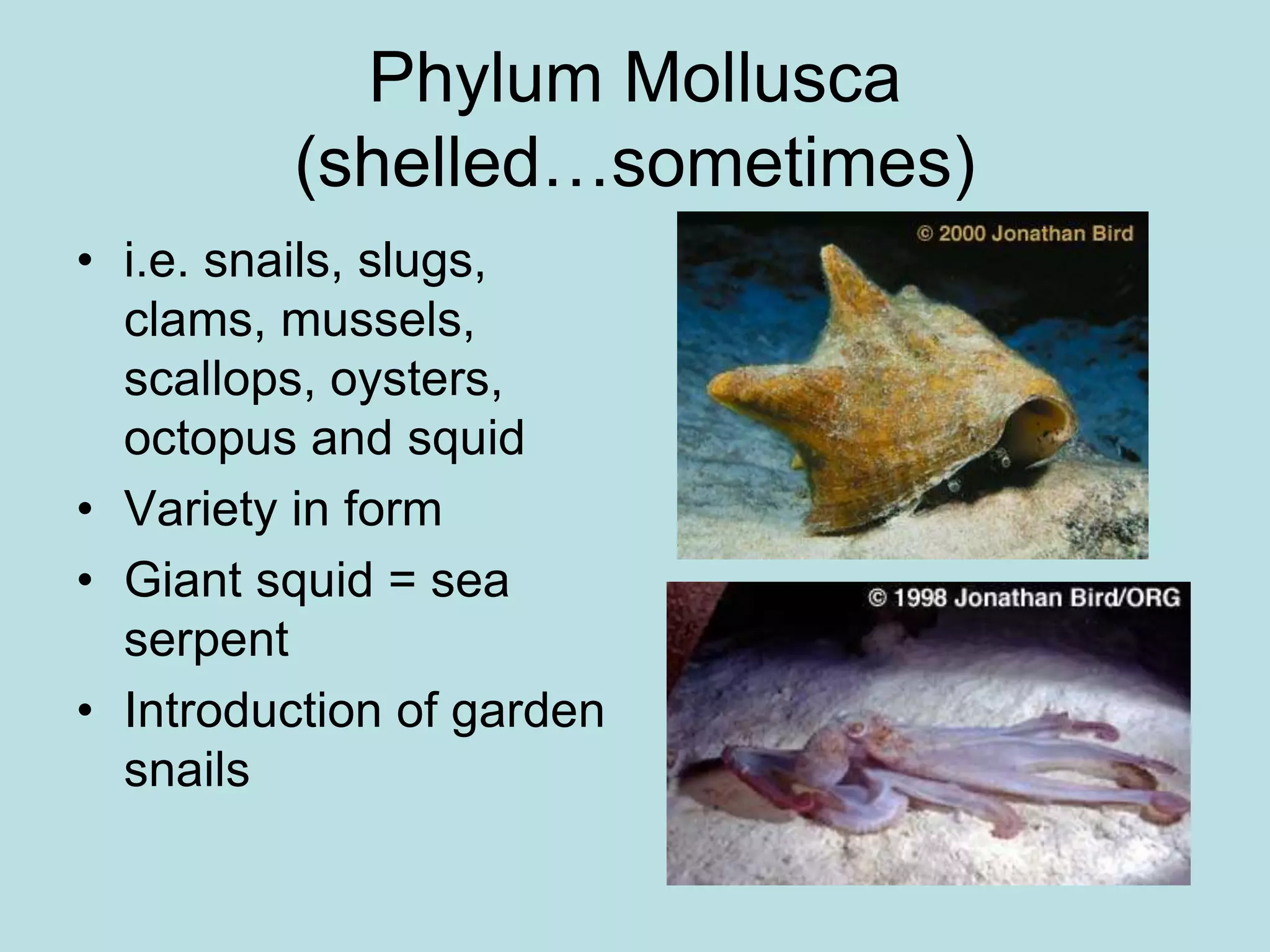
Phylum Mollusca
(shelled…sometimes)
• i.e. snails, slugs,
clams, mussels,
scallops, oysters,
octopus and squid
• Variety in form
• Giant squid = sea
serpent
• Introduction of garden
snails
Phylum Arthropoda
(jointed legged animals)
• i.e. insects, spiders and
scorpions, shellfish
(crustaceans), centipedes
(1 pr legs per segment),
millipedes (2 pr)
• Exoskeleton
• Metamorphosis
• Pheromones
• Molting
Phylum Echinodermata
(spiny-skinned)
• i.e. sea stars =
starfish,
sea urchins
• Water vascular
system
• Tube feet
• Important predators
Phylum Chordata
(includes the vertebrates)
• i.e. fish, sharks,
amphibians, reptiles,
birds, mammals
• Notochord, nerve
cord, gill slits, tail

Kingdom Animalia.ppt

  • 1.
    Kingdom Animalia Characteristics • Heterotrophs •Eukaryotic • Multicellular • No cell wall, no chloroplasts • Motile • Sense Organs
  • 2.
    9 phyla wewill mention • Porifera—sponges • Cnidaria—jellyfish, sea anemones, coral • Platyhelminthes—flatworms • Nematoda—roundworms • Annelida—earthworms • Mollusca—shelled animals • Arthropoda—insects, spiders • Echinodermata—spiny-skinned • Chordata—vertebrates (and others)
  • 3.
    Phylum Porifera (sponges) • Asymmetrical •Pores—filter feeders • Not motile (sessile) • Provide habitat for other animals • Eaten by starfish and some fish • Most primitive animal
  • 4.
    Phylum Cnidaria (jellyfish, seaanemones, coral) • Digestive cavity called a coelenteron • Radial symmetry • Predators-feed on crustaceans • Corals provide important habitat for fish • Coral used for decoration and threatened by pollution • All have stinging cells
  • 5.
    Phylum Platyhelminthes (planarians, tapeworms,flukes) • Bilateral symmetry • Cephalization- head and brain • Acoelomate- no body cavity • Incomplete digestive system (one opening) • Some are parasites in digestive tract • In early 1900’s models ate them to be thin— YUK!
  • 6.
    Phylum Nematoda (roundworms) • Alsocalled nematodes • Complete digestive system-separate mouth and anus (2 openings) • Pseudocoelomate • Decomposers, predators (bacteria, inverts) • Eaten by insects, mice • Beneficial to garden by eating insects
  • 7.
    Phylum Annelida (segmented worms) •i.e. earthworms, leeches • True coelom • Sensitive to vibrations on ground-rain • Prey for robins, shrews, jays, snakes • Leeches have cornified knobs to break skin, anticoagulant and anesthetic
  • 8.
    Phylum Mollusca (shelled…sometimes) • i.e.snails, slugs, clams, mussels, scallops, oysters, octopus and squid • Variety in form • Giant squid = sea serpent • Introduction of garden snails
  • 9.
    Phylum Arthropoda (jointed leggedanimals) • i.e. insects, spiders and scorpions, shellfish (crustaceans), centipedes (1 pr legs per segment), millipedes (2 pr) • Exoskeleton • Metamorphosis • Pheromones • Molting
  • 10.
    Phylum Echinodermata (spiny-skinned) • i.e.sea stars = starfish, sea urchins • Water vascular system • Tube feet • Important predators
  • 11.
    Phylum Chordata (includes thevertebrates) • i.e. fish, sharks, amphibians, reptiles, birds, mammals • Notochord, nerve cord, gill slits, tail