The Technologies That are Key
to Unlocking Genome Analysis
Hannes Smarason
Genome Sequencing |Personalized Medicine | Transforming Health Care
• Genome sequencing technology available
today can accurately sequence a whole
genome from an individual’s test sample for a
surprisingly low cost.
• As a result, the adoption of this technology is
rapidly expanding as medical centers around
the world embrace its utility in informing
healthcare decisions—an emerging reality of
personalized medicine.
Technologies Enabling Genome
Progress
Three Areas of Progress
• Three important areas of technology progress
have enabled the medical community to reach
this point:
– Lower costs
– New tools
– Reliable reference databases
1. Lower Costs
Lower-Cost Genome Sequencing:
Major technological advances have reduced the cost of
sequencing to nearly $1,000 or less, a critical milestone
to enable the use of sequencing as a mass-market
product for medical care.
2. New Tools
Genomic Analysis Tools:
Since the human genome was first sequenced, an increasingly
robust body of research has showcased the links between
mutations identified in the genome and disease risk. Informatics
tools have been developed by medical centers and genomics
companies to apply to whole-genome samples.
Increasingly, these genome analysis tools will need to adapt to
the steady pace of new genomic linkages to disease and to
operate at a level approaching “big data.”
3. Reliable Referencing
Reference Databases for Human Genomes:
There are a growing number of robust databases of human
genomes, including data for healthy people or those with certain
diseases. When properly analyzed, these databases offer the
potential to provide the medical community with a reference
library against which to compare genetic data.
Large-scale, high-quality databases are an essential element to
cross-reference a patient genome to guide more informed
medical decisions.
The “3-Legged Stool”
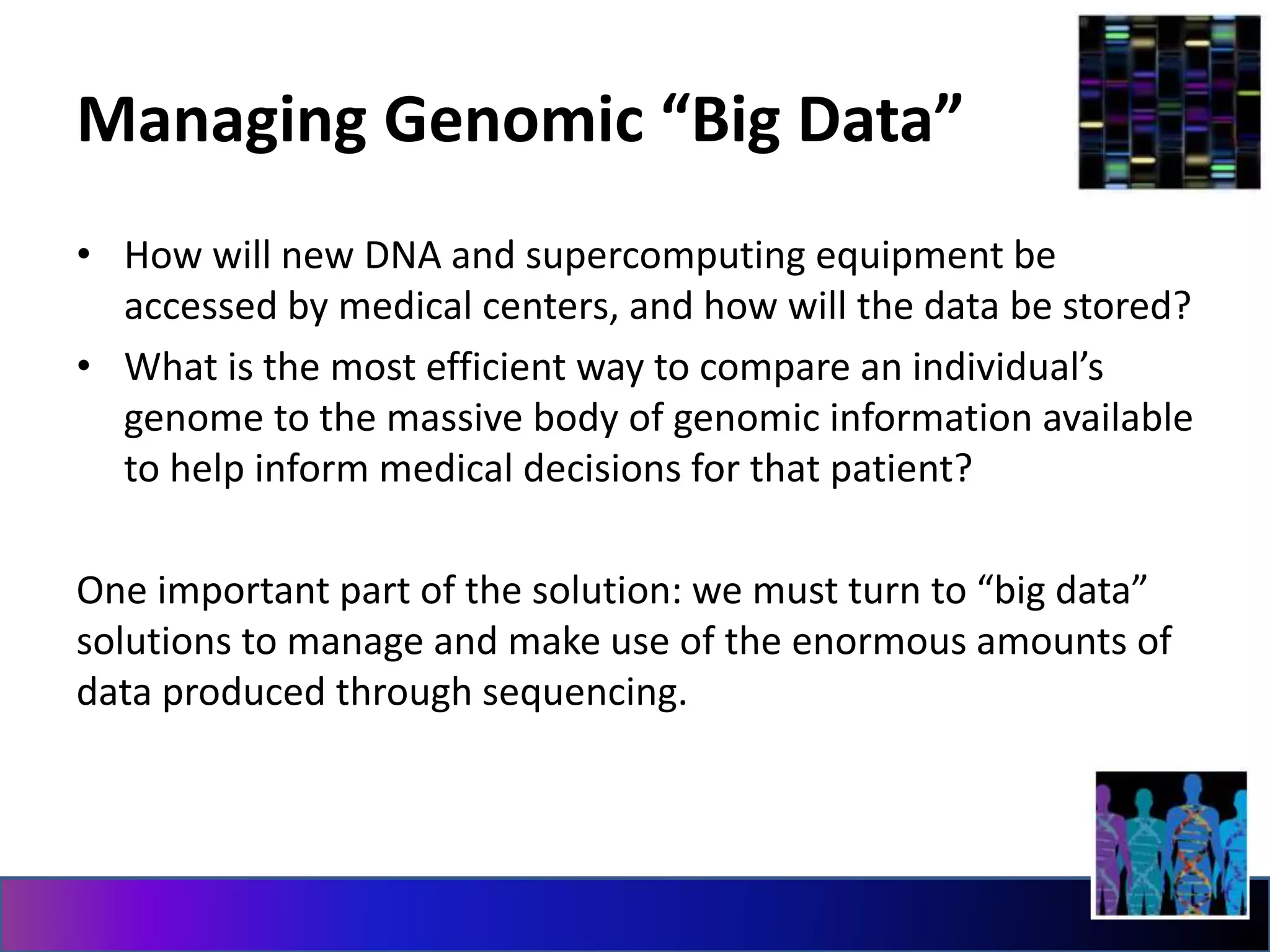
These three technology domains represent the
“3-legged stool” that will help the world reach
personalized medicine.
The technology is in place, and the
corresponding insights and uses are expanding
every day.
Yet there are challenges to be resolved before
implementing these tools on a universal basis.
Managing Genomic “Big Data”
• How will new DNA and supercomputing equipment be
accessed by medical centers, and how will the data be stored?
• What is the most efficient way to compare an individual’s
genome to the massive body of genomic information available
to help inform medical decisions for that patient?
One important part of the solution: we must turn to “big data”
solutions to manage and make use of the enormous amounts of
data produced through sequencing.
The progress to date has been amazing. Yet the
opportunities ahead are even more extraordinary to
improve the speed, accuracy, and accessibility of
genomic information to improve human health.

Key Technologies for Genome Analysis

  • 1.
    The Technologies Thatare Key to Unlocking Genome Analysis Hannes Smarason Genome Sequencing |Personalized Medicine | Transforming Health Care
  • 2.
    • Genome sequencingtechnology available today can accurately sequence a whole genome from an individual’s test sample for a surprisingly low cost. • As a result, the adoption of this technology is rapidly expanding as medical centers around the world embrace its utility in informing healthcare decisions—an emerging reality of personalized medicine. Technologies Enabling Genome Progress
  • 3.
    Three Areas ofProgress • Three important areas of technology progress have enabled the medical community to reach this point: – Lower costs – New tools – Reliable reference databases
  • 4.
    1. Lower Costs Lower-CostGenome Sequencing: Major technological advances have reduced the cost of sequencing to nearly $1,000 or less, a critical milestone to enable the use of sequencing as a mass-market product for medical care.
  • 5.
    2. New Tools GenomicAnalysis Tools: Since the human genome was first sequenced, an increasingly robust body of research has showcased the links between mutations identified in the genome and disease risk. Informatics tools have been developed by medical centers and genomics companies to apply to whole-genome samples. Increasingly, these genome analysis tools will need to adapt to the steady pace of new genomic linkages to disease and to operate at a level approaching “big data.”
  • 6.
    3. Reliable Referencing ReferenceDatabases for Human Genomes: There are a growing number of robust databases of human genomes, including data for healthy people or those with certain diseases. When properly analyzed, these databases offer the potential to provide the medical community with a reference library against which to compare genetic data. Large-scale, high-quality databases are an essential element to cross-reference a patient genome to guide more informed medical decisions.
  • 7.
    The “3-Legged Stool” Thesethree technology domains represent the “3-legged stool” that will help the world reach personalized medicine. The technology is in place, and the corresponding insights and uses are expanding every day. Yet there are challenges to be resolved before implementing these tools on a universal basis.
  • 8.
    Managing Genomic “BigData” • How will new DNA and supercomputing equipment be accessed by medical centers, and how will the data be stored? • What is the most efficient way to compare an individual’s genome to the massive body of genomic information available to help inform medical decisions for that patient? One important part of the solution: we must turn to “big data” solutions to manage and make use of the enormous amounts of data produced through sequencing.
  • 9.
    The progress todate has been amazing. Yet the opportunities ahead are even more extraordinary to improve the speed, accuracy, and accessibility of genomic information to improve human health.