www.KaiNexus.com
Dr. Gregory Jacobson, CEO and Co-Founder
210-601-4564
greg@kainexus.com
Mark Graban, Chief Improvement Officer
817-372-5682
mark@kainexus.comCOPYRIGHT 2013 , KAINEXUS LLC
Kaizen & KaiNexus
Making Improvement Easier
Agenda
 Kaizen Overview (20 minutes)
 What is Kaizen?
 Greg’s Kaizen Experience
 KaiNexus Demo (20 minutes)
 Web-based Technology
 Services
 The Role of Leaders (5 minutes)
 Q&A (15 minutes)
“Start from Why”
 Healthcare is in a state of crisis (globally)
 We can’t just fight fires anymore
 We need a disciplined, methodical
improvement method
 We need everybody involved in improvement
 Continuously learning and improving orgs
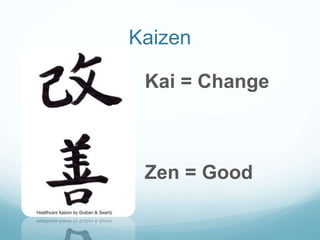
Kaizen
Kai = Change
Zen = Good
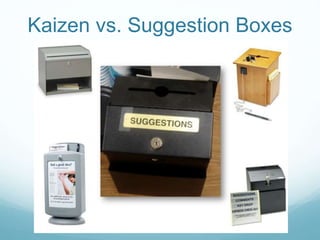
Kaizen vs. Suggestion Boxes
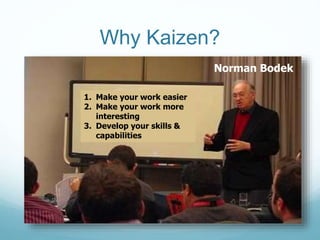
Why Kaizen?
1. Make your work easier
2. Make your work more
interesting
3. Develop your skills &
capabilities
Norman Bodek
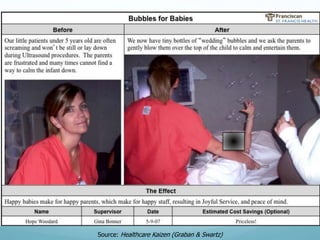
Source: Healthcare Kaizen (Graban & Swartz)
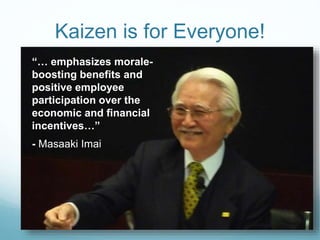
Kaizen is for Everyone!
“… emphasizes morale-
boosting benefits and
positive employee
participation over the
economic and financial
incentives…”
- Masaaki Imai
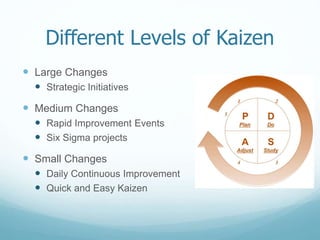
Different Levels of Kaizen
 Large Changes
 Strategic Initiatives
 Medium Changes
 Rapid Improvement Events
 Six Sigma projects
 Small Changes
 Daily Continuous Improvement
 Quick and Easy Kaizen
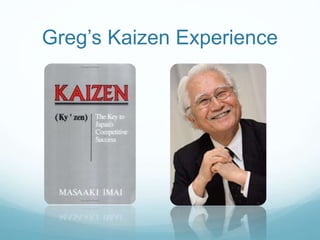
Greg’s Kaizen Experience
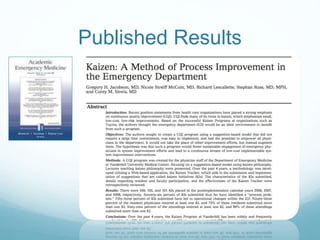
Published Results
Kaizen Principles
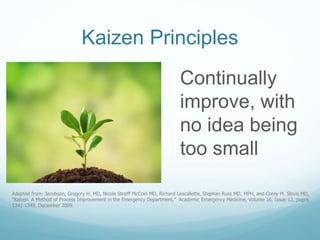
Continually
improve, with
no idea being
too small
Adapted from: Jacobson, Gregory H. MD, Nicole Streiff McCoin MD, Richard Lescallette, Stephan Russ MD, MPH, and Corey M. Slovis MD,
“Kaizen: A Method of Process Improvement in the Emergency Department,” Academic Emergency Medicine, Volume 16, Issue 12, pages
1341-1349, December 2009.
Kaizen Principles
A major source
of quality
defects is
problems in the
process
Adapted from: Jacobson, Gregory H. MD, Nicole Streiff McCoin MD, Richard Lescallette, Stephan Russ MD, MPH, and Corey M. Slovis MD,
“Kaizen: A Method of Process Improvement in the Emergency Department,” Academic Emergency Medicine, Volume 16, Issue 12, pages
1341-1349, December 2009.
Kaizen Principles
Focus change on
common sense,
low-cost, low-risk
improvements, not
major innovations
Adapted from: Jacobson, Gregory H. MD, Nicole Streiff McCoin MD, Richard Lescallette, Stephan Russ MD, MPH, and Corey M. Slovis MD,
“Kaizen: A Method of Process Improvement in the Emergency Department,” Academic Emergency Medicine, Volume 16, Issue 12, pages
1341-1349, December 2009.
Kaizen Principles
Empower the
worker to
enact
change
Adapted from: Jacobson, Gregory H. MD, Nicole Streiff McCoin MD, Richard Lescallette, Stephan Russ MD, MPH, and Corey M. Slovis MD,
“Kaizen: A Method of Process Improvement in the Emergency Department,” Academic Emergency Medicine, Volume 16, Issue 12, pages
1341-1349, December 2009.
Kaizen Principles
All ideas are
addressed and
responded to in
some way
Adapted from: Jacobson, Gregory H. MD, Nicole Streiff McCoin MD, Richard Lescallette, Stephan Russ MD, MPH, and Corey M. Slovis MD,
“Kaizen: A Method of Process Improvement in the Emergency Department,” Academic Emergency Medicine, Volume 16, Issue 12, pages
1341-1349, December 2009.
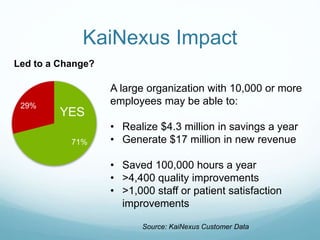
KaiNexus Impact
71%
29%
Led to a Change?
YES
A large organization with 10,000 or more
employees may be able to:
• Realize $4.3 million in savings a year
• Generate $17 million in new revenue
• Saved 100,000 hours a year
• >4,400 quality improvements
• >1,000 staff or patient satisfaction
improvements
Source: KaiNexus Customer Data
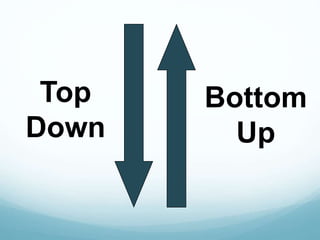
Top
Down
Bottom
Up
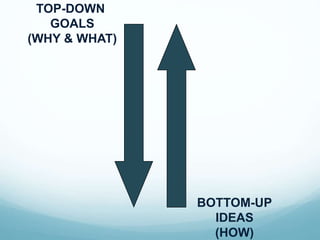
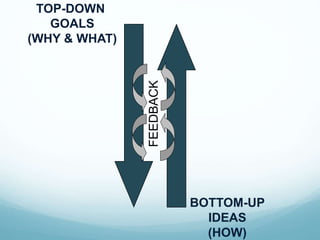
TOP-DOWN
GOALS
(WHY & WHAT)
BOTTOM-UP
IDEAS
(HOW)
TOP-DOWN
GOALS
(WHY & WHAT)
BOTTOM-UP
IDEAS
(HOW)
FEEDBACK
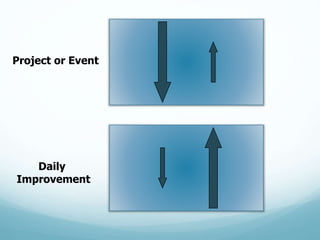
Project or Event
Daily
Improvement
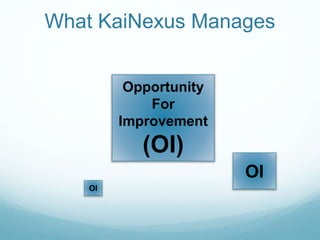
What KaiNexus Manages
Opportunity
For
Improvement
(OI)
OI
OI
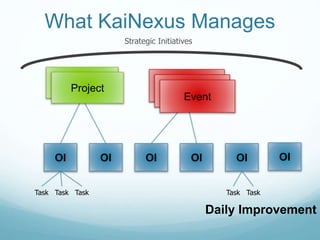
What KaiNexus Manages
Project Event
OI OI OI OI OI
Task Task Task Task Task
Project Event
Event
Strategic Initiatives
Daily Improvement
OI
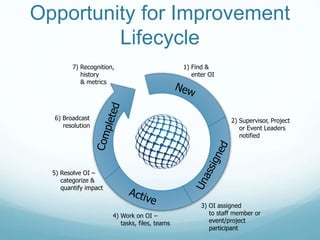
1) Find &
enter OI
2) Supervisor, Project
or Event Leaders
notified
3) OI assigned
to staff member or
event/project
participant
4) Work on OI –
tasks, files, teams
5) Resolve OI –
categorize &
quantify impact
6) Broadcast
resolution
7) Recognition,
history
& metrics
Opportunity for Improvement
Lifecycle
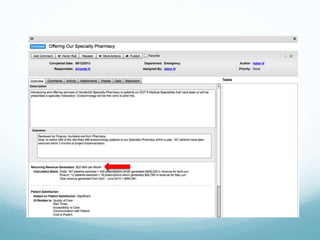
Technology Demo
What Can We Do as
Leaders?
 Coach, mentor, and lead
 “Add energy to the system”
 “All You Gotta Do is Ask”
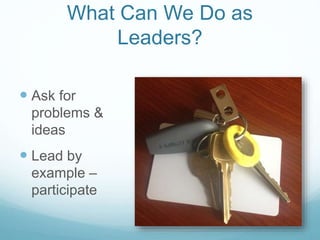
What Can We Do as
Leaders?
 Ask for
problems &
ideas
 Lead by
example –
participate
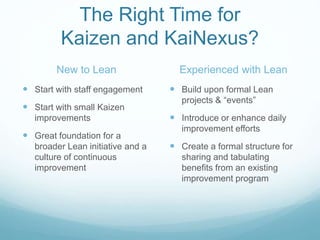
The Right Time for
Kaizen and KaiNexus?
New to Lean
 Start with staff engagement
 Start with small Kaizen
improvements
 Great foundation for a
broader Lean initiative and a
culture of continuous
improvement
Experienced with Lean
 Build upon formal Lean
projects & “events”
 Introduce or enhance daily
improvement efforts
 Create a formal structure for
sharing and tabulating
benefits from an existing
improvement program
A Common Question
 Which statement is correct?
 You should wait to start improving until you have a culture
of continuous improvement.
Or…
 The action of improving results in creating a culture of
continuous improvement
Questions
 Web:
 www.KaiNexus.com
 Email:
 greg@KaiNexus.com
 mark@KaiNexus.com
 Books – free first chapters:
 www.hckaizen.com/kaizenpreview
 www.hckaizen.com/execpreview

Kaizen & KaiNexus - Making Improvement Easier

  • 1.
    www.KaiNexus.com Dr. Gregory Jacobson,CEO and Co-Founder 210-601-4564 greg@kainexus.com Mark Graban, Chief Improvement Officer 817-372-5682 mark@kainexus.comCOPYRIGHT 2013 , KAINEXUS LLC Kaizen & KaiNexus Making Improvement Easier
  • 2.
    Agenda  Kaizen Overview(20 minutes)  What is Kaizen?  Greg’s Kaizen Experience  KaiNexus Demo (20 minutes)  Web-based Technology  Services  The Role of Leaders (5 minutes)  Q&A (15 minutes)
  • 3.
    “Start from Why” Healthcare is in a state of crisis (globally)  We can’t just fight fires anymore  We need a disciplined, methodical improvement method  We need everybody involved in improvement  Continuously learning and improving orgs
  • 4.
  • 5.
  • 6.
    Why Kaizen? 1. Makeyour work easier 2. Make your work more interesting 3. Develop your skills & capabilities Norman Bodek
  • 7.
    Source: Healthcare Kaizen(Graban & Swartz)
  • 8.
    Kaizen is forEveryone! “… emphasizes morale- boosting benefits and positive employee participation over the economic and financial incentives…” - Masaaki Imai
  • 10.
    Different Levels ofKaizen  Large Changes  Strategic Initiatives  Medium Changes  Rapid Improvement Events  Six Sigma projects  Small Changes  Daily Continuous Improvement  Quick and Easy Kaizen
  • 11.
  • 12.
  • 13.
    Kaizen Principles Continually improve, with noidea being too small Adapted from: Jacobson, Gregory H. MD, Nicole Streiff McCoin MD, Richard Lescallette, Stephan Russ MD, MPH, and Corey M. Slovis MD, “Kaizen: A Method of Process Improvement in the Emergency Department,” Academic Emergency Medicine, Volume 16, Issue 12, pages 1341-1349, December 2009.
  • 14.
    Kaizen Principles A majorsource of quality defects is problems in the process Adapted from: Jacobson, Gregory H. MD, Nicole Streiff McCoin MD, Richard Lescallette, Stephan Russ MD, MPH, and Corey M. Slovis MD, “Kaizen: A Method of Process Improvement in the Emergency Department,” Academic Emergency Medicine, Volume 16, Issue 12, pages 1341-1349, December 2009.
  • 15.
    Kaizen Principles Focus changeon common sense, low-cost, low-risk improvements, not major innovations Adapted from: Jacobson, Gregory H. MD, Nicole Streiff McCoin MD, Richard Lescallette, Stephan Russ MD, MPH, and Corey M. Slovis MD, “Kaizen: A Method of Process Improvement in the Emergency Department,” Academic Emergency Medicine, Volume 16, Issue 12, pages 1341-1349, December 2009.
  • 16.
    Kaizen Principles Empower the workerto enact change Adapted from: Jacobson, Gregory H. MD, Nicole Streiff McCoin MD, Richard Lescallette, Stephan Russ MD, MPH, and Corey M. Slovis MD, “Kaizen: A Method of Process Improvement in the Emergency Department,” Academic Emergency Medicine, Volume 16, Issue 12, pages 1341-1349, December 2009.
  • 17.
    Kaizen Principles All ideasare addressed and responded to in some way Adapted from: Jacobson, Gregory H. MD, Nicole Streiff McCoin MD, Richard Lescallette, Stephan Russ MD, MPH, and Corey M. Slovis MD, “Kaizen: A Method of Process Improvement in the Emergency Department,” Academic Emergency Medicine, Volume 16, Issue 12, pages 1341-1349, December 2009.
  • 18.
    KaiNexus Impact 71% 29% Led toa Change? YES A large organization with 10,000 or more employees may be able to: • Realize $4.3 million in savings a year • Generate $17 million in new revenue • Saved 100,000 hours a year • >4,400 quality improvements • >1,000 staff or patient satisfaction improvements Source: KaiNexus Customer Data
  • 19.
  • 20.
  • 21.
  • 22.
  • 23.
  • 24.
    What KaiNexus Manages ProjectEvent OI OI OI OI OI Task Task Task Task Task Project Event Event Strategic Initiatives Daily Improvement OI
  • 25.
    1) Find & enterOI 2) Supervisor, Project or Event Leaders notified 3) OI assigned to staff member or event/project participant 4) Work on OI – tasks, files, teams 5) Resolve OI – categorize & quantify impact 6) Broadcast resolution 7) Recognition, history & metrics Opportunity for Improvement Lifecycle
  • 26.
  • 27.
    What Can WeDo as Leaders?  Coach, mentor, and lead  “Add energy to the system”  “All You Gotta Do is Ask”
  • 28.
    What Can WeDo as Leaders?  Ask for problems & ideas  Lead by example – participate
  • 29.
    The Right Timefor Kaizen and KaiNexus? New to Lean  Start with staff engagement  Start with small Kaizen improvements  Great foundation for a broader Lean initiative and a culture of continuous improvement Experienced with Lean  Build upon formal Lean projects & “events”  Introduce or enhance daily improvement efforts  Create a formal structure for sharing and tabulating benefits from an existing improvement program
  • 30.
    A Common Question Which statement is correct?  You should wait to start improving until you have a culture of continuous improvement. Or…  The action of improving results in creating a culture of continuous improvement
  • 31.
    Questions  Web:  www.KaiNexus.com Email:  greg@KaiNexus.com  mark@KaiNexus.com  Books – free first chapters:  www.hckaizen.com/kaizenpreview  www.hckaizen.com/execpreview

Editor's Notes

  • #2 Ask how many are doing lean, doing events, doing daily Kaizen??
  • #5 Kaizen is part of many organizations’ lean healthcare efforts incorporate DAILY continuous improvement, not just weeklong projects (ThedaCare, Virginia Mason, Seattle Children’s, Univ of Mich)
  • #6 Suggestion boxes are well intended… perhaps. I’ll give them that much credit. But they seem like they don’t usually work. It’s not the fault of the box… it’s how they are managed. What are the two common features of these boxes, and more you can buy online? The lock… and their opaqueness. Slow / No Response Yes / No Answers Not Collaborative Not Transparent Buy Instead of Do? Complaints Against Others Incentives  Fighting Quotas  Gaming
  • #9 Staff morale  patient sat and outcomes
  • #10 Staff morale  patient sat and outcomes
  • #11 One dysfunction is thinking kaizen (or improvement) is about episodic events
  • #12 Roadmap: Emergency medicine physician 2004 started at Vandy Corey Slovis handed me this book. Applicability to health care – complex process oriented work place, tons of inefficiencies, huge opportunities to improve system, cars are complex machines that involves multiple areas of expertise, cohesive framework and disciplined approach to systematically improve the workplace. 1) educational component 2) mechanism. Educating staff on principles of kaizen First, with residents Then, expanded to other disciplines (nurses, etc.) Improved the way we taught improvement From 2-hour long lectures to shorter segments
  • #15 Berwick – stop looking for bad apples
  • #19 Estimated $3M savings a year with about 3500 FTEs Many “lean healthcare” orgs are incorporating the kaizen style of improvement, and so it’s hard to break what impact of their overall improvements
  • #24 Estimated $3M savings a year with about 3500 FTEs Many “lean healthcare” orgs are incorporating the kaizen style of improvement, and so it’s hard to break what impact of their overall improvements
  • #25 Estimated $3M savings a year with about 3500 FTEs Many “lean healthcare” orgs are incorporating the kaizen style of improvement, and so it’s hard to break what impact of their overall improvements
  • #28 Support all 5 steps – find, discuss, implement, document, share
  • #29 Support all 5 steps – find, discuss, implement, document, share