JOINT OPTIMISATION OF X BAR
CONTROL CHART &
PREVENTIVE MAINTENANCE
(YISHA XIANG*)
- SANTOSH PIDGE
Control chart
 A control chart is graphically representation
of the collected information.
 It detects the variation in processing.
 Types of control cahrt,
1) x -chart
2) R -chart
3) 6- chart
Statistical process control
 A. Shewhart developed the control chart In
1924 and concept of A state statistical Control.
 Extend the quality of the product by using
statistics.
 Statistics process control help to determine
the amount of variation.
 To make sure process in a state of control.
Variation in Quality:
 Some sort of variation the two atoms is bound to
be there. In fact is an integral part of any
manufacturing process.
 This difference in characteristics known as
variation.
 This variation may be due to substandard quality
of raw material, carelessness on the part of
operator, fault in machinery systems etc.
Types Of Variations
A. Variation due to “chance causes”
B. Variation due “assinable causes”
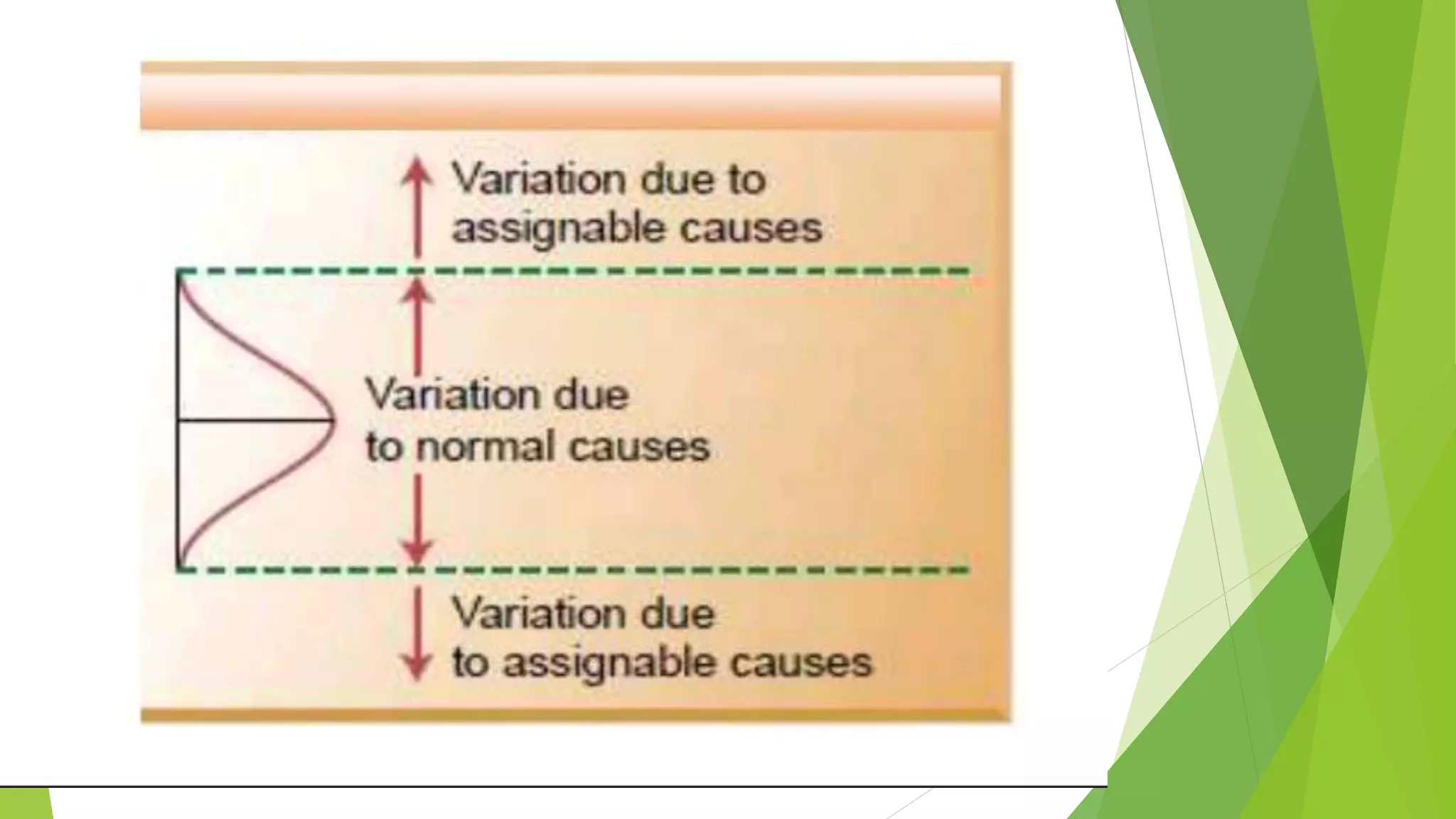
Variation due to chance causes/
common causes
 This Variation is NOT due to defect in machine, raw
material or any other factors .
 Behave in random manner.
 Negligible but investable.
 The process is said to be under the state of statistical
control.
Variation due to assignable causes :
 Difference in quality of raw material
 Difference in machines
 Difference in operator
 Difference of time
Specification and control limits :
 No items in the world can be a true copy of another
item.
 It is not expressed in absolute values but in terms of a
range .
 For Eg.
The diameter of a pen is expected by its
manufacture not as 7mm but as 7mm±0.05
Thus, the diameter of pen produced by the
manufacture can vary from 6.95mm to 7.05mm.
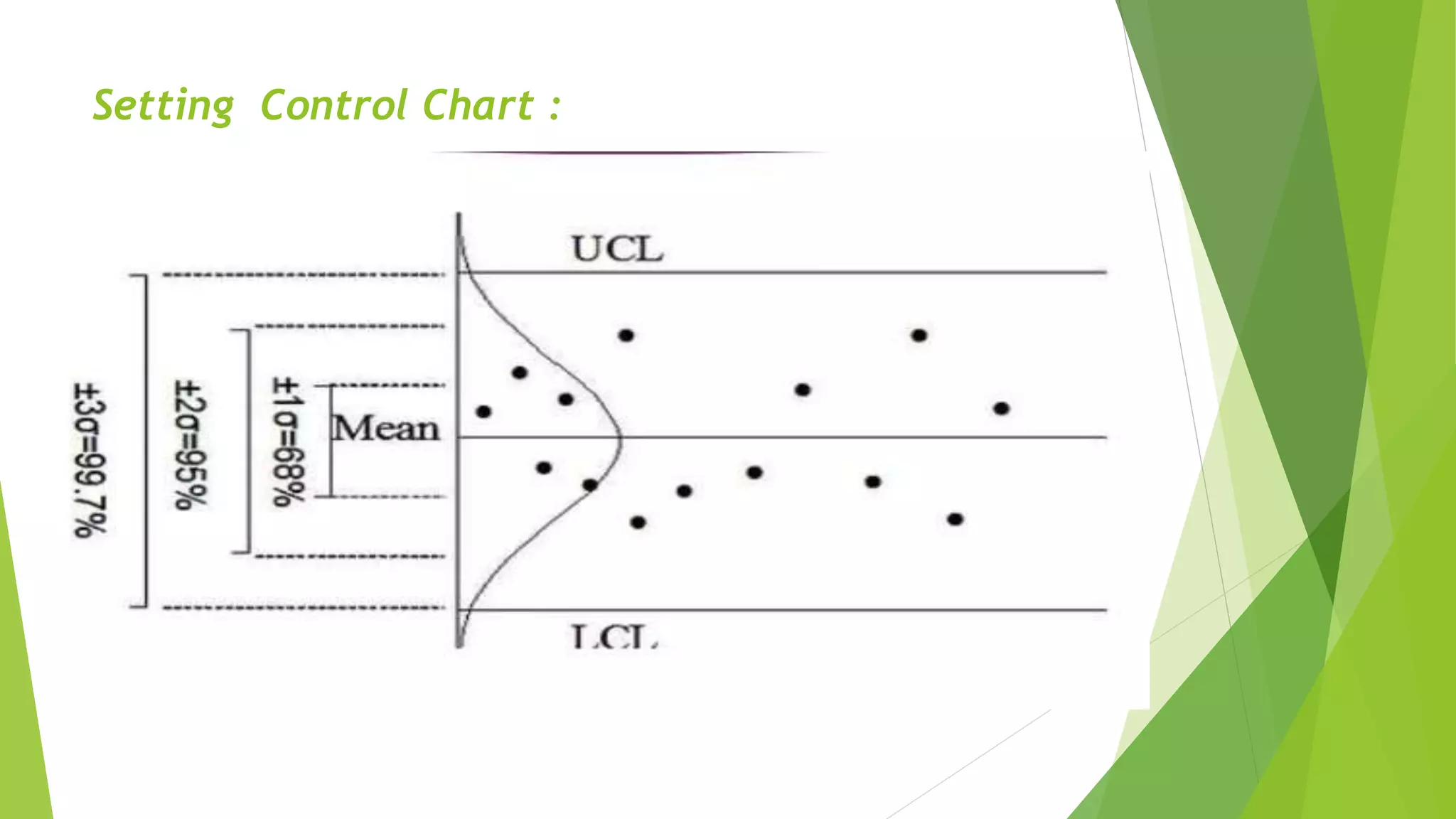
Setting Control Chart :
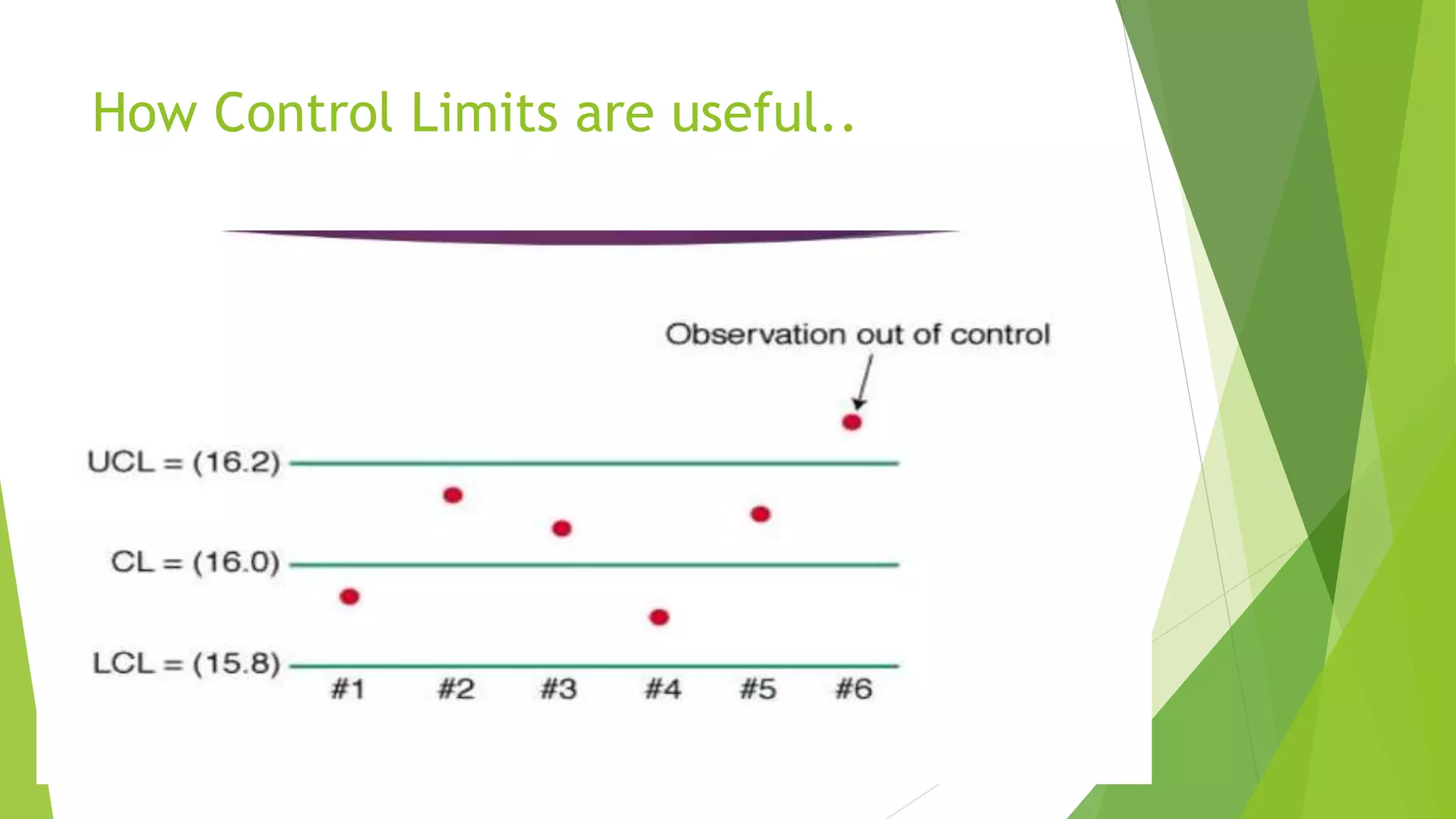
How Control Limits are useful..
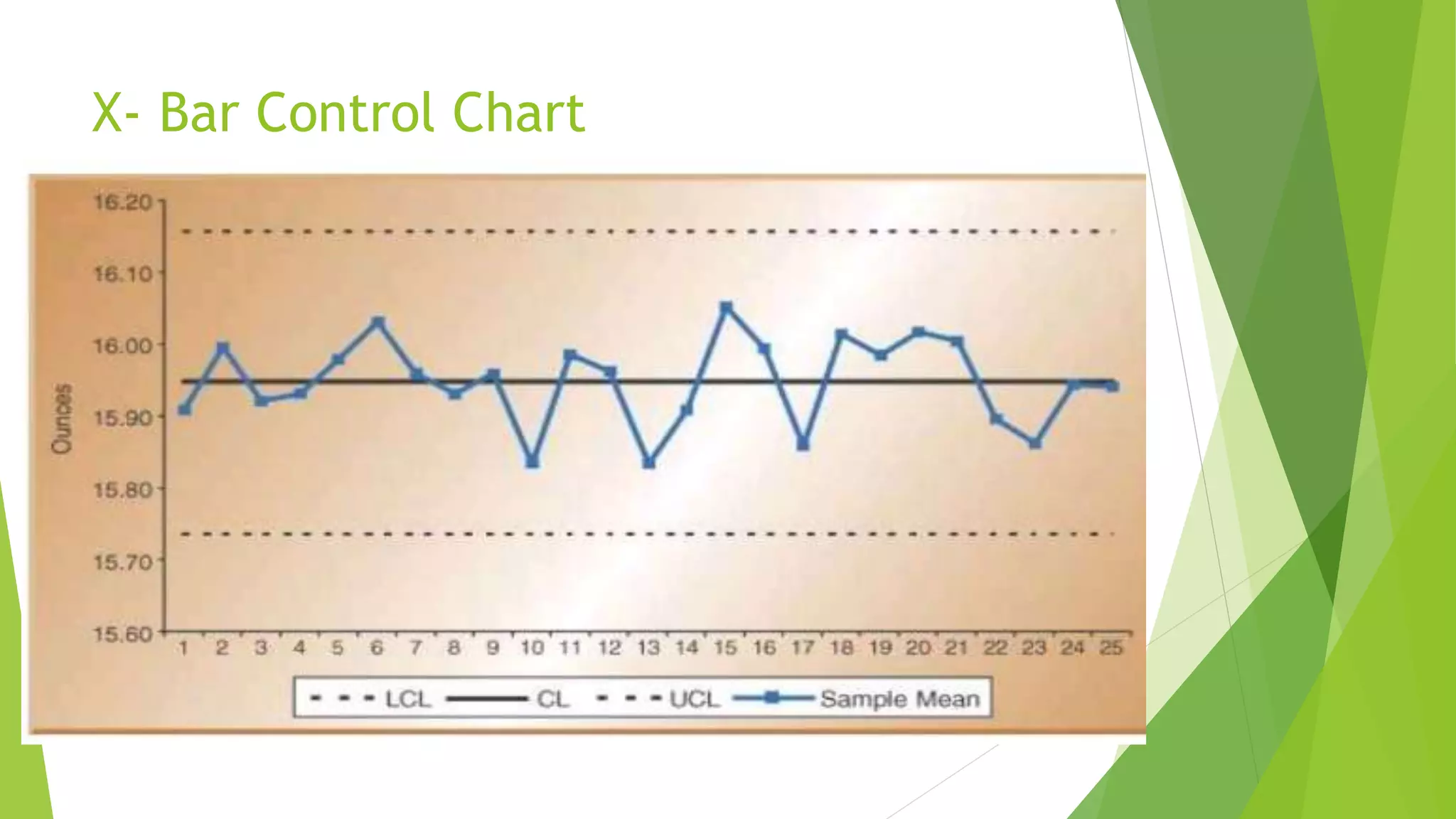
X- Bar Control Chart
Preventive Maintenance:
 The primary goal of maintenance is to avoid or mitigate the
consequences of failure of equipment.
 This may be by preventing the failure before it actually
occurs which Planned Maintenance and Condition Based
Maintenance help to achieve
 Maintenance activities include partial or complete overhauls
at specified periods, oil changes, lubrication, minor
adjustments, and so on. In addition, workers can record
equipment deterioration so they know to replace or repair
worn parts before they cause system failure.
For eg . servicing of our vehicle
Corrective Maintenance :
 Corrective maintenance is a maintenance task
performed to identify, isolate, and rectify a fault so
that the failed equipment, machine, or system can
be restored to an operational condition within the
tolerances or limits established for in-service
operations.
for eg. Replacement of component after failure
Conclusion:
 ●This paper presents an integrated model for the joint optimization of
statistical process control (sampling intervals, sample size and control
limit) and preventive maintenance
 Information from quality control charts is utilized to facilitate
maintenance decisions.
 ●It is assumed that preventive maintenance is imperfect, meaning
that preventive maintenance improves the process from its current
state to any non-worse state with given probabilities.
 ●A cost model is formulated for the simultaneous optimization of
statistical process control and maintenance activities with the
objective of minimizing the total expected operational cost rate
References
 ●Alardhi, M., Labib, A.W., 2008. Preventive maintenance
scheduling of multicogeneration plants using integer
programming. Journal of the Operational Research Society 59,
503–509.
 ●Ben-Daya, M., 1999. Integrated production maintenance and
quality model for imperfect processes. IIE Transactions 31 (6),
491–501.
Joint optimisation  of x bar control chart &

Joint optimisation of x bar control chart &

  • 1.
    JOINT OPTIMISATION OFX BAR CONTROL CHART & PREVENTIVE MAINTENANCE (YISHA XIANG*) - SANTOSH PIDGE
  • 2.
    Control chart  Acontrol chart is graphically representation of the collected information.  It detects the variation in processing.  Types of control cahrt, 1) x -chart 2) R -chart 3) 6- chart
  • 3.
    Statistical process control A. Shewhart developed the control chart In 1924 and concept of A state statistical Control.  Extend the quality of the product by using statistics.  Statistics process control help to determine the amount of variation.  To make sure process in a state of control.
  • 4.
    Variation in Quality: Some sort of variation the two atoms is bound to be there. In fact is an integral part of any manufacturing process.  This difference in characteristics known as variation.  This variation may be due to substandard quality of raw material, carelessness on the part of operator, fault in machinery systems etc.
  • 5.
    Types Of Variations A.Variation due to “chance causes” B. Variation due “assinable causes”
  • 6.
    Variation due tochance causes/ common causes  This Variation is NOT due to defect in machine, raw material or any other factors .  Behave in random manner.  Negligible but investable.  The process is said to be under the state of statistical control.
  • 7.
    Variation due toassignable causes :  Difference in quality of raw material  Difference in machines  Difference in operator  Difference of time
  • 9.
    Specification and controllimits :  No items in the world can be a true copy of another item.  It is not expressed in absolute values but in terms of a range .  For Eg. The diameter of a pen is expected by its manufacture not as 7mm but as 7mm±0.05 Thus, the diameter of pen produced by the manufacture can vary from 6.95mm to 7.05mm.
  • 10.
  • 11.
    How Control Limitsare useful..
  • 12.
  • 13.
    Preventive Maintenance:  Theprimary goal of maintenance is to avoid or mitigate the consequences of failure of equipment.  This may be by preventing the failure before it actually occurs which Planned Maintenance and Condition Based Maintenance help to achieve  Maintenance activities include partial or complete overhauls at specified periods, oil changes, lubrication, minor adjustments, and so on. In addition, workers can record equipment deterioration so they know to replace or repair worn parts before they cause system failure. For eg . servicing of our vehicle
  • 14.
    Corrective Maintenance : Corrective maintenance is a maintenance task performed to identify, isolate, and rectify a fault so that the failed equipment, machine, or system can be restored to an operational condition within the tolerances or limits established for in-service operations. for eg. Replacement of component after failure
  • 15.
    Conclusion:  ●This paperpresents an integrated model for the joint optimization of statistical process control (sampling intervals, sample size and control limit) and preventive maintenance  Information from quality control charts is utilized to facilitate maintenance decisions.  ●It is assumed that preventive maintenance is imperfect, meaning that preventive maintenance improves the process from its current state to any non-worse state with given probabilities.  ●A cost model is formulated for the simultaneous optimization of statistical process control and maintenance activities with the objective of minimizing the total expected operational cost rate
  • 16.
    References  ●Alardhi, M.,Labib, A.W., 2008. Preventive maintenance scheduling of multicogeneration plants using integer programming. Journal of the Operational Research Society 59, 503–509.  ●Ben-Daya, M., 1999. Integrated production maintenance and quality model for imperfect processes. IIE Transactions 31 (6), 491–501.