John Kotter – Steps to Change Management Konosuke Matsushita Professor of Leadership at Harvard  Author of  Leading Change  and  A Force for Change: Leadership Differs from Management .  Matsushita Leadership
Barriers to change Writing a memo instead of lighting a fire  Committees | Reports |  What contributes to complacency?  How do we create a sense of urgency? Talking too much saying too little 10 X effort in speaking ! Bad media [speeches / memos] | Inconsistent behavior MBWA ? Face to face time ?  Declaring victory before the war is over 0.1 X time for change | settling for too little too soon Looking for villains in the wrong places  Who are the inertia?
Failures in change management Allowing too much complacency  Failing to create a sufficiently powerful guiding coalition  Underestimating the power of vision  Under-communicating the vision  Permitting obstacles to block the vision  Failing to create short term wins  Declaring victory too soon  Neglecting to anchor changes firmly in the corporate culture.
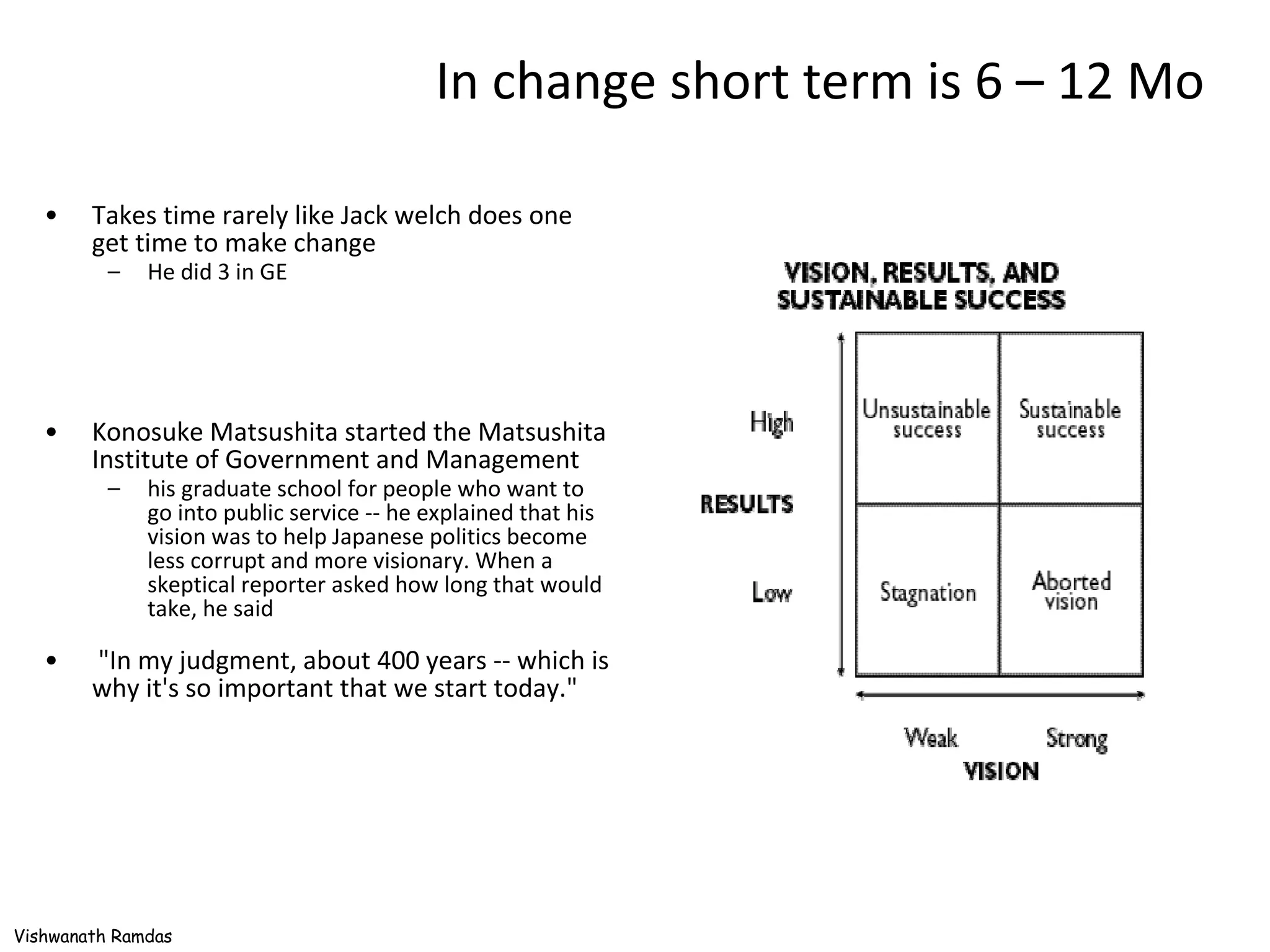
In change short term is 6 – 12 Mo Takes time rarely like Jack welch does one get time to make change  He did 3 in GE Konosuke Matsushita started the Matsushita Institute of Government and Management  his graduate school for people who want to go into public service -- he explained that his vision was to help Japanese politics become less corrupt and more visionary. When a skeptical reporter asked how long that would take, he said "In my judgment, about 400 years -- which is why it's so important that we start today."
Leadership for change Build coalitions Engage the right talent [ what are the traits? Where from? Growing coalitions strategically [giving credit of success to others, investing when the person is small for long term] Working as a team [change means stress >> personnel problems, doing, sharing, committing ] Creating a vision Leading by example [emotional pitch / effect] Leadership traits [ challenging status quo / fresh eyes] Great leaders take risks [ put efforts into change]
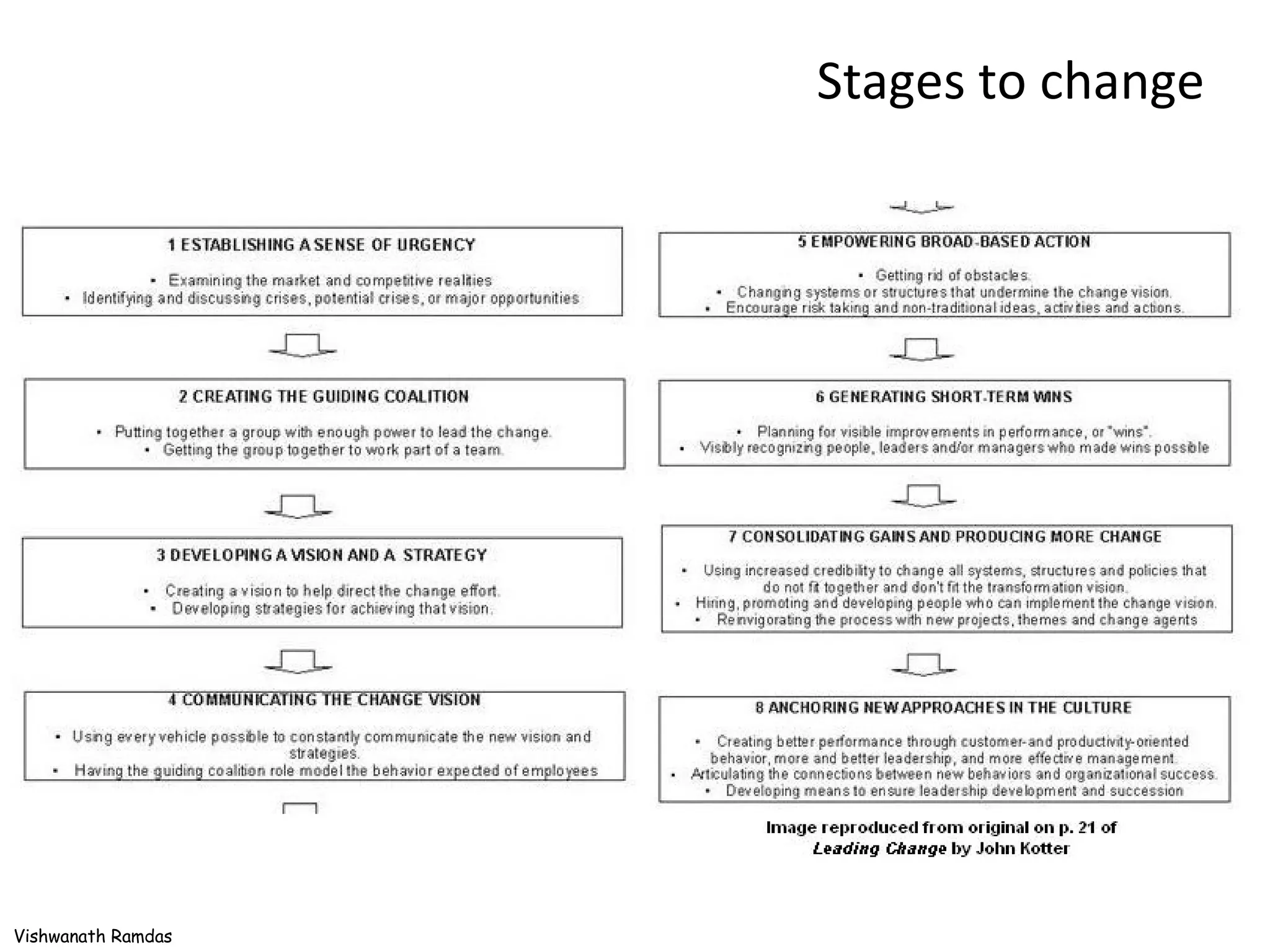
8 steps to organization change Establish a Sense of Urgency Examine market and competitive realities Identify and discuss crises, potential crises, or major opportunities Form a Powerful Guiding Coalition Assemble a group with enough power to lead the change effort Encourage the group to work as a team Create a Vision Create a vision to help direct the change effort Develop strategies for achieving that vision Communicate the Vision Use every vehicle possible to communicate the new vision and strategies Teach new behaviors by the example of the guiding coalition
8 steps to organization change Plan for and Create Short-Term Wins Plan for visible performance improvements Create those improvements Recognize &  reward employees involved in improvements Consolidate Improvements and Produce  More Change Use increased credibility to change systems, structures, and policies that don't fit the vision Hire, promote, and develop employees who can implement the vision Reinvigorate the process with new projects, themes, and change agents Institutionalize New Approaches Articulate the connections between the new behaviors and organizational success Develop the means to ensure leadership development and succession Empower Others to Act on  Vision Get rid of obstacles to change Change systems or  structures that seriously undermine the vision Encourage risk taking and nontraditional ideas, activities, and actions
Stages to change
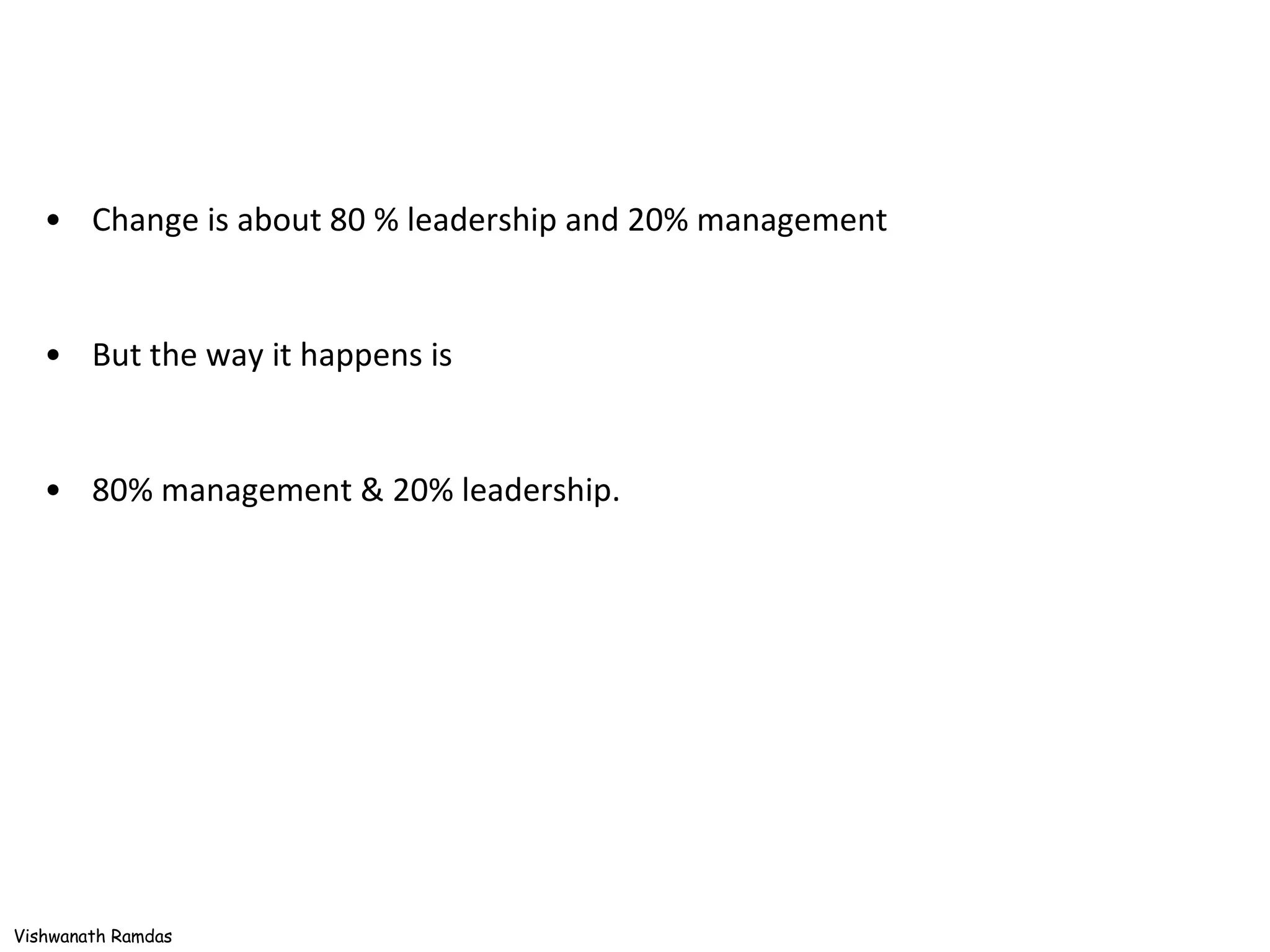
Change is about 80 % leadership and 20% management But the way it happens is  80% management & 20% leadership.

John kotter steps to change mgmt My notes

  • 1.
    John Kotter –Steps to Change Management Konosuke Matsushita Professor of Leadership at Harvard Author of Leading Change and A Force for Change: Leadership Differs from Management . Matsushita Leadership
  • 2.
    Barriers to changeWriting a memo instead of lighting a fire Committees | Reports | What contributes to complacency? How do we create a sense of urgency? Talking too much saying too little 10 X effort in speaking ! Bad media [speeches / memos] | Inconsistent behavior MBWA ? Face to face time ? Declaring victory before the war is over 0.1 X time for change | settling for too little too soon Looking for villains in the wrong places Who are the inertia?
  • 3.
    Failures in changemanagement Allowing too much complacency Failing to create a sufficiently powerful guiding coalition Underestimating the power of vision Under-communicating the vision Permitting obstacles to block the vision Failing to create short term wins Declaring victory too soon Neglecting to anchor changes firmly in the corporate culture.
  • 4.
    In change shortterm is 6 – 12 Mo Takes time rarely like Jack welch does one get time to make change He did 3 in GE Konosuke Matsushita started the Matsushita Institute of Government and Management his graduate school for people who want to go into public service -- he explained that his vision was to help Japanese politics become less corrupt and more visionary. When a skeptical reporter asked how long that would take, he said "In my judgment, about 400 years -- which is why it's so important that we start today."
  • 5.
    Leadership for changeBuild coalitions Engage the right talent [ what are the traits? Where from? Growing coalitions strategically [giving credit of success to others, investing when the person is small for long term] Working as a team [change means stress >> personnel problems, doing, sharing, committing ] Creating a vision Leading by example [emotional pitch / effect] Leadership traits [ challenging status quo / fresh eyes] Great leaders take risks [ put efforts into change]
  • 6.
    8 steps toorganization change Establish a Sense of Urgency Examine market and competitive realities Identify and discuss crises, potential crises, or major opportunities Form a Powerful Guiding Coalition Assemble a group with enough power to lead the change effort Encourage the group to work as a team Create a Vision Create a vision to help direct the change effort Develop strategies for achieving that vision Communicate the Vision Use every vehicle possible to communicate the new vision and strategies Teach new behaviors by the example of the guiding coalition
  • 7.
    8 steps toorganization change Plan for and Create Short-Term Wins Plan for visible performance improvements Create those improvements Recognize & reward employees involved in improvements Consolidate Improvements and Produce More Change Use increased credibility to change systems, structures, and policies that don't fit the vision Hire, promote, and develop employees who can implement the vision Reinvigorate the process with new projects, themes, and change agents Institutionalize New Approaches Articulate the connections between the new behaviors and organizational success Develop the means to ensure leadership development and succession Empower Others to Act on Vision Get rid of obstacles to change Change systems or structures that seriously undermine the vision Encourage risk taking and nontraditional ideas, activities, and actions
  • 8.
  • 9.
    Change is about80 % leadership and 20% management But the way it happens is 80% management & 20% leadership.