

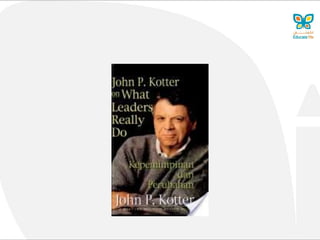
John Kotter
Who is John Kotter?
•John Paul Kotter (born 1947) is a
former professor at the Harvard
Business School, an acclaimed
author, and now Chief Innovation
Officer at Kotter International. He is
regarded as an authority on
leadership and change.
Why John Kotter is one of the
founders of leadership change
- Kotter is the author of 18 books, and his books are in the top
1% of sales from Amazon.com.
- His international bestseller” Leading Change”, outlined an
actionable, 8-step process for implementing successful
transformations.
- In 1998, his Matsushita Leadership won first place in the
Financial Times, Booz-Allen Global Business Book Competition
for biography/autobiography
- In October 2001, Business Week magazine rated Kotter the #1
"leadership guru" in America based on a survey they conducted
of 504 enterprises.
- In 1996, "Leading Change" was named the #1 management
book of the year by Management General.
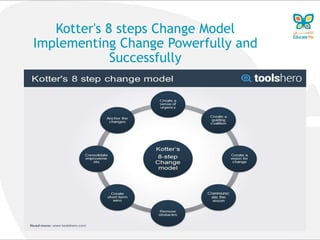
Kotter's 8 steps Change Model
Implementing Change Powerfully and
Successfully
Step 1: Create Urgency
- Identify potential threats, and develop scenarios
showing what could happen in the future.
-- Examine opportunities that should be, or could be,
exploited.
- Start honest discussions, and give dynamic and
convincing reasons to get people talking and thinking.
- Request support from customers, outside
stakeholders and industry people to strengthen your
argument.
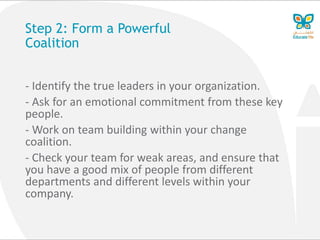
Step 2: Form a Powerful
Coalition
- Identify the true leaders in your organization.
- Ask for an emotional commitment from these key
people.
- Work on team building within your change
coalition.
- Check your team for weak areas, and ensure that
you have a good mix of people from different
departments and different levels within your
company.
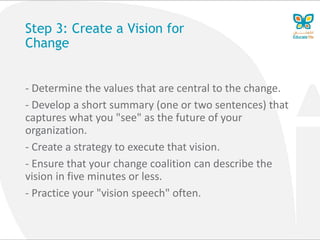
Step 3: Create a Vision for
Change
- Determine the values that are central to the change.
- Develop a short summary (one or two sentences) that
captures what you "see" as the future of your
organization.
- Create a strategy to execute that vision.
- Ensure that your change coalition can describe the
vision in five minutes or less.
- Practice your "vision speech" often.
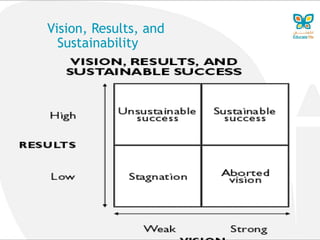
Vision, Results, and
Sustainability
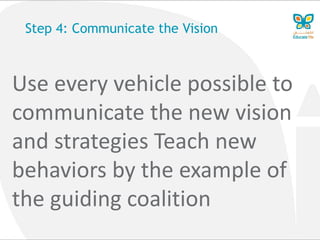
Step 4: Communicate the Vision
Use every vehicle possible to
communicate the new vision
and strategies Teach new
behaviors by the example of
the guiding coalition
Step 5: Remove Obstacles
- Get rid of obstacles to change
- Change systems or structures
that seriously undermine the vision
-Encourage risk taking and
nontraditional ideas, activities, and
actions
Step 6: Create Short term Wins
- Plan for visible performance
improvements
- Creating those improvements
- Recognize and reward
employees involved in the
improvements
Step 7: Build on the Change
- Consolidate Improvements by increased
credibility to change systems, structures, and
eliminate policies that don't fit the vision.
- Hire, promote, and develop
employees who can implement the vision
- Reinvigorate the process with new
projects, themes, and change agents
Step 8: Anchor the Changes in
Corporate Culture
- Articulate the connections
between the new behaviors and
organizational success
- Develop the means to ensure
leadership development and
succession
- Foster the changes into the
foundation culture
John kotter"s 8 Steps Change Model

John kotter"s 8 Steps Change Model

  • 1.
  • 2.
    Who is JohnKotter? •John Paul Kotter (born 1947) is a former professor at the Harvard Business School, an acclaimed author, and now Chief Innovation Officer at Kotter International. He is regarded as an authority on leadership and change.
  • 3.
    Why John Kotteris one of the founders of leadership change - Kotter is the author of 18 books, and his books are in the top 1% of sales from Amazon.com. - His international bestseller” Leading Change”, outlined an actionable, 8-step process for implementing successful transformations. - In 1998, his Matsushita Leadership won first place in the Financial Times, Booz-Allen Global Business Book Competition for biography/autobiography - In October 2001, Business Week magazine rated Kotter the #1 "leadership guru" in America based on a survey they conducted of 504 enterprises. - In 1996, "Leading Change" was named the #1 management book of the year by Management General.
  • 4.
    Kotter's 8 stepsChange Model Implementing Change Powerfully and Successfully
  • 5.
    Step 1: CreateUrgency - Identify potential threats, and develop scenarios showing what could happen in the future. -- Examine opportunities that should be, or could be, exploited. - Start honest discussions, and give dynamic and convincing reasons to get people talking and thinking. - Request support from customers, outside stakeholders and industry people to strengthen your argument.
  • 6.
    Step 2: Forma Powerful Coalition - Identify the true leaders in your organization. - Ask for an emotional commitment from these key people. - Work on team building within your change coalition. - Check your team for weak areas, and ensure that you have a good mix of people from different departments and different levels within your company.
  • 7.
    Step 3: Createa Vision for Change - Determine the values that are central to the change. - Develop a short summary (one or two sentences) that captures what you "see" as the future of your organization. - Create a strategy to execute that vision. - Ensure that your change coalition can describe the vision in five minutes or less. - Practice your "vision speech" often.
  • 8.
  • 9.
    Step 4: Communicatethe Vision Use every vehicle possible to communicate the new vision and strategies Teach new behaviors by the example of the guiding coalition
  • 10.
    Step 5: RemoveObstacles - Get rid of obstacles to change - Change systems or structures that seriously undermine the vision -Encourage risk taking and nontraditional ideas, activities, and actions
  • 11.
    Step 6: CreateShort term Wins - Plan for visible performance improvements - Creating those improvements - Recognize and reward employees involved in the improvements
  • 12.
    Step 7: Buildon the Change - Consolidate Improvements by increased credibility to change systems, structures, and eliminate policies that don't fit the vision. - Hire, promote, and develop employees who can implement the vision - Reinvigorate the process with new projects, themes, and change agents
  • 13.
    Step 8: Anchorthe Changes in Corporate Culture - Articulate the connections between the new behaviors and organizational success - Develop the means to ensure leadership development and succession - Foster the changes into the foundation culture

Editor's Notes

  • #15 References: http://en.wikipedia.org/wiki/John_Kotter http://books.google.com.eg/books?id=H02ar1hD7nAC&redir_esc=y http://www.mindtools.com/pages/article/newPPM_82.htm http://blogs.hbr.org/kotter/