Author : ShankaraNarayanan S
Publisher: Adyar Library and Research Center ] The Theosophical
Society Press
First Edition third Reprint 2011
ISBN [10]: 81-85141-14-2
ISBN [13]: 978-81-85141-14-5
Radha Burnier
Swami Smarananda [ Sri Ramakrishna Math, Chennai
Rabindranath Tagore's Quote ... love for India, 1.
Satyam Gnanam Anantam Brahma
Santam Shivam Advaitam
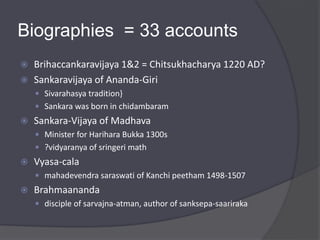
Biographies = 33 accounts
 Brihaccankaravijaya 1&2 = Chitsukhacharya 1220 AD?
 Sankaravijaya of Ananda-Giri
 Sivarahasya tradition}
 Sankara was born in chidambaram
 Sankara-Vijaya of Madhava
 Minister for Harihara Bukka 1300s
 ?vidyaranya of sringeri math
 Vyasa-cala
 mahadevendra saraswati of Kanchi peetham 1498-1507
 Brahmaananda
 disciple of sarvajna-atman, author of sanksepa-saariraka
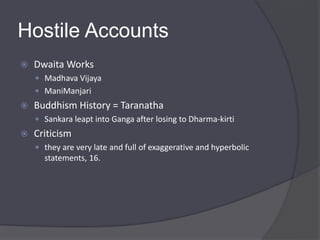
Hostile Accounts
 Dwaita Works
 Madhava Vijaya
 ManiManjari
 Buddhism History = Taranatha
 Sankara leapt into Ganga after losing to Dharma-kirti
 Criticism
 they are very late and full of exaggerative and hyperbolic
statements, 16.
State of history writing in India
 Poetic license
 Kumarila Bhatta in Mimamsa Vartika
 states that even valmiki and Vyasa used poetic license in
narratives
Bhartrhari on the advent of extraordinary man; Quote 22.
2 fold Dharma of Bharat
 Pravriti [ Rituals and Scriptures ]
 Nivritti [ renunciation, enquiry, negation ]
 Decline and its restoration by the Divine, 23.
The supremacy of Buddhism, 26.
6 schools of Dharma
 Sankhya: Oldest
 inert material cause, [ pradhaana]
○ denouncing supremeness, ++ no God Particle
○ Satkarya vada [ theory of causation, effects exist subtly in the cause]
 Nyaya
 nyaya vartika b udhyottakara 600AD? fight against buddhism
 Vaisesikha,
 Yoga,
 Purva-Mimamsa,
 Authors Jaimini, Upavarsa, Sabar-svamin ++ pravritti dharma ++
Karma
 Bhartru-prapanca = found it difficult to understand how Nivritti
was an independent path in itself
 The Bhakti school, 29.
Prasthanatraya = Brahmasutras ++ Upanishads ++
Bagavadgita
Advaita
Northern school of Vedanta,
 Gaudapãda
 ?Alleged Buddhistic features of Gauda pada's Karikas
 mandukya kaarika = commentary on Mandukya upanishad
 Buddhism picks off vedanta as Mahedra-varma I pallava 600 AD
noted
 Govinda Bhagavatpada. ,
 Mahabhasya of Patanjali, grammarian
 Real name chandra-svamin ,
 4 sons : bhartruhari being one of them
○ who propounded - sabda-advaita vaada [ wave theory ]
 Kashmir / Ujjain
Southern school of Vedanta
 Brahmanandin, = Chandogya Vaakya, [atri]
 Dramidacarya.= Bhasya on the above vaakya [atri]
 Sundara Pandya= varttika on sariraka mimansa vritti by
upavarsa
3 degrees of reality
 illusory rope snake
 Absolute Brahman
 phenomenal reality
Quotes by Veda Vyasa and Max Müller on the limitations of
logic. 39
Scenic land of Kerala
 Parasu-Rãmaksetra, 41.
 Cidvilasa -= 15 verse description , purna, Curni, Aluwa,
Periyar,
Kaipillli house
Atri Gotra
 Atri [book 5, svarbhanu, Sun ]
 taittiriya YajurVeda,
 10K students
 a-tri free from rajas tamas, sat.
 Anusuya, ++ Dandaka Forest
 Sivaguru Father title : Vidhya-adhiraja
 Makha Pandita FIL / Meputtur
 Aryamba Mother
 Tri-sivaperur [ Trissur ] Blessing for son
 Vrsa-cala Bull hill ++ Dakshina Kailasa
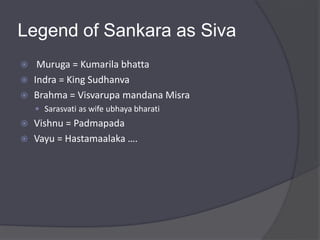
Legend of Sankara as Siva
 Muruga = Kumarila bhatta
 Indra = King Sudhanva
 Brahma = Visvarupa mandana Misra
 Sarasvati as wife ubhaya bharati
 Vishnu = Padmapada
 Vayu = Hastamaalaka ….
Sankara Birth
 Pancami, Vaisakha [ May / June ]
 Guru poornima today
 Nakshatra
○ punarvasu 7 Rama
○ ardra 6th Siva
 Meaning of Samkara
 Sam [5] + Ka [1] + Ra [2] == 5 th day, 1st fortnight, 2nd month ..
7th nakshatra
 Sanskrit numbering = sequential consonants ++ chronograph, 1
sun, 2 eyes etc..
Key milestones
 3Y = caulakarma
 Saundarya Lahari : Bhagavathi feeds the baby and baby narrates [
Devibhujanga, Bhujangaprayaata ]
 5Y upanayana = ghatika , chaturvaidyasala , bhiksha carana
 7Y = completed all the vaidika works
 Kanakadhara stotra
 Poor woman, gooseberry offering bhiksha
 gold + svarna Attu mana
 8Y back at home
 Pulls river purna nearer to home for his mother 56.
 Rajasekhara's visit
 Offers gold, ++ 3 poems recital …. they are good!! ++ Son is born
 Rishis, 8Y Bless further life ++ expanded to 16Y sad news
 Samnyasa : Crocodile incident
 VivekaChudamani [79,81,82,143 ] Crocodile as craving and indulgence in
life
Quotes Merutunga and George Eliot on ancient stories 70.
Govinda Bhagavatpada Guru
 Ans Sat-chit-ananda
 Dasa-sloki
 madhusudana Sarasvati comments that this is better than
Brahma-sutras of baadaraayana / Vyasa ]
 Contains the narmada
 narmada-astaka [ Vindhya viruddham dhyayati, Agastya = one
who conquered a mountain
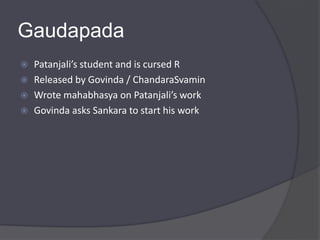
Gaudapada
 Patanjali’s student and is cursed R
 Released by Govinda / ChandaraSvamin
 Wrote mahabhasya on Patanjali’s work
 Govinda asks Sankara to start his work
Works of Sankara
 Kasi [ pentad and Octad written ]
 Meeting Vishnu-sarma
 Sanandana and later padma-pada
 Narrating Bhaja Govindam
 dwadasa pajarika stotra
 chaturdasa [ charpata] panjarika stotra ]
 12 + 14 = mohamudgara
 Candala as preceptor = Manisa pancakam
Badarika Asrama Gauda padas
15 works
 11 Upanishad Bhasya
 Mandukya, Isha, Kena [2] , Chandogya, katha,
 prashna, taittiriy,a Aittiriya, bhruhad-aranyaka , mundaka
 2 bhaasyas on kena are pada and vakya [ word and sentence]
 Other Doubtful Upanishads
 nrusimha taapini, kausitaki, svetashwatara upanishads
 3 itihasa bhasya
 Bagavadgita,
 sanat-sujaatiya
 vishnu sahasra nama stotra
 Sutra-prasthana on brahmsutra
 shariraka bhaasya
 Meeting Badaraayana Vyasa
 debate [ mural in the varadaraja temple in kanci
 gives him 16 more years
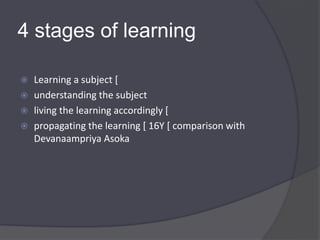
4 stages of learning
 Learning a subject [
 understanding the subject
 living the learning accordingly [
 propagating the learning [ 16Y [ comparison with
Devanaampriya Asoka
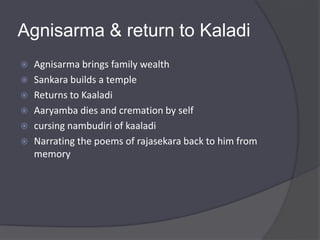
Agnisarma & return to Kaladi
 Agnisarma brings family wealth
 Sankara builds a temple
 Returns to Kaaladi
 Aaryamba dies and cremation by self
 cursing nambudiri of kaaladi
 Narrating the poems of rajasekara back to him from
memory
Kumarila Bhatta and Mandana
Misra
 Disciples = Mandana, Umveka, Prabhakara Misra, Muraari Misra
 Kumarila bhatta Falls pushed by buddhists, losing right eye
 Sankara wants kumarila to write a varttika on Sariraka Bhasya
 Dying Kumarila, on the pyre reads introduction and guides him to
visvarupa / Mandana
 Mandana mishra
 mahishmati , Shraddha ceremony
 Ubhaya bharati as the judge
 Judgment by fresh garland
 Ubhaya bhaarati
 questions on sex kama sutra = amaru-sataka by sankara
 Mandana becomes sureshwara-carya [ 1st sankara of sringeri ]
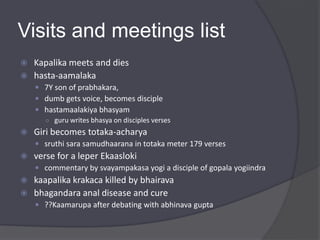
Visits and meetings list
 Kapalika meets and dies
 hasta-aamalaka
 7Y son of prabhakara,
 dumb gets voice, becomes disciple
 hastamaalakiya bhasyam
○ guru writes bhasya on disciples verses
 Giri becomes totaka-acharya
 sruthi sara samudhaarana in totaka meter 179 verses
 verse for a leper Ekaasloki
 commentary by svayampakasa yogi a disciple of gopala yogiindra
 kaapalika krakaca killed by bhairava
 bhagandara anal disease and cure
 ??Kaamarupa after debating with abhinava gupta
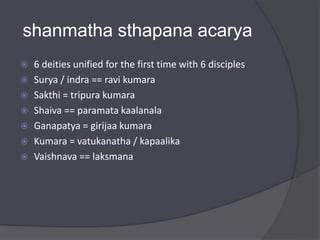
shanmatha sthapana acarya
 6 deities unified for the first time with 6 disciples
 Surya / indra == ravi kumara
 Sakthi = tripura kumara
 Shaiva == paramata kaalanala
 Ganapatya = girijaa kumara
 Kumara = vatukanatha / kapaalika
 Vaishnava == laksmana
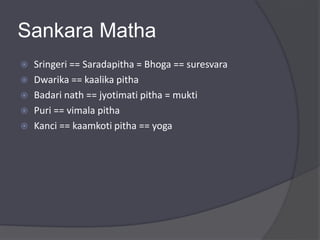
Sankara Matha
 Sringeri == Saradapitha = Bhoga == suresvara
 Dwarika == kaalika pitha
 Badari nath == jyotimati pitha = mukti
 Puri == vimala pitha
 Kanci == kaamkoti pitha == yoga
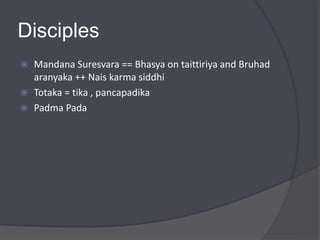
Disciples
 Mandana Suresvara == Bhasya on taittiriya and Bruhad
aranyaka ++ Nais karma siddhi
 Totaka = tika , pancapadika
 Padma Pada
Pentad for easy understanding of advaita sara
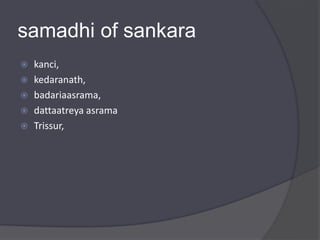
samadhi of sankara
 kanci,
 kedaranath,
 badariaasrama,
 dattaatreya asrama
 Trissur,
types of commentaries
 Sutra
 Bhaasya
 Varttika
Chapter VI Philosophy of
Sankara
 Brahma Jignasa, Atma Jignasa Brahma Vicara
 Brahma satya jagan mithya jiva barhmaiva naaparaha
Brahma sat
 Svarupalaksana
 negation, == nirguna saguna
 antaryaamin
 sambandha avastha
 imaginary relations
 maya- sakti leads to lower level entities with different sat rajas
tamas , sankhya inert
 Sambandha anaavastha
 relentless relationship regression
 relationship is false bheda self contradictions three there is no
difference Brahma isvara self
advaita focus
 Focus on nature of Brahman and not relations
 sraddha ++ manana ++ anumana
 frailty of suska tarka self based logic
 Sravana and sramana Buddha Sankara
 Brahma sat ! Nirguna saguna are the same
 vimuktas cha vimucyate
 3 states atma Brahman medium
 self deha dehi ( jiva)
 reflects universal nature svaprakasa self luminous
Atman aham
 Difference is anirvacaniya and through maya-sakti
 Aavarana Maya and. Viksepa
 veiling and manifesting extremes leading to lower forms
 self clouding
 17 layers organs
 sutra-atma
 atma as a string
 Indian string theory mahaprana virat vaishvaanara
 Gods are interactions of guna rajas sat tamas in
differing proportions
 Maya == differentiation bheda ! Interaction
sambandha ! Interpretation mithya
Jagan mithya
 phantasia , buddha comparison vivartavada
 satkaaravada
 parinamavada
 vivartavada
 change and no change
 cryptic Buddhist
Atma brahmaiva na para
 brahmavid brahmaiva bhavati
 atomic atma
 embodied Brahman encapsulation satyam jnanam anantam atma
 ! ruler is not analogy of Brahman
 Ruler knows the kingdom but not everywhere
 wrong association Brahman not associated
 medium size atma
 realization failure
 Hunter kidnap instant realization to Prince
 bhagatyagalaksana
 words association are dropped and only root essence is true
 … like number and arithmetic ways to get there impermanence
 kataka nut water purification 8todo
 Soham vs daso-ham
 objection our perception is limited reality
 association sambandha avastha problem like owner described as the house
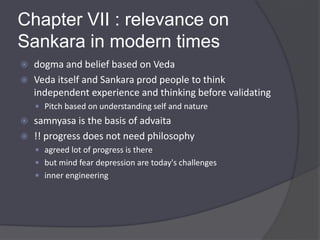
Chapter VII : relevance on
Sankara in modern times
 dogma and belief based on Veda
 Veda itself and Sankara prod people to think
independent experience and thinking before validating
 Pitch based on understanding self and nature
 samnyasa is the basis of advaita
 !! progress does not need philosophy
 agreed lot of progress is there
 but mind fear depression are today's challenges
 inner engineering
Dharmakirthi Buddha references
Boox summary 201602 sri sankara

Boox summary 201602 sri sankara

  • 1.
    Author : ShankaraNarayananS Publisher: Adyar Library and Research Center ] The Theosophical Society Press First Edition third Reprint 2011 ISBN [10]: 81-85141-14-2 ISBN [13]: 978-81-85141-14-5
  • 2.
    Radha Burnier Swami Smarananda[ Sri Ramakrishna Math, Chennai
  • 3.
    Rabindranath Tagore's Quote... love for India, 1. Satyam Gnanam Anantam Brahma Santam Shivam Advaitam
  • 4.
    Biographies = 33accounts  Brihaccankaravijaya 1&2 = Chitsukhacharya 1220 AD?  Sankaravijaya of Ananda-Giri  Sivarahasya tradition}  Sankara was born in chidambaram  Sankara-Vijaya of Madhava  Minister for Harihara Bukka 1300s  ?vidyaranya of sringeri math  Vyasa-cala  mahadevendra saraswati of Kanchi peetham 1498-1507  Brahmaananda  disciple of sarvajna-atman, author of sanksepa-saariraka
  • 5.
    Hostile Accounts  DwaitaWorks  Madhava Vijaya  ManiManjari  Buddhism History = Taranatha  Sankara leapt into Ganga after losing to Dharma-kirti  Criticism  they are very late and full of exaggerative and hyperbolic statements, 16.
  • 6.
    State of historywriting in India  Poetic license  Kumarila Bhatta in Mimamsa Vartika  states that even valmiki and Vyasa used poetic license in narratives
  • 7.
    Bhartrhari on theadvent of extraordinary man; Quote 22.
  • 8.
    2 fold Dharmaof Bharat  Pravriti [ Rituals and Scriptures ]  Nivritti [ renunciation, enquiry, negation ]  Decline and its restoration by the Divine, 23.
  • 9.
    The supremacy ofBuddhism, 26.
  • 10.
    6 schools ofDharma  Sankhya: Oldest  inert material cause, [ pradhaana] ○ denouncing supremeness, ++ no God Particle ○ Satkarya vada [ theory of causation, effects exist subtly in the cause]  Nyaya  nyaya vartika b udhyottakara 600AD? fight against buddhism  Vaisesikha,  Yoga,  Purva-Mimamsa,  Authors Jaimini, Upavarsa, Sabar-svamin ++ pravritti dharma ++ Karma  Bhartru-prapanca = found it difficult to understand how Nivritti was an independent path in itself  The Bhakti school, 29.
  • 11.
    Prasthanatraya = Brahmasutras++ Upanishads ++ Bagavadgita Advaita
  • 12.
    Northern school ofVedanta,  Gaudapãda  ?Alleged Buddhistic features of Gauda pada's Karikas  mandukya kaarika = commentary on Mandukya upanishad  Buddhism picks off vedanta as Mahedra-varma I pallava 600 AD noted  Govinda Bhagavatpada. ,  Mahabhasya of Patanjali, grammarian  Real name chandra-svamin ,  4 sons : bhartruhari being one of them ○ who propounded - sabda-advaita vaada [ wave theory ]  Kashmir / Ujjain
  • 13.
    Southern school ofVedanta  Brahmanandin, = Chandogya Vaakya, [atri]  Dramidacarya.= Bhasya on the above vaakya [atri]  Sundara Pandya= varttika on sariraka mimansa vritti by upavarsa
  • 14.
    3 degrees ofreality  illusory rope snake  Absolute Brahman  phenomenal reality
  • 16.
    Quotes by VedaVyasa and Max Müller on the limitations of logic. 39
  • 17.
    Scenic land ofKerala  Parasu-Rãmaksetra, 41.  Cidvilasa -= 15 verse description , purna, Curni, Aluwa, Periyar,
  • 18.
  • 19.
    Atri Gotra  Atri[book 5, svarbhanu, Sun ]  taittiriya YajurVeda,  10K students  a-tri free from rajas tamas, sat.  Anusuya, ++ Dandaka Forest  Sivaguru Father title : Vidhya-adhiraja  Makha Pandita FIL / Meputtur  Aryamba Mother  Tri-sivaperur [ Trissur ] Blessing for son  Vrsa-cala Bull hill ++ Dakshina Kailasa
  • 20.
    Legend of Sankaraas Siva  Muruga = Kumarila bhatta  Indra = King Sudhanva  Brahma = Visvarupa mandana Misra  Sarasvati as wife ubhaya bharati  Vishnu = Padmapada  Vayu = Hastamaalaka ….
  • 21.
    Sankara Birth  Pancami,Vaisakha [ May / June ]  Guru poornima today  Nakshatra ○ punarvasu 7 Rama ○ ardra 6th Siva  Meaning of Samkara  Sam [5] + Ka [1] + Ra [2] == 5 th day, 1st fortnight, 2nd month .. 7th nakshatra  Sanskrit numbering = sequential consonants ++ chronograph, 1 sun, 2 eyes etc..
  • 22.
    Key milestones  3Y= caulakarma  Saundarya Lahari : Bhagavathi feeds the baby and baby narrates [ Devibhujanga, Bhujangaprayaata ]  5Y upanayana = ghatika , chaturvaidyasala , bhiksha carana  7Y = completed all the vaidika works  Kanakadhara stotra  Poor woman, gooseberry offering bhiksha  gold + svarna Attu mana  8Y back at home  Pulls river purna nearer to home for his mother 56.  Rajasekhara's visit  Offers gold, ++ 3 poems recital …. they are good!! ++ Son is born  Rishis, 8Y Bless further life ++ expanded to 16Y sad news  Samnyasa : Crocodile incident  VivekaChudamani [79,81,82,143 ] Crocodile as craving and indulgence in life
  • 23.
    Quotes Merutunga andGeorge Eliot on ancient stories 70.
  • 24.
    Govinda Bhagavatpada Guru Ans Sat-chit-ananda  Dasa-sloki  madhusudana Sarasvati comments that this is better than Brahma-sutras of baadaraayana / Vyasa ]  Contains the narmada  narmada-astaka [ Vindhya viruddham dhyayati, Agastya = one who conquered a mountain
  • 25.
    Gaudapada  Patanjali’s studentand is cursed R  Released by Govinda / ChandaraSvamin  Wrote mahabhasya on Patanjali’s work  Govinda asks Sankara to start his work
  • 26.
    Works of Sankara Kasi [ pentad and Octad written ]  Meeting Vishnu-sarma  Sanandana and later padma-pada  Narrating Bhaja Govindam  dwadasa pajarika stotra  chaturdasa [ charpata] panjarika stotra ]  12 + 14 = mohamudgara  Candala as preceptor = Manisa pancakam
  • 27.
    Badarika Asrama Gaudapadas 15 works  11 Upanishad Bhasya  Mandukya, Isha, Kena [2] , Chandogya, katha,  prashna, taittiriy,a Aittiriya, bhruhad-aranyaka , mundaka  2 bhaasyas on kena are pada and vakya [ word and sentence]  Other Doubtful Upanishads  nrusimha taapini, kausitaki, svetashwatara upanishads  3 itihasa bhasya  Bagavadgita,  sanat-sujaatiya  vishnu sahasra nama stotra  Sutra-prasthana on brahmsutra  shariraka bhaasya  Meeting Badaraayana Vyasa  debate [ mural in the varadaraja temple in kanci  gives him 16 more years
  • 28.
    4 stages oflearning  Learning a subject [  understanding the subject  living the learning accordingly [  propagating the learning [ 16Y [ comparison with Devanaampriya Asoka
  • 29.
    Agnisarma & returnto Kaladi  Agnisarma brings family wealth  Sankara builds a temple  Returns to Kaaladi  Aaryamba dies and cremation by self  cursing nambudiri of kaaladi  Narrating the poems of rajasekara back to him from memory
  • 30.
    Kumarila Bhatta andMandana Misra  Disciples = Mandana, Umveka, Prabhakara Misra, Muraari Misra  Kumarila bhatta Falls pushed by buddhists, losing right eye  Sankara wants kumarila to write a varttika on Sariraka Bhasya  Dying Kumarila, on the pyre reads introduction and guides him to visvarupa / Mandana  Mandana mishra  mahishmati , Shraddha ceremony  Ubhaya bharati as the judge  Judgment by fresh garland  Ubhaya bhaarati  questions on sex kama sutra = amaru-sataka by sankara  Mandana becomes sureshwara-carya [ 1st sankara of sringeri ]
  • 32.
    Visits and meetingslist  Kapalika meets and dies  hasta-aamalaka  7Y son of prabhakara,  dumb gets voice, becomes disciple  hastamaalakiya bhasyam ○ guru writes bhasya on disciples verses  Giri becomes totaka-acharya  sruthi sara samudhaarana in totaka meter 179 verses  verse for a leper Ekaasloki  commentary by svayampakasa yogi a disciple of gopala yogiindra  kaapalika krakaca killed by bhairava  bhagandara anal disease and cure  ??Kaamarupa after debating with abhinava gupta
  • 33.
    shanmatha sthapana acarya 6 deities unified for the first time with 6 disciples  Surya / indra == ravi kumara  Sakthi = tripura kumara  Shaiva == paramata kaalanala  Ganapatya = girijaa kumara  Kumara = vatukanatha / kapaalika  Vaishnava == laksmana
  • 34.
    Sankara Matha  Sringeri== Saradapitha = Bhoga == suresvara  Dwarika == kaalika pitha  Badari nath == jyotimati pitha = mukti  Puri == vimala pitha  Kanci == kaamkoti pitha == yoga
  • 35.
    Disciples  Mandana Suresvara== Bhasya on taittiriya and Bruhad aranyaka ++ Nais karma siddhi  Totaka = tika , pancapadika  Padma Pada
  • 36.
    Pentad for easyunderstanding of advaita sara
  • 37.
    samadhi of sankara kanci,  kedaranath,  badariaasrama,  dattaatreya asrama  Trissur,
  • 38.
    types of commentaries Sutra  Bhaasya  Varttika
  • 39.
    Chapter VI Philosophyof Sankara  Brahma Jignasa, Atma Jignasa Brahma Vicara  Brahma satya jagan mithya jiva barhmaiva naaparaha
  • 40.
    Brahma sat  Svarupalaksana negation, == nirguna saguna  antaryaamin  sambandha avastha  imaginary relations  maya- sakti leads to lower level entities with different sat rajas tamas , sankhya inert  Sambandha anaavastha  relentless relationship regression  relationship is false bheda self contradictions three there is no difference Brahma isvara self
  • 41.
    advaita focus  Focuson nature of Brahman and not relations  sraddha ++ manana ++ anumana  frailty of suska tarka self based logic  Sravana and sramana Buddha Sankara  Brahma sat ! Nirguna saguna are the same  vimuktas cha vimucyate  3 states atma Brahman medium  self deha dehi ( jiva)  reflects universal nature svaprakasa self luminous
  • 42.
    Atman aham  Differenceis anirvacaniya and through maya-sakti  Aavarana Maya and. Viksepa  veiling and manifesting extremes leading to lower forms  self clouding  17 layers organs  sutra-atma  atma as a string  Indian string theory mahaprana virat vaishvaanara  Gods are interactions of guna rajas sat tamas in differing proportions  Maya == differentiation bheda ! Interaction sambandha ! Interpretation mithya
  • 44.
    Jagan mithya  phantasia, buddha comparison vivartavada  satkaaravada  parinamavada  vivartavada  change and no change  cryptic Buddhist
  • 45.
    Atma brahmaiva napara  brahmavid brahmaiva bhavati  atomic atma  embodied Brahman encapsulation satyam jnanam anantam atma  ! ruler is not analogy of Brahman  Ruler knows the kingdom but not everywhere  wrong association Brahman not associated  medium size atma  realization failure  Hunter kidnap instant realization to Prince  bhagatyagalaksana  words association are dropped and only root essence is true  … like number and arithmetic ways to get there impermanence  kataka nut water purification 8todo  Soham vs daso-ham  objection our perception is limited reality  association sambandha avastha problem like owner described as the house
  • 46.
    Chapter VII :relevance on Sankara in modern times  dogma and belief based on Veda  Veda itself and Sankara prod people to think independent experience and thinking before validating  Pitch based on understanding self and nature  samnyasa is the basis of advaita  !! progress does not need philosophy  agreed lot of progress is there  but mind fear depression are today's challenges  inner engineering
  • 47.