Don’t Let 
PCBs 
Manage You 
Tips for Handling 
a Potentially 
Contaminated 
Workplace
About the Expert 
Craig Sasse has worked at 
Triumvirate Environmental for 
over 6 years and has been 
environmental consultant for 
over 18. He performs 
environmental consulting and 
engineering services to assess, 
manage and mitigate 
environmental liability. He has 
done PCB consulting for some 
of the top Universities in the U.S.
Don’t Let PCBs Manage You 
Introduction 3 
Fast Facts 5 
Take Inventory 
Manage Construction 
Assume PCB Containing 
Use Consulting 
8 
10 
12 
15
Don’t Let PCBs Manage You 
Introduction 3 
Fast Facts 5 
Take Inventory 
Manage Construction 
Assume PCB Containing 
Use Consulting 
8 
10 
12 
15
Introduction 
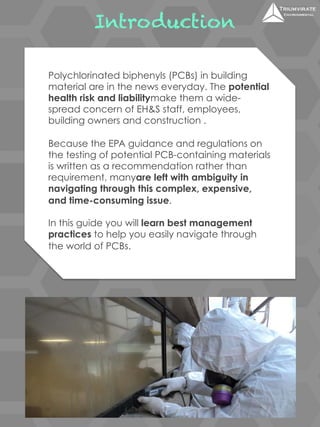
Polychlorinated biphenyls (PCBs) in building 
material are in the news everyday. The potential 
health risk and liabilitymake them a wide-spread 
concern of EH&S staff, employees, 
building owners and construction . 
Because the EPA guidance and regulations on 
the testing of potential PCB-containing materials 
is written as a recommendation rather than 
requirement, manyare left with ambiguity in 
navigating through this complex, expensive, 
and time-consuming issue. 
In this guide you will learn best management 
practices to help you easily navigate through 
the world of PCBs.
Don’t Let PCBs Manage You 
Introduction 3 
Fast Facts 5 
Take Inventory 
Manage Construction 
Assume PCB Containing 
Use Consulting 
8 
10 
12 
15
Fast Facts 
What are PCBs? 
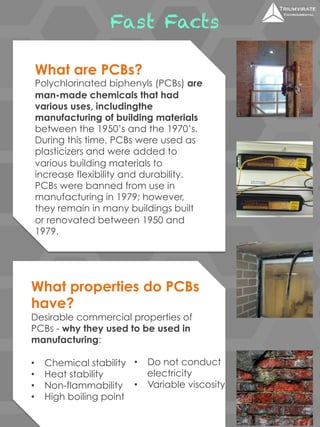
Polychlorinated biphenyls (PCBs) are 
man-made chemicals that had 
various uses, includingthe 
manufacturing of building materials 
between the 1950’s and the 1970’s. 
During this time, PCBs were used as 
plasticizers and were added to 
various building materials to 
increase flexibility and durability. 
PCBs were banned from use in 
manufacturing in 1979; however, 
they remain in many buildings built 
or renovated between 1950 and 
1979. 
What properties do PCBs 
have? 
Desirable commercial properties of 
PCBs - why they used to be used in 
manufacturing: 
• Chemical stability 
• Heat stability 
• Non-flammability 
• High boiling point 
• Do not conduct 
electricity 
• Variable viscosity
Fast Facts 
Where are 
PCBs 
found? 
• Transformers 
• Capacitors 
• Hydraulic 
fluids 
• Oil-based 
paints 
• Fluorescent 
light ballasts 
• Lubricating & 
cutting oils 
• Floor finishes 
• Fire retardants 
• Thermal 
insulation 
materials 
(foam, felt) 
• Caulking & 
grout 
• PVC coatings 
for electrical 
wire & 
components 
• Carbonless 
copy paper 
• Inks and dyes 
• Adhesives/ 
mastic 
Where are they regulated? 
The Toxic Substances Control Act (TSCA, 15 USC 
Chapter 53) granted EPA the authority to create a 
regulatory framework for control methods to 
prevent chemicals from posing unreasonable risk. 
The regulatory framework for PCBs is found in 40 
CFR 761. This prohibits and sets forth requirements 
for PCB manufacture, processing, and distribution 
in commerce. The regulation also specifies 
storage and disposal requirements of PCBs and 
PCB items. It governs owners, operators, and 
persons conducting cleanup of PCB 
contaminated property.
Don’t Let PCBs Manage You 
Introduction 3 
Fast Facts 5 
Take Inventory 
Manage Construction 
Assume PCB Containing 
Use Consulting 
8 
10 
12 
15
Take Inventory 
The first step in managing PCBs is to take an in-depth inventory 
of all buildings under your management. This could consist of a 
school system, a group of municipal buildings, a college 
campus, or a real estate portfolio. The inventory should include 
an evaluation of the age of the building, type of construction, 
and any renovation history. Next, inspect and inventory all 
suspect materials in “pedigree” buildings. 
Questions to Ask: 
• Was the commercial building built between 1950 and 
1979? 
• Were there renovations completed between 1950 and 
1979? 
• What materials are suspect? 
• Where are suspect materials? 
• Will renovations disturb suspect materials? 
• How much suspect material will be disturbed? 
If you were to answer “Yes” to the first two questions, then it is 
possible that the building was constructed using PCB-containing 
materials.
Don’t Let PCBs Manage You 
Introduction 3 
Fast Facts 5 
Take Inventory 
Manage Construction 
Assume PCB Containing 
Use Consulting 
8 
10 
12 
15
Manage Construction 
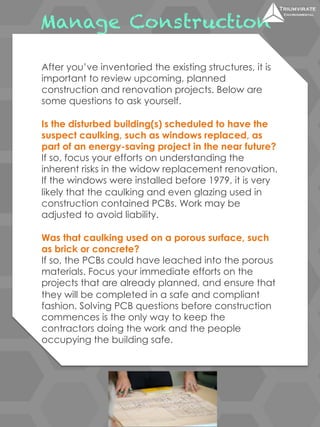
After you’ve inventoried the existing structures, it is 
important to review upcoming, planned 
construction and renovation projects. Below are 
some questions to ask yourself. 
Is the disturbed building(s) scheduled to have the 
suspect caulking, such as windows replaced, as 
part of an energy-saving project in the near future? 
If so, focus your efforts on understanding the 
inherent risks in the widow replacement renovation. 
If the windows were installed before 1979, it is very 
likely that the caulking and even glazing used in 
construction contained PCBs. Work may be 
adjusted to avoid liability. 
Was that caulking used on a porous surface, such 
as brick or concrete? 
If so, the PCBs could have leached into the porous 
materials. Focus your immediate efforts on the 
projects that are already planned, and ensure that 
they will be completed in a safe and compliant 
fashion. Solving PCB questions before construction 
commences is the only way to keep the 
contractors doing the work and the people 
occupying the building safe.
Don’t Let PCBs Manage You 
Introduction 3 
Fast Facts 5 
Take Inventory 
Manage Construction 
Assume PCB Containing 
Use Consulting 
8 
10 
12 
15
Manage Construction 
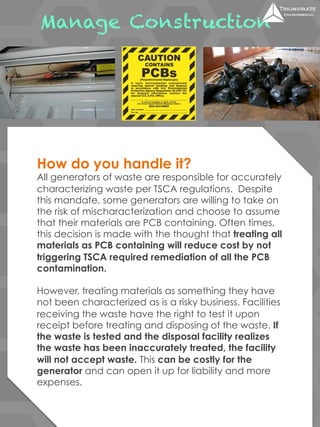
How do you handle it? 
All generators of waste are responsible for accurately 
characterizing waste per TSCA regulations. Despite 
this mandate, some generators are willing to take on 
the risk of mischaracterization and choose to assume 
that their materials are PCB containing. Often times, 
this decision is made with the thought that treating all 
materials as PCB containing will reduce cost by not 
triggering TSCA required remediation of all the PCB 
contamination. 
However, treating materials as something they have 
not been characterized as is a risky business. Facilities 
receiving the waste have the right to test it upon 
receipt before treating and disposing of the waste. If 
the waste is tested and the disposal facility realizes 
the waste has been inaccurately treated, the facility 
will not accept waste. This can be costly for the 
generator and can open it up for liability and more 
expenses.
Manage Construction 
CAUTION: 
You 
are 
not 
obligated 
to 
test. 
If 
you 
do 
decide 
to 
perform 
a 
PCB 
analysis, 
you 
are 
required 
by 
TSCA 
to 
act 
if 
results 
show 
levels 
> 
50 
ppm 
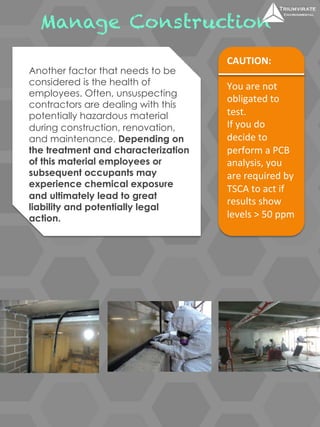
Another factor that needs to be 
considered is the health of 
employees. Often, unsuspecting 
contractors are dealing with this 
potentially hazardous material 
during construction, renovation, 
and maintenance. Depending on 
the treatment and characterization 
of this material employees or 
subsequent occupants may 
experience chemical exposure 
and ultimately lead to great 
liability and potentially legal 
action.
Don’t Let PCBs Manage You 
Introduction 3 
Fast Facts 5 
Take Inventory 
Manage Construction 
Assume PCB Containing 
Use Consulting 
8 
10 
12 
15
Use Consulting 
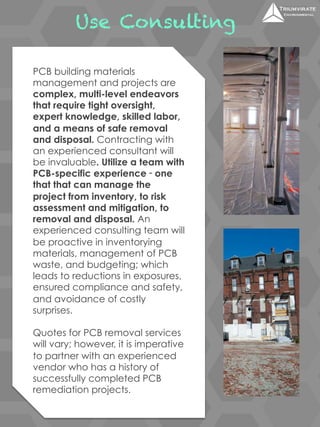
PCB building materials 
management and projects are 
complex, multi-level endeavors 
that require tight oversight, 
expert knowledge, skilled labor, 
and a means of safe removal 
and disposal. Contracting with 
an experienced consultant will 
be invaluable. Utilize a team with 
PCB-specific experience ‑ one 
that that can manage the 
project from inventory, to risk 
assessment and mitigation, to 
removal and disposal. An 
experienced consulting team will 
be proactive in inventorying 
materials, management of PCB 
waste, and budgeting; which 
leads to reductions in exposures, 
ensured compliance and safety, 
and avoidance of costly 
surprises. 
Quotes for PCB removal services 
will vary; however, it is imperative 
to partner with an experienced 
vendor who has a history of 
successfully completed PCB 
remediation projects.
Learn About Our Services 
Triumvirate Environmental has a team of PCB 
experts with several decades of field 
experience. Triumvirates PCB services 
include: 
• PCB Sampling and Testing 
• PCB Risk Assessments 
• PCB Remediation Plan Development 
• PCB Removal and Disposal 
• And More 
Click the links below to learn more about our 
PCB services and programs. 
Learn 
More 
About 
Our 
PCB 
Services 
Here 
Request 
a 
PCB 
ConsultaNon

Don't Let PCBs Manage You: Tips For Handling A Potentially Contaminated Workplace

  • 1.
    Don’t Let PCBs Manage You Tips for Handling a Potentially Contaminated Workplace
  • 2.
    About the Expert Craig Sasse has worked at Triumvirate Environmental for over 6 years and has been environmental consultant for over 18. He performs environmental consulting and engineering services to assess, manage and mitigate environmental liability. He has done PCB consulting for some of the top Universities in the U.S.
  • 3.
    Don’t Let PCBsManage You Introduction 3 Fast Facts 5 Take Inventory Manage Construction Assume PCB Containing Use Consulting 8 10 12 15
  • 4.
    Don’t Let PCBsManage You Introduction 3 Fast Facts 5 Take Inventory Manage Construction Assume PCB Containing Use Consulting 8 10 12 15
  • 5.
    Introduction Polychlorinated biphenyls(PCBs) in building material are in the news everyday. The potential health risk and liabilitymake them a wide-spread concern of EH&S staff, employees, building owners and construction . Because the EPA guidance and regulations on the testing of potential PCB-containing materials is written as a recommendation rather than requirement, manyare left with ambiguity in navigating through this complex, expensive, and time-consuming issue. In this guide you will learn best management practices to help you easily navigate through the world of PCBs.
  • 6.
    Don’t Let PCBsManage You Introduction 3 Fast Facts 5 Take Inventory Manage Construction Assume PCB Containing Use Consulting 8 10 12 15
  • 7.
    Fast Facts Whatare PCBs? Polychlorinated biphenyls (PCBs) are man-made chemicals that had various uses, includingthe manufacturing of building materials between the 1950’s and the 1970’s. During this time, PCBs were used as plasticizers and were added to various building materials to increase flexibility and durability. PCBs were banned from use in manufacturing in 1979; however, they remain in many buildings built or renovated between 1950 and 1979. What properties do PCBs have? Desirable commercial properties of PCBs - why they used to be used in manufacturing: • Chemical stability • Heat stability • Non-flammability • High boiling point • Do not conduct electricity • Variable viscosity
  • 8.
    Fast Facts Whereare PCBs found? • Transformers • Capacitors • Hydraulic fluids • Oil-based paints • Fluorescent light ballasts • Lubricating & cutting oils • Floor finishes • Fire retardants • Thermal insulation materials (foam, felt) • Caulking & grout • PVC coatings for electrical wire & components • Carbonless copy paper • Inks and dyes • Adhesives/ mastic Where are they regulated? The Toxic Substances Control Act (TSCA, 15 USC Chapter 53) granted EPA the authority to create a regulatory framework for control methods to prevent chemicals from posing unreasonable risk. The regulatory framework for PCBs is found in 40 CFR 761. This prohibits and sets forth requirements for PCB manufacture, processing, and distribution in commerce. The regulation also specifies storage and disposal requirements of PCBs and PCB items. It governs owners, operators, and persons conducting cleanup of PCB contaminated property.
  • 9.
    Don’t Let PCBsManage You Introduction 3 Fast Facts 5 Take Inventory Manage Construction Assume PCB Containing Use Consulting 8 10 12 15
  • 10.
    Take Inventory Thefirst step in managing PCBs is to take an in-depth inventory of all buildings under your management. This could consist of a school system, a group of municipal buildings, a college campus, or a real estate portfolio. The inventory should include an evaluation of the age of the building, type of construction, and any renovation history. Next, inspect and inventory all suspect materials in “pedigree” buildings. Questions to Ask: • Was the commercial building built between 1950 and 1979? • Were there renovations completed between 1950 and 1979? • What materials are suspect? • Where are suspect materials? • Will renovations disturb suspect materials? • How much suspect material will be disturbed? If you were to answer “Yes” to the first two questions, then it is possible that the building was constructed using PCB-containing materials.
  • 11.
    Don’t Let PCBsManage You Introduction 3 Fast Facts 5 Take Inventory Manage Construction Assume PCB Containing Use Consulting 8 10 12 15
  • 12.
    Manage Construction Afteryou’ve inventoried the existing structures, it is important to review upcoming, planned construction and renovation projects. Below are some questions to ask yourself. Is the disturbed building(s) scheduled to have the suspect caulking, such as windows replaced, as part of an energy-saving project in the near future? If so, focus your efforts on understanding the inherent risks in the widow replacement renovation. If the windows were installed before 1979, it is very likely that the caulking and even glazing used in construction contained PCBs. Work may be adjusted to avoid liability. Was that caulking used on a porous surface, such as brick or concrete? If so, the PCBs could have leached into the porous materials. Focus your immediate efforts on the projects that are already planned, and ensure that they will be completed in a safe and compliant fashion. Solving PCB questions before construction commences is the only way to keep the contractors doing the work and the people occupying the building safe.
  • 13.
    Don’t Let PCBsManage You Introduction 3 Fast Facts 5 Take Inventory Manage Construction Assume PCB Containing Use Consulting 8 10 12 15
  • 14.
    Manage Construction Howdo you handle it? All generators of waste are responsible for accurately characterizing waste per TSCA regulations. Despite this mandate, some generators are willing to take on the risk of mischaracterization and choose to assume that their materials are PCB containing. Often times, this decision is made with the thought that treating all materials as PCB containing will reduce cost by not triggering TSCA required remediation of all the PCB contamination. However, treating materials as something they have not been characterized as is a risky business. Facilities receiving the waste have the right to test it upon receipt before treating and disposing of the waste. If the waste is tested and the disposal facility realizes the waste has been inaccurately treated, the facility will not accept waste. This can be costly for the generator and can open it up for liability and more expenses.
  • 15.
    Manage Construction CAUTION: You are not obligated to test. If you do decide to perform a PCB analysis, you are required by TSCA to act if results show levels > 50 ppm Another factor that needs to be considered is the health of employees. Often, unsuspecting contractors are dealing with this potentially hazardous material during construction, renovation, and maintenance. Depending on the treatment and characterization of this material employees or subsequent occupants may experience chemical exposure and ultimately lead to great liability and potentially legal action.
  • 16.
    Don’t Let PCBsManage You Introduction 3 Fast Facts 5 Take Inventory Manage Construction Assume PCB Containing Use Consulting 8 10 12 15
  • 17.
    Use Consulting PCBbuilding materials management and projects are complex, multi-level endeavors that require tight oversight, expert knowledge, skilled labor, and a means of safe removal and disposal. Contracting with an experienced consultant will be invaluable. Utilize a team with PCB-specific experience ‑ one that that can manage the project from inventory, to risk assessment and mitigation, to removal and disposal. An experienced consulting team will be proactive in inventorying materials, management of PCB waste, and budgeting; which leads to reductions in exposures, ensured compliance and safety, and avoidance of costly surprises. Quotes for PCB removal services will vary; however, it is imperative to partner with an experienced vendor who has a history of successfully completed PCB remediation projects.
  • 18.
    Learn About OurServices Triumvirate Environmental has a team of PCB experts with several decades of field experience. Triumvirates PCB services include: • PCB Sampling and Testing • PCB Risk Assessments • PCB Remediation Plan Development • PCB Removal and Disposal • And More Click the links below to learn more about our PCB services and programs. Learn More About Our PCB Services Here Request a PCB ConsultaNon