2016 Wind Turbine Blade
Workshop
Structural Enhancements –
The way to lower LCOE
CTO and founder: Find Mølholt Jensen, PhD
2
Outline
2
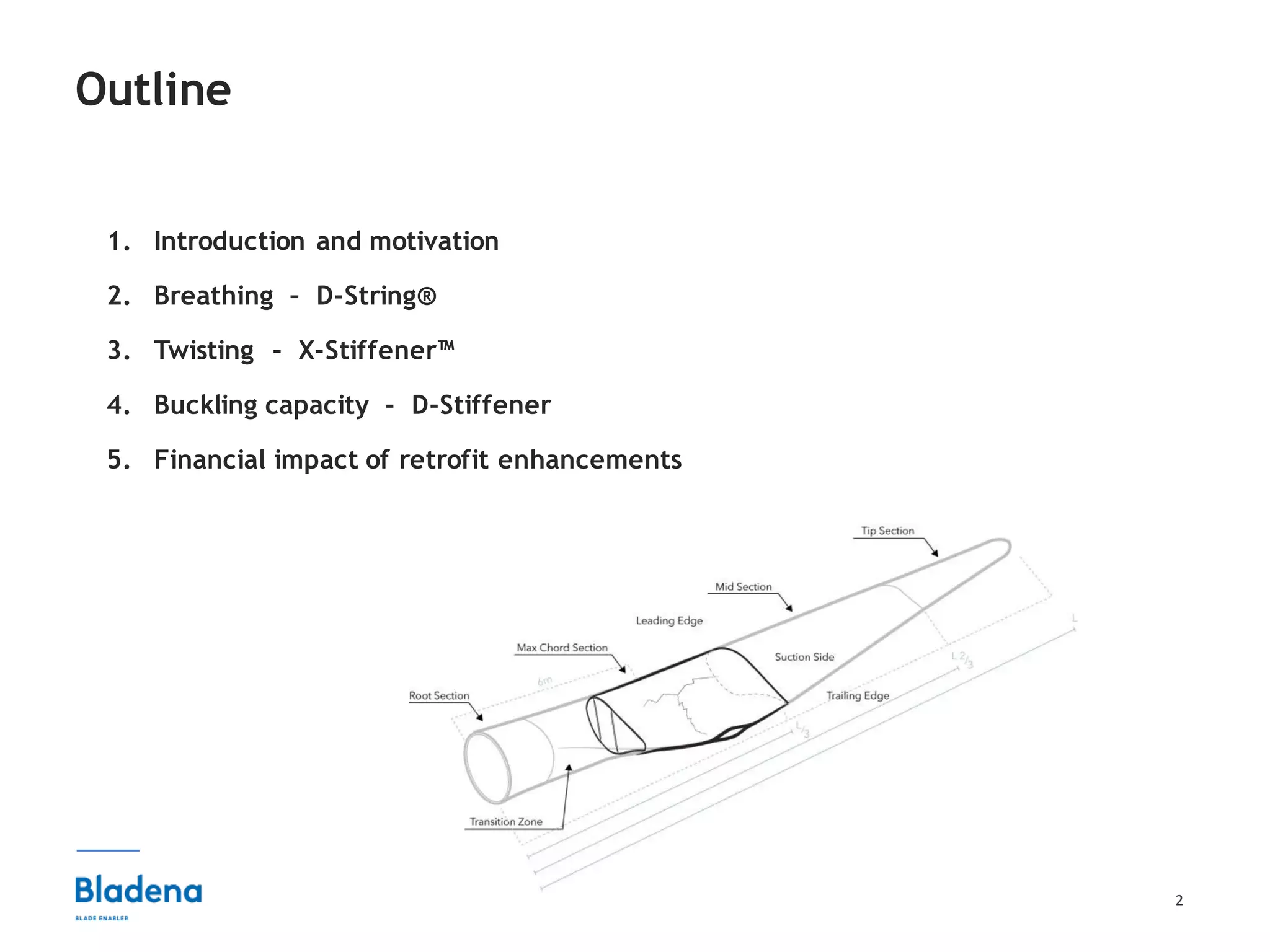
1. Introduction and motivation
2. Breathing – D-String®
3. Twisting - X-Stiffener™
4. Buckling capacity - D-Stiffener
5. Financial impact of retrofit enhancements
3
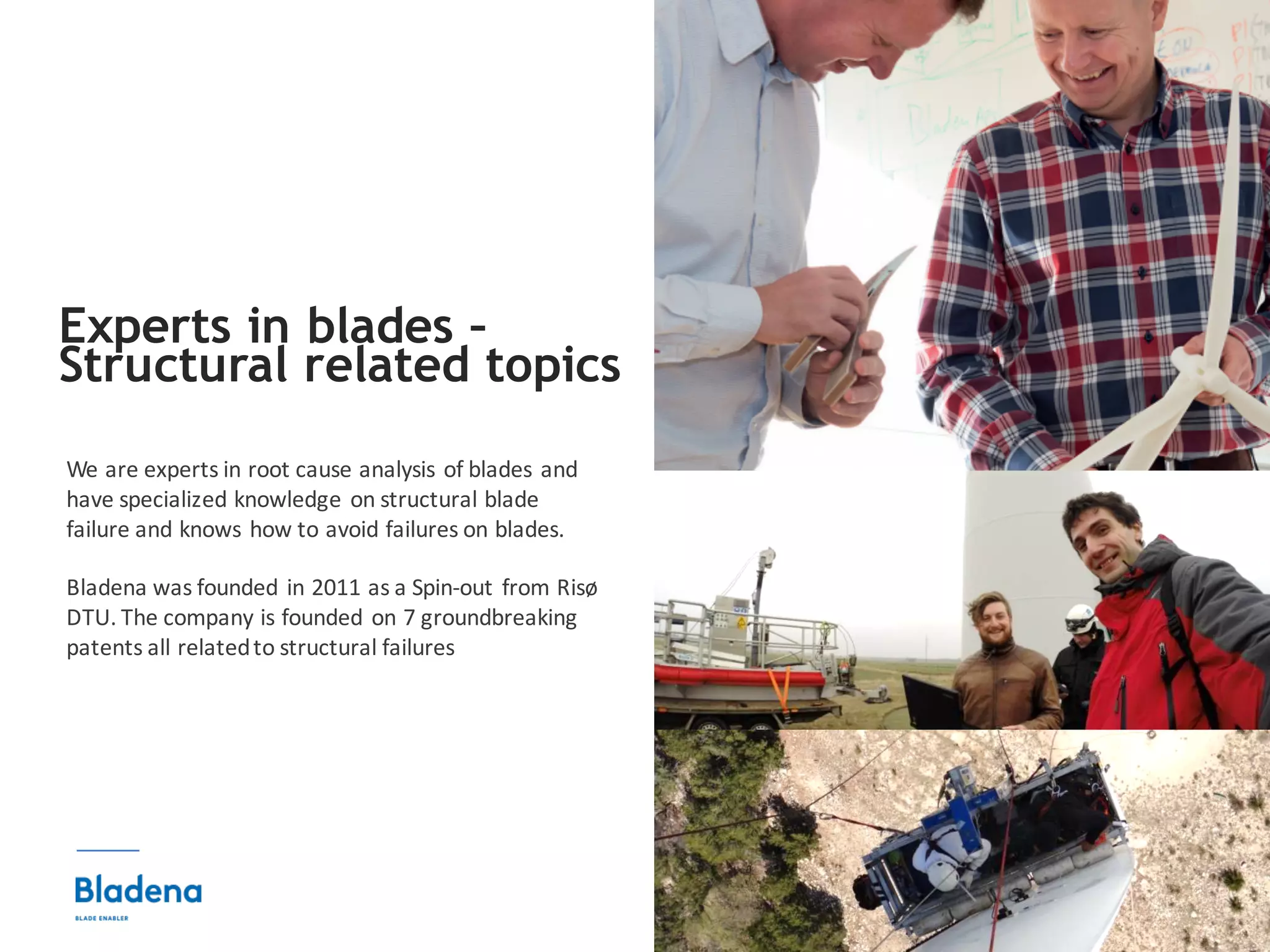
We	are	experts	in	root	cause	analysis	of	blades	and	
have	specialized	knowledge	on	structural	blade	
failure	and	knows	how	to	avoid	failures	on	blades.
Bladena was founded in	2011	as	a	Spin-out	from	Risø	
DTU.	The	company is	founded on	7	groundbreaking
patents	all	relatedto	structural failures
Experts in blades –
Structural related topics
4
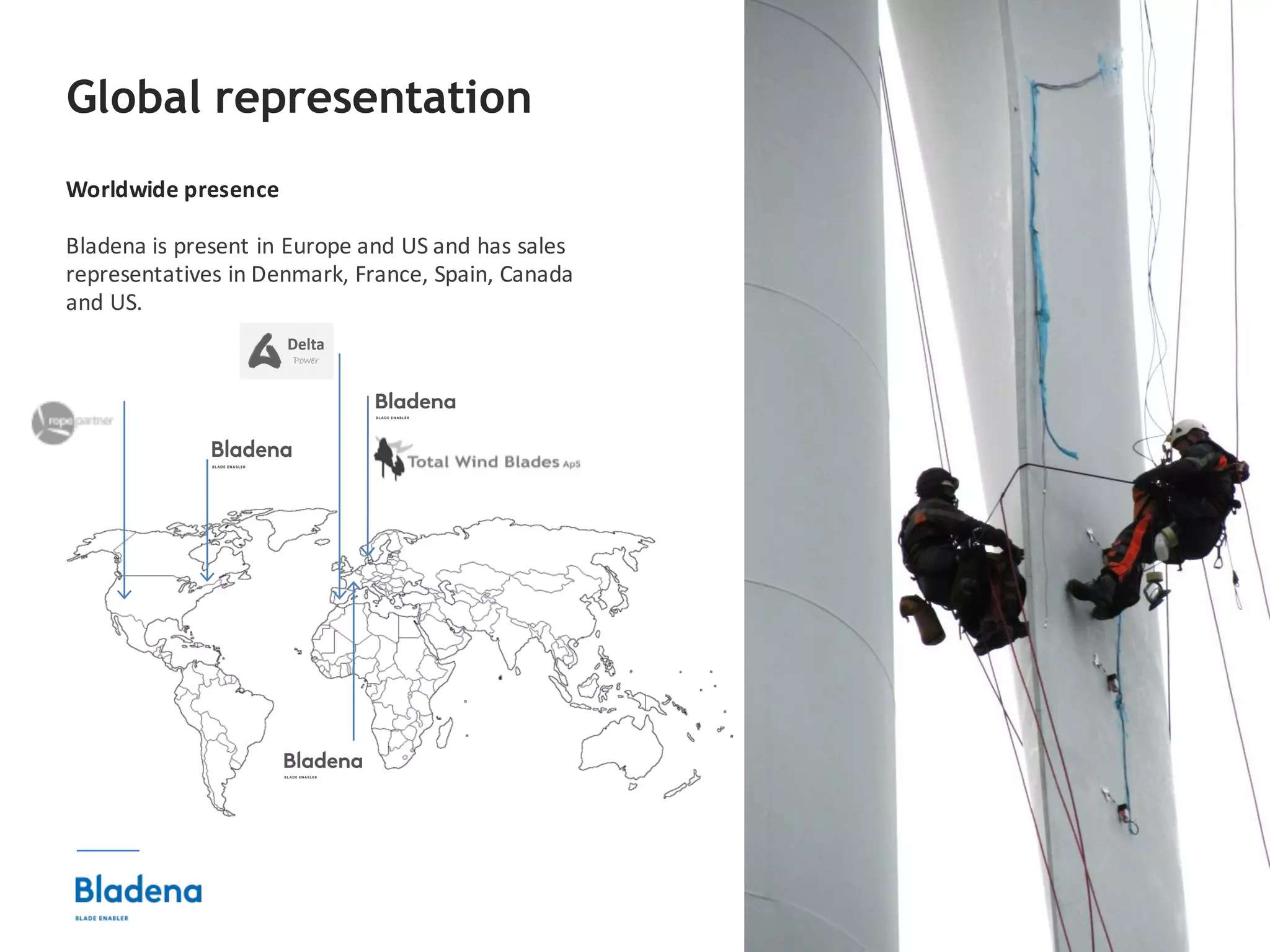
Worldwide	presence
Bladena	is	present	in	Europe	and	US	and	has	sales	
representatives	in	Denmark,	France,	Spain,	Canada	
and	US.
Global representation
5
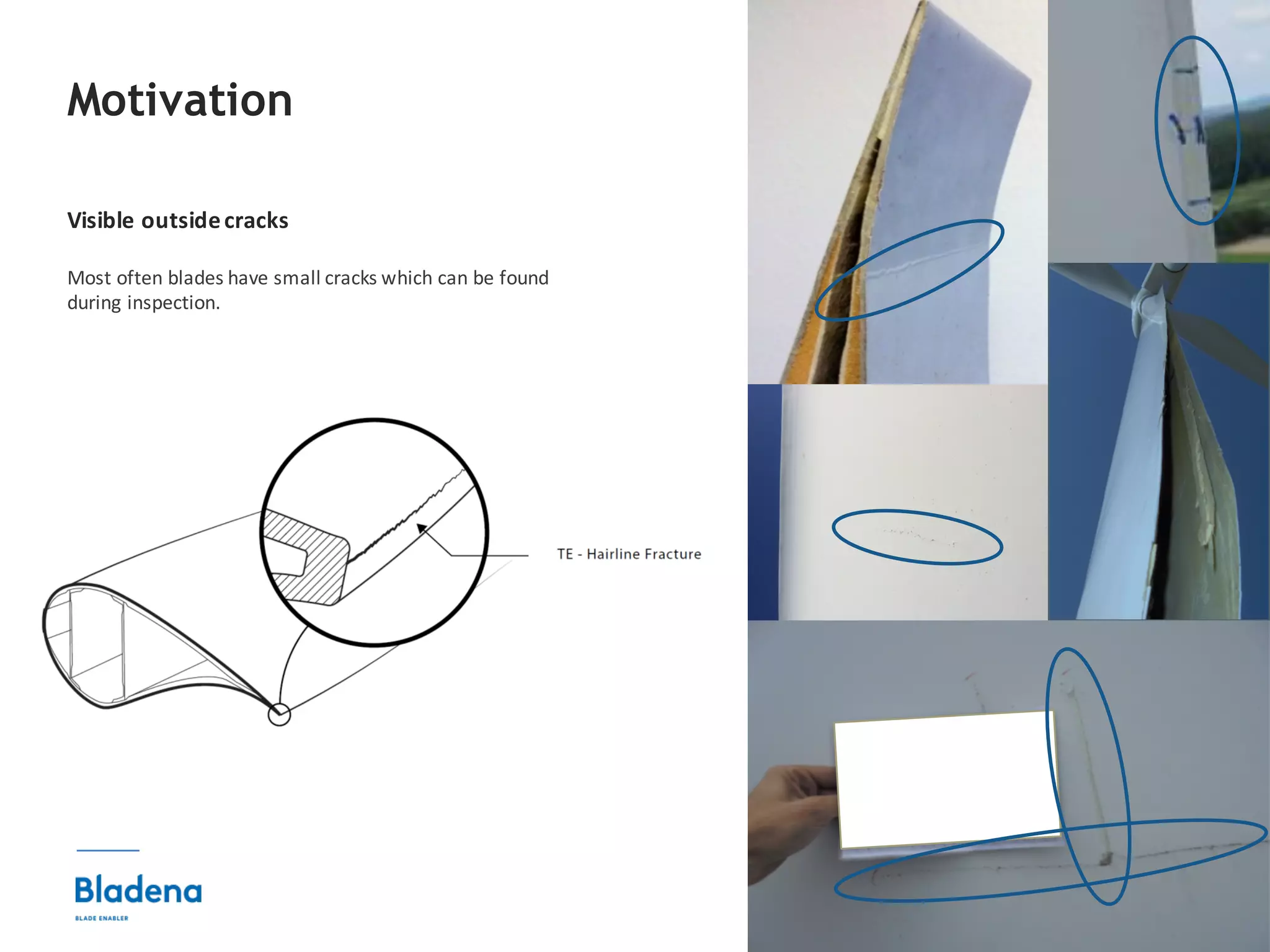
Motivation
Visible	outsidecracks
Most	often	blades	have	small	cracks	which	can	be	found	
during	inspection.
6
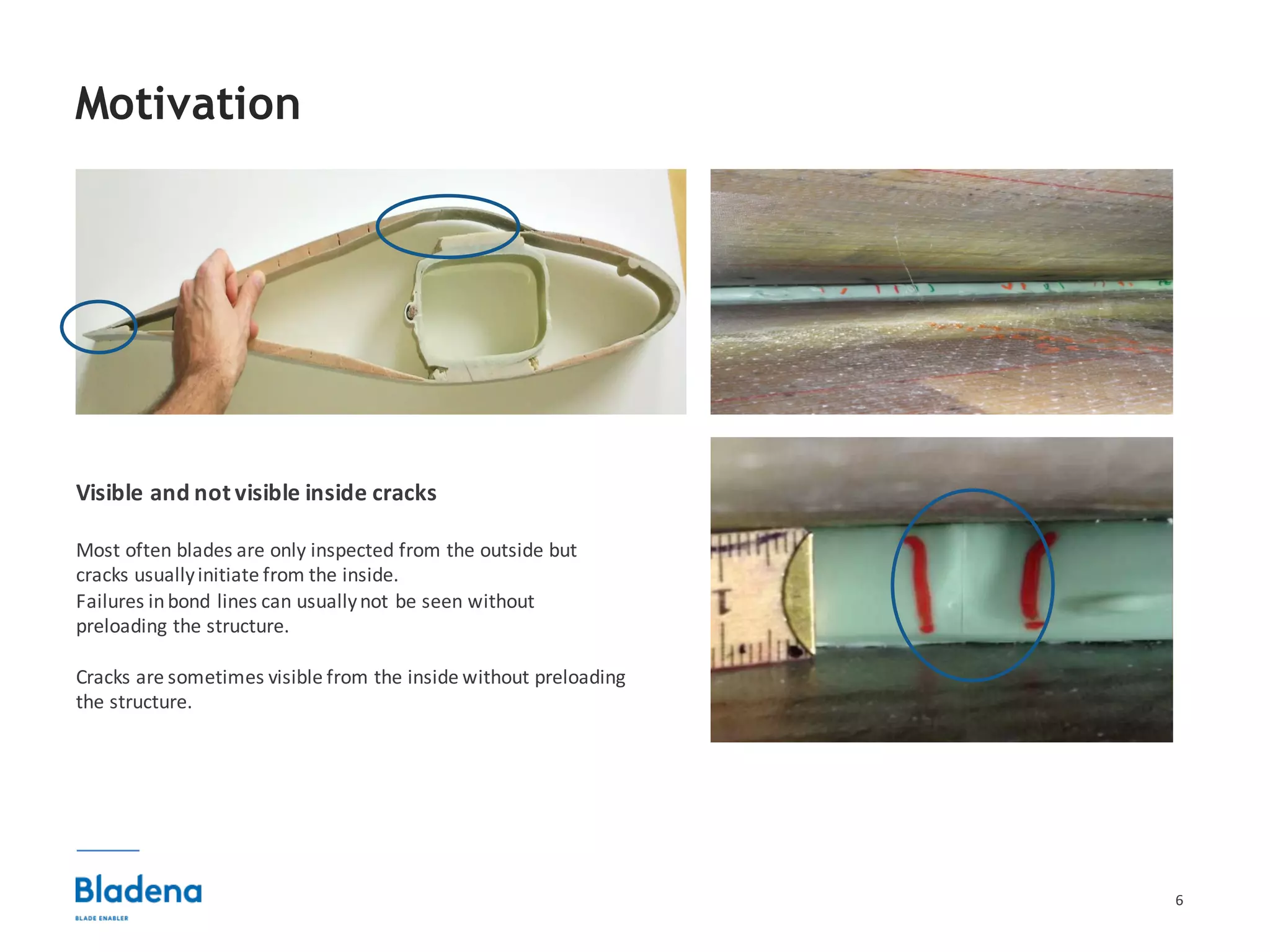
Motivation
Visible	and	not	visible	inside cracks
Most	often	blades	are	only	inspected	from	the	outside	but	
cracks	usually	initiate	from	the	inside.	
Failures	in	bond	lines	can	usually	not	be	seen	without	
preloading	the	structure.
Cracks	are	sometimes	visible	from	the	inside	without	preloading	
the	structure.
7
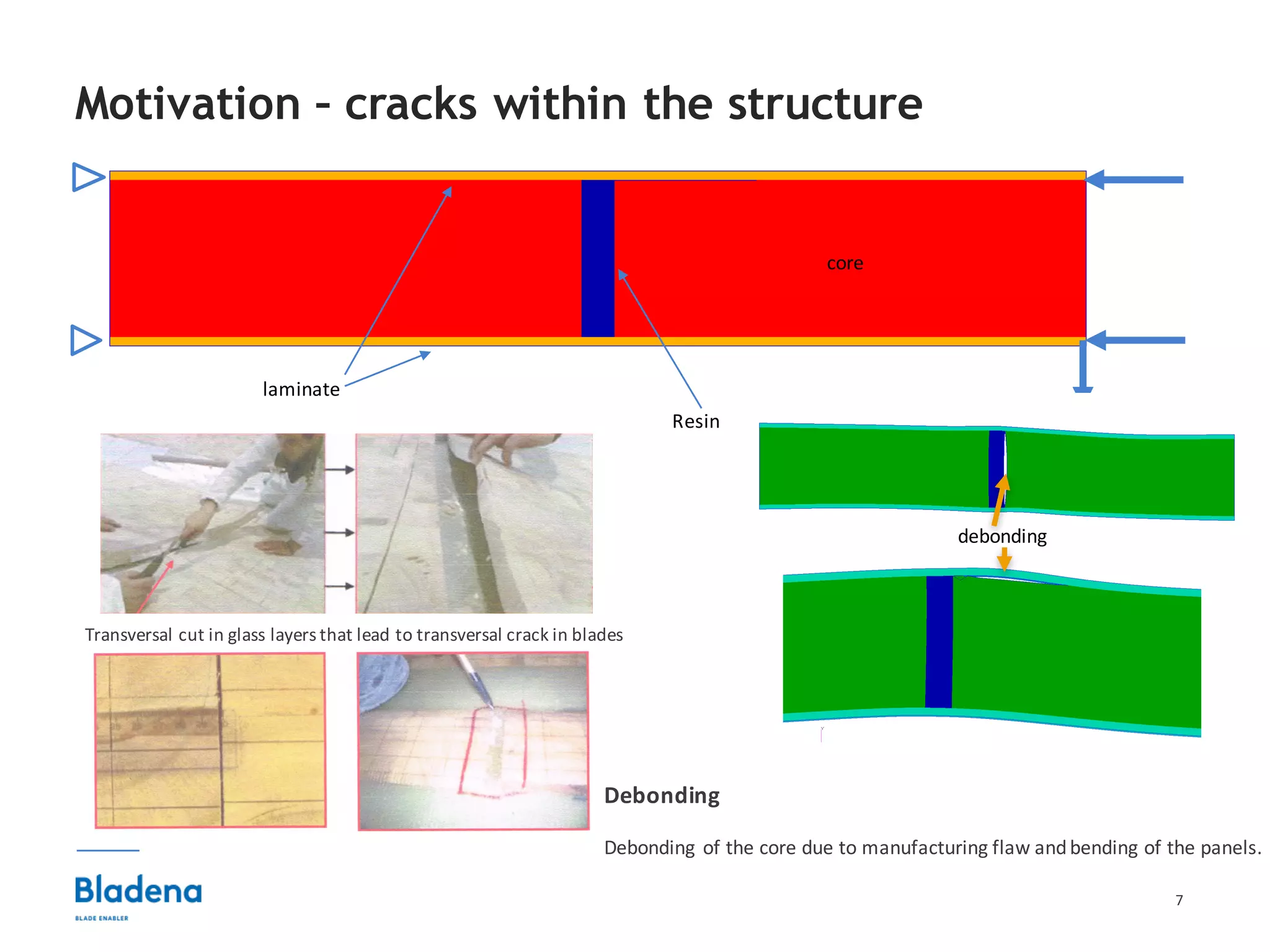
Motivation – cracks within the structure
Debonding
Debonding	of	the	core	due	to	manufacturing	flaw	and	bending	of	the	panels.
core
laminate
Resin
debonding
Transversal	cut	in	glass	layers	that	lead	to	transversal	crack	in	blades
8
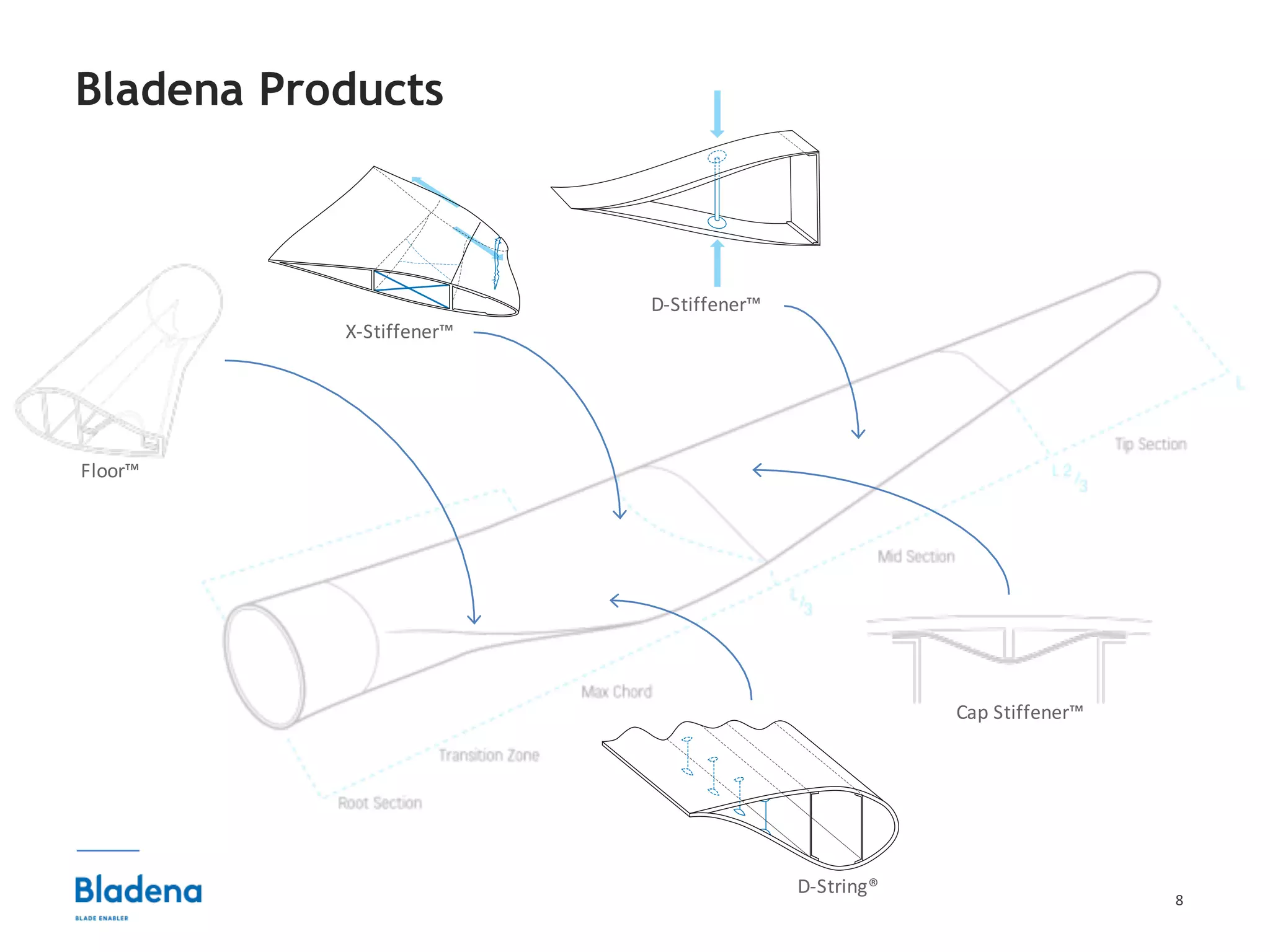
Bladena Products
Floor™
X-Stiffener™
D-Stiffener™
D-String®
Cap	Stiffener™
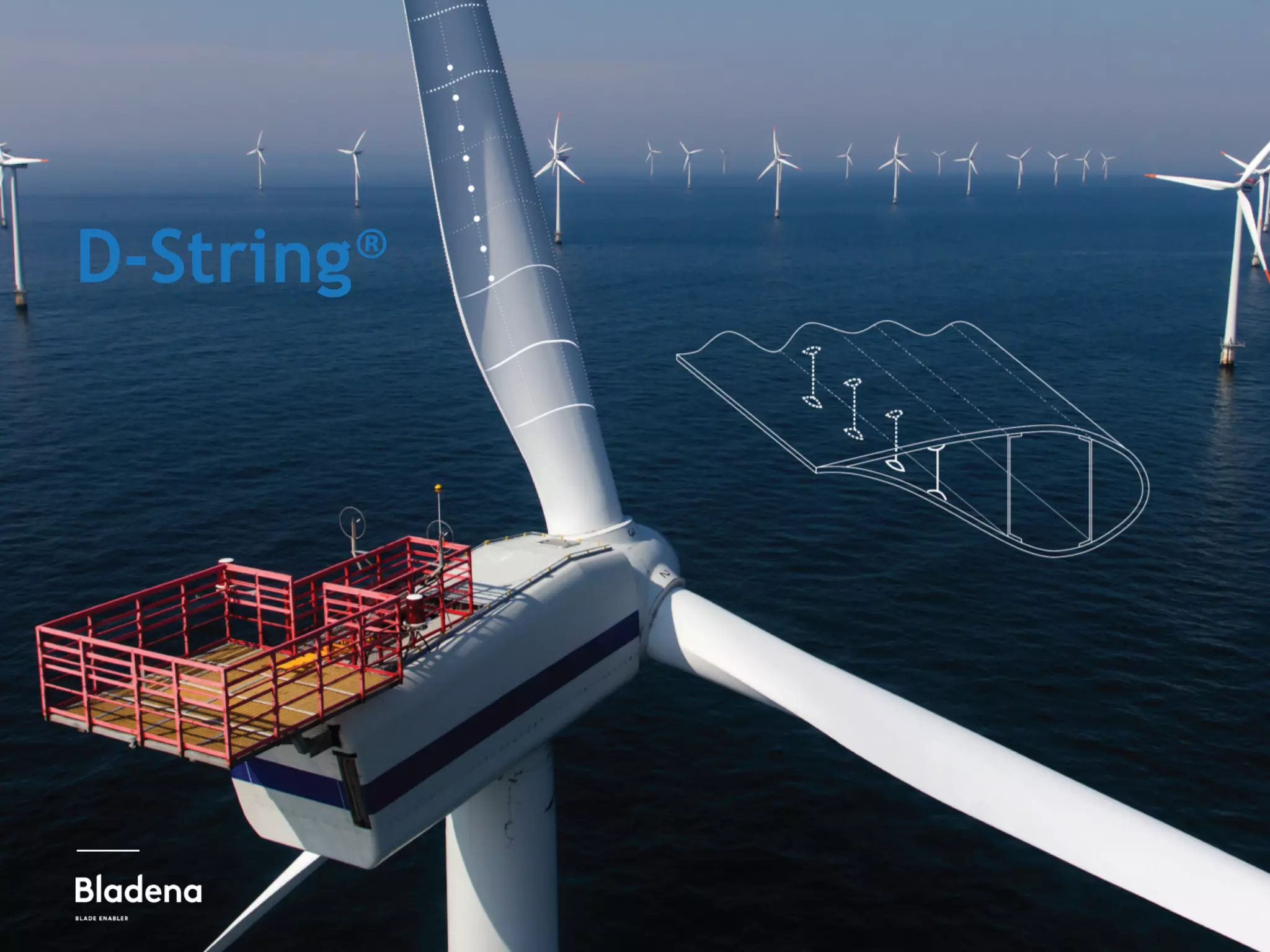
D-String®
10
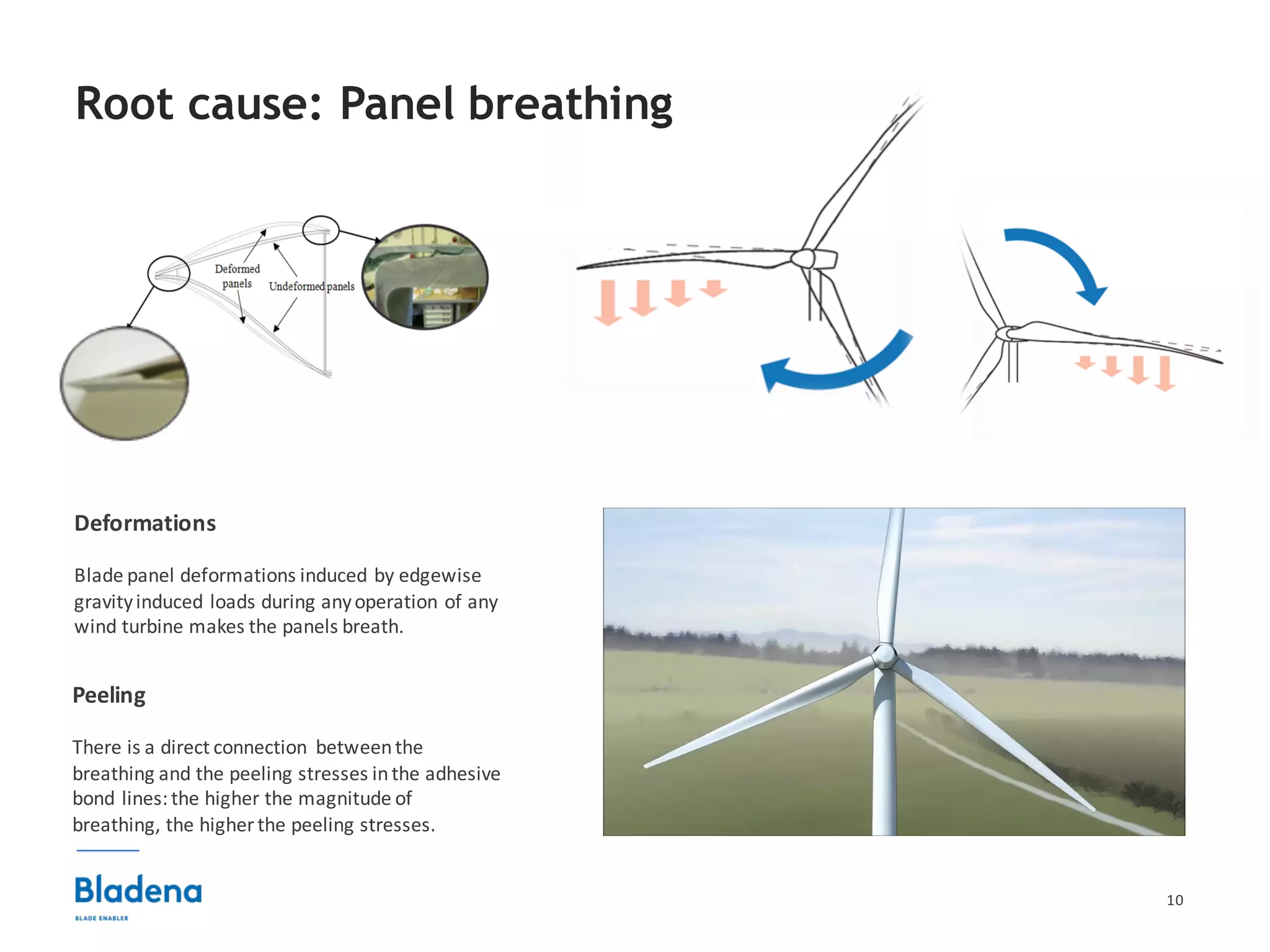
Root cause: Panel breathing
Deformations
Blade	panel	deformations	induced	by	edgewise	
gravity	induced	loads	during	any	operation	of	any	
wind	turbine	makes	the	panels	breath.
Peeling
There	is	a	direct	connection	 between	the	
breathing	and	the	peeling	stresses	in	the	adhesive	
bond	lines:	the	higher	the	magnitude	of	
breathing,	the	higher	the	peeling	stresses.
11
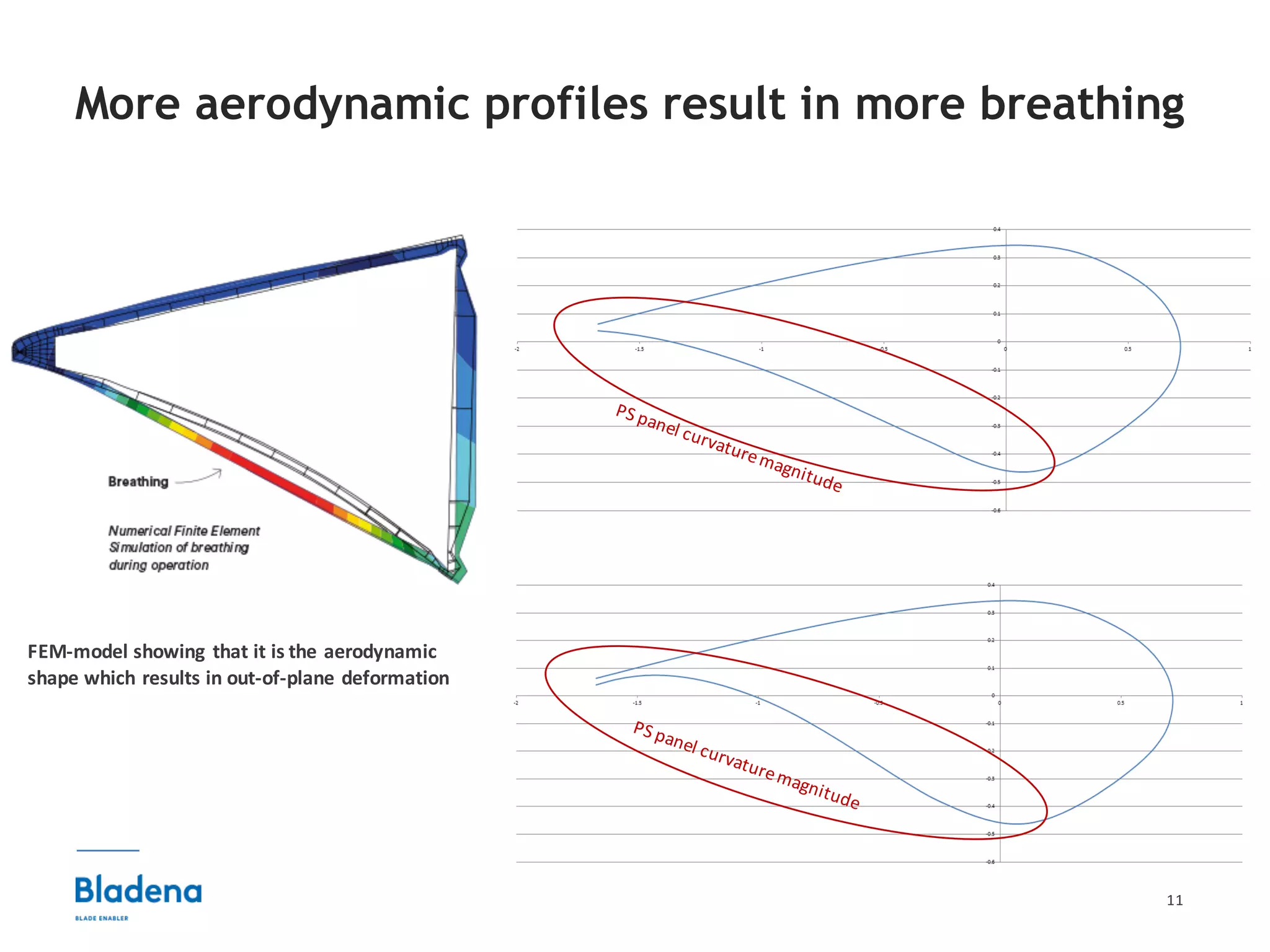
More aerodynamic profiles result in more breathing
FEM-model	showing that it	is	the	aerodynamic
shape which results in	out-of-plane	deformation
12
Transverse cracks on the trailing edge panels
Bending of the TE-panels causes
transverse cracks
Advanced	FEM	simulations	have	confirmed	the	
measurements.	3D	longitudinal	waves	are	
reduced	when	the	D-Strings®	are	used.
Inside	view	of	the	trailing	edge
FEM	illustrating	the	panel
waves	when	the	D-Strings®	are	not	used.
With	red	colour	– high	magnitude
FEM	illustrating	the	reduction
of	panel	waves	when	D-Strings®	are	used.
With	green	colour	– low	magnitude
Transverse	cracks	found	during	inspection
13
Effect of D-String®
Breathing deformations	shown
before and	after D-string installation
Peeling	stress	analysis	in	trailing	edge
Withouth	D-Strings®	installed
With	D-Strings®	installed
14
Field installations
First	kit	installed	on	a	Vestas	V80	turbine	in	Tjæreborg	Enge in	
January	2013,	followed	by	several installations	on	GE,	LM,	
Vestas,	etc...	blades
Almost	4	years	of	operation
Almost	4	years	the	D-String®	has	been	installed	on	blades	in	
operation.	Recent	inspections	confirmed	that	there	are	no	cracks	
in	the	TE	max	chord	area	and	there	are	no	signs	of	blade	damages	
related	to	the	installation	of	the	D-String®
Platform	 or	rope	
used	to	access	the	
blades
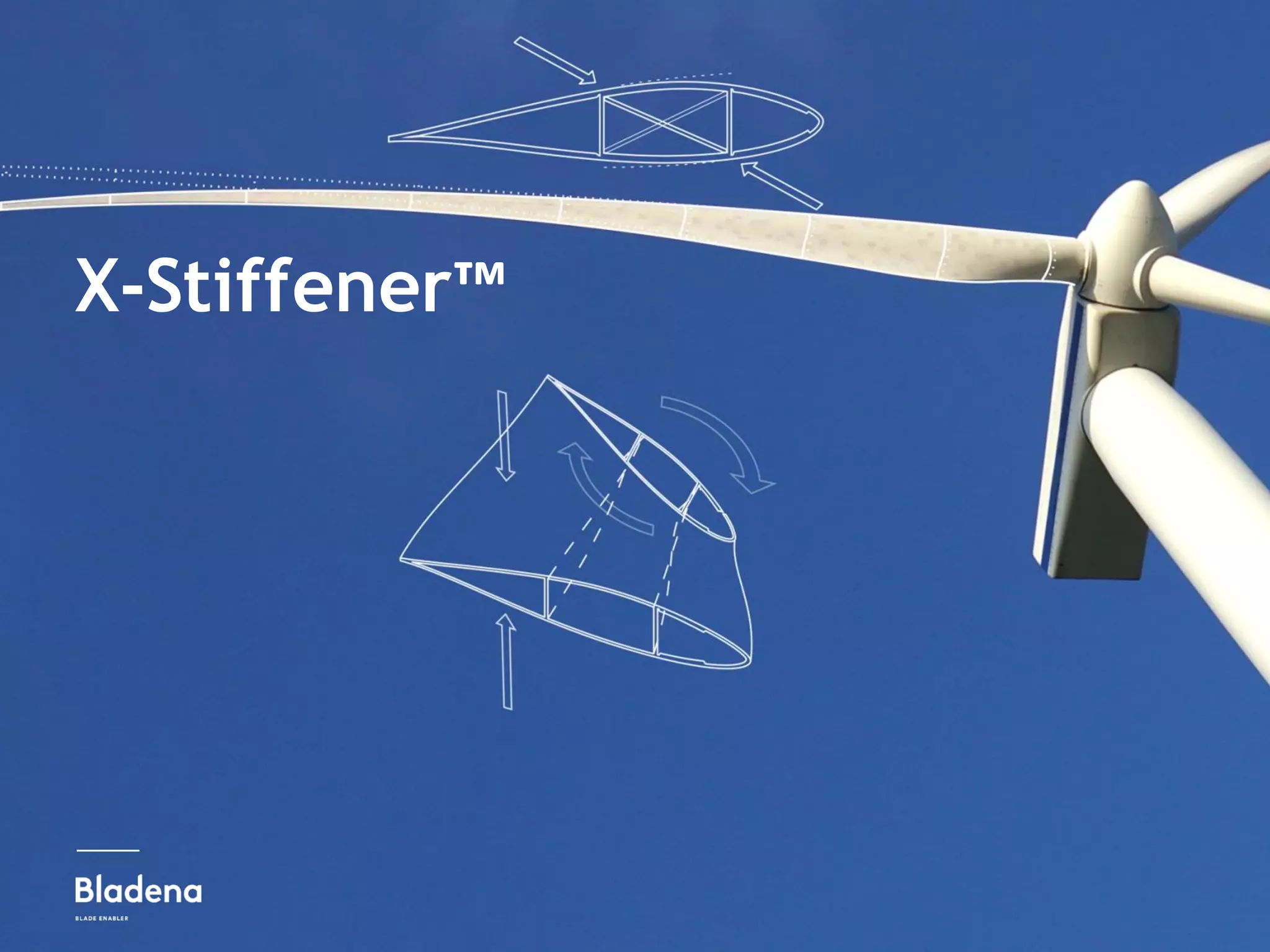
X-Stiffener™
16
Root-Cause: Twisting
Background	on	loads	on	blades	in	operation
Loads	on	wind	turbine	blades	during	operation	can	
be	split	in	two	main	components:
• Edgewise	loads	- dominated	by	gravity.
• Flapwise loads	- dominated	by	aerodynamic	
forces.
17
Root-Cause: Twisting (also called cross-sectional
shear distortion)
Increased	twisting
As	the	new	flat-back	profiles	are	more	and	
more	used,	the	twisting	becomes	higher	due	to	
the	lack	of	support	in	the	trailing	edge.
Hot	spots
Deformed shape
Un-deformed	shape
Cross-sectional	shear	deformation	generates	
peeling	stresses	in	the	adhesive	bond	lines.
Peeling	stresses
The	effect	of	the	two	phenomena	is	the	apearance	of	peeling	stresses	
in	the	adhesive	bondlines	along	the	blades	in	certain	hot	spots.
18
Influence of X-Stiffener
Twist	reduction
After	installation	of	the	X-Stiffener	the	twisting	reduces	80-85%.	This	has	a	direct	impact	on	the	peeling	
stresses	in	the	adhesive	bond-lines,	leading	to	significant	increase	of	the	blade	lifetime.
X-Stiffener	
installation
X-Stiffener
19
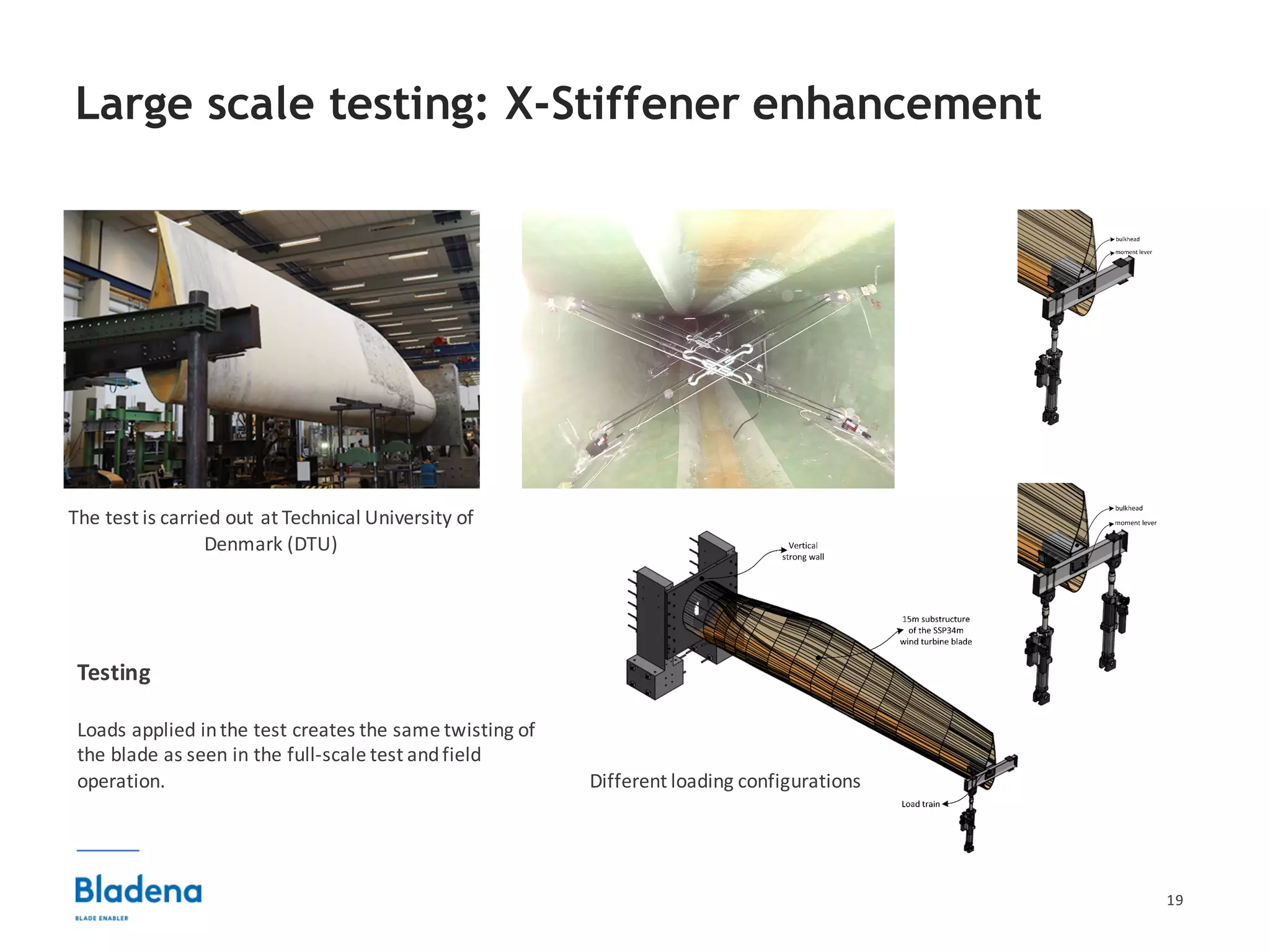
Large scale testing: X-Stiffener enhancement
Testing
Loads	applied	in	the	test	creates	the	same	twisting	of	
the	blade	as	seen	in	the	full-scale	test	and	field	
operation. Different	loading	configurations
The	test	is	carried	out	at	Technical	University	of	
Denmark	(DTU)
20
Large blades have more twisting
Size	effects…
Deformations	increase	by	250-
300%	when	blade	is	scaled	up	
with	a	factor	of	2.	Peeling	
stresses	in	the	adhesive	
bondlines	follow	this	increase.
D-Stiffener™
22
Root-Cause: Buckling of the TE-panels
Premises	for	failure
The	bending	of	the	blade	due	to	aerodynamic	forces	and	
reduced	buckling	capacity	of	the	blade	in	mid	span	and	mid	span	
towards	the	tip	creates	premises	for	failure.
23
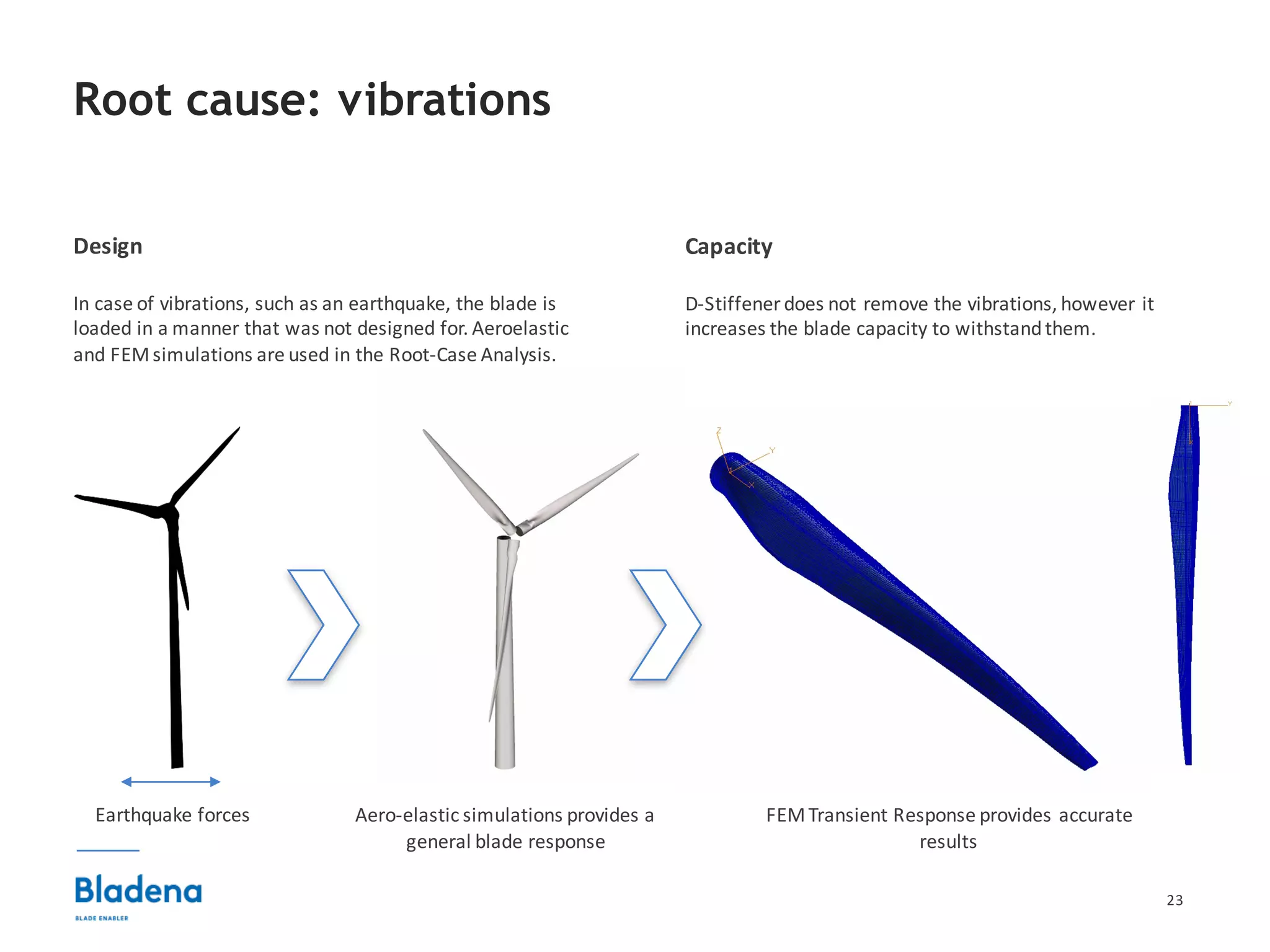
Root cause: vibrations
Design
In	case	of	vibrations,	such	as	an	earthquake,	the	blade	is	
loaded	in	a	manner	that	was	not	designed	for.	Aeroelastic	
and	FEM	simulations	are	used	in	the	Root-Case	Analysis.
Earthquake	forces FEM	Transient	Response	provides	accurate	
results		
Aero-elastic	simulations	provides	a	
general	blade	response
Capacity
D-Stiffener	does	not	remove	the	vibrations,	however	it	
increases	the	blade	capacity	to	withstand	them.
24
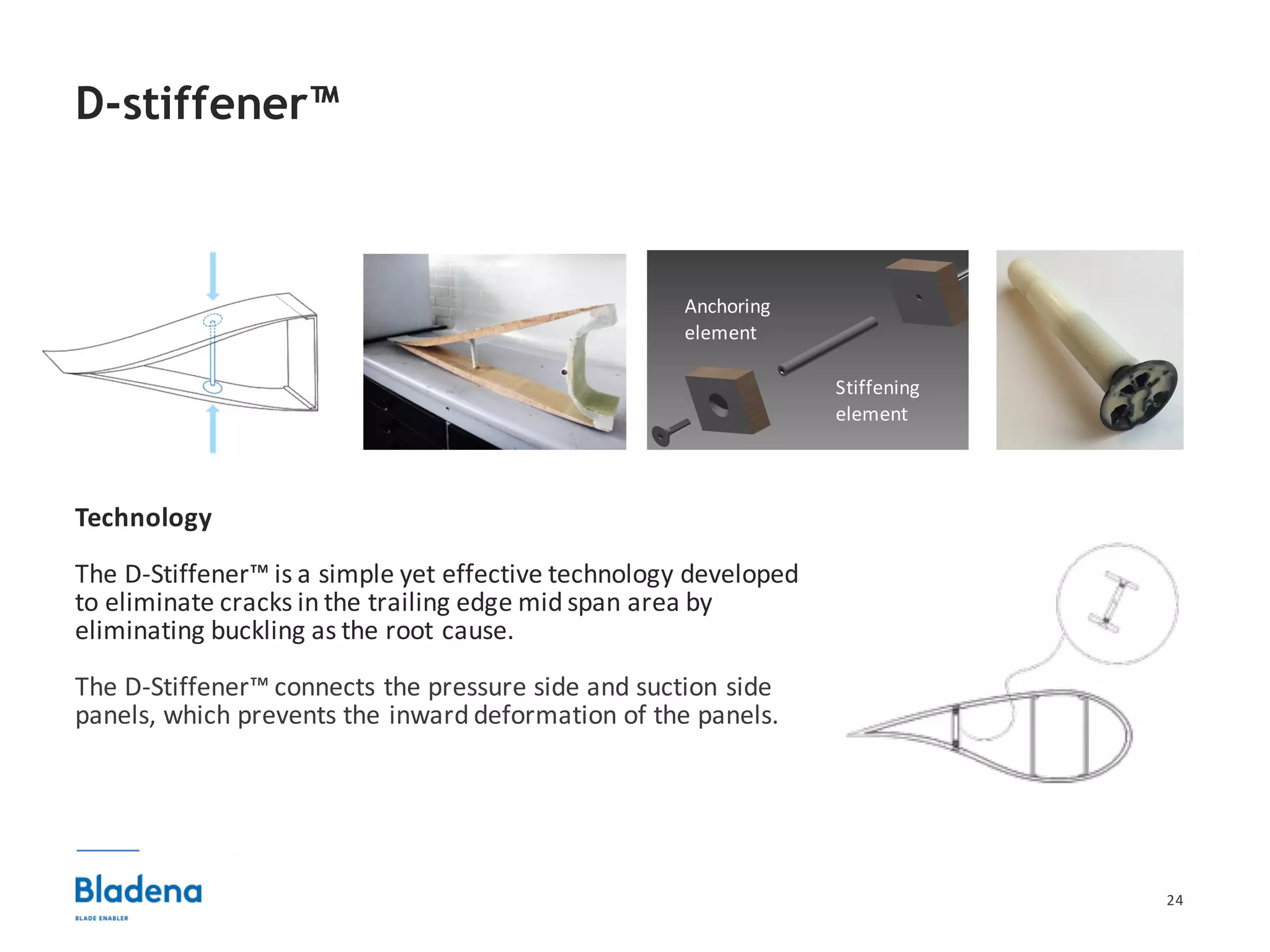
Technology
The	D-Stiffener™	is	a	simple	yet	effective	technology	developed	
to	eliminate	cracks	in	the	trailing	edge	mid	span	area	by	
eliminating	buckling	as	the	root	cause.
The	D-Stiffener™	connects	the	pressure	side	and	suction	side	
panels,	which	prevents	the	inward	deformation	of	the	panels.	
D-stiffener™
Anchoring	
element
Stiffening	
element
25
D-Stiffener impact
Sketch	showing	the	position	of	D-Stiffeners	in	the	blade
No	D-Stiffeners	installed D-Stiffeners	installed
DD-Stiffener
26
Financial and Operational Impact, WTO
Results
• Less	maintenance	time	=>		reduced	cost	of	energy	=>	higher	
profit
• E.g.	D-String®	:The	cost	of	one	incident	repair	equals	the	cost	
of	a	D-String® kit	for	3	blades	(including	the	installation)
• The	risk	of	cracks	increases	with	the	age	of	the	blades	due	to
the	fatigue	loading,	bathtub curve
• The	technologies	secures	operation	of	the	blade	in	
the	anticipated	life	time	of	the	turbine	without	added	
maintenance	cost
• ROI		less	than	2	years
Owners risk
Warranty
Years	of	operation
Failurerate
27
Design and Manufacturing Impact, OEM
Results
• Reduced	material	consumption,	thinner	panels
• Larger	manufacturing	tolerances
• No	need	for	trailing	edge	over	lamination,	less	work	in	
confined	space
• Less	risk	for	failurs during	full	scale	test	and	in	operation
• Possible	option	for	increased	aerodynamic	designs,	
increased	AEP
Contact
Ryan Hagelskjær Lauridsen / ryl@bladena.com
Find Mølholt Jensen / fmj@bladena.com
Dave Zanier / dz@bladena.com
Universitetsparken 7
DK-4000 Roskilde
Denmark
www.bladena.com
© 2016 Bladena. All rights reserved. Reproduction or distribution of this report in any form without prior written permission is strictly
forbidden. Violation of the above restrictions will be subjects to legal action under the Danish Arbitration Act. The information herein is
taken from sources considered reliable, but its accuracy and completeness are not warranted, nor are the opinions, analyses and forecasts
on which they are based. Bladena cannot be held liable for any errors in this report, neither can Bladena be liable for any financial loss or
damage caused by the use of the information presented in this report.

Structural Enhancements: The Way to lower LCOE