JAUNDICE & LFT INTERPRETATION
Dr. Sharma,Academic F1
Aintree University Hospital
LEARNING OBJECTIVES
• To develop a systematic approach to the patient who
presents with jaundice.
• To identify key serological and imaging tests to
request.
• To be able to confidently interpret liver function tests.
• To be able to confidently interpret hepatitis serology
results.
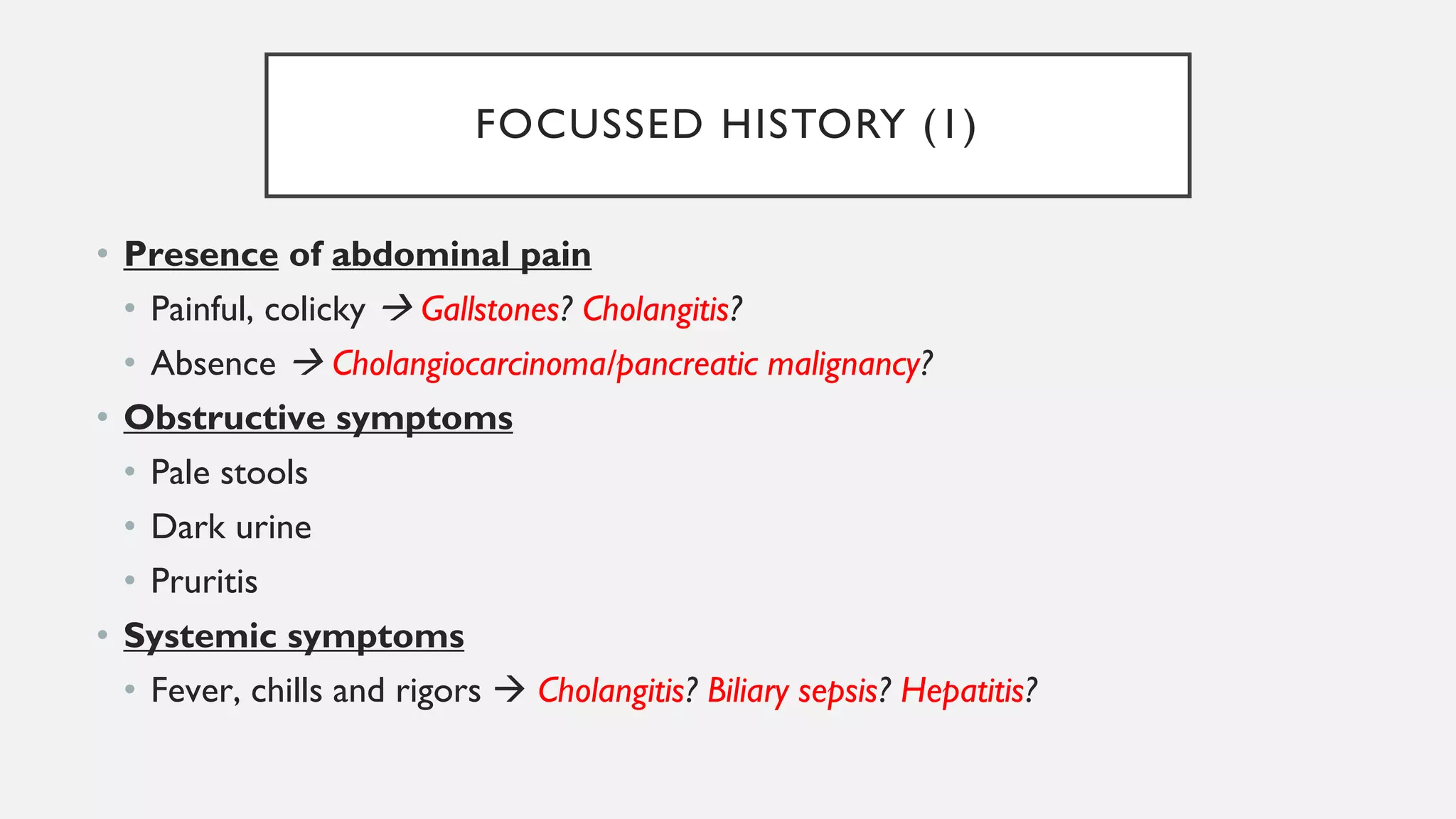
FOCUSSED HISTORY (1)
• Presence of abdominal pain
• Painful, colicky → Gallstones? Cholangitis?
• Absence → Cholangiocarcinoma/pancreatic malignancy?
• Obstructive symptoms
• Pale stools
• Dark urine
• Pruritis
• Systemic symptoms
• Fever, chills and rigors → Cholangitis? Biliary sepsis? Hepatitis?
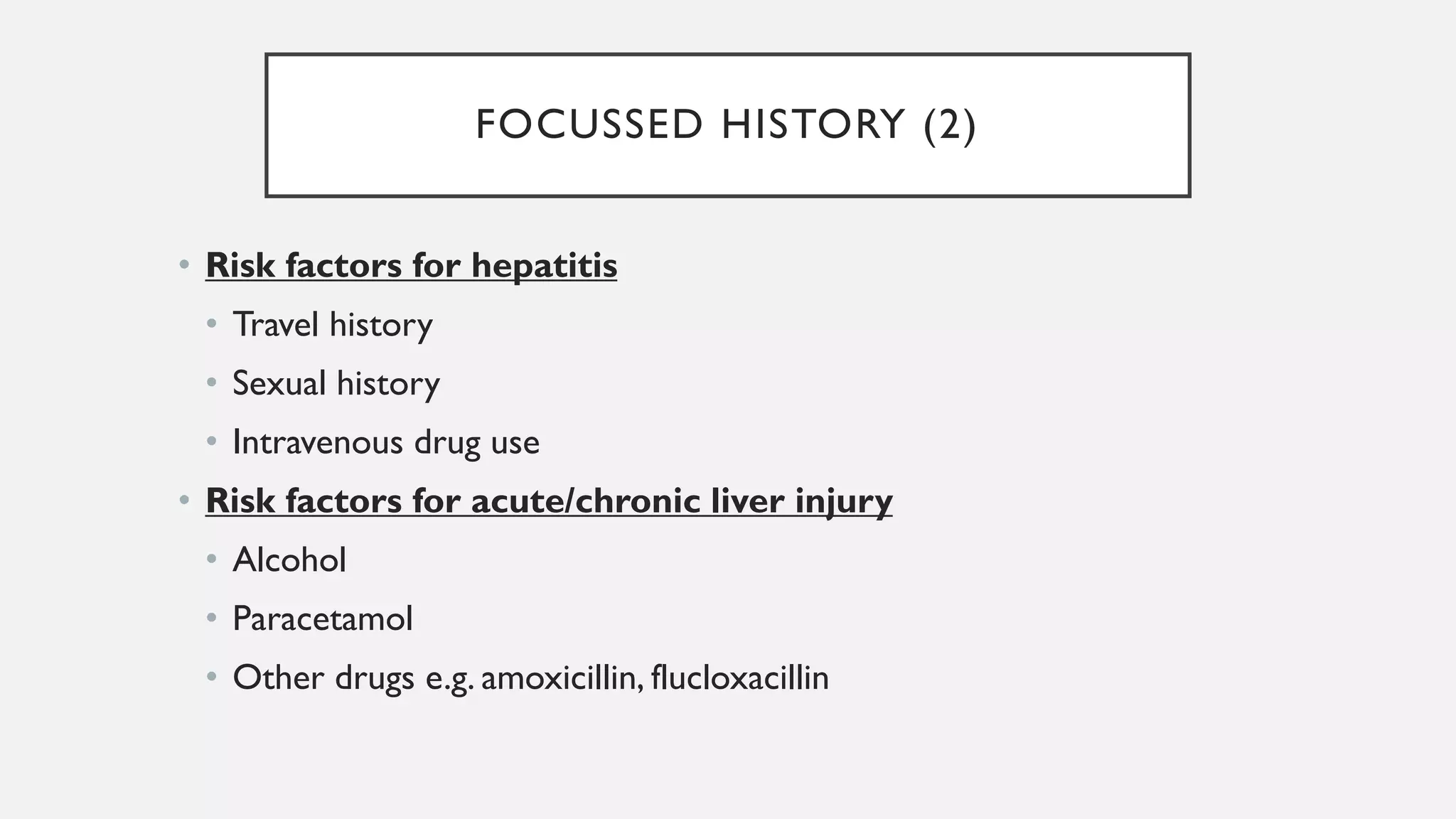
FOCUSSED HISTORY (2)
• Risk factors for hepatitis
• Travel history
• Sexual history
• Intravenous drug use
• Risk factors for acute/chronic liver injury
• Alcohol
• Paracetamol
• Other drugs e.g. amoxicillin, flucloxacillin
FOCUSSED HISTORY (3)
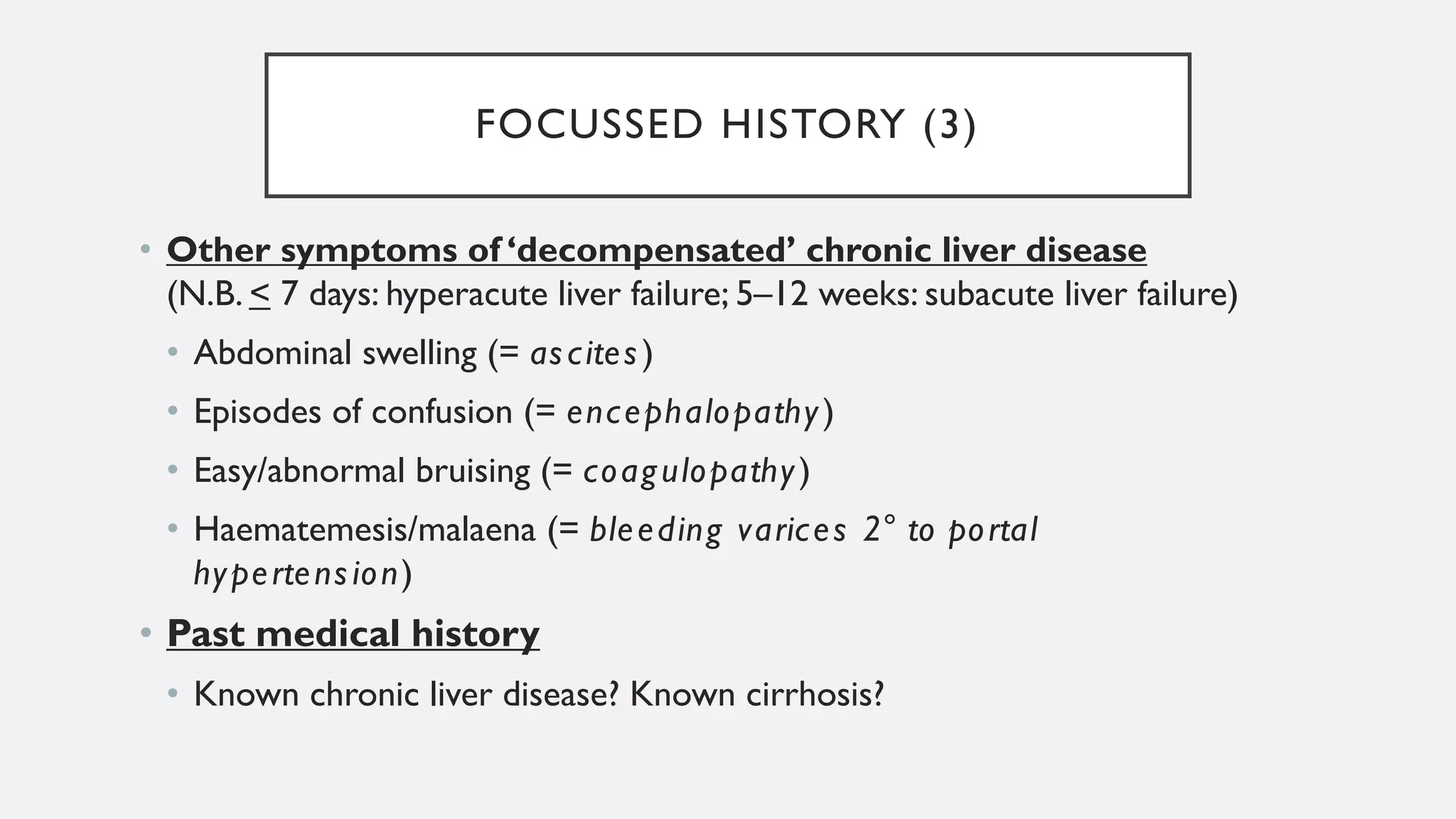
• Other symptoms of ‘decompensated’ chronic liver disease
(N.B. < 7 days: hyperacute liver failure; 5–12 weeks: subacute liver failure)
• Abdominal swelling (= ascites)
• Episodes of confusion (= encephalopathy)
• Easy/abnormal bruising (= coagulopathy)
• Haematemesis/malaena (= bleeding varices 2° to portal
hypertension)
• Past medical history
• Known chronic liver disease? Known cirrhosis?
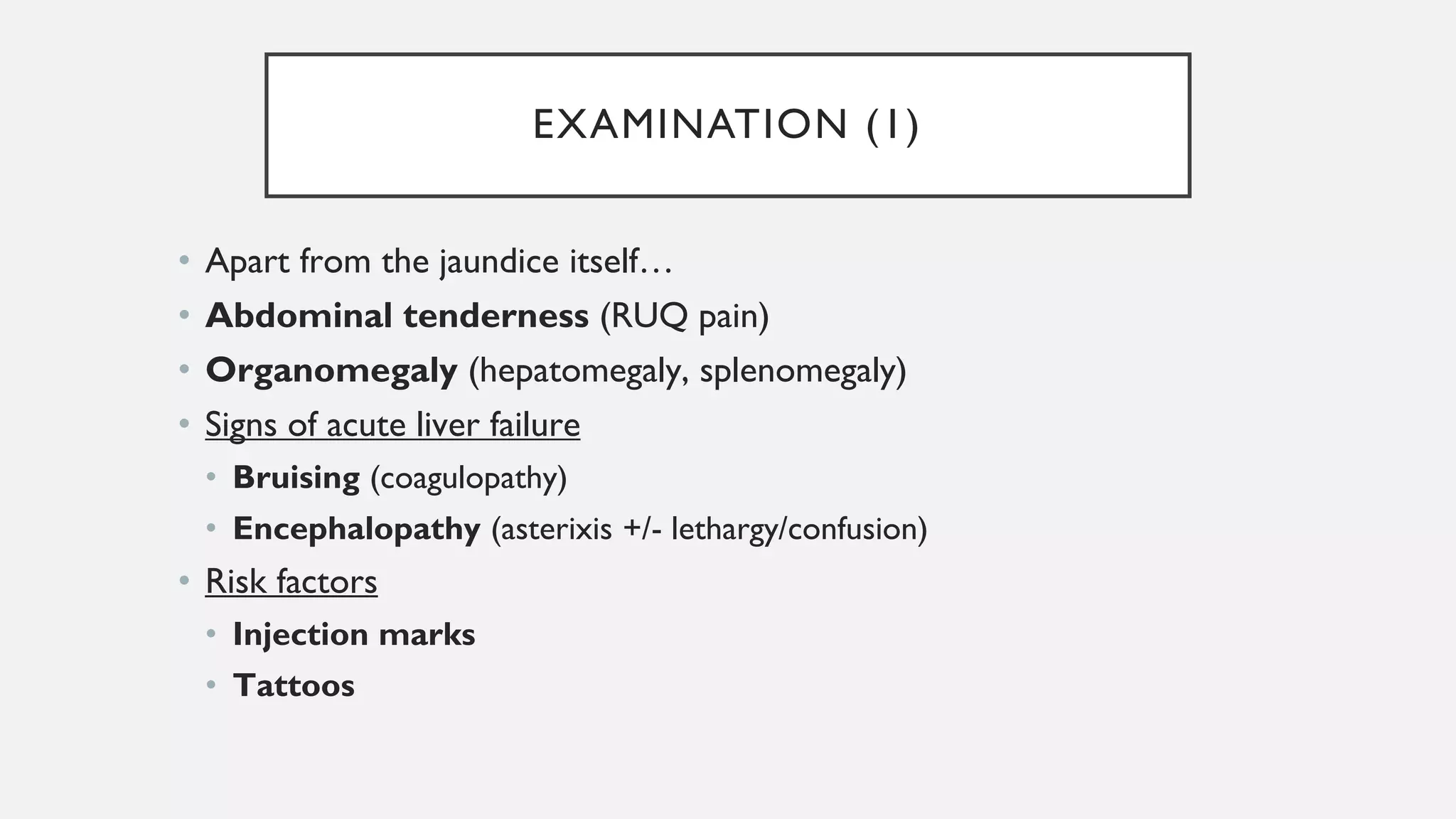
EXAMINATION (1)
• Apart from the jaundice itself…
• Abdominal tenderness (RUQ pain)
• Organomegaly (hepatomegaly, splenomegaly)
• Signs of acute liver failure
• Bruising (coagulopathy)
• Encephalopathy (asterixis +/- lethargy/confusion)
• Risk factors
• Injection marks
• Tattoos
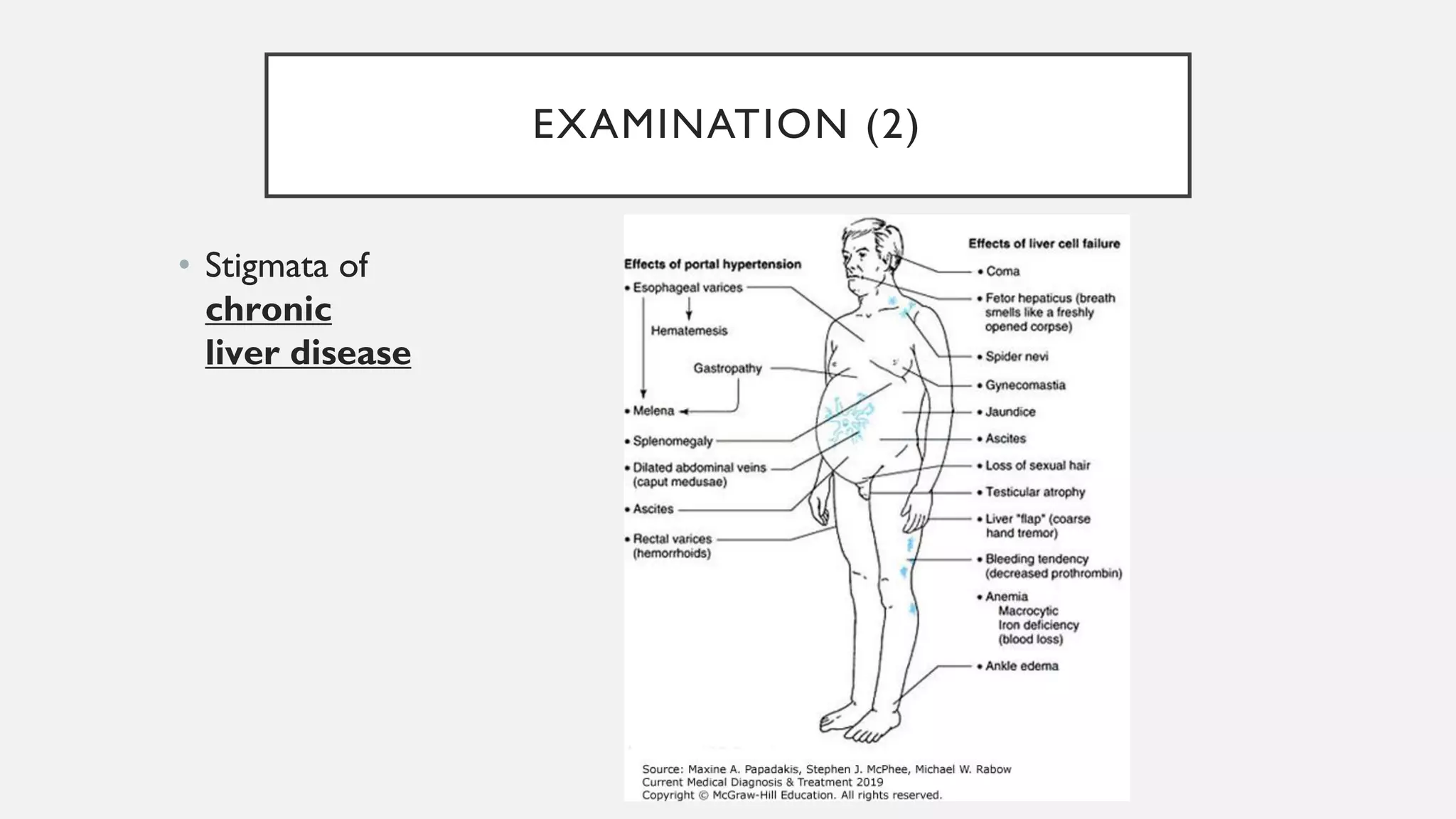
EXAMINATION (2)
• Stigmata of
chronic
liver disease
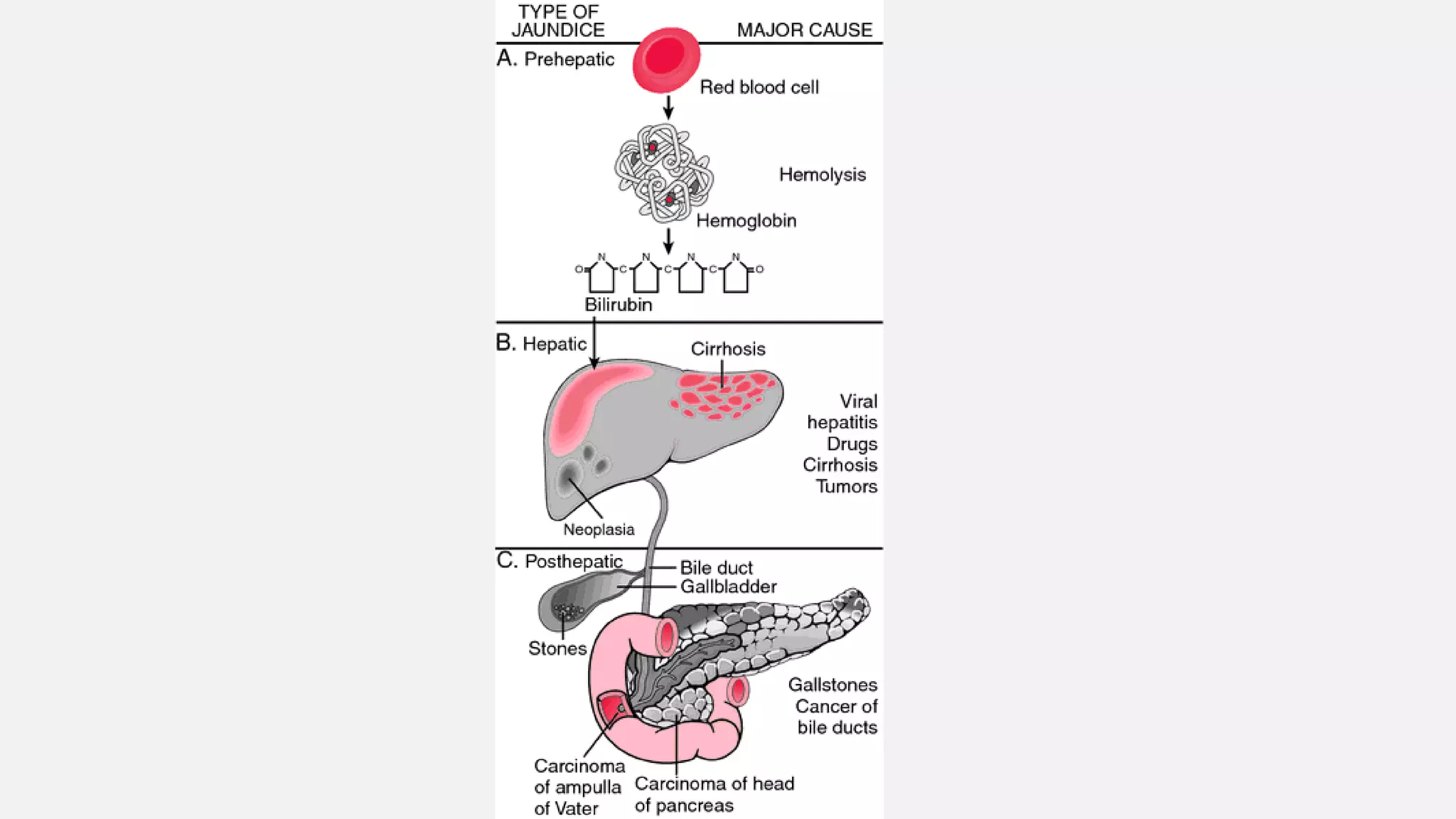
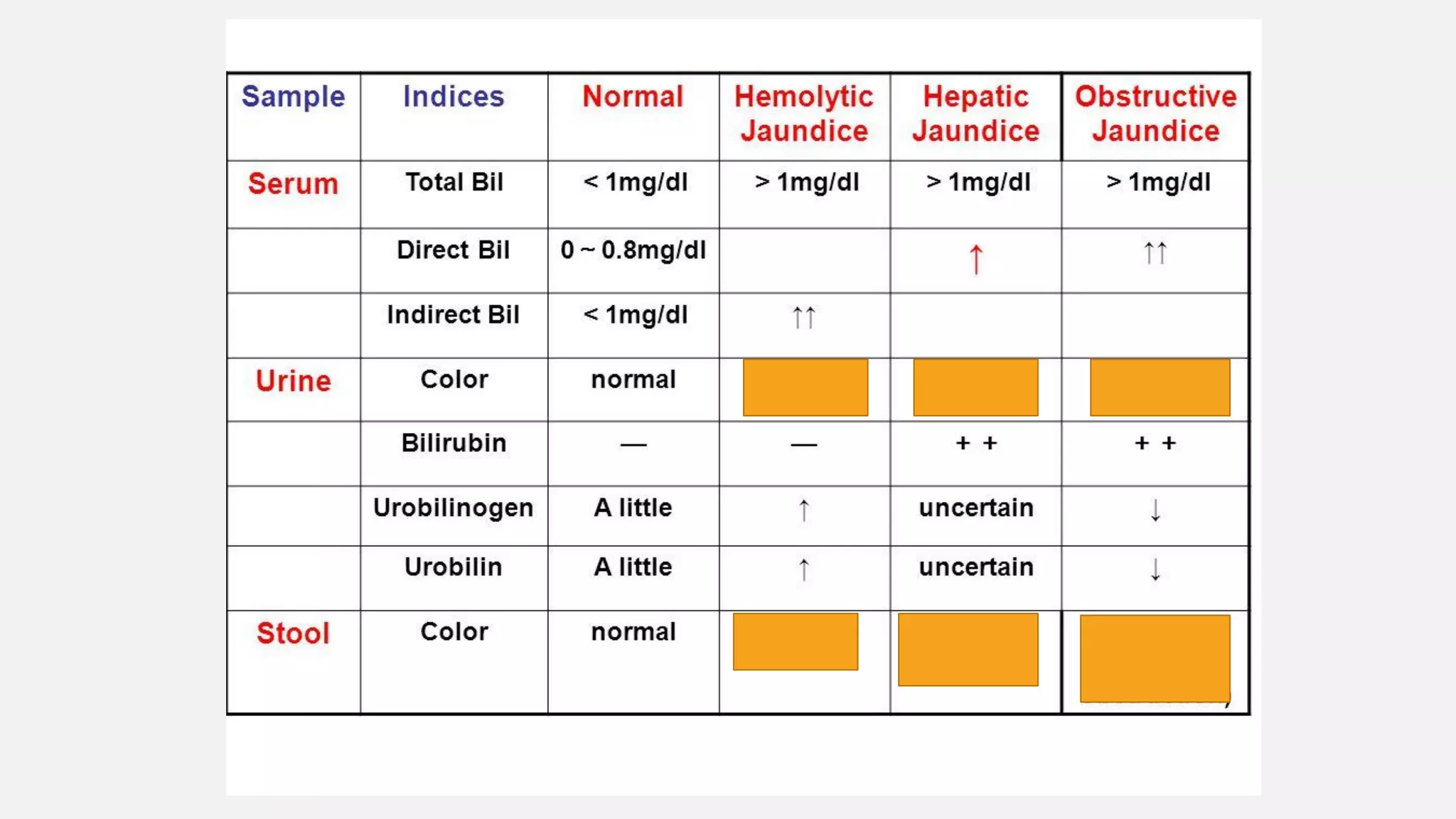
DIF F E R E NT IA L DIA G NO S IS ?
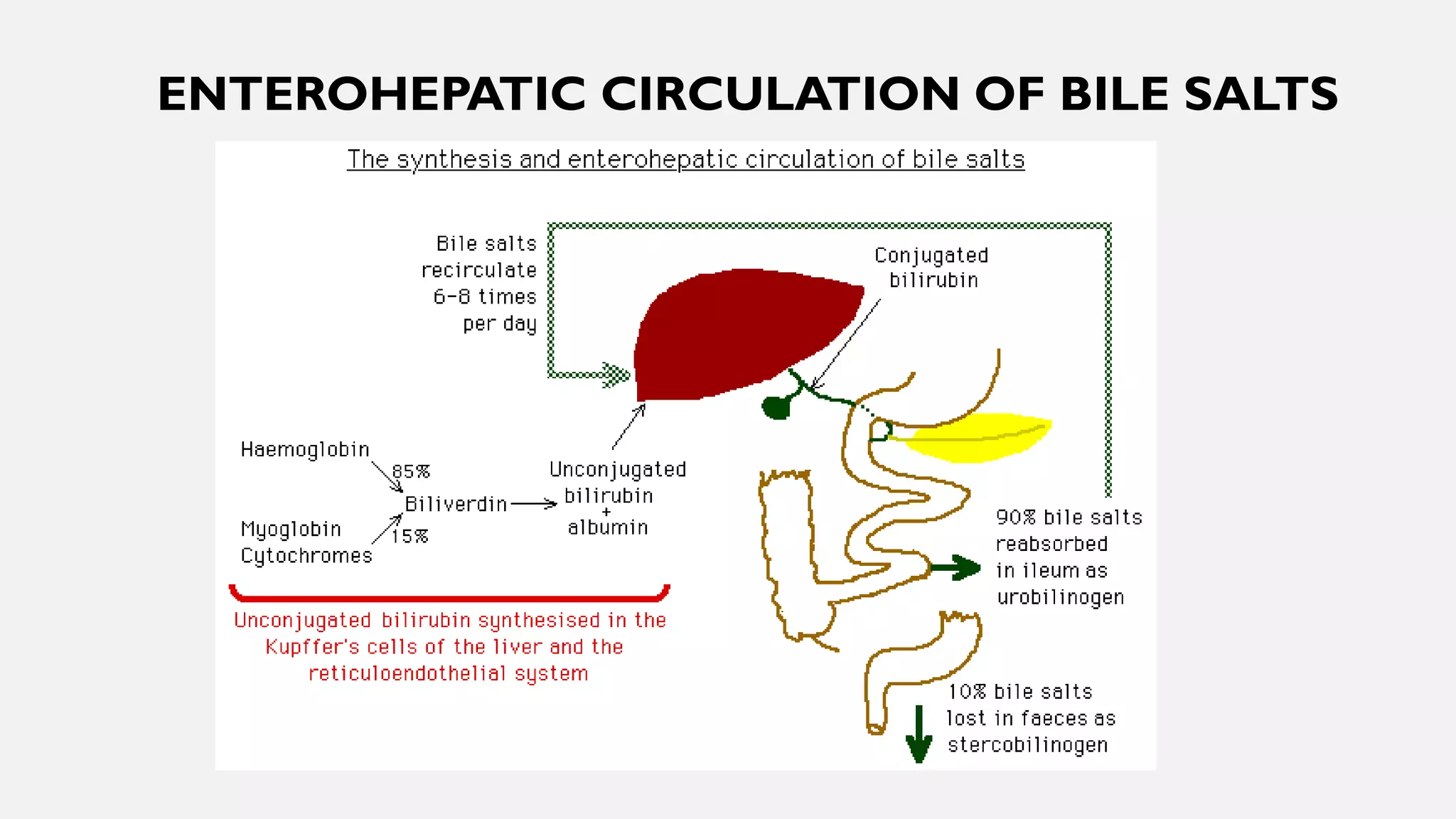
ENTEROHEPATIC CIRCULATION OF BILE SALTS
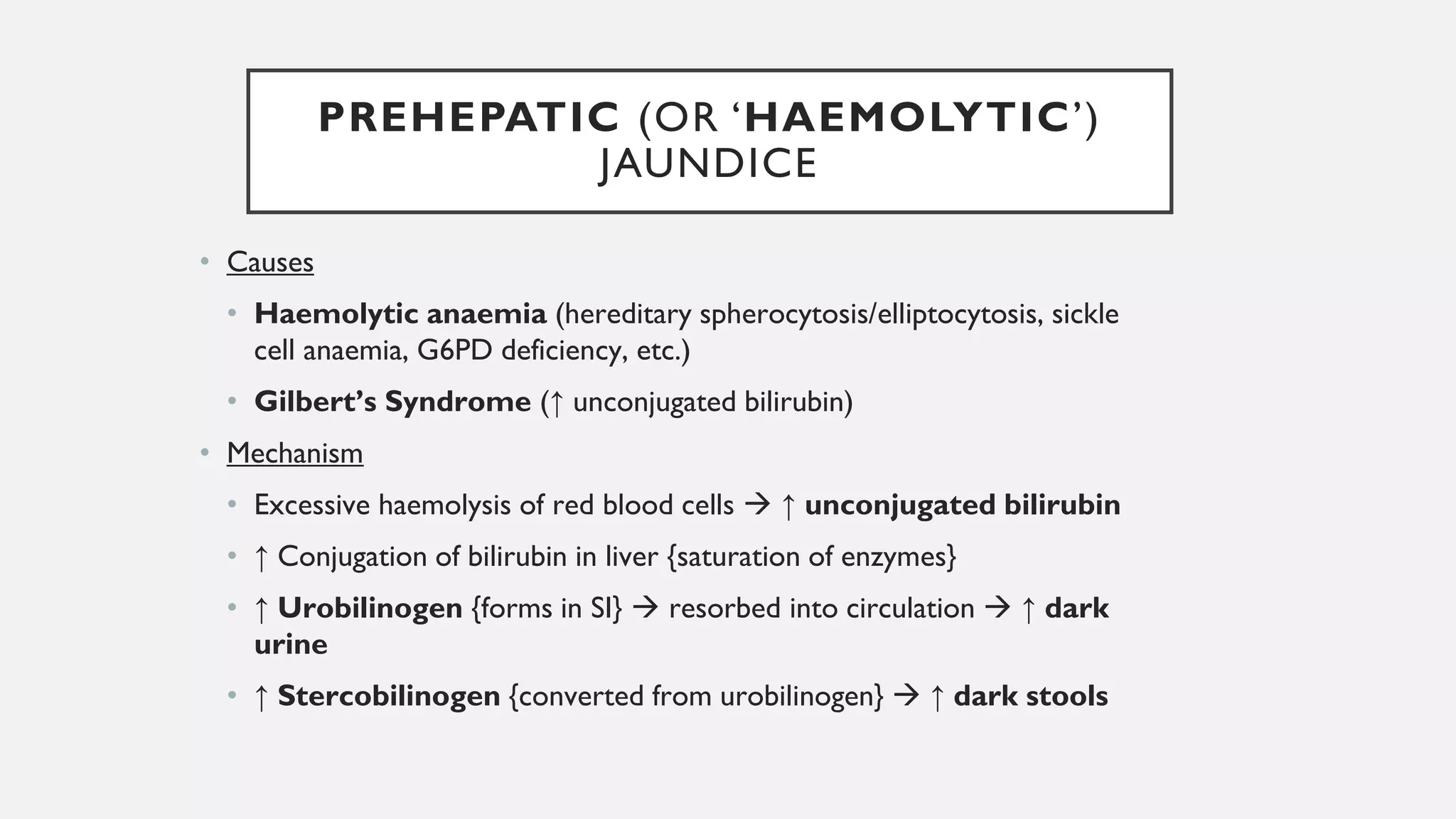
PREHEPATIC (OR ‘HAEMOLYTIC’)
JAUNDICE
• Causes
• Haemolytic anaemia (hereditary spherocytosis/elliptocytosis, sickle
cell anaemia, G6PD deficiency, etc.)
• Gilbert’s Syndrome (↑ unconjugated bilirubin)
• Mechanism
• Excessive haemolysis of red blood cells → ↑ unconjugated bilirubin
• ↑ Conjugation of bilirubin in liver {saturation of enzymes}
• ↑ Urobilinogen {forms in SI} → resorbed into circulation → ↑ dark
urine
• ↑ Stercobilinogen {converted from urobilinogen} → ↑ dark stools
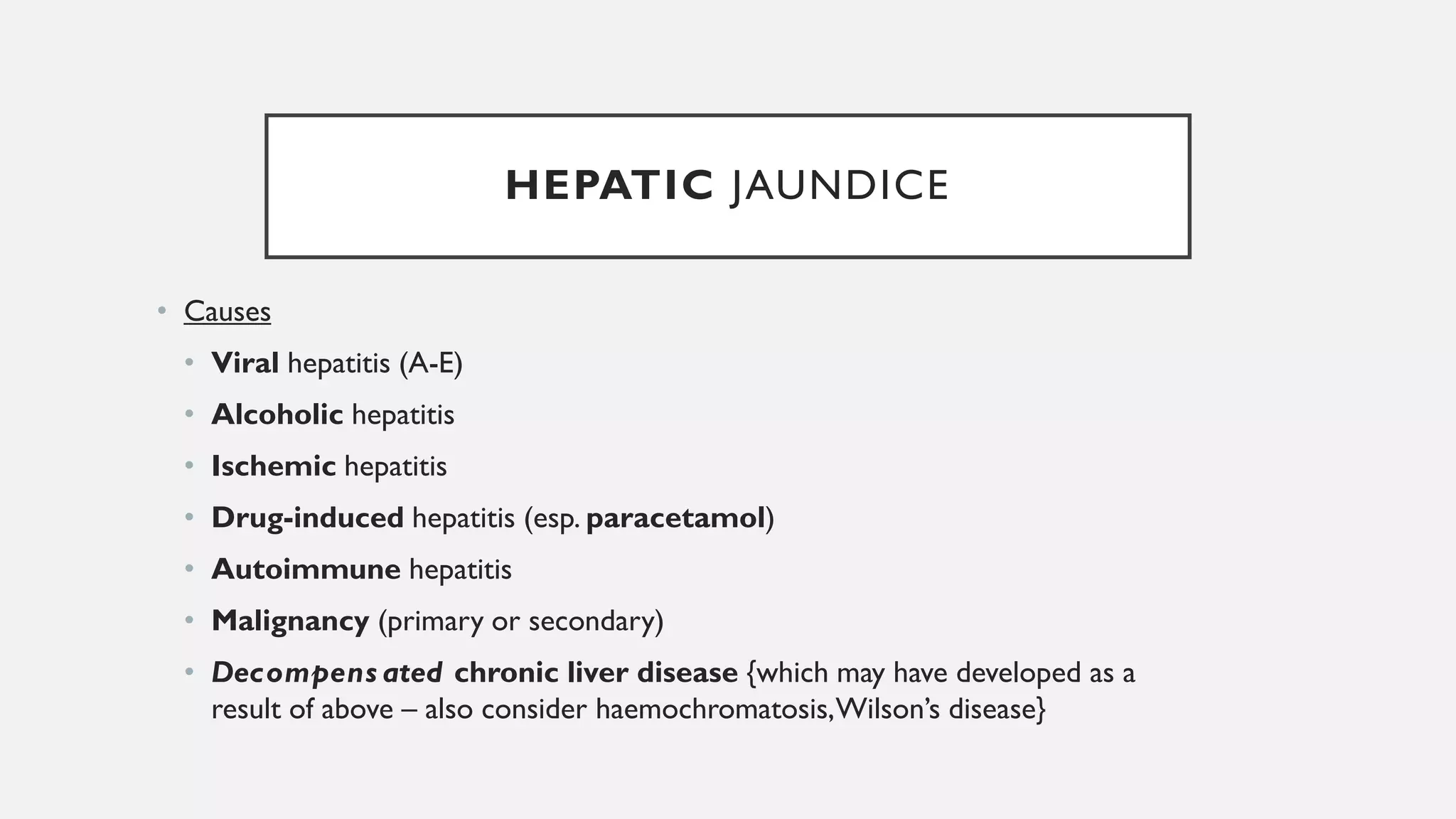
HEPATIC JAUNDICE
• Causes
• Viral hepatitis (A-E)
• Alcoholic hepatitis
• Ischemic hepatitis
• Drug-induced hepatitis (esp. paracetamol)
• Autoimmune hepatitis
• Malignancy (primary or secondary)
• Decompens ated chronic liver disease {which may have developed as a
result of above – also consider haemochromatosis,Wilson’s disease}
POST-HEPATIC JAUNDICE
• Causes
• Any cause of ‘cholestatic’ or obstructive jaundice:
• Gallstones
• Cholangiocarcinoma
• Pancreatic carcinoma
• Primary biliary cholangitis (autoimmune)
• Primary sclerosing cholangitis (associated with ulcerative colitis)
• Parasites
• CONJUGATED BILIRUBIN & LIPASE FROM GALLBLADDER →
BLOCKED ENTEROHEPATIC CIRCULATION
→ PALE, FATTY STOOLS + DARK URINE
INVESTIGATIONS (1)
• Routine bloods 💉
• LFTs, yGT (=deranged)
• Glucose (↓ due to ↓gluconeogenesis)
• Clotting screen (PT, aPTT ↑ due to ↓ synthetic function)
• If suspect haemolytic anaemia → ↑ LDH, ↑ haptoglobin
• ABG
• pH is used as part of King’s College transplant criteria for ALF (hepatic
dysfunction is a cause of lactic acidosis)
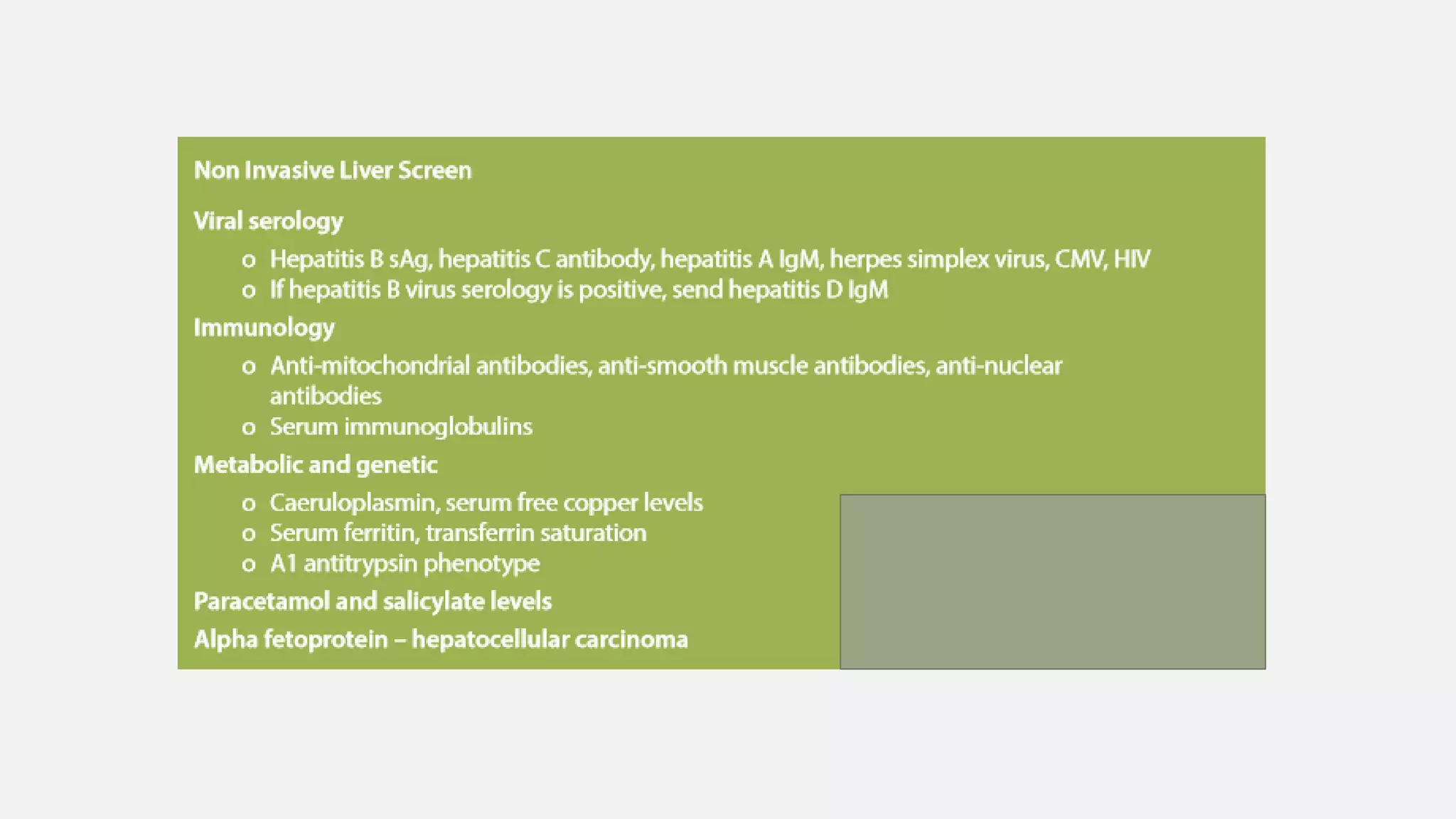
• Non-invasive liver screen
ALBUMIN
• Marker of synthetic function of liver
• But also, a…
• Marker of nutritional status
• Marker of inflammation/disease severity
• Negative acute phase protein
• ↓ production by liver so more amino acids available for
production of positive acute phase proteins
• ↑ proteolysis (catabolism)
• ↑ transcapillary escape rate
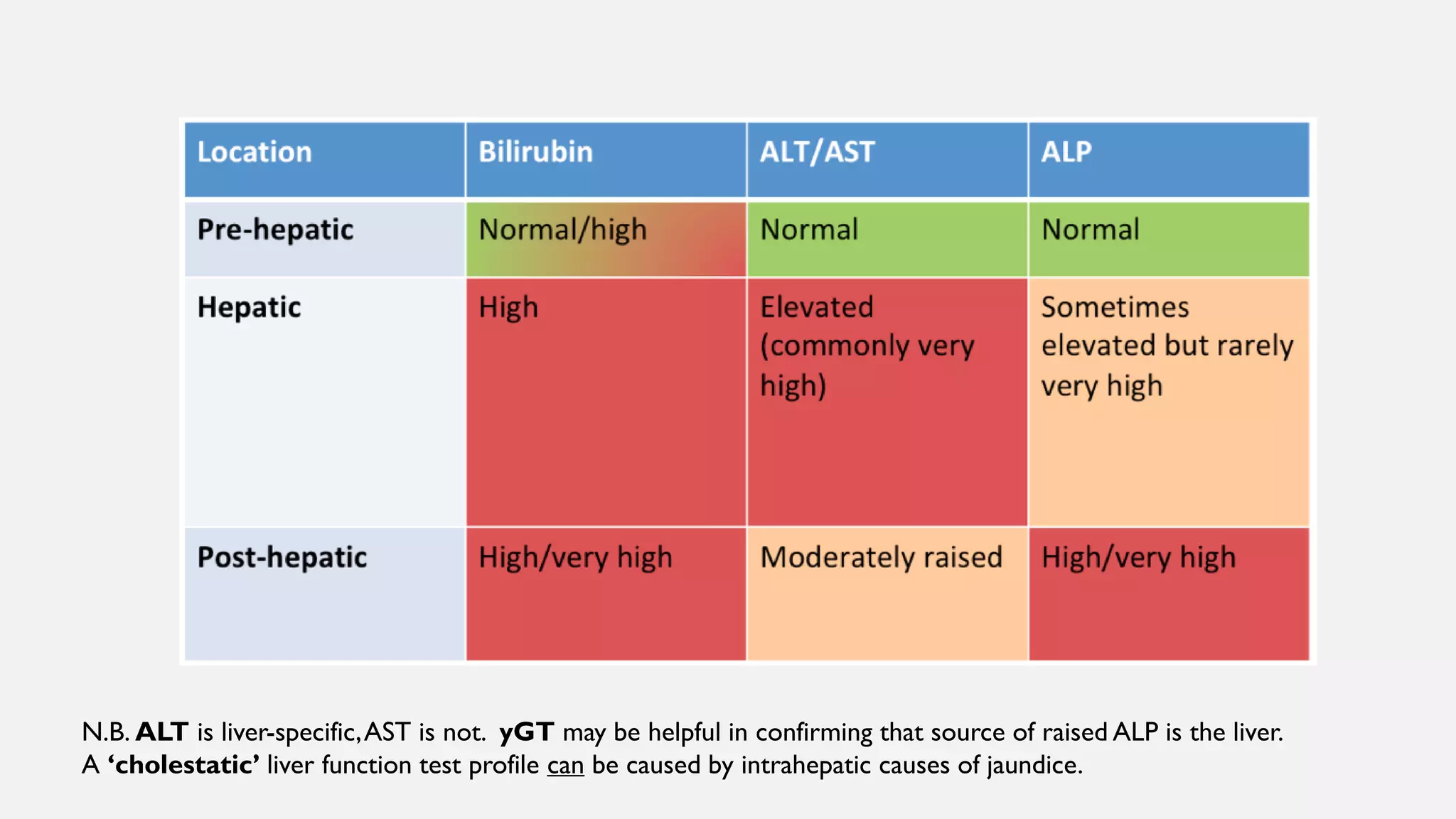
N.B. ALT is liver-specific,AST is not. yGT may be helpful in confirming that source of raised ALP is the liver.
A ‘cholestatic’ liver function test profile can be caused by intrahepatic causes of jaundice.
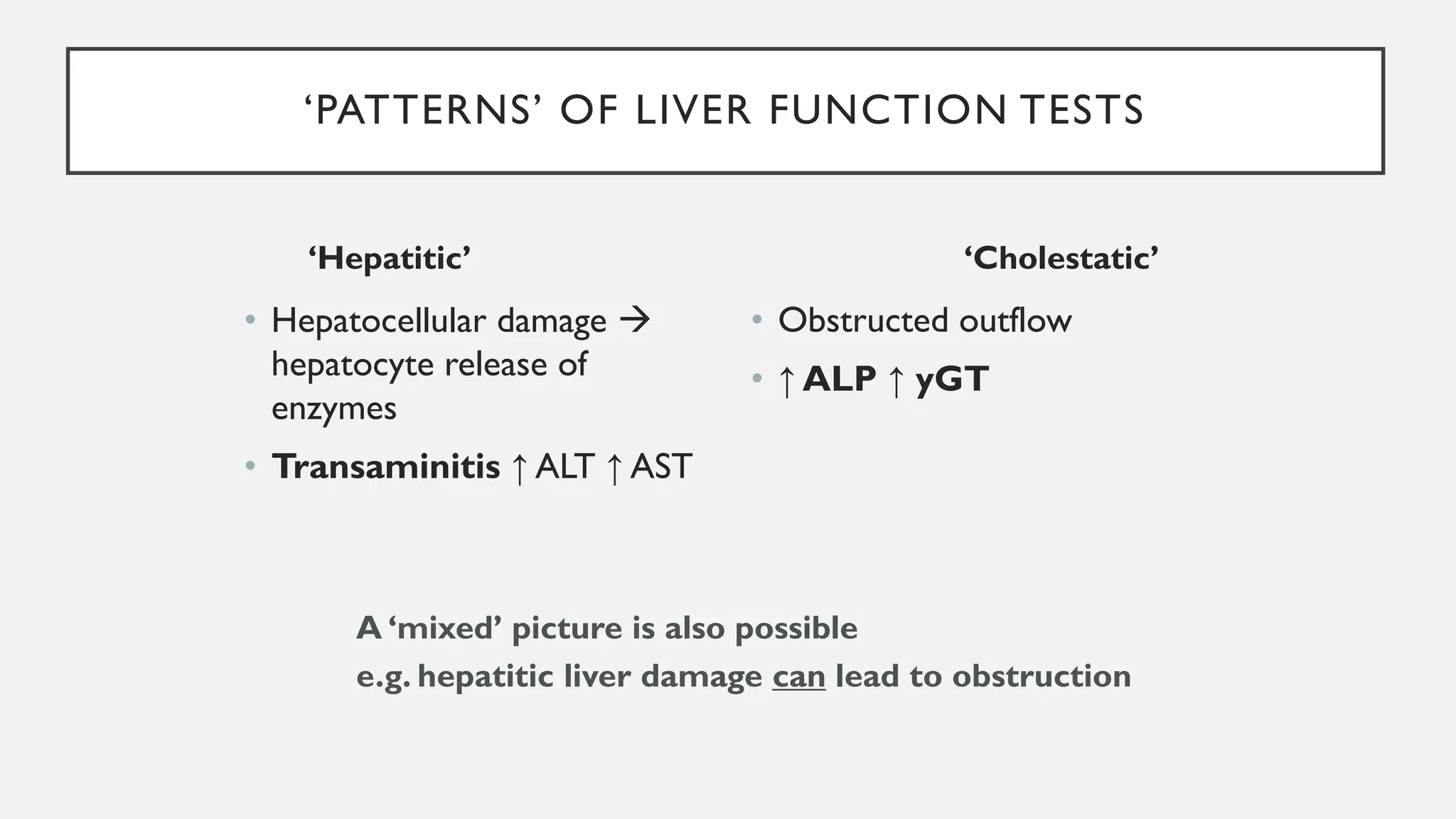
‘PATTERNS’ OF LIVER FUNCTION TESTS
‘Hepatitic’
• Hepatocellular damage →
hepatocyte release of
enzymes
• Transaminitis ↑ ALT ↑ AST
‘Cholestatic’
• Obstructed outflow
• ↑ ALP ↑ yGT
A ‘mixed’ picture is also possible
e.g. hepatitic liver damage can lead to obstruction
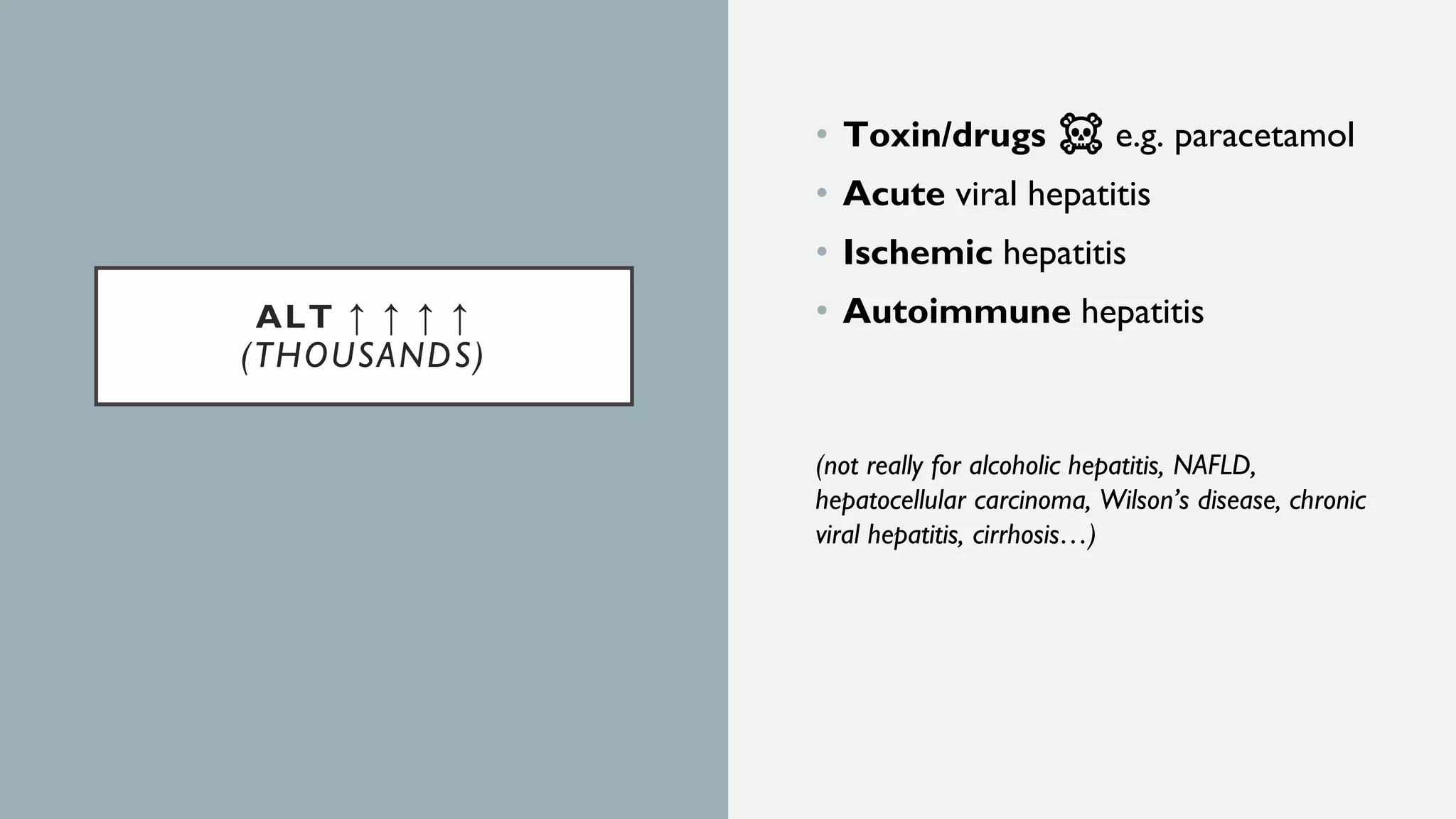
ALT ↑ ↑ ↑ ↑
(THOUSANDS)
• Toxin/drugs ☠️ e.g. paracetamol
• Acute viral hepatitis
• Ischemic hepatitis
• Autoimmune hepatitis
(not really for alcoholic hepatitis, NAFLD,
hepatocellular carcinoma, Wilson’s disease, chronic
viral hepatitis, cirrhosis…)
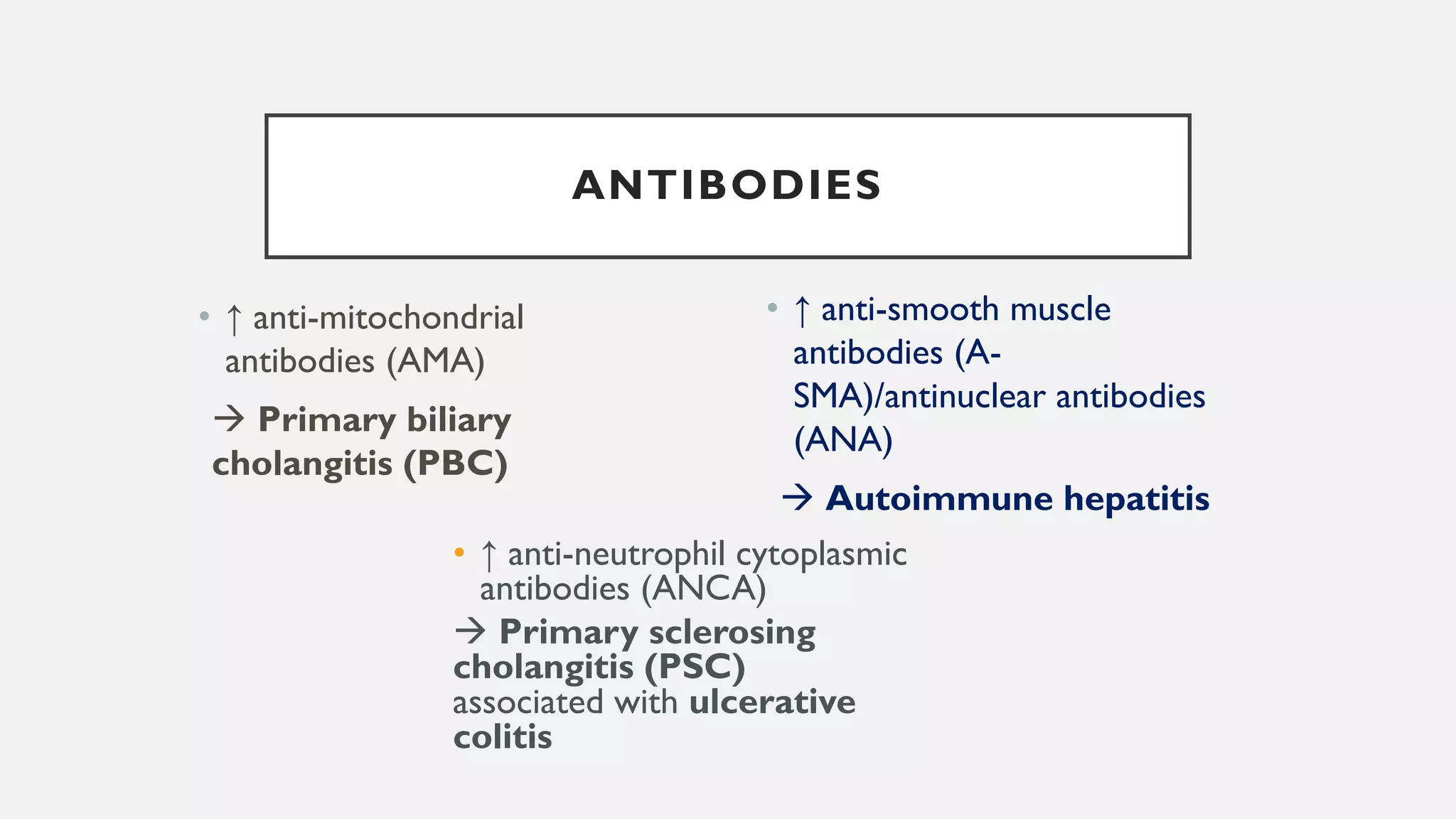
ANTIBODIES
• ↑ anti-mitochondrial
antibodies (AMA)
→ Primary biliary
cholangitis (PBC)
• ↑ anti-smooth muscle
antibodies (A-
SMA)/antinuclear antibodies
(ANA)
→ Autoimmune hepatitis
• ↑ anti-neutrophil cytoplasmic
antibodies (ANCA)
→ Primary sclerosing
cholangitis (PSC)
associated with ulcerative
colitis
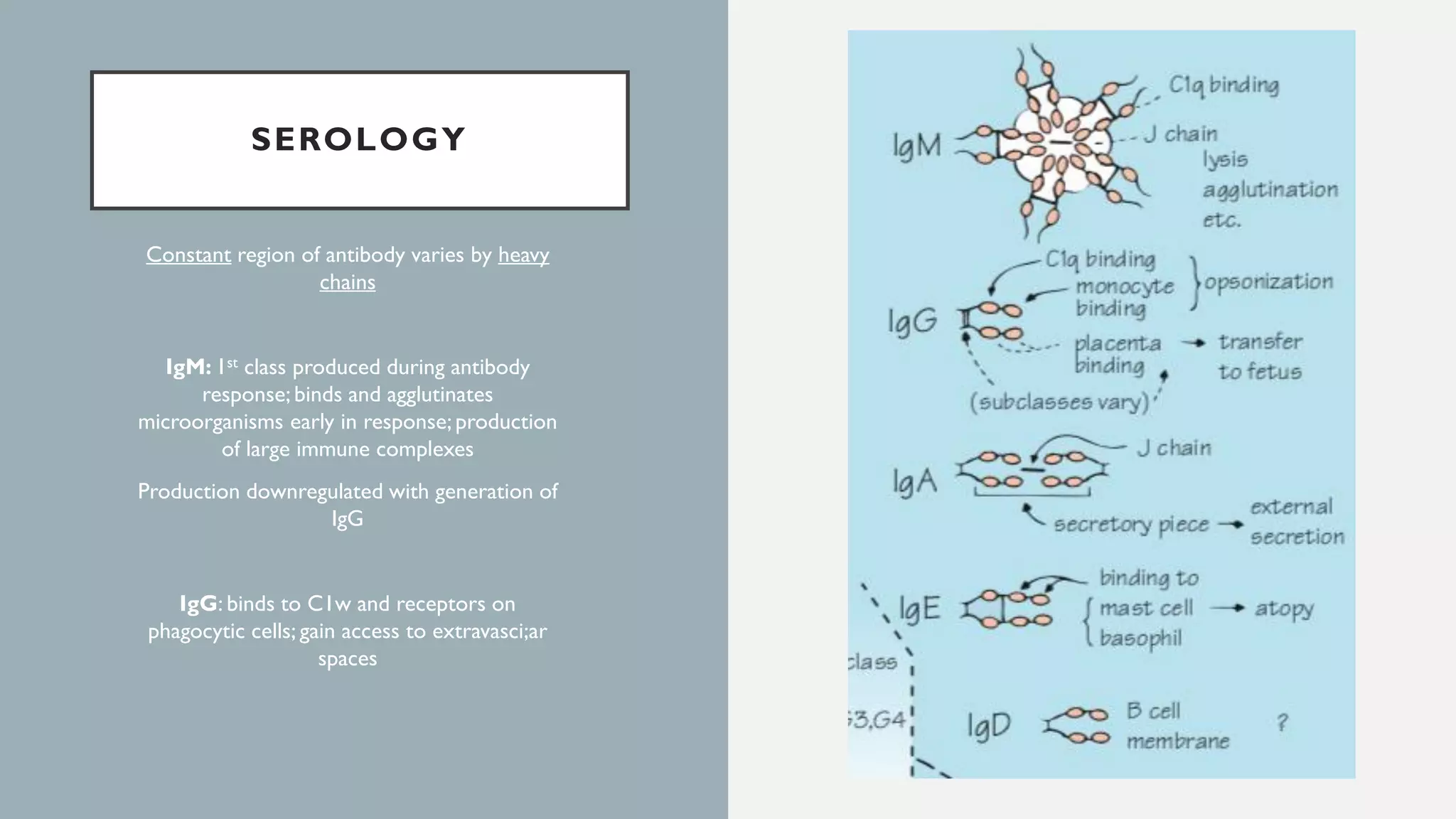
SEROLOGY
Constant region of antibody varies by heavy
chains
IgM: 1st class produced during antibody
response; binds and agglutinates
microorganisms early in response; production
of large immune complexes
Production downregulated with generation of
IgG
IgG: binds to C1w and receptors on
phagocytic cells; gain access to extravasci;ar
spaces
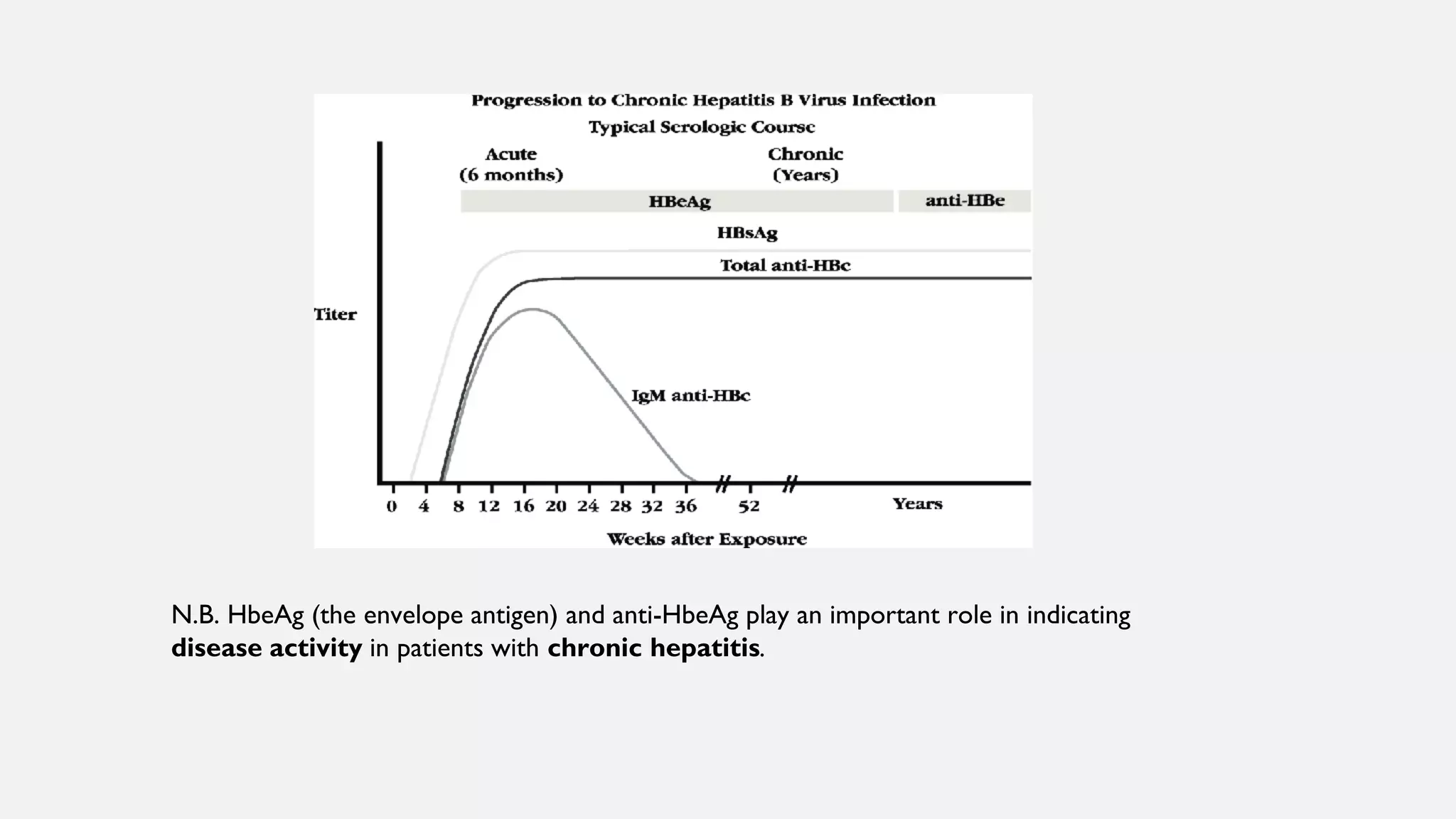
N.B. HbeAg (the envelope antigen) and anti-HbeAg play an important role in indicating
disease activity in patients with chronic hepatitis.
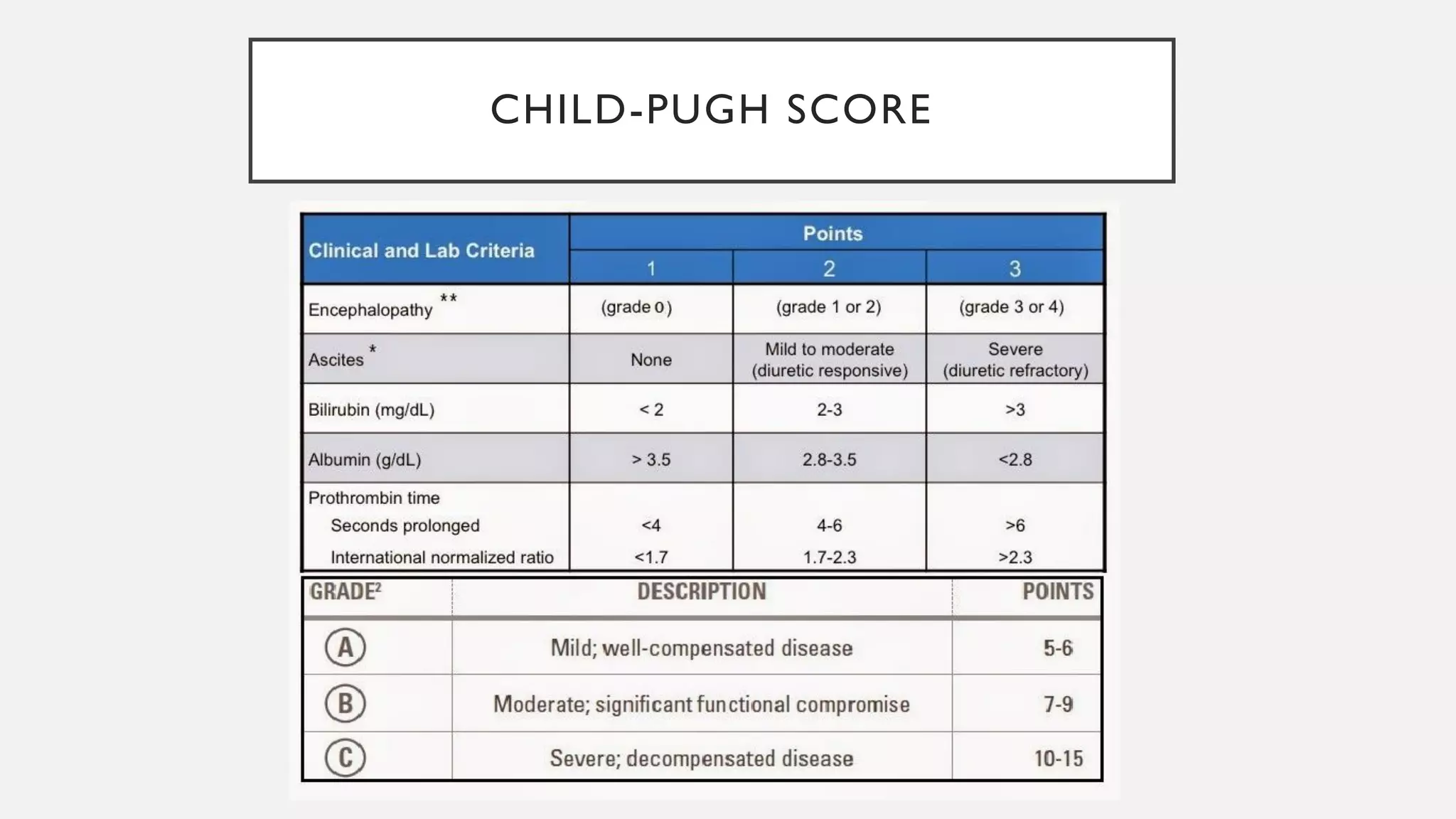
CHILD-PUGH SCORE
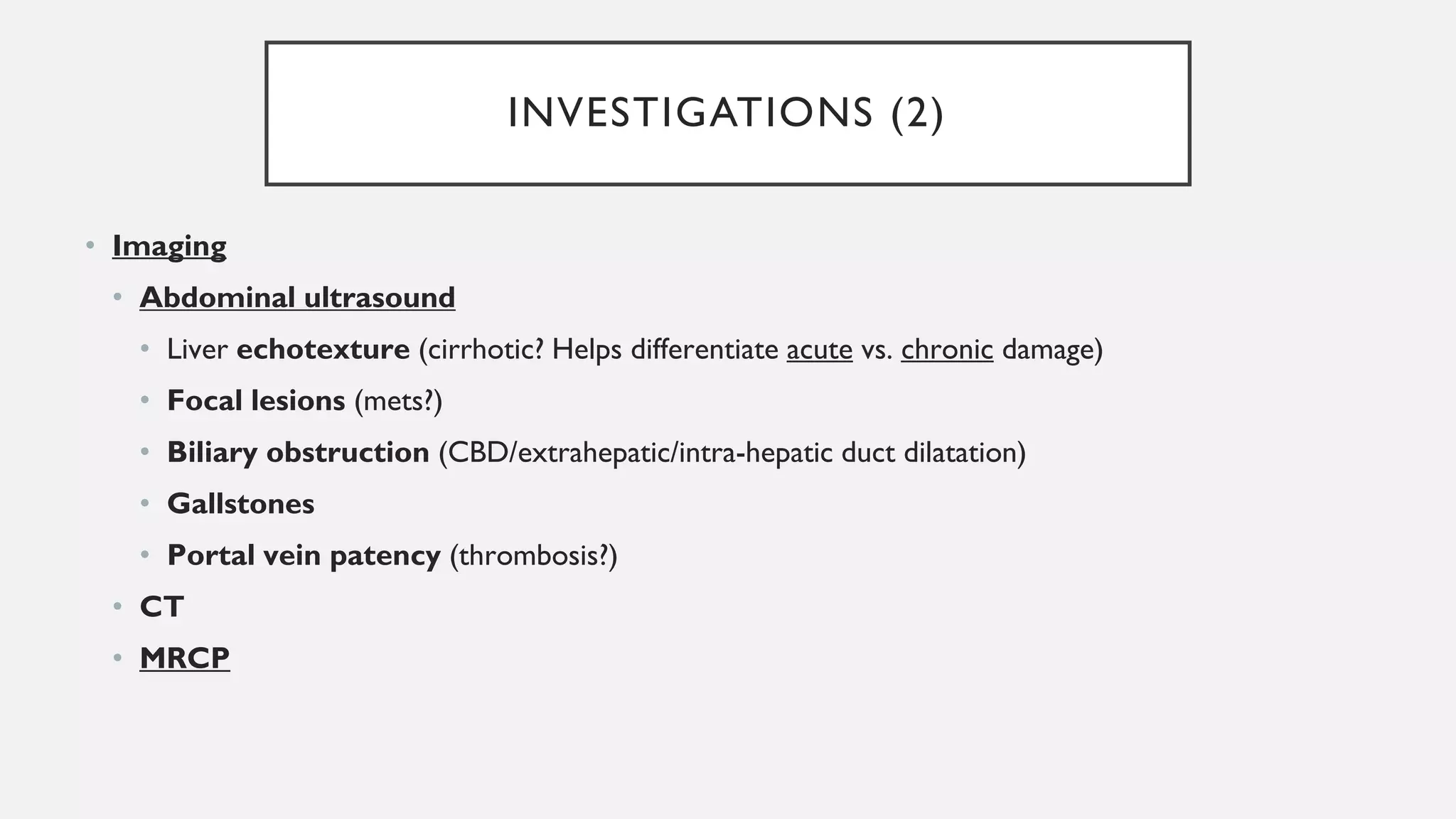
INVESTIGATIONS (2)
• Imaging
• Abdominal ultrasound
• Liver echotexture (cirrhotic? Helps differentiate acute vs. chronic damage)
• Focal lesions (mets?)
• Biliary obstruction (CBD/extrahepatic/intra-hepatic duct dilatation)
• Gallstones
• Portal vein patency (thrombosis?)
• CT
• MRCP
INVESTIGATIONS (3)
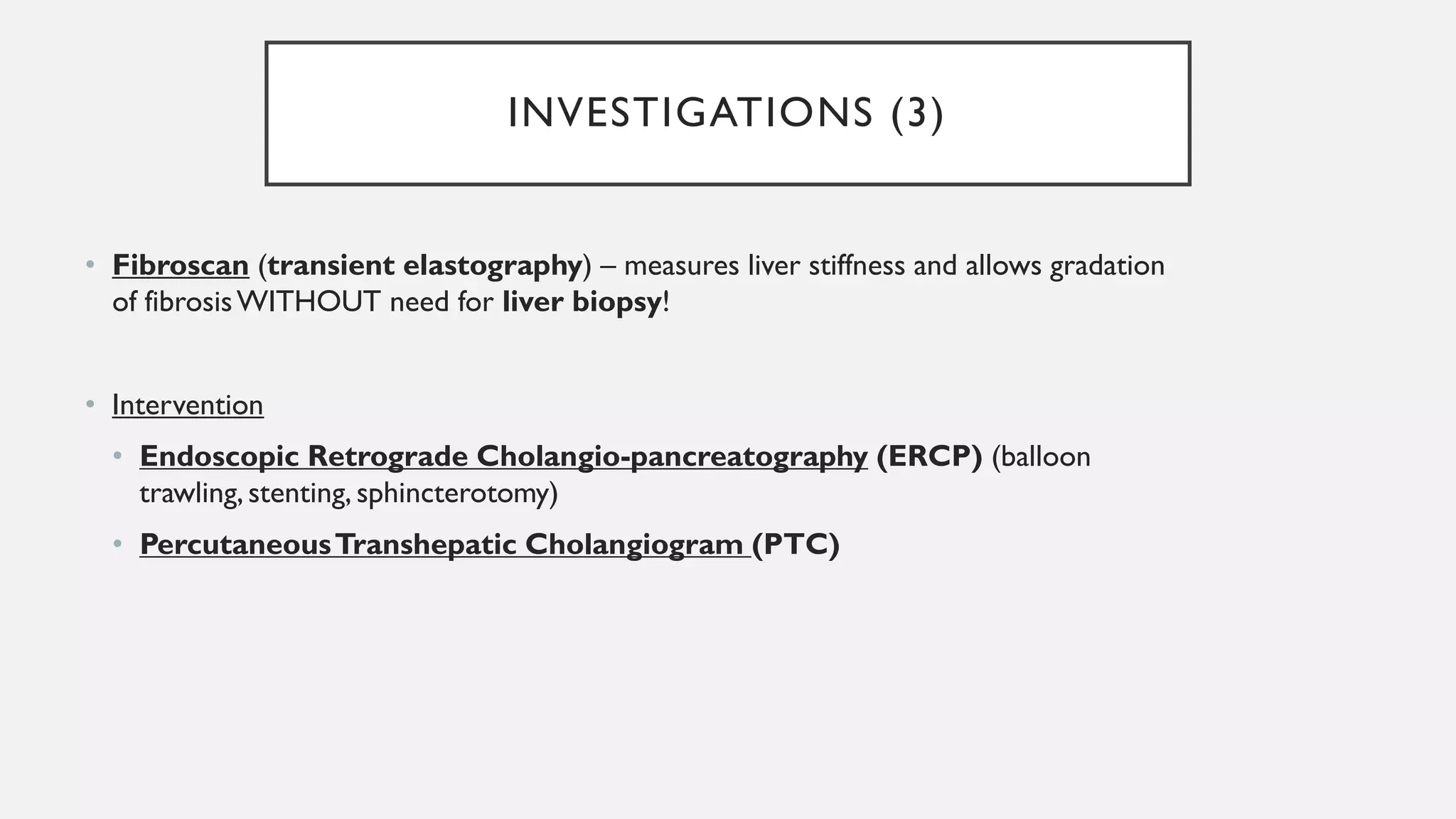
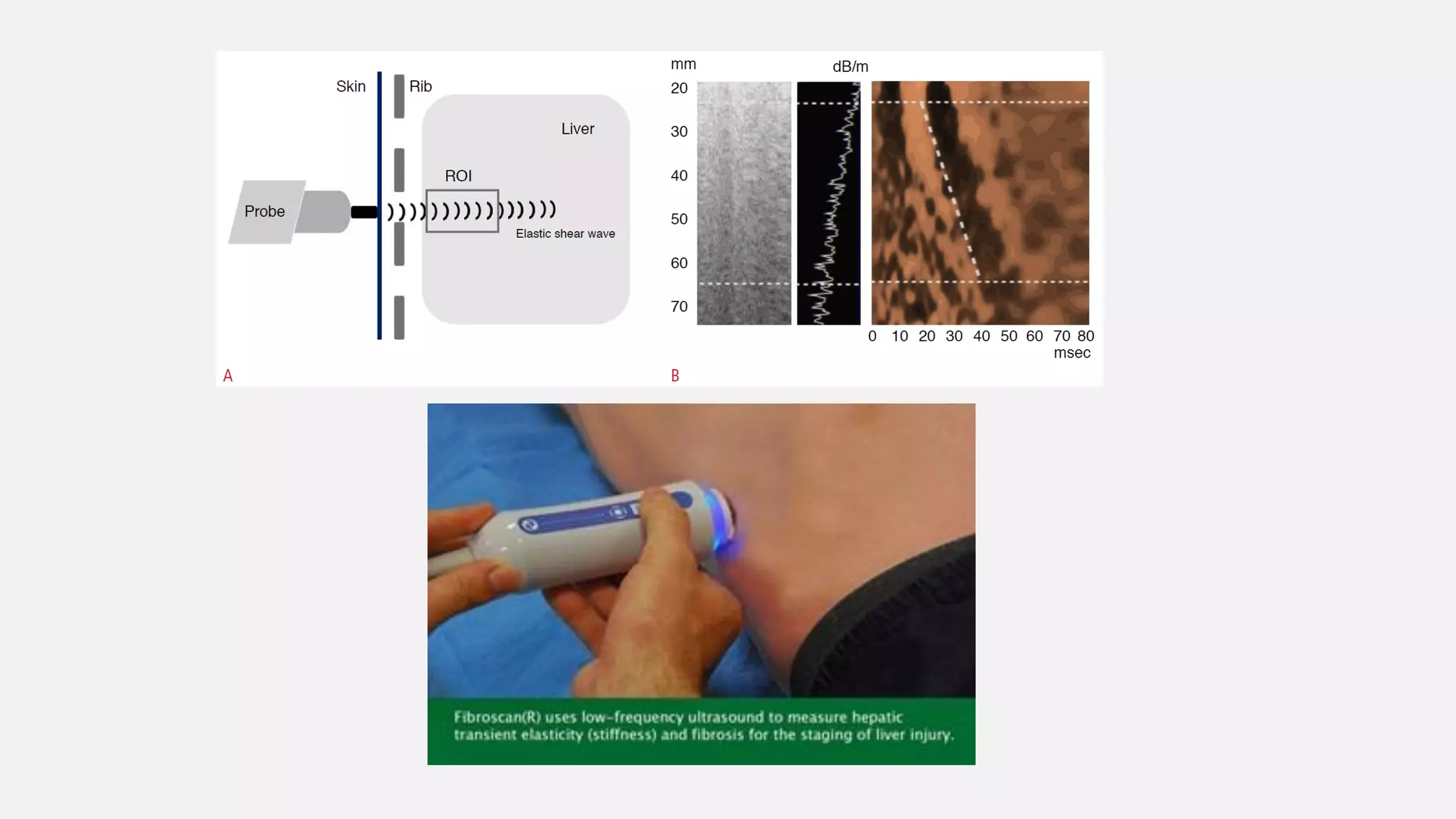
• Fibroscan (transient elastography) – measures liver stiffness and allows gradation
of fibrosisWITHOUT need for liver biopsy!
• Intervention
• Endoscopic Retrograde Cholangio-pancreatography (ERCP) (balloon
trawling, stenting, sphincterotomy)
• PercutaneousTranshepatic Cholangiogram (PTC)
ASCITIC TAP
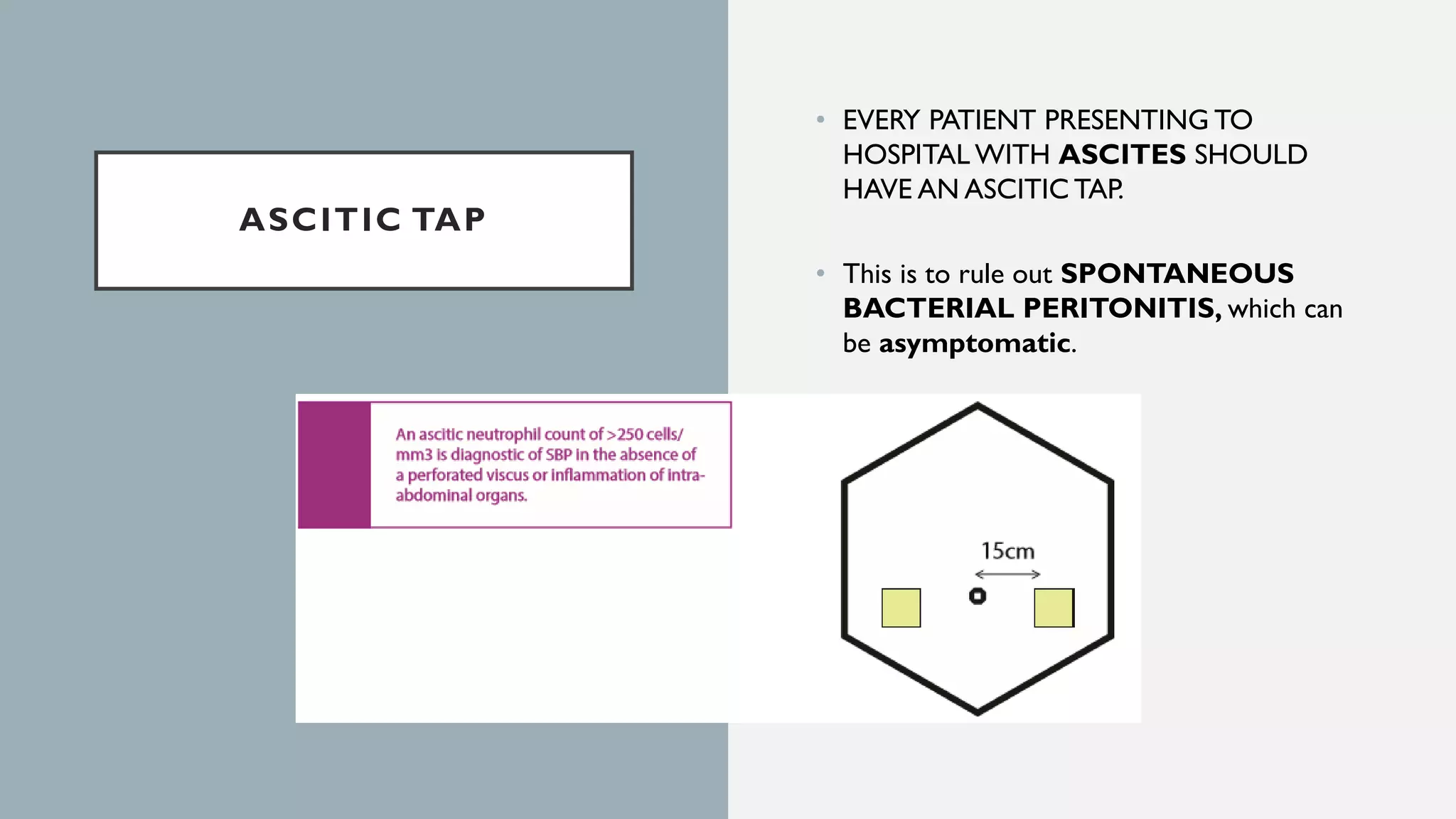
• EVERY PATIENT PRESENTING TO
HOSPITAL WITH ASCITES SHOULD
HAVE AN ASCITIC TAP.
• This is to rule out SPONTANEOUS
BACTERIAL PERITONITIS, which can
be asymptomatic.
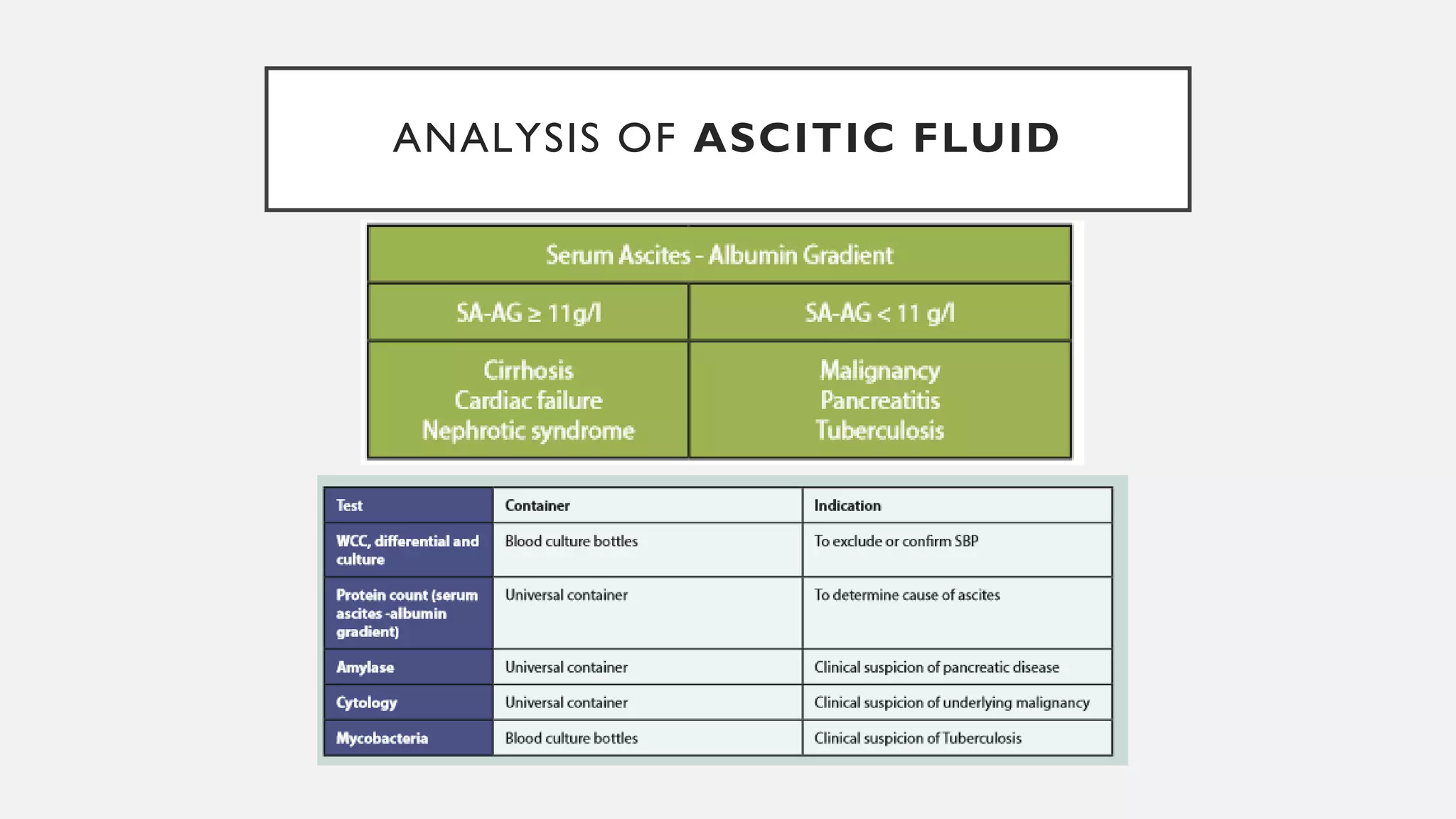
ANALYSIS OF ASCITIC FLUID
CASE 1
• A 75-year old lady presents with a 4-week history of jaundice, 3 kg
weight loss, pale stools, and dark urine. She has not experienced
any abdominal pain. She has no past medical history.
• On examination, she is jaundiced but apyrexial.The remainder of
her observations are normal. Her liver edge is palpable at 2-cm
below the costal margin. She has no signs of chronic liver disease.
BLOOD TESTS
• FBC
• Hb 135 g/L
• WCC 4.5 x 10⁹/L
• Platelets 124 x 109/L (↓)
• U&Es
• Normal
• LFTs
• Bilirubin 240 uM ↑
• ALT 120 IU/L (↑)
• ALP 1506 IU/L (↑ ↑)
• Albumin 36 g/L
• Clotting
• INR 1.3
QUESTIONS (1)
• What pattern of LFTs is demonstrated here?
• Obstructive
• Differential diagnosis?
• Pancreatic head tumour
• Ampullary tumour
• Cholangiocarcinoma
• Gallstones
• Benign biliary stricture
QUESTIONS
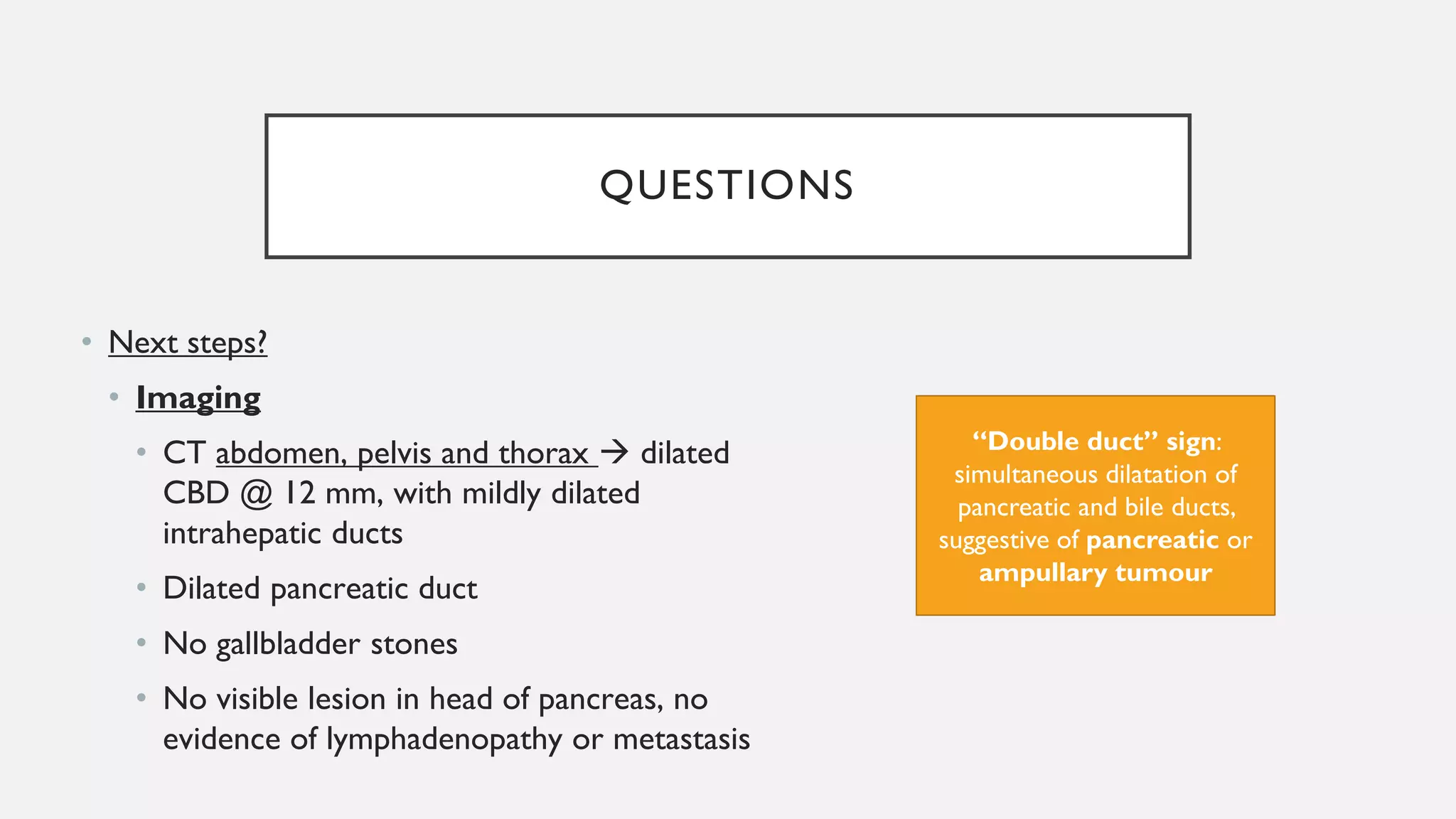
• Next steps?
• Imaging
• CT abdomen, pelvis and thorax → dilated
CBD @ 12 mm, with mildly dilated
intrahepatic ducts
• Dilated pancreatic duct
• No gallbladder stones
• No visible lesion in head of pancreas, no
evidence of lymphadenopathy or metastasis
“Double duct” sign:
simultaneous dilatation of
pancreatic and bile ducts,
suggestive of pancreatic or
ampullary tumour
QUESTIONS
• Next steps?
• ERCP
• Double duct sign observed again
• Appearances suggestive of ampullary carcinoma → biopsies
obtained
• Biliary stent inserted
• Prophylactic antibiotics commenced post-ERCP (↑ risk of
cholangitis)
• Management
• Local resection orWhipple’s procedure (pancreatoduodenectomy)
CASE 2
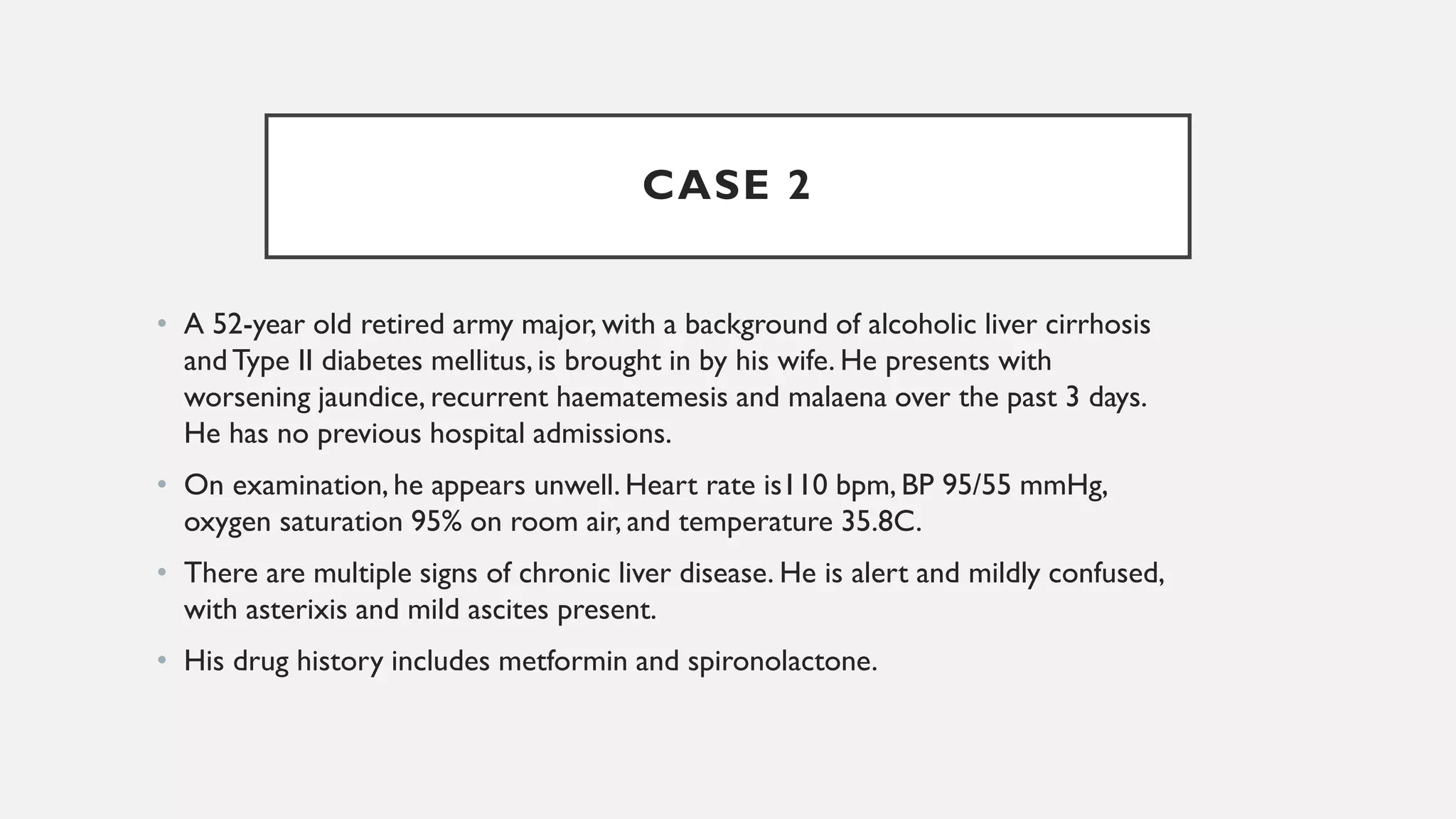
• A 52-year old retired army major, with a background of alcoholic liver cirrhosis
andType II diabetes mellitus, is brought in by his wife. He presents with
worsening jaundice, recurrent haematemesis and malaena over the past 3 days.
He has no previous hospital admissions.
• On examination, he appears unwell. Heart rate is110 bpm, BP 95/55 mmHg,
oxygen saturation 95% on room air, and temperature 35.8C.
• There are multiple signs of chronic liver disease. He is alert and mildly confused,
with asterixis and mild ascites present.
• His drug history includes metformin and spironolactone.
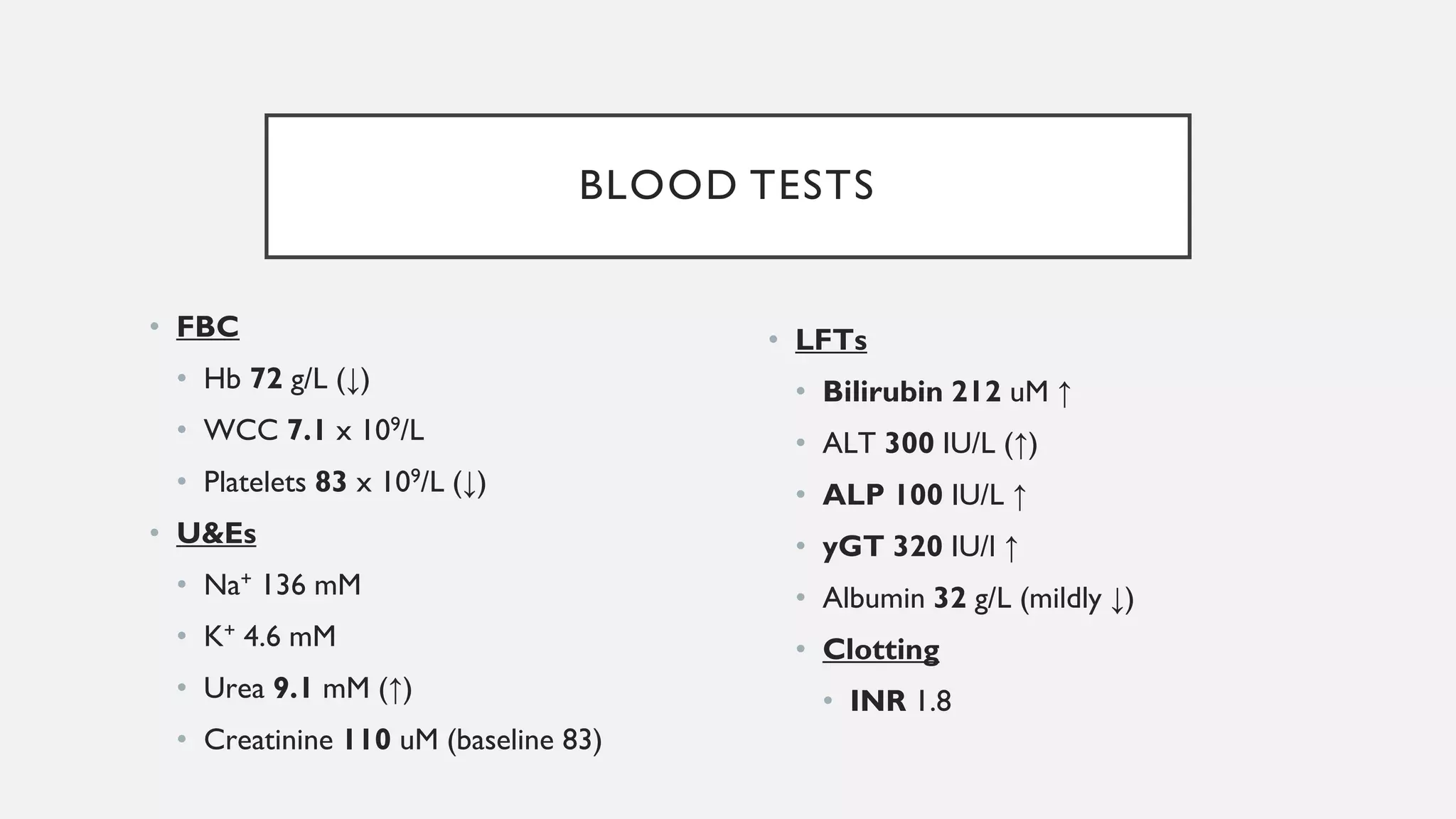
BLOOD TESTS
• FBC
• Hb 72 g/L (↓)
• WCC 7.1 x 10⁹/L
• Platelets 83 x 109/L (↓)
• U&Es
• Na+ 136 mM
• K+ 4.6 mM
• Urea 9.1 mM (↑)
• Creatinine 110 uM (baseline 83)
• LFTs
• Bilirubin 212 uM ↑
• ALT 300 IU/L (↑)
• ALP 100 IU/L ↑
• yGT 320 IU/l ↑
• Albumin 32 g/L (mildly ↓)
• Clotting
• INR 1.8
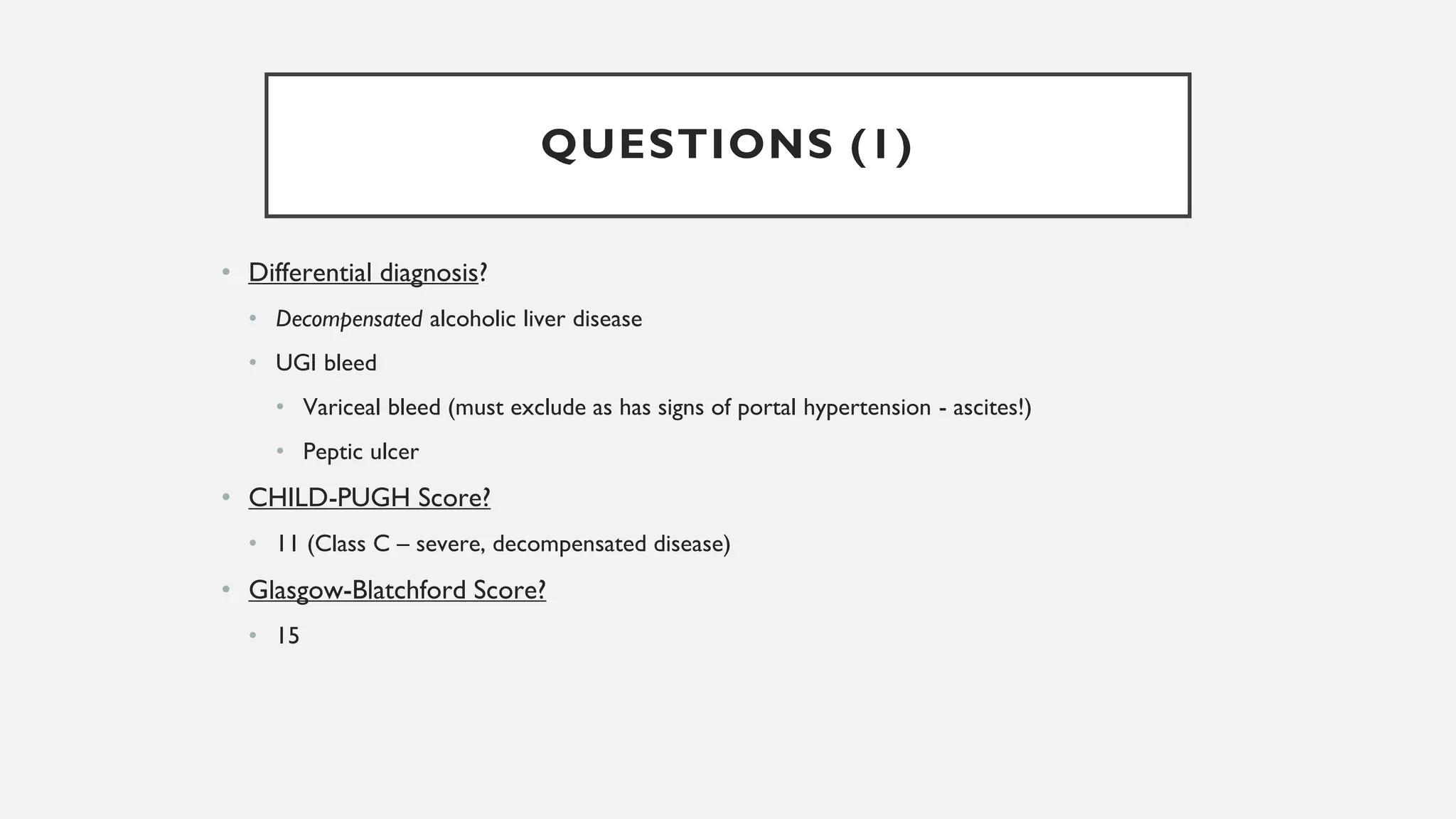
QUESTIONS (1)
• Differential diagnosis?
• Decompensated alcoholic liver disease
• UGI bleed
• Variceal bleed (must exclude as has signs of portal hypertension - ascites!)
• Peptic ulcer
• CHILD-PUGH Score?
• 11 (Class C – severe, decompensated disease)
• Glasgow-Blatchford Score?
• 15
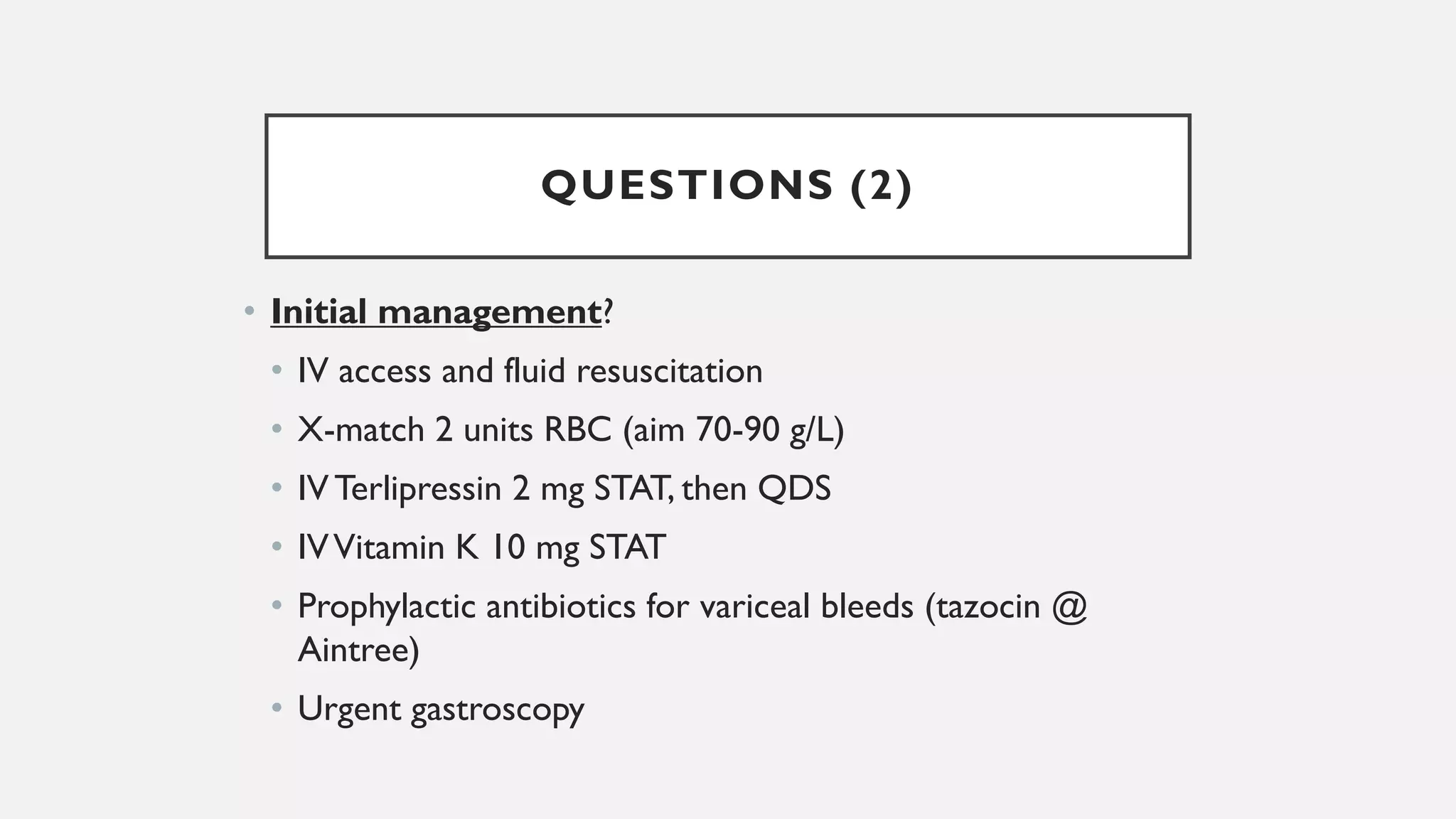
QUESTIONS (2)
• Initial management?
• IV access and fluid resuscitation
• X-match 2 units RBC (aim 70-90 g/L)
• IV Terlipressin 2 mg STAT, then QDS
• IVVitamin K 10 mg STAT
• Prophylactic antibiotics for variceal bleeds (tazocin @
Aintree)
• Urgent gastroscopy
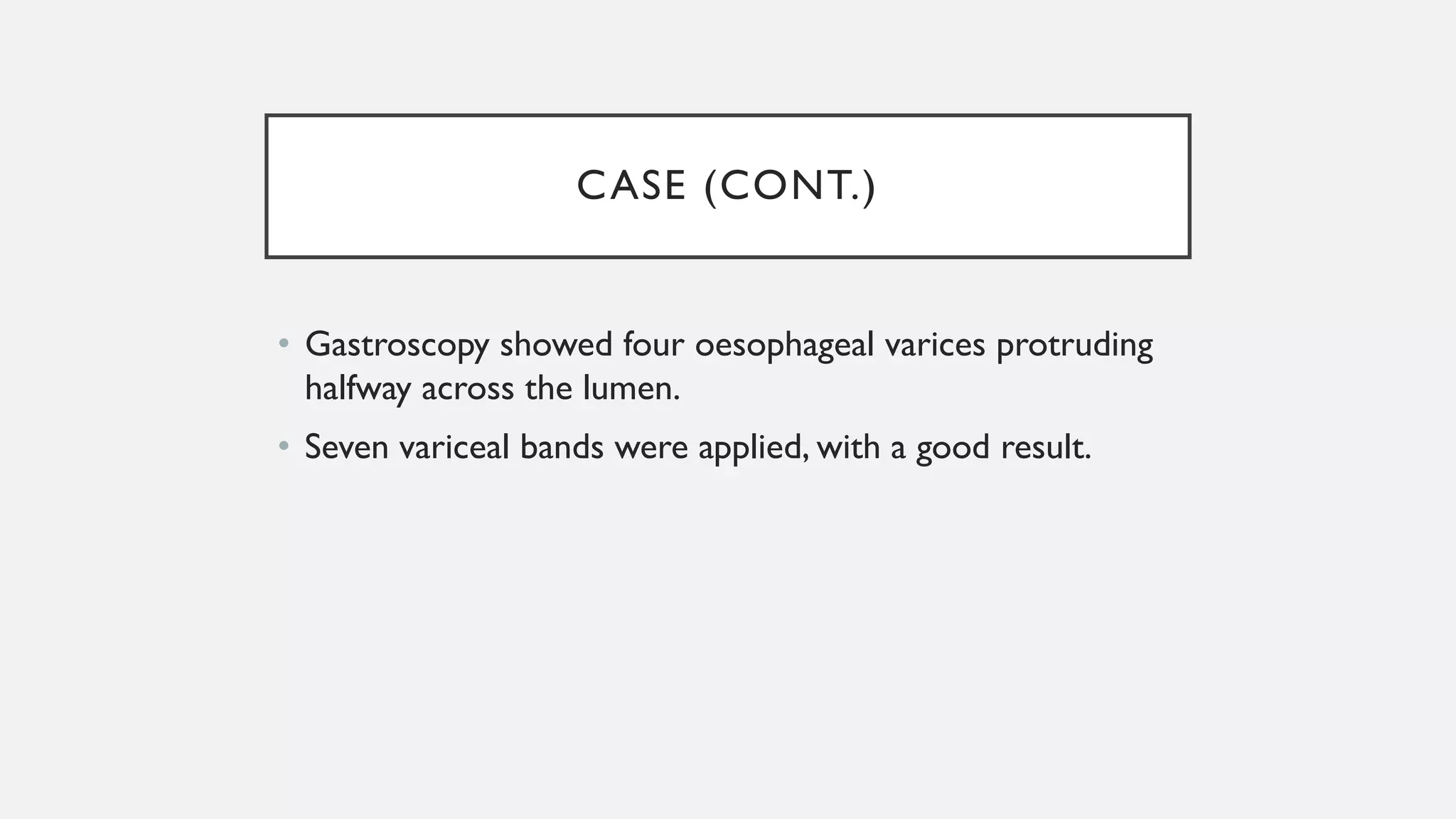
CASE (CONT.)
• Gastroscopy showed four oesophageal varices protruding
halfway across the lumen.
• Seven variceal bands were applied, with a good result.
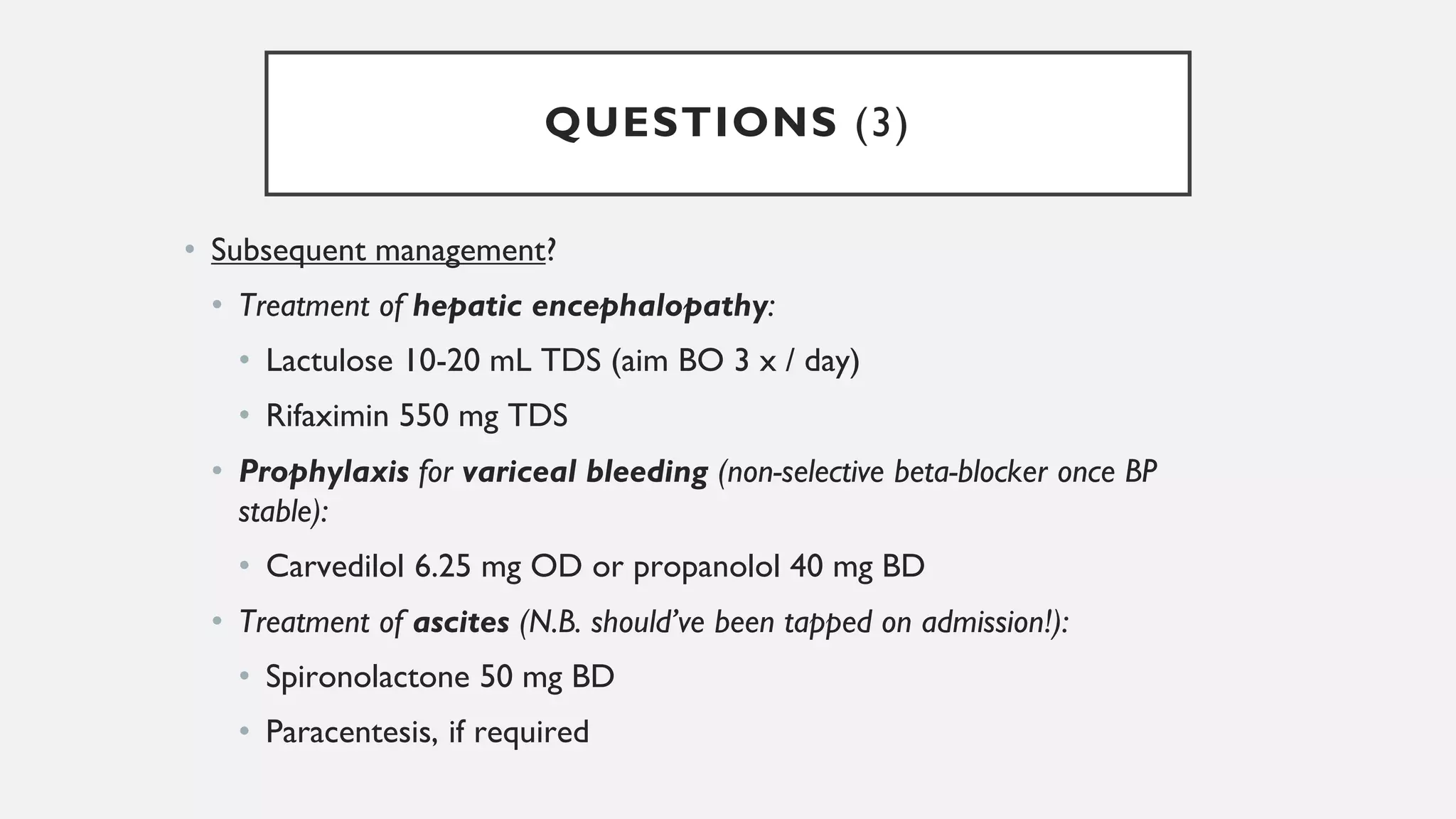
QUESTIONS (3)
• Subsequent management?
• Treatment of hepatic encephalopathy:
• Lactulose 10-20 mL TDS (aim BO 3 x / day)
• Rifaximin 550 mg TDS
• Prophylaxis for variceal bleeding (non-selective beta-blocker once BP
stable):
• Carvedilol 6.25 mg OD or propanolol 40 mg BD
• Treatment of ascites (N.B. should’ve been tapped on admission!):
• Spironolactone 50 mg BD
• Paracentesis, if required
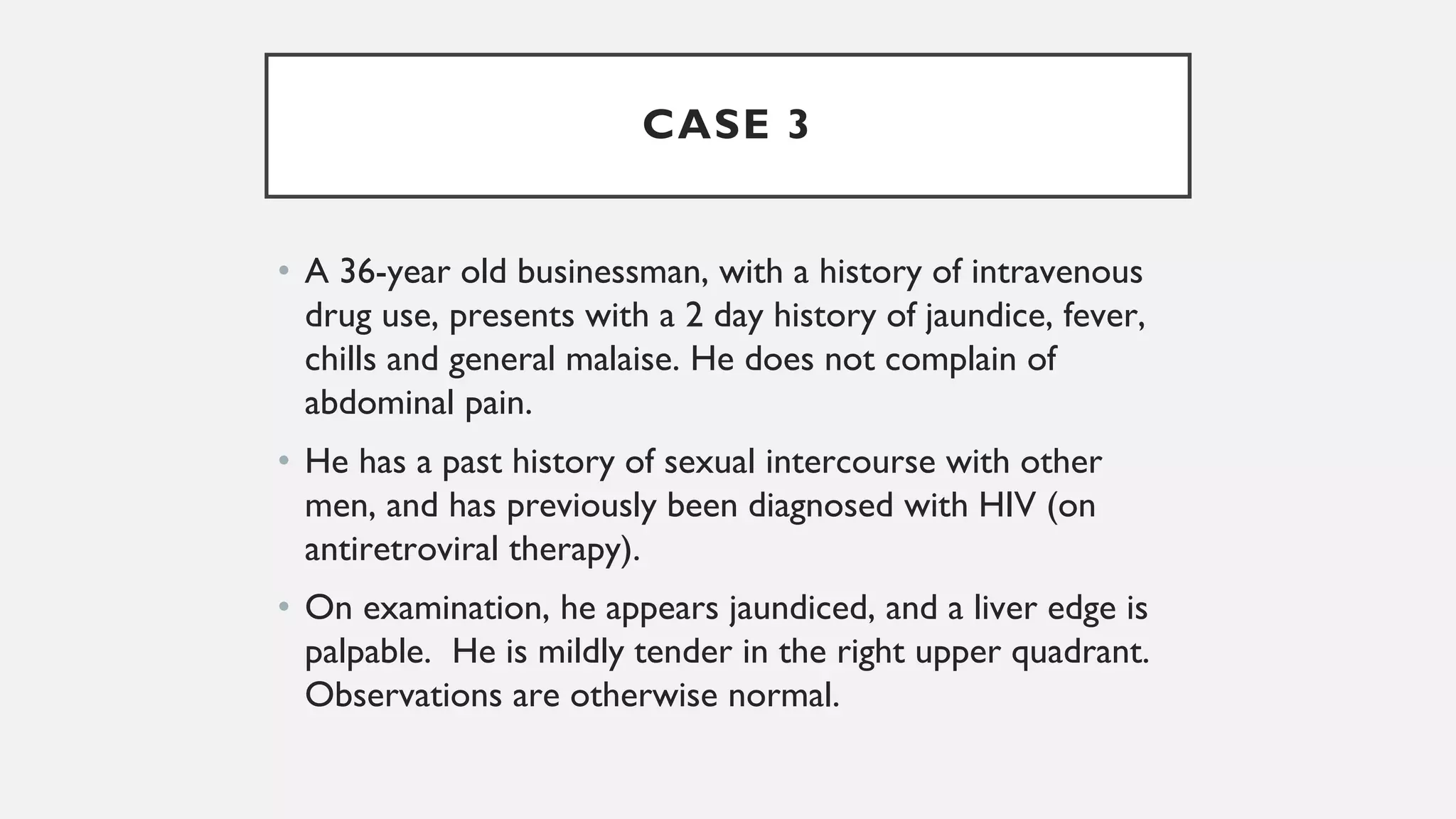
CASE 3
• A 36-year old businessman, with a history of intravenous
drug use, presents with a 2 day history of jaundice, fever,
chills and general malaise. He does not complain of
abdominal pain.
• He has a past history of sexual intercourse with other
men, and has previously been diagnosed with HIV (on
antiretroviral therapy).
• On examination, he appears jaundiced, and a liver edge is
palpable. He is mildly tender in the right upper quadrant.
Observations are otherwise normal.
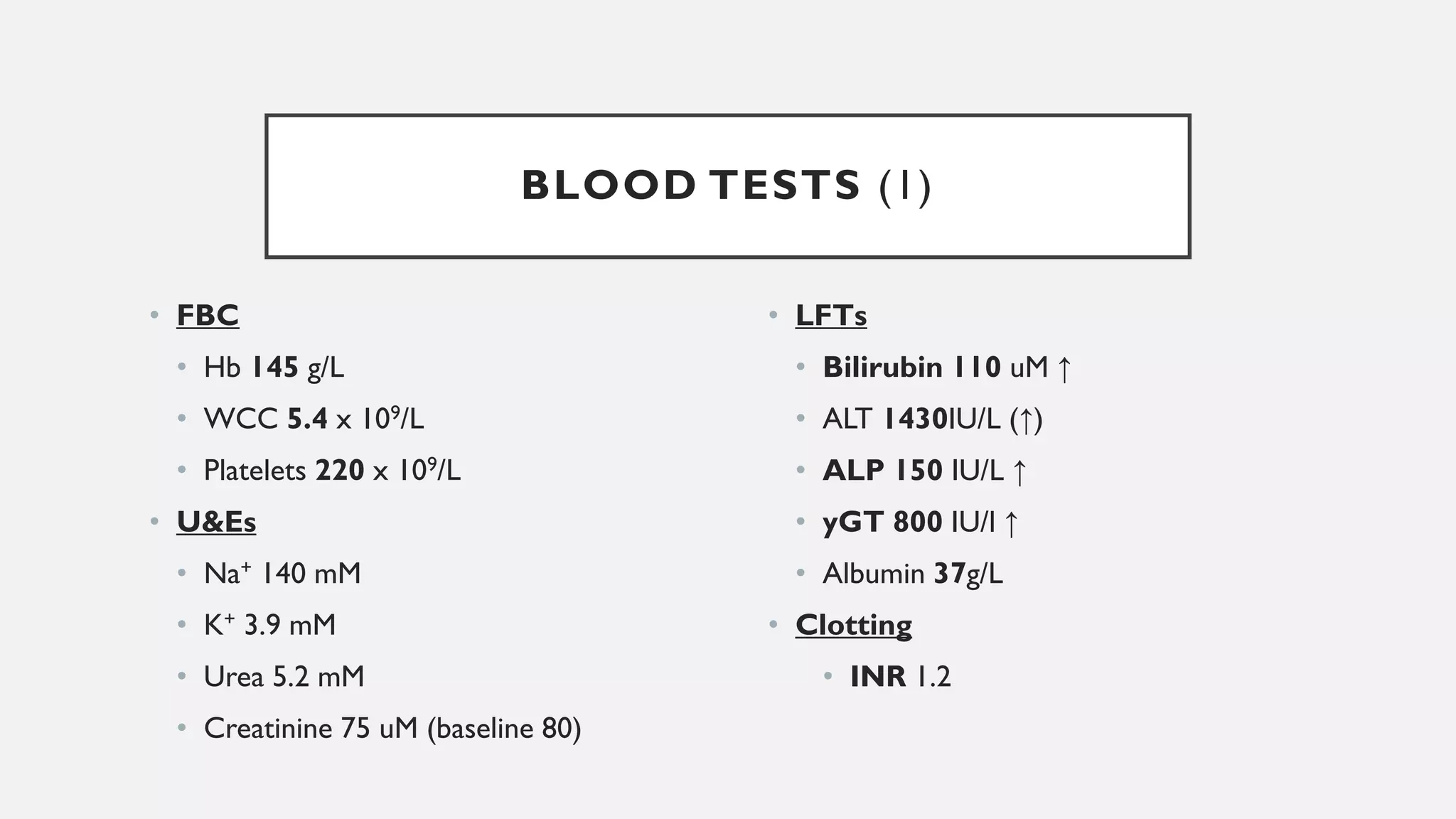
BLOOD TESTS (1)
• FBC
• Hb 145 g/L
• WCC 5.4 x 10⁹/L
• Platelets 220 x 109/L
• U&Es
• Na+ 140 mM
• K+ 3.9 mM
• Urea 5.2 mM
• Creatinine 75 uM (baseline 80)
• LFTs
• Bilirubin 110 uM ↑
• ALT 1430IU/L (↑)
• ALP 150 IU/L ↑
• yGT 800 IU/l ↑
• Albumin 37g/L
• Clotting
• INR 1.2
QUESTIONS (1)
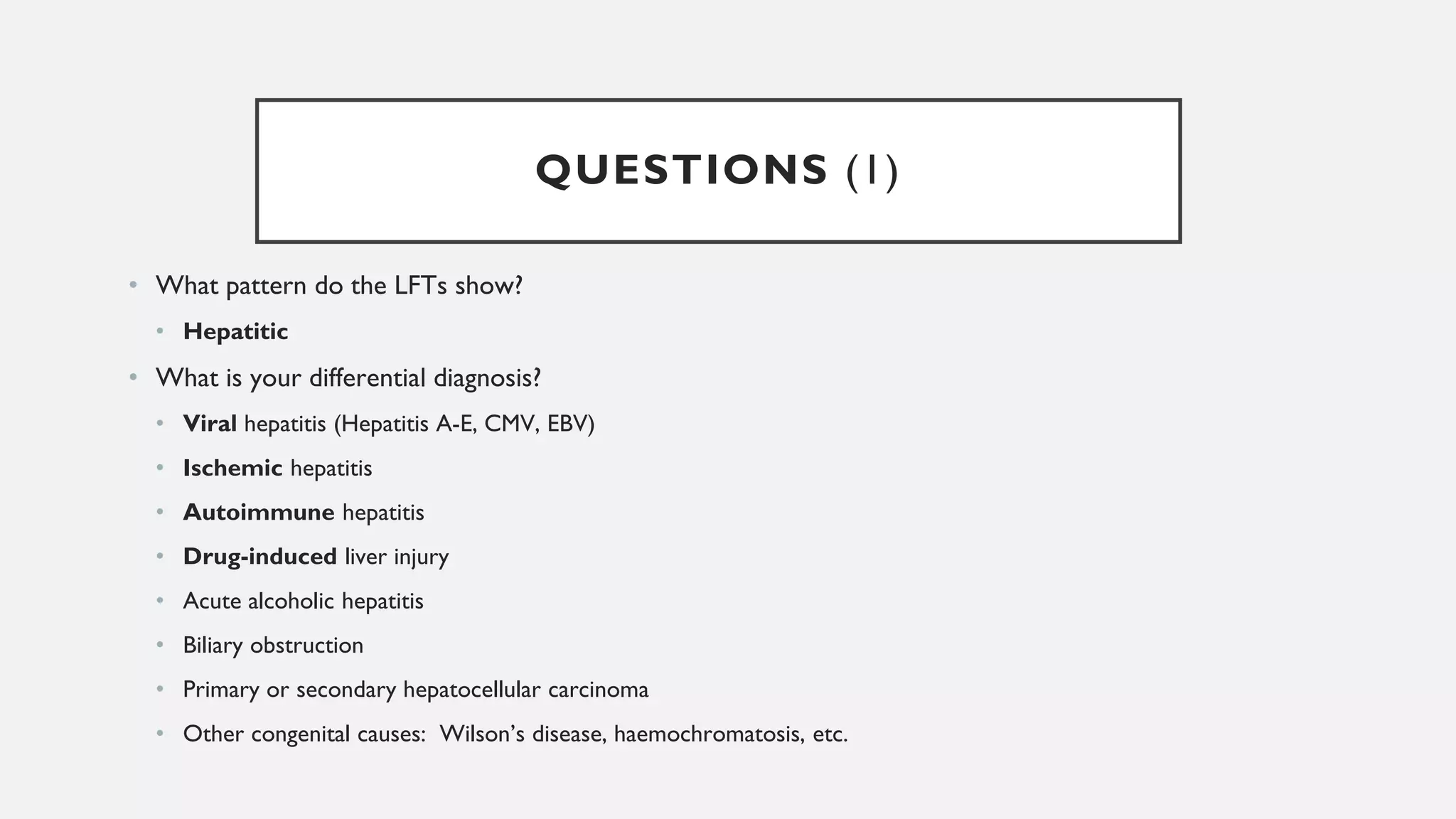
• What pattern do the LFTs show?
• Hepatitic
• What is your differential diagnosis?
• Viral hepatitis (Hepatitis A-E, CMV, EBV)
• Ischemic hepatitis
• Autoimmune hepatitis
• Drug-induced liver injury
• Acute alcoholic hepatitis
• Biliary obstruction
• Primary or secondary hepatocellular carcinoma
• Other congenital causes: Wilson’s disease, haemochromatosis, etc.
QUESTIONS (2)
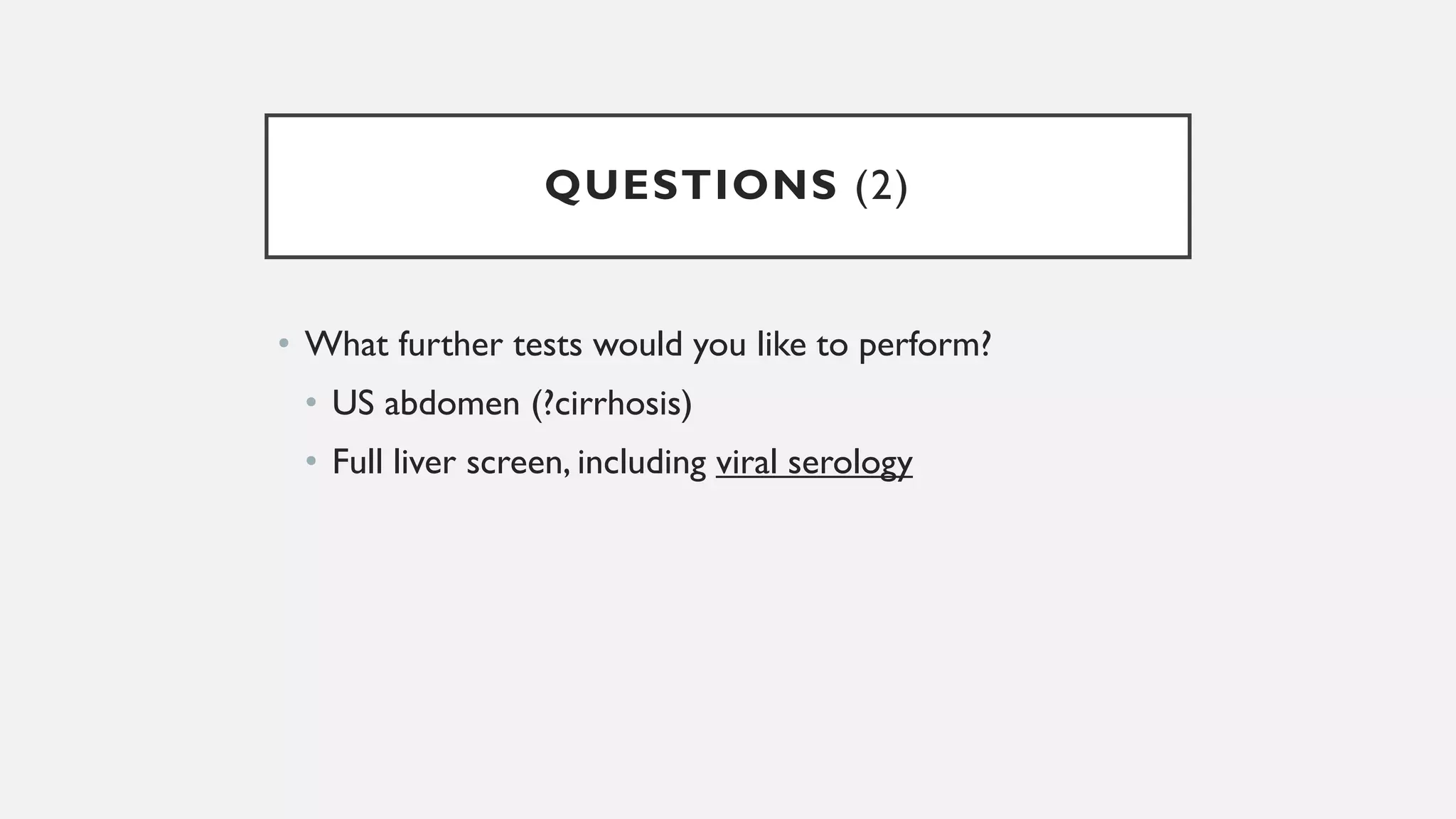
• What further tests would you like to perform?
• US abdomen (?cirrhosis)
• Full liver screen, including viral serology
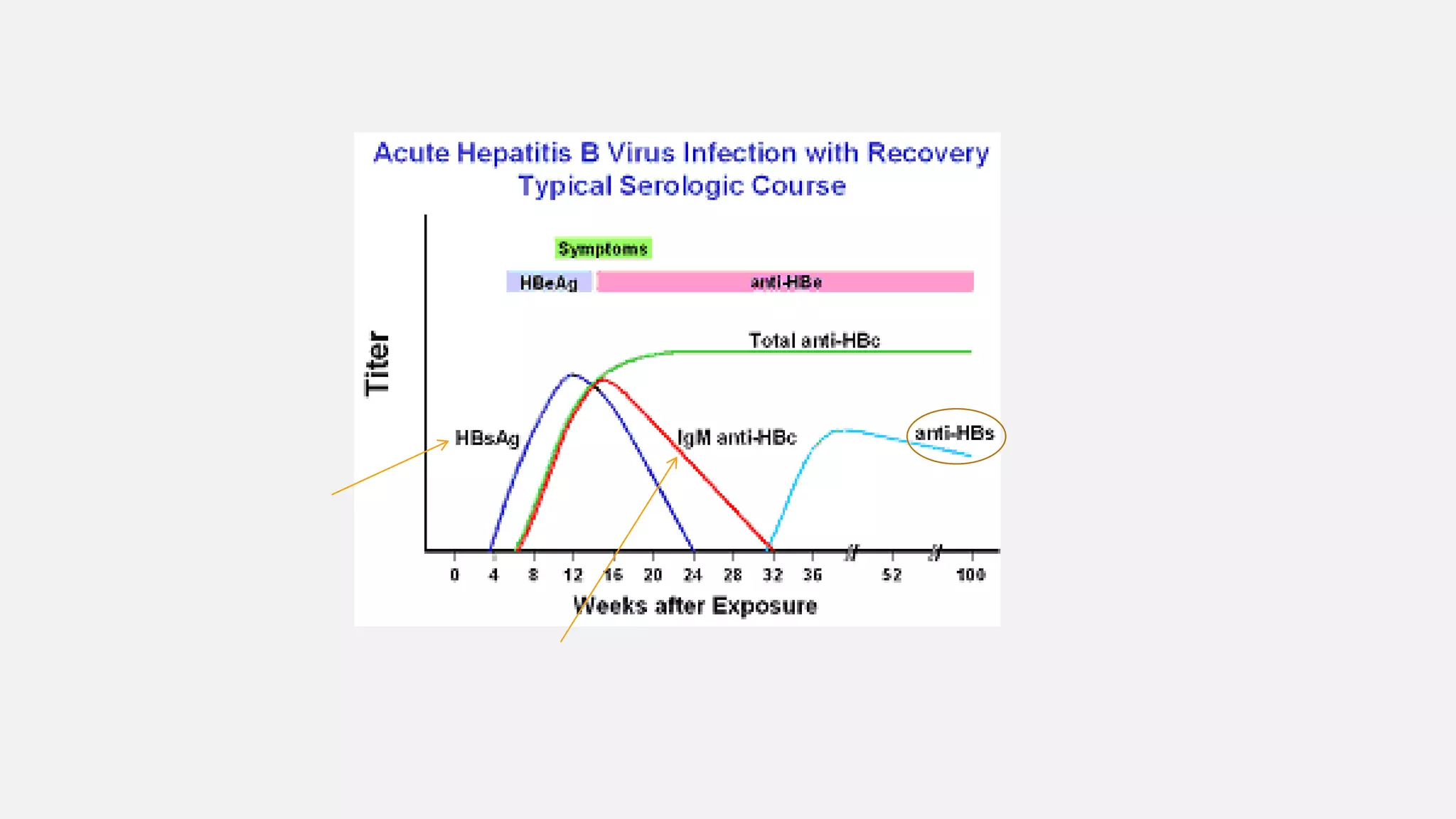
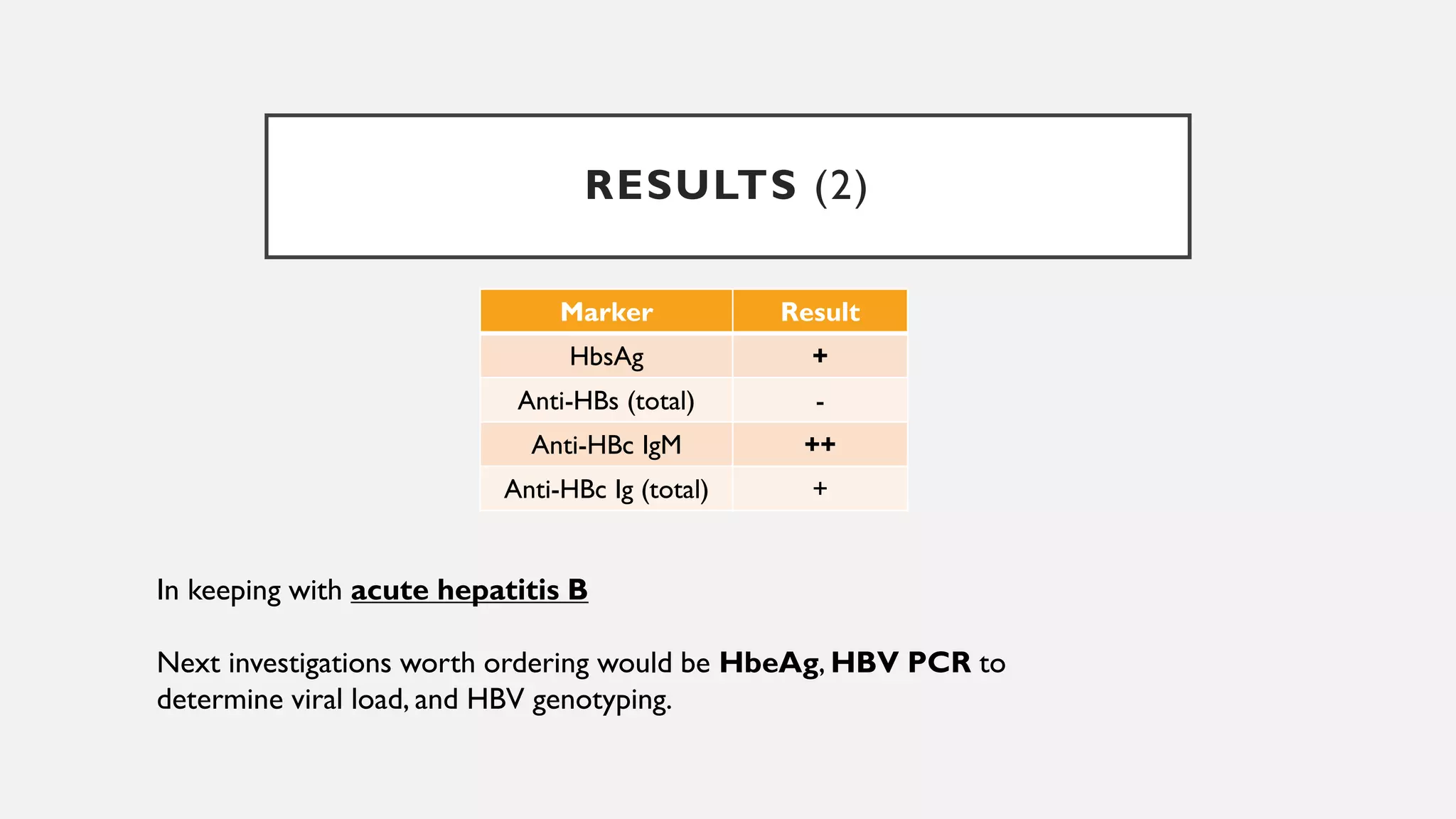
RESULTS (2)
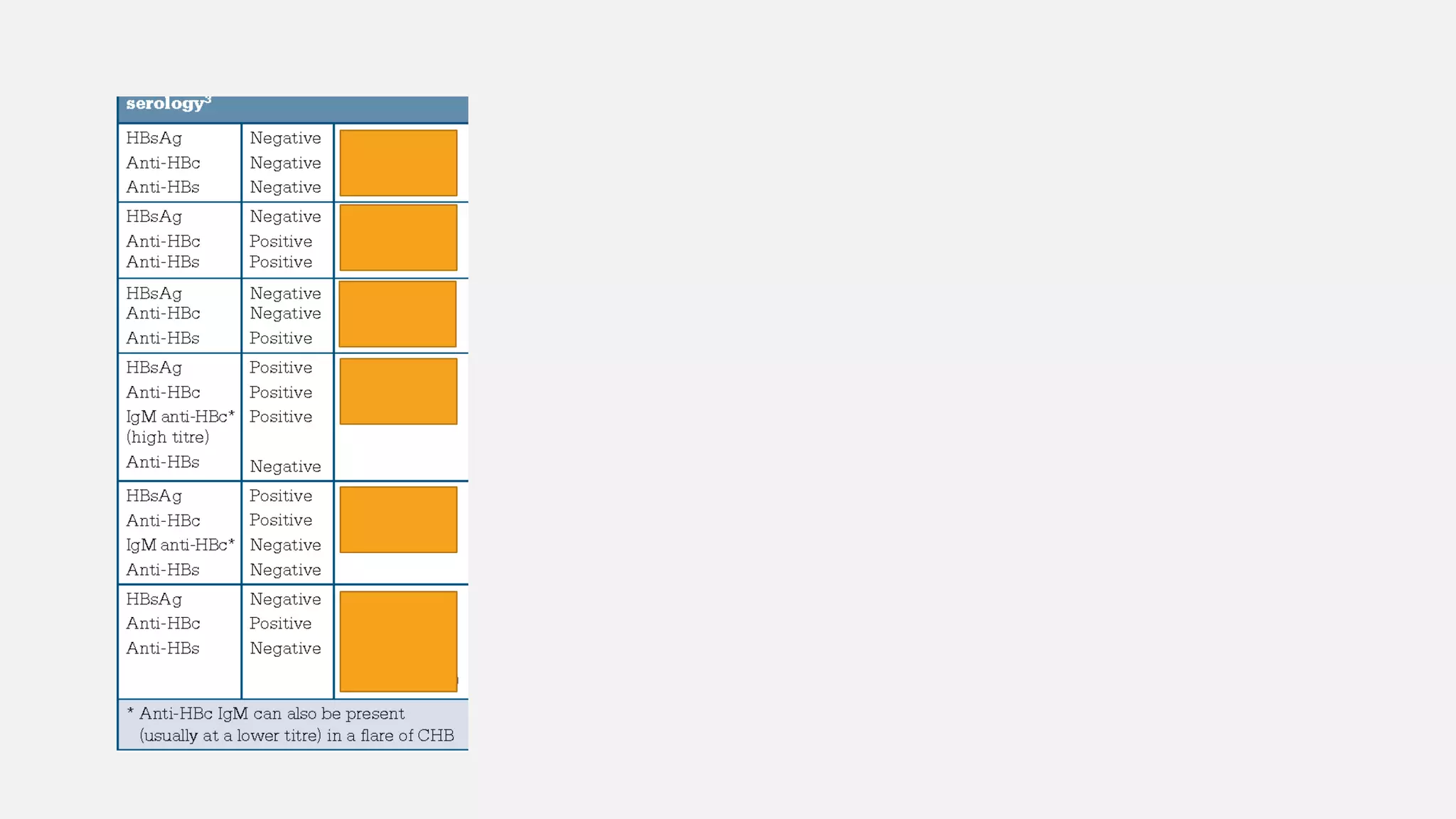
Marker Result
HbsAg +
Anti-HBs (total) -
Anti-HBc IgM ++
Anti-HBc Ig (total) +
In keeping with acute hepatitis B
Next investigations worth ordering would be HbeAg, HBV PCR to
determine viral load, and HBV genotyping.
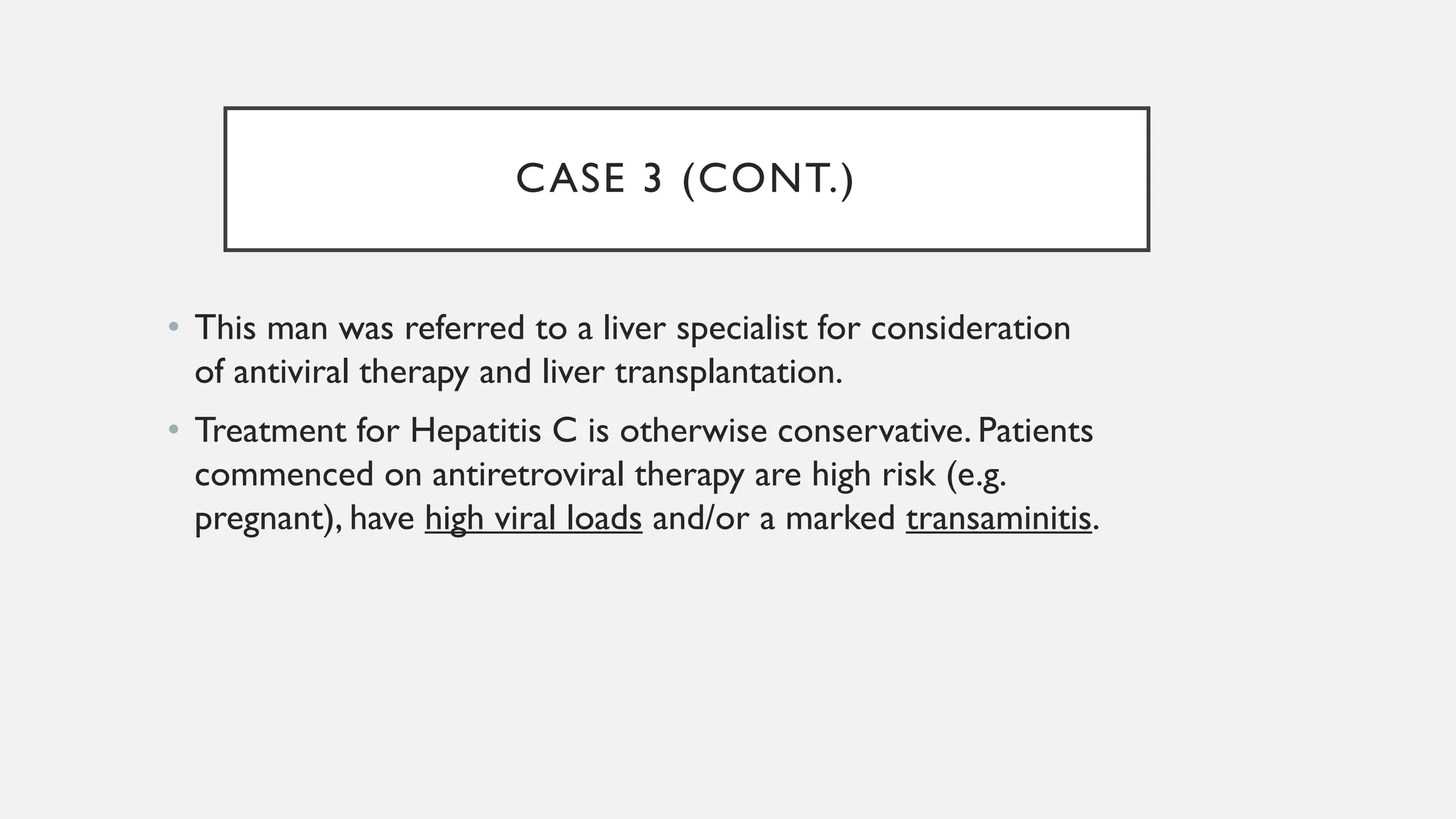
CASE 3 (CONT.)
• This man was referred to a liver specialist for consideration
of antiviral therapy and liver transplantation.
• Treatment for Hepatitis C is otherwise conservative. Patients
commenced on antiretroviral therapy are high risk (e.g.
pregnant), have high viral loads and/or a marked transaminitis.
IMPORTANT CONSIDERATIONS
• Recurrent episodes of acute-on-chronic hepatitis B can lead to
cirrhosis.
• Note that the majority of patients will be asymptomatic, and that
a recent multi-centred RCT trial (HepFREE) demonstrates significant
cost-effectiveness to primary-care level screening of hepatitis B and
C in high-risk migrant populations.

Jaundice and LFT interpretation

  • 1.
    JAUNDICE & LFTINTERPRETATION Dr. Sharma,Academic F1 Aintree University Hospital
  • 2.
    LEARNING OBJECTIVES • Todevelop a systematic approach to the patient who presents with jaundice. • To identify key serological and imaging tests to request. • To be able to confidently interpret liver function tests. • To be able to confidently interpret hepatitis serology results.
  • 3.
    FOCUSSED HISTORY (1) •Presence of abdominal pain • Painful, colicky → Gallstones? Cholangitis? • Absence → Cholangiocarcinoma/pancreatic malignancy? • Obstructive symptoms • Pale stools • Dark urine • Pruritis • Systemic symptoms • Fever, chills and rigors → Cholangitis? Biliary sepsis? Hepatitis?
  • 4.
    FOCUSSED HISTORY (2) •Risk factors for hepatitis • Travel history • Sexual history • Intravenous drug use • Risk factors for acute/chronic liver injury • Alcohol • Paracetamol • Other drugs e.g. amoxicillin, flucloxacillin
  • 5.
    FOCUSSED HISTORY (3) •Other symptoms of ‘decompensated’ chronic liver disease (N.B. < 7 days: hyperacute liver failure; 5–12 weeks: subacute liver failure) • Abdominal swelling (= ascites) • Episodes of confusion (= encephalopathy) • Easy/abnormal bruising (= coagulopathy) • Haematemesis/malaena (= bleeding varices 2° to portal hypertension) • Past medical history • Known chronic liver disease? Known cirrhosis?
  • 6.
    EXAMINATION (1) • Apartfrom the jaundice itself… • Abdominal tenderness (RUQ pain) • Organomegaly (hepatomegaly, splenomegaly) • Signs of acute liver failure • Bruising (coagulopathy) • Encephalopathy (asterixis +/- lethargy/confusion) • Risk factors • Injection marks • Tattoos
  • 7.
    EXAMINATION (2) • Stigmataof chronic liver disease
  • 8.
    DIF F ER E NT IA L DIA G NO S IS ?
  • 10.
  • 11.
    PREHEPATIC (OR ‘HAEMOLYTIC’) JAUNDICE •Causes • Haemolytic anaemia (hereditary spherocytosis/elliptocytosis, sickle cell anaemia, G6PD deficiency, etc.) • Gilbert’s Syndrome (↑ unconjugated bilirubin) • Mechanism • Excessive haemolysis of red blood cells → ↑ unconjugated bilirubin • ↑ Conjugation of bilirubin in liver {saturation of enzymes} • ↑ Urobilinogen {forms in SI} → resorbed into circulation → ↑ dark urine • ↑ Stercobilinogen {converted from urobilinogen} → ↑ dark stools
  • 12.
    HEPATIC JAUNDICE • Causes •Viral hepatitis (A-E) • Alcoholic hepatitis • Ischemic hepatitis • Drug-induced hepatitis (esp. paracetamol) • Autoimmune hepatitis • Malignancy (primary or secondary) • Decompens ated chronic liver disease {which may have developed as a result of above – also consider haemochromatosis,Wilson’s disease}
  • 13.
    POST-HEPATIC JAUNDICE • Causes •Any cause of ‘cholestatic’ or obstructive jaundice: • Gallstones • Cholangiocarcinoma • Pancreatic carcinoma • Primary biliary cholangitis (autoimmune) • Primary sclerosing cholangitis (associated with ulcerative colitis) • Parasites • CONJUGATED BILIRUBIN & LIPASE FROM GALLBLADDER → BLOCKED ENTEROHEPATIC CIRCULATION → PALE, FATTY STOOLS + DARK URINE
  • 15.
    INVESTIGATIONS (1) • Routinebloods 💉 • LFTs, yGT (=deranged) • Glucose (↓ due to ↓gluconeogenesis) • Clotting screen (PT, aPTT ↑ due to ↓ synthetic function) • If suspect haemolytic anaemia → ↑ LDH, ↑ haptoglobin • ABG • pH is used as part of King’s College transplant criteria for ALF (hepatic dysfunction is a cause of lactic acidosis) • Non-invasive liver screen
  • 16.
    ALBUMIN • Marker ofsynthetic function of liver • But also, a… • Marker of nutritional status • Marker of inflammation/disease severity • Negative acute phase protein • ↓ production by liver so more amino acids available for production of positive acute phase proteins • ↑ proteolysis (catabolism) • ↑ transcapillary escape rate
  • 17.
    N.B. ALT isliver-specific,AST is not. yGT may be helpful in confirming that source of raised ALP is the liver. A ‘cholestatic’ liver function test profile can be caused by intrahepatic causes of jaundice.
  • 18.
    ‘PATTERNS’ OF LIVERFUNCTION TESTS ‘Hepatitic’ • Hepatocellular damage → hepatocyte release of enzymes • Transaminitis ↑ ALT ↑ AST ‘Cholestatic’ • Obstructed outflow • ↑ ALP ↑ yGT A ‘mixed’ picture is also possible e.g. hepatitic liver damage can lead to obstruction
  • 19.
    ALT ↑ ↑↑ ↑ (THOUSANDS) • Toxin/drugs ☠️ e.g. paracetamol • Acute viral hepatitis • Ischemic hepatitis • Autoimmune hepatitis (not really for alcoholic hepatitis, NAFLD, hepatocellular carcinoma, Wilson’s disease, chronic viral hepatitis, cirrhosis…)
  • 21.
    ANTIBODIES • ↑ anti-mitochondrial antibodies(AMA) → Primary biliary cholangitis (PBC) • ↑ anti-smooth muscle antibodies (A- SMA)/antinuclear antibodies (ANA) → Autoimmune hepatitis • ↑ anti-neutrophil cytoplasmic antibodies (ANCA) → Primary sclerosing cholangitis (PSC) associated with ulcerative colitis
  • 22.
    SEROLOGY Constant region ofantibody varies by heavy chains IgM: 1st class produced during antibody response; binds and agglutinates microorganisms early in response; production of large immune complexes Production downregulated with generation of IgG IgG: binds to C1w and receptors on phagocytic cells; gain access to extravasci;ar spaces
  • 26.
    N.B. HbeAg (theenvelope antigen) and anti-HbeAg play an important role in indicating disease activity in patients with chronic hepatitis.
  • 28.
  • 29.
    INVESTIGATIONS (2) • Imaging •Abdominal ultrasound • Liver echotexture (cirrhotic? Helps differentiate acute vs. chronic damage) • Focal lesions (mets?) • Biliary obstruction (CBD/extrahepatic/intra-hepatic duct dilatation) • Gallstones • Portal vein patency (thrombosis?) • CT • MRCP
  • 30.
    INVESTIGATIONS (3) • Fibroscan(transient elastography) – measures liver stiffness and allows gradation of fibrosisWITHOUT need for liver biopsy! • Intervention • Endoscopic Retrograde Cholangio-pancreatography (ERCP) (balloon trawling, stenting, sphincterotomy) • PercutaneousTranshepatic Cholangiogram (PTC)
  • 32.
    ASCITIC TAP • EVERYPATIENT PRESENTING TO HOSPITAL WITH ASCITES SHOULD HAVE AN ASCITIC TAP. • This is to rule out SPONTANEOUS BACTERIAL PERITONITIS, which can be asymptomatic.
  • 33.
  • 34.
    CASE 1 • A75-year old lady presents with a 4-week history of jaundice, 3 kg weight loss, pale stools, and dark urine. She has not experienced any abdominal pain. She has no past medical history. • On examination, she is jaundiced but apyrexial.The remainder of her observations are normal. Her liver edge is palpable at 2-cm below the costal margin. She has no signs of chronic liver disease.
  • 35.
    BLOOD TESTS • FBC •Hb 135 g/L • WCC 4.5 x 10⁹/L • Platelets 124 x 109/L (↓) • U&Es • Normal • LFTs • Bilirubin 240 uM ↑ • ALT 120 IU/L (↑) • ALP 1506 IU/L (↑ ↑) • Albumin 36 g/L • Clotting • INR 1.3
  • 36.
    QUESTIONS (1) • Whatpattern of LFTs is demonstrated here? • Obstructive • Differential diagnosis? • Pancreatic head tumour • Ampullary tumour • Cholangiocarcinoma • Gallstones • Benign biliary stricture
  • 37.
    QUESTIONS • Next steps? •Imaging • CT abdomen, pelvis and thorax → dilated CBD @ 12 mm, with mildly dilated intrahepatic ducts • Dilated pancreatic duct • No gallbladder stones • No visible lesion in head of pancreas, no evidence of lymphadenopathy or metastasis “Double duct” sign: simultaneous dilatation of pancreatic and bile ducts, suggestive of pancreatic or ampullary tumour
  • 38.
    QUESTIONS • Next steps? •ERCP • Double duct sign observed again • Appearances suggestive of ampullary carcinoma → biopsies obtained • Biliary stent inserted • Prophylactic antibiotics commenced post-ERCP (↑ risk of cholangitis) • Management • Local resection orWhipple’s procedure (pancreatoduodenectomy)
  • 39.
    CASE 2 • A52-year old retired army major, with a background of alcoholic liver cirrhosis andType II diabetes mellitus, is brought in by his wife. He presents with worsening jaundice, recurrent haematemesis and malaena over the past 3 days. He has no previous hospital admissions. • On examination, he appears unwell. Heart rate is110 bpm, BP 95/55 mmHg, oxygen saturation 95% on room air, and temperature 35.8C. • There are multiple signs of chronic liver disease. He is alert and mildly confused, with asterixis and mild ascites present. • His drug history includes metformin and spironolactone.
  • 40.
    BLOOD TESTS • FBC •Hb 72 g/L (↓) • WCC 7.1 x 10⁹/L • Platelets 83 x 109/L (↓) • U&Es • Na+ 136 mM • K+ 4.6 mM • Urea 9.1 mM (↑) • Creatinine 110 uM (baseline 83) • LFTs • Bilirubin 212 uM ↑ • ALT 300 IU/L (↑) • ALP 100 IU/L ↑ • yGT 320 IU/l ↑ • Albumin 32 g/L (mildly ↓) • Clotting • INR 1.8
  • 41.
    QUESTIONS (1) • Differentialdiagnosis? • Decompensated alcoholic liver disease • UGI bleed • Variceal bleed (must exclude as has signs of portal hypertension - ascites!) • Peptic ulcer • CHILD-PUGH Score? • 11 (Class C – severe, decompensated disease) • Glasgow-Blatchford Score? • 15
  • 42.
    QUESTIONS (2) • Initialmanagement? • IV access and fluid resuscitation • X-match 2 units RBC (aim 70-90 g/L) • IV Terlipressin 2 mg STAT, then QDS • IVVitamin K 10 mg STAT • Prophylactic antibiotics for variceal bleeds (tazocin @ Aintree) • Urgent gastroscopy
  • 43.
    CASE (CONT.) • Gastroscopyshowed four oesophageal varices protruding halfway across the lumen. • Seven variceal bands were applied, with a good result.
  • 44.
    QUESTIONS (3) • Subsequentmanagement? • Treatment of hepatic encephalopathy: • Lactulose 10-20 mL TDS (aim BO 3 x / day) • Rifaximin 550 mg TDS • Prophylaxis for variceal bleeding (non-selective beta-blocker once BP stable): • Carvedilol 6.25 mg OD or propanolol 40 mg BD • Treatment of ascites (N.B. should’ve been tapped on admission!): • Spironolactone 50 mg BD • Paracentesis, if required
  • 45.
    CASE 3 • A36-year old businessman, with a history of intravenous drug use, presents with a 2 day history of jaundice, fever, chills and general malaise. He does not complain of abdominal pain. • He has a past history of sexual intercourse with other men, and has previously been diagnosed with HIV (on antiretroviral therapy). • On examination, he appears jaundiced, and a liver edge is palpable. He is mildly tender in the right upper quadrant. Observations are otherwise normal.
  • 46.
    BLOOD TESTS (1) •FBC • Hb 145 g/L • WCC 5.4 x 10⁹/L • Platelets 220 x 109/L • U&Es • Na+ 140 mM • K+ 3.9 mM • Urea 5.2 mM • Creatinine 75 uM (baseline 80) • LFTs • Bilirubin 110 uM ↑ • ALT 1430IU/L (↑) • ALP 150 IU/L ↑ • yGT 800 IU/l ↑ • Albumin 37g/L • Clotting • INR 1.2
  • 47.
    QUESTIONS (1) • Whatpattern do the LFTs show? • Hepatitic • What is your differential diagnosis? • Viral hepatitis (Hepatitis A-E, CMV, EBV) • Ischemic hepatitis • Autoimmune hepatitis • Drug-induced liver injury • Acute alcoholic hepatitis • Biliary obstruction • Primary or secondary hepatocellular carcinoma • Other congenital causes: Wilson’s disease, haemochromatosis, etc.
  • 48.
    QUESTIONS (2) • Whatfurther tests would you like to perform? • US abdomen (?cirrhosis) • Full liver screen, including viral serology
  • 49.
    RESULTS (2) Marker Result HbsAg+ Anti-HBs (total) - Anti-HBc IgM ++ Anti-HBc Ig (total) + In keeping with acute hepatitis B Next investigations worth ordering would be HbeAg, HBV PCR to determine viral load, and HBV genotyping.
  • 50.
    CASE 3 (CONT.) •This man was referred to a liver specialist for consideration of antiviral therapy and liver transplantation. • Treatment for Hepatitis C is otherwise conservative. Patients commenced on antiretroviral therapy are high risk (e.g. pregnant), have high viral loads and/or a marked transaminitis.
  • 51.
    IMPORTANT CONSIDERATIONS • Recurrentepisodes of acute-on-chronic hepatitis B can lead to cirrhosis. • Note that the majority of patients will be asymptomatic, and that a recent multi-centred RCT trial (HepFREE) demonstrates significant cost-effectiveness to primary-care level screening of hepatitis B and C in high-risk migrant populations.