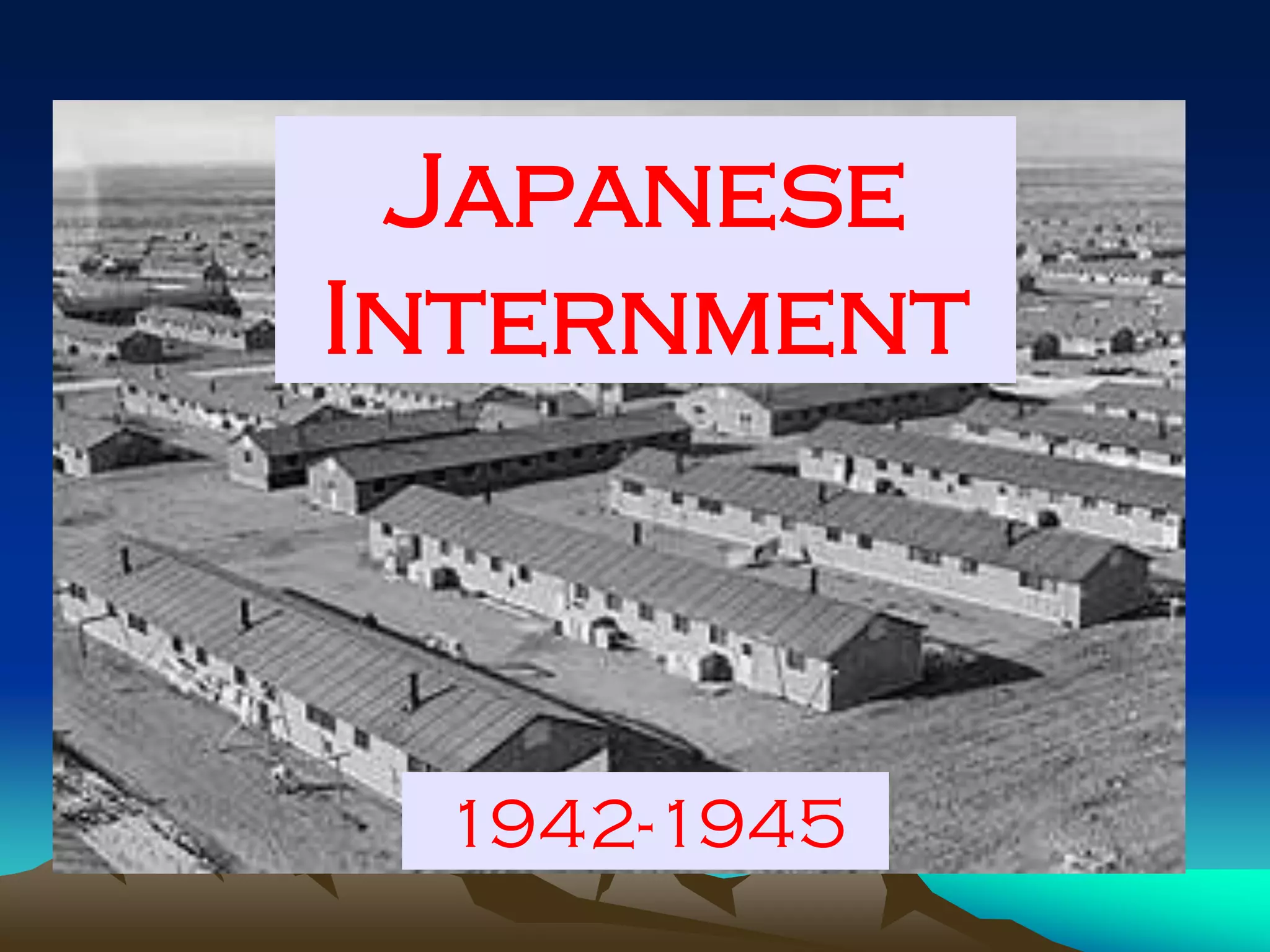
Japanese
Internment
1942-1945
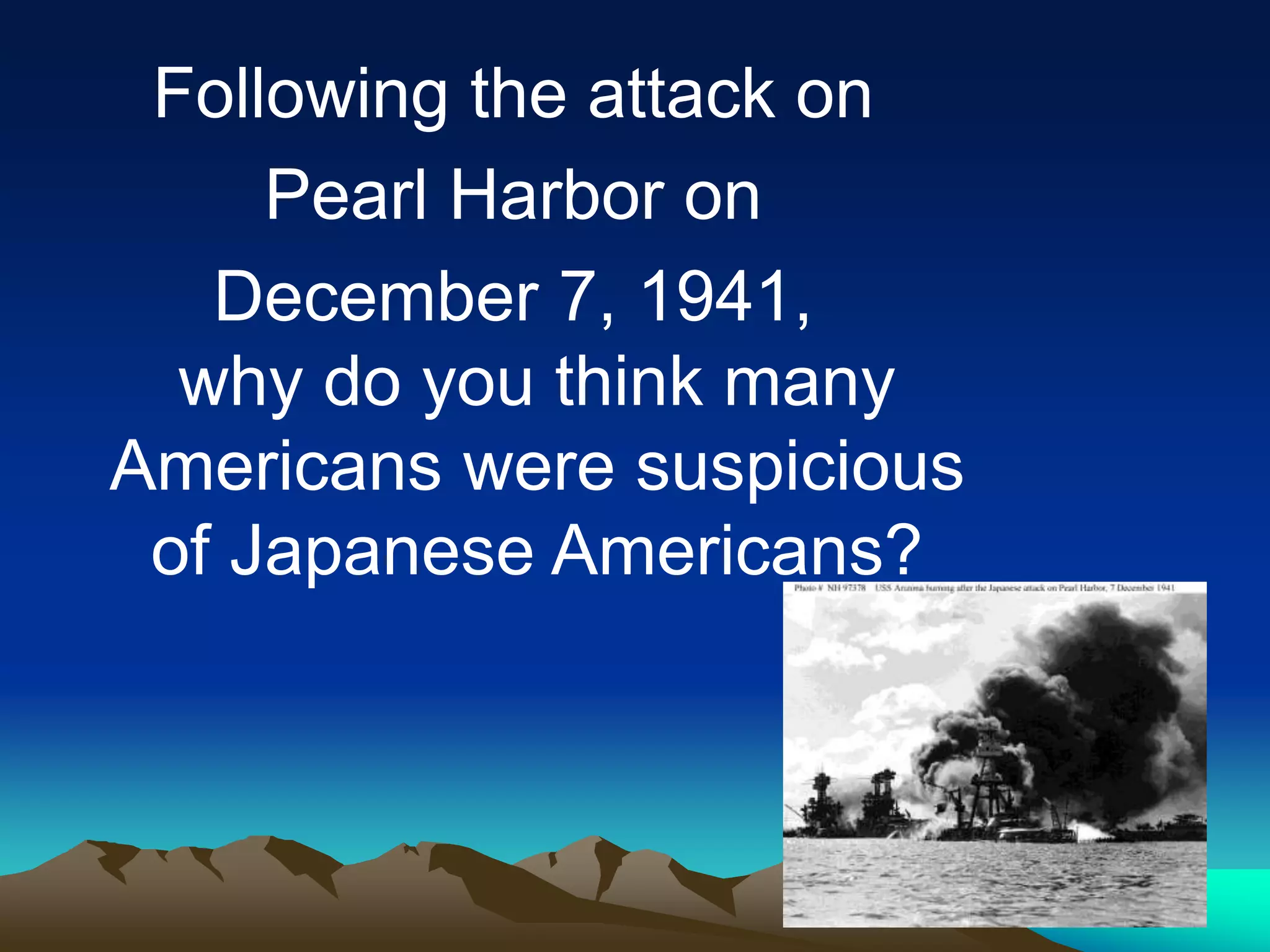
Following the attack on
Pearl Harbor on
December 7, 1941,
why do you think many
Americans were suspicious
of Japanese Americans?
Many people were afraid that Japanese
Americans that lived
on the West Coast might be
acting as spies helping
Japan attack the U.S.
HOWEVER…There was NEVER any
evidence that Japanese Americans
acted as spies during WWII.
Relocation
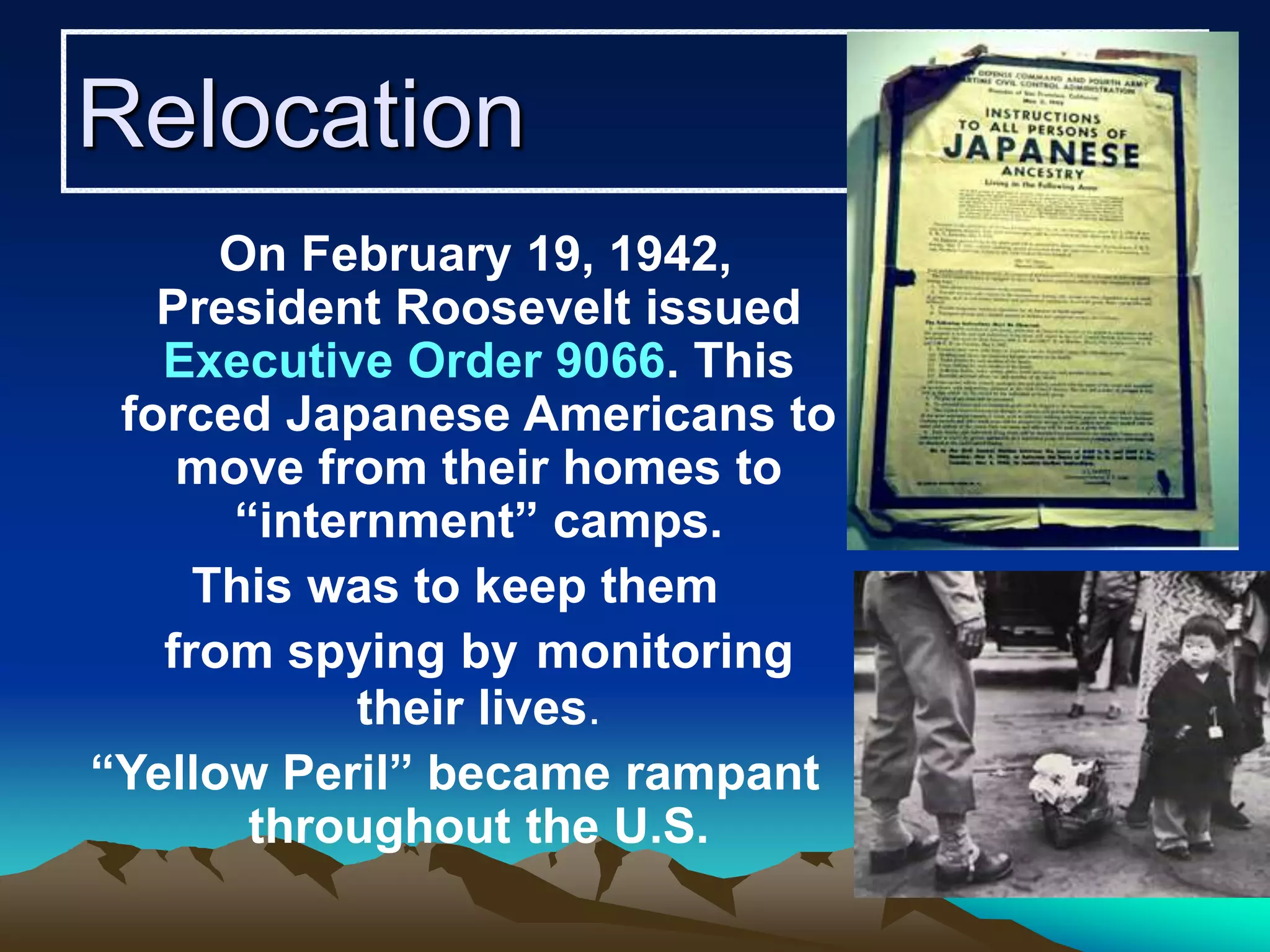
On February 19, 1942,
President Roosevelt issued
Executive Order 9066. This
forced Japanese Americans to
move from their homes to
“internment” camps.
This was to keep them
from spying by monitoring
their lives.
“Yellow Peril” became rampant
throughout the U.S.
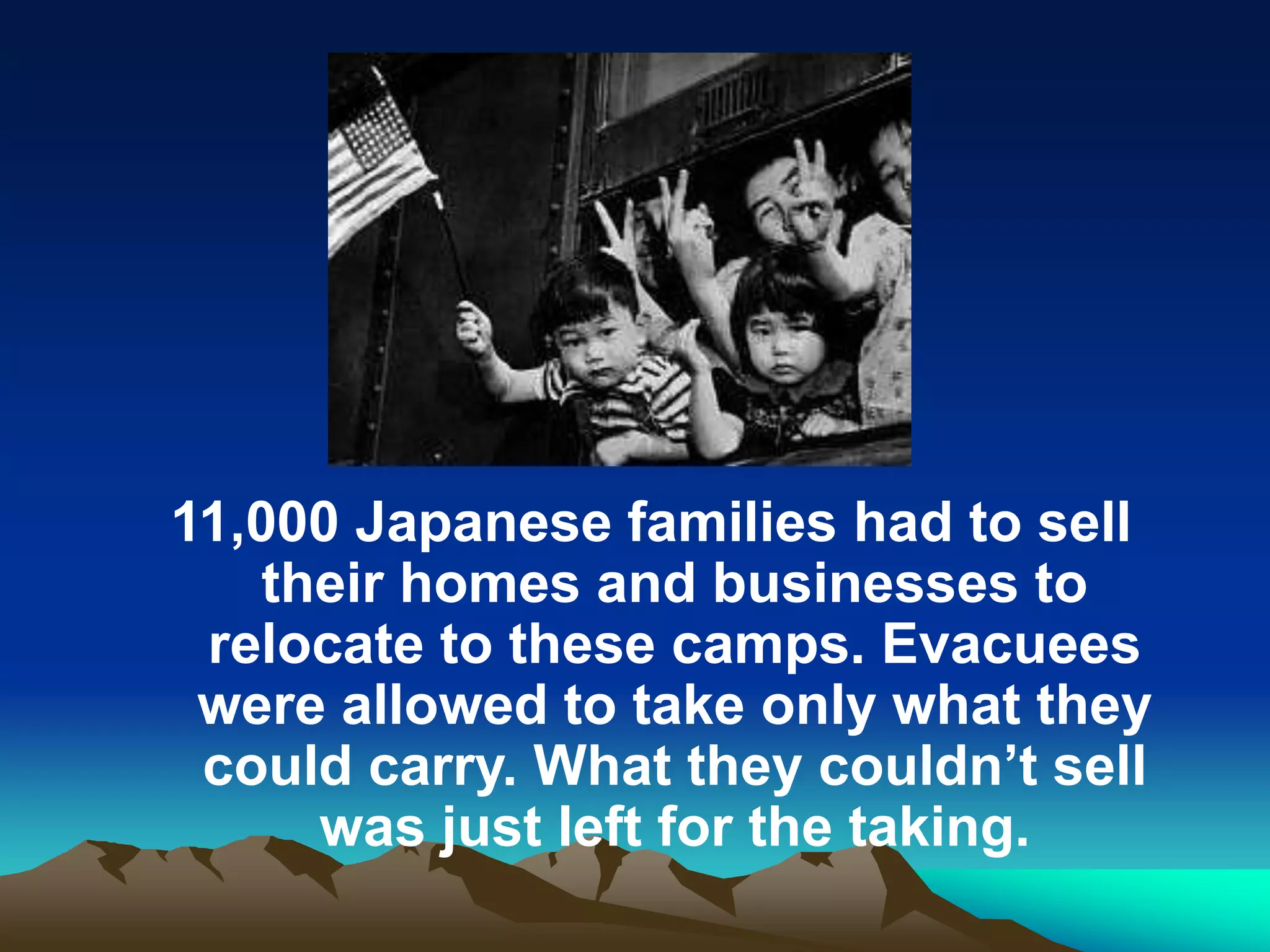
11,000 Japanese families had to sell
their homes and businesses to
relocate to these camps. Evacuees
were allowed to take only what they
could carry. What they couldn’t sell
was just left for the taking.
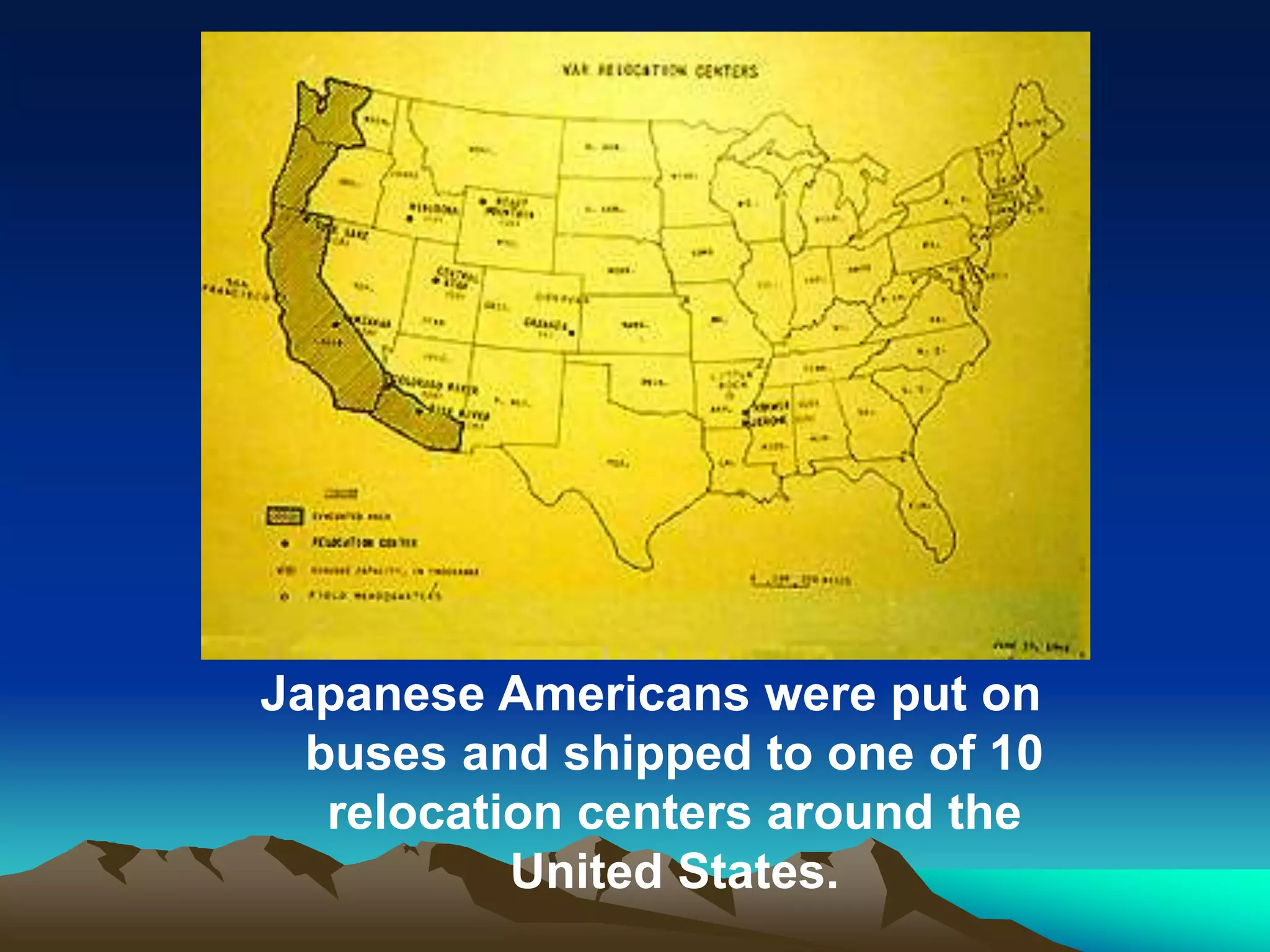
Japanese Americans were put on
buses and shipped to one of 10
relocation centers around the
United States.
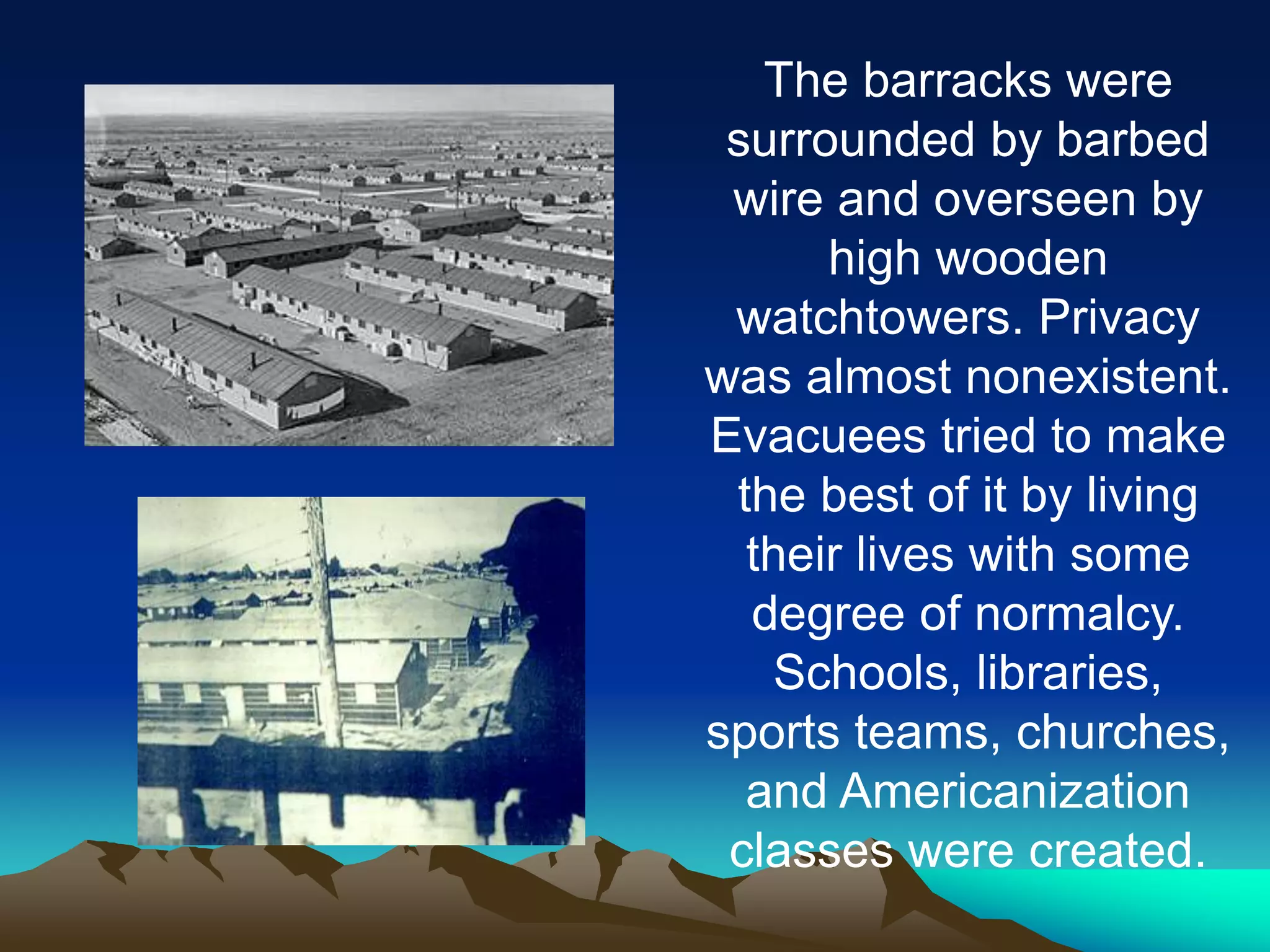
The barracks were
surrounded by barbed
wire and overseen by
high wooden
watchtowers. Privacy
was almost nonexistent.
Evacuees tried to make
the best of it by living
their lives with some
degree of normalcy.
Schools, libraries,
sports teams, churches,
and Americanization
classes were created.
Originally, FDR
considered the relocation
“legal” under
constitutional powers
granted to the president
during times of war.
The Supreme Court
supported this claim in
the case of
Korematsu vs. U.S.
Later, this was overturned
and all camps were
closed by early 1945.
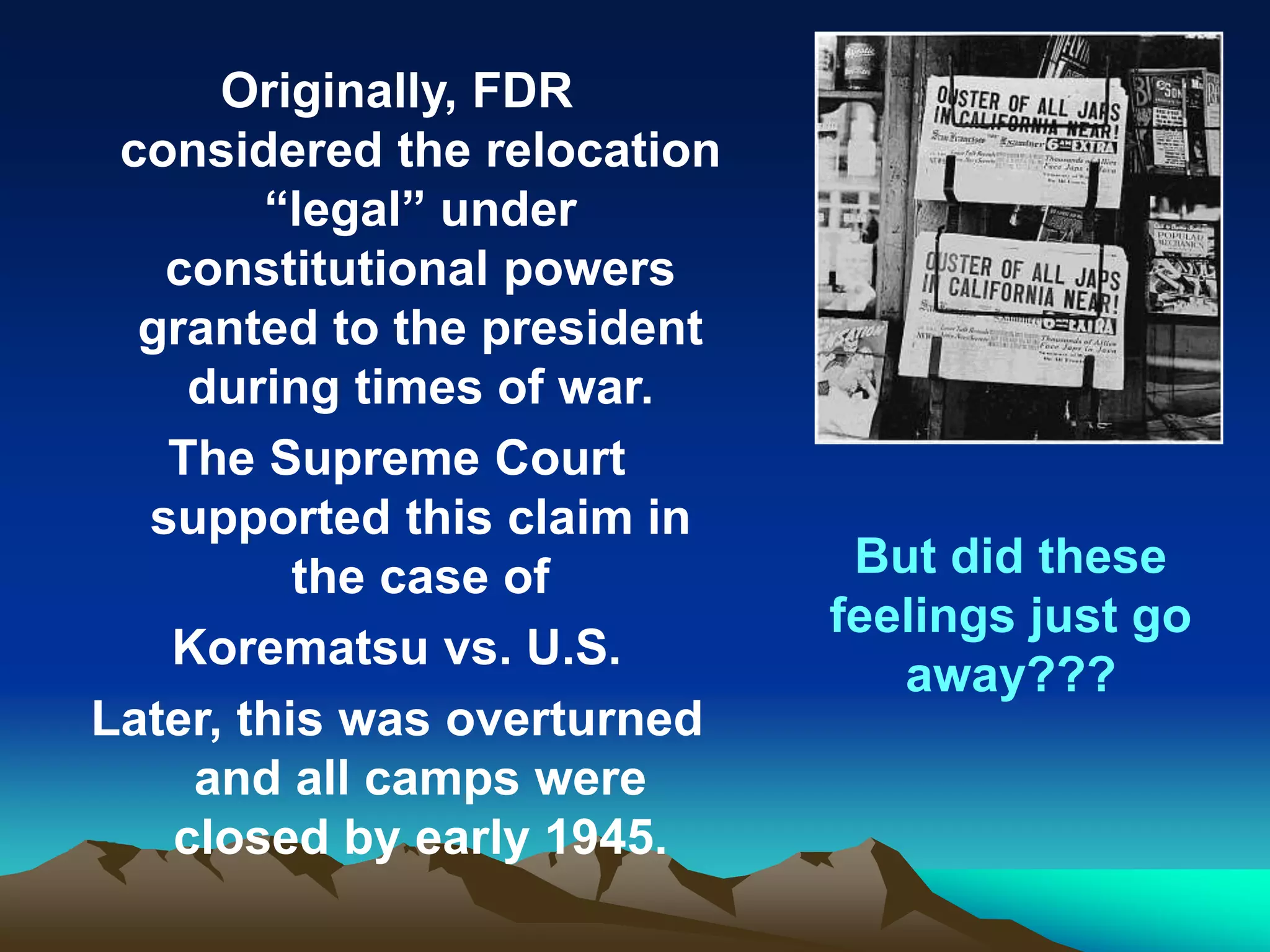
But did these
feelings just go
away???
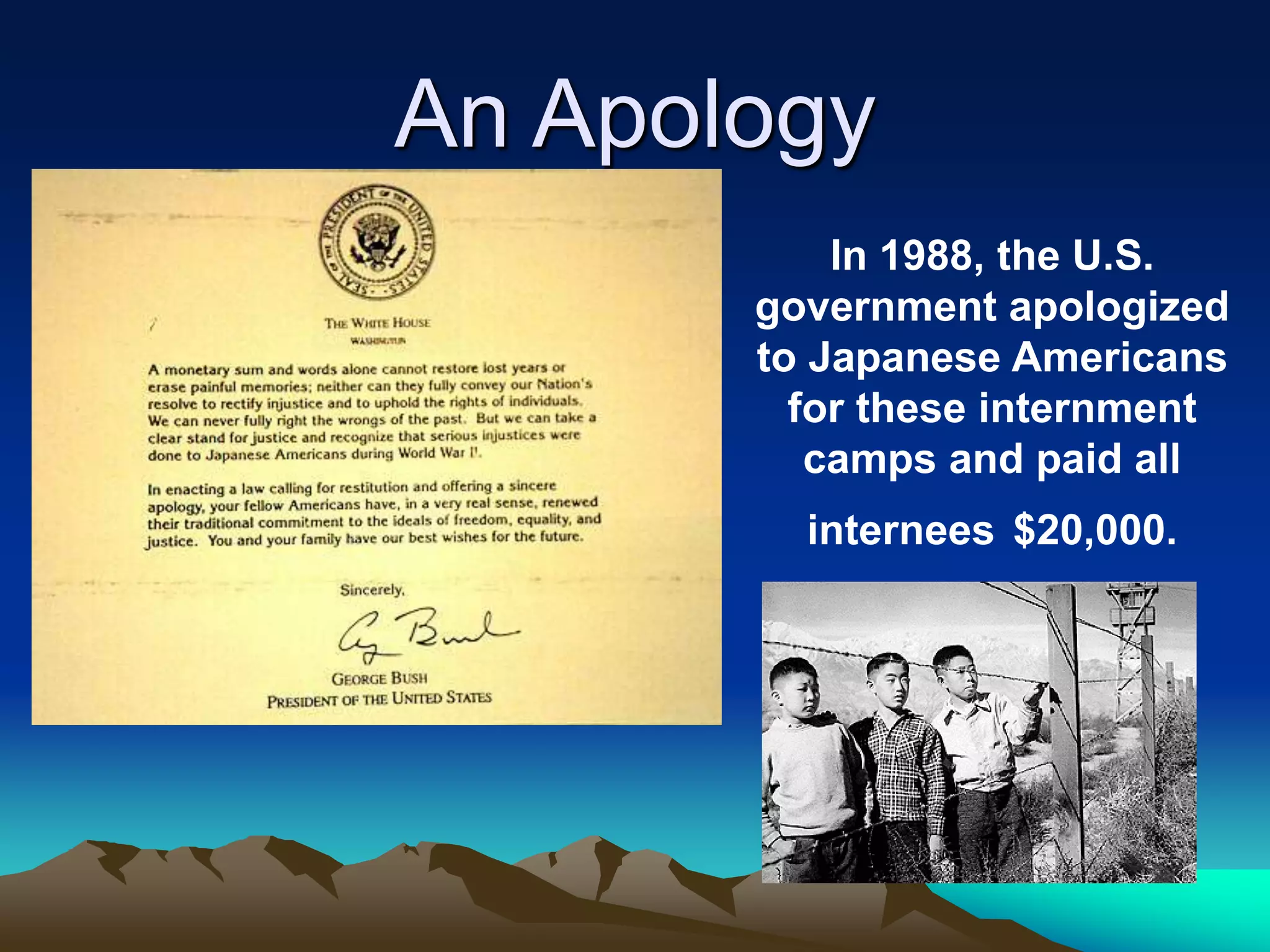
An Apology
In 1988, the U.S.
government apologized
to Japanese Americans
for these internment
camps and paid all
internees $20,000.

Japanese internment camps

  • 1.
  • 2.
    Following the attackon Pearl Harbor on December 7, 1941, why do you think many Americans were suspicious of Japanese Americans?
  • 3.
    Many people wereafraid that Japanese Americans that lived on the West Coast might be acting as spies helping Japan attack the U.S. HOWEVER…There was NEVER any evidence that Japanese Americans acted as spies during WWII.
  • 4.
    Relocation On February 19,1942, President Roosevelt issued Executive Order 9066. This forced Japanese Americans to move from their homes to “internment” camps. This was to keep them from spying by monitoring their lives. “Yellow Peril” became rampant throughout the U.S.
  • 5.
    11,000 Japanese familieshad to sell their homes and businesses to relocate to these camps. Evacuees were allowed to take only what they could carry. What they couldn’t sell was just left for the taking.
  • 6.
    Japanese Americans wereput on buses and shipped to one of 10 relocation centers around the United States.
  • 7.
    The barracks were surroundedby barbed wire and overseen by high wooden watchtowers. Privacy was almost nonexistent. Evacuees tried to make the best of it by living their lives with some degree of normalcy. Schools, libraries, sports teams, churches, and Americanization classes were created.
  • 8.
    Originally, FDR considered therelocation “legal” under constitutional powers granted to the president during times of war. The Supreme Court supported this claim in the case of Korematsu vs. U.S. Later, this was overturned and all camps were closed by early 1945. But did these feelings just go away???
  • 9.
    An Apology In 1988,the U.S. government apologized to Japanese Americans for these internment camps and paid all internees $20,000.