Operation
Barbarossa:
The Invasion of the USSR!
22 June, 1941 : the start of the two-
front war
J. Marshall, 2007
Some thoughts:
• Now a 2-front war
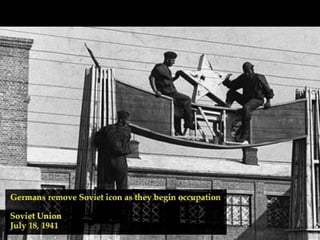
• Not a surprise: Lebensraum vs. Nazi-Soviet
Pact
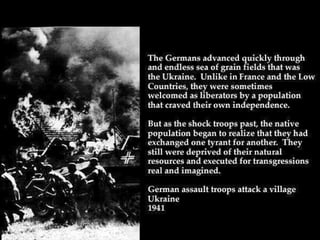
• A HUGE battle front
• Success at first – but the beginning of the end
for GERMANY!
• The 5 Year Plans had been working!
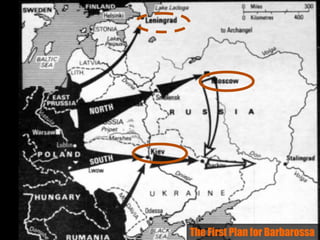
The First Plan for Barbarossa
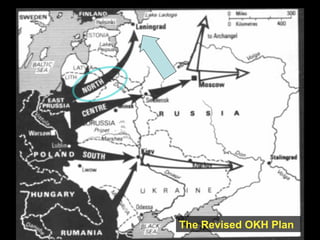
The Revised OKH Plan
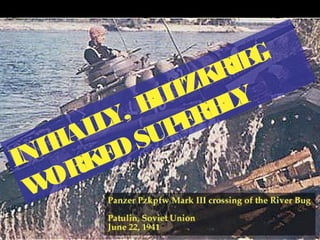
INITIALLY, BLITZKRIEG
WORKEDSUPERBLY
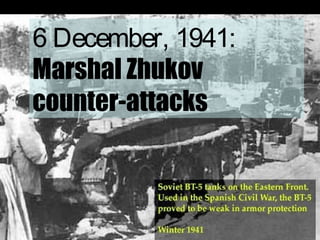
6 December, 1941:
Marshal Zhukov
counter-attacks
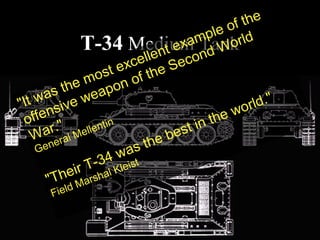
T-34 Medium Tank
"It was the most excellent example of the
offensive weapon of the Second World
War."
General Mellentin
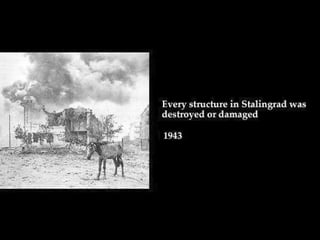
"Their T-34 was the best in the world."
Field Marshal Kleist
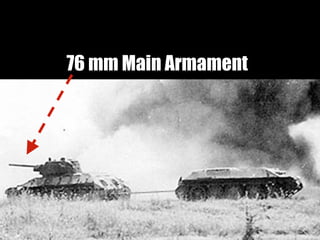
76 mm Main Armament
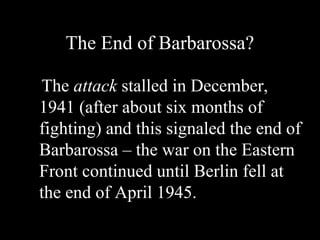
The End of Barbarossa?
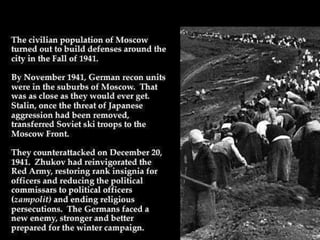
The attack stalled in December,
1941 (after about six months of
fighting) and this signaled the end of
Barbarossa – the war on the Eastern
Front continued until Berlin fell at
the end of April 1945.
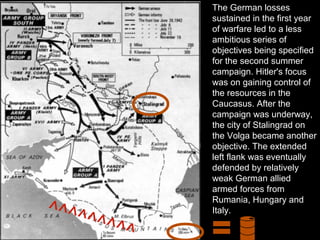
The German losses
sustained in the first year
of warfare led to a less
ambitious series of
objectives being specified
for the second summer
campaign. Hitler's focus
was on gaining control of
the resources in the
Caucasus. After the
campaign was underway,
the city of Stalingrad on
the Volga became another
objective. The extended
left flank was eventually
defended by relatively
weak German allied
armed forces from
Rumania, Hungary and
Italy.
=
^^^^^^^^^
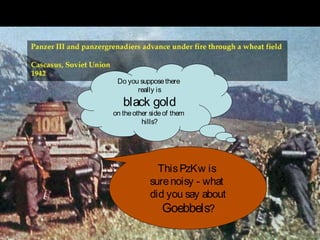
OIL!
TheGermansneeded…

Do you supposethere
really is
black gold
on theother sideof them
hills?
ThisPzKw is
surenoisy - what
did you say about
Goebbels?
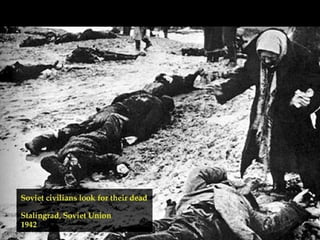
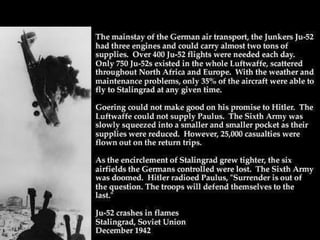
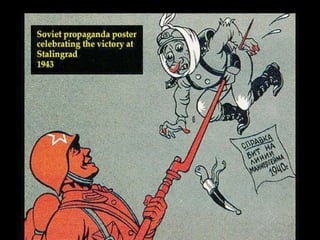
21 Aug, 1942 - 31 Jan 1943
Battle of Stalingrad:
Turning Point!
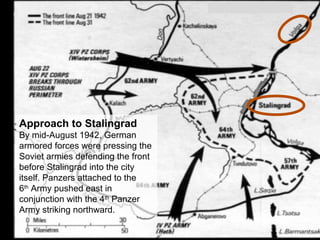
Approach to Stalingrad
By mid-August 1942, German
armored forces were pressing the
Soviet armies defending the front
before Stalingrad into the city
itself. Panzers attached to the
6th
Army pushed east in
conjunction with the 4th
Panzer
Army striking northward.
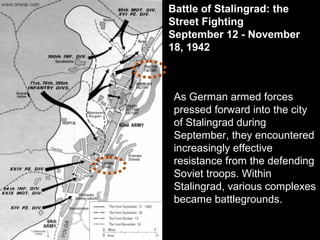
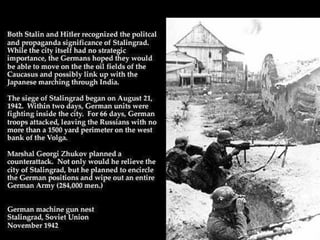
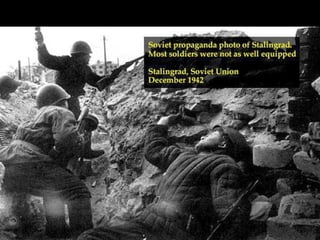
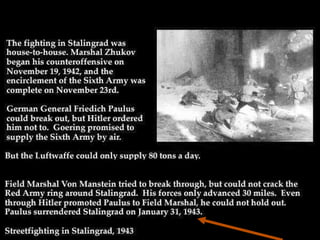
Battle of Stalingrad: the
Street Fighting
September 12 - November
18, 1942
As German armed forces
pressed forward into the city
of Stalingrad during
September, they encountered
increasingly effective
resistance from the defending
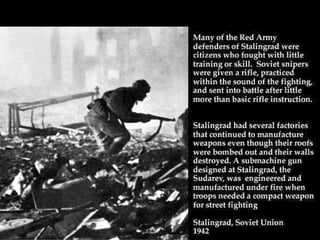
Soviet troops. Within
Stalingrad, various complexes
became battlegrounds.
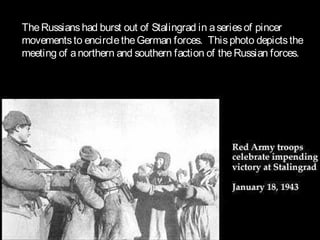
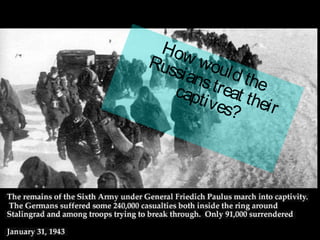
TheRussianshad burst out of Stalingrad in aseriesof pincer
movementsto encircletheGerman forces. Thisphoto depictsthe
meeting of anorthern and southern faction of theRussian forces.
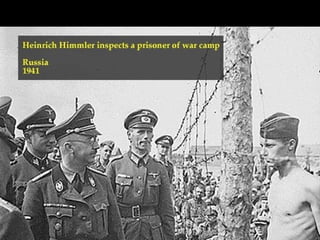
How would the
Russianstreat their
captives?
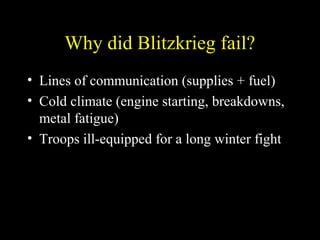
Why did Blitzkrieg fail?
• Lines of communication (supplies + fuel)
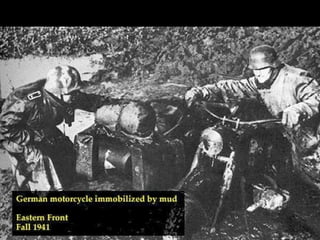
• Cold climate (engine starting, breakdowns,
metal fatigue)
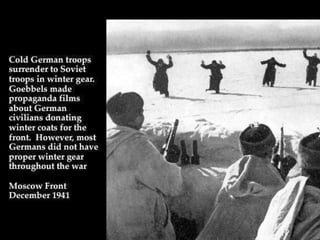
• Troops ill-equipped for a long winter fight
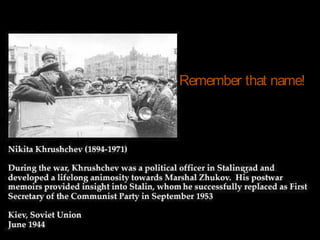
Remember that name!

Barbarossa and the Eastern Front

  • 1.
    Operation Barbarossa: The Invasion ofthe USSR! 22 June, 1941 : the start of the two- front war J. Marshall, 2007
  • 2.
    Some thoughts: • Nowa 2-front war • Not a surprise: Lebensraum vs. Nazi-Soviet Pact • A HUGE battle front • Success at first – but the beginning of the end for GERMANY! • The 5 Year Plans had been working!
  • 3.
    The First Planfor Barbarossa
  • 4.
  • 5.
  • 12.
    6 December, 1941: MarshalZhukov counter-attacks
  • 14.
    T-34 Medium Tank "Itwas the most excellent example of the offensive weapon of the Second World War." General Mellentin "Their T-34 was the best in the world." Field Marshal Kleist
  • 15.
    76 mm MainArmament
  • 17.
    The End ofBarbarossa? The attack stalled in December, 1941 (after about six months of fighting) and this signaled the end of Barbarossa – the war on the Eastern Front continued until Berlin fell at the end of April 1945.
  • 18.
    The German losses sustainedin the first year of warfare led to a less ambitious series of objectives being specified for the second summer campaign. Hitler's focus was on gaining control of the resources in the Caucasus. After the campaign was underway, the city of Stalingrad on the Volga became another objective. The extended left flank was eventually defended by relatively weak German allied armed forces from Rumania, Hungary and Italy. = ^^^^^^^^^
  • 22.
  • 23.
    Do you supposethere reallyis black gold on theother sideof them hills? ThisPzKw is surenoisy - what did you say about Goebbels?
  • 24.
    21 Aug, 1942- 31 Jan 1943 Battle of Stalingrad: Turning Point!
  • 25.
    Approach to Stalingrad Bymid-August 1942, German armored forces were pressing the Soviet armies defending the front before Stalingrad into the city itself. Panzers attached to the 6th Army pushed east in conjunction with the 4th Panzer Army striking northward.
  • 26.
    Battle of Stalingrad:the Street Fighting September 12 - November 18, 1942 As German armed forces pressed forward into the city of Stalingrad during September, they encountered increasingly effective resistance from the defending Soviet troops. Within Stalingrad, various complexes became battlegrounds.
  • 37.
    TheRussianshad burst outof Stalingrad in aseriesof pincer movementsto encircletheGerman forces. Thisphoto depictsthe meeting of anorthern and southern faction of theRussian forces.
  • 38.
  • 41.
    Why did Blitzkriegfail? • Lines of communication (supplies + fuel) • Cold climate (engine starting, breakdowns, metal fatigue) • Troops ill-equipped for a long winter fight
  • 42.

Editor's Notes

  • #3 When Barbarossa begins Hitler has all of Europe (except a few neutral countries). He has expanded into the Balkans + eastern Europe in spite of the Nazi – Soviet Pact. Stalin wants to appease Hitler to give more time – remember the PURGE. Many were warning Stalin but he kept holding up his end of the Pact: ex. Far East rubber shipments to Hitler.
  • #4 Marck’s Plan The initial German military proposal for an invasion of the Soviet Union which called for two army groups and primary strikes in the direction of Moscow and Kiev with a secondary attack toward Leningrad. The northern army group would push southward after reaching Moscow, linking up with the southern group at Kharkov.
  • #5 OKH = Oberkommando der Heeres (High Command of the German Army) The revised German Army High Command proposal for an invasion of the Soviet Union added weight to the attack toward Leningrad and called for a separate army group for this purpose. It also anticipated further eastward exploitation, independently, by the central and southern army groups.
  • #42 1) Just like in North Africa, armies couldn’t over-stretch their logistical limits. 2) diesel engines (even gas) don’t start well in sub-zero conditions – especially those of 1930s technology. Driving over frozen ground rattled the vehicles to pieces. 3) Hitler anticipated a quick victory, so troops weren’t given winter kit.